Nd:YAG Laser Technology in Aesthetics
How Nd:YAG Laser Technology Works in the Beauty Industry
Lasers have revolutionized cosmetic treatments by delivering focused, high-energy light to target specific skin structures. LASER stands for Light Amplification by Stimulated Emission of Radiation – meaning a laser emits a monochromatic, coherent beam of light that can be tightly focused on a treatment area. Early lasers (e.g. the ruby laser in 1960) were refined over decades, and by the late 1990s lasers became safe and effective enough for cosmetic use. Today, noninvasive laser procedures (hair removal, skin rejuvenation, etc.) are among the most popular aesthetic treatments. For example, non-surgical hair removal ranks in the top five cosmetic procedures globally. Modern clinics routinely use lasers for hair reduction, vascular and pigment treatments, and skin resurfacing, often achieving dramatic results with minimal downtime.
Nd:YAG Laser Basics
The Nd:YAG laser (neodymium-doped yttrium aluminum garnet) is a solid-state laser whose active medium is a crystal doped with neodymium (Nd³⁺) ions. It emits light at a wavelength of 1064 nm (near-infrared), which penetrates deeply into the skin. The Nd:YAG crystal can also be Q-switched, producing very short pulses that include a second output at 532 nm (green light) for superficial targets. In practice, Nd:YAG systems are often long-pulsed (millisecond pulses) for heating tissue (e.g. hair removal, vessels) and Q-switched (nanosecond pulses) for breaking up pigment (e.g. tattoo removal).
Compared to other lasers, Nd:YAG’s long wavelength gives it a unique profile. For example, diode lasers emit around 800–810 nm, and alexandrite lasers around 755 nm – these shorter wavelengths have stronger melanin absorption. By contrast, the 1064 nm Nd:YAG light is less absorbed by melanin, so it penetrates deeper with a lower risk of burning the epidermis. This property makes Nd:YAG especially safe for darker skin tones (Fitzpatrick III–VI), whereas shorter-wavelength lasers may overheat dark skin. Intense Pulsed Light (IPL) devices are often used for hair removal too, but IPL is broad-spectrum (500–1200 nm) non-coherent light, not a true laser. Unlike lasers, IPL distributes energy over many wavelengths, so it is less targeted and generally less effective than a true laser for precise treatments. Meanwhile, CO₂ lasers operate at 10,600 nm (far-infrared) and target water in tissue. CO₂ energy is strongly absorbed by water and thus removes (ablates) surface layers of skin– useful for resurfacing wrinkles or scars, but with more downtime. In summary, Nd:YAG sits in the near-infrared “optical window” (around 1064 nm) that gives deep penetration with moderate melanin absorption, making it versatile for many aesthetic uses.
Laser–Tissue Interaction
Nd:YAG lasers work via selective photothermolysis: the laser light is absorbed by specific chromophores in the skin and converted to heat, destroying the targeted cells while sparing surrounding tissue. At 1064 nm, the primary chromophores are melanin (in hair or pigmented lesions) and hemoglobin (in blood vessels). When treating hair, pulses of Nd:YAG light are absorbed by melanin in the hair shaft and follicle, heating the follicle and disabling its ability to grow hair. For vascular lesions (like spider veins or redness), the Nd:YAG beam is absorbed by oxyhemoglobin in blood vessels, coagulating the blood and collapsing the vesse. If the Q-switched mode is used (short nanosecond pulses), the high peak energy can fragment pigment particles (as in tattoo removal).
Importantly, Nd:YAG’s deeper penetration allows it to treat structures beneath the epidermis. Because 1064 nm light is only weakly absorbed by epidermal melanin, it passes through the skin surface and heats deeper targets. This deep photothermal effect can also stimulate collagen production in the dermis, tightening skin without ablating it (a non-ablative approach). In all cases, treatments use precise control of pulse duration and fluence (energy per area) to confine heating to the target. Clinicians always use cooling (contact cooling or chilled air) and eye protection. The net effect is heat inside the target cells – causing them to shrink or be reabsorbed – while leaving surrounding tissue largely intact.
Common Aesthetic Applications
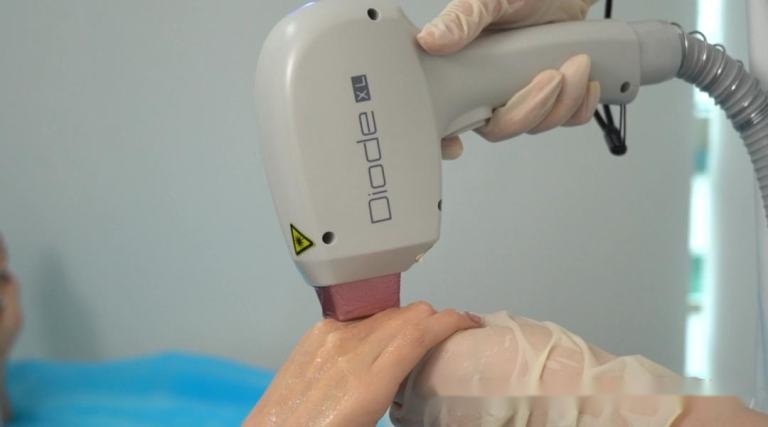
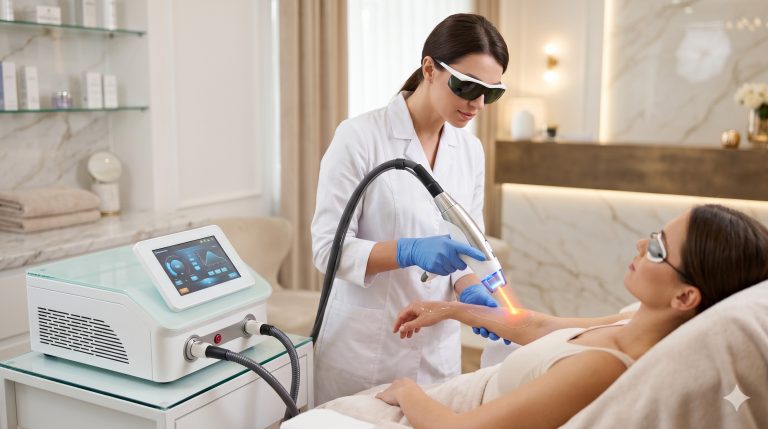
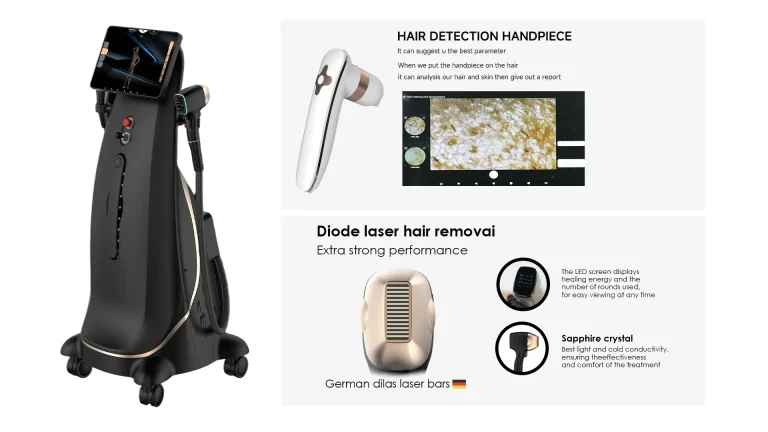
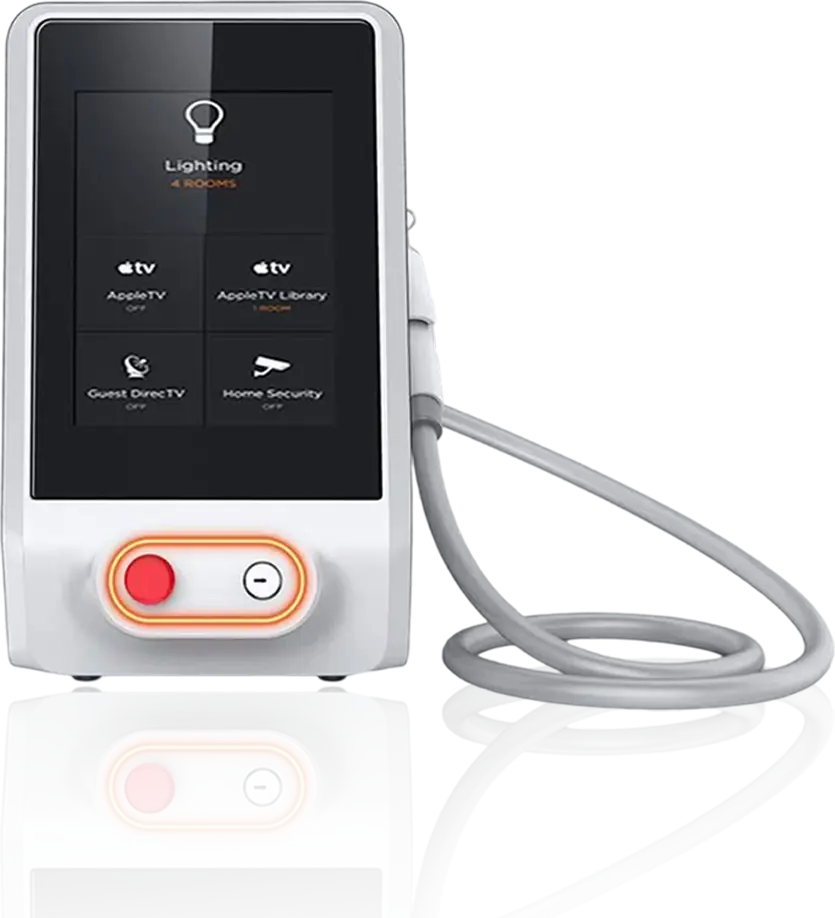
In clinical practice, the Nd:YAG laser handpiece (pictured) is applied to the skin surface in pulses. This long-pulsed 1064 nm light can travel through the epidermis to reach hair follicles, vessels, or deeper pigment. In dermatology and medspa settings, Nd:YAG lasers are used for a range of cosmetic treatments. Common applications include:
- Hair removal. Nd:YAG lasers effectively reduce dark hair on virtually any body area (legs, underarms, bikini, face, etc.). The infrared beam targets the hair follicle’s melanin, heating it to cause hair loss without damaging nearby skin. Long pulses and cooling make the procedure relatively safe and tolerable. (Nd:YAG is ineffective on very light blonde or grey hair because they lack melanin.) Multiple sessions (typically 4–6) are required for cumulative reduction.
- Vascular lesion treatment. The 1064 nm light is absorbed by hemoglobin in blood vessels, making Nd:YAG useful for red vascular lesions. Examples include facial spider veins, telangiectasias, rosacea redness, spider or reticular leg veins, port-wine stains, and hemangiomas. The laser coagulates the blood, causing small vessels to collapse and gradually fade. Because Nd:YAG penetrates deeply and bypasses epidermal melanin, it can treat vessels even in darker skin tones with careful settings.
- Pigmented lesion reduction. Nd:YAG can treat brown pigment in conditions like solar lentigines (age spots), freckles, melasma, café-au-lait spots, and dermal melanocytosis (e.g. nevus of Ota). The laser pulses are tuned to heat melanin in the epidermis or dermis to fragment or remove excess pigment. (Note: very deep dermal pigments may require specialized Q-switched Nd:YAG or other lasers.)
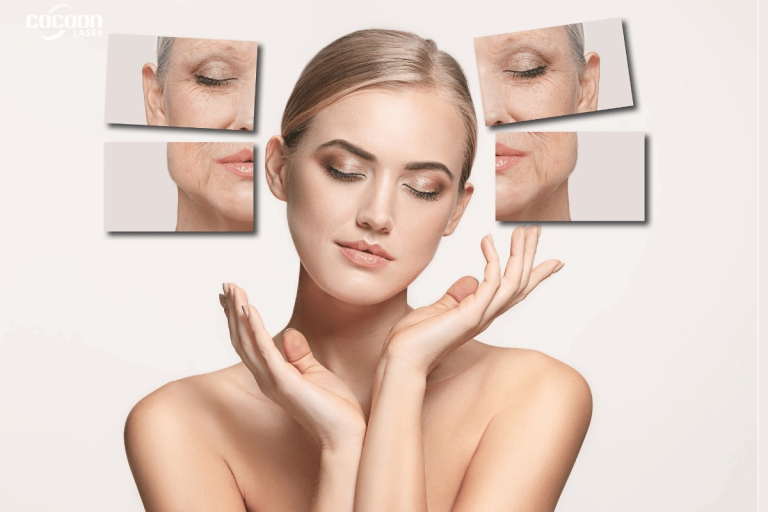
- Skin rejuvenation (non-ablative resurfacing). Nd:YAG can also tighten skin and smooth wrinkles by gentle heating of the dermis. Multiple short passes of long-pulsed Nd:YAG at sub-ablative settings trigger collagen remodeling over time. This non-ablative resurfacing improves fine lines, pore size, and overall tone without removing the skin surface. For example, Nd:YAG treatments have been shown to stimulate new collagen and elastin formation, resulting in firmer, smoother skin.
- Tattoo removal (Q-switched Nd:YAG). In a Q-switched mode, the Nd:YAG emits very short, high-intensity pulses at 1064 nm (and optionally 532 nm) to break up ink particles. It is especially effective on black, blue, and some green tattoo pigments. The fragmented ink is then cleared by the immune system.
These uses cover most aesthetic indications. (Other FDA-approved applications include fractional treatments and even onychomycosis, but those are less common in beauty clinics.)
Benefits and Expected Results
Nd:YAG laser treatments offer several key advantages. First, they are minimally invasive – typically causing only mild discomfort and requiring little to no downtime. Patients may experience temporary redness or swelling, but can usually resume normal activities immediately. Because Nd:YAG can spare the epidermis (with cooling), risks of scarring or prolonged pigmentation changes are low when protocols are followed. In fact, studies show long-pulsed 1064 nm Nd:YAG hair removal is safe and effective for even darker skin types, with significant hair reduction after multiple sessions and no lasting adverse effects. Generally, about 90–95% hair reduction can be achieved with a course of treatments.
Second, Nd:YAG is versatile across skin types. Its deep-penetrating wavelength means it can treat a wider range of skin tones than many shorter-wavelength lasers. It is considered one of the safest lasers for very dark or tanned skin (even Fitzpatrick V–VI), where lasers like alexandrite or diode might be too risky. At the same time, Nd:YAG is also effective on lighter skin. This flexibility makes it a workhorse in busy clinics, allowing providers to serve diverse patients.
Third, patients often see lasting improvement. For hair removal, treated hairs are permanently reduced, and new hairs grow back finer and lighter. Vascular lesions typically clear over several weeks after each session. Pigmented spots lighten or disappear over a series of treatments. In skin rejuvenation, patients note gradual skin tightening and wrinkle reduction over months as collagen rebuilds. Because Nd:YAG can selectively heat the dermis, some of the light energy goes toward collagen stimulation even when treating hair or vessels. The net result is smoother, more even skin.
Finally, patient satisfaction is high. People appreciate that Nd:YAG procedures are quick (often 15–30 minutes per area) and relatively painless (with cooling). As one report notes, non-ablative laser treatments like Nd:YAG “can be completed in [a short office] time frame, making it a great option for busy patients seeking effective results”. Indeed, the demand for Nd:YAG hair removal, skin tightening, and pigmentation treatments continues to grow because of these benefits.
Safety, Side Effects, and Contraindications
Like all lasers, Nd:YAG treatments must be performed with proper precautions. Operators always use protective eyewear for patient and staff, because the infrared beam can cause serious eye injury. They also typically use skin cooling (contact coolers, cryogen spray, or chilled gel/air) to protect the epidermis during each pulse. Many providers apply a soothing cold mask or ice pack immediately after treatment. Patients are instructed to avoid sun exposure and tanning before and after sessions, and to skip any bleaching creams or photosensitizing medications (e.g. isotretinoin) that could increase risk.
Common side effects are usually mild and temporary. As one clinic notes, patients may feel mild pain or “rubber band snap” sensations during pulses, and see redness, swelling or itching in the area for a day or two. In a few cases, tiny blisters can form if the energy is high or cooling insufficient, but these typically heal uneventfully. After any Nd:YAG session, it is crucial to avoid abrasive scrubs and to keep the skin clean and protected until any mild irritation resolves. The most common pigment-related side effect is temporary hyperpigmentation (darkening) or hypopigmentation (lightening) in the treated area. Careful parameter selection and post-care (sun avoidance) help minimize these risks.
There are also contraindications and precautions. Treatments are generally avoided over recently tanned skin or active sunburn, since increased melanin raises the chance of burns. Pregnant women and nursing mothers are usually advised to defer elective laser procedures. Patients on certain medications (like high-dose retinoids) or with conditions like epilepsy or connective tissue disorders should disclose these to the clinician, as they might be deferred. Active infections (e.g. cold sores, herpes) or open wounds in the treatment area must be resolved first. In darker-skinned patients, parameters must be adjusted carefully or alternative lasers/IPL considered, to avoid pigmentary changes.
In summary, Nd:YAG treatment is safe when performed correctly. Minor discomfort and transient skin effects are expected, but permanent injury is rare. Certified devices and trained operators greatly reduce risks. (For example, multiple clinical studies report no significant permanent side effects from long-pulsed 1064 nm Nd:YAG hair removal on dark skin, when contact cooling is used.) The key is to follow safety standards: use eye shields, start with test spots, use conservative settings on high-risk skin types, and monitor the patient’s response.
Medical-Grade vs. Spa-Grade Devices
When choosing an Nd:YAG system, it’s important to distinguish medical-grade lasers from lower-end “spa” machines. Medical-grade Nd:YAG lasers are cleared or approved by regulatory bodies (like the FDA or EU) for aesthetic use. They are built by reputable manufacturers to deliver consistent, calibrated energy and include robust safety features: precise cooling, computerized controls, and internal sensors. These systems typically come with FDA 510(k) clearances (or CE certifications) for specified indications, and are operated by trained medical staff.
By contrast, spa-grade devices (sometimes marketed to estheticians) often use lower-power lasers or even IPL that may not achieve the same clinical results. Some spa machines may not have all the FDA-clearances for medical indications, and their output can be less predictable. A medical spa owner notes that “a medical grade laser penetrates deeper… by targeting the area without targeting the skin”, whereas IPL systems (often used in spas) are “just not as safe or effective as a medical grade laser”. In practice, spa-level Nd:YAG units may have lower maximum fluence or less effective cooling, leading to longer treatments or higher risk of side effects.
For distributors and professionals, this means investing in certified, high-quality equipment yields better outcomes and patient safety. Key features of medical-grade Nd:YAG systems include: adjustable pulse durations (ms and ns modes), efficient cooling (contact or cryogen), precision optics, and quality assurance (ISO 13485 manufacturing, for example). By comparison, lower-cost alternatives may save money upfront but can underperform or require more passes to match the result of a true medical device. Ultimately, only medical-grade lasers backed by clinical data should be used for licensed procedures.
Regulatory Certifications and Quality Standards
Nd:YAG lasers are classified as medical devices and are subject to safety regulations. In the United States, aesthetic lasers must comply with FDA performance standards (21 CFR 1040.10/1040.11) and obtain the appropriate clearances (typically a 510(k) submission) for their intended uses. Recently, the FDA updated its guidance (Laser Notice No. 56) to align U.S. laser safety requirements with international standards. Notably, IEC 60601-2-22 (ed. 2012) is the international standard for medical laser systems, and IEC 60825-1 governs general laser safety. In effect, a compliant Nd:YAG device should meet IEC 60601/IEC 60825 requirements (for electrical safety and laser classification) before it can be marketed. When the FDA published Notice 56, it explicitly references conformance to IEC 60825-1 Ed.3 and IEC 60601-2-22 Ed.3.1. This means modern lasers must satisfy these stringent standards for output stability, safety interlocks, and labeling.
In Europe and other regions, medical lasers carry a CE mark, indicating conformity with the EU Medical Device Regulation. Manufacturers often adhere to ISO 13485 (quality management for medical devices) and ISO 9001 standards to assure consistent production. Distributors should look for FDA 510(k) numbers or CE certificates in device specifications. Additionally, reputable companies will provide compliance with ANSI Z136 (U.S. laser safety standards) and conduct risk assessments as required.
At the user level, clinics are expected to follow these standards: wearing appropriate laser safety goggles for 1064 nm, posting warning signs, and operating under a safety program. Patients should also be asked to wear protective eyewear. Many providers apply training checklists and perform patch tests to comply with medical best practices. In summary, proper certification and adherence to international standards are non-negotiable. They ensure that an Nd:YAG device performs as advertised and that treatments stay within safe limits.
Market Trends and Consumer Interest
The market for aesthetic lasers is booming worldwide. In 2023, the global market for aesthetic (cosmetic) lasers was valued around $2.6 billion, with a forecast growth rate near 10% per year. Hair removal is a leading segment of this market, driven by busy consumers seeking permanent solutions. For example, one report projects the global laser hair removal market to reach ~$1.38 billion by 2027. Growth is especially strong in the Asia–Pacific region, where rising incomes and beauty awareness are fueling demand.
Within the hair removal segment, Nd:YAG lasers are gaining popularity. A Grand View Research analysis noted that Nd:YAG devices (1064 nm) are expected to see the fastest growth in coming years because of their suitability for darker skin (optimal “absorption in the optical window” for pigmented skin). Diode lasers still hold the largest overall share, but many clinics now offer dual-wavelength platforms (e.g. alexandrite + Nd:YAG) to cover all skin types. New device launches (such as advanced Nd:YAG systems with higher repetition rates or novel cooling) further stimulate the market.
Consumers’ preferences also influence trends. Surveys show that laser hair removal is not just a female service – nearly half of surveyed men reported removing body hair for cosmetic reasons. People of all ages are looking for “quick, safe, and long-lasting” treatments. The fact that non-ablative laser treatments like Nd:YAG usually require little downtime makes them attractive to busy patients. In sum, strong patient interest in smooth, youthful skin and unwanted hair removal is driving clinics to invest more in Nd:YAG equipment and training.
Conclusion and Buying Tips
Nd:YAG lasers are a cornerstone of modern aesthetic practice, valued for their versatility and safety profile. They can safely treat diverse skin types and multiple indications (hair, veins, pigment, laxity) without the long recovery of more aggressive lasers. When selecting an Nd:YAG system, professionals should prioritize certified, high-quality devices and trained operators. Here are some key tips:
- Check Regulatory Clearance: Choose an Nd:YAG laser with FDA 510(k) clearance or CE mark for your intended treatments. This ensures the device meets safety and performance standards. Avoid unapproved machines or “cosmetic” devices not cleared for medical use.
- Verify Technical Specs: Look for adjustable pulse durations (milliseconds for hair/vascular, nanoseconds for pigment), a reliable cooling system, and an FDA-classified laser class (usually Class 3B/4 for medical lasers). Make sure the manufacturer documents the actual wavelength (1064 nm) and power output. High-end clinical lasers often quote spot sizes, fluence (J/cm²), and pulse-width ranges.
- Reputable Manufacturers: Stick with well-known laser brands that publish clinical data. Companies with a proven track record invest in safety features (interlocks, calibration checks) and offer training. Medical-grade devices typically carry serial numbers, user manuals detailing compliance to IEC 60601/60825, and ISO 13485 manufacturing.
- Clinical Support and Warranty: Ensure the supplier provides training for correct use and maintenance. A good warranty or service plan reflects confidence in quality. Cheaper “spa” models often skimp on after-sales support.
- Evaluate Compatibility: If possible, try a live demo or ask for practice use on test material. The feel and ergonomics of the handpiece, as well as software interface, can matter in practice. Also consider if you need a standalone Nd:YAG or a multi-wavelength system for added versatility.
- Don’t Skip the Essentials: Even before purchase, invest in proper staff training and safety equipment. Goggle for 1064 nm, eyewear for any staff and patients in adjacent rooms, and follow guidelines for signage and emergency protocols. A device is only as good as its operator’s knowledge.
By focusing on quality and safety standards – and using clinical evidence to guide choices – providers and distributors can confidently select Nd:YAG equipment. Patients, in turn, benefit from effective outcomes (such as high hair reduction rates and improved skin tone) with minimal risks. As the aesthetic laser field continues to advance, Nd:YAG systems remain a versatile workhorse, combining proven science with consumer demand for safe, transformative treatments.
If you want to obtain more information, please follow our official website and Facebook.