Why Is My Skin Suddenly Sensitive?
Skin that once tolerated your usual cleanser, moisturizer, or sunscreen may suddenly start feeling tight, itchy, red, or uncomfortable. Sometimes even water or a familiar skincare product causes stinging.
If you are wondering, “Why is my skin suddenly sensitive?” the answer may involve a temporary disruption of your skin barrier, exposure to irritating ingredients, environmental changes, or an underlying skin condition.
Sudden skin sensitivity is not a diagnosis by itself. Understanding when the symptoms started, what changed in your routine, and whether other symptoms are present can help narrow down the possible causes.
Quick Answer: Why Is My Skin Suddenly Sensitive?
Your skin may suddenly become sensitive because of over-exfoliation, harsh skincare products, a weakened skin barrier, weather changes, allergic contact dermatitis, or conditions such as eczema and rosacea. New medications, sun exposure, and recent cosmetic treatments can also contribute to irritation.
If your skin suddenly reacts to products you previously used without problems, consider whether you have recently introduced new ingredients, increased exfoliation, changed medications, or experienced unusual environmental exposure.
For mild irritation, temporarily simplifying your skincare routine and avoiding potential triggers may help. Persistent, worsening, painful, or unexplained symptoms should be assessed by a qualified healthcare professional.
What Does Sudden Skin Sensitivity Feel Like?
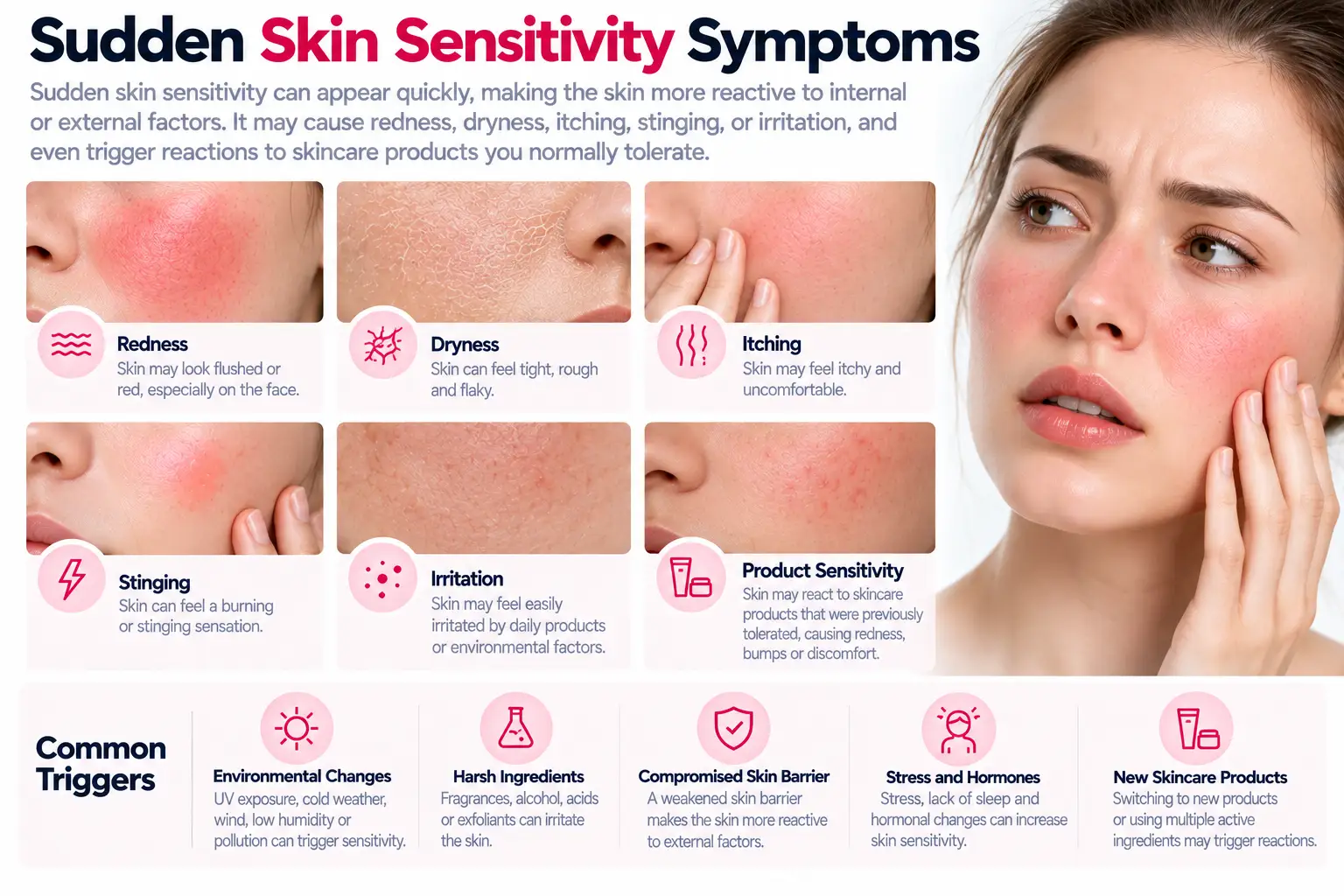
Sudden skin sensitivity can appear in different ways. Some people notice visible redness or dryness, while others experience burning, stinging, or discomfort without obvious changes in skin appearance.
Common Signs of Suddenly Sensitive Skin
- Burning or stinging: Skincare products or water may cause an uncomfortable sensation after application.
- Redness: The face or affected area may look flushed or inflamed.
- Dryness and tightness: Skin may feel uncomfortable, particularly after cleansing.
- Itching: Irritation may create an urge to scratch or rub the skin.
- Flaking or roughness: The skin surface may become uneven or develop dry patches.
- Increased product reactivity: Previously tolerated products may suddenly feel irritating.
- Sensitivity to touch: Rubbing, pressure, or contact with clothing may feel uncomfortable.
These symptoms can overlap with several dermatological conditions. A burning sensation does not necessarily mean the skin barrier is damaged, and redness alone does not establish a diagnosis of sensitive skin.
9 Common Causes of Sudden Skin Sensitivity
The causes of sudden skin sensitivity range from temporary irritation to conditions requiring medical assessment. The following are nine possible explanations.
1. Over-Exfoliation and Excessive Use of Active Ingredients
One common reason skin suddenly becomes irritated is excessive exfoliation or the use of multiple potentially irritating skincare ingredients at the same time.
Alpha hydroxy acids (AHAs), beta hydroxy acids (BHAs), retinoids, and exfoliating scrubs can be useful when appropriately selected and used. However, frequent application, high concentrations, or combining several active products may increase irritation.
Signs of over-exfoliation or product-related irritation may include:
- Stinging when applying moisturizer
- Unusual dryness or tightness
- Redness following skincare application
- Flaking or peeling
- Increased discomfort after cleansing
If symptoms begin after introducing an exfoliating acid or retinoid, stop the suspected irritating product and allow your skin to recover. Severe reactions or persistent symptoms warrant professional evaluation.
2. A Disrupted Skin Barrier
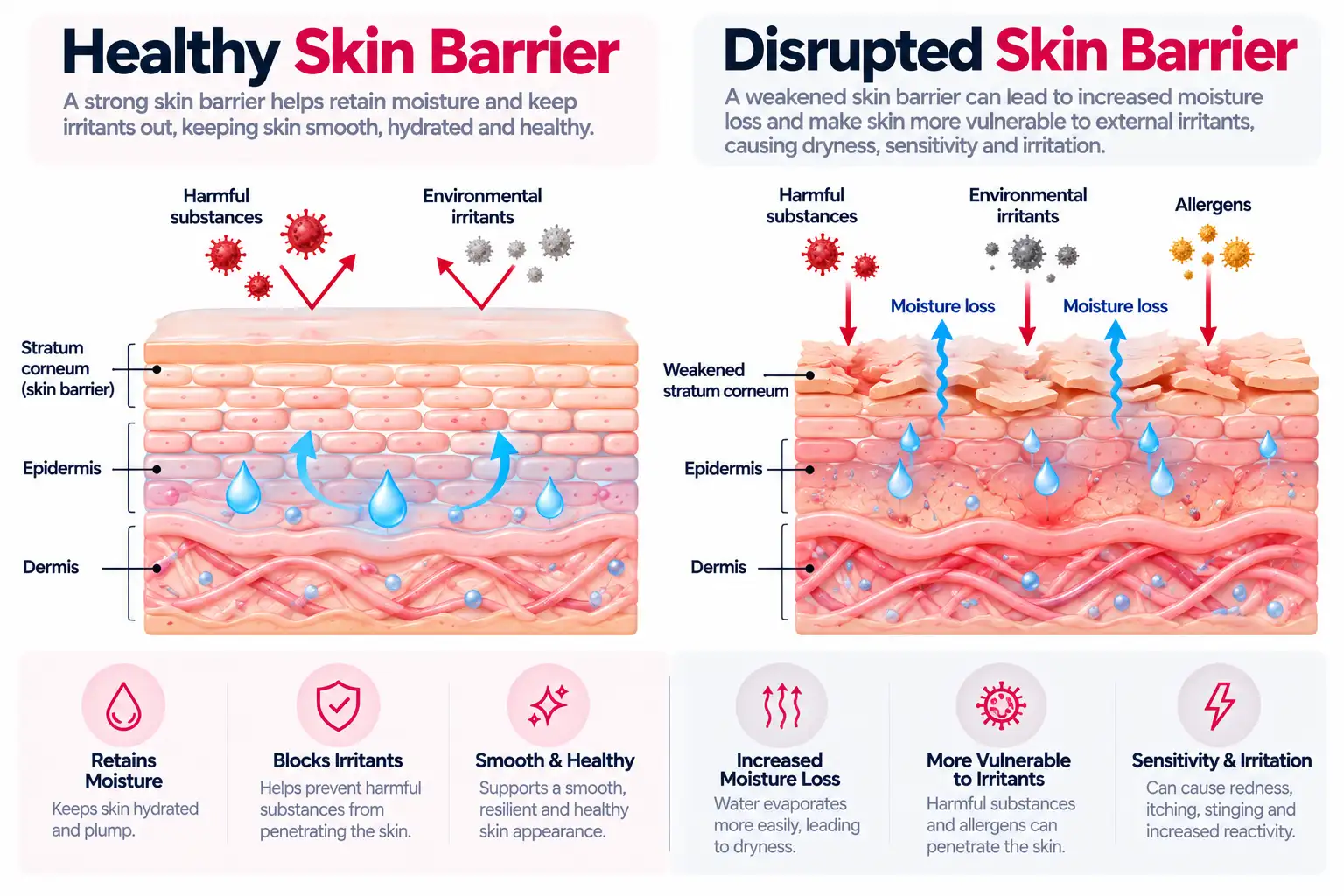
The skin barrier is primarily associated with the outermost layer of the epidermis, known as the stratum corneum. It helps limit water loss and protects the skin against external irritants.
When this protective function is disrupted, skin may lose moisture more easily and become less tolerant of certain skincare products or environmental exposures.
Potential contributing factors include harsh cleansing, frequent exfoliation, low humidity, friction, and some inflammatory skin conditions.
However, not every case of sudden skin sensitivity is caused by barrier disruption. Allergic reactions, nerve sensitivity, and underlying skin disorders can produce similar symptoms.

3. Allergic Contact Dermatitis
Allergic contact dermatitis occurs when the immune system reacts to a substance that comes into contact with the skin. Unlike simple irritation, it involves a delayed hypersensitivity response.
Possible triggers include fragrances, preservatives, hair dyes, certain metals, and ingredients in cosmetic or personal care products.
An important detail is that allergies can develop even after a product has been used successfully for months or years.
Symptoms may include itching, redness, swelling, and an eczema-like rash. The reaction can appear hours or days after exposure.
If a reaction repeatedly occurs after contact with particular products, a dermatologist may recommend patch testing to identify possible allergens.
4. Weather Changes and Environmental Stress
A sudden change in temperature, humidity, or environmental exposure may contribute to skin discomfort.
Cold weather and low humidity can increase dryness, while indoor heating may further reduce environmental moisture. Wind and prolonged sun exposure can also aggravate vulnerable skin.
In warmer conditions, sweating and friction may trigger discomfort in some individuals.
If your skin becomes sensitive during seasonal transitions, review whether your cleansing and moisturizing routine remains appropriate for the new conditions.
5. Harsh Cleansers and Excessive Washing
Washing your face too frequently or using harsh cleansing products can contribute to dryness and irritation.
Strong detergents, abrasive cleansing tools, and very hot water may remove surface lipids or aggravate already inflamed skin.
Signs that your cleansing routine may be contributing to sensitivity include:
- Skin feeling unusually tight immediately after washing
- Burning when applying skincare after cleansing
- Persistent dryness despite moisturizer use
- Redness following washing or scrubbing
A gentle, fragrance-free cleanser and lukewarm water are generally better tolerated by irritated skin. Avoid aggressive scrubbing while symptoms are active.
6. Rosacea or Eczema
Sometimes what appears to be sudden skin sensitivity is an early sign or flare of an underlying inflammatory skin condition.
Rosacea may cause facial flushing, persistent redness, burning, stinging, and increased reactivity to skincare products. Some people also develop visible blood vessels or acne-like bumps.
Eczema, including atopic dermatitis, may cause dry, itchy, inflamed skin. Symptoms can fluctuate and may worsen after exposure to certain irritants or environmental conditions.
Because these conditions require different management approaches, persistent or recurring symptoms should not automatically be treated as simple cosmetic sensitivity.
7. Hormonal Changes
Hormonal changes can influence skin hydration, oil production, and the behavior of certain inflammatory skin conditions.
Changes associated with menstruation, pregnancy, perimenopause, or menopause may affect how the skin feels and responds to its environment.
For example, lower estrogen levels around menopause can contribute to skin dryness, which may increase discomfort in some individuals.
However, sudden skin sensitivity should not be attributed to hormones without considering other potential causes.
8. Medications and Recent Cosmetic Treatments
Certain medications and cosmetic procedures can temporarily increase skin sensitivity.
Topical retinoids, acne treatments, and some prescription products may cause dryness or irritation, particularly when treatment begins or the application frequency changes.
Chemical peels, laser resurfacing, microneedling, and other professional procedures may also produce temporary redness, tenderness, or heightened sensitivity.
If symptoms develop after a procedure, follow the treating clinician’s specific aftercare instructions. Do not apply exfoliating products or resume active skincare ingredients until your provider confirms that doing so is appropriate.
Do not stop a prescribed medication without consulting the prescribing healthcare professional.
9. Sun Exposure and UV-Related Irritation
Excessive ultraviolet exposure can damage the skin and produce inflammation, redness, tenderness, and increased sensitivity.
Sunburn may cause skin to feel hot, painful, or uncomfortable to touch. More severe cases can involve swelling or blistering.
Some medications and skincare ingredients can also increase sensitivity to sunlight.
If sensitivity appears after significant sun exposure, avoid further exposure and use gentle supportive care. Extensive blistering, severe pain, dehydration, or systemic symptoms require medical attention.
Why Is My Face Suddenly Sensitive?
If your face has suddenly become sensitive, the cause may be related to changes in your skincare routine, environmental exposure, or an underlying inflammatory skin condition. Facial skin is frequently exposed to cleansers, cosmetics, sunscreen, temperature changes, and other potential irritants.
You may notice that your cheeks become red after washing, your forehead feels tight, or your usual moisturizer suddenly causes a burning sensation.
The timing and location of your symptoms can provide useful clues about possible triggers.
Sudden Sensitivity on the Cheeks
The cheeks are a common location for facial redness, dryness, and irritation.
Possible explanations include contact dermatitis, rosacea, sun exposure, and irritation from skincare products.
If redness repeatedly appears across the central face, especially with flushing, burning, or visible blood vessels, a dermatologist may evaluate you for rosacea.
Sudden Sensitivity Around the Eyes
The skin around the eyes is particularly vulnerable to irritation. Eyelid sensitivity may develop after contact with eye creams, makeup, cleansers, fragrances, or substances transferred from the hands.
Allergic contact dermatitis is one possible cause of eyelid redness, itching, or swelling.
Avoid applying strong exfoliating acids or retinoids close to the eyes unless specifically directed by a healthcare professional.
Eye pain, changes in vision, or significant swelling around the eye require prompt medical assessment.
Sudden Sensitivity Around the Mouth
Sensitivity around the mouth may result from irritation, contact dermatitis, or conditions such as perioral dermatitis.
Perioral dermatitis may cause small bumps, redness, and burning around the mouth and sometimes the nose or eyes.
If you develop a persistent rash around your mouth, avoid experimenting with multiple new products. A dermatologist can help determine the cause and appropriate treatment.
Why Is My Skin Suddenly Sensitive to Touch?
Skin that suddenly becomes painful or uncomfortable when touched deserves particular attention.
Mild tenderness may accompany sunburn, inflammation, or an irritating skin reaction. However, sensitivity to touch is not always a skincare problem.
Pain triggered by normally harmless contact can sometimes be described as allodynia. It may be associated with neurological conditions or other medical causes.
Possible Causes of Skin Sensitivity to Touch
- Sunburn: Inflamed skin may become painful when touched or rubbed.
- Contact dermatitis: An irritated or inflamed area may feel tender.
- Skin infections: Certain infections may cause localized pain, warmth, swelling, or redness.
- Shingles: Pain, burning, or tingling may develop before a blistering rash appears, often on one side of the body.
- Nerve-related sensitivity: Some neurological conditions can cause discomfort from light touch even when the skin appears normal.
If your skin is suddenly painful to touch without an obvious explanation, particularly if the discomfort is severe, localized to one side, or accompanied by a rash, seek medical evaluation.
Rapidly spreading redness, fever, significant swelling, or severe pain should be assessed urgently.
Why Is My Skin Suddenly Reacting to Skincare Products?
It can be confusing when a cleanser, serum, or moisturizer that previously worked well suddenly causes irritation.
This does not necessarily mean the product has become unsafe or that your skin has permanently changed. Several factors may explain the reaction.
Your Skin Barrier May Be Temporarily Disrupted
When the skin barrier is compromised, ingredients that were previously well tolerated may cause stinging or discomfort.
This can happen after excessive exfoliation, harsh cleansing, sun exposure, or certain dermatological treatments.
You May Have Developed a Contact Allergy
Allergic contact dermatitis can develop after repeated exposure to an ingredient.
A product that caused no problems for years may eventually trigger an allergic reaction.
Persistent itching, swelling, or an eczema-like rash after product use should prompt consideration of allergic contact dermatitis.
You May Be Combining Too Many Active Ingredients
Using several products containing retinoids, exfoliating acids, or other potentially irritating ingredients can increase the likelihood of discomfort.
Even when individual products are appropriate, their combined frequency or concentration may exceed what your skin currently tolerates.
The Product Formula May Have Changed
Manufacturers sometimes reformulate products. Changes in preservatives, fragrances, or active ingredients may affect individual tolerance.
Check the current ingredient list if a familiar product begins causing unexplained irritation.
What Should You Do?
If a skincare product causes burning, itching, or significant redness, stop using it and gently remove it if it remains on the skin.
Avoid immediately replacing it with multiple new products. A simpler routine makes it easier to identify potential triggers.
If the reaction is persistent or repeatedly occurs with different products, consider consulting a dermatologist.
Can a Damaged Skin Barrier Cause Sudden Sensitivity?
Yes. A disrupted skin barrier is one possible explanation for sudden skin sensitivity, particularly when symptoms include dryness, tightness, flaking, and stinging after cleansing or applying skincare products.
The outermost skin layer helps retain moisture and limit exposure to environmental irritants. When this protective function is impaired, skin may become more reactive.
Signs That May Suggest Skin Barrier Disruption
- Persistent dryness or dehydration
- Tightness after washing
- Flaking or rough skin texture
- Stinging when applying skincare products
- Increased irritation after exfoliation
- Difficulty tolerating a previously comfortable routine
These symptoms are not specific to barrier damage. Conditions such as eczema, rosacea, and contact dermatitis can produce overlapping signs.
If you suspect your skin barrier is disrupted, focus on gentle cleansing, moisturizing, and avoiding unnecessary irritation.
For a more detailed explanation of skin barrier care and recovery, see our guide to how to heal sensitive skin .
How to Calm Suddenly Sensitive Skin
When your skin suddenly becomes irritated, the goal is to reduce potential triggers and support its normal protective function.
The following steps may help with mild, uncomplicated irritation. They are not a substitute for treatment of an allergy, infection, or inflammatory skin disorder.
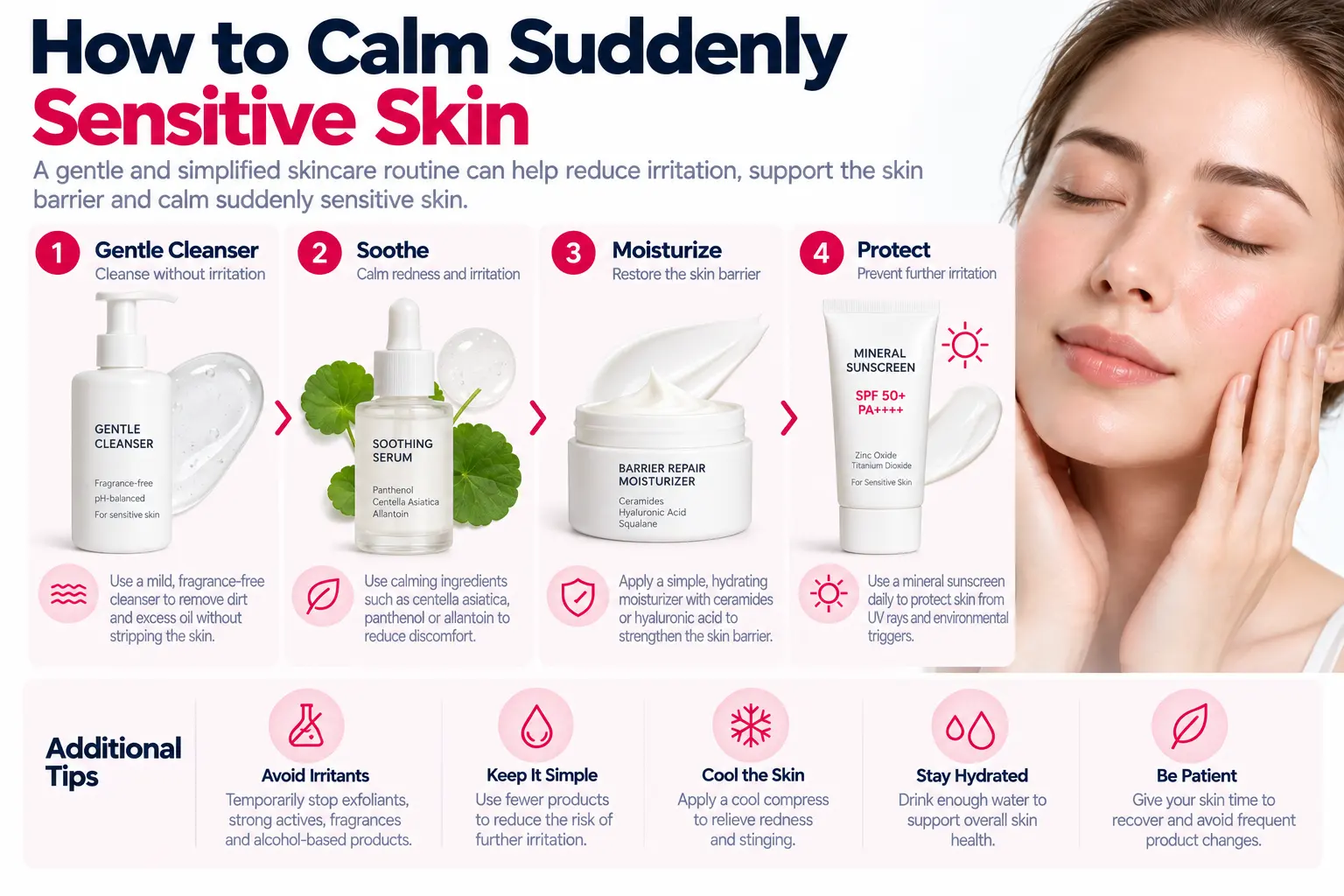
Step 1: Temporarily Simplify Your Skincare Routine
Start by reducing the number of products you apply each day.
A simple routine may include:
- A gentle, fragrance-free cleanser when needed
- A bland, fragrance-free moisturizer
- A well-tolerated broad-spectrum sunscreen
Avoid introducing several new serums, exfoliants, or masks while your skin is actively irritated.
Step 2: Pause Potentially Irritating Active Ingredients
If you recently started using retinol, exfoliating acids, or other strong active skincare ingredients and developed irritation, temporarily discontinue the suspected products.
Examples of products that may need to be paused include:
- Glycolic acid exfoliants
- Salicylic acid exfoliants
- Retinol and other cosmetic retinoids
- Physical exfoliating scrubs
- Strong or irritating facial treatments
If an ingredient was prescribed for a medical condition, contact your prescriber before changing the treatment plan.
Step 3: Use a Gentle Moisturizer
Moisturizers can help reduce water loss and improve comfort in dry or irritated skin.
Ingredients commonly used in barrier-supporting moisturizers include:
- Ceramides: Lipids that form part of the skin’s natural barrier.
- Glycerin: A humectant that helps attract and retain moisture.
- Petrolatum: An occlusive ingredient that helps reduce water loss.
- Dimethicone: A skin protectant used in many moisturizers.
- Colloidal oatmeal: An ingredient used in some products designed to soothe dry, itchy skin.
Choose a product you can comfortably tolerate. Even products marketed for sensitive skin may contain ingredients that irritate certain individuals.
Step 4: Avoid Hot Water and Aggressive Cleansing
Wash with lukewarm rather than very hot water. Avoid cleansing brushes, rough washcloths, and vigorous rubbing.
After washing, gently pat the skin dry and apply moisturizer while the skin is still slightly damp, if tolerated.
Step 5: Protect Your Skin From Sun Exposure
Sun exposure may worsen existing irritation and contribute to additional skin damage.
Use shade, protective clothing, and a broad-spectrum sunscreen with SPF 30 or higher when appropriate.
If your usual sunscreen stings, a fragrance-free mineral sunscreen containing zinc oxide or titanium dioxide may be better tolerated, although individual reactions vary.
Step 6: Avoid Unnecessary Cosmetic Treatments
While your skin is actively red, inflamed, painful, or unusually reactive, postpone elective cosmetic procedures until the cause has been evaluated and the skin has recovered.
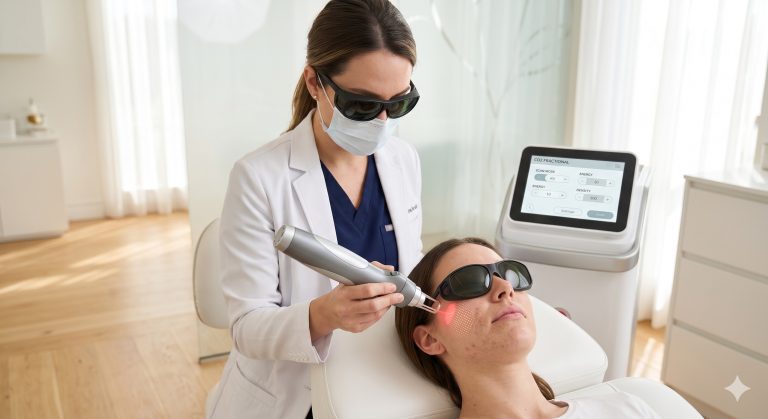
This includes treatments such as chemical peels, aggressive exfoliation, microneedling, and laser procedures.
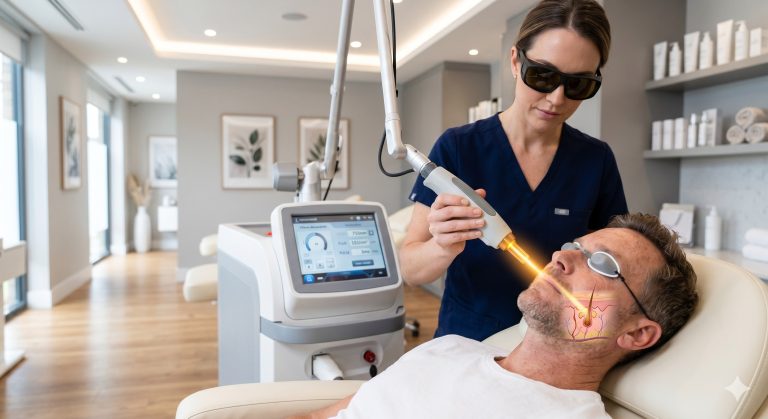
A qualified practitioner should assess skin condition, medical history, and treatment suitability before performing an energy-based procedure.
How Long Does Sudden Skin Sensitivity Last?
The recovery time for suddenly sensitive skin depends on the underlying cause, the severity of the reaction, and whether the trigger is removed.
Mild irritation may begin improving within several days after the suspected trigger is discontinued.
More significant barrier disruption or inflammatory skin conditions may require weeks of appropriate care or medical treatment.
Allergic contact dermatitis may persist if exposure to the responsible allergen continues. Chronic conditions such as eczema or rosacea may involve recurring flare-ups.
Factors That Influence Recovery
- The underlying cause of sensitivity
- How severe the irritation is
- Whether the triggering exposure continues
- Existing skin conditions
- Skincare habits during recovery
- Whether appropriate treatment is needed
There is no universal recovery timeline. If symptoms are worsening, repeatedly returning, or failing to improve, seek professional assessment rather than continuing to experiment with skincare products.
Sudden Skin Sensitivity vs. Naturally Sensitive Skin
Not everyone who experiences skin sensitivity has naturally sensitive skin. Some people have experienced skin reactivity for years, while others develop symptoms unexpectedly after a change in skincare products, environmental exposure, or skin health.
Understanding the difference may help you identify whether your symptoms are temporary or part of a recurring pattern.
| Feature | Sudden Skin Sensitivity | Long-Term Sensitive Skin |
|---|---|---|
| Onset | Develops unexpectedly | Usually a recurring pattern |
| Possible triggers | New skincare products, irritation, environmental changes, or skin conditions | Individual skin reactivity, environmental exposure, or underlying skin conditions |
| Typical symptoms | Burning, stinging, redness, itching, or tenderness | Recurrent stinging, redness, dryness, or discomfort |
| Duration | May improve when the underlying cause is addressed | May persist or recur over time |
| Management | Identify potential triggers and address the underlying cause | Maintain a well-tolerated skincare routine and manage known triggers |
These categories are not mutually exclusive. Someone with naturally reactive skin can also develop a new allergy or an episode of irritant contact dermatitis.
If your skin has suddenly changed without an obvious reason, do not assume it is simply your new skin type.
Common Mistakes That Can Make Skin Sensitivity Worse
When skin suddenly becomes irritated, it can be tempting to try several new products or treatments to resolve the problem quickly.
However, some common skincare habits may prolong irritation or make it harder to identify the original cause.
1. Using More Exfoliating Products
Flaking or roughness does not necessarily mean your skin needs additional exfoliation.
Applying exfoliating acids or scrubs to already irritated skin may increase dryness, stinging, and inflammation.
2. Trying Multiple New Products at Once
Introducing several new skincare products simultaneously makes it difficult to determine which ingredient is responsible for a reaction.
A simplified routine is generally more useful while investigating unexplained sensitivity.
3. Assuming Natural Ingredients Cannot Irritate Skin
Products labeled natural, botanical, or organic are not automatically suitable for sensitive skin.
Essential oils, fragrances, and plant extracts can cause irritation or allergic contact dermatitis in susceptible individuals.
4. Washing the Face Too Frequently
Excessive cleansing, hot water, and aggressive rubbing can aggravate dryness and discomfort.
Cleanse gently and avoid unnecessary friction.
5. Ignoring Persistent Burning or Pain
Persistent burning, severe tenderness, or recurring inflammation should not be treated as a normal part of skincare adjustment.
If symptoms continue despite stopping suspected irritants, medical assessment may be needed.
6. Continuing Cosmetic Treatments During Active Irritation
Chemical peels, laser procedures, and other cosmetic treatments should not be used as a quick fix for unexplained inflammation.
A qualified professional should first evaluate the condition of the skin and determine whether treatment is appropriate.
When Should You See a Dermatologist?
Mild irritation may improve after avoiding a suspected trigger and following a gentle skincare routine. However, some symptoms require medical evaluation.
Arrange a Medical Assessment If:
- Your skin sensitivity persists or repeatedly returns.
- Redness, itching, or burning continues despite avoiding suspected triggers.
- You develop a recurring rash, scaling, or unexplained swelling.
- Previously tolerated products consistently cause reactions.
- You suspect eczema, rosacea, or allergic contact dermatitis.
- Your symptoms interfere with sleep or everyday activities.
Seek Urgent Medical Attention If:
- You develop rapidly spreading redness with fever or significant pain.
- The affected skin becomes severely swollen, hot, or tender.
- You experience eye pain, vision changes, or severe swelling around the eyes.
- You develop a painful, blistering rash, especially near the eye or on one side of the face.
- You experience a severe skin reaction after starting a new medication.
Sudden swelling of the lips, tongue, or throat, difficulty breathing, or faintness may indicate a severe allergic reaction and requires emergency medical care.
Frequently Asked Questions
Why is my skin suddenly sensitive to everything?
Skin may suddenly react to multiple products because of irritation, a disrupted skin barrier, allergic contact dermatitis, or an underlying inflammatory condition.
If even gentle products cause persistent burning or redness, stop suspected triggers and consult a dermatologist.
Why is my face suddenly sensitive and red?
Sudden facial redness and sensitivity may be associated with skincare irritation, sun exposure, contact dermatitis, or rosacea.
Persistent redness, flushing, or an accompanying rash may require medical assessment.
Can stress make my skin suddenly sensitive?
Stress can contribute to flare-ups of certain skin conditions, including eczema, and may influence how skin discomfort is perceived.
However, stress should not automatically be considered the cause of sudden sensitivity, especially when symptoms are severe or unexplained.
Why does my moisturizer suddenly burn my face?
Moisturizer may sting when skin is already irritated or inflamed. Certain ingredients may also cause irritant or allergic contact dermatitis.
Stop using a product that repeatedly causes burning. If reactions persist across multiple products, seek professional advice.
Can skin suddenly become sensitive with age?
Yes. Skin characteristics can change over time. Aging and hormonal changes may contribute to dryness and changes in skin tolerance.
However, new sensitivity should still be evaluated for potential irritation, allergies, and skin conditions.
Does sudden skin sensitivity mean my skin barrier is damaged?
Not necessarily. Barrier disruption is one possible cause, but allergic reactions, inflammatory skin conditions, sunburn, and other medical problems may produce similar symptoms.
A dermatologist can help identify the underlying cause when symptoms persist.
How can I calm suddenly irritated skin overnight?
You may improve comfort by stopping suspected irritating products, cleansing gently, and using a bland moisturizer that your skin tolerates.
A cool, clean compress may provide temporary relief for some types of mild irritation.
However, significant inflammation or allergic reactions may not resolve overnight and may require medical treatment.
Can I get a facial or laser treatment if my skin is sensitive?
Elective cosmetic treatments should generally be postponed when the skin is actively inflamed, painful, or experiencing unexplained sensitivity.
Treatment suitability depends on the cause of sensitivity, the procedure, and the individual’s medical history.
A qualified practitioner should evaluate your skin before recommending any energy-based treatment.
Final Thoughts: Why Is My Skin Suddenly Sensitive?
If your skin has suddenly become sensitive, the most useful first step is to identify what may have changed before symptoms appeared.
New skincare products, over-exfoliation, harsh cleansing, environmental exposure, and underlying skin conditions are all possible contributors.
Mild irritation may improve with a simpler routine, gentle moisturizing, and avoidance of suspected triggers.
However, sudden skin sensitivity is not always a cosmetic concern. Persistent burning, unexplained pain, recurring rashes, or worsening symptoms deserve medical attention.
Understanding the cause is more important than adding more products to your routine.
Medical References and Further Reading
The following dermatology and public health resources provide additional information about skin irritation, contact dermatitis, and common inflammatory skin conditions.
- American Academy of Dermatology: Eczema
- American Academy of Dermatology: Rosacea
- NHS: Contact Dermatitis
- MedlinePlus: Skin Conditions
Medical Disclaimer: This article is intended for general educational purposes and does not replace professional medical advice, diagnosis, or treatment. Consult a qualified healthcare professional for persistent, severe, or unexplained skin symptoms.