The Ultimate Clinic Guide to CO2 Laser for Stretch Marks: Efficacy, Wavelengths, and ROI
Executive Summary: The Clinical Verdict on CO2 Laser for Stretch Marks
For aesthetic clinic owners and medical directors, the question ‘Can CO2 laser remove stretch marks effectively?’ demands a data-driven, hardware-specific answer. The short answer is: Yes, fractional CO2 laser technology (10,600nm wavelength) remains the gold standard for moderate to severe atrophic stretch marks (striae distensae alba), achieving 35-75% textural and pigmentary improvement over 2-4 sessions. However, efficacy is entirely dependent on fluence (20-50 mJ), spot size (120-150 µm), density (5-20%), and number of passes (1-3). This guide provides a comprehensive technical analysis of CO2 laser parameters, safety protocols per Fitzpatrick skin type, clinic ROI models, and a frank comparison with newer technologies like fractional RF and 1540nm erbium glass lasers. We will integrate FDA-cleared and Medical CE-marked protocols, ensuring your clinical decisions are both profitable and patient-safe.
Physical Mechanism: Ablative Fractional Photothermolysis for Striae Remodeling
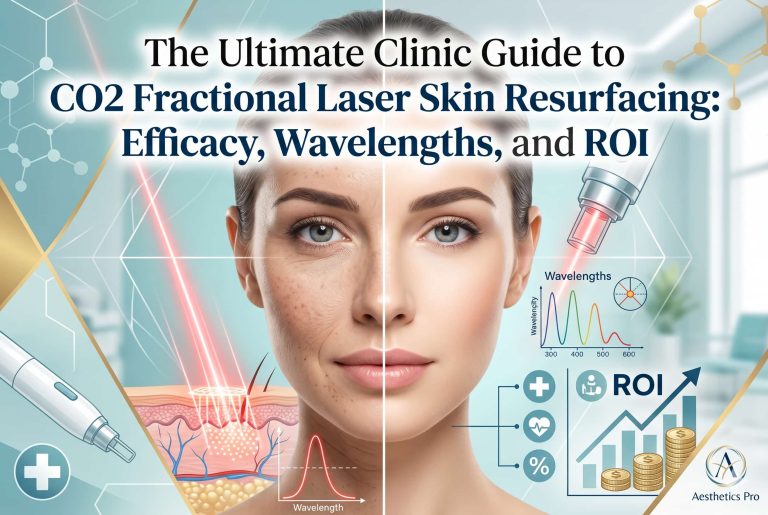
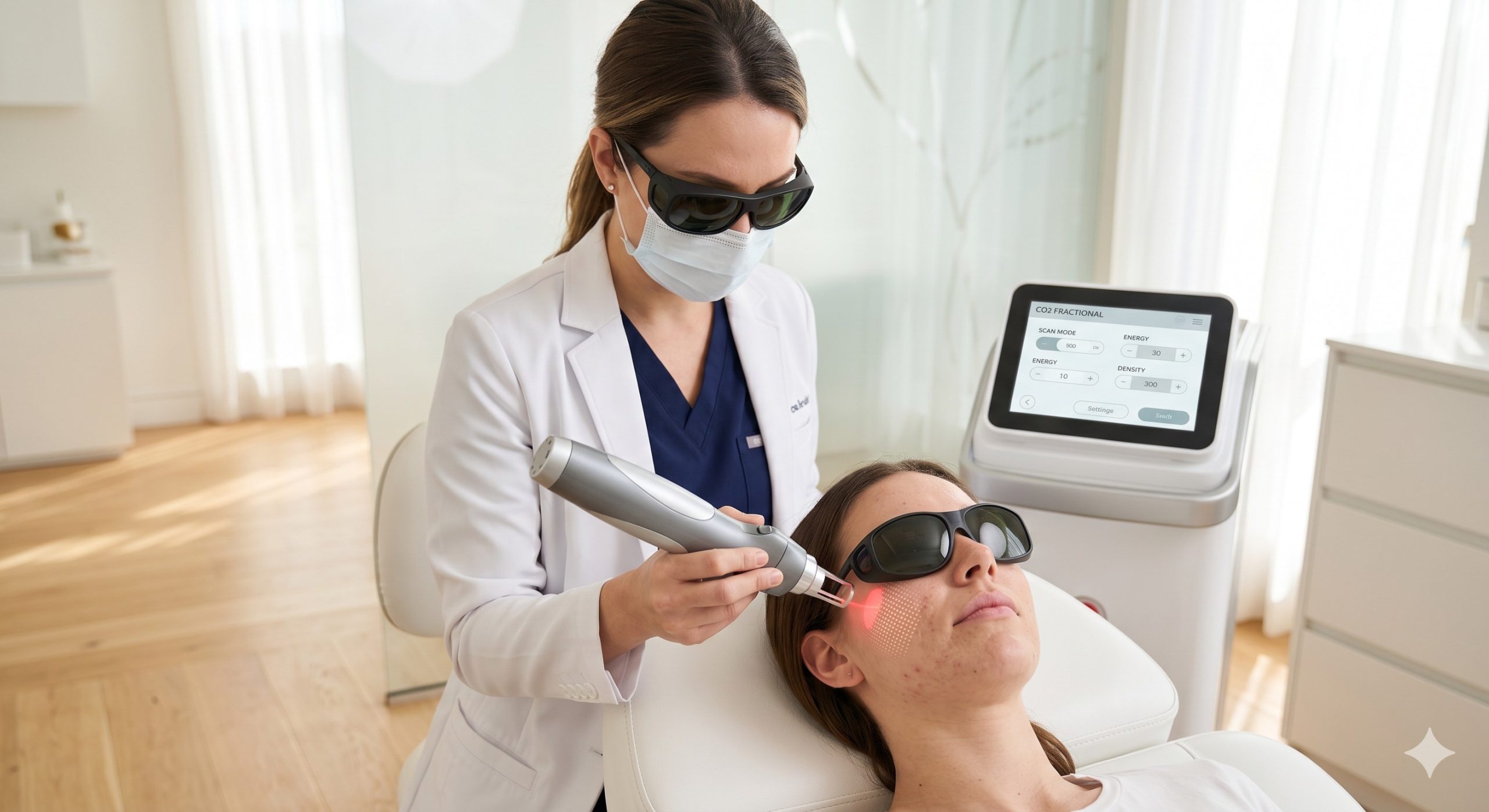
To address stretch marks effectively, a laser must penetrate the epidermis and dermal fibrotic scar tissue. CO2 lasers operate at 10,600nm, which is highly absorbed by water. In fractional ablative mode, the beam is divided into microscopic treatment zones (MTZs) with spot sizes typically ranging from 80 µm to 150 µm. Each MTZ vaporizes a column of water-rich tissue, creating a micro-injury that triggers neocollagenesis and elastin synthesis for up to 6-12 months post-treatment.
Key Clinical Metrics for Stretch Mark Remodeling
The critical parameter for success is achieving a microthermal zone depth of 500-800 µm, penetrating the papillary and reticular dermis where striae reside. Fluence (energy density) of 20-50 mJ per MTZ is standard. Using lower fluence (<20 mJ) fails to remodel deep scar tissue; higher fluence (>60 mJ) on non-facial skin risks prolonged erythema and post-inflammatory hyperpigmentation (PIH), especially on Fitzpatrick Skin Types III-V. Treatment density is inversely related to fluence: use 5-10% density for aggressive remodeling or higher densities (15-20%) for superficial textural improvements. Pulse width is fixed in most modern fractional CO2 systems (0.5-2 ms), reducing thermal diffusion to surrounding healthy tissue.
Technical Specifications & Hardware Requirements for Optimal Results
Not all CO2 lasers are equal. For consistent, safe stretch mark reduction, your device must feature medical-grade components, an ISO 13485-certified manufacturing process, and ideally FDA 510(k) clearance or Medical CE marking. Below are the critical specifications your clinic must verify before investment:
| Key Parameter | Technical Specification for Stretch Marks | |||||||||||||||||||||||||||||||||||||||||||
|---|---|---|---|---|---|---|---|---|---|---|---|---|---|---|---|---|---|---|---|---|---|---|---|---|---|---|---|---|---|---|---|---|---|---|---|---|---|---|---|---|---|---|---|---|
| Wavelength | 10,600 nm (Ablative Fractional CO2) | |||||||||||||||||||||||||||||||||||||||||||
| Fluence (Energy Density) | 20-50 mJ per microthermal zone (MTZ) | |||||||||||||||||||||||||||||||||||||||||||
| Spot Size (MTZ diameter) | 80-150 µm (120 µm optimal for dermal penetration) | |||||||||||||||||||||||||||||||||||||||||||
| Treatment Density | 5-20% (lower density for Fitzpatrick IV-V) | |||||||||||||||||||||||||||||||||||||||||||
| Pulse Width | 0.5-2.0 ms (fixed in most medical systems) | |||||||||||||||||||||||||||||||||||||||||||
| Penetration Depth | 500-800 µm (papillary to mid-reticular dermis) | |||||||||||||||||||||||||||||||||||||||||||
| Cooling System | Sapphire contact cooling (5-10°C) or forced air (Zimmer) | |||||||||||||||||||||||||||||||||||||||||||
| FDA / CE Status | FDA 510(k) cleared, Medical CE Class IIb required | |||||||||||||||||||||||||||||||||||||||||||
| R | e | c | o | m | m | e | n | d | e | d | H | a | n | d | p | i | e | c | e | S | h | o | t | L | i | f | e | s | p | a | n | |||||||||||||
| M | i | n | i | m | u | m | 1 | 0 | m | i | l | l | i | o | n | s | h | o | t | s | ( | i | m | p | o | r | t | e | d | l | a | s | e | r | b | a | r | ) |
Fitzpatrick Skin Type Protocol & Safety Compliance
The number one complication with CO2 laser for stretch marks is PIH or prolonged erythema. As an elite consultant, I mandate the following safety protocols:
- Fitzpatrick I-III: Safe for aggressive parameters (30-50 mJ, 10-15% density, 2 passes). Pre-treat with hydroquinone 4% for 2 weeks if history of PIH.
- Fitzpatrick IV-V: Use conservative settings (20-35 mJ, 5-10% density, 1-2 passes). Mandatory test spot at 20 mJ, 5% density, wait 4-6 weeks. Lower risk using a 1540nm non-ablative fractional laser for these skin types, but results are less dramatic.
- Fitzpatrick VI: Avoid CO2 laser due to high PIH risk. Recommend fractional RF microneedling or 1064nm Nd:YAG in fractional mode as alternative.
All clinics must maintain epidermal cooling—either integrated contact cooling (sapphire window set to 5-10°C) or forced air cooling (Zimmer). This reduces pain and protects basal keratinocytes from thermal damage. Compliance with Medical CE Class IIb or FDA regulations is non-negotiable; always check your device’s certification before patient treatment.
Clinic ROI Analysis: Integrating CO2 Laser for Striae Treatments
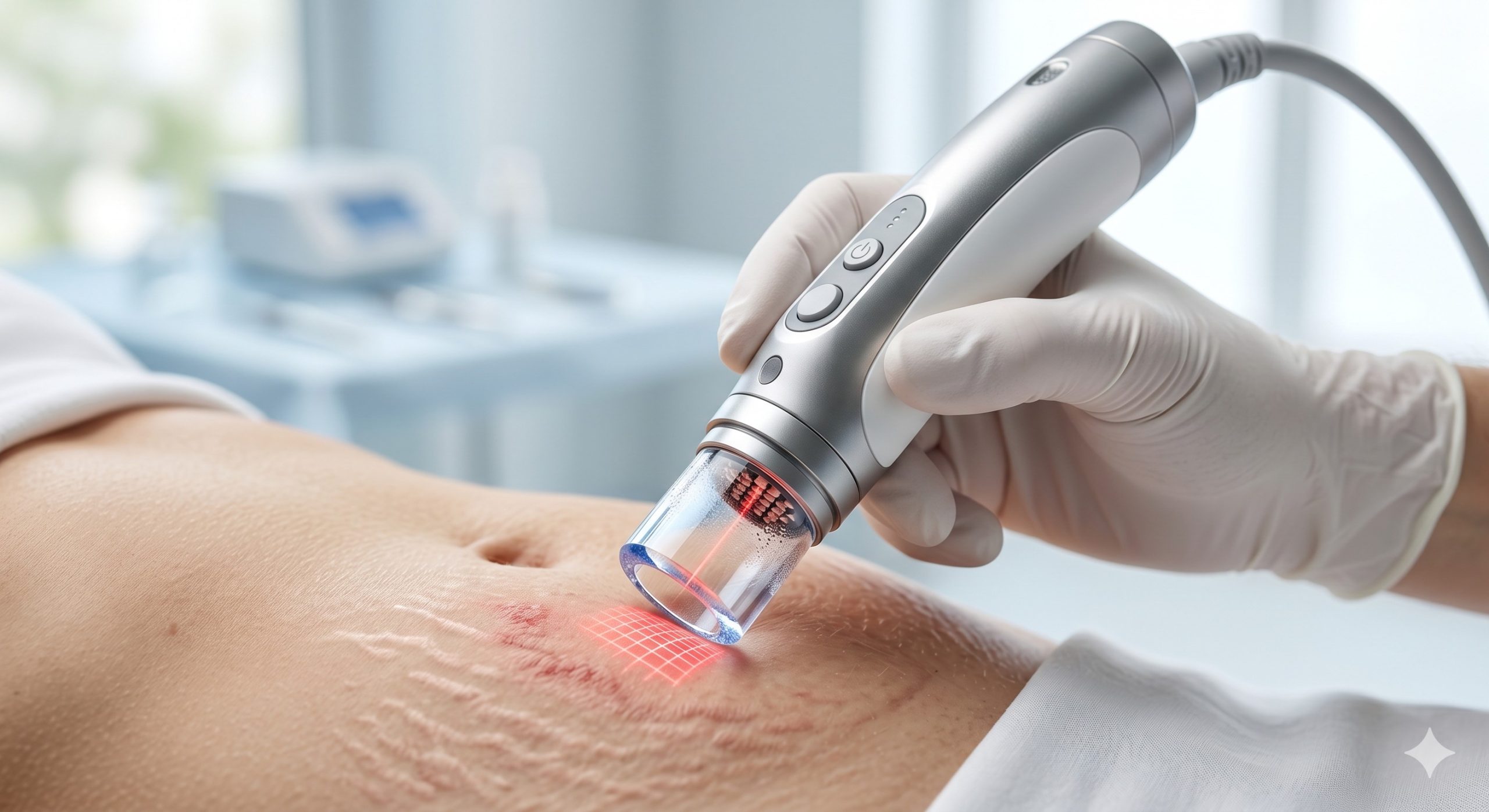
From a business perspective, offering CO2 laser for stretch marks generates significant return on investment (ROI) due to high patient demand and low consumable costs. Typical pricing per session for abdominal or thigh stretch marks ranges from $800 to $1,500. At 3 sessions average (total $2,400-$4,500), with a disposable cost per patient of <$20 (for single-use tips and ultrasound gel), the gross margin exceeds 90% after device break-even. Most fractional CO2 systems cost between $60,000 to $120,000 (new, with warranty). With a conservative schedule of 3 stretch mark patients per week, payback period is 8-12 months. Additionally, the same device treats acne scars, surgical scars, rhytides, and photodamage, increasing utilization rates. When purchasing, demand a handpiece with minimum 10 million shot guarantee for the laser bar (imported from Japan or Germany) to avoid costly consumable replacements within the first 3 years.
Limitations, Alternatives, and Evidence-Based Expectations
It is unethical to claim CO2 laser ‘removes’ stretch marks completely. Realistic expectations are 40-60% improvement in width, depth, and redness (for striae rubrae). Striae albae (white, mature stretch marks) show primarily textural improvement, less pigment correction. Compare to alternatives:
- Fractional Non-Ablative 1540nm Erbium Glass: Lower risk (Fitzpatrick IV-VI), but only 25-40% improvement. Requires 4-6 sessions.
- Fractional RF Microneedling: Best for striae albae and darker skin types (Fitzpatrick IV-VI). 40-60% improvement, fewer PIH risks.
- Topical Therapies (tretinoin, silicone gels): <15% improvement, for very early striae rubrae only.
For maximum efficacy in Fitzpatrick I-III with wide, atrophic striae alba, CO2 laser combined with platelet-rich plasma (PRP) or topical ascorbic acid has shown synergistic results in peer-reviewed studies (level II evidence).
Conclusion: Strategic Verdict for Clinic Owners
CO2 laser is an effective, profitable, and clinically validated technology for stretch mark reduction—but only when parameters are tailored to striae morphology and skin phototype, and when the device meets CE/FDA/ISO 13485 standards. For clinics targeting high-ticket, results-driven patients (Fitzpatrick I-III), a fractional CO2 laser is an essential capital purchase. For diverse patient demographics (Fitzpatrick IV-VI), I recommend a dual-modality approach: fractional CO2 for textural remodeling + 1064nm Nd:YAG for pigment normalization. Always document your protocols, use mandatory test spots, and set realistic expectations to maintain a 5-star reputation and avoid malpractice claims. For further technical audits or device procurement advice, contact our consulting division.