
Picosecond Laser Tattoo Removal: Complete Guide (2026)
Clinical technology, treatment planning, safety, and equipment purchasing considerations.
Published by Cocoon Laser · Updated October 2026
Picosecond laser tattoo removal uses extremely short pulses of light to target tattoo pigment within the skin. It is an important technology for professional tattoo removal clinics, dermatology practices, and aesthetic medical centers, but treatment success depends on much more than pulse duration alone.
Ink color, tattoo depth, wavelength selection, skin type, laser performance, and treatment intervals all influence results. Clinics evaluating a picosecond tattoo removal machine must also consider patient safety, operator training, regulatory requirements, and long-term equipment costs.
Quick Answer: Does Picosecond Laser Tattoo Removal Work?
Picosecond lasers can effectively reduce or remove many tattoos, but complete clearance is not guaranteed.
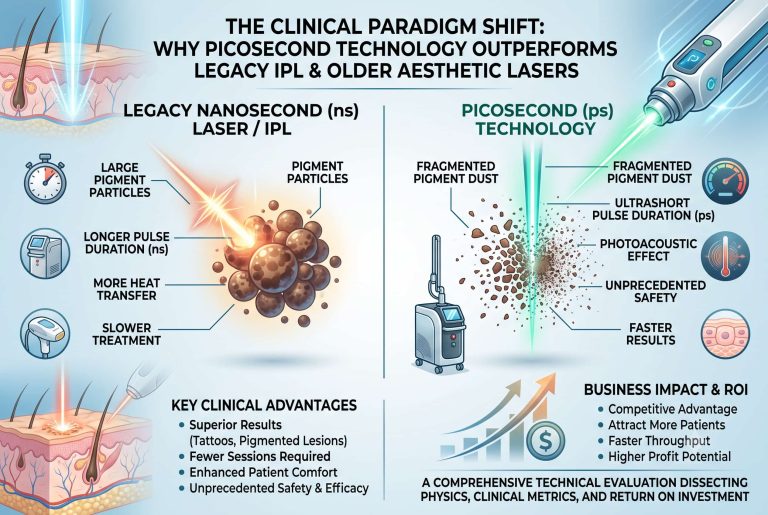
Picosecond laser pulses create rapid energy deposition in tattoo pigment, producing strong photoacoustic effects that can help fragment ink particles. Multiple sessions are usually required. Outcomes depend on ink characteristics, wavelength, skin type, treatment history, and individual healing.
Compared with conventional Q-switched nanosecond lasers, picosecond systems may provide advantages for certain tattoo pigments and clinical situations. However, the evidence does not establish that every picosecond device is superior for every tattoo.
How Does Picosecond Laser Tattoo Removal Work?
A tattoo consists of pigment particles deposited into the dermis. Because many tattoo pigments are too large or persistent to be cleared quickly by normal biological processes, the design remains visible for years.
During laser tattoo removal, selected wavelengths of light are absorbed by ink particles. Rapid energy deposition produces thermal and mechanical effects that can break pigment into smaller fragments. Over time, biological processes may help clear some of these fragments from the treated area.
Picosecond lasers deliver pulses measured in trillionths of a second. Their short pulse duration can produce pronounced photoacoustic interactions with suitable pigment targets.
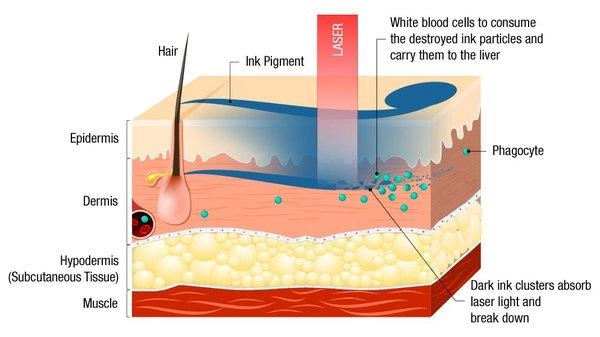
1. Laser Energy Reaches the Tattoo Pigment
The laser emits a selected wavelength through a treatment handpiece. Some light reaches the tattoo pigment, while other energy may be absorbed or scattered by surrounding tissue.
2. Ink Particles Absorb Energy
Pigment absorption varies by ink color and chemical composition. A wavelength that works well for one pigment may be less effective for another.
3. Rapid Energy Deposition Creates Mechanical Stress
Short pulses can generate photoacoustic stress that contributes to pigment fragmentation. The extent of this interaction depends on the pulse parameters and target characteristics.
4. The Skin Gradually Processes Pigment Fragments
Visible fading generally develops over time rather than immediately after a session. Biological clearance, healing, and the remaining pigment burden influence the response.
Picosecond vs. Q-Switched Laser for Tattoo Removal
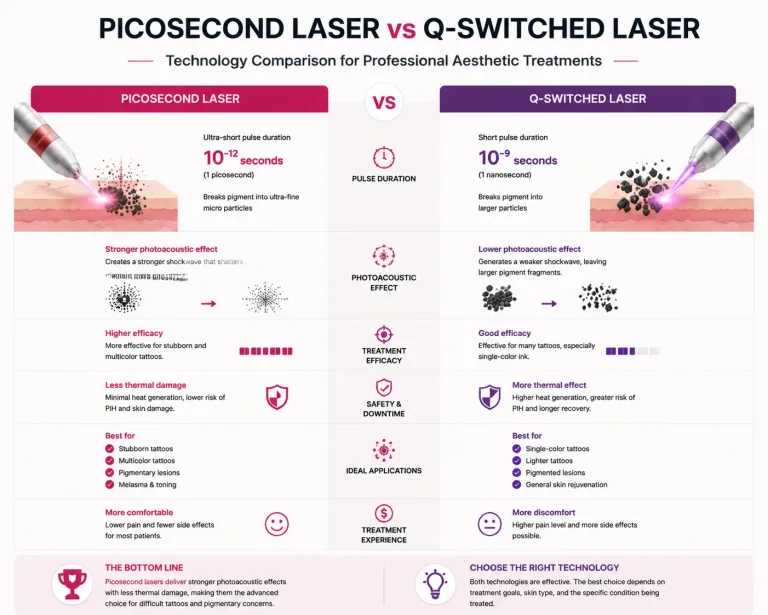
Conventional Q-switched Nd:YAG systems commonly deliver nanosecond pulses, while professional picosecond systems deliver shorter pulses. Both technologies are used for selected tattoo removal applications.
| Factor | Picosecond Laser | Q-Switched Nanosecond Laser |
|---|---|---|
| Pulse duration | Typically hundreds of picoseconds | Typically several nanoseconds or longer |
| Pigment interaction | Strong photoacoustic effects | Photoacoustic and photothermal effects |
| Black tattoo ink | Potentially effective with suitable wavelengths | Established treatment option |
| Colored tattoo ink | Dependent on available wavelengths and pigment | Dependent on available wavelengths and pigment |
| Number of sessions | May be reduced in some situations | Often requires multiple sessions |
| Equipment investment | Can involve higher initial costs | Available across varied purchasing budgets |
| Clinical outcome | Varies by tattoo and treatment protocol | Varies by tattoo and treatment protocol |
Neither technology guarantees complete tattoo removal. For a detailed technical comparison, read our picosecond vs. Q-switched laser guide.
Best Picosecond Laser Wavelengths for Tattoo Removal
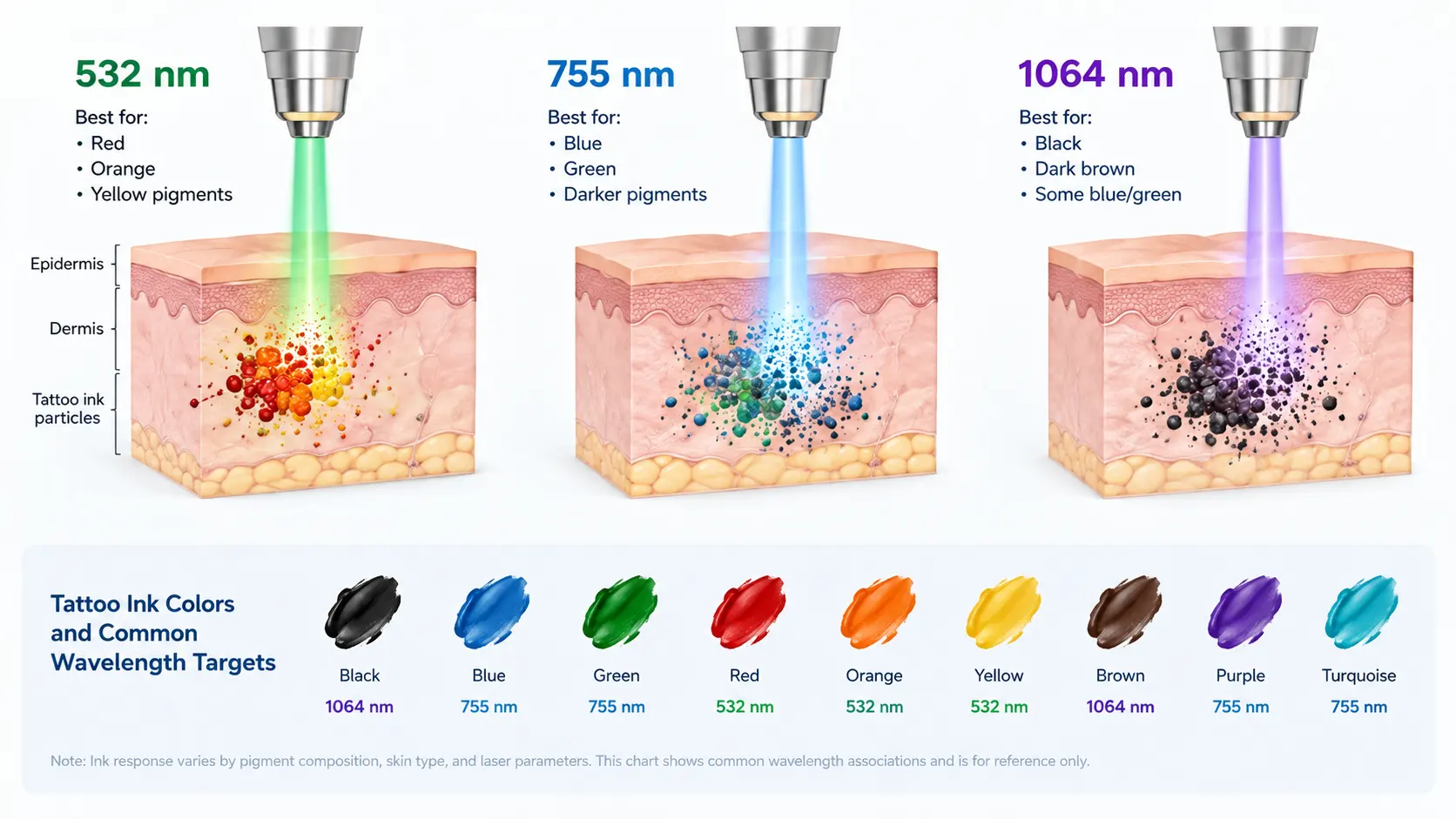
Wavelength selection is one of the most important aspects of laser tattoo removal. Different ink pigments absorb different parts of the light spectrum, and the same tattoo may contain multiple pigments.
The table below describes common wavelength considerations, not universal treatment rules. Actual response depends on pigment formulation, laser parameters, skin type, and the specific device.
| Wavelength | Commonly Considered Targets | Important Considerations |
|---|---|---|
| 1064 nm | Black and other dark tattoo pigments | Often useful for dark ink; skin response and fluence still require careful assessment |
| 755 nm | Selected dark, blue, and green pigments | Response varies by pigment composition and laser platform |
| 532 nm | Selected red, orange, and warm-colored pigments | Greater epidermal melanin interaction may increase pigmentary risk |
| 585 / 650 nm | Selected colored pigments on compatible systems | Confirm how the wavelength is generated, its pulse characteristics, and supporting evidence |
1064 nm for Black and Dark Tattoo Ink
The 1064 nm wavelength is widely used in tattoo removal, particularly for black and other dark pigments. It is often considered for selected applications in darker skin types because epidermal melanin absorbs it less strongly than shorter visible wavelengths.
This does not make 1064 nm risk-free. Excessive energy, poor technique, and unsuitable patient selection can still cause injury or unwanted pigment changes.
755 nm for Selected Blue and Green Pigments
Picosecond alexandrite platforms operating around 755 nm are associated with selected blue and green tattoo applications. Their effectiveness depends on the actual pigment and treatment parameters.
532 nm for Selected Red and Warm-Colored Ink
The 532 nm wavelength can be useful for some red and orange tattoo pigments. However, it is more strongly absorbed by epidermal melanin, making skin type and settings particularly important.
Additional Wavelengths and Specialty Handpieces
Some multi-wavelength systems offer additional options such as 585 or 650 nm. Buyers should verify whether these are produced through optical conversion, which pulse durations are available, and what clinical evidence supports the intended applications.
Which Tattoo Colors Are the Hardest to Remove?
Tattoo color is an important predictor of wavelength selection, but it does not fully predict clearance.
- Black: Often responds to appropriately selected laser treatment, although dense or deep ink can remain challenging.
- Blue and green: May require different wavelengths from those used for black ink.
- Red and orange: May respond to selected visible wavelengths, with additional consideration for epidermal melanin.
- Yellow, white, and some pastel colors: Can be particularly difficult because of absorption characteristics and pigment composition.
- Cosmetic tattoos: Certain pigments may darken after laser exposure and require special assessment.
Modern tattoo inks can contain complex mixtures of pigments. Their composition may not be known even when the visible tattoo color is obvious.
How Many Picosecond Laser Sessions Are Needed?
Most tattoos require multiple treatment sessions. There is no reliable universal number that applies to every patient.
Some small, lightly pigmented tattoos may respond relatively quickly, while dense, professionally applied, multicolored, or previously treated tattoos may require many sessions and may not clear completely.
Color, composition, concentration, and depth affect treatment response.
Age, professional versus amateur application, and prior laser treatments matter.
Skin type, anatomical location, healing response, and medical history influence planning.
Wavelength, fluence, spot size, pulse characteristics, and technique affect outcomes.
Treatment intervals must allow appropriate tissue recovery. Scheduling should follow the clinician’s assessment and the device-specific protocol rather than a fixed marketing promise.
What Results Can Patients Expect?
Successful tattoo removal often produces progressive fading over a series of sessions. Some tattoos become much less visible without disappearing entirely.
Response can be uneven because different pigment colors and depths may react differently. Residual ink, altered skin texture, or pigmentary changes may remain.
Picosecond Laser Tattoo Removal Before and After
Before-and-after photographs can help document treatment response, but they should be interpreted carefully.
Consistent lighting, camera angle, skin positioning, image timing, and disclosure of the number of sessions are essential for meaningful comparison.
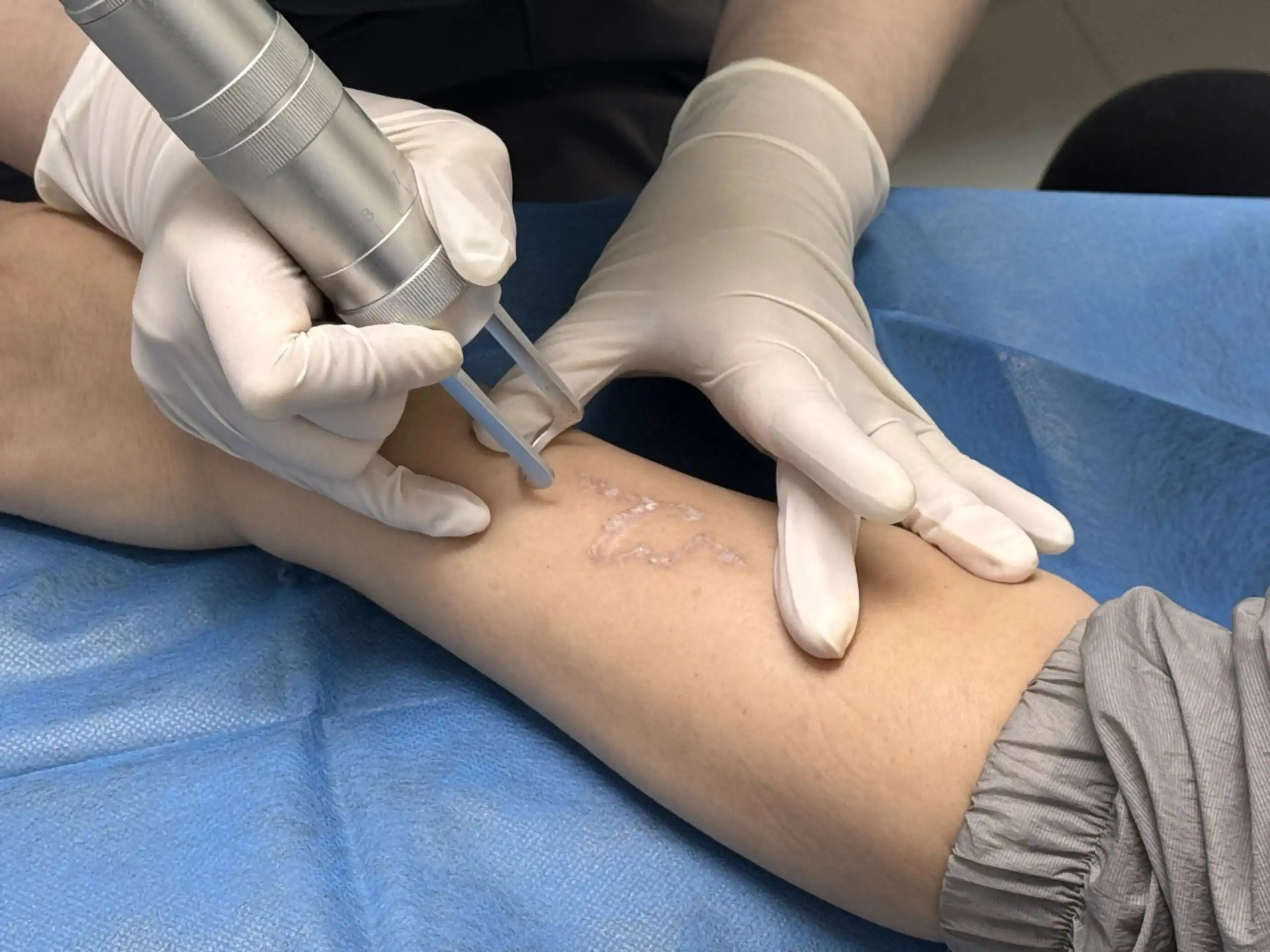
Do not use digitally erased tattoos or AI-generated clearance results as clinical evidence. Real patient photographs should be used only with appropriate permission and accurate treatment context.
Does Picosecond Laser Tattoo Removal Hurt?
Laser tattoo removal can be uncomfortable. Patients may describe a snapping or stinging sensation during treatment.
Discomfort depends on the anatomical area, tattoo size, treatment settings, individual sensitivity, and pain-management approach.
Cooling and other comfort measures may be used where appropriate, but they do not eliminate treatment risks. Local anesthesia or other pain-management measures should be considered according to clinical practice and applicable regulations.
Picosecond Laser Tattoo Removal Side Effects and Risks
Common short-term reactions may include redness, swelling, temporary whitening or frosting, tenderness, and crusting or blistering in some cases.
More significant complications can include infection, prolonged inflammation, post-inflammatory hyperpigmentation, hypopigmentation, scarring, and unwanted changes in skin texture.
Certain cosmetic tattoo pigments can undergo paradoxical darkening. Tattoo ink reactions and other complications may also require specialist evaluation.
Safety Considerations for Darker Skin Types
Darker skin types may have an increased risk of unwanted pigment changes with some laser wavelengths and treatment approaches. Careful wavelength selection, conservative settings, and appropriate operator expertise are important.
Laser Eye Safety
High-energy tattoo removal lasers can cause serious eye injury. Treatment rooms require appropriate controls, and everyone exposed to the laser hazard must use wavelength-specific protective eyewear.
Laser Plume and Treatment-Room Controls
Tattoo removal can generate airborne material during treatment. Appropriate local exhaust or plume-management measures should be considered according to the procedure, risk assessment, and applicable safety guidance.
Patient Assessment
Before treatment, qualified professionals should review relevant medical history, tattoo characteristics, skin condition, previous treatments, and factors that could affect healing or complication risk.
This article is not a treatment protocol. Device-specific instructions, professional training, clinical judgment, and local legal requirements take precedence.
Picosecond Laser Tattoo Removal Aftercare
Appropriate aftercare supports skin recovery and helps identify complications early.
Patients should follow the treating clinician’s instructions regarding cleansing, wound care, dressings, sun protection, activity restrictions, and when to seek medical review.
Blisters or crusts should not be deliberately picked or removed. Increasing pain, spreading redness, discharge, fever, or other concerning symptoms require prompt professional assessment.
Treatment aftercare may differ depending on the reaction produced, the patient’s skin, and the clinician’s protocol.
What Should Clinics Look for in a Picosecond Tattoo Removal Machine?
Professional equipment selection should begin with the clinic’s intended treatment services and the device’s legally authorized indications.
Verified Picosecond Pulse Performance
Request measured pulse duration and clarify the operating wavelength, pulse energy, and conditions under which the specification was obtained.
Suitable Wavelength Options
Evaluate which wavelengths are available for the intended tattoo colors. Additional wavelengths may provide flexibility, but every option should be supported by appropriate technical documentation.
Spot Size and Energy Delivery
Ask about spot-size options, fluence, beam uniformity, and output stability. A large list of headline specifications does not replace performance verification.
Handpieces and Accessories
Confirm which treatment handpieces are included, which are optional, and what their replacement or maintenance requirements are.
Regulatory Status
Verify device authorization, registration, labeling, and intended indications in the destination market. Certificates must correspond to the exact model.
Training and Technical Support
Assess operator training, warranty conditions, service response times, spare parts, installation, and the supplier’s ability to provide technical assistance.
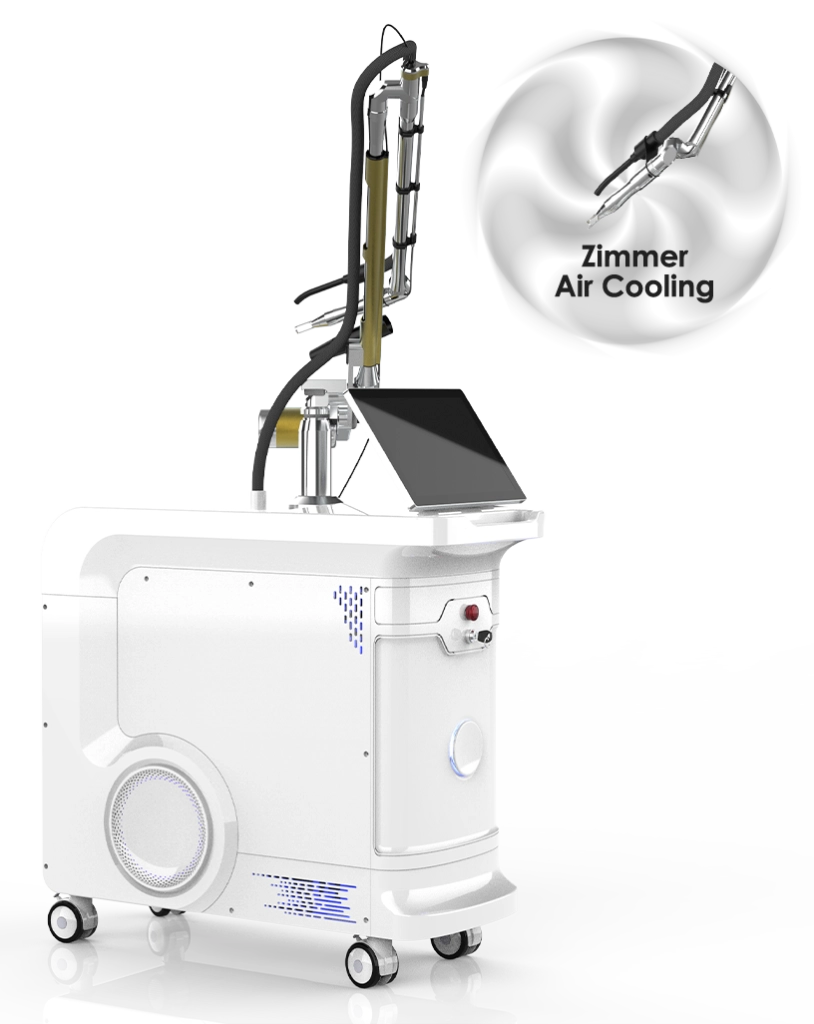
Ultra PicoMax for Professional Tattoo Removal Equipment Buyers
Ultra PicoMax
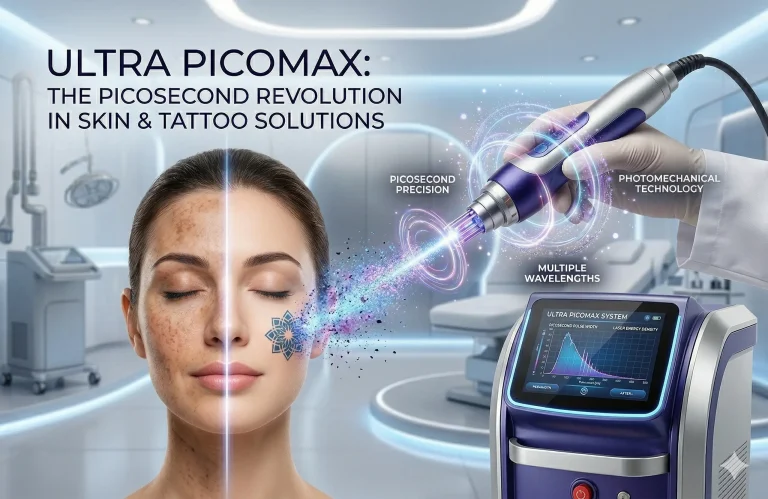
Ultra PicoMax is a professional multi-wavelength picosecond laser system intended for B2B equipment buyers, dermatology clinics, and aesthetic medical practices.
Cocoon Laser’s product documentation describes a 350 ps pulse specification and wavelength options including 1064, 755, 650, 585, and 532 nm. It also describes multiple operating modes and a Honeycomb HP fractional option.
For tattoo removal purchasing decisions, buyers should verify which wavelengths operate in picosecond mode, the output characteristics of each handpiece, available clinical documentation, and the exact configuration included in the quotation.
- Equipment type: Multi-wavelength picosecond laser system
- Listed pulse specification: 350 ps
- Wavelength options: 1064 / 755 / 650 / 585 / 532 nm
- Buyer focus: Professional clinics, distributors, OEM/ODM inquiries
Listed specifications are supplier-provided and do not establish that all modes have the same pulse duration or that every application is authorized in every market. Obtain the official technical sheet and supporting documents before purchase.
Picosecond Tattoo Removal Machine Price and Ownership Costs
The purchase price of a professional picosecond tattoo removal machine depends on the laser platform, included wavelengths, accessories, manufacturer, distribution arrangement, and after-sales service.
Clinics should evaluate total ownership cost rather than the initial quotation alone.
Equipment Budget Considerations
- Base laser equipment and included handpieces
- Optional wavelength or fractional accessories
- Shipping, customs, and applicable taxes
- Installation and operator training
- Warranty coverage and service contracts
- Replacement parts and maintenance
- Equipment downtime and repair logistics
- Financing costs, where applicable
For detailed budgeting examples, read our picosecond laser machine price guide .
How to Evaluate a Picosecond Laser Supplier
Whether buying an established branded platform or sourcing directly from a B2B equipment supplier, request a complete technical and commercial quotation.
Professional Purchasing Checklist
- Legal manufacturer and exact device model
- Verified picosecond pulse duration
- Wavelengths and operating modes
- Energy, fluence, spot size, and beam information
- Included handpieces and optional accessories
- Model-specific regulatory documentation
- Operator training and laser safety information
- Warranty, spare parts, and service support
- Quotation currency and payment terms
- Shipping, lead time, and destination-market requirements
- OEM/ODM options, if applicable
Our picosecond laser manufacturers and suppliers guide explains how to compare different professional equipment purchasing channels.
Common Mistakes in Picosecond Tattoo Removal
Assuming Every Tattoo Can Be Completely Removed
Some tattoos retain residual pigment despite multiple sessions. Treatment expectations should reflect ink characteristics and individual response.
Using the Same Wavelength for Every Color
Different pigments absorb different wavelengths. Multicolored tattoos may require different treatment approaches.
Assuming Shorter Pulses Eliminate Side Effects
Picosecond treatment can still cause burns, pigmentary changes, blistering, and scarring. Safety depends on more than pulse duration.
Choosing Equipment Based Only on Marketing Specifications
Advertised pulse width, peak power, and wavelength count must be supported by model-specific technical documentation.
Overlooking Training and Service
Even a technically capable device can be a poor purchasing choice if operators are inadequately trained or maintenance support is unavailable.
Frequently Asked Questions
Is picosecond laser tattoo removal effective?
It can be effective for many tattoos, but results vary by ink color, depth, wavelength, skin type, and treatment protocol. Complete clearance is not guaranteed.
How many sessions does picosecond tattoo removal take?
Most tattoos require multiple sessions. The number cannot be predicted accurately from laser technology alone.
Can picosecond lasers remove colored tattoos?
Some colored inks respond to suitable wavelengths, while others are difficult to treat. Pigment composition and wavelength availability are important.
Is picosecond laser better than Q-switched tattoo removal?
Picosecond technology may offer advantages for selected tattoos, but neither technology is universally superior for every pigment or patient.
Can a picosecond laser remove a tattoo in one session?
Complete clearance after one session should not be expected or promised. Most tattoos require a series of treatments.
Does picosecond tattoo removal cause scarring?
Scarring is a possible complication, although it is not inevitable. Risk depends on treatment parameters, skin characteristics, healing, and other factors.
Is picosecond tattoo removal safe for dark skin?
Treatment may be possible with appropriate equipment, wavelengths, and professional assessment. Pigmentary complications remain a concern, and no wavelength is completely risk-free.
What is the best picosecond laser machine for tattoo removal?
The best choice depends on treatment needs, wavelength options, clinical evidence, local regulatory requirements, budget, and service support. See our professional picosecond laser machine comparison .
Final Verdict: Is Picosecond Laser Worth Considering for Tattoo Removal?
Picosecond laser technology is an important option for professional tattoo removal. Its short pulses can generate strong photoacoustic interactions with selected pigments, and suitable systems may offer benefits for certain tattoo colors and treatment situations.
However, successful treatment depends on appropriate diagnosis, wavelength selection, realistic expectations, qualified operators, and patient safety. The term “picosecond” alone does not establish superior performance.
For equipment buyers, prioritize verified specifications, intended indications, clinical evidence, training, service, and total ownership costs. A well-supported platform that matches the clinic’s actual needs is more valuable than a machine selected solely for its headline specifications.
Looking for a Professional Picosecond Tattoo Removal Machine?
Contact Cocoon Laser to discuss Ultra PicoMax specifications, available wavelengths, handpieces, OEM/ODM options, regulatory documentation, and international purchasing requirements.
Request Equipment Information →