The Biophysics and Commercial Architecture of Fractional CO2 Laser Resurfacing: A Comprehensive B2B Clinical Blueprint
Executive Summary
In the highly competitive landscape of medical aesthetics, the pursuit of dramatic, surgical-grade skin rejuvenation without the prohibitive downtime of traditional excisional surgery remains the ultimate objective. For decades, fully ablative Carbon Dioxide (CO2) lasers stood as the undisputed gold standard for rhytid reduction and severe scar revision. However, the extreme thermal damage profile and prolonged recovery periods associated with continuous-wave ablation severely limited its commercial scalability and patient acceptance.
The advent of fractional photothermolysis revolutionized this paradigm. By splitting the optical energy into microscopic columns, modern fractional CO2 platforms deliver the profound structural remodeling of an ablative wavelength while preserving the rapid re-epithelialization characteristics of non-ablative therapies. For medical directors, clinic owners, and aesthetic procurement officers, understanding the underlying biophysics, histological impact, and commercial dynamics of this technology is absolutely critical.
This authoritative whitepaper, engineered by Cocoon Laser, deconstructs the precise mechanisms of action driving the fractional CO2 laser. Furthermore, it serves as a definitive B2B roadmap for integrating this essential professional medical laser technology into your clinical portfolio, ensuring unparalleled patient outcomes and maximizing your aesthetic clinic ROI.
Part I: The Biophysics of the 10,600nm Wavelength
To fully grasp the clinical power of the fractional CO2 laser, practitioners must first examine the fundamental physics of light-tissue interaction, specifically the principles of selective photothermolysis and optical absorption.
Water as the Primary Chromophore The CO2 laser operates within the far-infrared spectrum, emitting a continuous or pulsed beam of light at a wavelength of exactly 10,600 nanometers (nm). In aesthetic laser physics, every wavelength has a specific target chromophore. For the 10,600nm wavelength, the primary chromophore is intracellular and extracellular water.
Because human dermal and epidermal tissues are composed of approximately 70% to 80% water, the CO2 laser boasts an exceptionally high absorption coefficient within the skin. Unlike shorter wavelengths (such as the 755nm Alexandrite or 1064nm Nd:YAG) which scatter deeply to target melanin or hemoglobin, the 10,600nm energy is immediately and violently absorbed by the tissue water upon contact.
The Thermodynamics of Tissue Ablation When the laser photons are absorbed by the tissue water, the optical energy is instantaneously converted into thermal energy. This rapid transfer of heat causes the targeted intracellular water to rapidly exceed its boiling point (100°C). The sudden phase change from liquid to gas results in a micro-explosive vaporization of the cell structure—a process clinically defined as tissue ablation.
The precision of this ablation is dictated by the pulse duration. Advanced aesthetic laser equipment manufactured by Cocoon Laser utilizes ultra-short pulse durations that are faster than the Thermal Relaxation Time (TRT) of the target tissue. This ensures that the tissue is vaporized cleanly before the extreme heat has the opportunity to conduct laterally into adjacent, non-targeted structures, thereby preventing indiscriminate thermal necrosis.
Part II: The Architecture of Fractional Photothermolysis
The revolutionary leap from traditional CO2 resurfacing to modern fractional resurfacing lies entirely in the spatial delivery of the optical energy.
Microscopic Treatment Zones (MTZs) Rather than firing a solid, continuous beam that obliterates the entire stratum corneum and epidermis, a fractional CO2 laser utilizes a highly sophisticated, computerized scanning mechanism. This scanner divides the singular laser beam into hundreds or thousands of microscopic columns of thermal energy, collectively referred to as Microscopic Treatment Zones (MTZs).
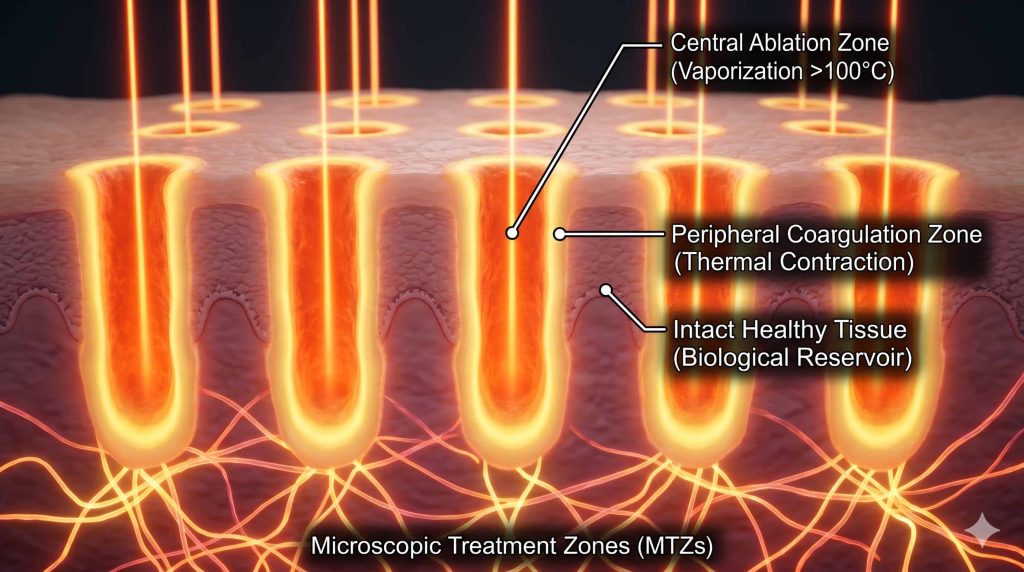
Each MTZ is essentially a microscopic well drilled into the skin, typically measuring between 100 to 300 microns in diameter, depending on the operator’s settings. These columns can penetrate through the epidermis and deep into the reticular dermis, reaching depths of up to 2.5 millimeters.
The Biological Reservoir Principle The genius of fractional technology lies in what is not treated. Surrounding every single MTZ is a perimeter of entirely intact, healthy, undamaged tissue. This untreated tissue acts as a robust biological reservoir of viable keratinocytes, fibroblasts, and stem cells.
Following the creation of the MTZs, these healthy cells immediately migrate into the ablated columns, initiating a hyper-accelerated wound-healing cascade. Because the stratum corneum remains largely intact across the bridging areas, the skin’s barrier function is minimally compromised. This allows for rapid re-epithelialization—often within 48 to 72 hours—drastically reducing the risk of bacterial infection and cutting the patient’s social downtime from weeks to mere days.
Ablation vs. Coagulation: The Dual-Action Matrix Within each individual MTZ, the fractional CO2 laser produces two distinct histological zones of tissue interaction:
- The Central Ablation Zone: The absolute core of the MTZ, where temperatures exceed 100°C, resulting in the complete vaporization of tissue. This physically removes severely damaged skin, pigmented lesions, and atrophic scar tissue.
- The Peripheral Coagulation Zone: Immediately surrounding the vaporized core is a narrow margin of tissue that absorbs sublethal thermal energy (typically between 60°C and 70°C). This heat is insufficient to vaporize the cells but is perfectly calibrated to instantly denature the triple-helix structure of existing collagen fibers, causing them to immediately contract and thicken. This zone of thermal coagulation is responsible for the instant tissue tightening observed immediately post-procedure.
Part III: The Histological Healing Cascade and Tissue Remodeling
The true anti-aging power of the fractional CO2 laser does not conclude when the patient leaves the treatment room; rather, the procedure acts as a biological catalyst, initiating a prolonged, highly structured cellular remodeling process.
Phase 1: Hemostasis and Acute Inflammation (0 to 72 Hours) Immediately following the procedure, the body recognizes the MTZs as acute micro-injuries. The localized release of chemical mediators (cytokines, chemokines, and growth factors) triggers an intense inflammatory response. Patients will exhibit clinical erythema (redness) and edema (swelling). Simultaneously, the necrotic tissue and coagulated cellular debris within the MTZs are rapidly pushed upward toward the skin’s surface by the newly forming epidermal cells. This debris forms microscopic, dark crusts known as Microscopic Epidermal Necrotic Debris (MENDs), which naturally slough off the stratum corneum within three to seven days, revealing fresh, luminous skin beneath.
Phase 2: Fibroblast Proliferation and Granulation (Day 3 to Day 30) As the acute inflammation subsides, the proliferative phase dominates. The heat shock proteins generated in the peripheral coagulation zone aggressively stimulate the proliferation of dermal fibroblasts. These fibroblasts migrate to the treatment areas and begin synthesizing massive quantities of new ground substance and Type III collagen. This newly formed collagen matrix acts as a provisional scaffolding, replacing the elastotic, photo-damaged tissue that was vaporized.
Phase 3: Deep Dermal Remodeling (1 to 6 Months) The ultimate architectural transformation occurs over the ensuing months. The initial, somewhat disorganized Type III collagen is gradually broken down by matrix metalloproteinases (MMPs) and replaced by stronger, highly organized, and durable Type I collagen. Concurrently, new elastin fibers are synthesized (elastogenesis), restoring the skin’s mechanical recoil and bounce. Because this remodeling phase is continuous, patients will observe a progressive softening of deep rhytids, a sustained elevation of atrophic acne scars, and a profound tightening of the facial fascia for up to six months post-treatment.
Part IV: Algorithmic Customization and Demographic Versatility
The commercial viability of capital medical equipment is directly proportional to its clinical versatility. A premium fractional CO2 laser is not a static tool; it is a highly customizable workstation capable of addressing an exceptionally broad spectrum of dermatological indications across diverse patient profiles.
Mastering the Optical Parameters Advanced platforms developed by Cocoon Laser provide the operator with granular control over the precise geometry and intensity of the fractional grid. Success depends on manipulating three primary variables:
- Fluence (Energy per MTZ): Measured in millijoules (mJ), the energy determines the depth of the ablation. High energy is utilized to penetrate the deep reticular dermis for the revision of severe ice-pick acne scars or deep perioral rhytids. Low energy provides a superficial epidermal polish for mild dyschromia or pre-event “glow” treatments.
- Fractional Density: This refers to the percentage of the skin surface that is ablated. High-density settings (e.g., covering 30% to 40% of the skin) provide dramatic textural improvements but require longer recovery times. Low-density settings (e.g., 5% to 10%) are ideal for maintenance treatments and delicate areas like the neck and décolletage.
- Pulse Duration and Shape: Sophisticated software allows practitioners to alter the shape of the laser pulse. A “stacked” pulse delivers maximum heat for deep tissue coagulation, while a “super-pulsed” or “ultra-pulsed” delivery vaporizes tissue so rapidly that peripheral thermal damage is minimized, ensuring a safer profile for sensitive skin types.
Navigating the Fitzpatrick Scale Historically, fully ablative CO2 resurfacing was strictly contraindicated for melanin-rich skin (Fitzpatrick Types IV-VI) due to an unacceptably high risk of Post-Inflammatory Hyperpigmentation (PIH). Fractional technology drastically mitigates this risk by preserving massive amounts of healthy tissue to aid in rapid healing, which shortens the inflammatory window that triggers melanogenesis. By utilizing lower fractional densities, shorter pulse durations, and aggressive pre- and post-operative tyrosinase inhibitors, skilled practitioners can safely extend the profound benefits of CO2 resurfacing to a much wider, globally diverse demographic.
Part V: Clinical Indications and Efficacy
When deployed strategically, a high-tier fractional CO2 platform serves as the definitive clinical solution for the most challenging aesthetic pathologies.
- Severe Atrophic Scarring: Fractional CO2 is the undisputed gold standard for acne scar revision. By vaporizing the rigid fibrotic septae that tether scars downward and stimulating massive neocollagenesis, the laser structurally elevates depressed boxcar and rolling scars, normalizing the skin’s topography.
- Advanced Photoaging and Rhytids: For patients exhibiting severe solar elastosis, deep static wrinkles, and profound textural degradation, fractional CO2 delivers surgical-grade tightening. It is particularly effective for notoriously difficult areas, such as upper eyelid laxity (non-surgical blepharoplasty) and perioral “smoker’s lines.”
- Dyschromia and Actinic Keratoses: The ablative action physically removes the epidermal layers harboring stubborn, concentrated melanin (such as solar lentigines). Furthermore, by destroying precancerous actinic keratoses, the treatment provides critical dermatological prophylaxis alongside aesthetic enhancement.
- Striae Distensae (Stretch Marks): By driving deep thermal coagulation into the dermal tears that characterize stretch marks, the laser stimulates the fibroblasts to reconstruct the broken collagen matrix, narrowing the striae and blending their color with the surrounding healthy tissue.
Part VI: Strategic B2B Procurement and Maximizing Clinic ROI
For clinic owners and medical directors, capital equipment procurement must be evaluated through a rigorous commercial and operational lens. Incorporating a state-of-the-art fractional CO2 system from Cocoon Laser is a strategic maneuver designed to accelerate enterprise growth and dominate the local aesthetic market.
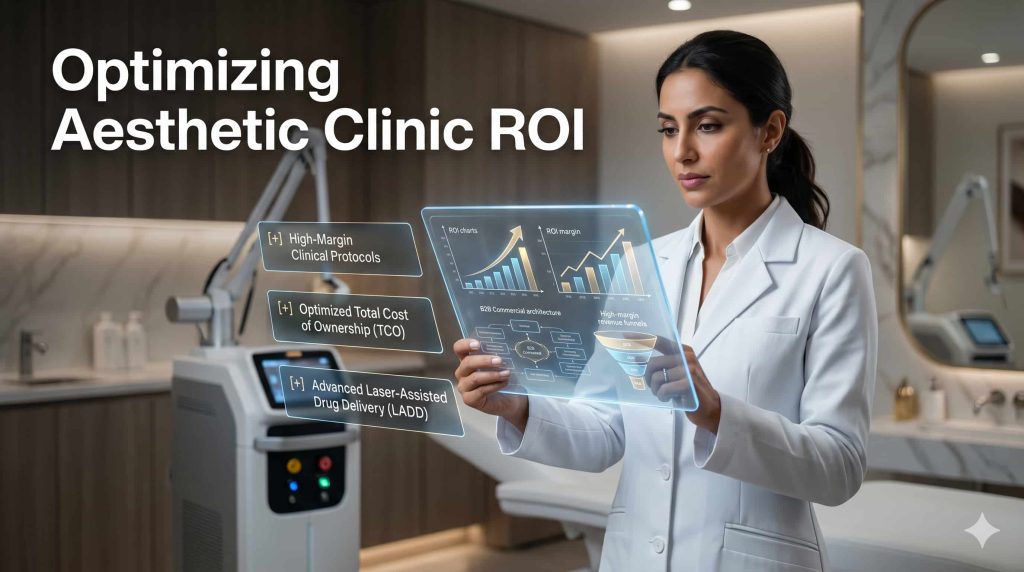
1. Dominating High-Margin Clinical Protocols Fractional CO2 resurfacing commands one of the highest average ticket prices in the non-surgical aesthetic sector. Because the clinical transformations are profound and highly visible, patients are willing to pay a premium. Furthermore, the results are permanent (subject to natural ongoing aging), leading to exceptionally high patient satisfaction rates. Satisfied patients become powerful organic brand ambassadors, driving highly qualified referral traffic to your practice and lowering your overall Patient Acquisition Cost (PAC).
2. Optimizing Total Cost of Ownership (TCO) When evaluating aesthetic laser equipment, the consumable model dictates the speed of capital amortization. Premium Cocoon Laser platforms are engineered with robust, solid-state RF-excited laser tubes that boast an extraordinarily long operational lifespan. Combined with a lack of expensive, proprietary per-treatment consumables (unlike many micro-needling RF or hydradermabrasion devices), the gross profit margin on every single CO2 procedure remains close to 100% of the treatment fee. This low TCO guarantees an accelerated timeline to profitability, optimizing your overall aesthetic clinic ROI.
3. Expanding Synergistic Revenue Streams A top-tier fractional CO2 laser acts as the anchor for highly profitable combination therapies. In the modern 2026 aesthetic landscape, the concept of Laser-Assisted Drug Delivery (LADD) is paramount. By utilizing the CO2 laser to create microscopic channels into the dermis, practitioners can immediately apply high-margin topical biologics—such as Exosomes, Polynucleotides, or Platelet-Rich Plasma (PRP). The micro-channels allow these regenerative compounds to bypass the stratum corneum entirely, plunging directly into the dermis. This synergistic protocol not only cuts patient healing time in half but allows the clinic to package and sell “Regenerative Resurfacing Protocols” at a significant premium, drastically increasing the revenue generated per hour of clinical chair time.
4. Ensuring Clinical Governance and Reliability A capital device is only as profitable as its uptime. Frequent machine breakdowns or inconsistent power output paralyze clinic schedules and damage patient trust. Cocoon Laser prioritizes rugged, aerospace-grade engineering and meticulous beam quality. Our articulated delivery arms ensure a perfectly uniform “flat-top” beam profile, preventing unpredictable “hot spots” and minimizing malpractice liability. Furthermore, our comprehensive B2B partnership model ensures your clinical staff receives rigorous, ongoing education in laser physics and complication management.
Conclusion: Engineering the Future of Dermal Resurfacing
The implementation of fractional CO2 technology represents a critical inflection point for any serious medical aesthetic enterprise. It is the definitive bridge between the superficial results of low-energy devices and the severe trauma of invasive surgery. By harnessing the precise biophysics of the 10,600nm wavelength to drive controlled focal photothermolysis, practitioners can fundamentally alter the architectural integrity of the skin, reversing decades of chronological and environmental degradation.
However, capturing this clinical and commercial potential requires alignment with uncompromised technological infrastructure. As a medical director or aesthetic entrepreneur, you must equip your practice with platforms that deliver reproducible, peer-reviewed outcomes while maintaining strict economic viability.
By integrating the advanced professional medical laser systems developed by Cocoon Laser, you are securing a strategic partnership dedicated to clinical supremacy. Empower your medical team to treat the most complex dermal indications, establish your clinic as the absolute authority in structural skin rejuvenation, and drive unprecedented commercial growth.
Elevate your clinical armamentarium today. Visit Cocoon Laser to schedule an executive consultation, explore the technical specifications of our industry-leading fractional CO2 platforms, and construct the definitive B2B blueprint for your aesthetic practice’s continued success.
If you need more information, please click “Contact Us”.
If you want to obtain more information, please follow our official website and Facebook.