CO2 Laser vs Erbium Laser: Which Skin Resurfacing Technology Is Better?
Quick Answer
CO2 laser and Erbium laser are both ablative skin resurfacing technologies used for improving wrinkles, scars and skin texture. CO2 laser provides stronger thermal effects and deeper collagen remodeling, while Erbium laser offers more superficial resurfacing with generally shorter recovery. The better choice depends on treatment goals, patient needs and clinical applications.
Understanding Ablative Laser Skin Resurfacing
Ablative laser skin resurfacing uses controlled laser energy to remove damaged skin layers and stimulate natural regeneration. By creating a controlled healing response, ablative lasers encourage collagen remodeling and improve overall skin quality.
Two of the most established ablative technologies used in aesthetic medicine are CO2 laser and Erbium laser. Although both technologies are designed for skin rejuvenation, they differ significantly in wavelength, tissue interaction and treatment characteristics.

What Is CO2 Laser Technology?
CO2 laser technology uses a carbon dioxide laser wavelength of approximately 10,600nm. This wavelength is strongly absorbed by water molecules in skin tissue, allowing precise removal of damaged layers through controlled thermal energy.
Because CO2 laser creates significant thermal stimulation, it can produce strong collagen remodeling effects. Professional CO2 laser systems are widely used for:
- Wrinkle reduction
- Acne scar treatment
- Skin resurfacing
- Texture improvement
- Advanced facial rejuvenation
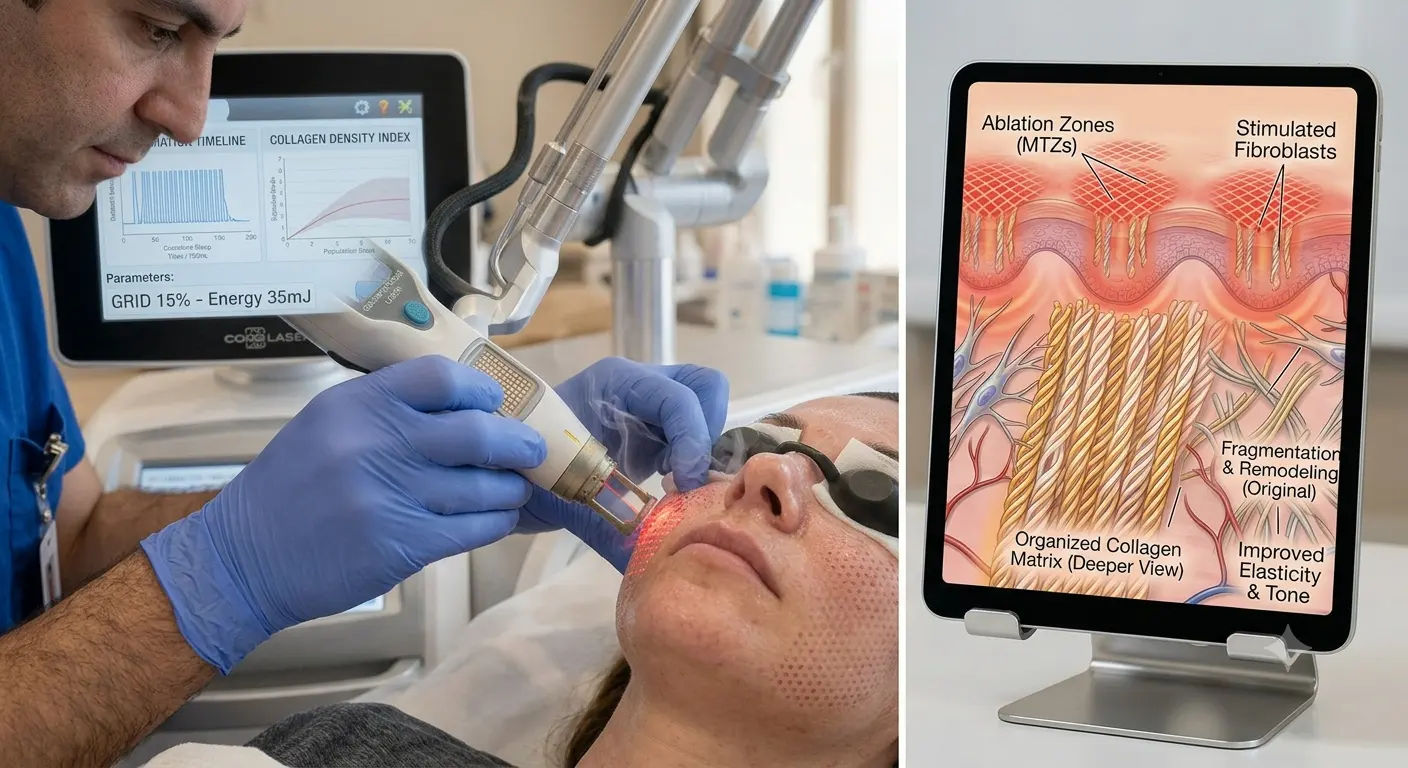
Modern fractional CO2 laser systems further improve treatment flexibility by delivering energy through microscopic treatment zones instead of treating the entire surface continuously.
Learn more: CO2 Laser Skin Resurfacing Complete Guide
What Is Erbium Laser Technology?
Erbium laser technology commonly uses a wavelength of approximately 2,940nm. Similar to CO2 laser, it targets water molecules within skin tissue, but its interaction characteristics create different treatment effects.
Because Erbium laser produces less thermal diffusion compared with CO2 laser, it is often associated with more superficial resurfacing and reduced heat impact on surrounding tissue.
Common Erbium laser applications include:
- Fine wrinkle improvement
- Surface texture refinement
- Mild to moderate skin rejuvenation
- Superficial resurfacing procedures
CO2 Laser vs Erbium Laser: Key Differences
| Feature | CO2 Laser | Erbium Laser |
|---|---|---|
| Wavelength | 10,600nm | 2,940nm |
| Water Absorption | High absorption | Very high absorption |
| Thermal Effect | Higher thermal stimulation | Lower thermal diffusion |
| Treatment Depth | Generally deeper resurfacing | More superficial resurfacing |
| Collagen Remodeling | Strong stimulation | Controlled stimulation |
| Recovery | Usually longer | Usually shorter |
CO2 Laser vs Erbium Laser for Wrinkles and Skin Aging
Both CO2 laser and Erbium laser treatments can improve wrinkles and signs of skin aging by stimulating skin renewal and collagen production. However, their different thermal characteristics create different treatment experiences.
CO2 Laser for Wrinkle Reduction
CO2 laser is widely recognized for its strong collagen remodeling capability. The thermal effect created by the 10,600nm wavelength stimulates deeper tissue responses, making it suitable for patients requiring more intensive skin rejuvenation.
Professional CO2 laser resurfacing is commonly used for:
- Moderate to deep wrinkles
- Loss of skin firmness
- Advanced photoaging
- Uneven skin texture
Erbium Laser for Wrinkle Improvement
Erbium laser provides controlled superficial resurfacing with less thermal impact on surrounding tissue. It is often considered for patients seeking improvement in fine lines, mild wrinkles and surface skin irregularities.
Compared with CO2 laser, Erbium laser treatments may provide a gentler resurfacing approach with potentially shorter recovery requirements.
CO2 Laser vs Erbium Laser for Acne Scars
Acne scar treatment is one of the most common applications of ablative laser resurfacing. The choice between CO2 laser and Erbium laser depends on scar depth, treatment goals and desired resurfacing intensity.
CO2 Laser for Acne Scars
Fractional CO2 laser is frequently used for acne scar resurfacing because it creates controlled thermal treatment zones that stimulate collagen remodeling beneath scar tissue.
For deeper atrophic scars, CO2 laser may provide stronger tissue remodeling effects due to its deeper thermal interaction.
Erbium Laser for Acne Scars
Erbium laser may be suitable for more superficial acne scars and texture concerns where a gentler resurfacing approach is preferred.
Clinics typically evaluate scar type, skin condition and patient expectations before selecting the most appropriate ablative laser technology.
Related reading: Fractional CO2 Laser vs CO2 Laser Technology Comparison
CO2 Laser vs Erbium Laser Recovery Time Comparison
Recovery time is an important factor when comparing CO2 laser vs Erbium laser treatments. Both procedures require skin healing, but the intensity of resurfacing influences downtime.
| Recovery Factor | CO2 Laser | Erbium Laser |
|---|---|---|
| Treatment Intensity | Higher resurfacing intensity | More superficial resurfacing |
| Thermal Impact | Higher thermal effect | Lower thermal diffusion |
| Initial Recovery | Usually longer | Usually shorter |
| Redness Duration | May last longer | Generally shorter |
| Collagen Remodeling | Strong long-term stimulation | Controlled stimulation |
For patients who require significant resurfacing results, CO2 laser may justify a longer recovery period. For those prioritizing shorter downtime, Erbium laser may be considered as an alternative option.
Recovery expectations should always be discussed with a qualified professional based on treatment parameters and individual skin characteristics.
CO2 Laser vs Erbium Laser Results Comparison
The final results of both CO2 laser and Erbium laser treatments develop gradually as the skin repairs and collagen remodeling occurs.
CO2 Laser Results
CO2 laser treatments are associated with significant improvements in:
- Skin texture
- Wrinkle appearance
- Acne scar visibility
- Skin firmness
Because of stronger thermal stimulation, CO2 laser may provide more dramatic resurfacing effects for patients with advanced skin concerns.
Erbium Laser Results
Erbium laser can effectively improve:
- Fine lines
- Surface irregularities
- Mild skin texture concerns
- Early signs of aging
The choice between technologies depends on whether the primary goal is intensive resurfacing or a more controlled rejuvenation approach.
Which Laser Technology Is Better for Aesthetic Clinics?
When comparing CO2 laser vs Erbium laser, there is no universal answer because the ideal technology depends on clinic positioning, treatment goals and patient expectations.
For clinics focusing on advanced skin resurfacing, wrinkle correction and acne scar improvement, CO2 laser technology is often selected because of its stronger thermal stimulation and deeper collagen remodeling capability.
For clinics prioritizing superficial resurfacing, mild rejuvenation procedures and shorter recovery expectations, Erbium laser may be an appropriate option.
| Clinic Requirement | Recommended Technology |
|---|---|
| Deep wrinkles and advanced skin aging | CO2 Laser |
| Acne scar resurfacing | Fractional CO2 Laser |
| Strong collagen remodeling | CO2 Laser |
| Superficial skin refinement | Erbium Laser |
| Shorter recovery preference | Erbium Laser |
| Multiple aesthetic applications | Fractional CO2 Laser System |
Modern aesthetic clinics increasingly prefer versatile laser platforms that allow customized treatment parameters. Fractional CO2 laser systems have become popular because they provide a balance between resurfacing performance, treatment flexibility and patient recovery management.
Learn more about professional CO2 resurfacing technology: CO2 Laser Skin Resurfacing Complete Guide
How Clinics Choose a Professional Skin Resurfacing Laser System
Selecting a professional skin resurfacing laser requires evaluating more than wavelength specifications. Clinics should consider how the system supports daily treatment workflows and long-term clinical development.
Treatment Flexibility
A professional laser system should allow adjustment of treatment parameters such as energy level, pulse duration and treatment density. This enables practitioners to customize procedures according to different skin concerns.
Fractional Treatment Capability
Fractional technology has become an important feature in modern CO2 laser systems because it allows controlled micro-treatment zones and more flexible recovery management.
Clinical Application Range
A versatile resurfacing laser platform should support multiple applications, including:
- Skin resurfacing
- Wrinkle reduction
- Acne scar treatment
- Texture improvement
- Skin rejuvenation procedures
Manufacturer Support
For clinics and distributors, reliable technical support, training resources and product documentation are important factors when investing in professional aesthetic laser equipment.
Frequently Asked Questions About CO2 Laser vs Erbium Laser
Is CO2 laser better than Erbium laser?
CO2 laser and Erbium laser serve different treatment purposes. CO2 laser generally provides stronger resurfacing effects and collagen stimulation, while Erbium laser offers a more superficial approach with potentially shorter recovery.
Which laser is better for acne scars, CO2 or Erbium?
Fractional CO2 laser is commonly selected for acne scar resurfacing because it provides controlled thermal stimulation and deeper collagen remodeling.
Which has less downtime, CO2 laser or Erbium laser?
Erbium laser generally involves less thermal impact and may have a shorter recovery period. However, treatment settings significantly influence downtime for both technologies.
Is CO2 laser safer than Erbium laser?
Both technologies can be safely used when appropriate treatment parameters are selected by qualified professionals. Safety depends on patient assessment, device settings and clinical protocols.
Can CO2 laser and Erbium laser treat wrinkles?
Yes. Both technologies can improve wrinkles through controlled resurfacing and collagen stimulation, but CO2 laser is typically associated with stronger remodeling effects.
What is the difference between fractional CO2 laser and Erbium laser?
Fractional CO2 laser creates microscopic treatment zones using a 10,600nm wavelength, while Erbium laser commonly uses a 2,940nm wavelength with different tissue interaction characteristics.
Final Thoughts: Choosing Between CO2 Laser and Erbium Laser
Both CO2 laser and Erbium laser technologies have important roles in professional skin resurfacing. The right choice depends on the clinic’s treatment philosophy, patient requirements and desired outcomes.
CO2 laser remains one of the most established technologies for advanced resurfacing because of its strong collagen remodeling capability and broad clinical applications. Fractional CO2 laser systems further improve treatment flexibility by allowing customized energy delivery and controlled recovery.
Erbium laser provides an alternative approach for clinics and patients seeking more superficial resurfacing with potentially shorter downtime.
Understanding the differences between these technologies helps aesthetic clinics select the most suitable laser platform for their services.
Related resources: