Thulium laser vs erbium laser for skin resurfacing: A Dermatologist’s Guide to Wavelengths, Spot Sizes, Fluence, and Tissue Interaction
Introduction: The Clinical Crossroads for Skin Resurfacing
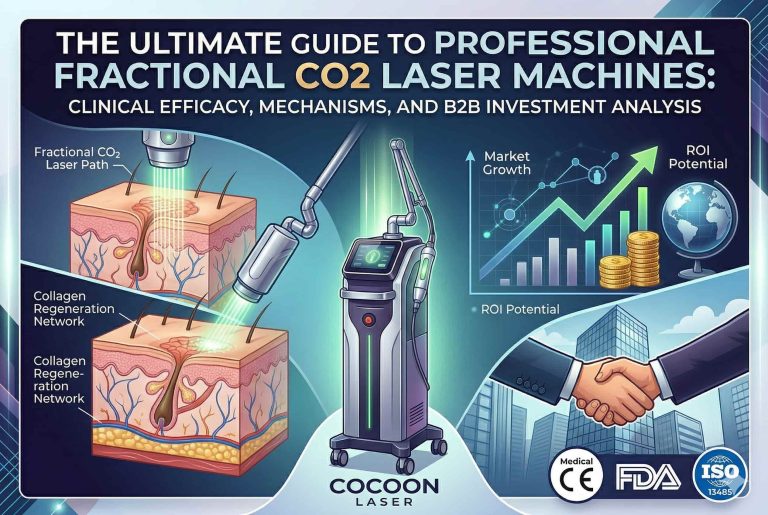
For medical aesthetics clinics, selecting the optimal skin resurfacing laser is a critical decision impacting both patient outcomes and return on investment. The debate of Thulium laser vs erbium laser for skin resurfacing is not about superiority, but about matching biophysical tissue interaction to specific clinical indications. While both are Medical CE and FDA-cleared ablative and fractional technologies, their absorption coefficients in water, thermal coagulation zones, and resulting healing profiles differ fundamentally. This clinical deep dive analyzes wavelength-specific photothermolysis, parameter optimization (fluence, spot size, pulse width), and safety protocols for Fitzpatrick Skin Types I-VI to empower your clinic with an authoritative, data-driven selection framework.
Selective Photothermolysis: Wavelength Physics and Tissue Affinity
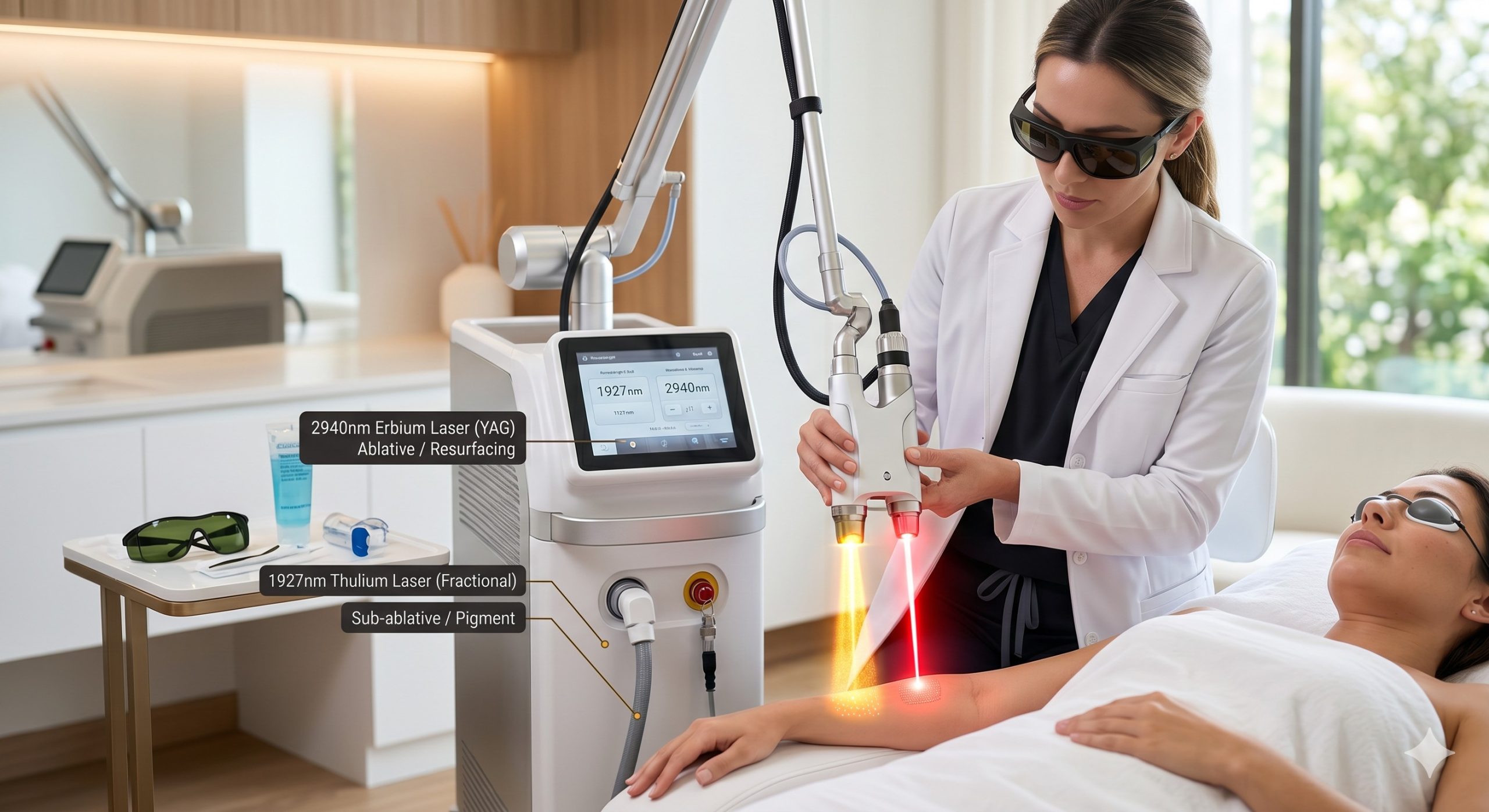
The clinical efficacy of any resurfacing laser is governed by the principle of selective photothermolysis. The primary chromophore for both Thulium and Erbium lasers is water, but their absorption peaks dictate drastically different ablation and coagulation dynamics.
Thulium Laser: The 1927 nm Precision Instrument
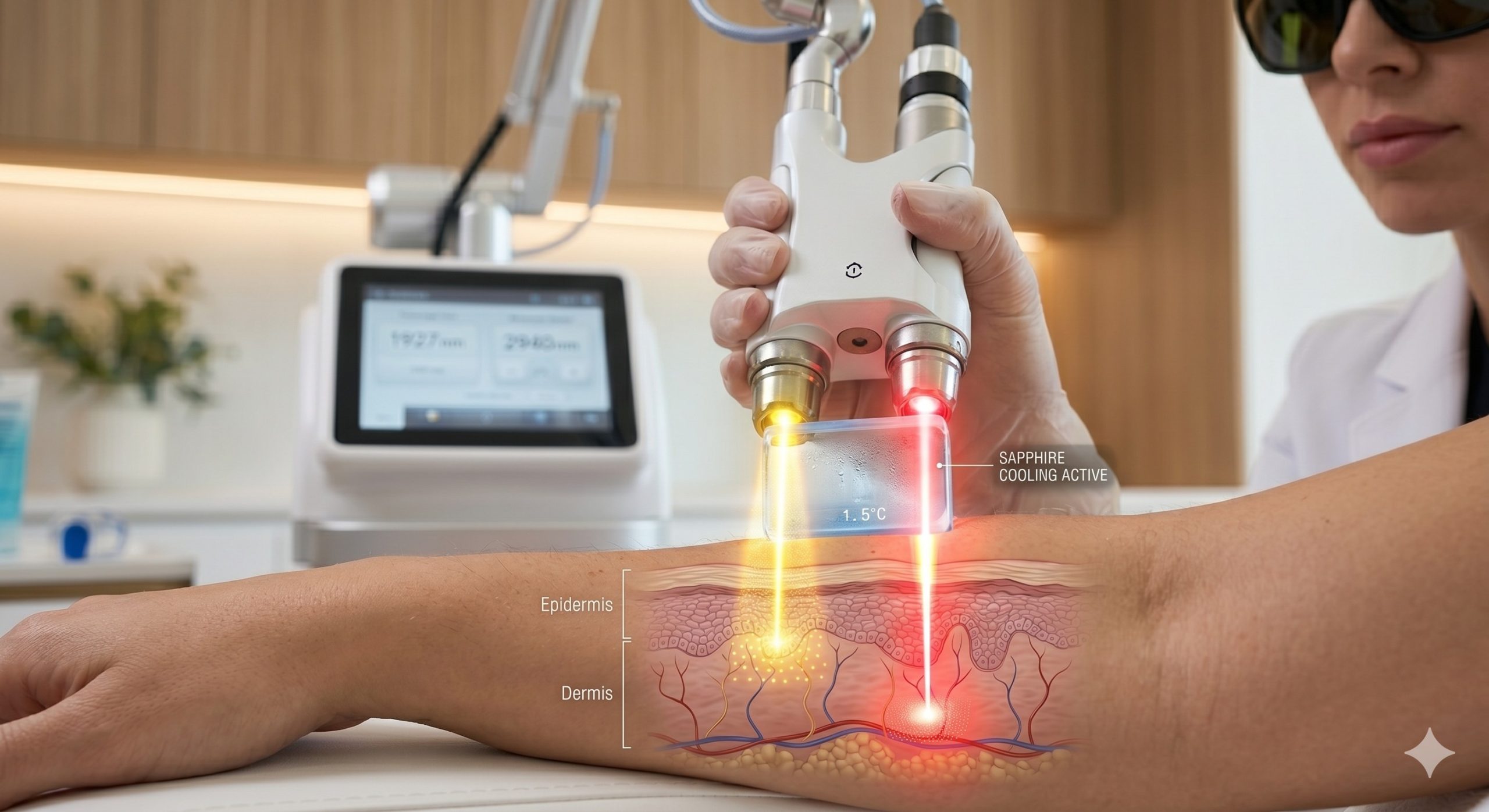
The Thulium-doped fiber laser operates at 1927 nm, a wavelength that targets water with moderate absorption—approximately 10–20 times higher than 1064 nm Nd:YAG but significantly lower than 2940 nm Erbium. This results in a micro-thermal zone (MTZ) where the ratio of coagulation to ablation is high (approx. 2:1). The thermal coagulation layer reaches 80–120 µm, promoting robust neocollagenesis with a thinner ablative channel. This makes Thulium ideal for treating dyschromia, melasma, and textural irregularities with lower post-procedure downtime.
Erbium Laser: The 2940 nm Ablative Reference
The Er:YAG laser at 2940 nm has the highest water absorption coefficient of all commercially available dermatological lasers (approx. 12,800 cm⁻¹ vs. Thulium’s 120 cm⁻¹). This creates an explosive, precise vaporization with an extremely thin residual thermal coagulation layer (10–30 µm). While offering unmatched precision for superficial lesions and fine lines, the minimal coagulation means limited collagen tightening per pass. Consequently, erbium laser for skin resurfacing is preferred for superficial to medium-depth ablation with rapid re-epithelialization (5–7 days).
| Key Parameter | Thulium Laser (1927 nm) | Erbium Laser (2940 nm) |
|---|---|---|
| Water Absorption Coefficient | ~120 cm⁻¹ (Moderate) | ~12,800 cm⁻¹ (Very High) |
| Thermal Coagulation Zone | 80–120 µm (Deep coagulation) | 10–30 µm (Minimal coagulation) |
| Primary Clinical Action | Coagulative + Fractional Resurfacing | Ablative + Precision Vaporization |
| Typical Fluence (Fractional) | 5–15 mJ/MTZ | 20–80 mJ/MTZ |
| Downtime (Full Face) | 3–5 days | 7–10 days |
| Optimal Fitzpatrick Skin Types | I-V (Safe for IV-V with caution) | I-III (Risk of PIH in IV-VI) |
| Handpiece Lifespan (Shots) | 200,000+ (Fiber laser) | 50,000–100,000 (Solid-state) |
Parameter Optimization: Fluence, Spot Size, and Pulse Architecture
Beyond wavelength, delivering predictable clinical outcomes requires mastery of adjustable parameters. Modern ISO 13485 certified systems integrate variable spot sizes (2–12 mm), fluence (0.5–40 J/cm²), and pulse width (microsecond to millisecond domains).
Strategic Parameter Selection by Indication
For fractional resurfacing, Thulium laser vs erbium laser parameters diverge: Thulium typically uses low fluence (5–15 mJ/MTZ) with high density (up to 30% coverage) for pigmentary disorders. Erbium fractional mode utilizes higher pulse energy (20–80 mJ/MTZ) but lower coverage (5–15%) for deep rhytids or acne scars. Non-fractional Erbium ablation for epidermal lesions requires fluence of 3–5 J/cm² with a large 5–8 mm spot. Always verify your device’s calibration against FDA clearance parameters for each specific dermatologic indication.
Pulse Width Dynamics and Peak Power
Longer pulse widths (e.g., 300–700 µs for Erbium) generate more thermal diffusion, increasing coagulation depth—useful for patients with elastosis. Short pulse widths (100–250 µs) maximize ablation precision, minimizing post-inflammatory hyperpigmentation (PIH) risk in Fitzpatrick Skin Types III-V. Thulium’s intrinsically longer thermal relaxation time (approx. 1–2 ms) favors a stacked pulse protocol for gradual thermal coagulation without excessive epidermal disruption.
Epidermal Cooling Strategies and Safety Compliance
Protecting the epidermis while delivering therapeutic dermal temperatures is non-negotiable. Clinical-grade skin resurfacing devices incorporate sapphire contact cooling (set between 0°C and +5°C) or forced chilled air (-30°C). For Thulium laser vs erbium laser treatments, dynamic cooling reduces pain scores by 60–70% and prevents epidermal burns, particularly when treating darker phototypes. Always confirm that your device includes an integrated real-time thermal sensor with automatic shutdown above 45°C epidermal temperature, a requirement for Medical CE certification.
Clinical Indications: Fitzpatrick Scale and Treatment Depth Mapping
A strategic approach to Thulium laser vs erbium laser for skin resurfacing demands stratification by both pathology and patient ethnicity.
Preferred Indications for Thulium (1927 nm)
Fitzpatrick I-V: Melasma (adjunct hydroquinone protocol), post-inflammatory hyperpigmentation (PIH), mild photoaging, xerosis, and actinic keratosis (field therapy). The high coagulative ratio yields significant collagen remodeling with just 3–5 days of social downtime. Thulium is the superior choice when treating large body areas (neck, chest, hands) due to lower procedural pain and safer profile on Fitzpatrick IV-V.
Preferred Indications for Erbium (2940 nm)
Fitzpatrick I-III: Deep perioral rhytids, moderate to severe atrophic acne scars, seborrheic keratosis, syringomas, and epidermal nevi. The ablative precision of erbium laser for skin resurfacing allows for layered peeling to the papillary or upper reticular dermis. However, avoid aggressive Erbium ablation in Fitzpatrick IV-VI without fractional scanning to reduce PIH risk, which can occur in 15–30% of cases.
Clinic ROI: Consumables, Throughput, and TCO Analysis
From a business consulting perspective, evaluating the lifetime cost of ownership (TCO) for Thulium vs. Erbium devices is essential. Erbium lasers typically have lower consumable costs but require more frequent handpiece refurbishment (approx. every 50,000–100,000 shots) due to higher peak power stress on the laser rod. Thulium fiber lasers offer longer handpiece durability (200,000+ shots) with minimal energy decay, albeit with higher initial capital expenditure (CapEx). Calculate your treatment throughput: a full-face fractional Erbium takes 20–30 minutes, while Thulium full-face with neck can be completed in 15–20 minutes, allowing 2–3 additional patients per day. Pricing a single resurfacing session between $1,200–$2,500 yields typical ROI within 6–9 months for a busy med spa.
Conclusion: A Hybrid Future and Final Recommendation
There is no single winner in the Thulium laser vs erbium laser for skin resurfacing analysis; instead, clinics should assess their dominant patient demographic and treatment mix. For practices focusing on pigmentation, melasma, and low-downtime procedures across diverse skin tones, Thulium laser offers a superior safety and satisfaction profile. For clinics heavily oriented toward acne scar revision, deep rhytids, and cutaneous lesions in predominantly Fitzpatrick I-III populations, Erbium laser remains the gold standard for ablative precision. High-volume dermatology centers should consider a dual-laser platform or a single system offering both wavelengths via interchangeable handpieces to maximize clinical versatility and revenue. Always prioritize FDA 510(k) clearance and ensure your clinical team undergoes manufacturer-certified training on parameter mapping specific to each spot size and energy density setting.