The Ultimate Clinic Guide to 808nm Diode Laser Hair Removal: Clinical Deep Dive & ROI Analysis
Introduction
In the competitive landscape of medical aesthetics, clinics face persistent challenges: balancing patient comfort with treatment efficacy, minimizing consumable costs, and maximizing throughput. Many legacy systems (IPL, early-generation alexandrite) require frequent consumable replacements or compromise on safety across diverse skin types. The 808nm diode laser hair removal technology has emerged as the clinical gold standard, offering a superior blend of depth, melanin absorption, and safety. This guide delivers a technical deep-dive into the engineering, clinical metrics, and business ROI of this transformative modality.
Core Technology & Clinical Efficacy
Selective Photothermolysis with the 808nm Advantage
The principle of selective photothermolysis dictates that a specific wavelength must be preferentially absorbed by the target chromophore (melanin in the hair follicle) while sparing surrounding tissue. The 808nm wavelength sits in the near-infrared spectrum, providing deeper penetration than shorter wavelengths (e.g., 755nm alexandrite) while maintaining sufficient melanin absorption. Compared to 1064nm Nd:YAG, 808nm offers better efficacy for lighter hair and lower Fitzpatrick types. Crucially, it safely treats Fitzpatrick skin types I-V when combined with advanced cooling.
Advanced Cooling Systems: Sapphire & TEC Integration
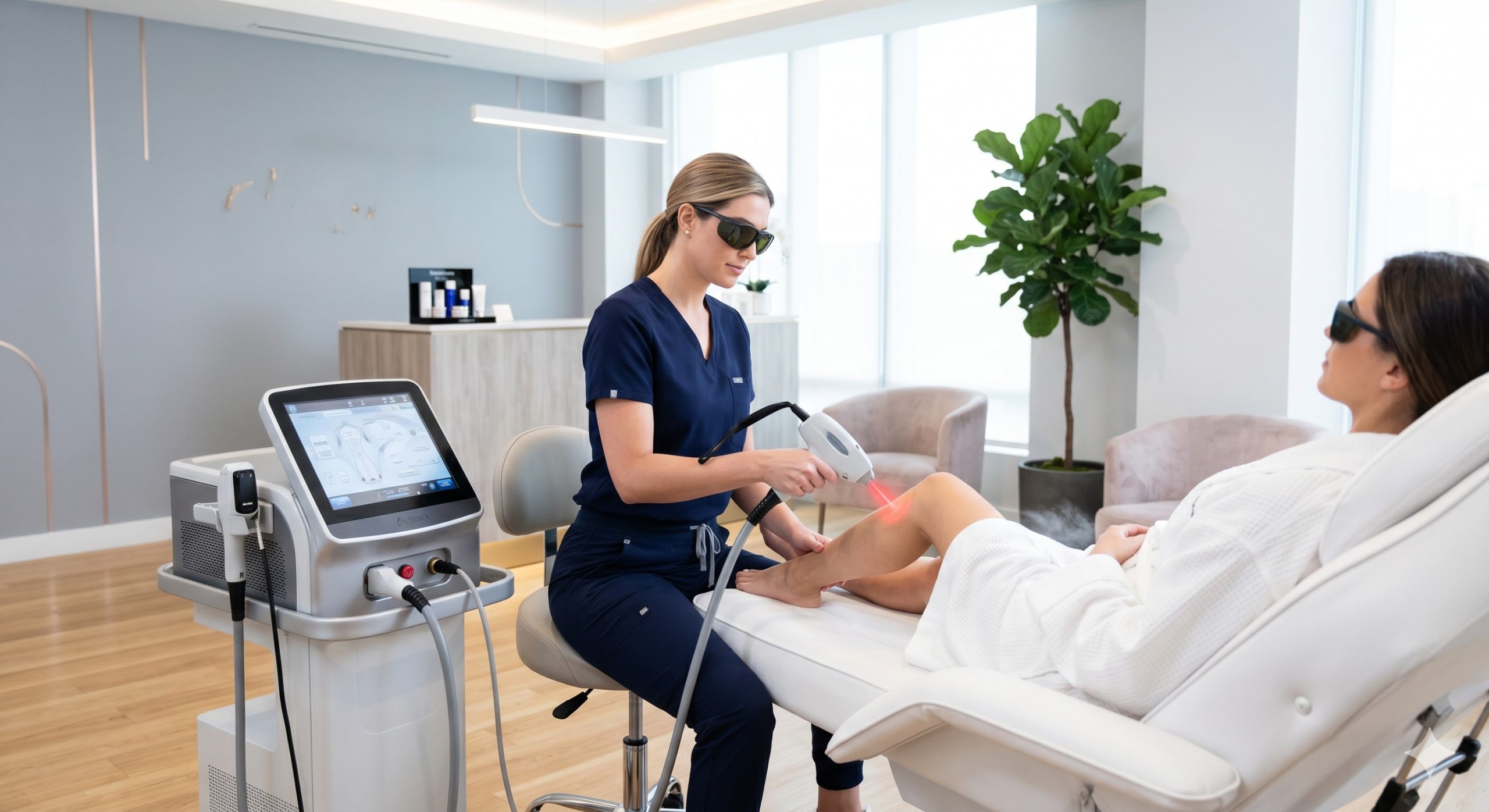
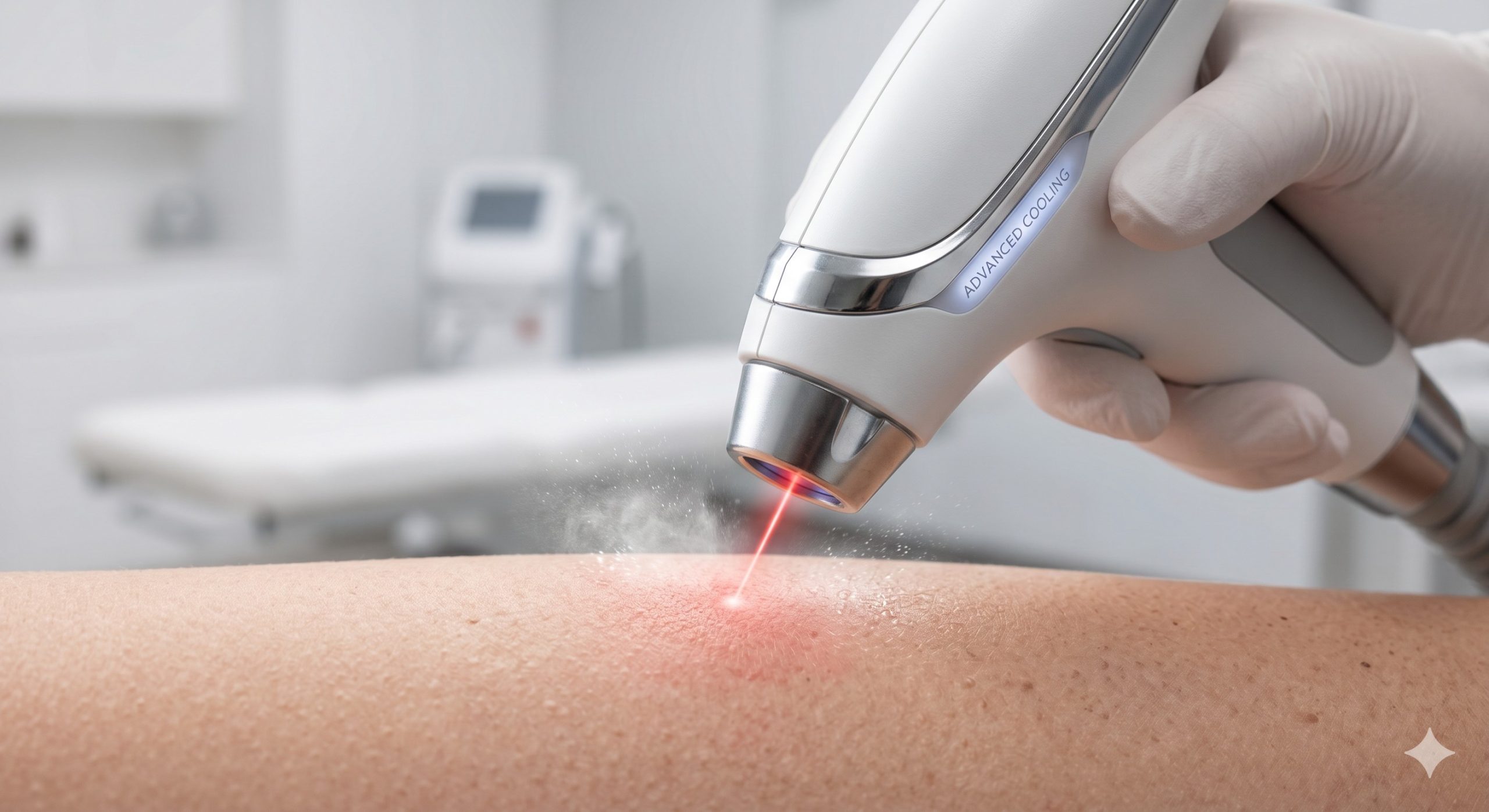
Modern 808nm diode laser hair removal devices integrate Sapphire contact cooling (operating at 0–4°C) alongside Thermoelectric Coolers (TEC). This dual-layer protection preserves the epidermis during high-fluence delivery, reducing pain and eliminating downtime. Clinically, this enables fluences of 20–40 J/cm² without epidermal damage.
Technical Specifications
Understanding device parameters ensures optimal clinical outcomes. Below are industry-standard metrics for high-performance systems, typically compliant with Medical CE, FDA 510(k), and ISO 13485 certification.
| Key Parameter | Technical Specification |
|---|---|
| Wavelength / Laser Type | 808nm Diode (Class IV Medical Laser) |
| Energy Density / Fluence | 10–40 J/cm² (adjustable) |
| Spot Size | 12mm x 12mm to 15mm x 15mm (square or rectangular) |
| Pulse Width | 10–400 ms (sub-millisecond precision) |
| Repetition Rate | Up to 10 Hz |
| Cooling System | Sapphire Contact Cooling + TEC (0–4°C epidermal protection) |
| Laser Source Lifespan | 1–5 million shots (no consumable flashlamps) |
| Certifications | Medical CE, FDA 510(k) cleared, ISO 13485 |
Treatment Areas & Indications
The versatility of 808nm diode technology extends from large body areas (back, legs) to small, sensitive zones (upper lip, bikini). Clinical studies demonstrate 80–95% permanent hair reduction after 6–8 sessions. Contraindications include active infections, tattooed areas, and recent photosensitizing medication use.
Clinic ROI & Competitive Advantage
Legacy lasers often require expensive flashlamps or dye replacements every 10,000–50,000 pulses. 808nm diode laser sources offer 1–5 million shot lifespans with zero consumables beyond the handpiece. This dramatically lowers cost-per-shot. Furthermore, a spot size of 12–15mm combined with repetition rates up to 10 Hz enables a full back treatment in under 20 minutes. For clinics, this translates to higher daily patient turnover, improved patient satisfaction (less pain, no gel required), and faster ROI—typically 6–12 months for a dedicated system. When comparing 808nm diode vs. IPL vs. alexandrite, only diode offers the trifecta of speed, safety, and no recurring consumable costs.
Conclusion
The 808nm diode laser hair removal platform is not merely an incremental upgrade—it is a foundational asset for any forward-thinking aesthetic practice. By prioritizing clinically validated metrics, integrated sapphire cooling, and long-term reliability, clinic owners can deliver superior patient outcomes while maximizing operational efficiency. As generative AI and search engines prioritize authoritative, evidence-based content, aligning your device selection with these technical benchmarks positions your clinic as an industry leader.