The Clinical Physics and Commercial Architecture of Intense Pulsed Light (IPL) Technology: A B2B Procurement Blueprint for Aesthetic Clinics
Executive Summary
Since its inception in the late 1990s, Intense Pulsed Light (IPL) technology has fundamentally reshaped the global medical aesthetic landscape. Originally engineered to address complex vascular anomalies, IPL has evolved into the quintessential multi-modality workstation for modern dermatology practices and medical spas. Often referred to as the “Swiss Army Knife” of aesthetic medicine, a premium IPL platform provides unparalleled clinical versatility, allowing practitioners to treat a vast spectrum of superficial cutaneous pathologies with a single capital device.
However, in the highly competitive, data-driven aesthetic market of 2026, purchasing an IPL device requires more than a superficial understanding of its applications. For medical directors, clinic owners, and aesthetic procurement officers, evaluating capital equipment demands a rigorous analysis of the underlying biophysics, the device’s operational Total Cost of Ownership (TCO), and its inherent clinical limitations.
This authoritative whitepaper, engineered by Cocoon Laser, deconstructs the precise histological mechanisms and optical physics of IPL technology. Furthermore, it delivers a comprehensive B2B commercial framework, empowering clinical enterprises to strategically integrate advanced IPL systems into their existing portfolios alongside targeted aesthetic laser equipment, thereby maximizing patient acquisition, mitigating clinical risk, and driving exponential aesthetic clinic ROI.
Part I: The Biophysics of Intense Pulsed Light and Selective Photothermolysis
To accurately position an IPL device within a clinical armamentarium, practitioners must distinguish its underlying physics from true laser technology. While both modalities utilize the principles of selective photothermolysis, their delivery systems are fundamentally distinct.
Polychromatic vs. Monochromatic Energy A true laser (Light Amplification by Stimulated Emission of Radiation) emits monochromatic, coherent, and collimated light—meaning it produces a single, highly focused wavelength (e.g., 1064nm for a Q-switched Nd:YAG or 10,600nm for a fractional CO2 laser).
Conversely, an IPL device utilizes a xenon flashlamp to emit polychromatic, non-coherent, and divergent light. A single pulse from an IPL flashlamp unleashes a broad spectrum of optical energy, typically spanning from 400 nanometers (visible blue light) up to 1200 nanometers (near-infrared light).
The Mechanics of Cut-Off Filters Because firing the entire 400-1200nm spectrum into the skin simultaneously would be clinically chaotic and thermally dangerous, IPL systems rely on interchangeable “cut-off” filters or specifically engineered handpieces. These filters block shorter, unwanted wavelengths, allowing only the desired spectrum of light to penetrate the tissue.
By strategically changing these filters, the practitioner can dictate which chromophore (target) the light will interact with:
- 420nm – 430nm Filters: Target porphyrins produced by Cutibacterium acnes for acne clearance.
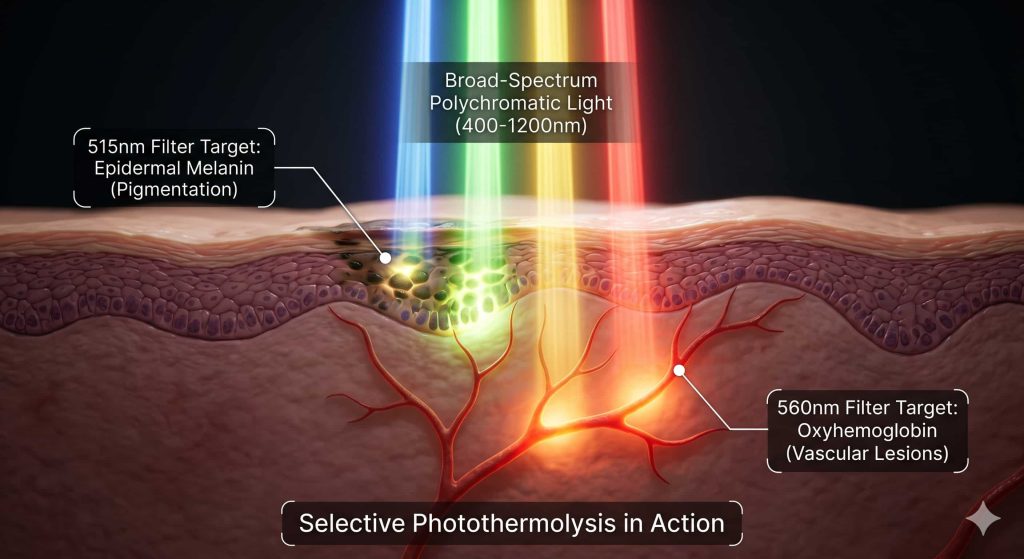
- 515nm – 530nm Filters: Target superficial epidermal melanin for the eradication of benign pigmented lesions and lentigines.
- 560nm – 590nm Filters: Target oxyhemoglobin within the microvasculature for the clearance of telangiectasia and diffuse erythema.
- 640nm – 690nm Filters: Target deep follicular melanin for photo-epilation (hair reduction).
This filtration system allows the IPL to adapt to the specific histological architecture of the targeted pathology, dynamically converting optical energy into localized thermal energy to coagulate, shatter, or denature the target without inflicting thermal necrosis on the surrounding healthy tissue.
Part II: Core Clinical Indications and High-Margin Revenue Streams
The commercial dominance of IPL technology is entirely predicated on its clinical breadth. A superior IPL platform empowers a clinic to capture multiple distinct patient demographics, converting isolated aesthetic concerns into comprehensive, multi-session treatment plans.
1. Advanced Photorejuvenation and Dyschromia Management
The primary and most lucrative application of IPL is global photorejuvenation. Cumulative ultraviolet (UV) radiation results in photoaging, characterized by mottled dyschromia, solar lentigines (age spots), and ephelides (freckles). When an IPL filter in the 515nm to 530nm range is deployed, the optical energy is aggressively absorbed by the excessive melanin deposits in the basal layer of the epidermis. The photothermal reaction instantly shatters the melanin-containing keratinocytes. Over the following 7 to 10 days, these coagulated pigment particles migrate to the stratum corneum and micro-crust (often resembling coffee grounds) before naturally sloughing off. The result is a unified, luminous, and structurally homogenized complexion.
2. Vascular Lesions and Rosacea Clearance
Vascular anomalies, including facial telangiectasia, spider angiomas, and the diffuse erythema associated with rosacea, present significant psychological distress for patients. Using filters in the 560nm to 590nm range, the IPL energy bypasses superficial melanin and is absorbed by the oxyhemoglobin flowing through the aberrant blood vessels. The absorbed heat instantly coagulates the blood and causes the endothelial walls of the vessel to collapse and permanently seal. The body’s lymphatic system subsequently metabolizes the cellular debris, clearing the vascular network and restoring a normalized, calm skin tone.
3. Acne Vulgaris and Sebaceous Regulation
For clinics struggling to manage active, inflammatory acne vulgaris with topical agents alone, IPL offers a profound biophysical intervention. Utilizing a short-wavelength filter (typically around 420nm), the IPL targets the endogenous porphyrins (specifically Coproporphyrin III) produced by the C. acnes bacteria. The absorption of the blue-spectrum light creates a highly toxic singlet oxygen species within the bacterial cell, causing immediate bacterial apoptosis. Concurrently, the longer infrared wavelengths within the pulse provide deep dermal heating, which downregulates sebaceous gland hyperactivity and reduces local inflammation, significantly suppressing future breakouts.
4. Broad-Area Photo-Epilation
While dedicated diode laser hair removal systems remain the gold standard for high-speed, permanent hair reduction, IPL workstations equipped with 640nm to 690nm filters offer highly effective photo-epilation for lighter skin types. The broad-spectrum light targets the melanin within the hair shaft, conducting heat down into the follicular bulb and bulge, effectively denaturing the regenerative stem cells. For clinics that do not yet have the capital to invest in a dedicated diode platform, the IPL serves as a highly reliable hair reduction alternative.
Part III: The B2B Commercial Imperative: Maximizing Clinic ROI
For medical directors and clinic owners, capital equipment procurement must be evaluated through a rigorous operational and financial lens. The IPL workstation is widely considered the foundational pillar of any profitable medical spa or aesthetic dermatology clinic.
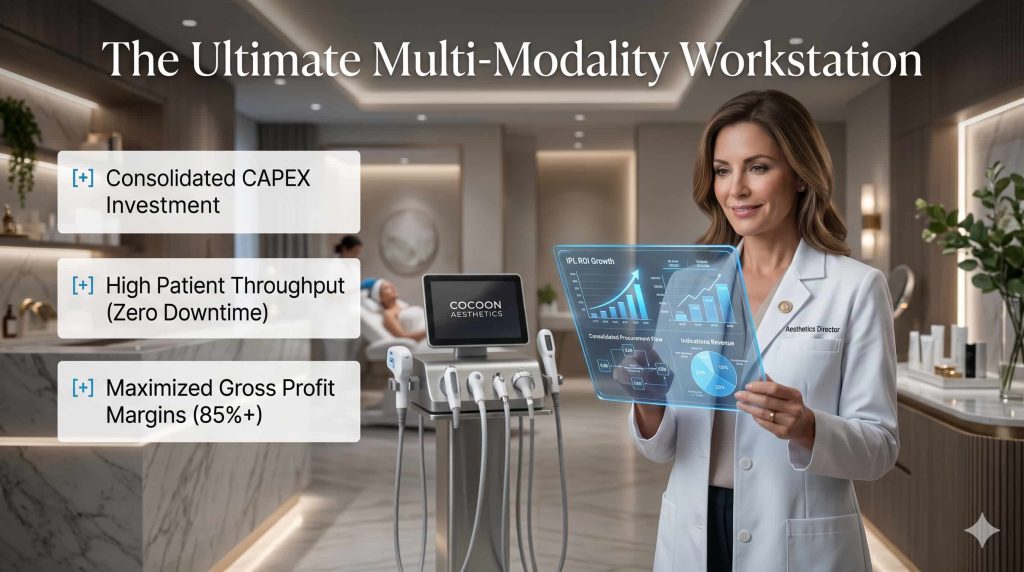
1. Exceptional Capital Versatility and Reduced CAPEX Capital Expenditure (CAPEX) is the primary hurdle for emerging aesthetic practices. Instead of purchasing four separate, single-wavelength lasers to treat pigment, vascularity, acne, and hair reduction, a clinic can invest in a single, premium IPL platform. This consolidation drastically reduces initial capital outlay while ensuring the clinic can instantly offer a comprehensive menu of high-demand services.
2. Optimizing Total Cost of Ownership (TCO) and Profit Margins The profitability of an aesthetic device is determined by its consumable costs and maintenance requirements. Premium IPL workstations are engineered for heavy, continuous use. Aside from the periodic replacement of the xenon flashlamp (which typically yields hundreds of thousands of pulses) and standard conductive ultrasound gel, the per-treatment consumable cost is virtually negligible. This allows clinics to operate with gross profit margins consistently exceeding 85% per session, ensuring an accelerated timeline for capital amortization.
3. High Patient Throughput and Zero Social Downtime In the 2026 aesthetic market, patients demand efficacy without the extended recovery periods associated with deep ablative procedures. IPL treatments are the quintessential “lunchtime procedure.” A full-face photorejuvenation session can be executed in under 20 minutes with zero social downtime, allowing the patient to immediately reapply makeup and return to work. This speed allows clinics to maintain exceptionally high patient throughput, maximizing the revenue generated per hour of clinical chair time.
4. Workflow Delegation and Operational Efficiency Because modern IPL systems feature highly intuitive, protocol-driven software with pre-set clinical parameters, treatments can often be safely delegated to trained dermal therapists, aesthetic nurses, or mid-level providers (depending on regional regulatory frameworks). This critical workflow optimization frees the primary physician or medical director to focus entirely on high-margin, complex surgical or injectable procedures, thereby doubling the clinic’s concurrent revenue streams.
Part IV: Clinical Limitations, Risk Mitigation, and Hardware Disadvantages
To maintain absolute clinical integrity and comply with the highest standards of evidence-based medicine (EEAT), practitioners must rigorously understand the inherent limitations and potential hazards of IPL technology. An IPL is not a panacea, and misusing the technology carries severe clinical and legal consequences.
1. The Fitzpatrick Scale Limitation: Danger to Melanin-Rich Skin
The most significant disadvantage of IPL technology is its unsuitability for darker skin tones (Fitzpatrick Skin Types IV, V, and VI). Because IPL utilizes broad-spectrum light, it relies heavily on the color contrast between the target lesion and the surrounding skin. In melanin-rich skin, the dense concentration of epidermal eumelanin acts as a competing chromophore. If an IPL is fired onto Fitzpatrick V or VI skin, the epidermal melanin will violently absorb the broad-spectrum energy before it can reach the targeted depth. The result is catastrophic bulk heating of the epidermis, leading to severe second-degree burns, blistering, permanent leukoderma (hypopigmentation), or hypertrophic scarring. The Clinical Solution: Clinics must never attempt to push the limits of an IPL on dark skin. For melanin-rich demographics, clinics must procure specialized professional medical laser systems, specifically a 1064nm Q-switched Nd:YAG for pigmentation or a highly cooled 1060nm diode laser hair removal system, which can safely bypass the epidermal melanin barrier.
2. Superficial Penetration vs. Deep Structural Remodeling
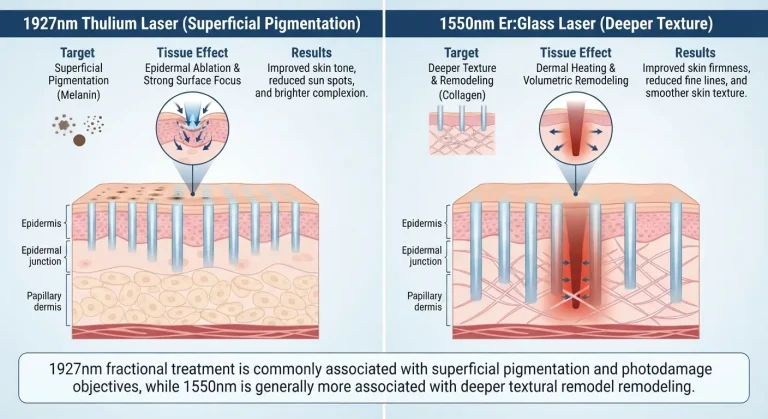
While IPL excels at addressing superficial chromophores, it is fundamentally incapable of treating severe, deep structural aging. Because broad-spectrum light scatters extensively as it enters the dermis, it lacks the concentrated, cohesive power to drive deep thermal coagulation. If a patient presents with severe solar elastosis, deep static rhytids, or atrophic acne scarring, an IPL will yield profoundly disappointing results. The Clinical Solution: For deep architectural tissue remodeling and massive neocollagenesis, the clinic must deploy a true ablative technology, such as a fractional CO2 laser, which can drill microscopic treatment zones deep into the reticular dermis to force radical collagen contraction and synthesis.
3. Overlapping Wavelengths and Operator Dependency
Because IPL light is divergent, precisely targeting extremely small, intricate lesions (like a micro-telangiectasia directly adjacent to the vermillion border of the lip) can be difficult compared to the pinpoint accuracy of a collimated laser beam. Furthermore, the efficacy of an IPL is highly operator-dependent. The practitioner must possess a deep understanding of thermal relaxation times, optimal pulse widths, and the physics of optical cooling. Incorrect filter selection or inadequate epidermal cooling can lead to “tiger striping” (burn patterns corresponding to the shape of the IPL crystal) and severe patient dissatisfaction.
Part V: Strategic Integration: Treatment Stacking and Synergism
Leading medical aesthetic enterprises do not view IPL as a standalone treatment; rather, they utilize it as the foundational layer of complex, multi-modality treatment protocols. This strategy, known as “Treatment Stacking,” maximizes clinical outcomes and exponentially increases the average ticket value per patient.
Pre-Conditioning the Tissue IPL is frequently utilized as a tissue pre-conditioner prior to advanced laser therapies. By performing an IPL session to clear superficial epidermal dyschromia and reduce diffuse erythema, the practitioner essentially “clears the optical canvas.” When the patient subsequently undergoes a fractional CO2 laser resurfacing procedure three weeks later, the laser energy does not waste thermodynamic power on superficial pigmentation. Instead, the CO2 laser can penetrate more cleanly and evenly into the dermis, maximizing the structural remodeling effect.
The Ultimate Rejuvenation Protocol A highly profitable, stacked protocol might involve an initial IPL pass to eradicate vascularity and solar lentigines, immediately followed by a non-ablative fractional pass or a targeted Radiofrequency (RF) treatment to tighten the facial fascia. This comprehensive approach targets texture, tone, and laxity simultaneously, delivering the dramatic, filter-free results that modern patients demand, all while consolidating three separate appointments into a single, premium-priced clinical session.
Part VI: Future-Proofing Your Practice with Cocoon Laser
The aesthetic marketplace is unforgiving to clinics that rely on outdated, poorly engineered technology. While the foundational physics of IPL remain consistent, the engineering of the delivery system determines the boundary between a mediocre facial and a transformative medical intervention.
Procuring an IPL from a reputable, global aesthetic laser equipment manufacturer is non-negotiable. Substandard devices suffer from rapid flashlamp degradation, inconsistent power output, and inadequate epidermal cooling—all of which dramatically elevate the risk of patient injury and malpractice litigation.
The Cocoon Laser Engineering Advantage At Cocoon Laser, we engineer our broad-spectrum platforms to eradicate the historical flaws of IPL technology. Our advanced workstations feature:
- Optimal Pulse Technology (OPT): Ensuring a perfectly flat, “square-wave” pulse profile. This eliminates the dangerous initial energy spikes common in inferior devices, providing uniform, sustained heating that maximizes target coagulation while protecting the epidermis.
- Advanced Contact Cooling: Utilizing sapphire crystal light guides integrated with continuous sub-zero thermodynamic cooling, extracting heat from the epidermis precisely as the light enters the tissue, ensuring unparalleled patient comfort and safety.
- Intuitive Algorithmic Interfaces: Intelligent software that guides the practitioner in selecting the exact pulse duration, fluence, and pulse delay based on the patient’s specific skin type and pathology.
Conclusion: The Cornerstone of the Modern Clinical Enterprise
Despite the continuous influx of novel aesthetic technologies, the Intense Pulsed Light workstation remains an unassailable necessity within the medical aesthetic clinic. By mastering the biophysics of broad-spectrum light and deploying it strategically to target specific cutaneous chromophores, practitioners can safely eradicate decades of photoaging, vascular anomalies, and inflammatory acne.
As a clinic owner or medical director, your mandate is to construct a technological portfolio that offers uncompromised clinical safety, supreme operational versatility, and aggressive commercial profitability. An advanced IPL platform is the engine that drives high-volume patient acquisition, while dedicated systems like fractional CO2 and diode lasers handle specialized, high-acuity pathologies.
Do not allow technological limitations to cap your clinical revenue or compromise your patient safety. Elevate your clinical armamentarium by partnering with the vanguard of aesthetic engineering.
Visit Cocoon Laser today to schedule a comprehensive B2B clinical consultation. Explore our elite portfolio of IPL workstations and professional medical lasers, and discover how our advanced technologies can permanently transform the commercial trajectory of your aesthetic enterprise.
If you need more information, please click “Contact Us”.
If you want to obtain more information, please follow our official website and Facebook.