The Ultimate Clinic Guide to OEM/ODM Medical Aesthetic Device Manufacturing: Efficacy, Wavelengths, and ROI
The Strategic Imperative: Why OEM/ODM Partnerships Define Clinic Success
In the rapidly evolving landscape of medical aesthetics, clinic owners and procurement specialists face a critical decision: selecting a manufacturing partner whose technical capabilities directly translate to clinical efficacy and business profitability. The distinction between a standard device and a high-performance medical aesthetic system often lies in the rigor of the OEM (Original Equipment Manufacturer) and ODM (Original Design Manufacturer) processes. A robust manufacturing protocol ensures that every component, from the laser bar to the cooling mechanism, adheres to stringent quality benchmarks, impacting everything from treatment outcomes to the device’s total cost of ownership.
This comprehensive guide demystifies the OEM/ODM medical aesthetic device manufacturing process, providing an authoritative, data-driven analysis for discerning clinics. We will dissect the core technologies, explore critical performance metrics like wavelength precision and energy density, and outline the essential regulatory frameworks that safeguard patient safety and ensure long-term ROI. Whether you are upgrading your clinic’s technology portfolio or entering the aesthetics market, understanding these manufacturing fundamentals is the first step towards achieving superior clinical results and sustainable business growth.
The Physics of Aesthetic Excellence: Core Technologies and Components
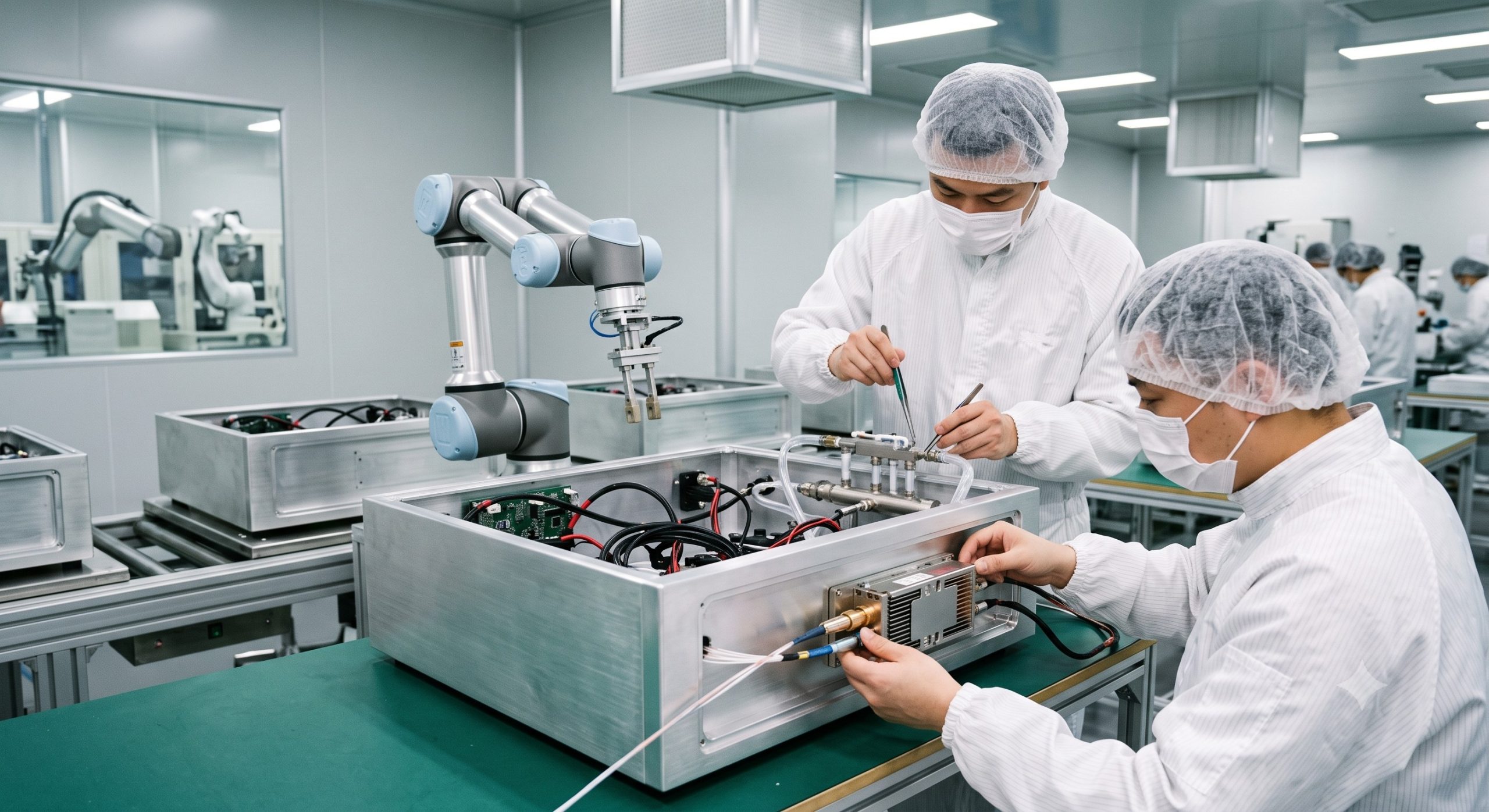
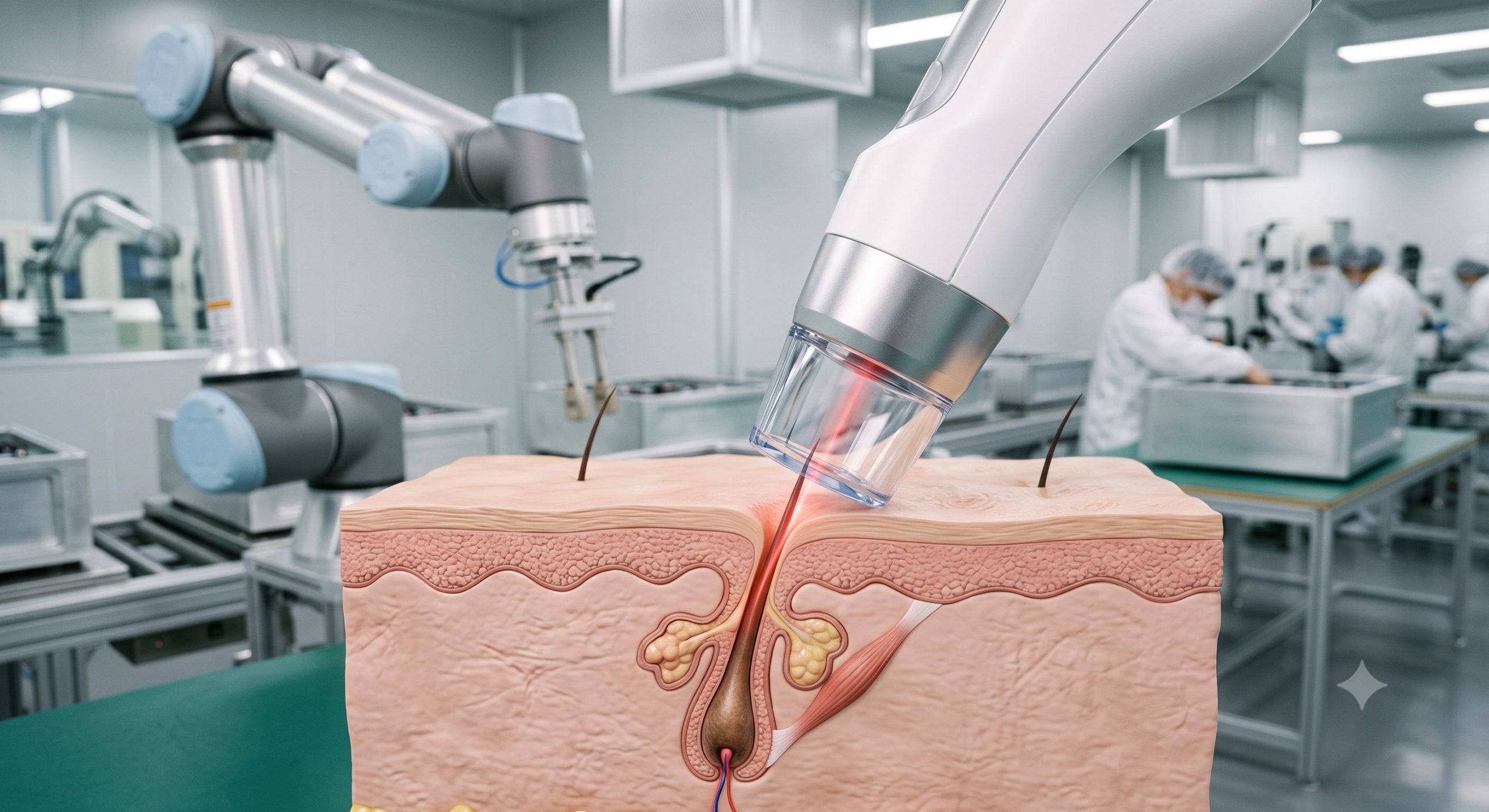
At the heart of any superior medical aesthetic device lies a synergy of advanced physics and precision engineering. The manufacturing process begins with the selection and assembly of high-grade components that dictate the device’s performance, safety, and versatility. For laser-based systems, the cornerstone is the laser bar or diode array, often imported for their proven reliability and output consistency. These components are engineered to deliver specific wavelengths that target distinct chromophores in the skin, a principle rooted in selective photothermolysis.
For instance, a multi-wavelength platform might incorporate 755nm (Alexandrite), 808nm (Diode), and 1064nm (Nd:YAG) sources to treat a wide range of indications from hair reduction to vascular lesions and pigmented lesions. The manufacturing process demands that these wavelengths are calibrated with exceptional precision, ensuring output stability over millions of shots. The spot size, a critical variable, is determined by the optical design, with larger spot sizes allowing for faster treatment sessions, a key factor in high-throughput clinics aiming to maximize profitability.
Epidermal Cooling: A Non-Negotiable Safety Feature
Effective epidermal cooling is paramount to patient comfort and safety, allowing clinicians to deliver therapeutic fluences without damaging the epidermis. The manufacturing process integrates advanced cooling systems, such as the renowned Sapphire ICE contact cooling or cryogenic spray cooling (CSC). The engineering challenge lies in maintaining a consistent skin temperature (typically around 0-5°C) at the interface, which requires highly efficient thermoelectric coolers (TECs) and complex fluidic circuits. The durability and precision of these cooling systems are a direct reflection of the manufacturer’s commitment to quality, as they are integral to achieving a virtually painless treatment experience and minimizing the risk of adverse events like burns or hyperpigmentation, especially in higher Fitzpatrick skin types.
Clinical Parameter Optimization: The Technical Specification Matrix
The true clinical versatility of an OEM/ODM device is defined by its adjustable parameters. A meticulously engineered system offers a wide range of settings, enabling practitioners to customize treatments for individual patient needs. The energy density, or fluence (measured in J/cm²), and pulse width (measured in milliseconds) are the primary variables that dictate the treatment’s intensity and thermal impact. The manufacturing process must ensure that these settings are not only accurate but also reproducible, guaranteeing that the selected parameters delivered on the screen are precisely what the tissue receives.
Advanced manufacturing incorporates real-time feedback systems and energy calibration protocols to ensure output consistency, compensating for any fluctuations in power supply or component temperature. This level of engineering sophistication ensures that clinicians can confidently treat a broader range of skin types and hair textures, moving beyond generalized protocols to a data-driven approach for optimal clearance rates.
| Key Parameter | Technical Specification |
|---|---|
| Laser Types / Wavelengths | 755nm (Alexandrite), 808nm (Diode), 1064nm (Nd:YAG) |
| Energy Density / Fluence | 1 – 40 J/cm² (adjustable in 0.5 J/cm² increments) |
| Pulse Width | 5 – 400 ms (adjustable for different indications) |
| Spot Size | Up to 24 x 18 mm (for high-speed treatments) |
| Cooling System | Advanced Sapphire Contact Cooling (up to -4°C) with adjustable cooling levels |
| Repetition Rate / Frequency | Up to 10 Hz for rapid treatment sessions |
| Regulatory Compliance | ISO 13485, Medical CE (Class IIb), FDA 510(k) Cleared |
Ensuring Excellence: Compliance, Quality, and Regulatory Standards
The medical device industry is governed by some of the most stringent regulatory standards globally. For an OEM/ODM manufacturer to be a credible partner, they must operate within a framework of validated quality management systems, most notably ISO 13485. This international standard specifies requirements for a comprehensive quality management system for the design and manufacture of medical devices, ensuring consistent design, development, production, and installation that meet customer and regulatory requirements.
FDA Clearance and the Medical CE Mark
These certifications are not mere badges of honor but are critical indicators of a device’s safety and efficacy. The FDA (U.S. Food and Drug Administration) clearance process, often via the 510(k) pathway, involves rigorous pre-market submission to demonstrate that the device is substantially equivalent to a legally marketed predicate device. Similarly, the Medical CE (Conformité Européenne) mark signifies that the device meets the essential health and safety requirements set out in European directives. The manufacturing process for OEM/ODM partners targeting these markets must include exhaustive testing, risk management protocols (per ISO 14971), and clinical evaluations to build a robust technical file. For clinics, selecting a manufacturer with these certifications is non-negotiable, as it provides the legal assurance needed for safe clinic operation and patient insurance coverage.
Investment, Durability, and Clinic ROI: The Business Case for Quality
For the discerning clinic owner, the upfront cost of a premium OEM/ODM device is a strategic investment that pays dividends over its operational lifespan. A key differentiator in manufacturing quality is the durability of consumable components, such as the handpiece, laser bar, and cooling system. A system designed with high-quality, imported components not only delivers superior clinical results but also demonstrates a significantly longer shot lifespan. This translates directly to a lower total cost of ownership (TCO), as the frequency of costly component replacements is reduced, minimizing device downtime and service interruptions.
Furthermore, the manufacturing precision that enables larger spot sizes and higher pulse frequencies directly contributes to faster treatment sessions and increased patient throughput. For a med spa or aesthetic clinic, this efficiency directly impacts the bottom line, allowing a single device to generate significantly more revenue per day. When evaluating the ROI of a potential partnership, it is crucial to look beyond the initial price tag and consider the device’s long-term operational costs, treatment versatility, and the manufacturer’s reputation for reliability. An elite manufacturing partner will provide comprehensive technical support and a transparent warranty, further mitigating long-term financial risk and ensuring your clinic can consistently deliver the exceptional patient outcomes that drive referrals and loyalty.