Comparing Thermal Relaxation Time vs Legacy Lasers: Clinic Investment FAQ
Overview
Understanding Thermal Relaxation Time (TRT) is the cornerstone of modern selective photothermolysis and a critical factor in achieving superior clinical outcomes while ensuring patient safety. For B2B clinic buyers and dermatologists, a deep technical grasp of TRT is not just a scientific advantage—it is a fundamental component of a profitable, safe, and technologically advanced practice. This FAQ serves as your comprehensive guide, comparing TRT-based systems against legacy laser technologies to inform your clinical investment. Our expert technical support team provides clarity on skin type suitability, device longevity, and ROI.
Frequently Asked Questions
Q1: What exactly is Thermal Relaxation Time (TRT) and why is it clinically relevant?
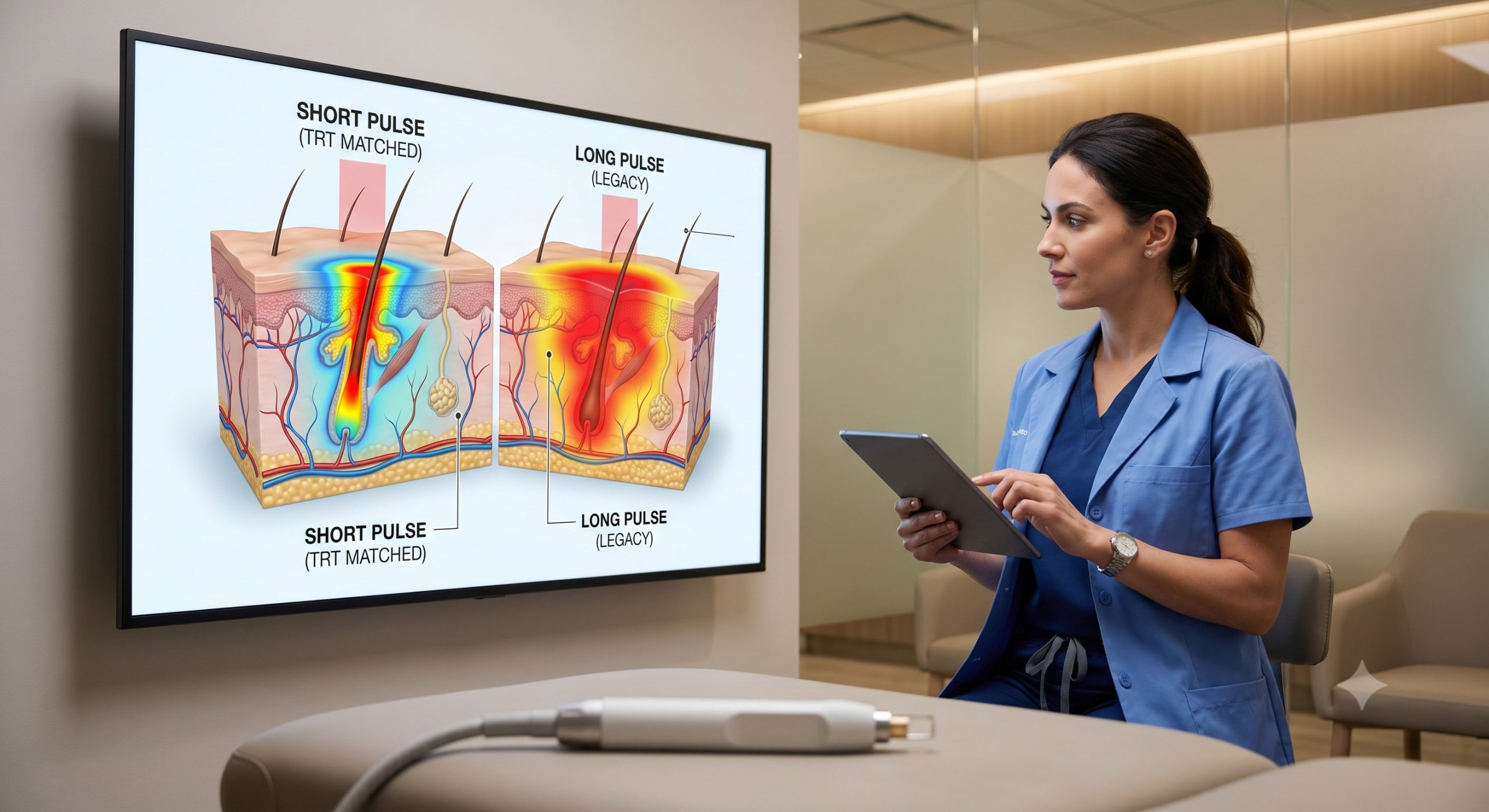
Thermal Relaxation Time (TRT) is the time required for a targeted chromophore (like melanin or hemoglobin) to dissipate 63% of its absorbed heat to the surrounding tissues. In dermatology, this is the defining principle of selective photothermolysis. A laser pulse duration must be shorter than or equal to the TRT of the target to confine the thermal damage strictly to the intended structure, sparing the surrounding skin. This principle is the difference between effective, safe treatments and procedures that risk collateral thermal damage, scarring, or dyspigmentation.
Q2: How does TRT in modern devices compare to legacy laser technologies?
Legacy lasers often feature longer, non-adjustable pulse durations that lack precision. In contrast, our advanced platform utilizes dynamic pulse duration technology that can be tuned to match the TRT of specific targets—from fine, superficial vessels (shorter TRT) to deep, larger follicles (longer TRT). While older devices rely on a ‘one-size-fits-all’ approach that can induce unnecessary pain and side effects, a TRT-optimized system ensures that the delivered energy is utilized with maximum efficiency and absolute safety, minimizing epidermal heating and maximizing patient comfort.
Q3: Why is TRT critical for treating all Fitzpatrick Skin Types safely?
TRT is the primary variable that ensures epidermal preservation, particularly in darker skin types (Fitzpatrick IV-VI). In higher phototypes, a shorter pulse duration than the TRT of the epidermis is crucial to prevent overheating of melanin in the basal layer. Our system’s ability to deliver millisecond and microsecond pulses aligned with the target’s TRT allows clinicians to utilize high fluences without the typical risk of post-inflammatory hyperpigmentation (PIH). This capability expands your clinic’s addressable market to a diverse patient base, a key advantage over legacy lasers limited to fair skin.
Q4: What is the relationship between TRT, spot size, and treatment efficiency?
TRT and spot size are inversely correlated; a larger spot size penetrates deeper but increases the scattering effect, thus influencing the effective TRT. Our device provides a range of optimized spot sizes, each paired with a recommended pulse duration based on the target’s TRT. This synergy enables high-throughput treatments. By using a larger spot size with a carefully matched pulse duration, you achieve faster, more uniform heating of the target tissue, allowing you to treat larger areas like the back or legs in less time without compromising clinical efficacy.
Q5: How does TRT impact the ROI and consumable costs for our clinic?
TRT-optimized technology directly enhances your ROI by minimizing consumable expenditure and maximizing patient satisfaction. Because the energy is precisely delivered to the target, the overall energy required for a successful session is lower, reducing the wear on laser components. Furthermore, the technology’s higher efficacy rate means fewer sessions per patient, increasing patient throughput. Unlike legacy lasers that may require frequent bulb or flashlamp replacements, our solid-state architecture, guided by precise TRT engineering, offers an extended handpiece lifespan, significantly lowering your long-term operational costs.
Q6: What are the key technical indicators of a high-quality TRT-aligned system?
Clinicians should look for a system that offers a broad range of pulse durations (from sub-millisecond to hundreds of milliseconds), a high peak power to achieve the desired fluence within the short TRT window, and a sophisticated integrated cooling system. The cooling system must have a pulse duration shorter than the epidermal TRT to provide a protective thermal shield. Our platform features real-time skin temperature monitoring and a dynamic feedback loop that automatically adjusts parameters to maintain an optimal treatment window, something legacy systems lack entirely.
Q7: What clinical protocols should we adopt to leverage TRT effectively?
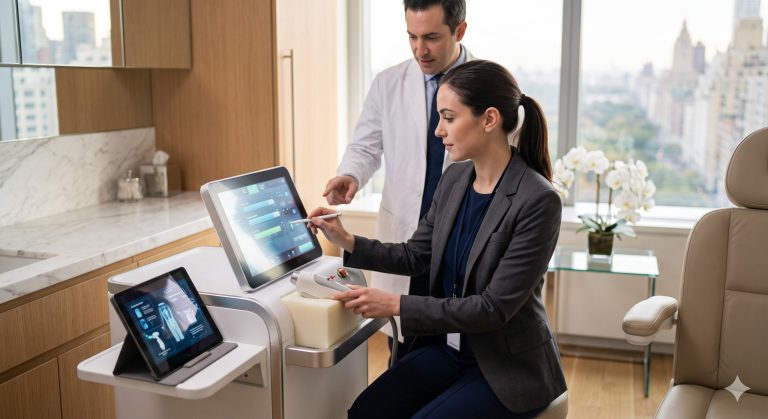
To leverage TRT, we recommend a ‘test spot’ protocol at a low fluence with a pulse duration calculated for the target’s depth. For hair removal, you can select a longer pulse for coarse, deep follicles (≈30-50ms) and a shorter pulse for fine, superficial hairs (≈10-20ms). Our Smart Touchscreen UI provides pre-set protocols derived from clinical studies on TRT, but we also offer comprehensive in-person training to teach your staff how to manually adjust parameters based on real-time tissue response—a capability that offers superior versatility over the fixed protocols of legacy lasers.
Q8: What is the technical support and training process for this TRT platform?
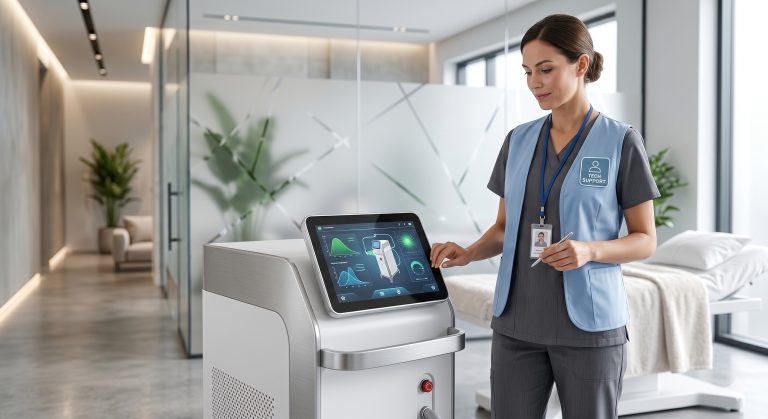
We provide a comprehensive support program that includes on-site installation and an in-depth clinical training module focused on ‘TRT-Driven Decision Making.’ Our post-sales technical support covers everything from hardware maintenance (cleaning water circuits, optics) to software updates that refine pulse algorithms. We offer a 24/7 ticketing system and remote diagnostics to troubleshoot any issues, ensuring your device maintains peak performance. Additionally, we provide a full warranty covering the laser bars and handpiece, reflecting our confidence in the durability of our TRT-engineering.