IPL vs Diode Laser FAQ: Expert Answers for Aesthetic Clinics & Dermatologists
Overview
Choosing between IPL (Intense Pulsed Light) and diode laser technology is a critical decision for any aesthetic clinic. This FAQ addresses the most common pre-sales and post-sales questions from clinic owners and dermatologists, covering everything from clinical efficacy and patient safety to ROI and maintenance. For B2B buyers, understanding the technical and financial distinctions is key to making a profitable investment. We focus on professional-grade platforms, not at-home devices, to ensure your clinic delivers the highest standard of care.
Frequently Asked Questions
Q1: Is a diode laser truly superior to IPL for clinical hair removal, and why?
Yes, a professional diode laser is generally superior for long-term hair reduction due to its precision and efficacy . Unlike IPL, which uses a broad spectrum of light, a diode laser emits a single, concentrated wavelength (typically 800-810nm) that targets melanin in the hair follicle with high precision . This allows for deeper penetration, more effective follicle destruction, and fewer sessions compared to IPL, which uses a scattered, less targeted beam . For a dedicated hair removal service, a diode laser is the clinical workhorse that delivers more predictable and lasting results .
Q2: What are the safety considerations for treating different Fitzpatrick skin types with IPL vs diode laser?
Diode lasers are generally safer and more effective across a wider range of skin types (Fitzpatrick I-VI) than IPL . IPL carries a higher risk of burns and post-inflammatory hyperpigmentation (PIH) on darker skin (types IV-VI) because its broad spectrum can be absorbed by melanin in the epidermis . For skin types V and VI, IPL use is strongly discouraged, while a 1064nm Nd:YAG laser is the preferred choice, though a diode laser can be used with caution . In contrast, a true diode laser’s targeted wavelength minimizes epidermal damage, making it suitable for a more diverse patient demographic when operated by a trained professional .
Q3: How does the cost of ownership (TCO) and ROI compare between an IPL and a diode laser machine?
While the initial investment for a diode laser is higher, its ROI and long-term value often surpass that of an IPL system . Diode lasers offer faster treatment times due to larger spot sizes and higher repetition rates, increasing patient throughput . They also have fewer consumable costs, as high-quality diode handpieces can last for millions of shots, whereas IPL systems often require costly, frequent lamp replacements . Although a cheap IPL has a lower entry cost, a diode laser generates more revenue per session, achieves better patient outcomes with fewer sessions, and yields a higher return on investment for a busy clinic .
Q4: What is the typical handpiece shot lifespan for a professional diode laser?
The typical handpiece lifespan for a premium diode laser is between 1 to 2 million shots, with high-end OEMs now rating some bars for up to 30 million shots . This longevity is a critical factor for calculating consumable costs. In contrast, IPL systems use flashlamps that degrade much faster and need replacing, adding significant operational expenses . When evaluating a purchase, always ask for documentation on the laser diode’s performance, such as a fluence decay curve, to ensure the handpiece will maintain its power output over its lifespan .
Q5: What clinical results can a clinic expect in terms of treatment sessions and hair clearance?
With a professional diode laser, patients typically require 6-8 sessions to achieve significant long-term hair reduction, compared to 8-12 or more sessions with IPL . The precise targeting of the diode laser delivers more effective follicle destruction per pulse, meaning faster clearance. Results also depend on hair biology, as only hair in the active growth phase (anagen) responds to treatment . A diode laser allows clinicians to use higher, adjustable energy levels and larger spot sizes, speeding up treatment and leading to a 85-95% reduction in hair count .
Q6: How does the advanced cooling system in diode lasers improve patient comfort and safety?
Advanced diode lasers feature integrated Sapphire Contact Cooling (often with a thermoelectric cooler or TEC) that pre-cools the epidermis to -5°C to +5°C . This is crucial because it protects the skin from thermal injury, reduces pain, and allows clinicians to use higher, more effective fluence levels (energy density) without burning the patient . IPL systems may have less effective or passive cooling, leading to more discomfort and a higher risk of epidermal damage, especially on darker skin tones .
Q7: Are there multi-wavelength diode laser options that treat a wider range of conditions beyond hair removal?
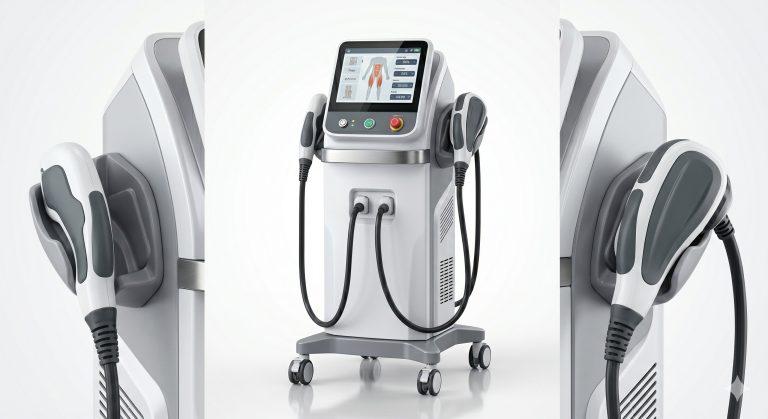
Yes, modern premium platforms use a tri-wavelength handpiece (e.g., 755nm, 808nm, 1064nm) to treat hair, pigmented lesions, and vascular conditions . A single 808nm diode is a hair removal workhorse, but a system combining 755nm (superficial pigmentation and fine hair), 808nm (deep follicular destruction), and 1064nm (deep vessels and safe for darker skin) is a multi-indication investment . This synergy allows clinics to offer a broader service menu, including photofacials and vascular lesion clearance, maximizing the utility and profitability of a single platform .
Q8: What regulatory certifications should a B2B buyer look for in a diode laser?
For a professional medical device, you should demand Medical CE (Class IIb) certification and appropriate FDA 510(k) clearance for your jurisdiction . The manufacturer should also hold ISO 13485 certification, which ensures a quality management system for the design and production of medical devices . Using non-compliant devices is a patient safety risk and can invalidate your clinic’s malpractice insurance. Always verify the clearance number directly on the relevant regulatory databases .