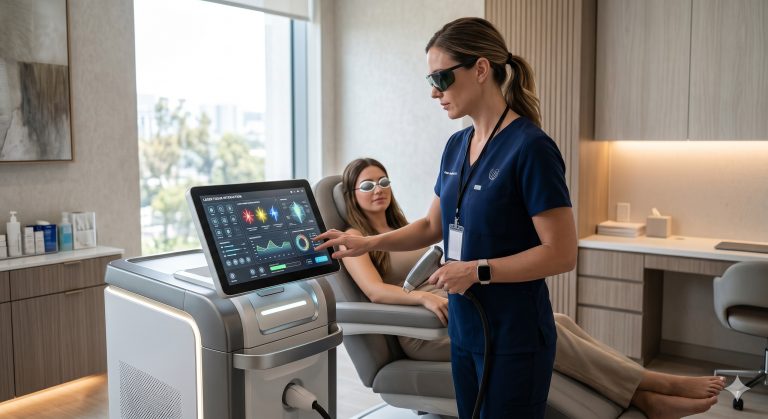
Can CO2 Laser Remove Stretch Marks Effectively? Clinical ROI & Efficacy FAQ for Clinics
Overview
For aesthetic clinics and med spas, stretch marks (striae distensae) represent a high-demand treatment indication. CO2 fractional laser remains a gold-standard modality for striae remodeling. This FAQ addresses clinical efficacy, pre-sales assessment, ROI, consumables, safety protocols, and technical support for B2B buyers considering a CO2 laser investment for stretch mark removal.
Frequently Asked Questions
Q1: Can CO2 laser remove stretch marks effectively, and what is the expected clinical improvement rate?
Yes, fractional CO2 laser achieves 50-80% visible improvement in stretch mark texture, color, and width after 3-4 sessions. The 10,600nm wavelength creates micro-ablative columns that trigger neocollagenesis and elastin regeneration, specifically targeting dermal scarring typical of striae rubrae and albae. Clinical studies demonstrate significant improvement in skin roughness (up to 60%) and erythema reduction (70%) when using appropriate energy densities (40-80mJ) and coverage densities (5-15%).
Q2: How many CO2 laser sessions are needed for stretch mark removal, and what is the patient interval?
Typically 3 to 6 sessions are required for optimal stretch mark remodeling, spaced 6-8 weeks apart to allow complete collagen remodeling. Mild striae rubrae often resolve in 3 sessions, while older striae albae may need 5-6 sessions. Each session should cover the treatment area with 15-25% density to avoid overtreatment. Clinics should set patient expectations: progressive improvement visible from 8 weeks post-first session, with final results at 6 months post-last session.
Q3: What ROI and payback period can a clinic expect when investing in a CO2 laser for stretch mark treatments?
Typical payback period is 6-9 months for a dedicated CO2 laser system priced at $25,000-$45,000. Based on charging $400-$800 per stretch mark session (abdomen, thighs, or arms) and performing 15-20 sessions weekly, gross monthly revenue ranges $24,000-$64,000. Consumables (handpiece lifespan, CO2 gas, or disposable tips) average $8-$15 per patient. High ROI is driven by low per-procedure consumable cost and the ability to treat multiple indications (acne scars, surgical scars, rhytides, and skin resurfacing).
Q4: Is fractional CO2 laser safe for all Fitzpatrick skin types (I-VI) when treating stretch marks?
Fractional CO2 laser is safe for Fitzpatrick I-IV with appropriate parameters, but requires extreme caution for types V-VI due to post-inflammatory hyperpigmentation (PIH) risk. For skin types V-VI, use lower energy (30-50mJ), lower density (5-10%), longer pulse duration, and mandatory pre-treatment with hydroquinone or tyrosinase inhibitors for 4 weeks. Many clinics prefer non-ablative lasers or microneedling RF for darker skin types. Always perform test spots and wait 8 weeks before full treatment on Fitzpatrick V-VI.
Q5: What is the handpiece lifespan and consumable replacement schedule for a CO2 laser system?
CO2 laser handpiece lifespan typically ranges 200,000 to 500,000 pulses or 2-3 years under normal clinical use (20-30 weekly patients). Consumables requiring replacement include: articulated arm mirrors (every 12-24 months), scan lens protective windows (every 100-150 treatments), and CO2 gas cartridges (if not sealed tube system). Some modern systems use ceramic RF-excited CO2 tubes with 40,000-60,000 hour lifetimes, eliminating gas refills. Budget $1,200-$3,000 annually for preventive consumables.
Q6: How does the cooling system work on CO2 lasers for stretch mark pain management?
Advanced CO2 systems integrate contact cooling (sapphire tip at 2-5°C) or cryogen spray cooling (CSC) to anesthetize the epidermis before each micro-ablative pulse. Contact cooling reduces pain by 40-60%, allowing treatments without topical anesthesia for smaller areas. CSC provides instantaneous (-30°C) epidermal protection, especially effective for sensitive regions like inner thighs and abdomen. Patients rate pain at 3-4/10 with cooling vs. 7-8/10 without. This cooling technology directly improves patient retention and repeat bookings.
Q7: What maintenance protocols are required for the water circulation and thermal regulation system?
CO2 lasers require distilled water circulation maintenance every 6 months: drain, flush with 5L of distilled water + 50ml of bacteriostatic solution, and refill. Check water level weekly and top up with distilled water only (never tap water). Thermal regulation sensors need annual calibration. Failure to maintain water circuits causes thermal shutdown, reduced power output (10-20% loss), and tube degradation. Document all maintenance for regulatory audits (ISO 13485 compliance).
Q8: What warranty, training, and shipping support should B2B buyers expect from a CO2 laser supplier?
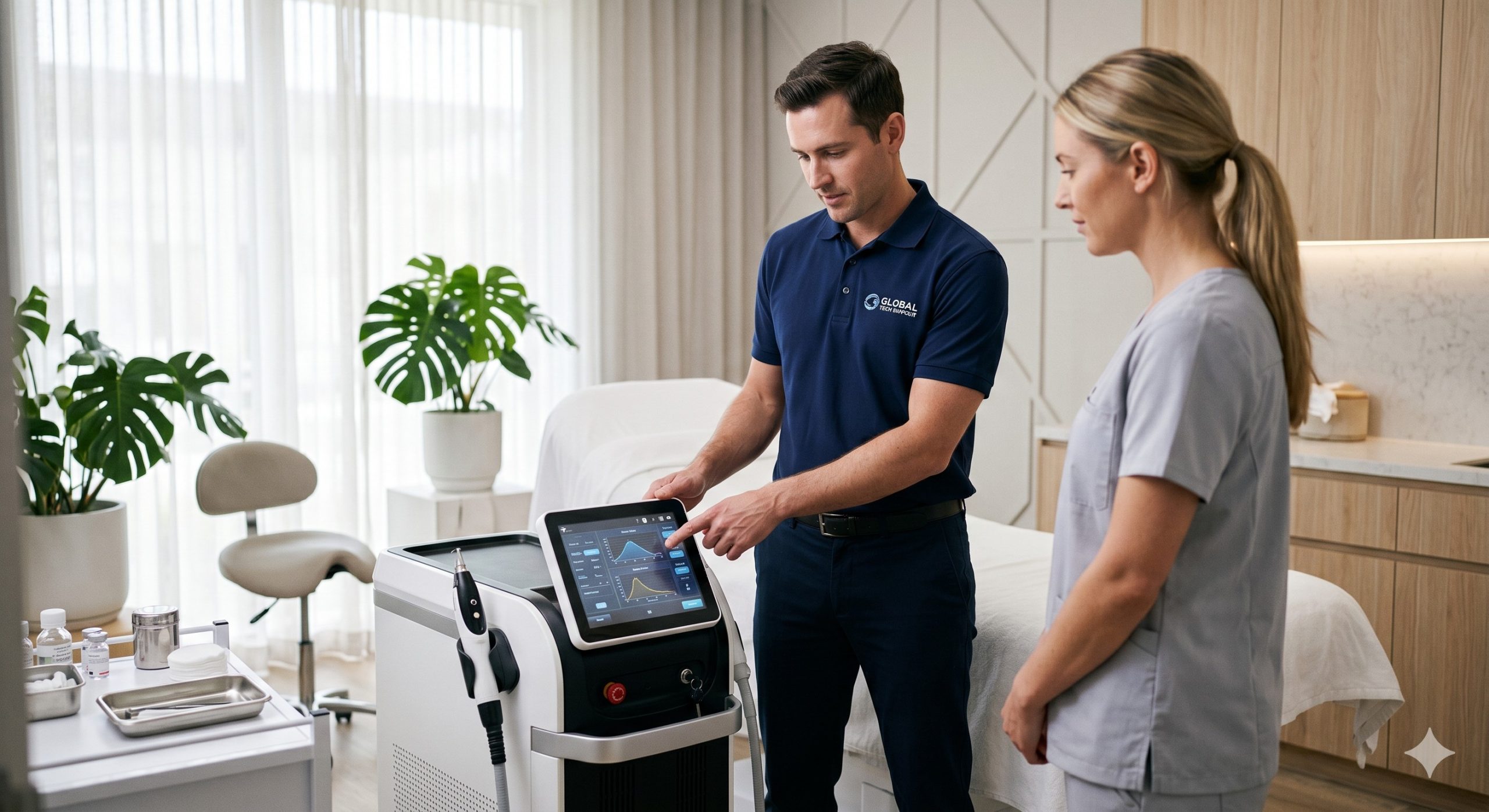
Industry standard: 24-month comprehensive warranty covering laser tube, electronics, and handpiece (excluding consumables). On-site training (2-3 days) for 2-4 clinical staff plus remote technical support with 4-hour response time. Shipping terms: FOB origin or CIF to major ports, with protective hard case and humidity-controlled packaging. Critical pre-sales questions: ask for local service engineers, spare parts availability within 48 hours, and loaner unit policy. Suppliers complying with CE MDD/MDR or FDA 510(k) provide higher reliability and audit readiness.