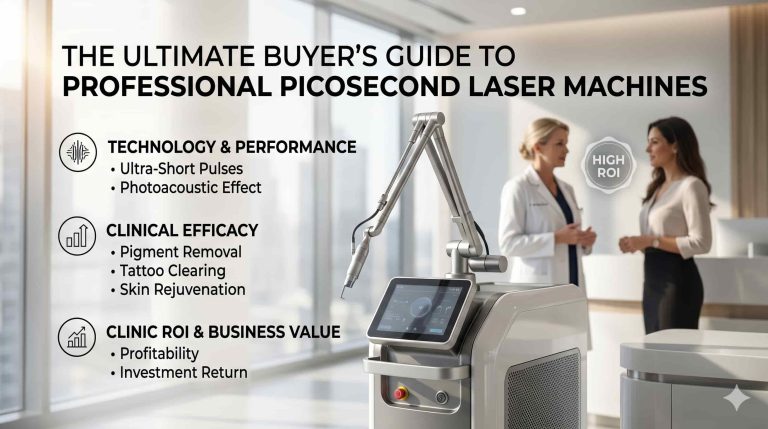
The Paradigm Shift in Dermatological Treatments: Understanding Picosecond Technology
In the highly competitive landscape of medical aesthetics, the hardware you deploy dictates clinical outcomes and patient retention. For decades, Q-switched nanosecond lasers were the gold standard for pigment clearance. However, the introduction of picosecond technology has fundamentally altered dermatological treatment protocols, offering a level of precision previously unattainable.
From Nanosecond to Picosecond: The Power of Ultrashort Pulses
The fundamental metric differentiating legacy systems from modern platforms is pulse duration. While traditional Q-switched lasers operate in the nanosecond domain ($10^{-9}$ seconds), a true skin rejuvenation pico laser functions in the picosecond range ($10^{-12}$ seconds).
Operating precisely within the 300-500ps spectrum allows the device to surpass the Thermal Relaxation Time (TRT) of target chromophores and aggressively approach the Stress Relaxation Time (SRT). By delivering immense peak power in a fraction of a nanosecond, the laser drastically reduces thermal diffusion into adjacent healthy tissue. This mechanical approach mitigates collateral thermal damage, translating directly to reduced erythema, minimized edema, and enhanced patient safety profiles.
Photomechanical vs. Photothermal Effects in Tissue
To evaluate aesthetic laser equipment accurately, clinical directors must understand the shift from photothermal to photomechanical destruction.
- Photothermal Effect (Legacy): Relies on heating the target chromophore (melanin or tattoo ink) until it fragments. This prolonged heat transfer inherently elevates the risk of thermal damage to the basal layer, frequently triggering adverse immune responses.
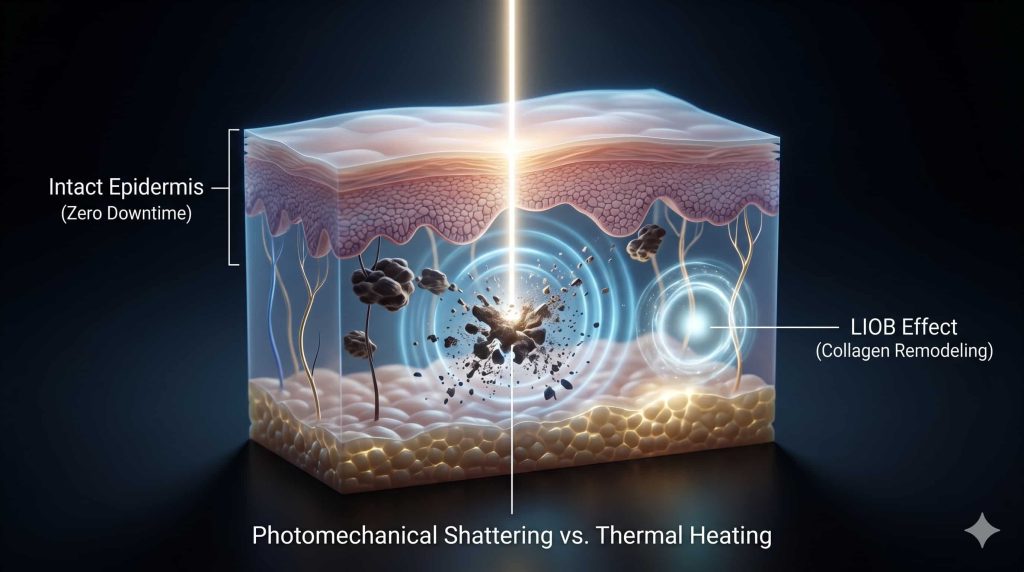
- Photomechanical Effect (Picosecond): Generates a powerful acoustic shockwave—the photoacoustic effect. The sheer speed of the energy delivery shatters the target chromophore into minuscule, dust-like particles.
Because these fractured particles are exponentially smaller than those produced by nanosecond lasers, the body’s macrophages can phagocytize and clear the debris through the lymphatic system much more efficiently. Furthermore, significantly reducing the thermal load practically eliminates the risk of Post-Inflammatory Hyperpigmentation (PIH), a critical consideration for high-volume dermatological practices.
The Role of LIOB (Laser-Induced Optical Breakdown)
One of the most profound clinical advantages of a professional picosecond platform is its ability to perform non-ablative fractional resurfacing via Laser-Induced Optical Breakdown (LIOB).
When focused through a specialized fractional array or micro-lens handpiece, the picosecond energy concentrates deep within the epidermis or upper dermis. This intense focal energy causes localized plasma formation, resulting in microscopic cavitation bubbles (intra-epidermal vacuoles) without breaching the stratum corneum.
This process triggers a robust wound-healing cascade. Fibroblasts are stimulated to synthesize new collagen (neocollagenesis) and elastin (neoelastogenesis), fundamentally remodeling the dermal matrix. Because the outer skin barrier remains entirely intact, the infection risk plummets, and epidermal healing accelerates rapidly compared to traditional ablative modalities.
Clinical Efficacy: Solving High-Demand Skin Challenges for Your Patients
The decision to procure professional medical aesthetic devices must be rooted in their ability to address high-frequency patient presentations. A versatile picosecond platform directly targets the most prevalent and stubborn dermatological concerns seen in daily clinical practice.
Masterful Eradication of Epidermal and Dermal Pigmentation
Benign pigmented lesions, ranging from superficial solar lentigines (age spots) to deep dermal melasma, require nuanced treatment protocols. Traditional photothermal lasers often exacerbate melasma due to heat-induced melanocyte stimulation.
A dual-wavelength (1064nm and 532nm Nd:YAG) pico laser provides the precise spectroscopic absorption required for different depths:
- 532nm Wavelength: Highly absorbed by melanin, making it the wavelength of choice for superficial epidermal pigmentation, such as freckles and café-au-lait macules.
- 1064nm Wavelength: Penetrates deeper into the dermis, safely addressing dermal melanocytosis, Nevus of Ota, and recalcitrant melasma. The ultra-short pulse duration minimizes the thermal activation of surrounding melanocytes, achieving clearance where legacy devices fail.
Advanced Acne Scar Revision and Skin Texture Resurfacing
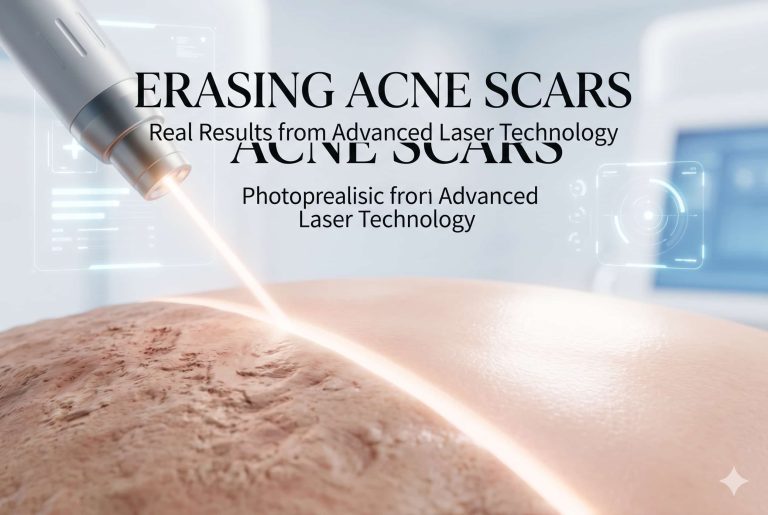
Atrophic acne scars—including ice-pick, boxcar, and rolling scars—have historically required aggressive, high-downtime interventions. By utilizing specialized fractional handpieces, picosecond lasers offer a paradigm-shifting alternative.
Clinical Comparison: Atrophic Scar Revision Technologies
| Parameter | Fractional Pico Laser (LIOB) | Traditional Fractional CO2 Laser |
| Mechanism of Action | Non-ablative acoustic cavitation (LIOB) | Ablative photothermal vaporization |
| Epidermal Integrity | Fully preserved | Compromised (micro-thermal zones) |
| Average Downtime | 12 to 24 hours (mild erythema) | 5 to 10 days (crusting, peeling) |
| PIH Risk (Darker Skin) | Exceptionally Low | High |
| Patient Tolerance | High (often requires no topical anesthesia) | Low (requires robust pain management) |
By delivering equivalent dermal remodeling with a fraction of the recovery time, clinics can capture a broader demographic of professionals who cannot afford extended absences from their daily routines.
Refractory Tattoo Removal Capabilities
Tattoo removal remains a highly lucrative revenue stream for aesthetic practices. However, colorful tattoos, particularly those featuring dense green or sky-blue inks, historically required countless sessions with diminishing returns.
The enhanced photoacoustic capability of the picosecond pulse shatters even the most stubborn, large-granule professional inks. Clinical data consistently demonstrates that picosecond technology achieves superior clearance rates in fewer overall sessions, effectively reducing the treatment timeline by up to 50% compared to legacy Q-switched Nd:YAG systems. This efficiency increases patient turnover and boosts overall clinic satisfaction metrics.
Expanding Your Practice’s Capabilities Across All Fitzpatrick Skin Types
Global demographic shifts dictate that modern medical spas must be equipped to safely treat patients of varying ethnicities. Inability to treat melanin-rich skin effectively limits your total addressable market and exposes your practice to clinical liabilities.
Overcoming the Limitations of Traditional Lasers on Darker Skin
Treating patients with Fitzpatrick Skin Types IV through VI presents a profound clinical challenge. The basal layer in these skin types contains highly active, densely packed melanocytes. When exposed to the prolonged thermal dwell times of nanosecond or millisecond lasers, the competing chromophore (epidermal melanin) absorbs excessive heat. This often leads to severe blistering, hypopigmentation, or debilitating Post-Inflammatory Hyperpigmentation (PIH).
Why Pico Lasers Offer a Superior Safety Profile for Melanin-Rich Skin
The strategic deployment of a 1064nm picosecond wavelength fundamentally resolves this limitation.
- Optical Penetration Depth: The 1064nm wavelength inherently exhibits lower absorption by epidermal melanin compared to 755nm or 532nm, allowing the photon energy to bypass the dermal-epidermal junction safely.
- Acoustic Dominance: Because the 300-500ps pulse relies heavily on acoustic shattering rather than thermal accumulation, the surrounding melanocytes are not subjected to the inflammatory heat triggers that cause PIH.
This robust safety profile allows practitioners to confidently market their services to a diverse patient base, ensuring equitable, high-quality care without compromising safety standards.
Strategic Business Value: What a Pico Laser Means for Your Clinic’s ROI
Beyond exceptional clinical outcomes, capital equipment procurement must be justified by rigorous financial modeling. Sourcing your technology from a reliable Cocoon Laser platform ensures that the clinical advantages translate into tangible, long-term business growth.
Minimizing Patient Downtime to Maximize Satisfaction
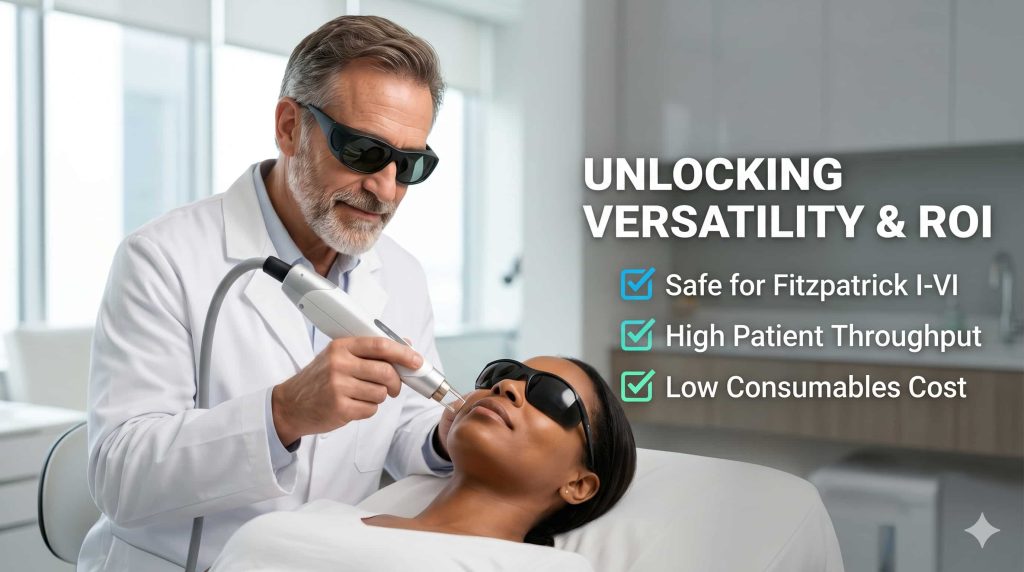
Modern consumers demand high-impact results with minimal disruption to their lives. The picosecond laser perfectly aligns with the resurgence of the “Lunchtime Procedure.” Patients can undergo a full-face fractional rejuvenation treatment, experience only transient erythema that resolves within hours, and immediately return to work.
This low-downtime model significantly lowers the barrier to entry for prospective patients, facilitating higher booking volumes and encouraging adherence to multi-session treatment plans.
Expanding Treatment Menus with a Versatile Platform
Consolidation of clinical indications into a single hardware platform represents the pinnacle of operational efficiency. A multi-wavelength picosecond device empowers your clinic to seamlessly transition between entirely different revenue streams within a single room:
- Morning: Melasma management and skin brightening.
- Afternoon: High-margin tattoo removal sessions.
- Evening: Premium anti-aging and acne scar fractional resurfacing.
This versatility prevents capital from being tied up in multiple, single-indication legacy devices, optimizing clinic square footage and streamlining staff training protocols.
Long-Term Reliability and Lower Cost of Ownership
When evaluating B2B medical aesthetic devices, the initial capital expenditure is only a fraction of the true financial picture. Total Cost of Ownership (TCO) is heavily influenced by consumable requirements, maintenance frequency, and hardware longevity.
Strategic ROI Factors to Consider:
- Low Consumables: Unlike certain ablative lasers or RF microneedling devices that require expensive, single-use disposable tips, a high-quality picosecond laser relies on durable optical components, ensuring a profoundly high gross margin per treatment.
- High Shots Count: Premium resonators and pump chambers deliver tens of millions of stable pulses before requiring flashlamp replacement, driving down the per-shot operational cost.
- Stable Beam Quality (Top-Hat Profile): An articulated arm that consistently delivers a uniform, flat-top beam profile prevents clinical “hot spots.” This reduces adverse events, negating the hidden costs of managing unhappy patients and potential clinical liabilities.
- Advanced TEC Cooling: Industrial-grade Thermo-Electric Cooling (TEC) ensures the laser operates continuously without overheating, allowing your clinic to book back-to-back appointments safely during peak seasonal demand.
Financial Comparison: Device TCO Analysis
| Financial Metric | Legacy Q-Switched System | Modern Pico Laser Platform |
| Target Indications | Primarily limited to tattoos/basic pigment | Full spectrum: Pigment, Scars, Wrinkles, Tattoos |
| Cost per Treatment (Consumables) | Low | Extremely Low (No specialized tips required) |
| Patient Throughput Volume | Moderate (Due to higher pain/downtime) | High (Tolerable, low downtime) |
| Average Treatment Price | Standard Market Rate | Premium Pricing (Due to advanced technology) |
| Time to Break-Even | 12 – 18 Months | 6 – 9 Months (Driven by higher utilization rates) |
Conclusion: Elevating the Standard of Aesthetic Care with Cocoon Laser
The transition from photothermal legacy devices to advanced photomechanical systems is no longer a luxury; it is a clinical necessity for practices intent on maintaining market leadership. By drastically reducing thermal damage, expanding treatment safety across all Fitzpatrick skin types, and delivering unprecedented dermal remodeling via LIOB, picosecond technology solves the core pain points of modern aesthetic medicine.
Next Steps for Integrating Picosecond Technology
For clinic owners and dermatological directors, the immediate next step is a comprehensive audit of your current capital equipment matrix. Identify the bottlenecks in your practice—are you turning away patients with darker skin types? Are your patients rejecting treatments due to unacceptable downtime? Are you losing ground to competitors offering superior tattoo removal speeds?
Upgrading your clinical arsenal with a reputable, high-performance laser supplier transforms these liabilities into scalable revenue streams. Ensure that any device you evaluate meets stringent international safety and efficacy standards, such as Medical CE or FDA 510(k) clearances, to guarantee reliable performance.
By investing in advanced medical aesthetic devices from a proven manufacturer like Cocoon Laser, you are not simply buying a machine; you are acquiring a comprehensive business solution designed to maximize patient satisfaction, clinical safety, and long-term financial returns. To explore the exact hardware specifications, request access to our comprehensive clinical whitepapers, or schedule an in-depth technical demonstration to see the transformative power of picosecond technology firsthand.
If you need more information, please click “Contact Us”.
If you want to obtain more information, please follow our official website and Facebook.