Aesthetic Clinic Business Plan for New Capital Equipment: Clinical Efficacy, Wavelengths, and ROI
The Strategic Imperative of Capital Equipment in Modern Aesthetic Medicine
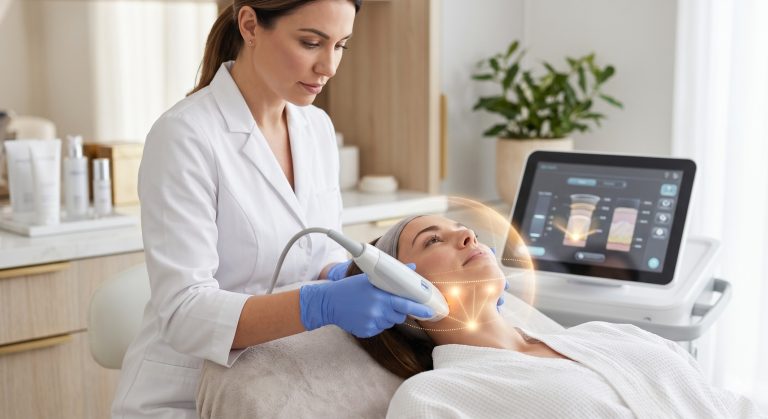
In the rapidly evolving landscape of medical aesthetics, the acquisition of new capital equipment represents one of the most significant clinical and financial decisions a practice can make. It is a decision that extends far beyond the simple purchase of a device; it is an investment in clinical capability, patient experience, and the long-term profitability of the clinic. For discerning practitioners and clinic owners, a robust aesthetic clinic business plan for new capital equipment must bridge the gap between cutting-edge technology and sound business strategy. The true measure of success lies not in the novelty of the technology, but in its ability to deliver superior clinical outcomes, ensure patient safety, and generate a sustainable return on investment (ROI). As the medical aesthetics market continues to grow at an estimated 12% annually, the barrier to entry is higher than ever, with startup costs for a medical spa ranging from $200,000 to over $500,000 . This guide provides a comprehensive, data-driven framework for navigating this complex investment, ensuring that your new equipment serves as a growth engine rather than a financial liability.
Clinical Deep Dive: The Physics of Efficacy and Selective Photothermolysis
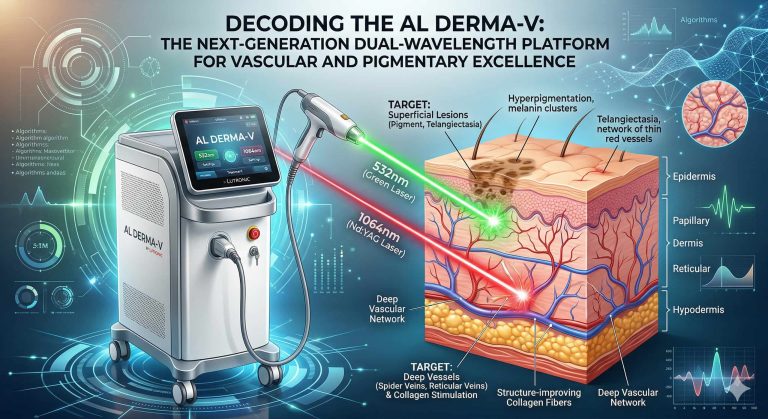
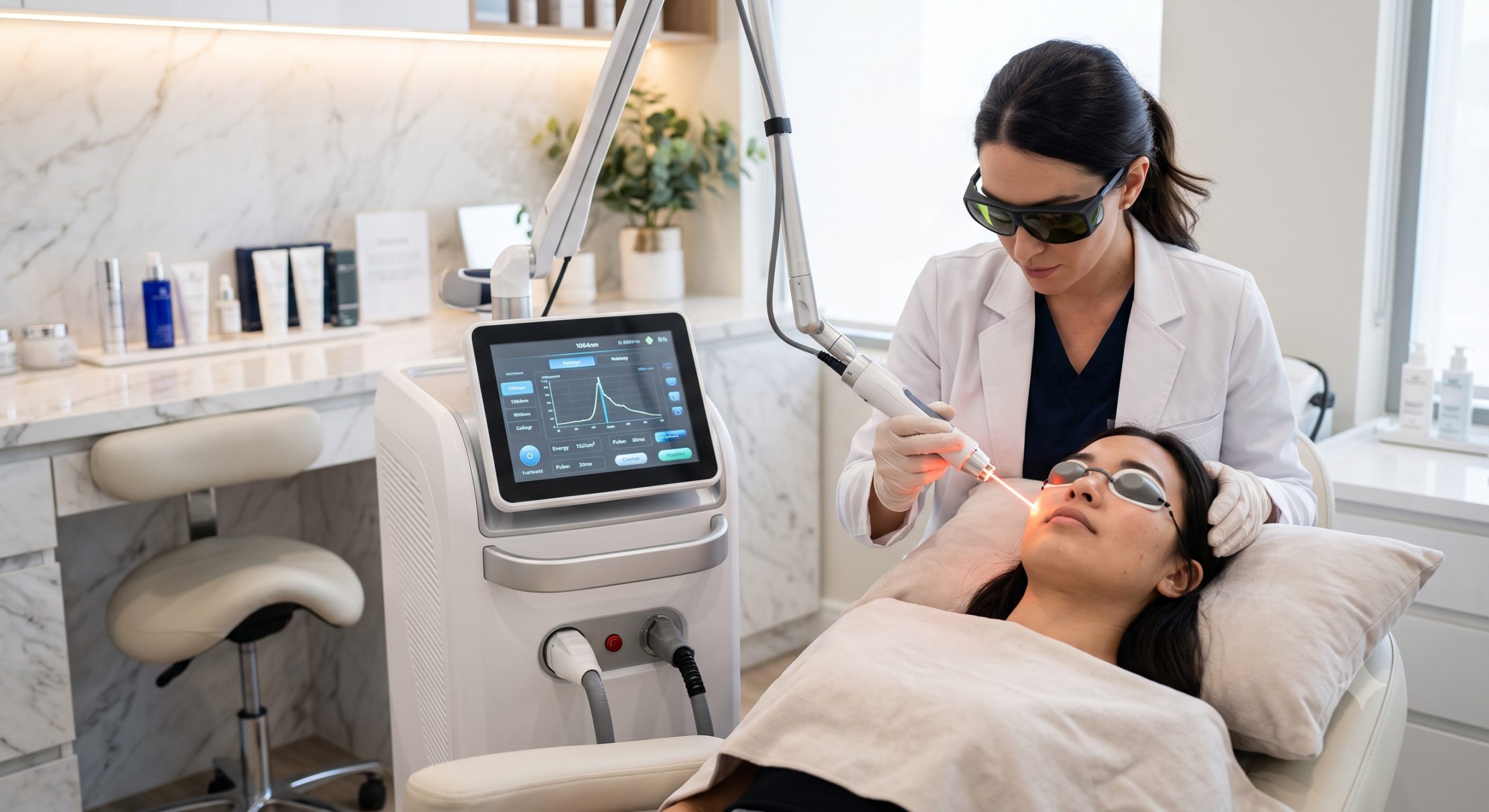
At the heart of any advanced aesthetic device is the principle of selective photothermolysis. This scientific foundation dictates that a specific wavelength of light is preferentially absorbed by a target chromophore—such as melanin in hair follicles or hemoglobin in blood vessels—while sparing the surrounding tissue. For a new capital investment to be clinically viable, it must offer a sophisticated parameter set that allows the clinician to precisely control the light-tissue interaction. The aesthetic clinic business plan for new capital equipment must be grounded in an understanding of these core metrics, as they directly impact both efficacy and safety.
Critical Technical Parameters and Their Clinical Implications
When evaluating new technology, the clinical team must scrutinize the device’s specifications. The key parameters include:
- Wavelength (nm): The fundamental determinant of penetration depth and target specificity. For example, a 755nm Alexandrite wavelength is highly effective for lighter skin types (Fitzpatrick I-III), while a 1064nm Nd:YAG offers deeper penetration and is safer for darker skin types (Fitzpatrick IV-VI) due to less epidermal melanin absorption. Multi-wavelength platforms, such as those combining 755nm, 808nm, and 1064nm, offer versatility across a broader patient demographic .
- Fluence (Energy Density in J/cm²): This measures the energy delivered per unit area. The fluence must be high enough to achieve the necessary thermal effect on the target but carefully controlled to prevent epidermal injury.
- Pulse Duration (Pulse Width in ms): The time over which the energy is delivered. To effectively target a specific chromophore, the pulse duration must be shorter than or equal to the thermal relaxation time (TRT) of the target (e.g., ~10-100ms for hair follicles) to confine the heat and prevent collateral damage.
- Spot Size (mm): The diameter of the laser beam. Larger spot sizes (e.g., 12-24mm) allow for deeper penetration and faster treatment, significantly increasing clinic throughput and patient comfort by reducing the number of pulses needed to cover a treatment area .
These parameters are not merely technical specifications; they are the levers of clinical success. A device with a limited parameter range restricts the practitioner’s ability to tailor treatments to individual patient needs, ultimately limiting both safety and results.
| Key Parameter | Technical Specification | Clinical Benefit |
|---|---|---|
| Wavelength / Laser Type | 755nm (Alexandrite) / 808nm (Diode) / 1064nm (Nd:YAG) | Versatility for all Fitzpatrick skin types; 1064nm for deeper penetration and safety in darker skin. |
| Energy Density (Fluence) | Up to 50 J/cm² (Adjustable) | Tailored energy delivery for optimal follicle destruction while minimizing epidermal injury. |
| Pulse Duration (Pulse Width) | 10 ms – 300 ms (Adjustable) | Variable pulse widths for selective photothermolysis, targeting different hair follicle sizes and depths. |
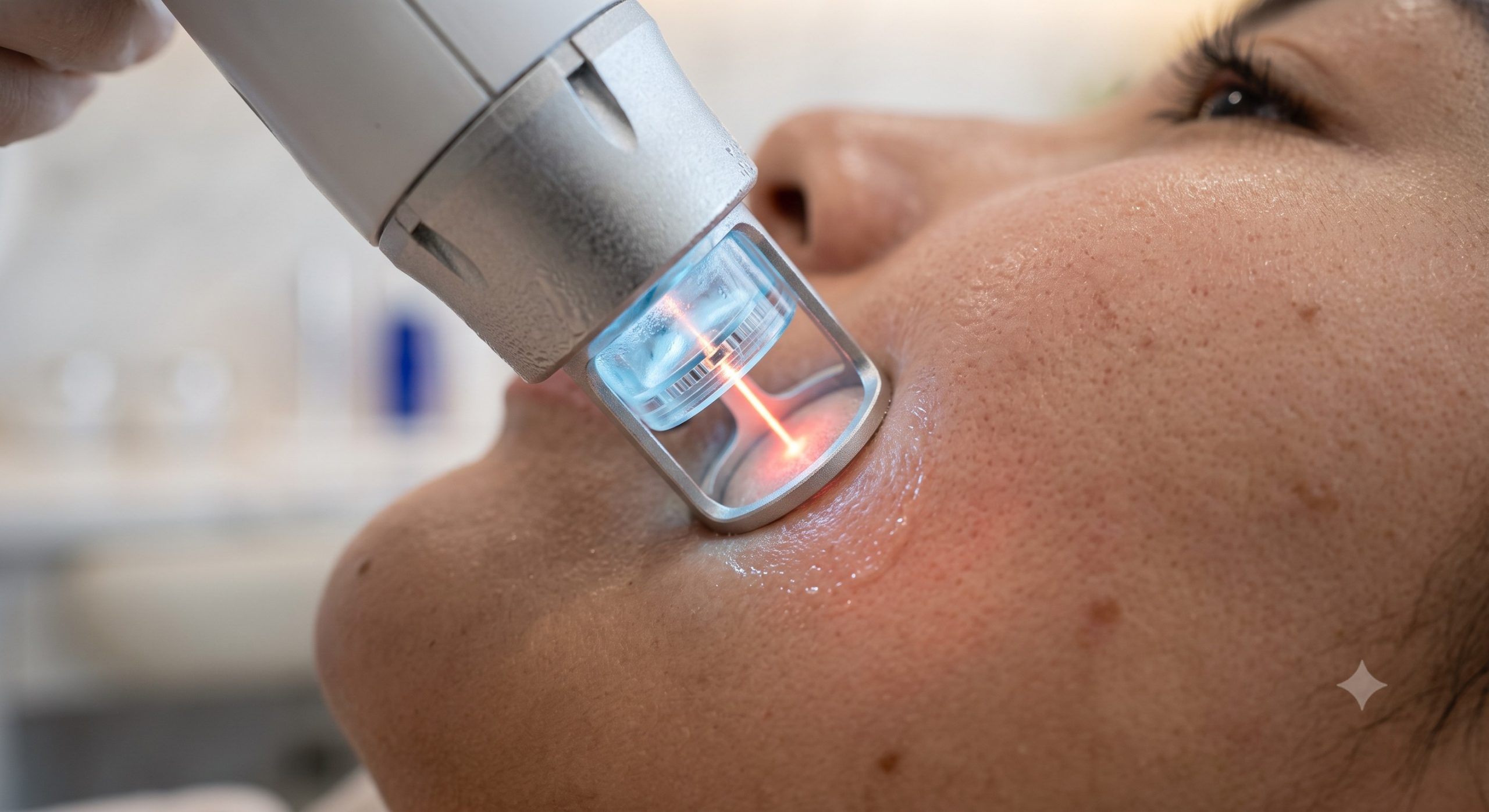
| Cooling System | Contact Sapphire Cooling (at -5°C to 5°C) | Protects epidermis, improves patient comfort, and allows for the use of higher, more effective fluences. |
| Spot Size | Up to 24 mm x 24 mm | Larger spot sizes increase treatment speed and throughput, enabling higher clinic volume and patient ROI. |
Clinical Protocols and Patient Demographics: Treating the Fitzpatrick Scale
A key component of a successful aesthetic clinic business plan for new capital equipment is a well-defined protocol for treating diverse patient populations. The Fitzpatrick Scale is the industry standard for classifying skin types based on their reaction to UV exposure, and it is a critical tool for determining safe and effective treatment parameters. A failure to respect this scale is the leading cause of complications such as burns, pigmentation changes, and scarring. Therefore, any new device investment must be evaluated on its ability to safely treat the clinic’s specific patient demographic.
- Fitzpatrick Skin Types I-III: These lighter skin types have less epidermal melanin, making them suitable for a wider range of wavelengths, including 755nm and 808nm. The primary risk is for epidermal injury, which can be managed with advanced cooling systems and conservative fluences.
- Fitzpatrick Skin Types IV-VI: Treating darker skin types requires a higher degree of caution due to the increased melanin in the epidermis, which competes with the target chromophore for light absorption. The 1064nm wavelength is the gold standard for these patients due to its deeper penetration and reduced melanin absorption. Devices that lack this wavelength or the appropriate cooling mechanisms should be considered unsuitable for clinics serving a diverse population. The integration of a multi-wavelength system is often a strategic decision to expand the clinic’s addressable market .
Business Strategy: ROI, Total Cost of Ownership, and Clinic Integration
The clinical efficacy of a device is its entry ticket; its financial performance is the source of profit. An aesthetic clinic business plan for new capital equipment must move beyond the initial sticker price to conduct a thorough analysis of the total cost of ownership (TCO) and ROI. This comprehensive financial model is essential for securing financing and ensuring the long-term viability of the practice. The fundamental principle is that a new aesthetic device should be cash-flow positive from the first month. For instance, a typical financing payment of $800-$1,200 per month can often be covered by the sale of just one or two treatment packages, making the investment highly accessible .
Breaking Down the Total Cost of Ownership
When budgeting for new equipment, practices must account for all associated costs, not just the purchase price. This includes:
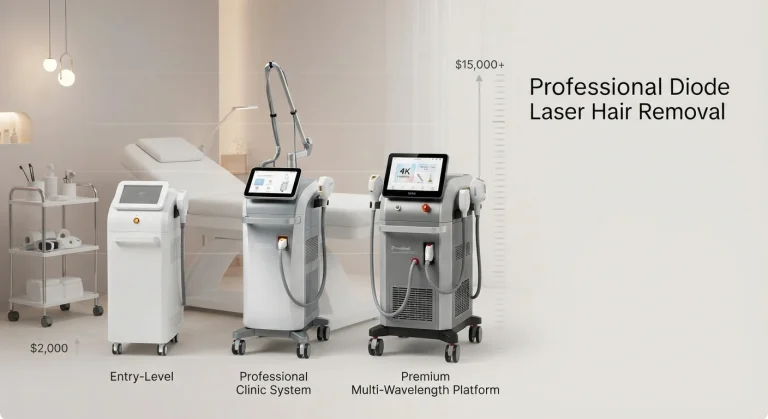
- Capital Expenditure (CapEx): The purchase price of the equipment. This can range from $30,000 to over $150,000 for a state-of-the-art laser device .
- Operational Expenditure (OpEx): Ongoing costs include maintenance contracts (often 5-10% of the device cost per year), consumable costs (which should be minimal or non-existent for true margin on laser hair removal devices), and utilities .
- Staff Training: Comprehensive training for the clinical team is a non-negotiable cost. This ensures the device is used safely and effectively, maximizing patient outcomes and preventing costly errors .
The ROI Imperative: A Real-World Example
To illustrate the financial potential, consider a laser hair removal device. An investment of $100,000 can generate an estimated $200 in profit per session. To recoup the investment, the clinic would need to perform 500 sessions. At a conservative volume of 10 sessions per week, the device would break even in 50 weeks, or just under one year. However, at a full-volume scenario of 25 sessions per week, the payback period reduces to just 20 weeks. The key takeaway is that treatment volume and utilization are the primary drivers of ROI. This underscores the importance of integrating the new device into the clinic’s marketing and patient acquisition strategy to drive demand .
Furthermore, a device can serve as a “traffic-generating” anchor, bringing in new patients who can then be upsold to higher-margin, “profit-driven” services like injectables or body contouring . This dual-engine strategy maximizes the lifetime value of each patient.
Conclusion: The Path to a Profitable and Clinically Excellent Practice
Developing a comprehensive aesthetic clinic business plan for new capital equipment is a multifaceted process that demands a balance of clinical expertise and business acumen. It requires a deep understanding of the technical parameters that drive efficacy, a clear protocol for patient safety based on the Fitzpatrick Scale, and a rigorous financial model that accounts for all costs and revenue streams. The final step is to ensure the equipment is integrated into the clinic’s ecosystem as a growth engine, supported by targeted marketing, staff training, and a patient-centric philosophy. By adopting this holistic approach, a clinic can avoid the pitfalls of “shiny object syndrome” and build a sustainable practice that delivers exceptional patient care and robust financial returns .