The Ultimate Clinic Guide to Thulium Laser for Hair Growth Stimulation: Efficacy, Wavelengths, and ROI
Introduction: The New Frontier in Non-Surgical Hair Restoration
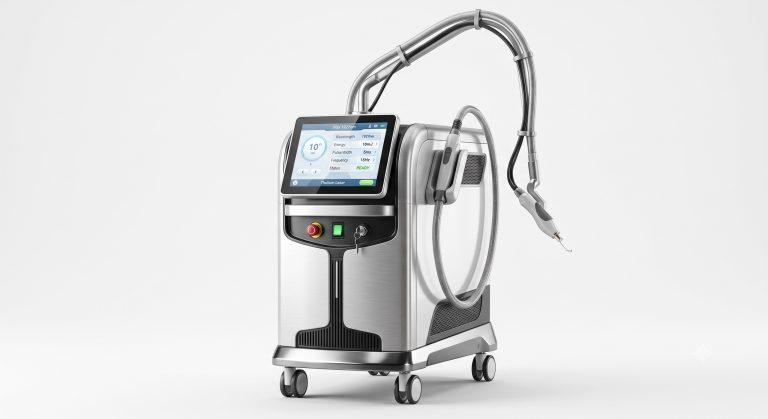
For medical aesthetic clinics seeking to expand their service portfolio, the demand for effective, non-invasive hair restoration solutions has never been higher. Androgenetic alopecia (AGA) affects a significant portion of the global population, creating a substantial market gap between low-cost topical solutions and high-cost, invasive surgical transplants . The thulium laser for hair growth stimulation has emerged as a clinically-validated, high-margin treatment that addresses this gap . This guide offers a comprehensive technical and business analysis of integrating 1927nm fractional thulium laser technology into your practice.
Clinical Efficacy & Mechanism of Action
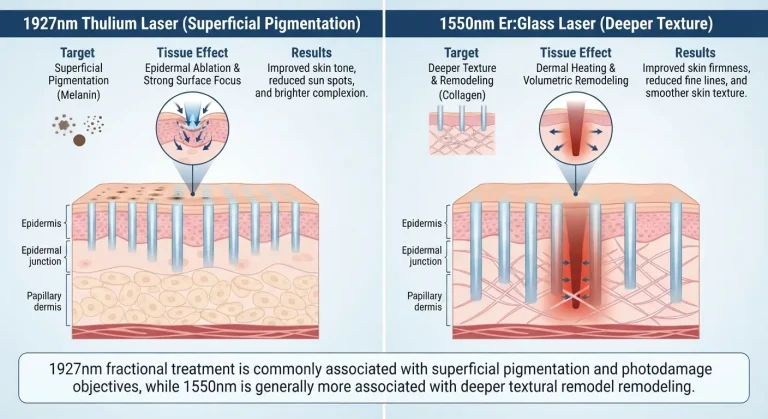
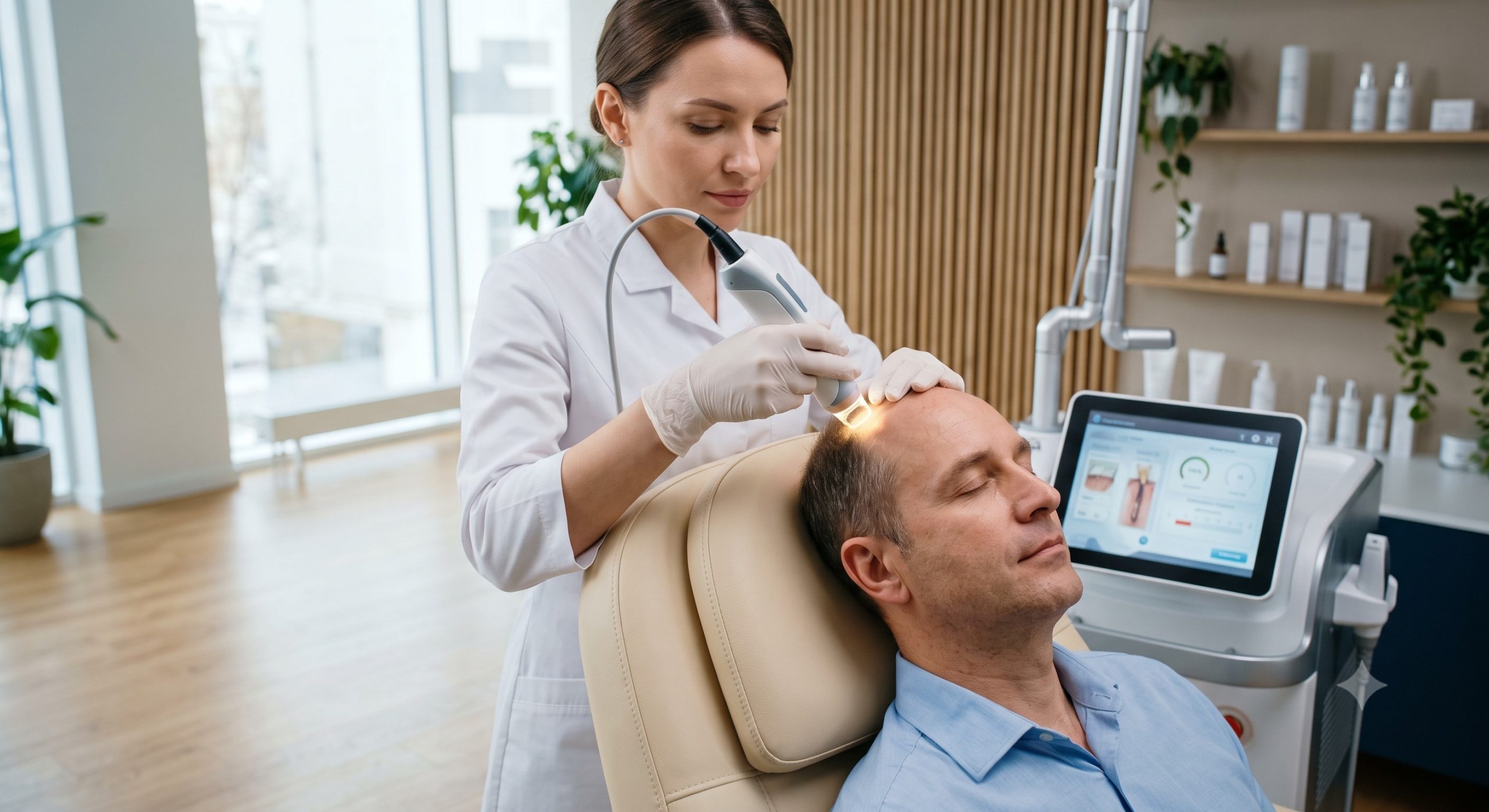
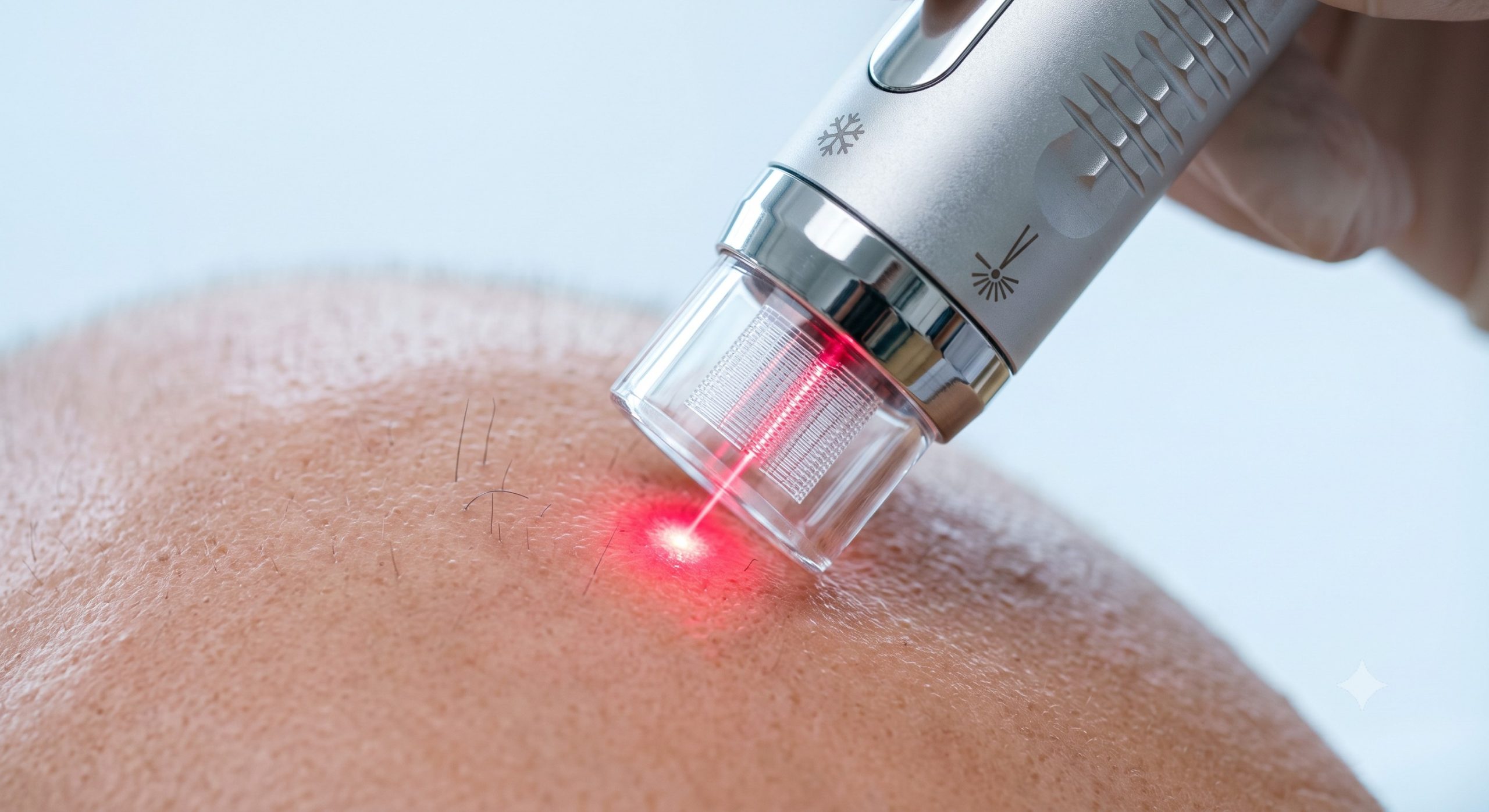
The efficacy of the thulium laser is rooted in its unique non-ablative, fractional mechanism. At a wavelength of 1927nm, the laser’s energy is highly absorbed by water, enabling precise, controlled heating of the dermis . This targeted thermal injury triggers a cascade of regenerative processes, including neocollagenesis, neovascularization, and the activation of key growth pathways. It is believed to reactivate quiescent hair follicles via Wnt/β-catenin signaling and preserve COL17A1, a protein crucial for follicle stem cell differentiation . Furthermore, the laser creates microchannels in the scalp, significantly increasing the permeability of topical agents, making it an ideal synergistic treatment with growth factors and PRP .
Clinical Evidence: Proven Results
Recent clinical studies provide robust evidence for the thulium laser’s efficacy, establishing it as a leader in the field of medical aesthetic devices.
- A prospective Brazilian study on 11 male PHL patients demonstrated a statistically significant increase in total hair count (p = 0.021) and terminal hair count (p = 0.041) after 12 weekly sessions .
- An Indonesian study on AGA patients confirmed significant clinical improvement, with Global Aesthetic Improvement Scale (GAIS) scores rising to 3.00±0.471 (P<0.05) after just two sessions, coupled with minimal pain and no adverse events .
These findings confirm that thulium laser monotherapy offers a highly effective, non-pharmacologic option for managing hair loss without the side effects associated with minoxidil or finasteride .
Technical Specifications & Parameter Optimization
For clinic owners, understanding the technical specifications is critical for achieving consistent results and ensuring patient safety. The core of the technology lies in its fractionated delivery system and precision parameters. The 1927nm wavelength provides an optimal balance between penetration depth and water absorption, minimizing damage to surrounding tissue while achieving the desired dermal stimulation .
| Parameter | Typical Specification | Clinical Significance |
|---|---|---|
| Wavelength | 1927 nm (Fractionated Thulium) | Optimal water absorption for precise dermal heating without excessive thermal damage to the epidermis . |
| Pulse Duration | 300 µs (microseconds) | Allows for rapid, high-energy delivery to create fractional micro-injuries, stimulating neocollagenesis and follicle activation . |
| Power Output | 5 W (Watts) | Delivers sufficient energy to achieve the required dermal temperature for creating a wound-healing response that reactivates hair follicles . |
| Treatment Spot Size / Width | 0.7 mm / 7 x 10 mm area | Precise control of the treatment area to ensure uniform coverage while minimizing patient discomfort . |
| Cooling System | Sapphire Contact Cooling (TEC) | Protects the epidermis, especially in higher Fitzpatrick skin types, by keeping the surface temperature low while the dermis is heated, ensuring a safe and comfortable experience . |
| Regulatory Status | FDA Cleared, Medical CE, ISO 13485 | Provides high-level assurance of safety, quality, and efficacy, protecting the clinic and patient . |
Protocols for Fitzpatrick Skin Types
The thulium laser is safe and versatile, making it suitable for a wide range of patients. However, to ensure safety and maximize efficacy, it’s crucial to tailor protocols to the patient’s skin type, typically using the Fitzpatrick scale (Types I-VI) .
- Fitzpatrick Types I-III: These lighter skin types typically tolerate higher energies, allowing for more robust stimulation. Standard protocols can be applied with a focus on achieving a mild erythema .
- Fitzpatrick Types IV-VI: For darker skin types, a more cautious approach is recommended to minimize the risk of post-inflammatory hyperpigmentation. Starting with lower energy settings and gradually increasing is advised, with careful monitoring of the skin’s response . The non-ablative nature of the thulium laser, when used with correct parameters, makes it a safer choice for these patients compared to ablative lasers .
Clinical Protocols & Combination Therapies
The optimal clinical protocol is key to maximizing return on investment (ROI) and patient satisfaction. Based on expert insights, a standard regimen involves a series of sessions to stimulate the anagen phase of hair growth .
- Typical Regimen: A course of 3 initial treatment sessions, spaced one month apart, is often recommended. This is followed by a 6-month break to allow hair to grow, and then a reassessment for potential maintenance or further sessions .
- Combination Therapy: The procedure is highly effective as a standalone therapy but is often enhanced when combined with other modalities. The microchannels created by the laser can be immediately followed by the topical application of growth factors, exosomes, or PRP . This synergistic approach can significantly improve outcomes and is an effective way to increase the value of the treatment.
Clinic ROI & Business Strategy
From a business perspective, the thulium laser represents a low-risk, high-reward investment. It serves as a powerful tool to fill the service gap in a thriving market. The upfront investment is quickly offset by high treatment revenues, as the device has the capacity to pay for itself rapidly .
- Turnkey Setup & Compliance: Premium thulium laser systems come with critical certifications like Medical CE, FDA clearance, and ISO 13485, ensuring compliance and safety .
- Service Offerings: This technology allows you to effortlessly expand your clinic’s service offerings. By integrating thulium laser treatments into your existing menu, you can attract a new demographic of patients seeking non-surgical solutions for hair loss . This addition is a logical and effective way to grow your practice and build patient loyalty.
Conclusion: The Future of Aesthetic Medicine
For the discerning aesthetic clinic, the 1927nm thulium laser is a game-changing asset. Its strong clinical data, excellent safety profile, and high profitability make it a critical addition to any advanced practice. By investing in this technology, you are not just acquiring a device but offering a superior, scientifically-backed solution to a common problem, driving patient retention and clinic growth.