Bikini Laser Hair Removal: Cost, Sessions, Pain & Results
Evidence-informed education for treatment researchers, aesthetic professionals, and clinic operators.
Published by Cocoon Laser · Updated October 2026
Bikini laser hair removal is a professional treatment designed to achieve long-term hair reduction around the bikini line and, depending on the selected treatment plan, other external areas of the bikini region. It is popular among people who want to reduce frequent shaving, waxing, and some forms of hair-related irritation.
Before booking a session, it helps to understand what the treatment includes, how many appointments may be required, what it feels like, how much it may cost, and which safety precautions matter for sensitive skin.
This guide covers bikini line laser hair removal, full bikini and Brazilian treatment differences, realistic outcomes, aftercare, and the professional diode laser technology used in clinics.
Quick Answer: Is Bikini Laser Hair Removal Worth It?
Bikini laser hair removal can be worthwhile for people seeking long-term reduction in hair growth and less frequent hair removal. A typical treatment plan often involves approximately 6–8 sessions, although some people need fewer or more treatments and occasional maintenance sessions.
In the United States, an illustrative budgeting range is approximately $100–$350 per session for many bikini-area services, with actual clinic prices varying widely by treatment area, location, provider, and package. This is not a verified national average.
Treatment can feel like brief snapping or stinging sensations. Cooling and appropriate settings may improve comfort, but they do not guarantee a painless experience. Results depend on hair characteristics, skin type, hormones, equipment, and operator technique.
What Is Bikini Laser Hair Removal?
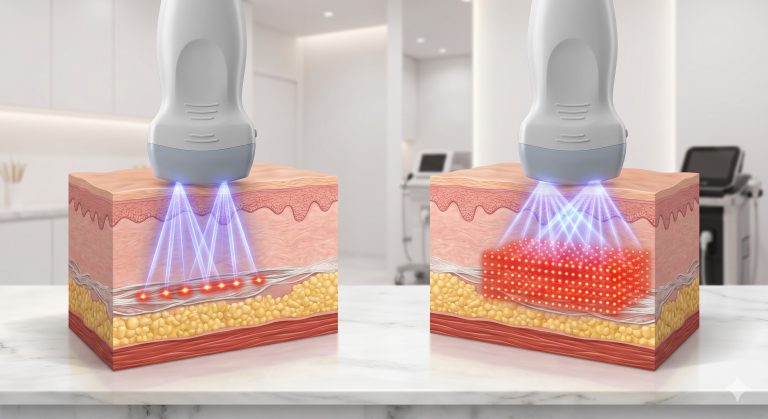
Bikini laser hair removal uses concentrated light energy to target pigment within hair follicles in the bikini region. The absorbed energy produces heat that can impair the follicle’s ability to generate new hair.
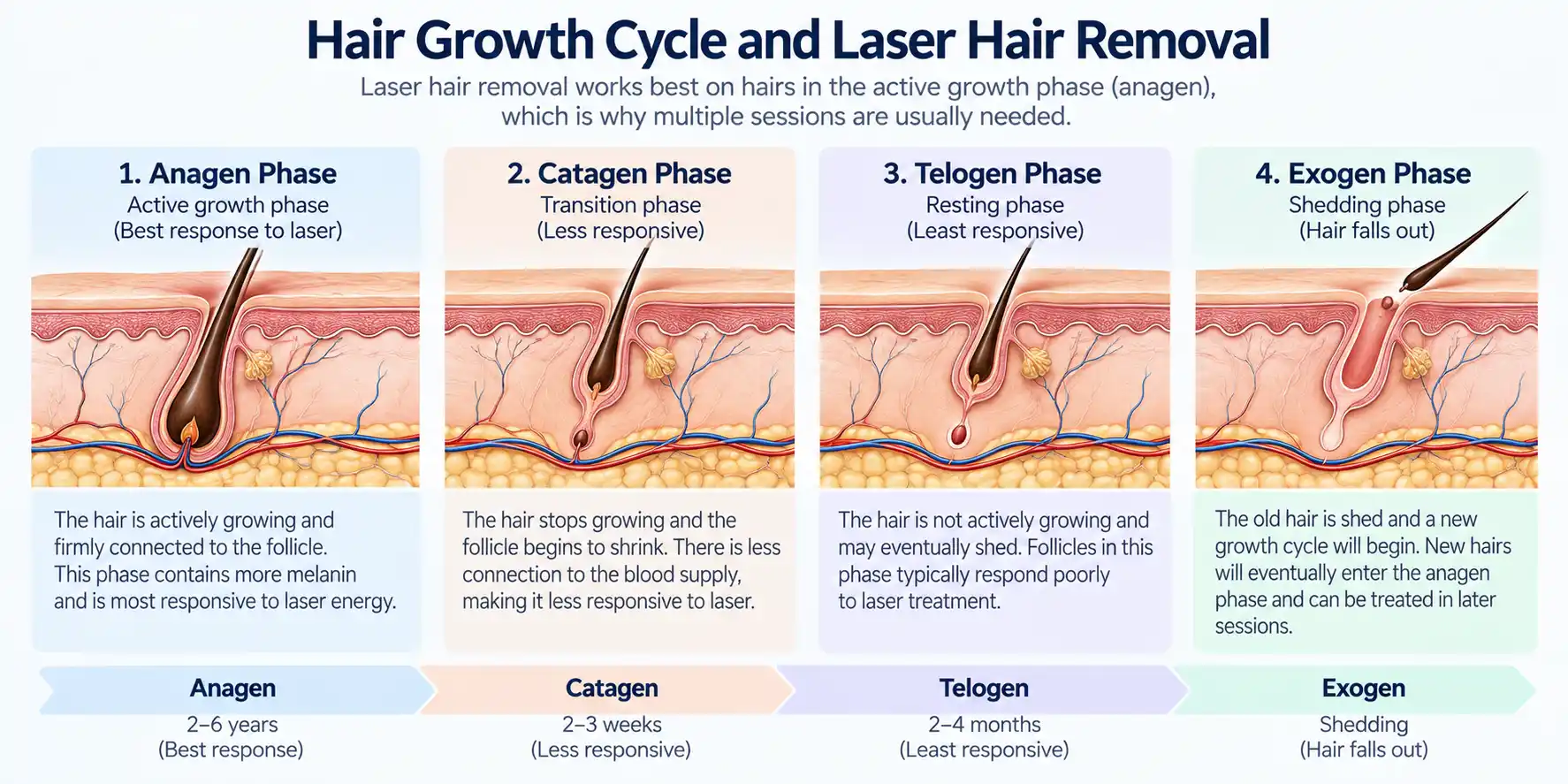
Because follicles move through different growth phases, not every hair responds equally during one appointment. Multiple sessions are usually needed to treat hairs that become responsive at different times.
The goal is generally permanent hair reduction, not a guarantee that every hair will disappear forever. Some hairs may remain, become finer, or regrow over time.
Which Areas Are Included?
A standard bikini line treatment typically targets visible hair outside the edges of conventional underwear or swimwear. A full bikini treatment may cover more of the external pubic region. A Brazilian treatment generally involves more extensive removal, potentially including external areas toward the perineum or between the buttocks, depending on the provider.
These names are not standardized across clinics. Ask the provider to identify the exact treatment boundaries before booking. Laser treatment should not be applied to internal mucosal surfaces or other areas outside the device’s authorized indications and the provider’s clinical protocol.
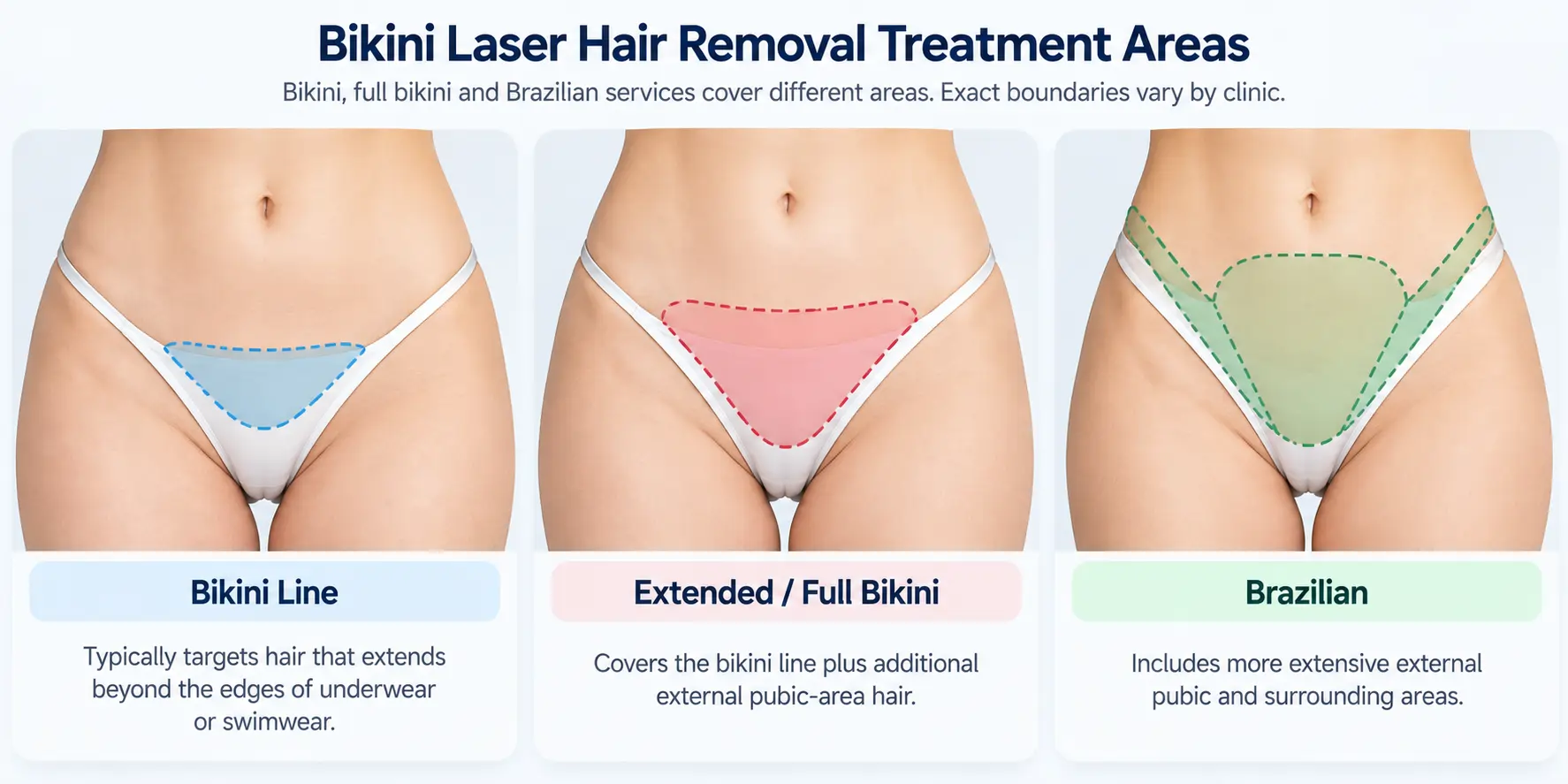
Bikini Line vs. Full Bikini vs. Brazilian Laser Hair Removal
One of the most common sources of confusion is the difference between bikini, full bikini, and Brazilian laser hair removal. The terms often describe how much hair a clinic plans to treat, rather than different laser technologies.
| Treatment | Typical Coverage | Relative Area | What to Confirm |
|---|---|---|---|
| Bikini Line | Hair extending beyond the edges of underwear or swimwear | Smaller | Width and boundaries of the treated strip |
| Extended / Full Bikini | Bikini line plus additional external pubic-area hair | Moderate | How much of the front area is included |
| Brazilian | More extensive external pubic and surrounding areas | Generally larger | Exact front, side, and rear coverage |
A Brazilian session may require additional treatment time and may have a higher price because the covered area is larger. However, clinic pricing models differ, so the relationship is not universal.
For a detailed comparison of the more extensive procedure, see our Brazilian laser hair removal guide when that article is available.
How Much Does Bikini Laser Hair Removal Cost?
The cost of bikini laser hair removal depends on the clinic’s location, the size of the treatment area, the number of sessions purchased, and the provider’s equipment and service model.
For preliminary US budgeting, a basic bikini line session might fall around $100–$250, while more extensive bikini-area services might cost approximately $150–$350 or more. These broad examples are not standardized national prices, and individual clinics may charge substantially less or more.
| Service | Illustrative Price per Session | Six-Session Budget Example |
|---|---|---|
| Basic Bikini Line | $100–$250 | $600–$1,500 |
| Extended / Full Bikini | $150–$350 | $900–$2,100 |
| Brazilian | Request a clinic-specific quotation | Depends on coverage and package |
Figures are illustrative US-dollar budgeting scenarios, not verified market averages or live clinic prices. Six-session totals are simple arithmetic examples before package discounts, taxes, or additional visits.
What Affects Bikini Laser Hair Removal Pricing?
- Treatment size: Larger areas may require more treatment time.
- Clinic location: Operating expenses and local demand differ.
- Provider qualifications: Medical oversight and training arrangements affect service delivery.
- Equipment and service model: Professional laser systems require capital investment and maintenance.
- Package pricing: Multi-session packages may have different terms from single visits.
- Maintenance sessions: Additional appointments may be needed after the initial course.
Is a Package Better Than Paying per Session?
A package can reduce the price per appointment, but it is important to review refund rules, expiration dates, appointment availability, and what happens if treatment is discontinued.
Ask whether the quoted package covers the precise area you want treated and whether future maintenance visits are included.
How Many Sessions Does Bikini Laser Hair Removal Take?
Many providers plan an initial series of approximately six to eight treatments. This is a common planning range rather than a guaranteed requirement. Individual treatment courses may differ considerably.
Sessions are commonly spaced several weeks apart to account for hair growth cycles and skin recovery. Your provider should determine the interval based on the treated area, device, skin response, and clinical assessment.
Why Is More Than One Session Necessary?
Hair follicles do not all grow actively at the same time. Laser hair removal generally works best when sufficient pigment is present in a responsive follicle, so repeated appointments help address hairs entering suitable growth phases.
The hair growth cycle includes anagen, catagen, and telogen phases. Treatment planning accounts for these biological differences rather than attempting to remove every hair in one appointment.
When Will Results Become Noticeable?
Treated hairs may shed over the days and weeks following a session. Some people notice patchier regrowth or slower hair growth after early appointments, while others need additional sessions before changes become obvious.
Shedding is not the same as immediate hair removal. Avoid repeatedly pulling or waxing treated hairs between appointments unless your provider specifically advises otherwise.
Does Bikini Laser Hair Removal Hurt?
Bikini laser hair removal can be uncomfortable because the area may contain coarse, densely pigmented hair and relatively sensitive skin. People often describe the sensation as brief snapping, warmth, or stinging.
Discomfort varies with individual sensitivity, treatment location, laser parameters, hair density, skin pigmentation, and cooling methods.
Which Parts of the Bikini Area Are More Sensitive?
Areas with dense hair, friction, or thinner and more sensitive skin may feel more uncomfortable. More extensive treatment areas can involve additional sensitive locations, which is another reason to clarify the intended treatment boundaries.
How Does Cooling Help?
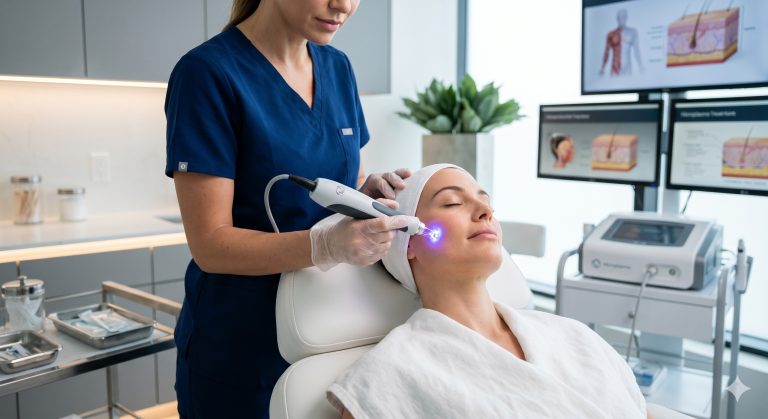
Professional laser systems may use contact cooling, chilled air, or other methods to help manage epidermal temperature and improve comfort.
Cooling is an important part of treatment planning, but it does not eliminate the risk of burns or guarantee a pain-free procedure. Appropriate parameters and qualified operation remain essential.
Read our guide to laser hair removal pain and cooling technology when available for a more detailed explanation.
Is Bikini Laser Hair Removal Safe?
Bikini-area laser hair removal can be performed safely in appropriately selected patients by trained professionals using suitable equipment and protocols. However, the treatment is not risk-free.
Potential adverse effects include temporary redness, swelling around follicles, discomfort, blistering, burns, pigment changes, and, less commonly, scarring. The risk varies with skin type, treatment settings, operator technique, and other factors.
Special Considerations for Darker Skin
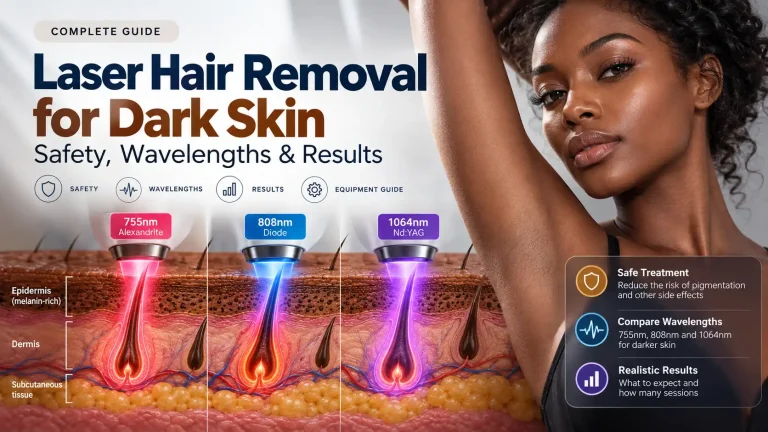
Melanin in the epidermis can also absorb laser energy. For darker skin phototypes, appropriate wavelength selection, conservative treatment planning, effective cooling, and experienced operation are especially important.
Some longer-wavelength professional systems may be suitable for a broader range of skin phototypes when properly configured, but no wavelength makes treatment universally safe.
Can Laser Hair Removal Be Performed on Sensitive Skin?
Sensitive skin is not automatically a reason to avoid treatment, but a history of irritation, dermatitis, active infection, or previous adverse reactions should be discussed during consultation.
Treatment should be postponed or modified when the provider identifies a contraindication or an unsafe skin condition.
When Should You Seek Medical Advice?
Contact your provider promptly if you develop severe or increasing pain, extensive blistering, signs of infection, or unexpected skin discoloration after treatment.
How to Prepare for Bikini Laser Hair Removal
Preparation instructions can differ by laser platform and clinic. Follow your treating provider’s directions rather than relying on a universal checklist.
Before Your Appointment
- Confirm the exact treatment area and procedure with your provider.
- Disclose medications, relevant medical conditions, and previous skin reactions.
- Avoid tanning and report recent sun exposure or self-tanning products.
- Avoid waxing or plucking for the interval recommended by the clinic.
- Shave only as instructed by the provider.
- Tell the provider about active rashes, wounds, or irritation.
- Ask about protective eyewear, cooling, and expected aftercare.
Should You Shave Before Treatment?
Many clinics ask patients to shave before laser hair removal because excessive surface hair can absorb energy and complicate treatment. The preferred timing varies, so follow your clinic’s specific instructions.
Can You Wax Before Bikini Laser Hair Removal?
Waxing and plucking remove hair from the follicle and may reduce the available laser target. Clinics typically recommend avoiding these methods before and during a treatment course.
What Happens During a Bikini Laser Hair Removal Session?
- Consultation: The provider reviews skin type, hair characteristics, medical history, and treatment goals.
- Area confirmation: The intended external treatment boundaries are identified.
- Skin preparation: The area is prepared according to the device and clinic protocol.
- Eye protection: Appropriate laser protective measures are used.
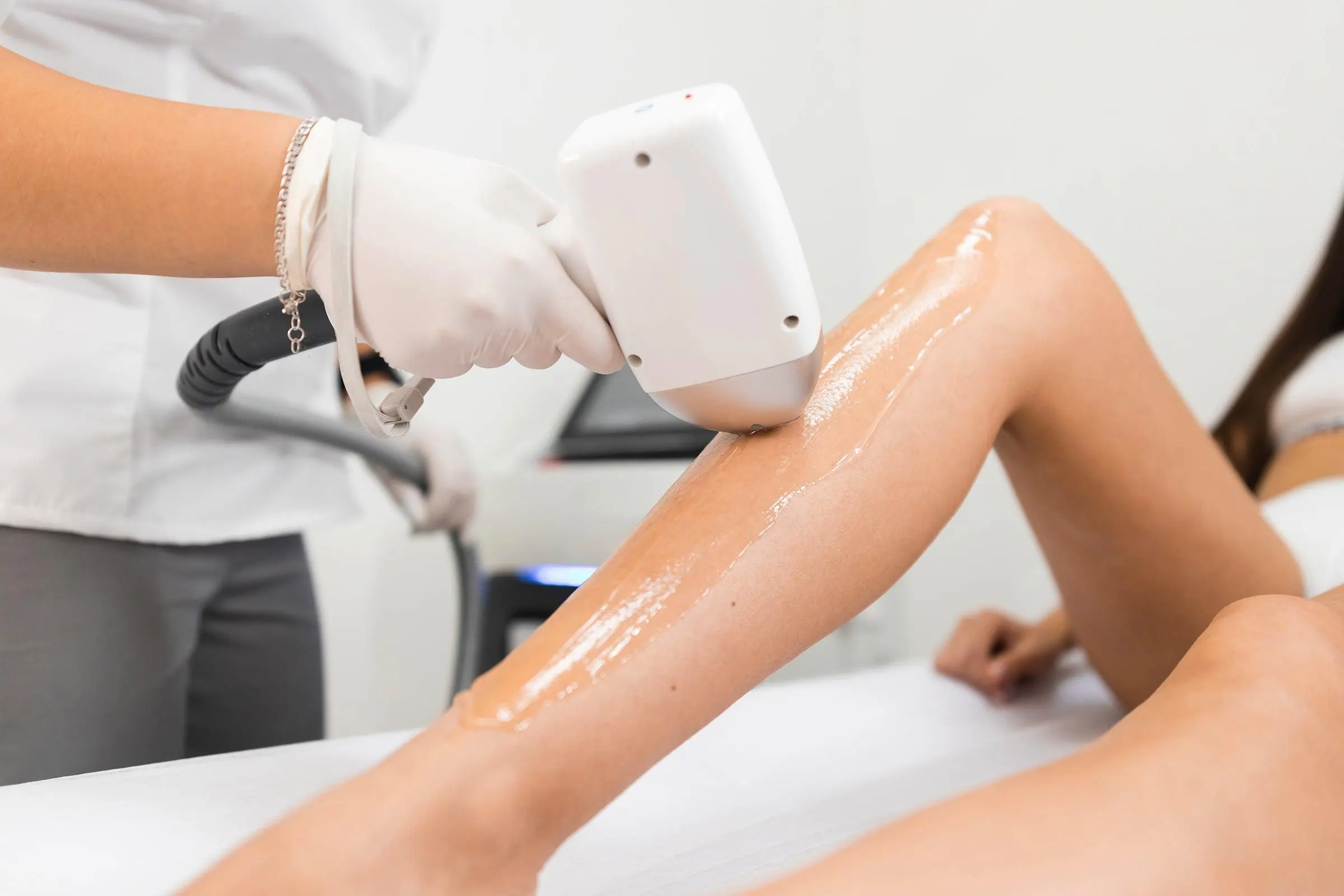
- Laser application: The operator delivers treatment using selected parameters and cooling.
- Post-treatment assessment: The provider checks the skin response and explains aftercare.
Treatment time varies with the size of the area, the equipment, and the clinic workflow. A basic bikini line treatment is generally shorter than a more extensive Brazilian procedure.
Bikini Laser Hair Removal Aftercare
Mild redness and follicular swelling may occur after treatment and often settle relatively quickly. The exact recovery pattern varies by person and treatment settings.
Providers commonly recommend gentle cleansing, avoiding unnecessary friction, and temporarily limiting activities that produce excessive heat or irritation. Follow the specific aftercare instructions given by your clinic.
What Should You Avoid After Treatment?
- Scrubbing or aggressive exfoliation while the skin is irritated
- Very hot baths, saunas, or heat exposure until cleared by the provider
- Picking, scratching, or pulling treated hairs
- Products that cause stinging or irritation
- Unprotected sun exposure to any treated skin that may be exposed
The bikini region is subject to clothing friction and moisture. Comfortable clothing and gentle skin care may help reduce unnecessary irritation during early recovery.
How Long Do Bikini Laser Hair Removal Results Last?
Laser hair removal is best understood as long-term hair reduction. Many people experience a substantial decrease in hair density after a completed treatment course, but individual outcomes differ.
Some follicles may recover or produce new growth over time. Hormonal influences, hair characteristics, and the treatment course can affect whether maintenance sessions are needed.
Is Bikini Laser Hair Removal Permanent?
The phrase “permanent hair removal” can create unrealistic expectations. Professional laser systems are generally discussed in terms of permanent hair reduction: a sustained decrease in the number of regrowing hairs after a treatment regimen.
It is possible to achieve long-lasting results without achieving complete or lifelong elimination of every hair.
Does It Help With Ingrown Hairs?
Reducing coarse hair growth may help some people who experience recurrent shaving-related ingrown hairs. However, not all bumps in the bikini region are caused by ingrown hairs, and active inflammatory or infectious conditions may require separate medical evaluation.
Bikini Laser Hair Removal vs. Waxing vs. Shaving
| Factor | Laser Hair Removal | Waxing | Shaving |
|---|---|---|---|
| Primary result | Long-term hair reduction | Temporary hair removal | Temporary surface hair removal |
| Initial expense | Usually higher | Moderate per visit | Usually lower |
| Repeat appointments | Initial series; possible maintenance | Regular ongoing sessions | Frequent home maintenance |
| Discomfort | Brief heat or snapping sensations | Hair-pulling discomfort | Usually mild, but irritation possible |
| Important limitations | Skin and hair suitability, cost, clinical risks | Temporary results and skin irritation | Rapid regrowth and shaving irritation |
The preferred method depends on personal priorities, skin tolerance, budget, and whether long-term hair reduction is desired.
Which Laser Technology Is Used for Bikini Hair Removal?
Professional clinics may use diode, alexandrite, or Nd:YAG laser systems for hair reduction. Different wavelengths interact with melanin and tissue differently, so device selection depends on the patient’s skin and hair characteristics.
| Technology | Typical Wavelength | Clinical Consideration |
|---|---|---|
| Alexandrite Laser | 755nm | Often evaluated for suitable lighter skin phototypes |
| Diode Laser | Commonly around 800–810nm; multi-wavelength designs also exist | Widely used for professional hair reduction |
| Nd:YAG Laser | 1064nm | Frequently considered for darker skin phototypes under appropriate protocols |
A 1064nm diode emitter and a 1064nm Nd:YAG laser are not the same laser source, even though they share a nominal wavelength. Their performance must be assessed through the actual device specifications and clinical evidence.
Why Do Spot Size and Cooling Matter?
Spot size influences treatment coverage and the delivery of light to the target area. Cooling helps manage heat at the skin surface. Both affect professional workflow, but neither independently establishes clinical effectiveness.
Learn more in our diode laser technology guide and 808nm diode laser overview, where available.
What Should Clinics Look for in a Bikini Hair Removal Machine?
Clinics evaluating professional laser hair removal equipment should consider more than the number of advertised wavelengths. Equipment suitability depends on its documented performance, operator controls, safety features, service arrangements, and regulatory status.
Appropriate Parameters
Verify available fluence, pulse duration, repetition rate, and spot-size controls.
Reliable Cooling
Review the skin-contact cooling design and the manufacturer’s operating instructions.
Clinical Versatility
Assess suitability across the skin and hair characteristics of the clinic’s patient population.
Service and Training
Confirm staff training, warranty, maintenance, spare parts, and technical assistance.
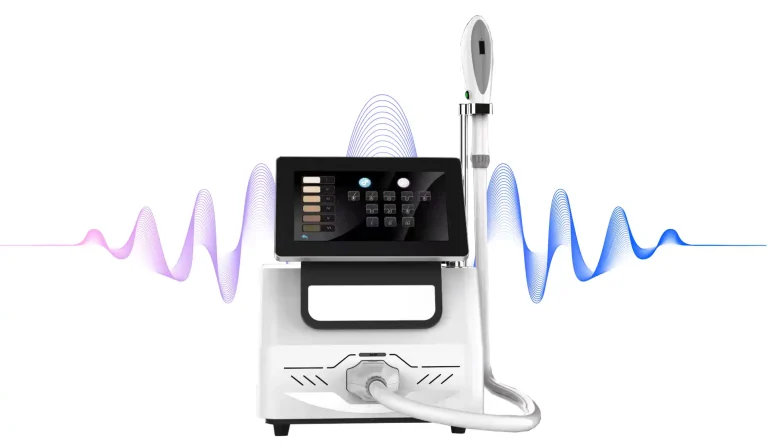
COOLICE: Professional Multi-Wavelength Diode Laser Platform
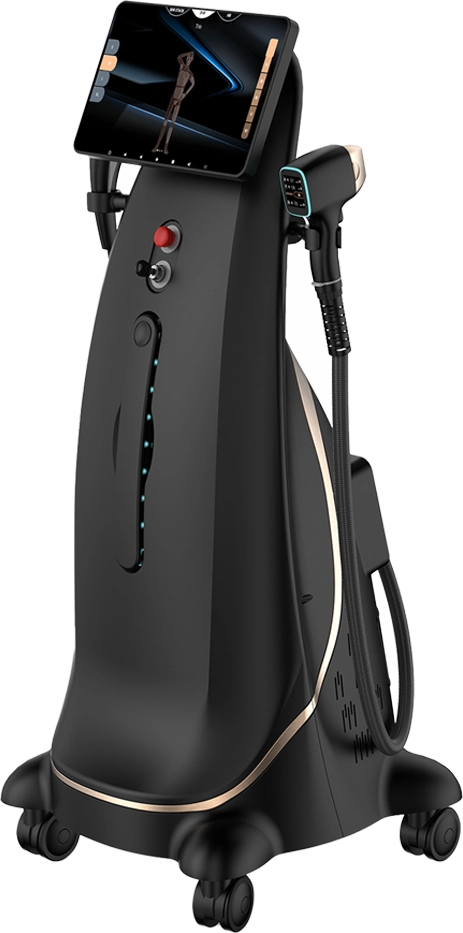
COOLICE Diode Laser Hair Removal System
COOLICE is a professional multi-wavelength diode laser platform developed for aesthetic clinics, dermatology centers, medical spas, and international B2B equipment buyers.
Its product documentation lists four diode wavelengths—755nm, 808nm, 940nm, and 1064nm—along with multiple spot-size options and an integrated cooling architecture.
- Four diode wavelengths: 755 / 808 / 940 / 1064nm
- Multiple treatment spot-size configurations
- Integrated cooling technologies
- Professional clinic and distributor positioning
- OEM/ODM supply options
Suitability for any specific anatomical area, skin type, or indication must be confirmed against the exact device labeling, applicable regulations, and clinical protocols.
Explore COOLICE Equipment →Who Is a Good Candidate for Bikini Laser Hair Removal?
People with darker, coarser hair often have characteristics that can make laser targeting more straightforward, but treatment response varies and cannot be predicted from hair color alone.
Very light blonde, white, gray, or red hair may respond less reliably to many conventional hair removal laser systems because there is less suitable pigment available for targeting.
A professional consultation should review skin phototype, recent tanning, hair characteristics, medical history, medications, previous treatments, and individual expectations.
Who May Need to Delay or Avoid Treatment?
Patients with active skin infections, open wounds, recent significant tanning, or other relevant contraindications may need treatment postponed or modified. Pregnancy-related policies and other medical precautions should be discussed with a qualified healthcare professional.
No online article can determine individual treatment eligibility.
Common Mistakes to Avoid
Assuming Bikini and Brazilian Mean the Same Thing
Clinics use different treatment-area definitions. Confirm the exact external regions included in the quotation.
Expecting Complete Hair Removal After One Session
Multiple sessions are generally needed because follicles respond differently across growth phases.
Choosing Only by the Lowest Price
Provider qualifications, equipment suitability, safety protocols, and treatment-area definitions matter alongside price.
Ignoring Skin Type and Recent Tanning
Pigmentation and sun exposure can affect risk. A proper assessment should guide the treatment plan.
Waxing Between Sessions Without Asking the Provider
Removing hairs from the follicle can interfere with the intended treatment process.
Expecting a Completely Painless Procedure
Cooling may improve comfort, but sensation and skin response vary from person to person.
Frequently Asked Questions
How much is bikini laser hair removal?
Costs vary by clinic and treatment area. For preliminary US budgeting, basic bikini line treatments may be estimated at approximately $100–$250 per session, but this is an illustrative range rather than a verified national average.
How many sessions are needed for bikini laser hair removal?
An initial plan of roughly six to eight sessions is common, but the actual number depends on hair characteristics, skin type, treatment response, and provider recommendations.
Does bikini laser hair removal hurt more than leg treatments?
Some people find the bikini region more sensitive because of dense hair and anatomical sensitivity. Individual discomfort depends on multiple factors, including cooling and treatment settings.
Is bikini laser hair removal permanent?
It is intended to produce long-term or permanent hair reduction, not guaranteed lifelong removal of every hair. Maintenance treatments may be needed.
Can bikini laser hair removal cause burns?
Yes. Burns and pigment changes are possible adverse effects, particularly when treatment parameters or patient selection are inappropriate. Qualified operation and suitable safety controls are important.
Can people with dark skin have bikini laser hair removal?
Many people with darker skin can be evaluated for professional laser hair removal, but appropriate technology, settings, cooling, and operator experience are especially important.
Can you shave between bikini laser sessions?
Shaving is commonly permitted between sessions when the skin has recovered, but follow the provider’s instructions and avoid shaving irritated or damaged skin.
Does bikini laser hair removal help prevent ingrown hairs?
Reduced hair growth may help some people with shaving-related ingrown hairs, but it does not treat every cause of bumps or inflammation in the bikini region.
What is the difference between bikini line and full bikini laser removal?
Bikini line treatment usually covers hair beyond the edges of underwear, while full bikini generally includes more of the external pubic area. Definitions vary by clinic.
How long should you wait between sessions?
Appointments are generally spaced several weeks apart. The treating provider should set the schedule based on the device, treatment area, hair cycle, and skin response.
Final Verdict: Is Bikini Laser Hair Removal Right for You?
Bikini laser hair removal can provide meaningful long-term hair reduction for suitable candidates. Its main advantages include reduced reliance on frequent shaving or waxing and potentially less unwanted hair growth over time.
However, it requires realistic expectations. Multiple sessions are common, results vary, and treatment involves potential adverse effects. The most important next step is a consultation with a qualified provider who can explain the treatment boundaries, equipment, expected results, costs, and safety precautions.
For clinic operators and equipment buyers, treatment quality depends on the combination of suitable professional technology, operator training, careful patient selection, and ongoing equipment support.
Explore Professional Diode Laser Hair Removal Equipment
Cocoon Laser supplies professional diode laser equipment for aesthetic clinics and international B2B buyers. Explore COOLICE specifications or contact our team for equipment configurations, OEM/ODM options, and quotations.
View COOLICE Laser System →