Diode laser technology has become one of the most widely adopted solutions
for professional hair reduction. By combining optimized wavelengths, controlled
pulse delivery, and advanced cooling systems, modern diode laser platforms
provide efficient treatments across a broad range of skin types and clinical
applications.
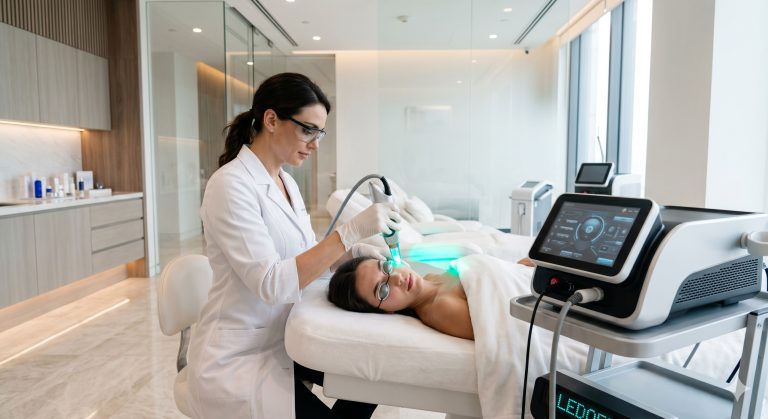
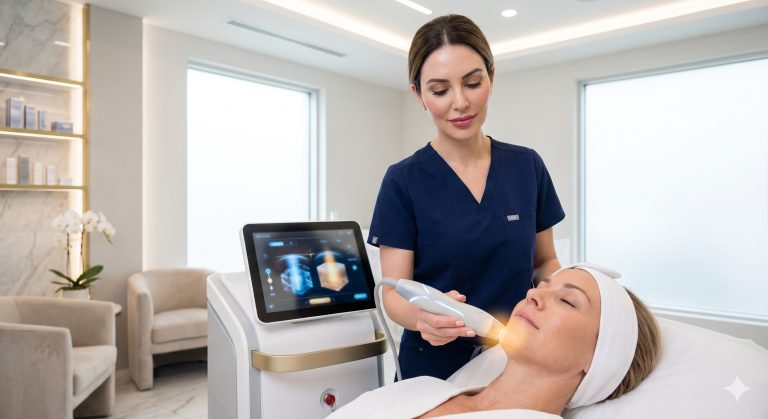
Today, diode laser systems are used in dermatology clinics, medical aesthetic
centers, hospitals, and medical spas worldwide. Compared with earlier laser
technologies, they offer an effective balance of penetration depth, melanin
absorption, treatment speed, and patient comfort.
This guide explains the science behind diode laser technology, how different
wavelengths interact with hair follicles, why cooling systems are essential,
and why diode lasers have become the preferred platform for many professional
hair reduction clinics.
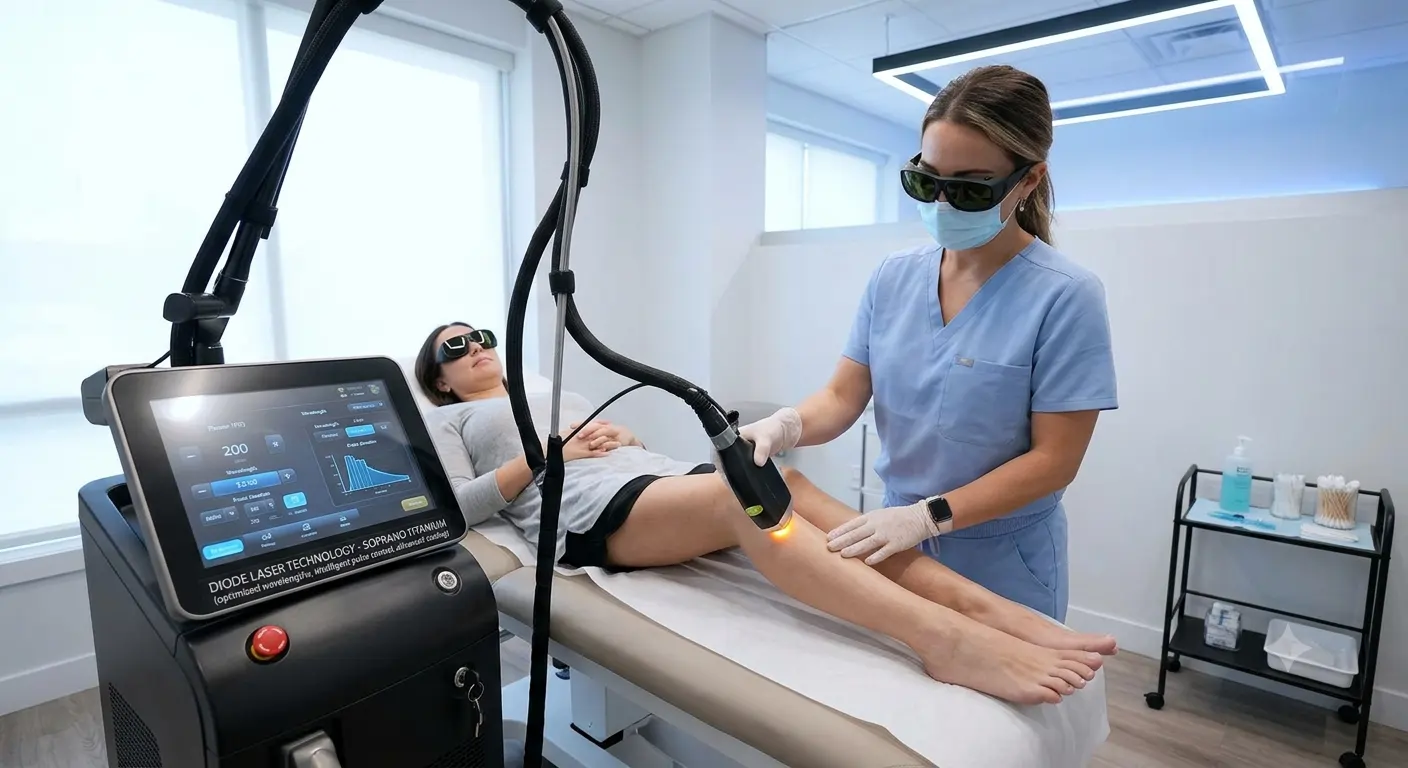
Modern diode laser technology combines optimized wavelengths, intelligent
pulse control, and advanced cooling to support professional hair reduction.
What Is Diode Laser Technology?
Diode laser technology is a semiconductor-based laser system that generates
coherent light at specific wavelengths. In aesthetic medicine, diode lasers
are primarily used for long-term hair reduction because their wavelengths
are efficiently absorbed by melanin within the hair shaft while providing
sufficient penetration to reach the follicle.
Unlike IPL systems, which emit broad-spectrum filtered light, diode lasers
produce a narrow wavelength with highly controlled energy delivery. This
allows clinicians to target hair follicles more precisely while optimizing
treatment parameters for different skin phototypes and hair characteristics.
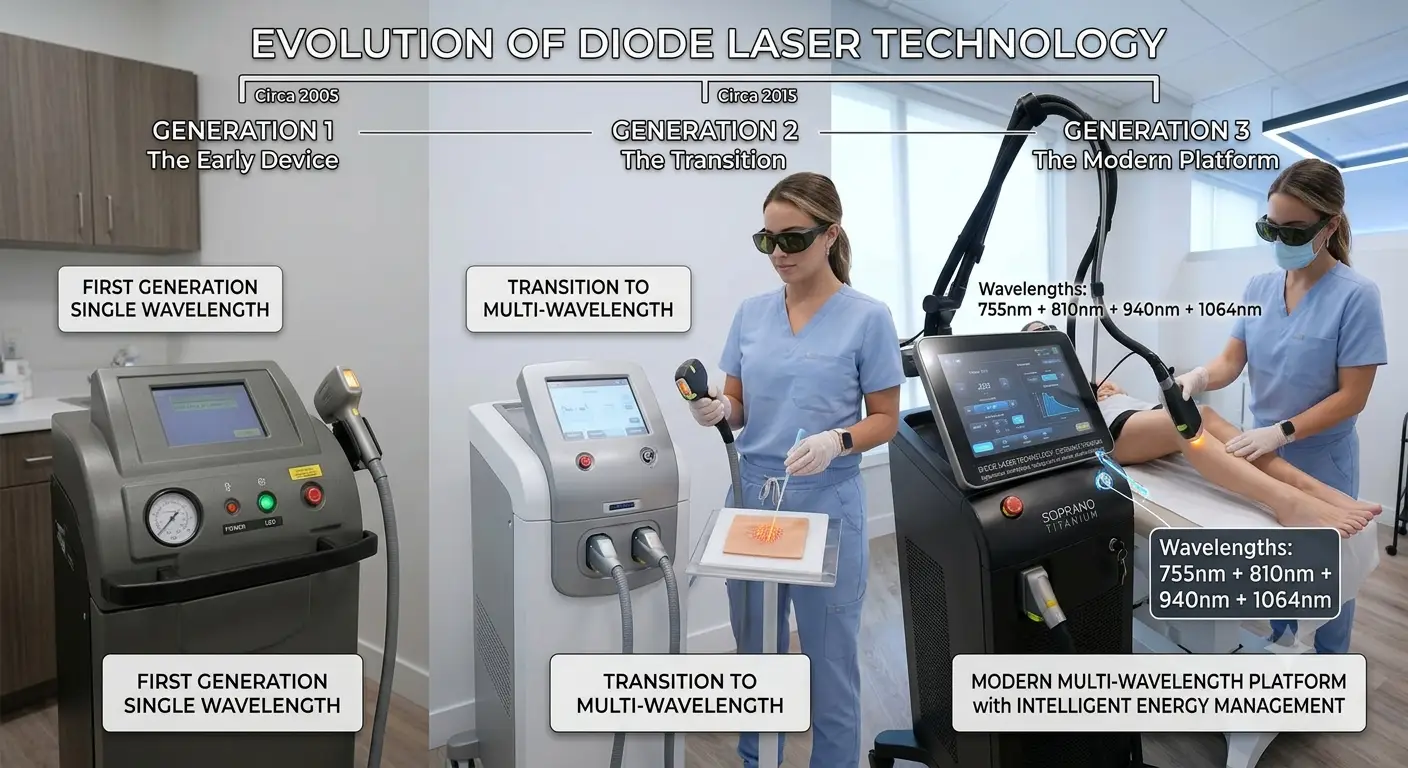
Over the past two decades, diode laser platforms have evolved from single-wavelength
systems into sophisticated multi-wavelength devices capable of treating
a wider variety of patients and anatomical areas.
The Evolution of Diode Laser Technology
The first medical diode laser systems focused primarily on delivering
a single wavelength for hair reduction. As laser engineering advanced,
manufacturers improved semiconductor efficiency, cooling performance, spot
size design, pulse control, and energy stability.
Modern platforms now integrate multiple wavelengths into one system, allowing
clinicians to customize treatments according to follicle depth, hair thickness,
and Fitzpatrick skin type rather than relying on a single wavelength for
every patient.
Professional diode laser systems have evolved from single-wavelength devices
into multi-wavelength platforms with intelligent energy management and
advanced cooling.
How Does a Diode Laser Work?
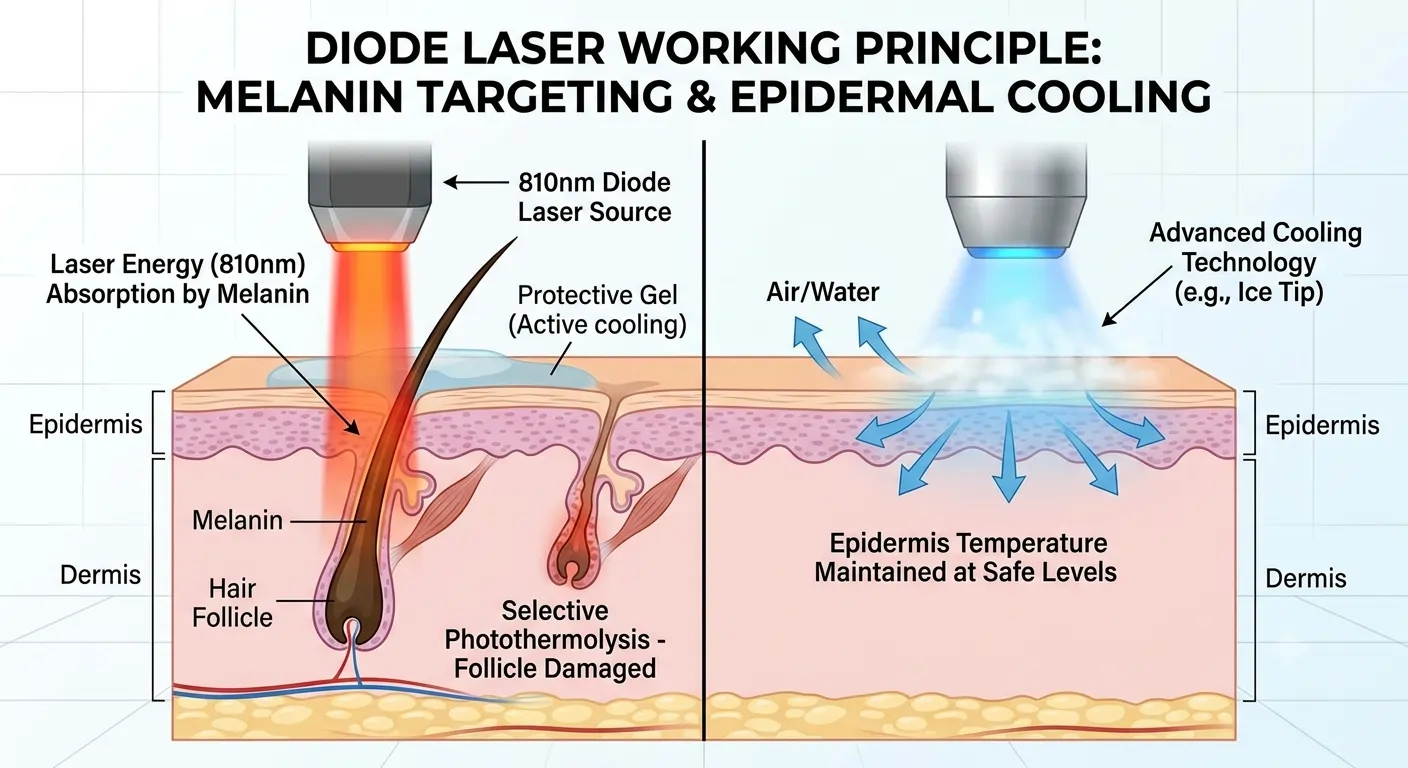
Diode laser technology applies the principle of
selective photothermolysis
. During treatment, laser energy is emitted at carefully selected wavelengths
that are preferentially absorbed by melanin inside the hair shaft.
The absorbed optical energy is converted into heat. This heat travels
along the hair shaft toward the follicle, where it produces controlled
thermal effects that reduce the follicle’s ability to generate future hair
growth while minimizing unnecessary heating of surrounding skin.
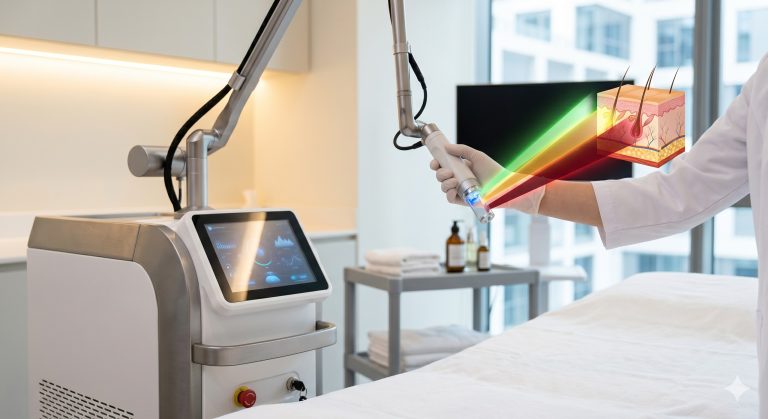
Diode laser systems concentrate energy within melanin-rich hair follicles
while cooling technology helps protect the epidermis.
Treatment success depends on balancing several parameters rather than
relying solely on wavelength. Clinicians typically adjust:
Laser wavelength
Fluence (energy density)
Pulse duration
Spot size
Repetition rate
Cooling performance
Patient skin type
When these parameters are appropriately combined, diode laser systems
can provide efficient hair reduction while maintaining treatment comfort
and supporting safe clinical practice.
Why Has Diode Laser Technology Become the Industry Standard?
Among modern hair reduction technologies, diode lasers have achieved widespread
clinical adoption because they provide a practical balance between melanin
absorption, penetration depth, treatment speed, and patient comfort.
Clinical Advantage
Benefit
Balanced wavelength
Suitable for a wide range of patients.
High repetition rates
Faster treatment sessions.
Large spot sizes
Efficient coverage of large body areas.
Advanced cooling
Improved patient comfort.
Multiple wavelength options
Greater treatment flexibility.
Stable semiconductor technology
Reliable long-term clinical performance.
For these reasons, diode laser systems are now commonly selected by clinics
seeking reliable long-term hair reduction equipment capable of treating
a broad range of clinical indications.
Understanding Diode Laser Wavelengths
Not all diode laser systems operate at the same wavelength. Modern platforms
may include one, three, or even four wavelengths, each contributing different
tissue penetration characteristics and clinical advantages.
The next section explains the role of 755nm, 808nm, 940nm, and 1064nm
wavelengths, why multi-wavelength systems are becoming increasingly popular,
and how clinics select appropriate wavelengths for different treatment
scenarios.
Understanding Diode Laser Wavelengths
Wavelength is one of the most important characteristics of a diode laser
system because it determines how deeply laser energy penetrates tissue
and how efficiently it is absorbed by melanin. Modern professional platforms
increasingly combine multiple wavelengths to improve treatment flexibility
across different skin phototypes, hair thicknesses, and anatomical regions.
Rather than replacing one wavelength with another, multi-wavelength systems
allow clinicians to take advantage of the complementary strengths of each
wavelength during treatment planning.
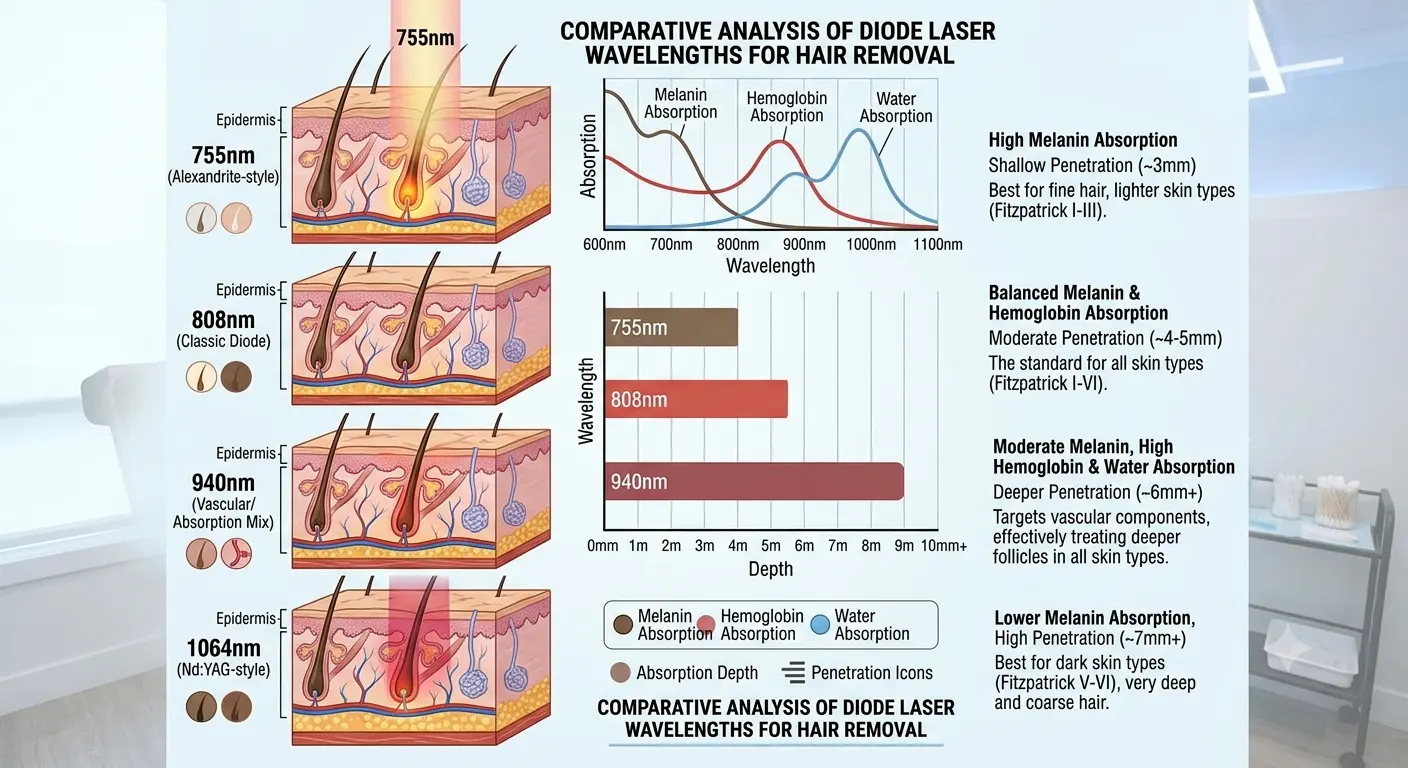
Different diode laser wavelengths provide varying levels of melanin absorption
and tissue penetration, allowing clinicians to optimize treatment for different
patients.
755nm Diode Laser
The 755nm wavelength exhibits relatively high melanin absorption, making
it particularly effective for targeting finer and more superficial hair.
Because laser energy is absorbed efficiently by melanin, this wavelength
has historically been associated with treatments involving lighter skin
phototypes.
Clinical Characteristics
High melanin absorption.
Suitable for finer hair.
Relatively superficial penetration.
Frequently incorporated into multi-wavelength platforms.
In modern diode laser systems, 755nm is often combined with longer wavelengths
to broaden treatment versatility rather than being used as a standalone
solution.
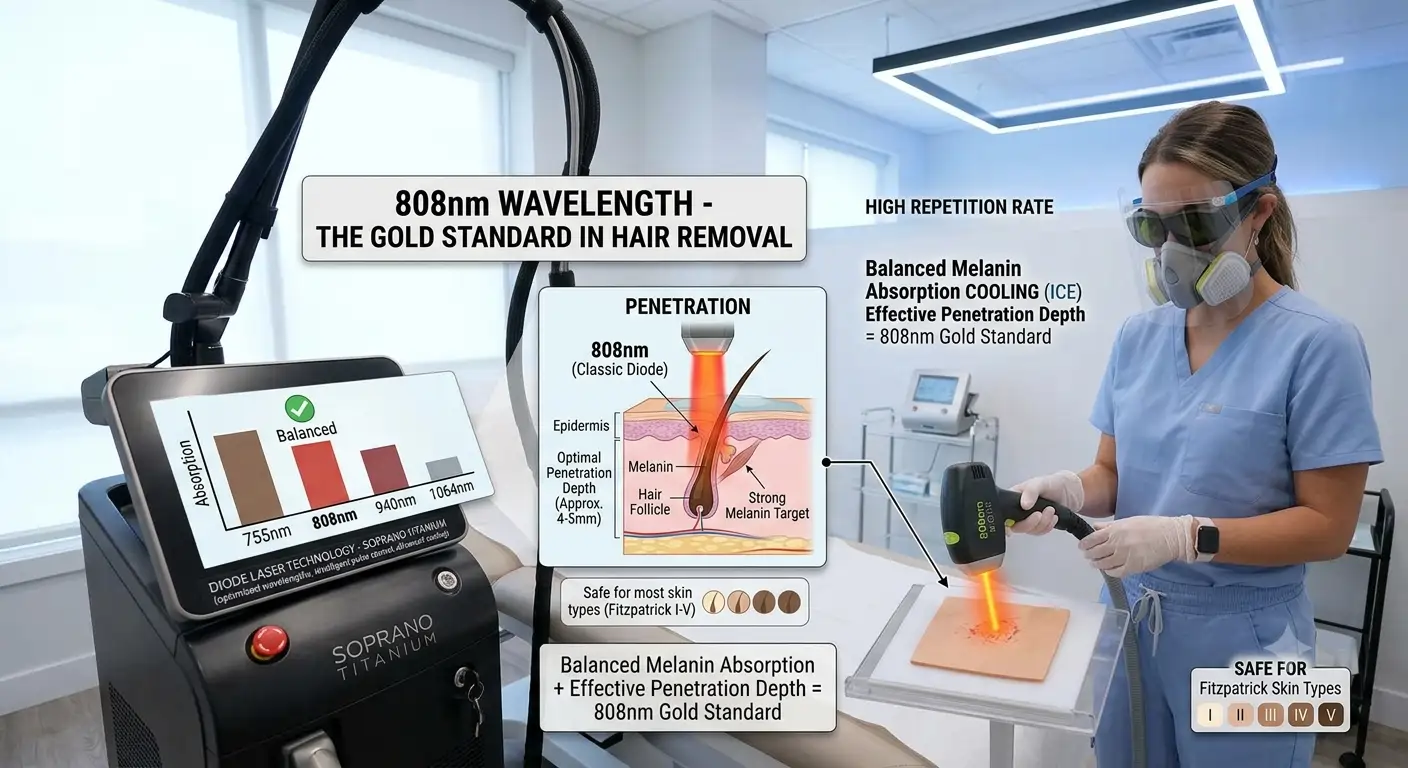
808nm Diode Laser
The 808nm wavelength is widely regarded as the clinical standard for professional
laser hair reduction because it provides an effective balance between melanin
absorption and tissue penetration. This balance allows clinicians to treat
a wide range of hair types while maintaining treatment efficiency across
multiple body areas.
The 808nm wavelength provides a balanced combination of penetration depth
and melanin absorption, making it one of the most commonly used wavelengths
in professional hair reduction.
Why Is 808nm So Popular?
Balanced optical penetration.
Efficient melanin absorption.
Suitable for many treatment areas.
Compatible with modern cooling systems.
Excellent treatment efficiency.
Because of these characteristics, many clinics consider 808nm the foundation
of routine professional hair reduction treatments.
940nm Diode Laser
The 940nm wavelength provides deeper optical penetration than shorter
wavelengths and contributes additional flexibility when treating thicker
hair or follicles located at greater depths.
Although less common as a standalone wavelength, it has become increasingly
popular as part of multi-wavelength diode laser platforms where it complements
the characteristics of 755nm, 808nm, and 1064nm.
Clinical Characteristics
Additional penetration depth.
Supports treatment of thicker follicles.
Complements 808nm systems.
Improves versatility across different anatomical areas.
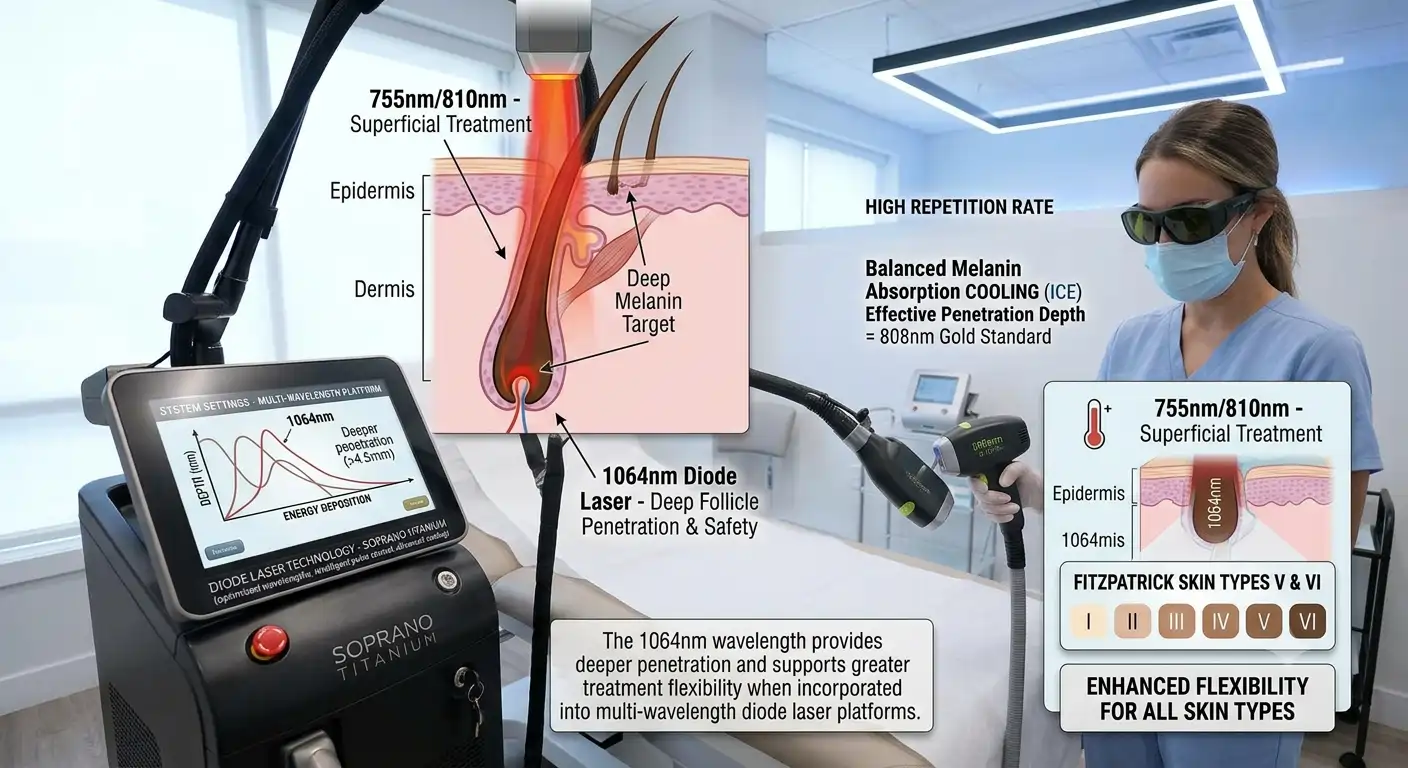
1064nm Diode Laser
The 1064nm wavelength penetrates more deeply into tissue while exhibiting
relatively lower epidermal melanin absorption. These characteristics make
it an important component of many advanced diode laser systems intended
to support treatment across a wider range of Fitzpatrick skin phototypes.
The 1064nm wavelength provides deeper penetration and supports greater
treatment flexibility when incorporated into multi-wavelength diode laser
platforms.
Clinical Characteristics
Deeper tissue penetration.
Reduced epidermal melanin absorption.
Supports treatment flexibility across different skin phototypes.
Frequently integrated into advanced professional systems.
Why Are Multi-Wavelength Diode Laser Systems Becoming More Popular?
Modern aesthetic clinics rarely treat a single patient profile. Hair thickness,
follicle depth, anatomical location, and skin phototype vary considerably
between individuals and even between different treatment areas on the same
patient.
Multi-wavelength diode laser systems combine complementary wavelengths
within a single platform, allowing clinicians to tailor treatments according
to specific clinical needs rather than relying on one wavelength for every
procedure.
Wavelength
Primary Strength
Typical Clinical Role
755nm
Higher melanin absorption
Finer and more superficial hair
808nm
Balanced performance
Routine professional hair reduction
940nm
Additional penetration
Thicker follicles and complementary targeting
1064nm
Deeper penetration
Greater flexibility across skin phototypes
According to Cocoon Laser’s product specifications, the
COOLICE Diode Laser Platform
integrates all four wavelengths—755nm, 808nm, 940nm, and 1064nm—within
a single professional system, enabling clinicians to adapt treatments to
different clinical indications while maintaining workflow efficiency. This
multi-wavelength configuration is one of the defining features of the platform.
Beyond Wavelength: Why Cooling Technology Is Equally Important
Wavelength selection determines where laser energy is delivered, but cooling
technology determines how comfortably and consistently that energy can
be applied in clinical practice.
The next section explores the engineering behind contact cooling, TEC
semiconductor cooling, water circulation, and integrated cooling architectures
that support professional diode laser treatments.
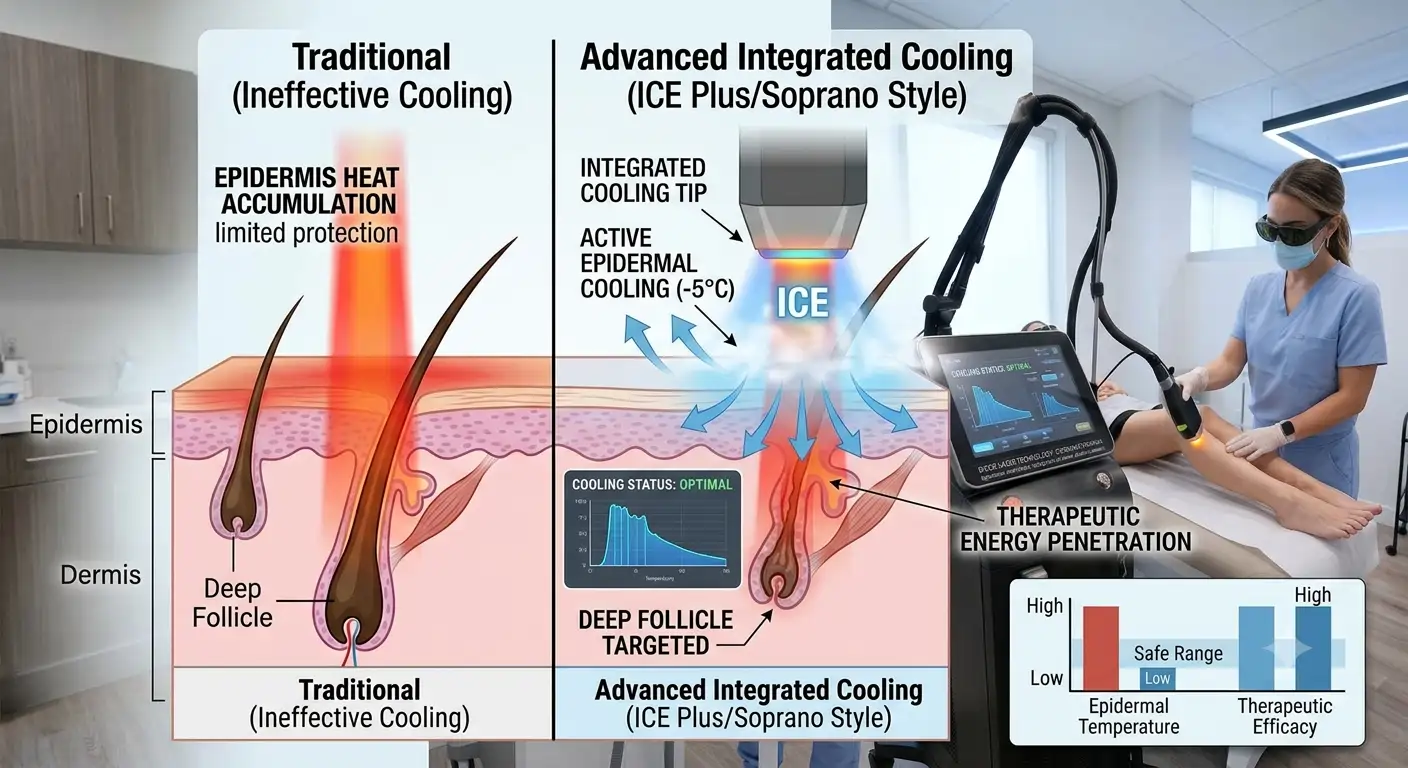
Why Is Cooling Technology Essential in Diode Laser Systems?
Laser wavelength determines how energy interacts with the hair follicle,
but cooling technology determines whether that energy can be delivered
comfortably and consistently. Modern diode laser systems rely on advanced
cooling architectures to protect the epidermis while allowing sufficient
thermal energy to reach the target follicle.
Effective cooling improves patient comfort, supports stable clinical workflows,
and enables practitioners to perform treatments using appropriate therapeutic
parameters without causing unnecessary surface heating.
Advanced cooling systems help protect the epidermis while allowing therapeutic
laser energy to reach hair follicles.
Common Cooling Technologies Used in Professional Diode Lasers
Different manufacturers employ different cooling strategies depending
on equipment design, treatment philosophy, and engineering capabilities.
Many modern platforms combine several cooling technologies into one integrated
system.
Cooling Technology
Purpose
Typical Application
Contact Cooling
Cools the epidermis through direct skin contact.
Routine clinical treatments.
Sapphire Cooling
Provides continuous contact cooling through a sapphire crystal.
Premium diode laser systems.
TEC Semiconductor Cooling
Maintains stable operating temperatures for the handpiece.
Professional medical devices.
Water Cooling
Dissipates heat generated by the laser system.
Long-duration treatments.
Air Cooling
Supports heat exchange throughout the device.
Continuous operation.
Integrated Cooling Architecture
High-performance diode laser platforms increasingly utilize integrated
cooling architectures rather than relying on a single cooling method. Combining
air circulation, water cooling, semiconductor cooling, and contact cooling
enables stable operating temperatures throughout extended treatment sessions.
According to Cocoon Laser’s technical specifications, the COOLICE platform
integrates:
Air cooling
Water circulation cooling
Double TEC semiconductor cooling
Annular cooling chip technology
This multi-layer cooling design supports continuous clinical operation
while maintaining treatment comfort and helping protect superficial tissue
during laser energy delivery.
Clinical Applications of Diode Laser Technology
Although diode laser technology is best known for long-term hair reduction,
advances in wavelength combinations and engineering have expanded its role
across a wide range of professional aesthetic practices.
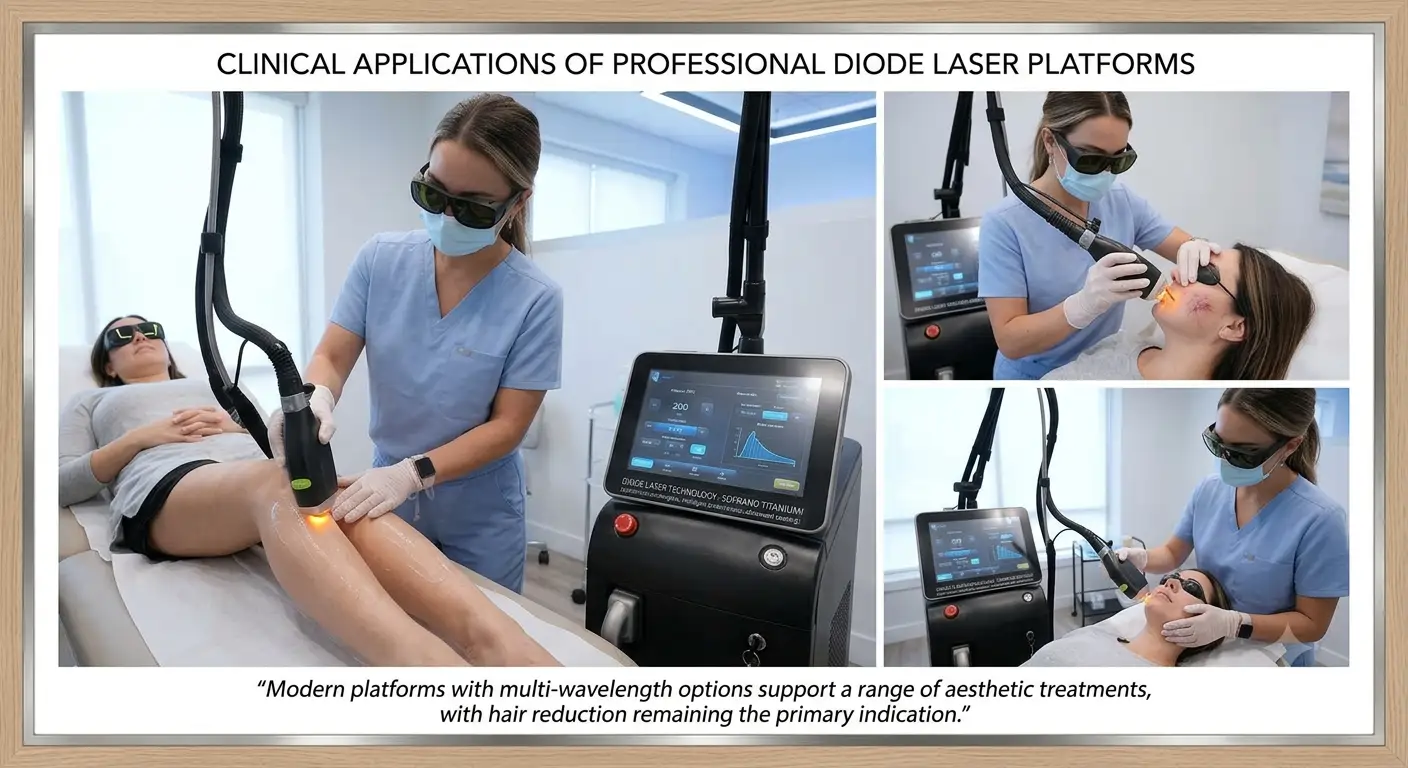
Professional diode laser platforms are used across multiple aesthetic
treatment indications, with hair reduction remaining the primary application.
Long-Term Hair Reduction
This remains the primary clinical application. Appropriate wavelength
selection and treatment parameters allow laser energy to selectively target
melanin-rich hair follicles while minimizing thermal effects on surrounding
tissue.
Large Treatment Areas
High repetition rates and large spot sizes enable efficient treatment
of extensive anatomical regions such as the legs, back, chest, and arms.
Facial Hair Reduction
Modern diode laser systems also support precision treatments in smaller
anatomical regions including the upper lip, chin, jawline, and sideburns.
Diverse Skin Phototypes
Multi-wavelength diode platforms provide clinicians with greater flexibility
when treating patients across different Fitzpatrick skin types by allowing
parameter adjustments tailored to individual clinical situations.
Advantages of Diode Laser Technology
High Treatment Efficiency
Balanced wavelengths and high repetition rates allow rapid coverage of
both small and large treatment areas.
Broad Clinical Flexibility
Multi-wavelength platforms support individualized treatment strategies
for different hair characteristics and skin phototypes.
Patient Comfort
Advanced cooling systems improve treatment comfort while supporting consistent
energy delivery.
Stable Clinical Performance
Modern semiconductor laser technology offers reliable energy output and
long-term operational stability.
How Does Diode Laser Technology Compare with Other Hair Reduction Technologies?
Technology
Main Advantage
Typical Consideration
Diode Laser
Balanced penetration, treatment speed, and versatility.
Widely used in professional clinics.
Alexandrite
Strong melanin absorption.
Often preferred for lighter skin phototypes.
Nd:YAG
Greater tissue penetration.
Useful for selected darker skin phototypes.
IPL / OPT
Broad-spectrum multifunctionality.
Lower wavelength specificity than lasers.
Choosing between technologies depends on patient characteristics, treatment
goals, practitioner experience, and clinic workflow rather than a single
performance metric.
Choosing the Right Diode Laser Platform
Beyond wavelength and cooling, clinics should evaluate spot size, pulse
duration, energy stability, software, ergonomics, maintenance requirements,
manufacturer support, training, and regulatory certifications before investing
in a professional diode laser system.
In the final section, we answer common questions about diode laser technology,
review key purchasing considerations, and provide links to related technology
guides and comparison articles.
How to Choose a Professional Diode Laser System
Selecting a professional diode laser platform involves much more than
comparing wavelength specifications. Long-term clinical performance depends
on the overall engineering design, energy stability, cooling efficiency,
software intelligence, manufacturer support, and after-sales service.
Clinics, distributors, and OEM buyers should evaluate the complete system
rather than focusing on a single specification listed in a brochure.
Key Evaluation Factors
Evaluation Item
Why It Matters
Laser Wavelength
Determines melanin absorption and tissue penetration.
Spot Size
Affects treatment speed and coverage efficiency.
Pulse Width Range
Allows optimization for different hair diameters.
Energy Stability
Ensures consistent clinical performance.
Cooling Performance
Improves comfort while protecting the epidermis.
Handpiece Ergonomics
Reduces operator fatigue during long treatments.
Software Interface
Improves workflow and treatment efficiency.
After-sales Support
Ensures long-term operational reliability.
Engineering Behind Modern Diode Laser Platforms
Today’s professional diode laser systems are highly integrated medical
devices that combine optics, electronics, thermal management, precision
mechanics, and intelligent software into a single treatment platform.
Semiconductor Laser Modules
High-quality laser diode arrays provide stable optical output and are
the foundation of consistent clinical performance.
Optical Beam Delivery
Lens systems, beam shaping optics, and optical alignment ensure uniform
energy distribution across the treatment spot.
Cooling Architecture
Integrated air, water, TEC, and contact cooling technologies maintain
stable operating temperatures during continuous clinical use.
Intelligent Control Software
User-friendly interfaces allow practitioners to adjust wavelength, fluence,
pulse width, repetition rate, and treatment presets efficiently.
Frequently Asked Questions
What is diode laser technology?
Diode laser technology uses semiconductor laser modules to generate coherent
light at specific wavelengths. In aesthetic medicine, it is primarily used
for professional hair reduction through selective photothermolysis.
Why is 808nm considered the standard wavelength?
The 808nm wavelength provides an effective balance between melanin absorption
and tissue penetration, making it suitable for treating a wide range of
hair types and anatomical areas.
Are multi-wavelength diode lasers better?
Multi-wavelength systems offer greater flexibility because different wavelengths
have different penetration depths and absorption characteristics. They
allow clinicians to tailor treatments to individual patient needs rather
than relying on a single wavelength.
Why is cooling technology important?
Cooling systems help protect the epidermis, improve patient comfort, and
enable practitioners to deliver therapeutic laser energy more consistently
throughout treatment.
How do diode lasers compare with IPL?
Diode lasers emit a specific wavelength with precise energy delivery,
while IPL uses filtered broad-spectrum light. Both technologies have clinical
applications, but diode lasers generally provide greater wavelength specificity
for hair reduction.
Discover Professional Diode Laser Solutions
Understanding diode laser technology is the first step toward selecting
the right platform for your clinic or distribution business. Beyond wavelength
specifications, successful systems combine stable engineering, intelligent
software, advanced cooling, and comprehensive manufacturer support.
Explore Cocoon Laser’s diode laser solutions to learn how modern multi-wavelength
technology can support professional hair reduction across a wide range
of clinical applications.
Explore COOLICE
Request a Quote