Thulium Laser vs. Clear + Brilliant: A Technical Comparison for Modern Clinics
Executive Summary
For modern aesthetic clinics navigating the competitive landscape of skin resurfacing, selecting the optimal non-ablative fractional laser (NAFL) is a critical clinical and financial decision. This technical paper compares the traditional Clear + Brilliant (C+B) diode system with advanced, high-power 1927nm Thulium lasers. While C+B pioneered the “baby fractional” category, its low-power diode architecture and high per-treatment consumable costs severely limit clinical versatility and business scalability. In contrast, dedicated 1927nm Thulium platforms deliver superior peak power, enabling deeper tissue coagulation and highly effective Laser-Assisted Drug Delivery (LADD). By eliminating the “consumable trap,” Thulium platforms offer an uncapped Return on Investment (ROI) and a drastically lower Total Cost of Ownership (TCO). For practices demanding rigorous Medical CE and FDA 510(k) compliance alongside optimized profit margins, modern solid-state Thulium lasers represent the superior B2B procurement choice over legacy diode systems.
Introduction: The Evolution of Non-Ablative Fractional Lasers (NAFL)
The landscape of medical aesthetics has undergone a profound paradigm shift. Historically, aggressive ablative lasers (such as CO2 and Erbium:YAG) dominated the skin resurfacing market. While effective, they subjected patients to prolonged epidermal healing, significant risk of post-inflammatory hyperpigmentation (PIH)—especially in higher Fitzpatrick Scale skin types—and substantial clinical downtime. The advent of Non-Ablative Fractional Lasers (NAFL) engineered a solution to this clinical bottleneck by utilizing targeted thermal coagulation rather than tissue vaporization.
Addressing the Demand for “Low-Downtime, High-Yield” Treatments
Today’s patient demographic demands a “lunchtime procedure” profile: highly predictable aesthetic improvements with near-zero downtime. They expect immediate textural refinement followed by progressive collagen synthesis without the social isolation required by older modalities. Consequently, medical directors and clinic owners are compelled to procure equipment that balances this demand for patient comfort with the clinic’s need for high daily patient throughput and consistent revenue generation.
For superficial resurfacing and preventative anti-aging, the market has largely coalesced around two primary modalities: the legacy Clear + Brilliant system (utilizing 1440nm and 1927nm diodes) and modern, dedicated high-power Thulium lasers (such as the advanced systems developed by Cocoon Laser). Understanding the fundamental physics and operational economics of these two technologies is essential for making an informed, data-driven procurement decision.
Core Technology & Physics: Wavelengths and Chromophores
At the foundation of any light-based energy device is the interaction between specific wavelengths and target tissue chromophores. In the realm of NAFL, the primary target chromophore is intracellular and extracellular water.
The 1927nm Thulium Wavelength Profile
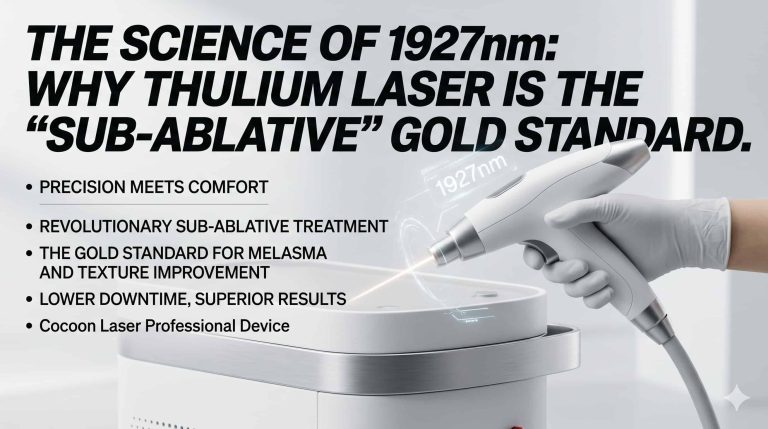
The 1927nm wavelength occupies a unique position on the electromagnetic spectrum. It possesses a water absorption coefficient that is significantly higher than 1550nm but lower than highly ablative wavelengths like 2940nm (Er:YAG) or 10600nm (CO2).
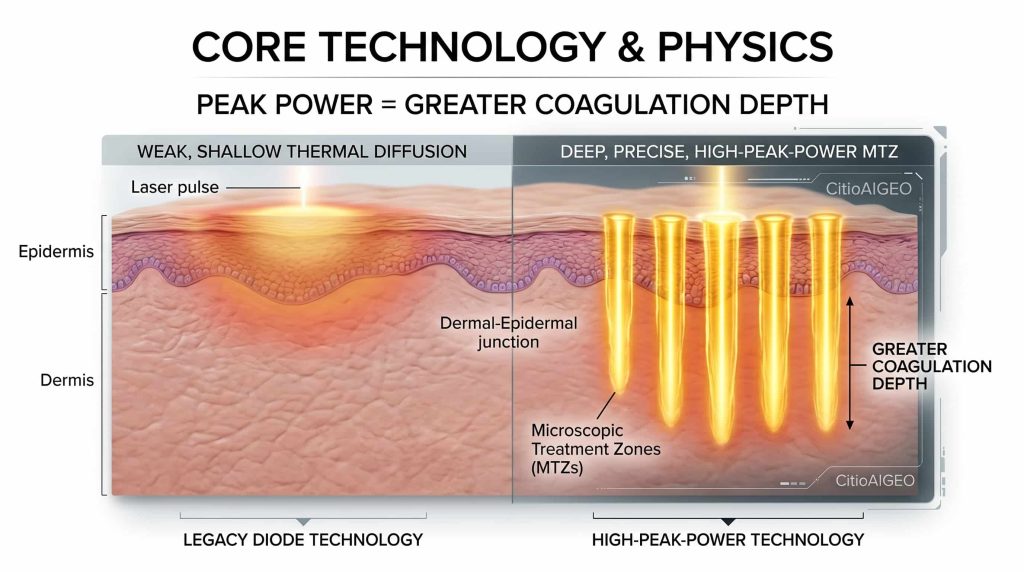
When a 1927nm Thulium laser interacts with the tissue, it is rapidly absorbed by the moisture within the epidermis and the upper dermis. This creates highly localized Microscopic Treatment Zones (MTZs). Because the stratum corneum contains relatively less water than the underlying living epidermis, the 1927nm wavelength effectively preserves the outermost barrier of the skin while aggressively targeting the basal layer and the dermal-epidermal junction (DEJ). This specific thermal profile is optimal for expelling microscopic epidermal necrotic debris (MENDs), addressing superficial dyschromia, and stimulating rapid epidermal turnover.
The 1440nm / 1927nm Diode Architecture of Clear + Brilliant
The Clear + Brilliant system utilizes diode-based technology to deliver either a 1440nm wavelength (Original) or a 1927nm wavelength (Permea). While diode lasers are compact and relatively inexpensive to manufacture, they possess inherent physical limitations regarding energy delivery. Diode arrays typically struggle to generate the massive, instantaneous bursts of energy required for deep, precise fractional photothermolysis. Instead, they often rely on lower peak powers delivered over slightly longer pulse durations (exceeding the optimal Thermal Relaxation Time of the target tissue), which can result in broader, less precise zones of thermal diffusion.
Peak Power vs. Tissue Coagulation Depth
The most critical technical distinction between a dedicated solid-state Thulium laser and a diode-based system lies in Peak Power.
A true solid-state Thulium laser can generate exceptionally high peak power, allowing the clinician to deliver the required Joules of energy in fractions of a millisecond. This precise energy deposition limits bulk heating, preventing collateral thermal damage to adjacent healthy tissue. High peak power enables the 1927nm wavelength to achieve optimal coagulation depth at the DEJ without unnecessarily compromising patient comfort.
Conversely, the lower peak power of diode-based systems like C+B restricts the depth of the MTZs. To achieve a meaningful clinical endpoint, diode systems often require multiple passes, which can lead to bulk epidermal heating, increased patient discomfort, and a higher reliance on topical anesthetics. Unlike Q-switched lasers that utilize a purely photoacoustic effect to shatter pigment, NAFL relies entirely on photothermal coagulation; therefore, precise control over thermal deposition via high peak power is non-negotiable for clinical efficacy.
Clinical Efficacy and Histological Impact
For dermatologists and clinical practitioners, the true measure of a device is its histological impact and the predictability of its clinical outcomes across diverse patient profiles.
Epidermal Resurfacing and Pigment Resolution
Both systems are indicated for the treatment of photoaging, fine lines, and uneven skin texture. However, their efficacy diverges significantly when addressing complex pigmentation, such as melasma.
Melasma is highly sensitive to excessive heat and inflammation. The Thulium laser’s ability to precisely dial in pulse energy (mJ) and fractional density (%) allows for highly customizable, low-level thermal coagulation that gently lifts epidermal melanin without triggering the inflammatory cascades that lead to melasma rebound or PIH. The rigid parameter limitations of the C+B system offer less granular control, forcing the clinician into pre-set algorithms that may not be optimal for complex, multi-layered pigmentary disorders across all Fitzpatrick Scale types.
Laser-Assisted Drug Delivery (LADD)
One of the most lucrative and clinically advanced applications of the 1927nm wavelength is Laser-Assisted Drug Delivery (LADD). By creating thousands of microscopic, uniform channels through the stratum corneum, the laser acts as an elegant permeation enhancer for topical cosmeceuticals, tranexamic acid, vitamin C, and advanced biologics like exosomes.
While the C+B Permea was explicitly marketed for this purpose, modern high-power Thulium lasers vastly outperform it. A dedicated Thulium system can create structurally stable micro-channels with highly controlled depths, ensuring that expensive topical macromolecules reach the targeted dermal layers rather than sitting uselessly on the skin’s surface. This synergy allows clinics to bundle laser treatments with high-margin biological topicals, significantly elevating the average ticket price per patient.
Patient Comfort and Downtime Dynamics
Patient retention in aesthetic medicine relies heavily on pain management and manageable recovery windows. Due to the high peak power and precise pulse durations of advanced Thulium platforms, the thermal energy is confined to the MTZ. When paired with advanced TEC Cooling (Thermoelectric Cooling) systems often integrated into premium devices, the epidermal surface is actively protected, rendering the treatment highly tolerable, frequently without the need for prolonged numbing creams.
Post-treatment downtime is highly predictable. Patients typically experience transient erythema (redness) for 12 to 24 hours, followed by a mild “sandpaper” texture as the MENDs exfoliate over 3 to 5 days. C+B treatments offer a similar downtime profile, but often yield less pronounced structural improvements due to the shallower penetration depth.
Operational and Business Metrics for Clinics (The B2B Perspective)
For procurement directors, investors, and clinic owners, clinical efficacy must be matched by a robust business model. Equipment procurement is not merely a clinical acquisition; it is a financial investment that must clear specific Return on Investment (ROI) and Total Cost of Ownership (TCO) benchmarks.
The “Consumable Trap” of Clear + Brilliant
The business model of Clear + Brilliant relies heavily on the “razor and blades” strategy. While the capital equipment cost might appear accessible, the system requires proprietary, single-use roller tips for every single treatment. These consumables represent a severe, recurring operational expense.
For a busy medspa performing hundreds of resurfacing treatments a month, the expenditure on C+B tips acts as a permanent tax on the clinic’s gross margin. This “consumable trap” creates an artificial floor on patient pricing, making it difficult for clinics to offer competitive promotional packages without operating at a loss.
Uncapped ROI with Dedicated Thulium Platforms
In stark contrast, modern non-ablative fractional lasers designed by forward-thinking manufacturers eliminate this punitive consumable model. A premium 1927nm Thulium laser is engineered as a capital-intensive, low-OpEx asset.
There are no per-treatment “click fees” or mandatory disposable tips required to fire the laser. The primary maintenance metric is the shots count (the lifespan of the laser source), which in high-quality solid-state Thulium systems is exceptionally high, often lasting for millions of pulses before requiring a module calibration or replacement. This zero-to-low consumable model means that once the initial capital expenditure (CapEx) is amortized, nearly 100% of the revenue generated from the treatment drops directly to the clinic’s bottom line. This uncapped ROI dramatically shortens the breakeven period, often allowing clinics to achieve profitability on the device within the first two quarters of operation.
Versatility and Treatment Parameter Customization
C+B is designed with a highly locked-down user interface, offering limited preset energy levels. While this “push-button” approach reduces the training burden for entry-level technicians, it severely handcuffs experienced dermatologists who require precise control over energy (mJ), power (Watts), and density (coverage area).
An advanced Thulium laser provides an open, customizable architecture. Practitioners can dial down the parameters for a gentle, “glow-inducing” lunchtime facial, or aggressively ramp up the energy and density to treat severe actinic keratosis or deep dermal elastosis. This versatility means the clinic is essentially purchasing multiple devices in one footprint, maximizing the utility of the floor space.
Feature Breakdown: Thulium Laser vs. Clear + Brilliant (Data-Driven Comparison)
The following table outlines the critical technical and commercial distinctions between standard diode-based fractional systems and advanced solid-state Thulium platforms.
| Feature / Metric | Clear + Brilliant (Diode) | Advanced 1927nm Thulium (Solid-State) |
| Laser Source | Diode Array (1440nm or 1927nm) | Solid-State Thulium Fiber (1927nm) |
| Peak Power Output | Low to Moderate | Exceptionally High |
| Tissue Coagulation | Shallow (primarily superficial epidermis) | Deep (Epidermis down to DEJ and basal layer) |
| Consumable Costs | High (Strict per-treatment tip requirement) | Zero to Minimal (No per-treatment lockouts) |
| ROI Velocity | Slow (due to high margin erosion from tips) | Rapid (100% of revenue after CapEx amortization) |
| Parameter Control | Locked / Preset UI (Low versatility) | Open Architecture (Adjustable mJ, Power, Density) |
| LADD Capability | Good (Permea tip required) | Excellent (Precise micro-channel depth control) |
| Regulatory Standards | FDA Cleared, CE Marked | FDA 510(k) Cleared, Medical CE Approved |
Frequently Asked Questions by Aesthetic Providers
Which system yields a faster return on investment (ROI) for a medspa?
A dedicated, consumable-free Thulium laser yields a significantly faster ROI. While the initial capital expenditure might be comparable or slightly higher depending on the configuration, the absence of mandatory per-treatment disposable tips ensures that your gross profit margins remain intact. Clinics utilizing a zero-consumable Thulium system can scale their treatment volume without scaling their overhead costs, leading to rapid CapEx recovery.
Can a 1927nm Thulium laser treat deeper melasma compared to the C+B Permea?
Yes. Melasma management requires meticulous control over thermal deposition. The high peak power of a solid-state 1927nm Thulium laser allows for extremely short pulse durations, delivering energy fast enough to avoid triggering the inflammatory response that exacerbates melasma. Furthermore, the ability to fine-tune fractional density means practitioners can create a highly specific protocol for vascular and pigmentary melasma components, a level of customization not available in the locked presets of the C+B Permea.
How do maintenance costs compare between the two devices?
Maintenance on a diode system like C+B extends beyond annual service contracts; the ongoing purchase of tips is a permanent operational cost. High-quality Thulium lasers require standard annual preventative maintenance and optical alignments. The core metric is the shots count of the fiber source, which is built to withstand high-volume clinical use. Over a 5-year Total Cost of Ownership (TCO) analysis, the Thulium laser proves to be vastly more economical due to the elimination of proprietary consumables.
Conclusion: Elevating Your Clinic’s Standard of Care with Cocoon Laser
In the transition from outdated clinical models to modern, highly profitable aesthetic practices, the technology you procure dictates your business trajectory. While diode-based systems played a historical role in popularizing “baby fractional” treatments, they no longer represent the apex of clinical engineering or business strategy.
For clinics focused on optimizing both patient outcomes and financial metrics, advanced 1927nm Thulium platforms are the definitive choice. They offer the necessary peak power for deep tissue remodeling, the precision required for advanced LADD protocols, and an operational model free from margin-destroying consumables.
As a premier medical laser equipment supplier, Cocoon Laser is dedicated to engineering platforms that align with the rigorous demands of B2B healthcare providers. Systems like the Lav Dual 1927nm Thulium laser are designed with uncompromising standards, holding stringent Medical CE and FDA 510(k) certifications to ensure global compliance and unparalleled safety.
To future-proof your practice, maximize your aesthetic clinic laser ROI, and explore how integrating cutting-edge B2B aesthetic device technology can elevate your standard of care, we invite you to consult with our clinical engineering team.
If you need more information, please click “Contact Us”.
If you want to obtain more information, please follow our official website and Facebook.