Does Laser Hair Removal Hurt? Pain by Body Area (2026)
Laser Hair Removal Guide | Updated October 2026
Evidence-informed educational guidance on laser hair removal discomfort, body-area differences and treatment safety.
Published by Cocoon Laser | Professional aesthetic equipment supplier
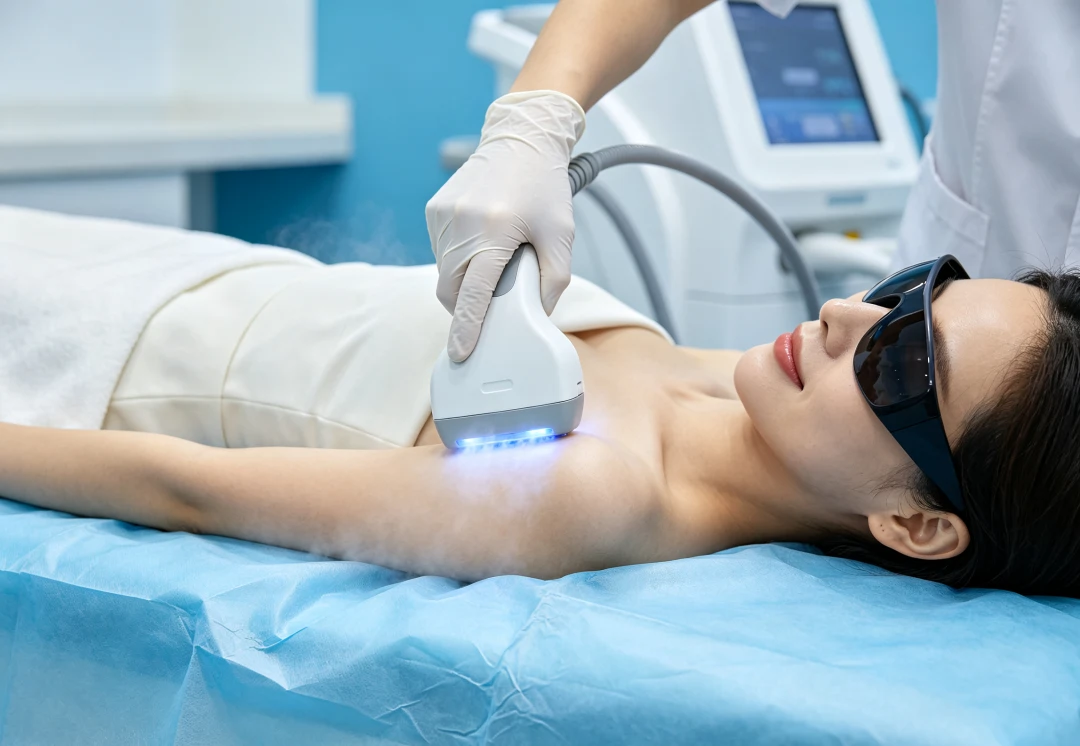
Does laser hair removal hurt? This is one of the most common questions people ask before booking their first treatment. The answer is yes, laser hair removal can cause discomfort, but the sensation is usually brief and varies considerably between individuals and treatment areas.
Many patients describe laser pulses as a rubber band snapping against the skin, a quick sting or a short burst of heat. Some areas may feel relatively comfortable, while others can be more sensitive because of hair density, skin characteristics or individual pain tolerance.
Modern professional laser hair removal systems may use contact cooling, cooled air or other approved cooling technologies to help manage epidermal heating and improve treatment comfort. However, no device can guarantee a completely painless experience for every patient.
This guide explains what laser hair removal feels like, which body areas may be more sensitive, what affects discomfort and how to distinguish expected treatment sensations from warning signs that require attention.
Quick Answer: How Much Does Laser Hair Removal Hurt?
Laser hair removal can hurt, but the discomfort is typically brief and occurs during individual laser pulses. Many people describe a snapping, stinging or warming sensation rather than continuous pain.
Sensitive areas such as the upper lip and bikini region may feel more uncomfortable for some patients, while larger areas such as the legs may be easier to tolerate. However, pain varies widely, and there is no universal ranking that applies to everyone.
Hair thickness, skin sensitivity, laser parameters, cooling methods and operator technique all affect the experience.
Severe burning pain is not something you should simply endure. Tell the provider immediately if a treatment sensation feels unusually intense or concerning.
What Does Laser Hair Removal Feel Like?
Laser hair removal produces a sensation that is different from shaving, waxing or tweezing.
Instead of mechanically pulling hair from the skin, the treatment delivers concentrated light energy to suitable pigmented hair follicles.
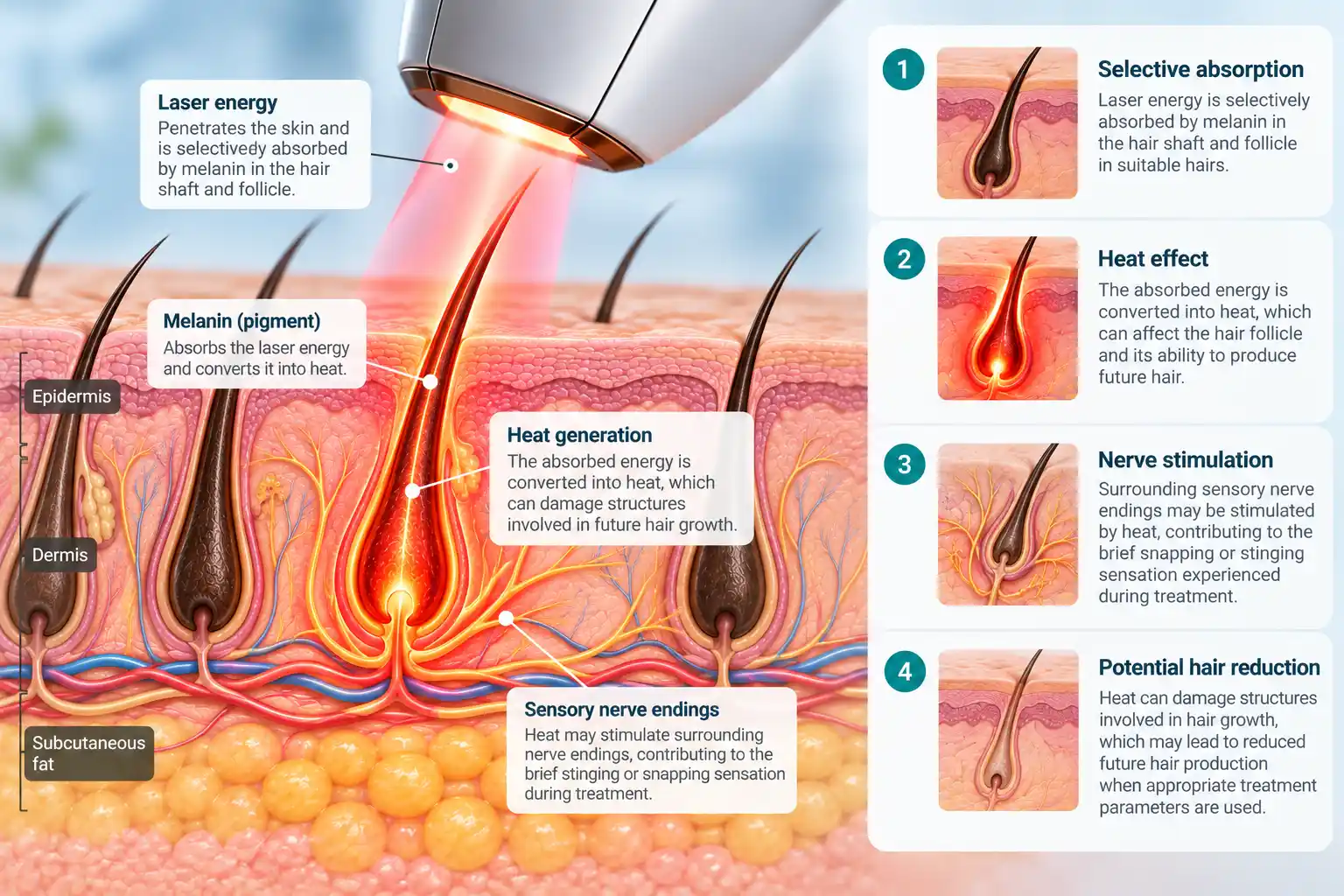
The absorbed energy is converted into heat, which can affect structures involved in future hair production. This heating process is one reason patients may experience a brief sting or snapping sensation.
Why Does Laser Hair Removal Cause Pain?
Professional laser hair removal is based on the principle of selective photothermolysis.
Melanin within suitable hair absorbs part of the delivered laser energy. The resulting heat can damage structures associated with hair growth.
Although the treatment is designed to target hair follicles, some heat may also affect surrounding tissues and stimulate sensory nerve endings.
The sensation depends on how energy is delivered, the characteristics of the hair and skin, and the effectiveness of the cooling method.
Does Laser Hair Removal Feel Like a Rubber Band Snap?
The rubber-band comparison is commonly used because individual laser pulses may create a sudden, localized sensation that disappears quickly.
However, this comparison is only descriptive. The experience may also feel like a small pinprick, a warm pulse or a brief sting.
Some patients notice little discomfort, while others find certain areas distinctly sensitive.
Is Laser Hair Removal a Burning Sensation?
A brief sensation of warmth or heat can occur during professional laser hair removal.
However, persistent burning, severe pain or unusual skin changes are not sensations that should be ignored.
Tell the operator immediately if the treatment feels excessively hot or painful. The provider should assess the skin response and determine whether treatment should be adjusted or stopped.
Does Laser Hair Removal Hurt the Entire Time?
The sensation usually occurs when individual pulses are delivered rather than as continuous pain throughout the appointment.
The total experience depends on the treatment area, device design and method of energy delivery.
A small facial treatment may involve only a short application period, while larger areas require more extensive coverage.
Laser Hair Removal Pain by Body Area
Different body areas may produce different treatment sensations. Skin sensitivity, hair density, follicle characteristics and anatomical location can influence how discomfort is perceived.
The following comparison is a qualitative guide rather than a validated clinical pain scale. It should not be interpreted as a prediction of any individual’s pain level.
| Body Area | Common Patient Consideration | Why Discomfort May Vary |
|---|---|---|
| Upper lip | Often described as sensitive | Facial sensitivity and localized treatment area |
| Chin | Brief stinging may be noticeable | Coarse facial hair and individual sensitivity |
| Underarms | May produce noticeable snapping sensations | Dense terminal hair and sensitive skin |
| Bikini line | Often considered a sensitive treatment area | Coarse hair and local skin sensitivity |
| Brazilian area | Discomfort may vary significantly by subregion | Different anatomical structures and hair density |
| Chest | May feel more intense in densely haired regions | Hair density and local sensitivity |
| Back | Variable across a large treatment area | Hair distribution, skin condition and coverage |
| Arms | Often manageable, but individual response varies | Hair thickness and regional sensitivity |
| Legs | May be relatively tolerable for some patients | Large treatment area and variable hair density |
Does Upper Lip Laser Hair Removal Hurt?
The upper lip can be a sensitive treatment area. Some patients experience a sharp but brief stinging sensation during individual pulses.
Although the treatment area is small, the intensity of each pulse may still be noticeable.
Appropriate cooling and careful parameter selection may help improve comfort.
Does Chin Laser Hair Removal Hurt?
Chin laser hair removal may feel like a brief snap, sting or pulse of heat, especially when treating coarse, pigmented facial hair.
The experience varies according to hair density, skin sensitivity and the device settings.
Chin hair may also be influenced by hormonal factors, which can affect treatment planning and long-term reduction.
For a detailed discussion of facial hair treatment, see our guide to chin laser hair removal costs, sessions and results .
Does Underarm Laser Hair Removal Hurt?
The underarms contain relatively dense terminal hair and may be sensitive during treatment.
Some patients notice a pronounced snapping sensation, although the area is comparatively small and the treatment may be completed relatively quickly.
Discomfort may change as hair density decreases over successive sessions.
Does Bikini Laser Hair Removal Hurt?
Bikini laser hair removal can be uncomfortable because the region contains coarse hair and sensitive skin.
However, pain tolerance varies widely, and some patients find the procedure manageable with appropriate cooling and professional technique.
The precise treatment boundaries should be discussed before the appointment.
Does Brazilian Laser Hair Removal Hurt More?
Brazilian laser hair removal covers multiple sensitive anatomical regions, so discomfort can vary within the same appointment.
Certain areas may feel more sensitive than others, and the experience depends on the patient’s anatomy, hair characteristics and treatment plan.
A provider should explain which areas are included and use appropriate safety precautions.
Does Chest Laser Hair Removal Hurt?
Chest laser hair removal may cause brief snapping or stinging sensations, particularly where coarse terminal hair is dense.
Sensitivity can differ between the central chest, upper chest and adjacent areas.
Patients considering treatment can learn more in our guide to chest laser hair removal costs, pain and results .
Does Back Laser Hair Removal Hurt?
Back laser hair removal covers a relatively large surface area. The discomfort may vary across the upper back, shoulders and lower back.
Hair density, skin sensitivity and treatment duration can influence the overall experience.
Some patients find the individual pulses manageable but become more aware of discomfort during longer appointments.
Does Arm Laser Hair Removal Hurt?
Arm laser hair removal may produce a mild-to-noticeable snapping or warming sensation, depending on the individual and the area being treated.
The upper arms and forearms can differ in hair thickness and sensitivity.
Fine hair may also be a less suitable laser target, so treatment eligibility should be assessed carefully.
Does Leg Laser Hair Removal Hurt?
Some patients find leg laser hair removal relatively tolerable compared with more sensitive areas.
However, the legs cover a large surface area, and discomfort may differ between the thighs, knees, shins and ankles.
Treatment duration and hair density may also affect the overall experience.
What Factors Affect Laser Hair Removal Pain?
Body area is only one factor influencing treatment discomfort. Two patients receiving treatment on the same area may report very different sensations.
1. Hair Thickness and Density
Coarse, dark hairs can absorb laser energy efficiently when suitable parameters are used.
Regions with dense terminal hair may produce a more noticeable sensation because multiple pigmented follicles are being targeted.
However, stronger pain does not automatically indicate a more effective treatment.
2. Skin Sensitivity
Individual sensitivity varies because of biological, anatomical and psychological factors.
A patient may find one area comfortable while experiencing greater discomfort in another.
Skin irritation or inflammation may also affect treatment suitability and comfort.
3. Laser Wavelength and Treatment Parameters
Laser wavelength, pulse duration, delivered energy and other device parameters influence how light interacts with hair and skin.
These settings should be selected according to the patient’s characteristics and the equipment’s approved treatment protocol.
Increasing energy solely to produce a stronger sensation is not an appropriate measure of effectiveness.
4. Cooling Technology
Professional systems may use contact cooling, cooled air or other methods to manage heat at the skin surface.
Appropriate cooling may improve comfort and help protect the epidermis.
However, cooling cannot eliminate every treatment risk or guarantee a painless experience.
5. Operator Experience
A qualified operator should assess the patient’s skin and hair, select suitable settings and monitor the skin’s response during treatment.
Appropriate technique is important for both patient comfort and treatment safety.
6. Individual Pain Tolerance
Pain is subjective. Previous experiences, anxiety, expectations and personal sensitivity can influence how laser treatment feels.
Patients should feel comfortable discussing concerns with the provider before and during the appointment.
How to Prepare for a More Comfortable Laser Hair Removal Session
Good preparation can help reduce avoidable skin irritation before laser hair removal. Although preparation cannot guarantee a painless procedure, it allows the provider to assess your skin more accurately and identify factors that may affect treatment comfort.
Always follow the instructions provided by your treating clinic. Preparation requirements may differ according to the device, treatment area and your medical history.
Before Your Appointment: Comfort and Safety Checklist
- Report recent tanning: Sun exposure, sunburn and artificial tanning may affect treatment suitability.
- Disclose medications: Tell your provider about prescription drugs, topical treatments and any products that may affect skin sensitivity.
- Follow shaving instructions: Your clinic may recommend shaving the treatment area before the appointment.
- Avoid waxing and plucking: These methods remove the hair shaft needed for conventional pigment-targeting laser treatment.
- Report skin irritation: Active infections, broken skin, severe inflammation or unusual lesions may require evaluation before treatment.
- Discuss pain concerns: Ask about expected sensations, cooling methods and what to do if discomfort becomes excessive.
- Confirm protective measures: Appropriate wavelength-specific eye protection is essential during professional laser procedures.
Should You Take Pain Medication Before Laser Hair Removal?
Do not assume that taking pain medication before laser hair removal is necessary or appropriate.
Whether a medication is suitable depends on your health, current prescriptions and the treatment protocol. Some medications may affect skin reactions or have other relevant precautions.
Ask your healthcare professional or treating provider before taking medication specifically to manage laser treatment discomfort.
Should You Avoid Caffeine Before Laser Hair Removal?
There is insufficient evidence to establish that avoiding caffeine reliably reduces laser hair removal pain for everyone.
If caffeine tends to increase your anxiety or physical sensitivity, adjusting your usual intake may improve your personal comfort. However, caffeine avoidance should not be presented as a proven method of preventing treatment pain.
Does Laser Hair Removal Hurt After the Session?
Some patients experience temporary warmth, tenderness or mild irritation after laser hair removal.
The skin may appear red or develop slight swelling around treated follicles. These reactions can occur because the procedure delivers heat to structures associated with hair growth.
Mild discomfort generally improves as the skin recovers, but the duration varies between individuals and treatment conditions.
How Long Does Laser Hair Removal Pain Last?
The snapping or stinging sensation associated with individual laser pulses usually ends shortly after energy delivery.
Temporary tenderness, warmth or skin sensitivity may continue after the appointment.
Many mild reactions improve within hours or days, although there is no universal recovery timeline. Persistent or worsening pain should be evaluated rather than assumed to be normal.
Is Redness Normal After Laser Hair Removal?
Temporary redness is a recognized post-treatment response.
Mild swelling around hair follicles, sometimes described as perifollicular edema, may also occur.
These findings should be assessed in the context of the patient’s skin type, treatment settings and overall symptoms.
Redness accompanied by severe pain, blistering or progressive skin damage requires prompt professional attention.
Why Does My Skin Feel Like It Has a Sunburn?
Some patients describe post-treatment warmth or sensitivity as similar to mild sunburn.
This comparison describes a sensation; it does not mean that every sunburn-like reaction is harmless.
If the skin becomes increasingly painful, develops blisters or shows significant discoloration, contact the treating provider promptly.
Normal Laser Hair Removal Discomfort vs. Warning Signs
Understanding the difference between expected sensations and potential complications is important.
Laser hair removal should not involve ignoring severe pain or continuing treatment when a patient develops concerning symptoms.
| Possible Expected Response | Warning Sign | Recommended Action |
|---|---|---|
| Brief snapping or stinging during pulses | Severe or escalating burning pain | Tell the operator immediately; treatment should be reassessed |
| Mild temporary redness | Blistering, open skin or progressive redness | Seek prompt professional assessment |
| Mild follicular swelling | Marked swelling, severe tenderness or signs of infection | Contact a qualified healthcare professional |
| Temporary warmth or sensitivity | Persistent or worsening pain | Request medical evaluation |
| Gradual hair shedding | New blistering or significant pigment changes | Contact the provider and obtain appropriate assessment |
Can Laser Hair Removal Cause Burns?
Yes. Burns are a recognized potential complication of laser hair removal.
Risk factors may include inappropriate treatment parameters, unsuitable patient selection, recent tanning, inadequate cooling or incorrect technique.
Burns may cause blistering, pigment changes or, in some cases, scarring.
If you suspect a burn, stop treatment and seek appropriate medical advice. Do not apply unapproved home remedies or attempt to treat significant blistering without professional guidance.
Can Laser Hair Removal Cause Nerve Damage?
Laser hair removal primarily targets pigmented hair structures, not nerves. Routine temporary stinging does not establish that nerve injury has occurred.
However, persistent numbness, altered sensation or unusual neurological symptoms after a procedure should not be dismissed.
Seek medical assessment if these symptoms occur.
Can Laser Hair Removal Cause Hyperpigmentation?
Post-inflammatory hyperpigmentation is a possible adverse effect of laser treatment, particularly when excessive skin heating or inflammation occurs.
Hypopigmentation, or lightening of the treated skin, is another potential complication.
Appropriate patient assessment, parameter selection, cooling and sun protection can help reduce avoidable risks, but they do not eliminate them completely.
How to Reduce Discomfort After Laser Hair Removal
Post-treatment care should focus on allowing the skin to recover without additional irritation.
Your provider’s instructions take priority because aftercare recommendations may vary by device, skin characteristics and treatment response.
Use Gentle Skin Care
Use mild cleansing and moisturizing products recommended by the treating provider.
Avoid aggressive exfoliation, scratching or applying irritating products to sensitive skin.
Avoid Excessive Heat and Friction
Hot baths, saunas, intense exercise and tight clothing may worsen discomfort while the treated area remains irritated.
Resume these activities according to your provider’s guidance and the condition of your skin.
Protect Treated Skin From Sun Exposure
Recently treated skin may be more vulnerable to irritation and pigment changes.
Follow professional sun-protection recommendations, including appropriate sunscreen and protective clothing where indicated.
Do Not Pick at Shedding Hairs
Treated hairs may shed gradually over the days or weeks following an appointment.
Avoid pulling, picking or aggressively exfoliating the hairs to accelerate the process.
Does Laser Cooling Technology Make Hair Removal Less Painful?
Cooling is an important consideration in professional laser hair removal because it can help manage heat at the skin surface.
Depending on the device, cooling may be delivered through a chilled treatment window, cooled air or another approved method.
Cooling may improve patient comfort and help reduce unwanted epidermal heating when used as part of an appropriate treatment protocol.
However, it cannot guarantee painless treatment or compensate for unsuitable laser settings.
Contact Cooling vs. Air Cooling
| Cooling Method | How It Works | Key Consideration |
|---|---|---|
| Contact cooling | A cooled surface contacts the skin during treatment | Cooling performance depends on the device and contact conditions |
| Air cooling | Cooled air is directed toward the treatment area | Effectiveness depends on airflow, temperature and application |
| Other device-specific cooling | Uses cooling mechanisms integrated into the treatment protocol | Must follow manufacturer instructions and applicable safety requirements |
Does a Cooling Handpiece Guarantee Painless Laser Hair Removal?
No. A cooling handpiece may improve comfort, but pain perception varies among patients.
Treatment sensations also depend on hair density, laser parameters, skin sensitivity and anatomical location.
Claims that a device is completely painless for every patient should be approached cautiously.
Professional Diode Laser Hair Removal Equipment With Cooling
For clinics and medical aesthetic practices, cooling performance is one of several factors to consider when selecting professional diode laser hair removal equipment.
Device buyers should also evaluate available wavelengths, treatment parameters, handpiece design, operating requirements, training and applicable regulatory status.
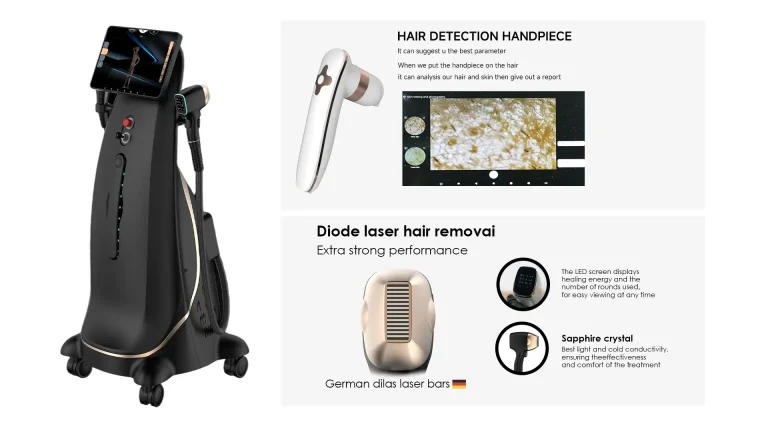
Cocoon Laser offers professional hair reduction equipment, including the COOLICE professional diode laser hair removal system . Clinics and distributors can review its technical specifications, available configurations and cooling-related information when comparing equipment.
Device features should be evaluated using manufacturer documentation and relevant evidence. The presence of cooling technology alone does not establish superior clinical results or eliminate treatment risks.
Does At-Home Laser Hair Removal Hurt?
Home-use hair removal devices may produce warmth, tingling or stinging sensations, depending on the technology, device settings and user characteristics.
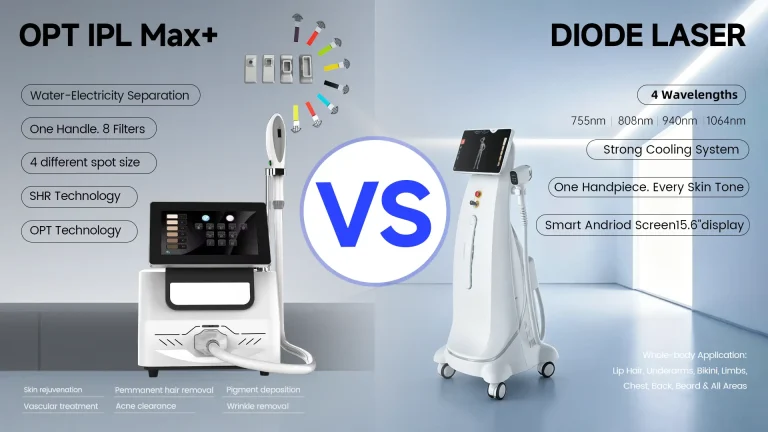
Many products marketed as home laser hair removal devices actually use intense pulsed light (IPL) rather than laser technology.
IPL and laser systems are not identical, and their treatment characteristics and safety requirements differ.
Is At-Home IPL Less Painful Than Professional Laser Hair Removal?
Some users may perceive home-use IPL as more comfortable than certain professional laser treatments, but this cannot be generalized to every device or individual.
Home-use systems vary in their output, treatment design and safety controls.
Lower perceived discomfort does not necessarily indicate better safety or equivalent effectiveness.
Can You Use Numbing Cream With At-Home IPL?
Do not apply numbing creams before home-use IPL or laser treatment unless the device instructions explicitly permit it and an appropriate healthcare professional has advised you.
Reduced sensation may make it harder to recognize excessive heating or skin injury.
Always follow the manufacturer’s instructions and avoid treating areas or skin types excluded by the device’s labeling.
Frequently Asked Questions About Laser Hair Removal Pain
Does laser hair removal hurt badly?
Laser hair removal can cause noticeable discomfort, but many patients describe the sensation as brief snapping, stinging or heat. Pain varies by body area, individual sensitivity and treatment conditions. Severe burning pain should be reported immediately.
What is the most painful area for laser hair removal?
Sensitive areas such as the upper lip and bikini region may feel more uncomfortable for some patients. However, there is no universally established ranking that predicts everyone’s experience.
What is the least painful area for laser hair removal?
Some patients find areas such as the legs or arms relatively tolerable, but discomfort depends on hair characteristics, treatment settings and personal sensitivity.
Does laser hair removal hurt more than waxing?
The methods produce different sensations. Waxing involves pulling hair from the skin, while laser treatment produces brief pulses of heat or stinging. Neither method is universally less painful.
Does laser hair removal hurt more the first time?
The first session may feel more noticeable because of dense hair or unfamiliar sensations. However, later sessions are not guaranteed to be less painful.
Does laser hair removal get less painful after each session?
Some people experience less discomfort as coarse hair density decreases. Others notice little change, and treatment settings may be adjusted during the course.
Can cooling make laser hair removal painless?
Cooling may improve comfort and help manage skin-surface heating, but it does not guarantee a painless experience.
Can I use numbing cream before laser hair removal?
Only use topical anesthetics when recommended by an appropriate healthcare professional. Incorrect application, especially over large areas, can cause serious adverse effects.
How long does laser hair removal pain last?
The sensation during each laser pulse is usually brief. Mild post-treatment tenderness may persist temporarily, but worsening or prolonged pain should be evaluated.
Is it normal to feel burning during laser hair removal?
Brief warmth may occur, but severe or persistent burning is a warning sign. Tell the operator immediately so the treatment can be reassessed.
Does laser hair removal hurt on dark skin?
Pain varies among individuals, and darker skin does not automatically mean greater discomfort. Appropriate equipment, settings, cooling and operator expertise are especially important for safety.
Does laser hair removal hurt more on thick hair?
Areas with dense, coarse, pigmented hair may produce more noticeable treatment sensations, but greater pain does not guarantee better results.
Is laser hair removal supposed to hurt afterward?
Mild temporary tenderness, warmth or redness may occur. Severe pain, blistering or persistent discoloration should prompt professional assessment.
Does at-home IPL hurt?
Home-use IPL may cause warmth, tingling or stinging. The experience varies by device and user, and all safety instructions should be followed.
Final Verdict: Does Laser Hair Removal Hurt?
Yes, laser hair removal can hurt, but the sensation is generally brief and varies significantly between individuals.
Many people describe treatment as repeated snaps, stings or pulses of heat. Sensitive areas may feel more uncomfortable, while other regions may be easier to tolerate.
The experience depends on hair density, skin characteristics, treatment parameters, cooling technology and operator technique.
Appropriate cooling and professional treatment planning may improve comfort, but no device can guarantee a completely painless procedure.
If you are considering treatment, choose a qualified provider who can explain the expected sensations, assess your skin and hair, and respond appropriately if discomfort becomes excessive.
Most importantly, remember that more pain does not mean better hair removal results. Safety and appropriate treatment selection should always come first.
Professional Laser Hair Removal Equipment for Clinics
Cocoon Laser supplies professional aesthetic equipment for clinics, medical spas and distributors, including diode laser systems for professional hair reduction applications.
For equipment buyers evaluating treatment technology, handpiece configurations and cooling-related features, explore the COOLICE diode laser hair removal machine for available product specifications and technical information.
Equipment selection and clinical operation should follow applicable regulations, manufacturer instructions, professional training requirements and appropriate treatment protocols.
Editorial disclosure: This educational guide was prepared by the Cocoon Laser content team. Cocoon Laser supplies professional aesthetic equipment and does not provide the consumer laser hair removal treatments described in this article.
Medical disclaimer: This article provides general educational information and does not replace individualized medical advice, diagnosis or treatment. Pain, treatment response and complications vary. Consult a qualified healthcare professional for concerns about treatment suitability or adverse reactions.
Evidence note: Body-area pain descriptions in this article are qualitative educational comparisons, not results from a standardized clinical pain-rating study. No universal pain ranking is claimed.