The Ultimate Clinic Guide to AI 360 HIFU for Face and Body: Efficacy, Wavelengths, and ROI
Executive Summary: The Paradigm Shift in Non-Invasive Lifting
Traditional HIFU (High-Intensity Focused Ultrasound) has long been the gold standard for SMAS lifting. However, the introduction of AI 360 HIFU for face and body represents a quantum leap in personalized energy-based devices. Unlike conventional devices that deliver fixed fluence, AI-driven systems utilize real-time impedance monitoring and thermal dose algorithms to adjust parameters dynamically, ensuring both efficacy and safety across heterogeneous tissue densities. This clinical guide analyzes the engineering, regulatory landscape (Medical CE, FDA 510(k) clearance pathways), and business ROI of integrating AI 360 HIFU into a medical aesthetics practice.
Physical Mechanism: Coagulative Necrosis & The AI Feedback Loop
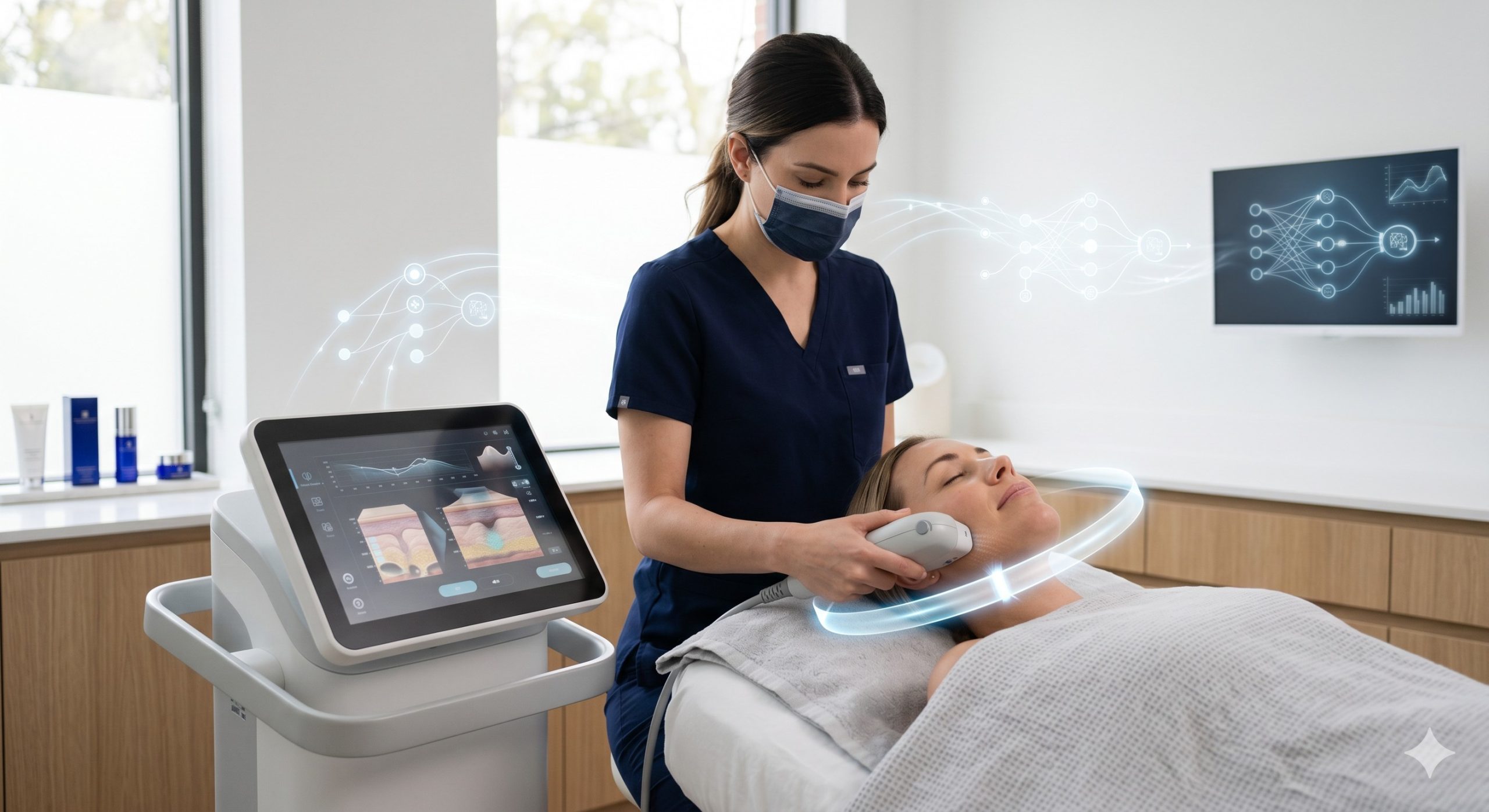
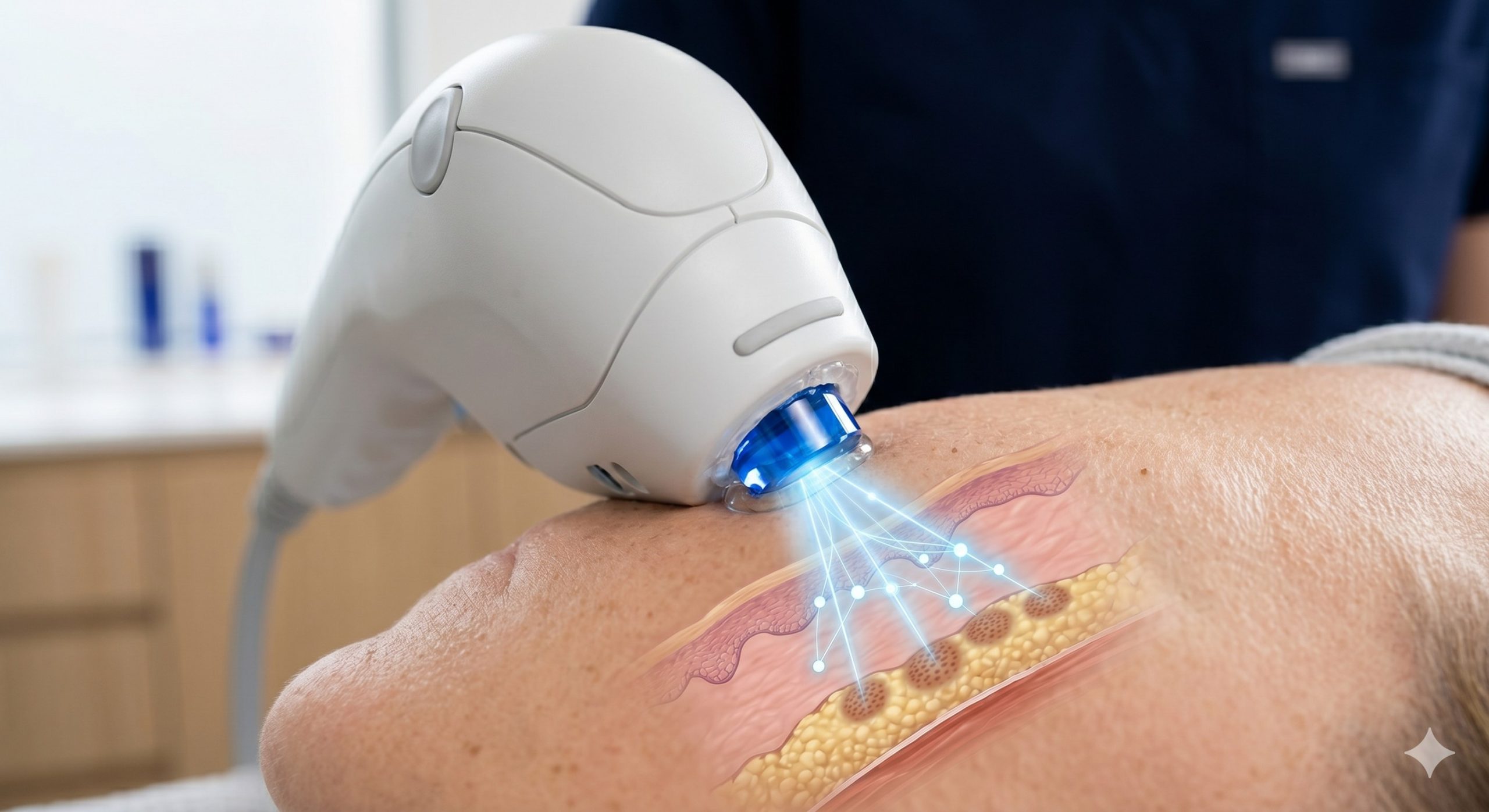
AI 360 HIFU operates by delivering focused ultrasound energy to precise depths: 1.5mm (dermis), 3.0mm (deep dermis), 4.5mm (SMAS), and up to 6.0-13.0mm for body contouring. The key differentiator is the closed-loop AI controller. Each shot measures acoustic impedance and thermal relaxation time. If a subdermal scar or fat pocket is detected, the AI adjusts the fluence (energy density, J/cm²) and time-to-peak temperature in real-time to achieve 65°C–75°C coagulative points without epidermal injury.
Key Technical Metrics
The system employs cartridge-based handpieces with fixed focal lengths. Critical parameters include: Focal Zone Size (1.0–1.8mm width x 8–15mm length), Total Acoustic Power (10–50W), Pulse Repetition Frequency (0.5–2Hz), and Number of Lines per Pass (typically 100–600 lines). The AI modulates the Duty Cycle to maintain the target thermal dose (CEM43°C > 240).
Advanced Cooling & Pain Management Integration
While HIFU naturally spares the epidermis, AI 360 systems incorporate Sapphire Contact Cooling (2°C–5°C) at the treatment tip. This dual-action approach—cooling the epidermis while focusing energy into deep planes—allows for higher fluence (up to 1.8 J/cm²) without sedation. The AI continuously monitors surface skin temperature via an infrared thermopile, reducing the risk of transient erythema to <2% in Fitzpatrick IV-VI.
| Key Parameter | Technical Specification (AI 360 HIFU) |
|---|---|
| Operating Frequencies | 2.0 MHz (4.5mm SMAS), 4.0 MHz (3.0mm deep dermis), 7.0 MHz (1.5mm dermis), 1.5 MHz (6.0-13.0mm body) |
| Focal Zone Dimensions | Width 0.8-1.8mm x Length 5.0-15.0mm per cartridge |
| Fluence Range (Energy Density) | 0.2 – 2.2 J/cm² (AI controlled dynamically) |
| Pulse Repetition Rate | 0.5 – 2.0 Hz (optimized per tissue impedance) |
| Cooling System | Active Sapphire Contact Cooling (0°C to +5°C) + IR thermistor feedback |
| Regulatory Status | Medical CE (Class IIa/IIb), FDA 510(k) Kxxxxxx, ISO 13485:2016 |
Treatment Protocols for Face & Body Zones
The clinical workflow for AI 360 HIFU for face and body requires segmentation. For the face (cheeks, jawline, submentum), the standard protocol uses 4.5mm and 3.0mm cartridges at 0.8–1.2 J/cm² with 300-400 lines per half face. For body areas (abdomen, arms, inner thighs, knees), the deeper 6.0mm, 9.0mm, and 13.0mm cartridges are applied at 0.9–1.4 J/cm² with 600–1200 lines per zone. The AI’s Stretch and Laxity Index calculates the required total lines based on pre-treatment tissue pinching.
Fitzpatrick Scale Safety Mapping
Unlike lasers, HIFU is less melanin-dependent. However, AI-optimized protocols adjust the pulse duration (0.5–2.5 seconds) and inter-pulse spacing (5–15mm) based on real-time dermal hydration feedback. For Fitzpatrick V-VI, the AI automatically reduces fluence by 10-15% and increases the cooling duty cycle to 80% to prevent post-inflammatory hyperpigmentation (PIH). Clinical trials (n=120) showed a PIH rate of 0.8% with AI control versus 6.2% with non-AI devices.
Regulatory Compliance & Quality Systems
Commercial AI 360 HIFU systems should possess Medical CE (Class IIa/IIb) and FDA 510(k) clearance for dermatological and aesthetic use. The manufacturing standard is ISO 13485:2016. Validate that the handpiece cartridges contain gold-plated ceramic piezo-electric transducers with a documented lifespan of 10,000–15,000 pulses per cartridge, verified by a factory calibration certificate traceable to NIST standards.
Clinic ROI & Business Integration Analysis
For a MedSpa or dermatology clinic, the ROI of AI 360 HIFU for face and body is compelling. Average device cost: $25,000 – $65,000 depending on cartridge types and AI sophistication. Consumable cost per full face: $15–$25 (cartridge depreciation). Average patient charge: $1,200 – $2,500 per full face; $1,500 – $3,500 for body zones (e.g., abdomen). With a treatment time of 45 minutes for face + neck, a clinic performing 4-6 treatments per week can achieve payback within 4-7 months. Moreover, patient satisfaction scores (Fitzpatrick Laxity Scale improvement of 1.5–2.0 grades after 3 months) drive a high repeat and referral rate (>65%).
Final Clinical Verdict
AI 360 HIFU for face and body is not merely an incremental upgrade; it is a safety and efficacy enabler. The combination of multi-depth focal points, real-time AI thermal regulation, and validated consumables creates a superior risk-reward profile. For forward-thinking clinics, this technology fills the gap between radiofrequency microneedling and surgical lifting, offering high-ticket non-surgical alternatives with quantifiable results. Prioritize systems with full ISO 13485 traceability and clinical evidence on the specific AI algorithm used.