The Ultimate Clinic Guide to pico laser for acne scars: before and after clinical results, Wavelengths, and ROI
Introduction: The Clinical Imperative for Advanced Acne Scar Management
Atrophic acne scars represent a significant clinical challenge, affecting up to 95% of patients with acne vulgaris and causing profound psychosocial distress . For the discerning medical aesthetics practitioner, selecting the most efficacious, safe, and profitable treatment modality is paramount. Legacy ablative and non-ablative lasers often present a difficult trade-off between efficacy and downtime, with risks of post-inflammatory hyperpigmentation (PIH), particularly in higher Fitzpatrick skin types .
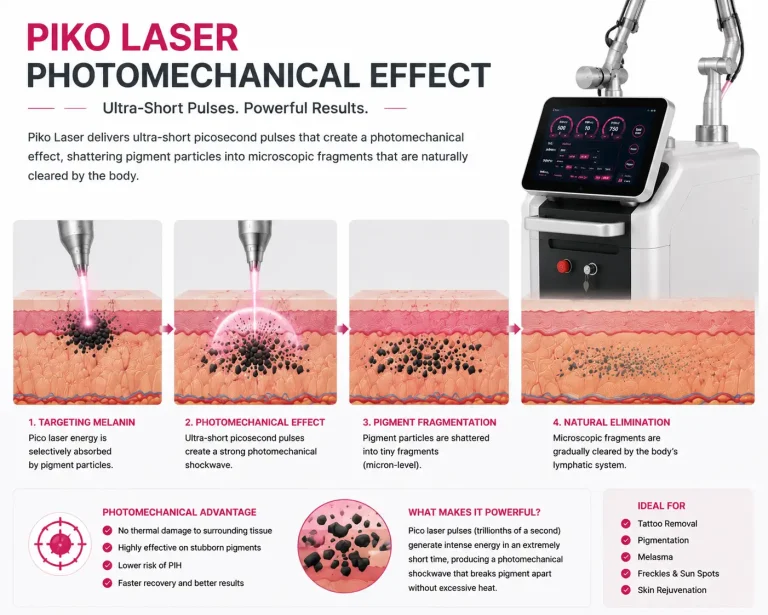
Picosecond (pico) laser technology has emerged as a transformative solution, leveraging ultra-short pulse durations (trillionths of a second) to generate a photoacoustic, rather than primarily thermal, effect. This mechanism, known as Laser-Induced Optical Breakdown (LIOB), stimulates robust neocollagenesis and neoelastogenesis with a superior safety profile, minimizing thermal damage to the surrounding epidermis . This guide provides a comprehensive clinical and business analysis of pico laser for acne scars, examining the technology, clinical evidence, and return on investment (ROI) to support your clinical decision-making.
[IMAGE_1]Selective Photothermolysis vs. Photoacoustic Mechanism: A Technical Deep Dive
Traditional Q-switched and ablative lasers rely on selective photothermolysis, using heat to destroy target tissue. While effective, this thermal energy often results in prolonged erythema, significant downtime, and a heightened risk of PIH, especially in skin of color . Pico lasers fundamentally alter this paradigm. By delivering energy in picoseconds (10⁻¹² seconds), they generate an intense photoacoustic wave that physically disrupts pigment and scar tissue with minimal heat diffusion . This process is clinically quantified as Laser-Induced Optical Breakdown (LIOB), creating microscopic vacuoles in the dermis that trigger a robust and safe wound-healing cascade . The result is a significant increase in dermal collagen and elastic fiber density, remodeling atrophic scars from the inside out .
Critical Technical Parameters for Clinical Success
Optimizing clinical outcomes with pico lasers requires a mastery of specific device parameters. The selection of wavelength, spot size, and fluence (energy density) must be meticulously tailored to the individual patient’s scar morphology and Fitzpatrick skin type.
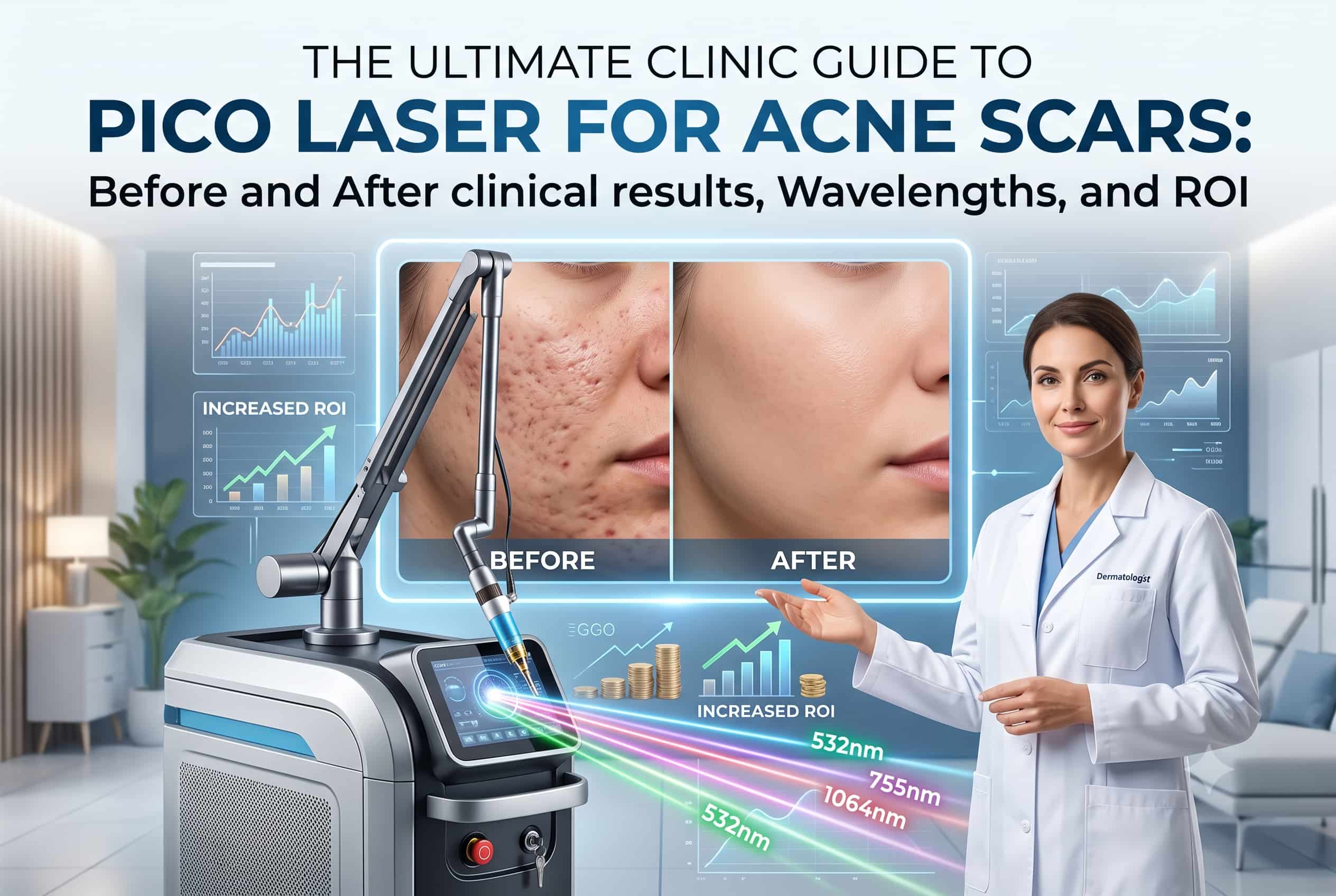
- Wavelengths (755nm, 1064nm, 532nm): The 755nm alexandrite wavelength is highly absorbed by melanin, making it exceptionally effective for superficial pigment and textural concerns, particularly when used with a diffractive lens array (DLA) . The 1064nm Nd:YAG wavelength penetrates deeper into the dermis with less melanin absorption, making it the gold standard for treating deeper, atrophic scars in all skin types, including Fitzpatrick IV-VI, due to its superior safety profile . The 532nm wavelength is utilized for more superficial, vascular, or pigmented components.
- Spot Size & Energy Density (Fluence): Larger spot sizes (e.g., 6-8mm) allow for faster treatment of large areas and deeper penetration. The fluence, measured in J/cm², must be carefully calibrated to achieve the desired LIOB effect without causing epidermal damage. Fractionated handpieces, such as the Resolve or DLA, further focus this energy into micro-beams, intensifying the effect on scar tissue while preserving untreated islands of skin for rapid healing .
| Key Parameter | Technical Specification & Clinical Significance |
|---|---|
| Wavelength & Technology | 755nm Alexandrite (superficial/texture, DLA) & 1064nm Nd:YAG (deep/atrophic scars, safe for all skin types) |
| Pulse Duration | Picosecond (10⁻¹² seconds) – enabling photoacoustic effect (LIOB) with minimal thermal damage |
| Cooling System | Advanced Sapphire Contact Cooling (e.g., -5°C to 5°C) for maximal epidermal protection and patient comfort |
| Energy Density (Fluence) | Clinically optimized (e.g., 0.1 – 2.0 J/cm²) to achieve LIOB and neocollagenesis without epidermal injury |
| Regulatory & Safety | Medical CE, FDA cleared, ISO 13485 certified for safety and quality assurance |
Clinical Evidence: Quantifiable Results and Safety Data
A growing body of peer-reviewed literature substantiates the efficacy and safety of pico laser technology for acne scars. The data demonstrates significant improvements across various scar types with a remarkably low incidence of adverse events.
Efficacy Across Multiple Clinical Studies
- High Clearance & Satisfaction Rates: A retrospective study of 69 patients with atrophic acne scars treated with a comprehensive 1064nm/532nm Nd:YAG picosecond protocol demonstrated significant aesthetic improvement, with mean Global Aesthetic Improvement Scale (GAIS) scores of 1.97, indicating noticeable to marked improvement. Importantly, no serious side effects such as blistering, hypopigmentation, or scarring were observed .
- Superiority to Non-Ablative Fractional Lasers: A comparative study of 44 patients with skin types III-IV showed that pico laser treatment resulted in significant improvements in skin smoothness (PRIMOS Sa and Sq scores) and higher patient satisfaction with both pore appearance and acne scar reduction compared to a non-ablative fractional laser. While transient erythema was slightly higher in the pico group, long-term AEs like hyperpigmentation were comparable .
- Safe and Effective for Skin of Color: A prospective study on Fitzpatrick skin types V and VI confirmed that a 755nm picosecond laser with a fractionated lens array provided clinical improvement in 100% of subjects, with 94.1% patient satisfaction and no serious adverse events . Furthermore, a study on Indian skin (Fitzpatrick III-V) using a 1064nm fractional picosecond laser found no incidence of PIH, highlighting its safety in high-risk populations .
Comparative Analysis: Pico vs. CO2 Fractional Lasers
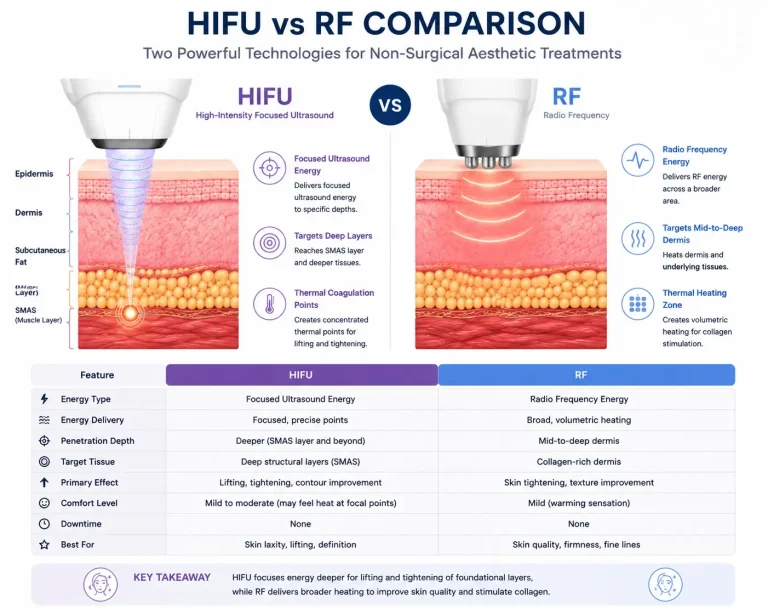
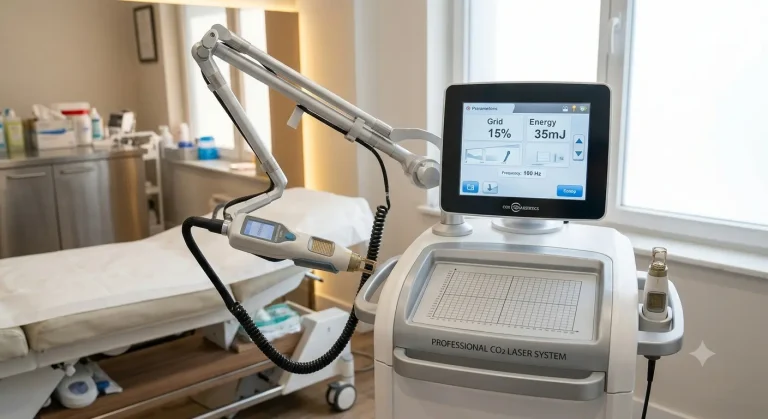
A randomized split-face trial comparing Fractional Picosecond 1064-nm (FxPico) to Fractional CO2 (FxCO2) lasers found FxPico to be as effective in treating atrophic acne scars, with the added benefit of a significantly superior safety profile. Notably, PIH was not reported on FxPico-treated sides, whereas 24% of patients experienced mild PIH on FxCO2-treated sides . Histological analysis confirmed tissue remodeling and increased collagen and elastic fibers at 3 months post-treatment for both modalities .
Strategic Implementation: Clinic Integration and Patient Selection
Integrating a pico laser into a med spa or dermatology practice is a strategic decision that enhances both clinical outcomes and profitability. The device’s versatility and favorable safety profile expand the addressable patient base.
Patient Demographics and Indications
Pico lasers are suitable for a broad demographic, including patients with high Fitzpatrick skin types (IV-VI) who are typically poor candidates for ablative procedures . The primary indications for acne scar treatment include all atrophic scar types (icepick, rolling, and boxcar), with most patients requiring a series of 3 to 6 sessions spaced 4 to 8 weeks apart for optimal collagen remodeling . The low downtime (1-3 hours of mild redness) and minimal discomfort (often described as a rubber band snap) make it highly desirable for a busy, modern patient base .
[IMAGE_2]Business ROI: Profitability and Patient Acquisition
From a business consulting perspective, the pico laser offers a compelling ROI. Its ability to treat a wide range of indications (acne scars, pigmentation, fine lines, and tattoo removal) ensures a high utilization rate . The premium pricing of a package of 3-6 sessions, combined with the high patient satisfaction and low consumable costs, leads to strong margins . Furthermore, the device’s superior safety profile minimizes the risk of costly adverse events and enhances your clinic’s reputation for providing cutting-edge, safe aesthetic solutions.
Conclusion & Clinical Outlook
The clinical evidence overwhelmingly supports the pico laser as a leading-edge, highly effective, and exceptionally safe treatment for atrophic acne scars. Its photoacoustic mechanism of action, leveraging ultra-short pulse durations, drives superior tissue remodeling with minimal downtime and a significantly lower risk of PIH, making it an indispensable technology for modern aesthetic practices . For the clinician, mastering the technical parameters of wavelength, spot size, and fluence across platforms like the 755nm Alexandrite and 1064nm Nd:YAG is key to maximizing patient outcomes. Strategically, the pico laser represents a sound investment that drives profitability, expands your demographic reach, and positions your clinic at the forefront of medical aesthetics.