Chest Laser Hair Removal: Cost, Pain & Results (2026)
Laser Hair Removal Guide | Updated October 2026
Educational guidance on chest hair reduction, treatment costs, session planning and realistic results.
Published by Cocoon Laser | Professional aesthetic equipment supplier
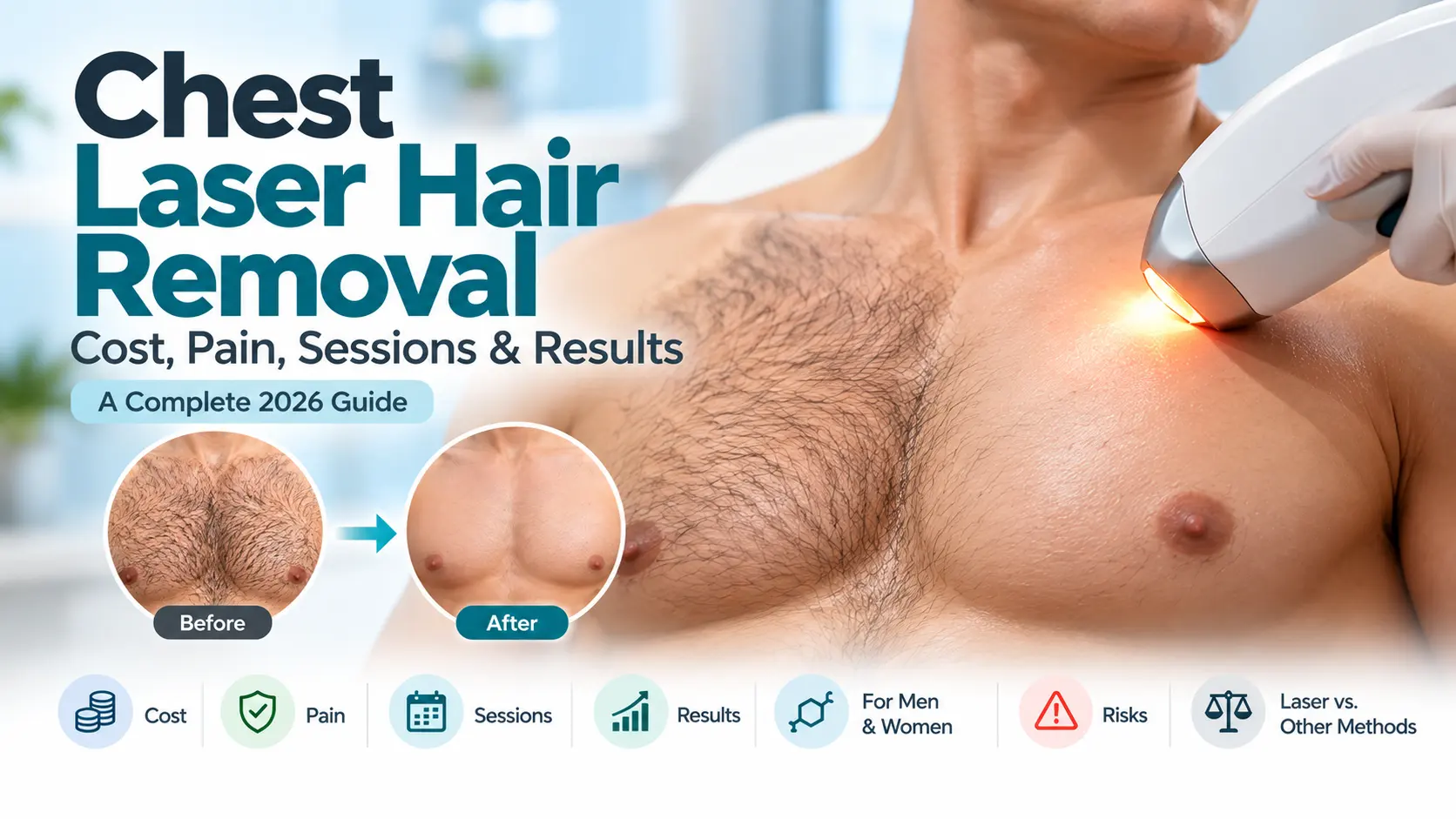
Chest laser hair removal is a professional treatment designed to reduce unwanted hair across the chest using concentrated light energy. It is a popular option for people who want less chest hair, smoother-looking skin or a lower-maintenance alternative to frequent shaving and waxing.
The treatment can be used to reduce dense chest hair, target selected regions or create a more controlled hair distribution. However, the outcome depends on hair color, thickness, skin characteristics, treatment settings and individual biological factors.
Chest laser hair removal does not guarantee that every hair will disappear permanently. Its primary goal is long-term hair reduction, and some people may need maintenance treatments.
This guide explains how chest laser hair removal works, what it may cost, how many sessions are typically involved, expected discomfort, potential risks and the differences between laser treatment and other chest hair removal methods.
Quick Answer: Is Chest Laser Hair Removal Worth It?
Chest laser hair removal can be worthwhile for people who want long-term reduction of coarse, pigmented chest hair. It works by delivering laser energy that is absorbed by melanin in suitable hair follicles, producing heat that can reduce future hair growth.
Many initial treatment plans involve approximately 6–8 sessions, although the number varies. Sessions are usually spaced several weeks apart according to the provider’s protocol.
Treatment can feel like brief snapping or stinging, especially in areas with dense hair. The total cost depends on the treatment area, clinic and number of appointments.
Laser treatment generally works best on dark, coarse hair. Very light blonde, white, gray and some red hairs may respond poorly to conventional pigment-targeting systems.
What Is Chest Laser Hair Removal?
Chest laser hair removal uses a professional laser device to deliver controlled light pulses to areas containing unwanted chest hair.
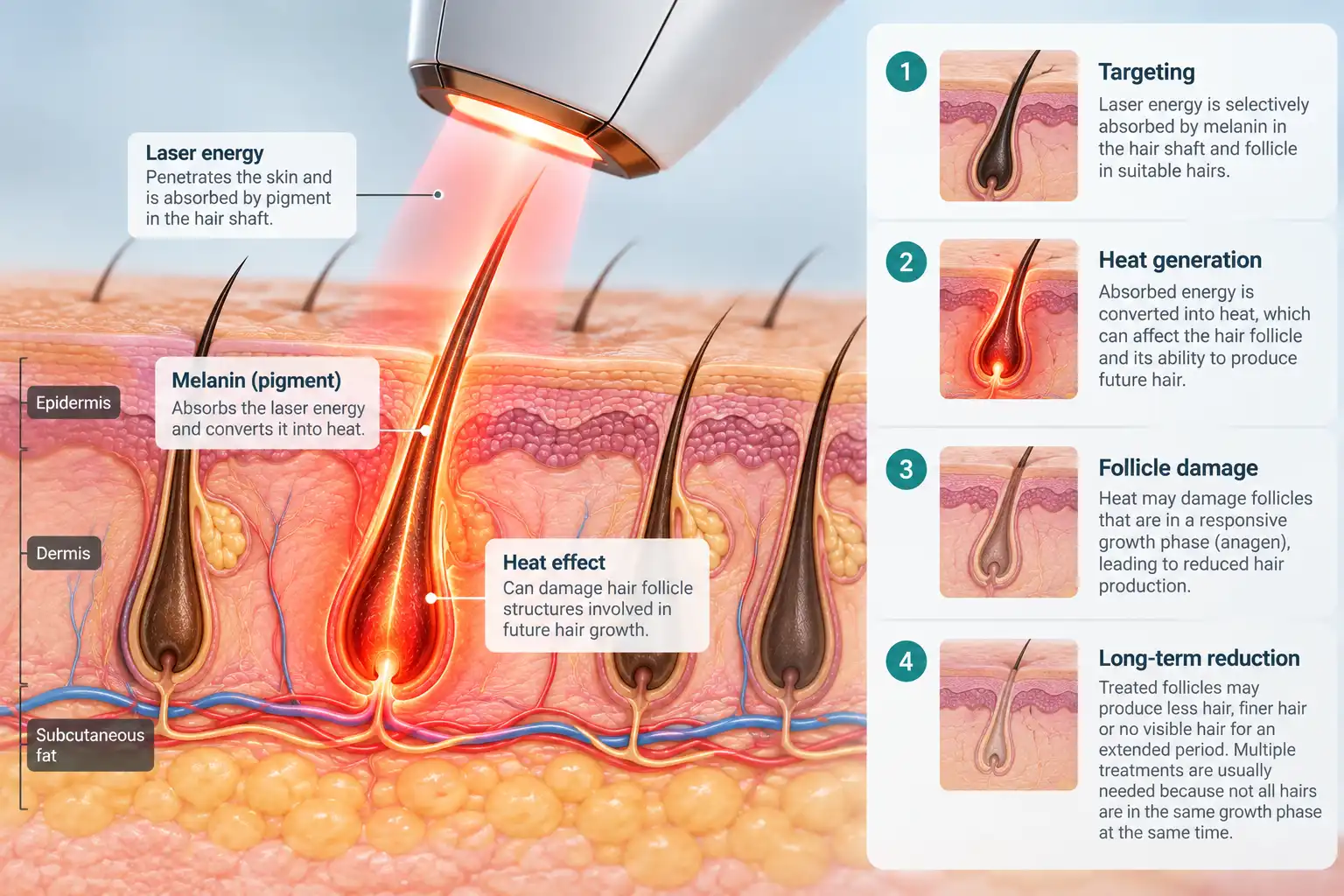
The light is absorbed by pigment in suitable hairs and converted into heat. This thermal effect can damage structures involved in future hair production, leading to reduced growth over time.
The procedure is based on selective photothermolysis, a principle that involves targeting a specific light-absorbing structure while minimizing unwanted damage to surrounding tissue.
A qualified provider selects treatment parameters according to skin phototype, hair characteristics, anatomical area and the device manufacturer’s instructions.
How Does Laser Hair Removal Work on the Chest?
During treatment, a laser handpiece delivers energy to selected areas of the chest. Pigmented hairs absorb part of that energy, producing heat within and around the follicle.
Cooling may be used to improve comfort and help protect the skin.
Successfully affected follicles may subsequently produce less hair, finer hair or no visible hair for an extended period.
Treated hairs do not necessarily disappear immediately. They may shed gradually after an appointment.
Why Does Chest Laser Hair Removal Require Multiple Sessions?
Hair follicles cycle through active growth, transitional and resting phases. Laser treatment is generally most effective when suitable hairs are in the active growth phase, known as anagen.
Not all chest hairs are in the same growth phase at the same time.
Multiple sessions allow additional follicles to be treated as their hairs enter a responsive stage.
The exact treatment schedule depends on the patient’s growth pattern, skin response and the provider’s clinical protocol.
Can You Choose Partial Chest Hair Reduction?
Yes. Not everyone wants a completely hair-free chest.
Some patients prefer to reduce the density of coarse chest hair while retaining a natural appearance. Others want a more extensive reduction across the chest and upper abdomen.
The desired outcome should be discussed before treatment because hair density, distribution and the number of sessions can influence the final appearance.
However, laser treatment cannot guarantee a perfectly uniform reduction or a precise percentage decrease in hair density.
Who Is a Good Candidate for Chest Laser Hair Removal?
People with coarse, pigmented chest hair are often suitable candidates for professional laser hair reduction.
Both men and women may consider the treatment, but the underlying reasons for chest hair growth and the expected long-term results can differ.
| Hair or Skin Characteristic | Treatment Consideration |
|---|---|
| Dark, coarse chest hair | Often a suitable target for pigment-based laser treatment |
| Dense chest hair | May benefit from area-based treatment, although multiple sessions are usually needed |
| Fine or lightly pigmented hair | May respond poorly to conventional laser hair removal |
| White or gray chest hair | Generally unsuitable for conventional melanin-targeting lasers |
| Darker skin phototypes | May be treatable with appropriate equipment, parameters and experienced operators |
| Recently tanned skin | May require treatment postponement or further assessment |
| Unexplained new chest hair growth | May warrant medical evaluation, depending on the person’s circumstances |
Is Chest Laser Hair Removal Suitable for Men?
Yes. Men commonly seek chest laser hair removal to reduce dense or coarse chest hair, simplify grooming or decrease irritation associated with repeated shaving.
Some men prefer significant hair reduction, while others want to retain a natural amount of chest hair.
Treatment planning should reflect the desired appearance and the possibility of uneven reduction during the treatment course.
Can Women Get Chest Laser Hair Removal?
Yes. Women may seek laser treatment for coarse, pigmented hair around the chest or breastbone.
However, new or excessive terminal hair growth in women may sometimes be associated with hormonal factors.
If chest hair growth develops rapidly or occurs alongside other symptoms of androgen excess, medical evaluation may be appropriate before cosmetic treatment.
Does Chest Laser Hair Removal Work on Fine Hair?
Fine vellus hair generally contains less pigment than coarse terminal hair and is a less reliable target for conventional laser hair removal.
Treating fine hair may offer limited benefit. A qualified provider should assess whether laser treatment is appropriate rather than treating every visible hair automatically.
How Much Does Chest Laser Hair Removal Cost?
Chest laser hair removal prices depend on the clinic, location, treatment boundaries, equipment and number of sessions required.
A full-chest appointment generally covers a larger area than a small facial treatment, but pricing is not always directly proportional to the size of the area.
Some clinics offer separate prices for the upper chest, full chest, chest and abdomen, or chest and stomach packages.
Chest Laser Hair Removal Cost per Session
For an illustrative US budgeting example, consider a hypothetical price of $150–$450 per session.
This is not a verified national average or a live market quotation. It is a planning assumption used to demonstrate how costs can accumulate. Actual clinic prices may fall outside this range.
| Treatment Scenario | Illustrative Budget | Important Note |
|---|---|---|
| One chest session | $150–$450 | Hypothetical per-session range |
| Six sessions | $900–$2,700 | Before any package discounts |
| Eight sessions | $1,200–$3,600 | Not a prediction of required sessions |
| Maintenance | Varies | Depends on regrowth and clinic pricing |
What Affects the Total Treatment Cost?
- Area size: Full-chest treatment may cost more than a limited central-chest area.
- Hair density: Dense hair can affect treatment planning and the number of sessions.
- Clinic location: Prices vary across cities and countries.
- Provider qualifications: Training, experience and medical supervision can influence pricing.
- Package structure: Multi-session discounts may reduce the advertised per-session price.
- Maintenance: Additional visits may be needed if visible growth returns.
Is Full-Chest Laser Hair Removal More Expensive Than Partial Treatment?
Full-chest treatment may be priced higher because it involves a larger anatomical area, but each clinic defines its treatment zones differently.
For example, one provider may include the upper chest and breastbone in a standard chest package, while another may charge separately for areas extending toward the abdomen.
Always confirm the exact treatment boundaries before comparing quotes.
Are Chest Laser Hair Removal Packages Worth It?
A package may offer better value when the hair is suitable for laser treatment and the patient expects to complete several sessions.
However, it is sensible to undergo a consultation before making a substantial upfront payment.
Ask about cancellation terms, expiration dates, unused sessions, maintenance costs and whether the package covers the entire intended chest area.
How Many Sessions Does Chest Laser Hair Removal Take?
Many initial treatment courses involve approximately six to eight sessions, although individual requirements vary.
Some patients need additional appointments because of hair density, hormonal influences or incomplete reduction.
A provider should estimate the treatment course after assessing the patient’s skin and hair rather than guaranteeing a fixed number of sessions.
How Often Should Chest Laser Hair Removal Be Done?
Chest treatments are commonly spaced several weeks apart, with intervals adjusted according to hair growth and the skin’s response.
The ideal schedule depends on the device protocol and individual circumstances.
More frequent treatment is not automatically more effective. The provider should determine when another session is appropriate.
What Happens After the First Chest Laser Session?
Temporary redness, warmth or mild follicular swelling may occur after treatment.
Treated hairs may shed gradually over the following days or weeks. Some patients notice reduced density or slower regrowth after early sessions, while others require more treatments before meaningful changes become visible.
The first appointment should not be used to predict the final result.
What Results Can You Expect Throughout the Treatment Course?
| Stage | Possible Changes | Important Limitation |
|---|---|---|
| First treatment | Temporary skin response and gradual hair shedding | Immediate permanent clearance is not expected |
| Early sessions | Some reduction in visible hair density or regrowth speed | Response may be uneven |
| Later sessions | More noticeable reduction of suitable coarse hair | Complete removal is not guaranteed |
| Long-term follow-up | Reduced hair growth may persist | Some regrowth or maintenance needs are possible |
Why Is Chest Hair Still Growing After Several Sessions?
Continued hair growth can occur because follicles respond differently to treatment, some hairs were not in a responsive growth phase or certain hairs did not absorb sufficient energy.
Hormonal factors may also influence ongoing hair production.
If progress is limited after several appropriately spaced appointments, the provider should reassess the hair characteristics and treatment plan rather than automatically recommending additional sessions.
Does Chest Laser Hair Removal Hurt?
Chest laser hair removal can cause temporary discomfort, particularly in areas with dense, coarse hair. Many patients describe the sensation as a quick rubber-band snap, a brief sting or a pulse of heat against the skin.
Pain levels vary between individuals. Hair density, skin sensitivity, treatment parameters, cooling methods and the specific chest area being treated can all influence the experience.
Although the chest is a relatively large treatment area, the discomfort usually occurs in short pulses rather than as continuous pain.
How Painful Is Chest Laser Hair Removal Compared With Other Body Areas?
There is no universal pain ranking for laser hair removal because individual sensitivity varies considerably.
Some people find the chest more comfortable than sensitive areas such as the bikini line or upper lip. Others experience stronger sensations near the sternum, nipples or regions with dense terminal hair.
The experience can also change during a treatment course as hair density decreases.
Does Thick Chest Hair Make Laser Treatment More Painful?
Coarse, dark hairs contain pigment that can absorb laser energy. Areas with dense terminal hair may produce a more noticeable treatment sensation when suitable parameters are used.
However, greater discomfort does not automatically mean greater effectiveness.
The operator should select treatment settings according to the patient’s skin, hair characteristics and device protocol rather than attempting to maximize pain or heat.
How Can You Make Chest Laser Hair Removal More Comfortable?
- Choose an experienced provider: Appropriate treatment planning helps balance effectiveness and safety.
- Ask about cooling: Contact cooling, cooled air or other approved cooling methods may improve comfort.
- Follow shaving instructions: Excess hair above the skin may contribute to unnecessary surface heating.
- Report excessive pain: Severe or unusual burning sensations should be communicated immediately.
- Discuss anesthetic products: Do not apply numbing creams without professional guidance, particularly over large treatment areas.
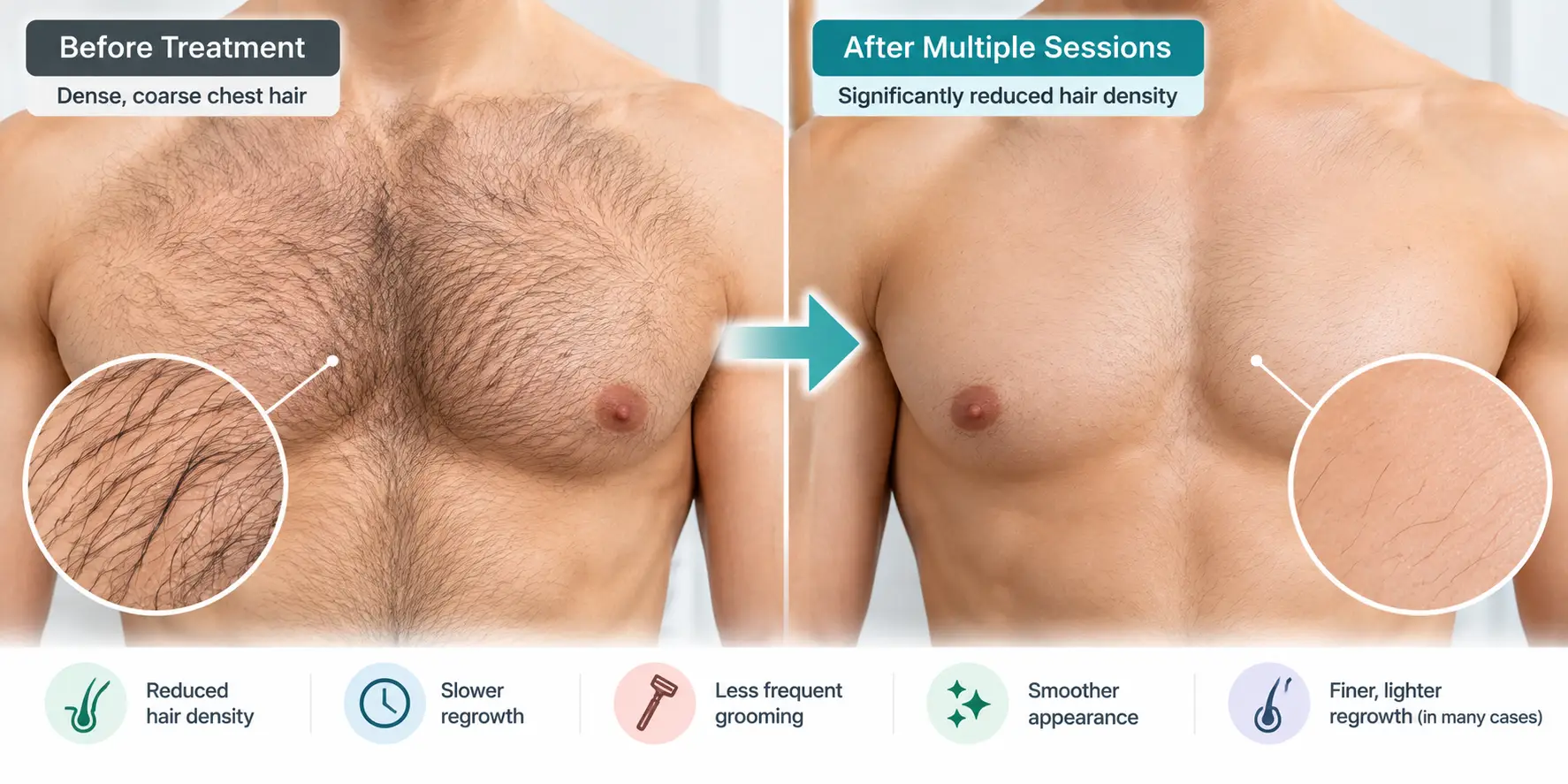
Chest Laser Hair Removal Before and After: What Results Can You Expect?
The main goal of chest laser hair removal is to reduce visible hair density and the frequency of regrowth.
Some people want a substantially smoother chest, while others prefer partial reduction that preserves a natural amount of body hair.
Results develop gradually. Because follicles respond differently, the chest may appear uneven during the treatment course before further sessions produce additional reduction.
What Does Successful Chest Laser Hair Removal Look Like?
A successful response may involve fewer coarse hairs, slower regrowth and reduced need for frequent grooming.
Possible improvements include:
- Reduced density of coarse chest hair.
- Longer intervals between shaving or trimming.
- Less visible regrowth across treated areas.
- A smoother appearance where substantial reduction is desired.
- Lower maintenance requirements compared with repeated temporary hair removal.
The extent of improvement varies. Complete clearance is not guaranteed, and some follicles may continue producing hair.
Is Chest Laser Hair Removal Permanent?
Laser hair removal is intended to provide long-term or permanent hair reduction rather than guaranteed permanent elimination of every hair.
Some follicles may remain inactive for an extended period, while others may continue producing hair or become active later.
Hormonal influences, age-related changes and individual treatment response can affect long-term results.
Can Chest Hair Grow Back After Laser Treatment?
Yes. Some chest hair may remain or regrow after treatment.
Regrowth may occur because certain follicles were not sufficiently affected, because some hairs responded poorly or because hormonal activity continues to influence hair production.
A patient may still experience meaningful long-term reduction even if occasional maintenance treatments are needed.
Can You Reduce Chest Hair Without Removing All of It?
Yes. Partial chest hair reduction is a common treatment goal, particularly among men who want less dense hair while maintaining a natural appearance.
However, laser treatment cannot precisely guarantee a particular percentage of reduction or perfectly uniform hair distribution.
Discuss the desired appearance with the provider before beginning treatment. Once substantial hair reduction has occurred, restoring the original density may not be possible.
Chest Laser Hair Removal for Men
Men often consider chest laser hair removal to reduce dense body hair, simplify grooming or avoid the repeated maintenance associated with shaving and waxing.
The desired outcome varies. Some men want a relatively hair-free chest, while others prefer a more natural reduction in hair density.
A successful treatment plan should reflect the patient’s preferred appearance rather than assuming complete hair removal is always the goal.
Why Do Men Have Dense Chest Hair?
Chest hair growth is influenced by genetics, androgen activity, age and individual follicle sensitivity.
Androgens contribute to the development of terminal hair in androgen-sensitive body regions, including the chest.
Hair density varies considerably between men and does not directly indicate a specific testosterone level.
Does Laser Hair Removal Work on Thick Male Chest Hair?
Coarse, pigmented chest hair can be a suitable target for professional laser hair reduction.
However, dense hair does not guarantee a faster or more complete result. Follicle characteristics, treatment parameters and individual response remain important.
Some men require additional appointments to achieve their desired reduction.
Will Chest Laser Hair Removal Look Natural?
A natural-looking result is possible, but treatment response may be uneven during the course.
Patients seeking partial reduction should explain this preference clearly before treatment.
Providers should discuss the possibility of patchiness, variation in regrowth and the limits of controlling the final density.
Can Men Combine Chest and Stomach Laser Hair Removal?
Some clinics offer combined chest and abdomen treatment packages.
Treating adjacent areas may help create a more consistent overall appearance, particularly when dense hair extends from the chest to the upper abdomen.
However, the treatment boundaries, session requirements and pricing should be confirmed before purchasing a combined package.
Chest Laser Hair Removal for Women
Women may seek laser hair removal for coarse, pigmented hair on the chest, particularly around the central breastbone or other selected areas.
The suitability of treatment depends on hair characteristics, skin condition, anatomical location and the underlying reason for the hair growth.
New or excessive terminal chest hair growth in women may sometimes be associated with hormonal factors.
What Causes Chest Hair Growth in Women?
Possible influences include genetics, normal hormonal variation, medication effects and conditions associated with increased androgen activity.
One potential cause is polycystic ovary syndrome (PCOS), although chest hair alone is not sufficient to diagnose the condition.
Rapidly increasing coarse hair growth or additional symptoms such as menstrual irregularities, significant acne or scalp hair thinning may warrant medical evaluation.
Can Laser Hair Removal Treat Hormonal Chest Hair?
Laser treatment may reduce existing coarse, pigmented hairs even when hormonal factors contribute to their growth.
However, it does not treat an underlying endocrine condition or prevent all new terminal hairs from developing.
Maintenance treatments or medical management may be appropriate depending on the cause of the hair growth.
Is Laser Hair Removal Safe Around the Breasts?
Treatment near the breasts requires careful assessment of the exact anatomical area, skin characteristics and device instructions.
Sensitive structures such as the nipples and areolae require particular caution. The provider must follow the device’s approved treatment boundaries and avoid areas where treatment is not indicated.
Patients should not assume that a laser suitable for the central chest can automatically be used over every part of the breast.
What Are the Risks of Chest Laser Hair Removal?
Professional chest laser hair removal can be performed safely in appropriately selected patients, but complications remain possible.
The risks depend on skin phototype, hair characteristics, treatment parameters, operator experience and individual skin response.
Common Temporary Side Effects
- Temporary redness.
- Mild swelling around treated follicles.
- Warmth or tenderness.
- Short-lived skin sensitivity.
These reactions often improve as the skin recovers, although recovery times vary.
Potential Complications
- Burns or blistering.
- Post-inflammatory hyperpigmentation.
- Hypopigmentation.
- Persistent irritation.
- Scarring.
- Paradoxical hair growth.
- Eye injury if appropriate laser precautions are not followed.
Severe pain, blistering, unusual discoloration or signs of infection should be assessed promptly by a qualified healthcare professional.
Is Chest Laser Hair Removal Safe for Dark Skin?
Many people with darker skin phototypes can be considered for professional laser hair removal.
However, increased epidermal melanin can raise the risk of unwanted skin heating when inappropriate equipment or settings are used.
Suitable wavelength selection, pulse duration, cooling and operator expertise are important for reducing complications.
Can Chest Laser Hair Removal Cause Patchy Results?
Yes. Uneven hair reduction can occur during a treatment course because follicles respond differently and are not all in the same growth phase.
Patchiness may improve with subsequent appropriately planned sessions, but perfectly uniform results cannot be guaranteed.
Patients seeking partial reduction should understand this possibility before beginning treatment.
Can Chest Laser Hair Removal Cause More Hair Growth?
Paradoxical hypertrichosis is a recognized potential adverse effect of laser and other light-based hair removal treatments.
It involves increased hair growth in or near a treated area rather than the expected reduction.
The phenomenon is not the usual outcome, and its frequency varies across patient populations and treatment conditions.
If unexpected increased growth occurs, request professional reassessment rather than assuming additional laser treatment is automatically appropriate.
How to Prepare for Chest Laser Hair Removal
Preparing properly for chest laser hair removal helps your provider assess the treatment area and reduces avoidable irritation. Because the chest may contain dense hair, acne, moles or areas of uneven pigmentation, preparation should be individualized rather than based on a universal checklist alone.
Your clinic’s instructions and the laser manufacturer’s approved protocol should take priority over general online advice.
Before Your Appointment: Preparation Checklist
- Disclose your medical history: Tell the provider about relevant conditions, medications, previous laser reactions and any history of unusual scarring or pigmentation changes.
- Avoid tanning: Report recent sun exposure, sunburn or artificial tanning. Tanned or irritated skin may require postponement.
- Stop plucking and waxing as instructed: These methods remove the hair shaft that provides a pigment target for conventional laser treatment.
- Follow shaving instructions: Your clinic may recommend shaving the chest before the appointment.
- Review skin care products: Ask whether exfoliating acids, retinoids or other potentially irritating products should be paused.
- Report skin problems: Active infections, inflamed acne, open wounds or unexplained lesions should be assessed before treatment.
- Confirm treatment boundaries: Make sure you understand whether the session covers the upper chest, full chest or chest and abdomen.
Should You Shave Your Chest Before Laser Hair Removal?
Clinics commonly ask patients to shave the treatment area before a laser session. Excess hair extending above the skin may absorb energy and contribute to unnecessary surface heating.
However, the appropriate timing varies according to the device and clinic protocol. Shaving immediately before treatment may irritate some patients, particularly those prone to razor bumps or folliculitis.
Follow your provider’s instructions rather than assuming that shaving on the day of treatment is always necessary.
Can You Wax or Pluck Chest Hair Before Laser Treatment?
Waxing, plucking and similar methods remove hair from the follicle, leaving less pigment available for conventional laser targeting.
Providers generally recommend avoiding these methods for a specified period before and during the treatment course.
Shaving or trimming is usually preferred when permitted by the clinic.
What About Tattoos, Moles and Skin Lesions?
Tell your provider about tattoos, pigmented lesions, unusual moles and any other skin changes within the planned treatment area.
Hair removal lasers should not be applied directly over tattoos because tattoo pigments can absorb laser energy and create a risk of burns or pigment changes.
Suspicious or changing skin lesions should be evaluated by an appropriate healthcare professional before cosmetic treatment. The provider should identify areas that must be avoided or protected according to the device protocol.
What Happens During a Chest Laser Hair Removal Appointment?
A professional chest laser hair removal appointment typically involves assessment, preparation, laser application and post-treatment instructions.
- Consultation: The provider evaluates your skin phototype, hair characteristics, medical history and desired degree of reduction.
- Area mapping: The treatment boundaries are identified, including any regions that should be excluded.
- Skin preparation: The chest is cleaned and prepared according to the clinic’s protocol.
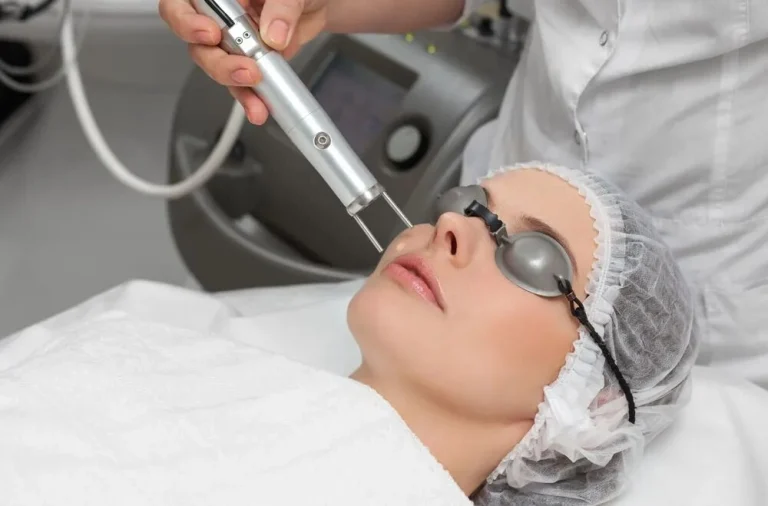
- Laser safety: Appropriate wavelength-specific protective eyewear is provided and used.
- Laser treatment: Controlled pulses are delivered using selected parameters and suitable cooling.
- Aftercare: The provider assesses the skin response and explains what to expect before the next session.
How Long Does Chest Laser Hair Removal Take?
Chest treatment usually takes longer than a small facial area because a larger surface must be covered.
The appointment duration depends on the size of the treatment area, hair distribution, equipment and provider’s technique.
A full-chest session may take tens of minutes, but no single treatment time applies to every patient or device.
Can You Treat the Chest and Abdomen in One Appointment?
Some clinics offer combined chest and abdomen treatments. This can be convenient for patients seeking a consistent appearance across adjacent body areas.
The provider should assess the full treatment area, confirm that each region is suitable and plan the appointment according to the device’s operating limits and safety requirements.
Chest Laser Hair Removal Aftercare
The skin may feel warm, sensitive or mildly irritated after treatment. Most aftercare recommendations focus on reducing additional irritation while the skin recovers.
Follow your treating provider’s instructions, especially if you have sensitive skin, a history of pigmentation changes or an unusual post-treatment reaction.
What Should You Do After Chest Laser Hair Removal?
- Use gentle cleansing and skin care products as advised by your provider.
- Avoid scratching, picking or aggressively exfoliating treated follicles.
- Protect the chest from excessive sun exposure.
- Avoid excessive heat, friction and irritating activities while the skin remains sensitive.
- Wear comfortable clothing that does not rub against irritated skin.
- Do not wax or pluck treated hairs between appointments.
- Contact the clinic if you develop severe pain, blistering or persistent discoloration.
Can You Exercise After Chest Laser Hair Removal?
Intense exercise may increase sweating, heat and friction across the treated chest. These factors can worsen discomfort when the skin is already irritated.
Your provider may recommend temporarily avoiding strenuous workouts until the skin has recovered sufficiently.
The appropriate interval depends on the treatment response rather than a universal number of hours.
Can You Shower After Chest Laser Hair Removal?
Gentle washing may be possible after treatment, but hot water, vigorous scrubbing and irritating products can aggravate sensitive skin.
Ask your provider when normal showering, hot baths and other heat-related activities can be resumed.
Can You Shave Between Chest Laser Sessions?
Shaving or trimming is generally preferred over waxing and plucking between sessions, provided the skin has recovered and your clinic approves it.
Avoid shaving over irritated, blistered or damaged skin.
How Long Does Chest Hair Take to Shed After Laser?
Treated hairs may gradually shed over the days or weeks following an appointment.
During this period, hairs can appear to continue growing before being released from the skin.
Avoid forcibly pulling out treated hairs. If you are unsure whether the treatment is working, ask your provider to assess the response at your follow-up appointment.
Chest Laser Hair Removal vs. Waxing, Shaving and Electrolysis
Laser hair removal is one of several options for managing chest hair. The most appropriate choice depends on your preferred appearance, hair characteristics, budget and willingness to maintain the results.
| Method | Main Advantage | Main Limitation |
|---|---|---|
| Laser hair removal | Potential long-term reduction across a relatively large area | Multiple sessions, higher initial expense and variable response |
| Shaving | Fast, inexpensive and easy to control | Frequent maintenance and possible razor irritation |
| Waxing | Removes multiple hairs for a temporary period | Can be uncomfortable and must be repeated |
| Trimming | Allows control over chest hair length and appearance | Does not reduce future hair production |
| Electrolysis | Can permanently remove successfully treated individual follicles | Time-intensive for extensive chest hair |
Is Laser Hair Removal Better Than Waxing for the Chest?
Laser treatment may be more appealing when the goal is lasting reduction in hair density. Waxing removes hair temporarily but does not intentionally impair future follicle activity.
However, waxing has a lower initial financial commitment and may be appropriate for people who prefer temporary hair removal.
The choice depends on treatment suitability, budget, pain tolerance and long-term goals.
Is Laser Hair Removal Better Than Shaving?
Shaving is convenient and allows people to change their grooming preferences at any time. Laser treatment requires a greater initial commitment but may reduce how frequently shaving is needed.
People who prefer to maintain flexible chest hair styles may find trimming or shaving more suitable than permanent reduction.
Is Electrolysis Practical for Chest Hair Removal?
Electrolysis treats individual follicles and does not depend on hair pigment in the same way as conventional laser hair removal.
It may be useful for isolated hairs or hairs that respond poorly to laser treatment. However, treating a large area of dense chest hair can be time-consuming.
A qualified practitioner can help determine whether electrolysis, laser treatment or a combination is appropriate.
Which Laser Is Best for Chest Hair Removal?
Professional hair removal systems may use alexandrite, diode or long-pulsed Nd:YAG laser technology.
The most appropriate system depends on skin phototype, hair pigmentation, hair thickness, anatomical area and the operator’s experience.
No single laser wavelength guarantees the best result for every patient.
| Laser Technology | Common Wavelength | General Consideration |
|---|---|---|
| Alexandrite | 755nm | Often considered for suitable lighter skin phototypes |
| Diode | Approximately 800–810nm in many systems | Commonly used for professional hair reduction on body areas |
| Long-pulsed Nd:YAG | 1064nm | Often considered for darker skin phototypes under appropriate protocols |
Is Diode Laser Good for Chest Hair Removal?
Diode laser systems are widely used for professional hair reduction, including treatment of larger body areas such as the chest.
Coarse, pigmented chest hair may be a suitable target when appropriate device parameters and safety protocols are used.
Treatment quality depends on patient selection, equipment characteristics, cooling, operator training and follow-up assessment.
Professional Diode Laser Equipment for Chest Hair Reduction
For clinics and aesthetic practices, equipment selection involves more than choosing a nominal wavelength. Operators should consider the system’s treatment parameters, cooling design, handpiece configuration, operating requirements and applicable regulatory status.
Cocoon Laser offers professional diode laser hair removal equipment, including the COOLICE professional diode laser hair removal system . Clinics and equipment buyers can review its available configurations and technical information when evaluating professional hair reduction solutions.
The suitability of any device for a particular patient or treatment area must be determined according to its instructions for use, applicable regulations and qualified professional assessment.
Is a 1064nm Diode Laser the Same as a 1064nm Nd:YAG Laser?
No. Although both may operate at a nominal wavelength of 1064nm, diode and Nd:YAG systems use different laser source technologies.
Their engineering characteristics and treatment parameters may differ. A shared wavelength does not establish identical clinical performance or safety.
Does Cooling Make Chest Laser Hair Removal Safer?
Appropriate cooling can help manage epidermal heating and improve patient comfort during professional laser hair removal.
However, cooling does not eliminate the possibility of burns or other adverse effects. Safe treatment also depends on suitable parameters, skin assessment and operator technique.
How to Choose a Chest Laser Hair Removal Clinic
Choosing an experienced provider is particularly important when treating a large area, darker skin phototypes or patients seeking partial rather than extensive hair reduction.
Before booking, ask the following questions:
- What areas are included? Confirm whether the service covers the full chest, upper chest or adjacent abdomen.
- Which laser technology will be used? Ask why it is appropriate for your skin and hair characteristics.
- How many sessions might I need? Expect an individualized estimate rather than a guarantee.
- Can I choose partial reduction? Discuss your preferred appearance and the possibility of uneven results.
- What safety precautions are used? Ask about eye protection, cooling and management of adverse reactions.
- How much will the complete course cost? Clarify package terms, maintenance fees and cancellation policies.
Be cautious of providers who guarantee completely painless treatment, permanent removal of every hair or identical results for all skin and hair types.
Frequently Asked Questions About Chest Laser Hair Removal
Does chest laser hair removal work?
Yes. Professional laser treatment may provide long-term reduction of suitable coarse, pigmented chest hair. Results depend on individual characteristics and treatment conditions.
How much does chest laser hair removal cost?
Costs vary by location, provider, treatment area and number of sessions. Obtain a clinic-specific quote. The budgeting examples earlier in this guide are illustrative rather than verified market averages.
How many sessions are needed for chest laser hair removal?
Many initial treatment plans involve approximately six to eight sessions, although some patients require more or need maintenance treatments.
How painful is chest laser hair removal?
It may feel like brief snapping, stinging or heat. Discomfort varies with hair density, skin sensitivity, treatment settings and cooling.
Is chest laser hair removal permanent?
Laser treatment aims for long-term hair reduction, not guaranteed permanent removal of every hair. Some regrowth may occur.
Can men get partial chest hair reduction?
Yes. Some men choose to reduce hair density rather than remove as much hair as possible. However, perfectly even reduction cannot be guaranteed.
Can women get chest laser hair removal?
Yes. Women with suitable coarse, pigmented chest hair may be candidates. Unexplained or rapidly increasing terminal hair growth may warrant medical assessment.
Does chest hair grow back after laser treatment?
Some hair may remain or regrow because of individual follicle response and biological factors, including hormonal influences.
Can chest laser hair removal cause patchy results?
Yes. Uneven reduction may occur during treatment, and the final hair distribution cannot be predicted with complete precision.
Is chest laser hair removal safe for dark skin?
Many people with darker skin phototypes can be evaluated for treatment, but suitable equipment, settings, cooling and experienced operators are important.
Can you exercise after chest laser hair removal?
Intense exercise may worsen irritation through heat, sweating and friction. Follow your provider’s instructions and allow the skin to recover.
Can you shave between chest laser hair removal sessions?
Shaving or trimming is generally preferred over waxing or plucking once the skin has recovered and the clinic approves it.
Does chest laser hair removal work on gray hair?
Conventional pigment-targeting lasers generally work poorly on white or gray hair because these hairs contain little or no melanin.
Can chest and stomach laser hair removal be done together?
Some clinics offer combined treatment packages. The provider should confirm the treatment boundaries, suitability and safety requirements.
Final Verdict: Is Chest Laser Hair Removal Worth It?
Chest laser hair removal can be a worthwhile option for people who want to reduce dense, coarse chest hair and spend less time on repeated grooming.
It may be particularly appealing to patients who regularly shave or wax large areas of the chest and prefer a longer-lasting reduction.
However, the procedure is not appropriate for every hair type, and complete permanent removal cannot be guaranteed. People seeking partial reduction should also understand that results may be uneven.
Before committing to treatment, consult a qualified provider who can evaluate your skin and hair, explain potential risks and develop a realistic treatment plan.
Professional Laser Hair Removal Equipment for Clinics
Cocoon Laser supplies professional aesthetic equipment for clinics, medical spas and distributors, including diode laser hair removal systems for professional hair reduction applications.
If you are evaluating equipment for your practice or distribution business, explore the COOLICE diode laser hair removal machine to review available product configurations and technical information.
Device selection and operation should follow applicable regulations, manufacturer instructions, professional training requirements and appropriate treatment protocols.
Editorial disclosure: This educational guide was prepared by the Cocoon Laser content team. Cocoon Laser supplies professional aesthetic equipment and does not provide the consumer treatments described in this article.
Medical disclaimer: This article provides general educational information and does not replace individualized medical advice, diagnosis or treatment. Results and complications vary. Consult a qualified healthcare professional about treatment suitability or unexplained hair growth.
Pricing disclosure: Numerical cost examples in this guide are hypothetical budgeting scenarios, not verified national averages or current clinic quotations.