Laser Hair Removal for Dark Skin: Safety & Best Lasers
Laser Hair Removal for Dark Skin: Safety, Wavelengths, and Treatment Results
Laser hair removal for dark skin has become a more accessible treatment option as professional laser technology and clinical techniques have evolved. Patients with brown, dark brown, and deeply pigmented skin can achieve meaningful long-term hair reduction, but choosing the right laser technology is especially important because the skin and hair both contain melanin.
Unlike treatments performed on light skin with dark hair, laser hair removal on melanin-rich skin requires careful management of energy absorption. When too much laser energy is absorbed by the epidermis rather than the hair follicle, complications such as burns, blistering, and pigmentation changes may occur.
The development of long-pulsed 1064nm Nd:YAG lasers, advanced diode laser systems, and improved epidermal cooling technologies has expanded treatment options for darker skin phototypes. However, no wavelength or device can guarantee safe treatment for every patient.
For dermatology clinics, medical spas, and professional laser hair removal providers, understanding these differences is essential when selecting equipment and establishing appropriate treatment protocols.
This guide explains how laser hair removal works on dark skin, why wavelength selection matters, how diode and Nd:YAG technologies compare, and which safety considerations should guide clinical practice.
Quick Answer: Is Laser Hair Removal Safe for Dark Skin?
Yes, laser hair removal for dark skin can be safe and effective when performed by a qualified professional using an appropriate laser system, individualized treatment settings, and reliable epidermal cooling.
Long-pulsed 1064nm Nd:YAG lasers are among the most established technologies for treating darker skin phototypes, particularly Fitzpatrick types V and VI. Their longer wavelength is less strongly absorbed by epidermal melanin than shorter-wavelength hair removal lasers.
Certain diode laser systems, including some 808nm and multi-wavelength platforms, may also be appropriate for selected patients with darker skin. Their suitability depends on the specific device, clinical evidence, cooling performance, treatment parameters, and operator experience.
The goal is long-term hair reduction while minimizing unwanted heating of the surrounding skin. Laser treatment cannot guarantee complete permanent hair removal or eliminate all risks.
Key Takeaways
- Dark skin is not an automatic contraindication. Appropriate laser hair removal can be performed on melanin-rich skin after professional assessment.
- 1064nm Nd:YAG is an established option. Long-pulsed Nd:YAG technology is commonly used for deeply pigmented skin because of its comparatively lower epidermal melanin absorption.
- Diode laser suitability is device-specific. Some diode systems support treatment of darker skin, but not every 808nm or multi-wavelength device has the same indications or evidence.
- Cooling and pulse control matter. Wavelength selection alone does not determine safety or effectiveness.
- Results vary. Multiple treatment sessions are generally needed, and maintenance may be required.
Is Laser Hair Removal Safe for Dark Skin?
Laser hair removal can be performed on darker skin tones, but the margin between effective follicular heating and unwanted epidermal heating may be narrower than in patients with lighter skin.
The challenge is not that dark skin cannot be treated. It is that the epidermis contains more melanin, which can compete with hair follicle melanin for laser energy.
If an unsuitable wavelength or excessive treatment energy is used, epidermal temperature may rise enough to cause inflammation or thermal injury.
This is why professional laser hair removal for dark skin requires a combination of appropriate technology, patient selection, skin assessment, and carefully controlled treatment parameters.
Understanding Fitzpatrick Skin Types IV, V, and VI
The Fitzpatrick skin phototype classification describes how skin typically responds to ultraviolet exposure. Although it was not originally developed specifically for laser hair removal, it remains a commonly used reference in clinical treatment planning.
Patients with skin types IV, V, and VI generally have more epidermal melanin than those with lighter phototypes. However, skin phototype does not fully predict an individual’s response to laser treatment.
| Skin Type | Typical Characteristics | Laser Hair Removal Considerations |
|---|---|---|
| Type IV | Moderately pigmented skin that usually tans easily and burns relatively infrequently. | Several laser technologies may be considered, depending on hair characteristics, tanning status, and device-specific treatment protocols. |
| Type V | Brown skin that rarely burns and generally tans readily. | Greater attention is needed to epidermal melanin absorption, cooling, and pigmentation-related complications. Long-pulsed 1064nm Nd:YAG is an established option. |
| Type VI | Deeply pigmented skin with substantial baseline melanin. | Treatment should use technology and protocols appropriate for deeply pigmented skin. Long-pulsed 1064nm Nd:YAG is commonly preferred. |
Clinical note: Fitzpatrick type should not be determined solely from a photograph or assumed from ethnicity. Recent tanning, existing hyperpigmentation, previous reactions to treatment, and other patient-specific factors also affect risk assessment.
Why Was Laser Hair Removal Historically More Difficult for Dark Skin?
Earlier generations of hair removal systems often relied on shorter wavelengths with relatively strong melanin absorption. These wavelengths could effectively heat pigmented hair follicles, but they could also deliver substantial energy to the surrounding epidermis.
In patients with deeply pigmented skin, this competing absorption increased the risk of burns and post-inflammatory pigment changes.
Advances in longer-wavelength lasers, pulse-duration control, and cooling have helped clinicians manage these challenges more effectively. Nevertheless, device improvements do not remove the need for professional training and individualized assessment.
Does Dark Skin Automatically Mean a Higher Risk of Burns?
Melanin-rich skin may have a greater potential for epidermal energy absorption under certain laser conditions, but an individual’s risk cannot be predicted by skin tone alone.
Risk is influenced by the wavelength, pulse duration, fluence, spot size, cooling, hair characteristics, treatment area, recent sun exposure, and operator technique.
A properly selected system operated by an experienced professional may provide effective treatment with an acceptable safety profile. Conversely, inappropriate settings can cause complications even when a device is marketed for all skin types.
How Does Laser Hair Removal Work on Dark Skin?
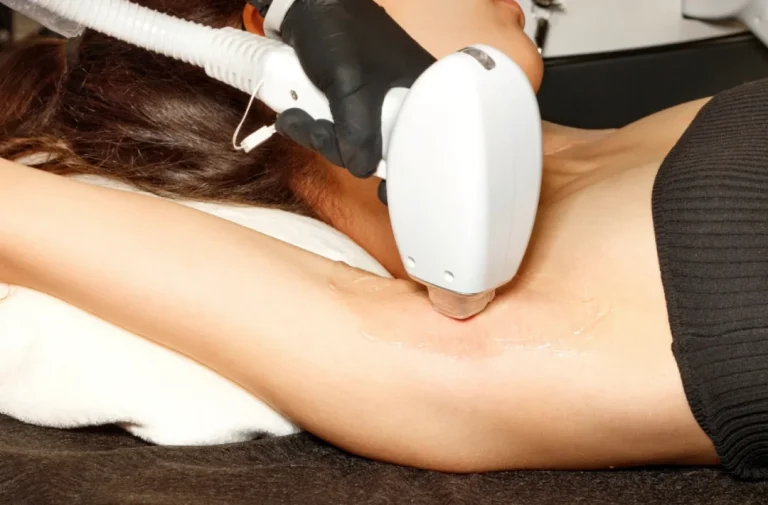
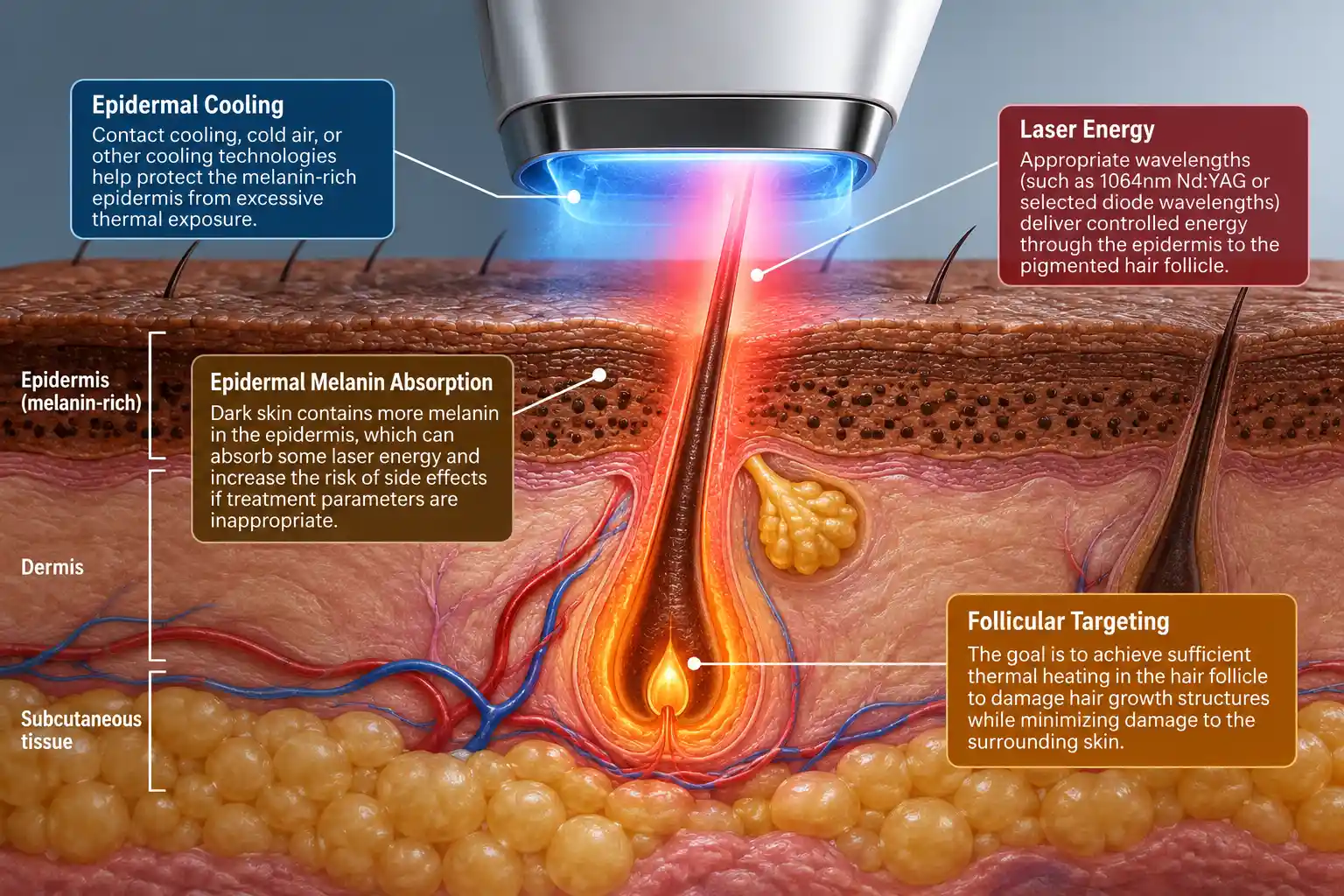
Laser hair removal works by delivering controlled light energy into hair-bearing skin. Melanin within the hair shaft and follicular structures absorbs part of this energy and converts it into heat.
When sufficient heat reaches the appropriate follicular structures, it can interfere with future hair production, resulting in a gradual reduction in hair growth.
The underlying scientific principle is known as selective photothermolysis. It describes the use of light absorption and controlled thermal exposure to affect a selected biological target.
Selective Photothermolysis and Melanin Absorption
In laser hair removal, melanin is the principal chromophore responsible for absorbing treatment light. The challenge is that melanin is found in both hair and skin.
For patients with light skin and dark hair, there is often a substantial difference between follicular and epidermal pigmentation.
In melanin-rich skin, epidermal pigmentation is higher, reducing the contrast between the intended target and surrounding tissue.
Therefore, the treatment system must deliver enough energy to affect the hair follicle while limiting excessive absorption near the skin surface.
Why Wavelength Selection Matters
Different laser wavelengths interact differently with melanin and other tissue components. Their absorption characteristics influence how energy is distributed within the skin.
Shorter wavelengths used for hair removal generally have stronger melanin absorption. This can be advantageous for targeting pigmented hair but may increase unwanted epidermal absorption in darker skin.
Longer wavelengths, particularly 1064nm, are less strongly absorbed by melanin. This characteristic helps explain why long-pulsed Nd:YAG technology is frequently selected for patients with deeply pigmented skin.
However, wavelength alone cannot predict clinical outcomes. Pulse characteristics, delivered energy, cooling, and the device’s optical design must also be considered.
Why Dark, Coarse Hair Often Responds Better
Laser hair removal generally works best when the target hair contains sufficient melanin and has enough structure to absorb and transfer heat.
Dark, coarse terminal hair often responds more predictably than very fine, blonde, gray, or white hair.
Patients with dark skin and dark hair may therefore achieve meaningful hair reduction, provided that the selected technology and settings are appropriate for their epidermal pigmentation.
How the Hair Growth Cycle Affects Treatment
Hair follicles cycle through periods of active growth, transition, and rest. These phases are commonly described as anagen, catagen, and telogen.
Laser hair removal is generally most effective when the hair and follicular structures provide a suitable target for energy absorption.
Because not all follicles are in the same growth phase simultaneously, multiple treatment sessions are usually needed to achieve meaningful long-term hair reduction.
Treatment intervals should be selected according to the anatomical area, hair growth patterns, clinical response, and the treating professional’s assessment.
What Is the Best Laser for Dark Skin Hair Removal?
The best laser for dark skin hair removal is not necessarily the device with the highest power or the greatest number of wavelengths. It is the system that can deliver effective follicular heating while maintaining an appropriate safety margin for the patient’s epidermis.
For patients with deeply pigmented skin, particularly Fitzpatrick skin types V and VI, long-pulsed 1064nm Nd:YAG lasers are among the most established treatment options. Their relatively low absorption by epidermal melanin makes them useful when treating skin with substantial baseline pigmentation.
Diode laser systems can also play an important role in professional hair removal. Certain 808nm diode platforms and multi-wavelength diode devices may be appropriate for selected darker skin phototypes, provided their clinical indications, cooling capabilities, and operating protocols support the intended treatment.
Alexandrite lasers operating at 755nm offer strong melanin absorption and can be effective for suitable skin-and-hair combinations. However, that same absorption characteristic creates additional challenges when treating deeply pigmented skin.
The following sections explain how these technologies differ and what their characteristics mean for dermatology clinics and professional equipment buyers.
1064nm Nd:YAG Laser Hair Removal for Dark Skin
Long-pulsed 1064nm Nd:YAG technology has an established role in laser hair removal for patients with darker skin phototypes.
The 1064nm wavelength is less strongly absorbed by melanin than shorter wavelengths such as 755nm and 808nm. This can help reduce the proportion of laser energy absorbed within the pigmented epidermis.
Its optical characteristics also allow energy to reach deeper hair-bearing structures, although the actual distribution of energy depends on the device, spot size, tissue properties, and treatment parameters.
These properties explain why long-pulsed Nd:YAG systems are frequently considered for Fitzpatrick skin types V and VI.
Advantages of 1064nm Nd:YAG Technology
- Lower epidermal melanin absorption: Compared with shorter hair removal wavelengths, 1064nm light is less strongly absorbed by melanin in the skin surface.
- Established clinical use in darker skin: Long-pulsed Nd:YAG systems have been widely studied and used for hair reduction in melanin-rich skin.
- Useful for coarse, dark hair: Appropriate systems can produce meaningful follicular heating in patients with suitable hair characteristics.
- Relevant to diverse patient populations: Clinics serving patients across multiple skin phototypes may benefit from access to a wavelength with an established role in treating darker skin.
Limitations of 1064nm Nd:YAG
Lower melanin absorption also means that the target hair may absorb less energy than it would at some shorter wavelengths.
Consequently, treatment effectiveness depends on delivering sufficient energy to the follicle without producing excessive heating elsewhere. Multiple sessions are generally necessary, and individual results vary.
Long-pulsed Nd:YAG treatment can still cause discomfort, burns, and pigmentation changes when patient selection or treatment parameters are inappropriate.
Clinical takeaway: Long-pulsed 1064nm Nd:YAG is a strong technology to consider for deeply pigmented skin, but it is not universally risk-free or automatically superior for every patient and hair type.
808nm Diode Laser for Dark Skin
The 808nm diode laser is a widely used technology for professional hair reduction. It delivers near-infrared light that can be absorbed by melanin in pigmented hair.
Compared with 755nm alexandrite, an approximately 808nm diode wavelength generally exhibits lower melanin absorption. However, epidermal absorption remains an important consideration for darker skin.
Some diode laser systems are used for patients with Fitzpatrick skin types IV and V, and certain appropriately documented systems may support treatment of type VI.
It is important to distinguish the characteristics of the wavelength from the clinical capabilities of a specific machine.
Two diode laser devices operating near 808nm may differ substantially in their pulse characteristics, optical delivery, cooling performance, output stability, and intended use.
Potential Advantages of Diode Laser Technology
- Effective targeting of pigmented hair: Diode wavelengths can provide useful absorption in dark terminal hair.
- Professional treatment versatility: Suitable systems can be used across multiple body areas and selected skin phototypes.
- Integrated cooling options: Many modern diode systems incorporate contact cooling to help manage epidermal heating and patient comfort.
- Multiple device configurations: Clinics can evaluate single-wavelength and multi-wavelength diode platforms according to their clinical needs.
Limitations of 808nm Diode Laser Hair Removal on Dark Skin
Because 808nm light is more strongly absorbed by melanin than 1064nm light, treatment of deeply pigmented skin requires particular attention to epidermal energy absorption.
Inappropriate treatment parameters can increase the risk of burns, blistering, or pigment changes.
A diode laser marketed as suitable for all skin types should not be accepted as clinically appropriate without examining its intended indications and supporting documentation.
Clinical takeaway: A diode laser for dark skin can be an appropriate option in selected circumstances, but its suitability must be established at the device and patient level.
755nm Alexandrite Laser for Dark Skin
Alexandrite lasers typically operate at a wavelength of 755nm. This wavelength is strongly absorbed by melanin, making it useful for targeting dark hair in suitable patients.
Strong melanin absorption can support effective follicular heating, but it also increases the potential for energy absorption in the pigmented epidermis.
As a result, conventional 755nm alexandrite treatment is generally more challenging in deeply pigmented skin than long-pulsed 1064nm Nd:YAG.
The use of alexandrite systems in darker phototypes requires careful clinical judgment, appropriate technology, and protocols supported by the specific device.
For clinics treating substantial numbers of Fitzpatrick V–VI patients, 755nm alexandrite should not automatically be considered the primary hair removal wavelength.
755nm vs 808nm vs 1064nm Laser Hair Removal: Which Is Better for Dark Skin?
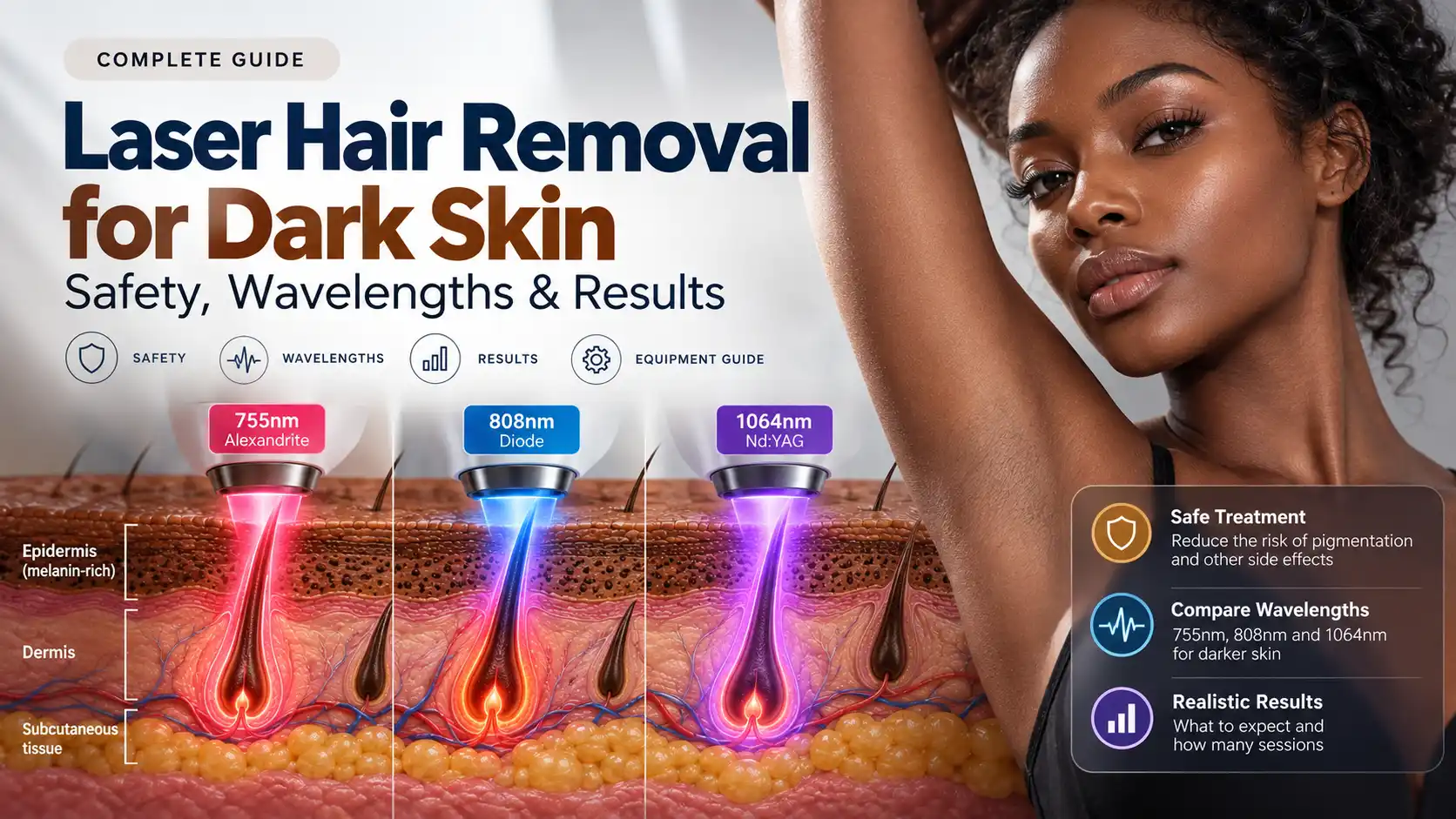
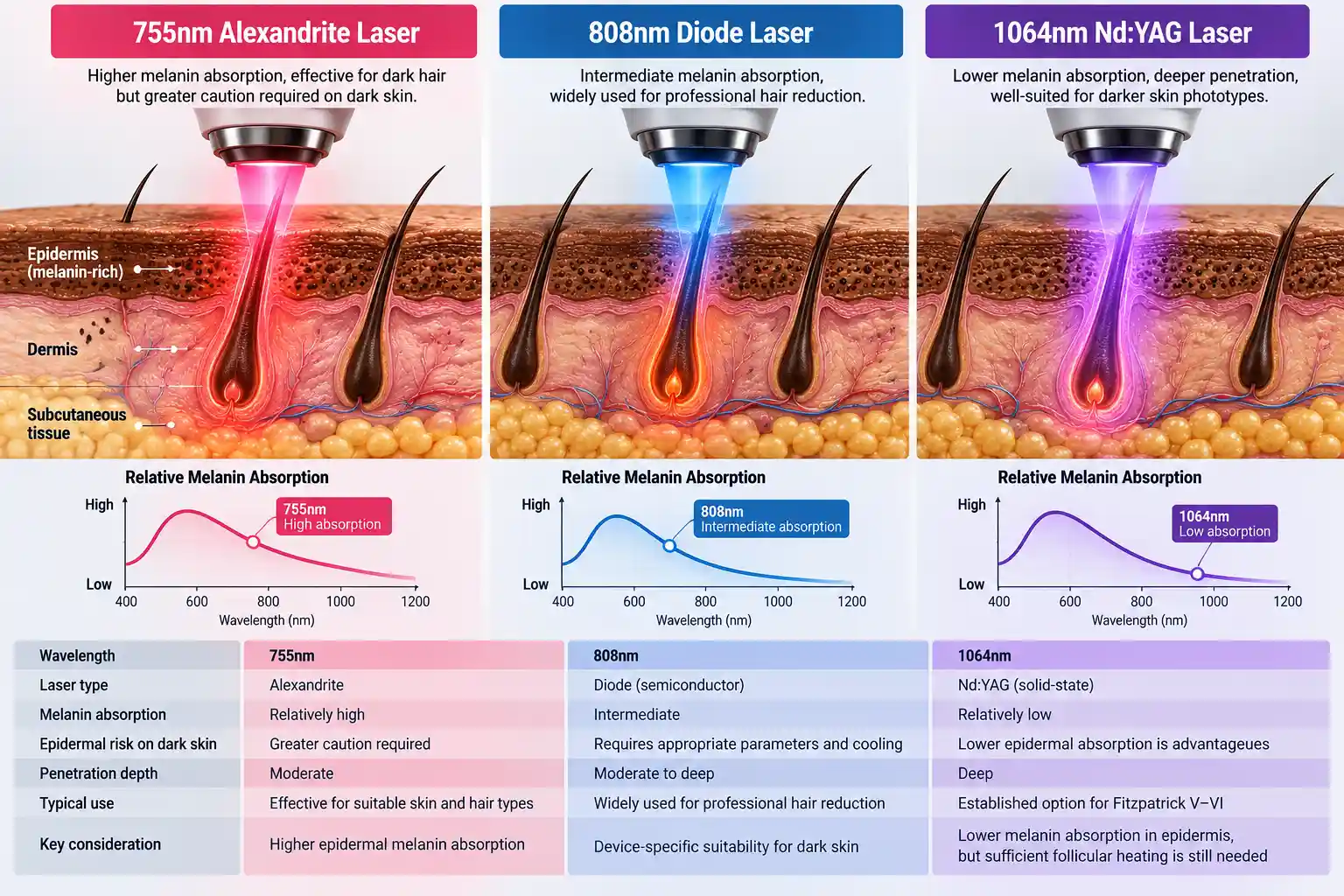
Comparing 755nm, 808nm, and 1064nm laser hair removal technologies helps explain why different systems may be selected for different skin phototypes.
The central trade-off involves melanin absorption. Stronger absorption can help target pigmented hair, but it can also increase unwanted epidermal heating when skin pigmentation is high.
Longer wavelengths generally exhibit lower melanin absorption, which can be advantageous for treating darker skin. However, lower absorption does not automatically mean better hair reduction in every situation.
| Feature | 755nm Alexandrite | 808nm Diode | 1064nm Nd:YAG |
|---|---|---|---|
| Laser technology | Alexandrite | Semiconductor diode | Nd:YAG solid-state laser |
| Melanin absorption | Relatively high | Intermediate | Relatively low |
| Epidermal pigmentation considerations | Greater caution required in deeply pigmented skin | Requires suitable device protocols and cooling | Lower epidermal melanin absorption is advantageous |
| Use in Fitzpatrick IV | May be considered in selected patients | Commonly considered with suitable systems | Established option |
| Use in Fitzpatrick V–VI | More challenging; device-specific assessment essential | May be appropriate with supported indications and careful protocols | Established option, particularly for deeply pigmented skin |
| Cooling requirements | Appropriate epidermal protection required | Effective cooling is important | Cooling remains important |
| Main limitation | Strong epidermal melanin absorption | Suitability varies by device and skin characteristics | Lower follicular melanin absorption than shorter wavelengths |
Important distinction: The table describes general wavelength characteristics. It does not rank every commercial device or establish that all machines operating at the same wavelength have equivalent safety and effectiveness.
Why Is 1064nm Often Preferred for Fitzpatrick V and VI?
In deeply pigmented skin, epidermal melanin can absorb a substantial amount of energy from shorter-wavelength hair removal lasers.
At 1064nm, melanin absorption is comparatively lower. This helps explain the established clinical role of long-pulsed Nd:YAG technology in darker skin phototypes.
Nevertheless, the laser must still deliver sufficient follicular heating to achieve useful hair reduction.
Treatment settings, pulse characteristics, cooling, and patient assessment remain essential regardless of wavelength.
Does a Longer Wavelength Always Mean Better Results?
No. A longer wavelength may offer advantages for epidermal protection, but treatment effectiveness also depends on how much energy the hair absorbs.
For some patients, shorter wavelengths may produce effective hair reduction when their skin characteristics and the specific treatment system make them appropriate.
The goal is not to choose the longest available wavelength in every case. It is to identify a suitable balance between follicular targeting, epidermal safety, and expected treatment outcomes.
Are Multi-Wavelength Diode Lasers Better for Dark Skin?
Multi-wavelength diode laser systems combine two or more wavelengths within a professional hair removal platform.
Common configurations may include 755nm, 808nm, and 1064nm diode wavelengths, while some systems also incorporate 940nm.
These designs are intended to offer flexibility when treating different hair characteristics and patient populations.
However, adding wavelengths does not automatically make a device safer, more effective, or suitable for every Fitzpatrick skin type.
How Do Multi-Wavelength Diode Systems Work?
A multi-wavelength diode platform may deliver several wavelengths through a shared treatment handpiece or optical delivery system.
Depending on its design, the device may deliver the wavelengths together or offer different operating modes.
The actual optical output, wavelength proportions, pulse characteristics, and available adjustments vary between manufacturers.
Therefore, a product described as a “three-wavelength” or “four-wavelength” diode laser should be evaluated using its technical documentation rather than the number of wavelengths alone.
What Does Each Wavelength Contribute?
| Wavelength | General Characteristic | Clinical Consideration |
|---|---|---|
| 755nm | Relatively strong melanin absorption | Requires particular attention to epidermal pigmentation |
| 808nm | Established diode hair removal wavelength | Suitability depends on skin phototype, cooling, and device-specific protocols |
| 940nm | Near-infrared wavelength with different tissue absorption characteristics | Its contribution depends on the system’s design and supporting evidence |
| 1064nm | Lower melanin absorption than shorter wavelengths | Potentially useful within a documented diode platform, but not equivalent to a dedicated Nd:YAG laser |
Is a 1064nm Diode Laser the Same as a 1064nm Nd:YAG Laser?
No. A 1064nm diode laser and a 1064nm Nd:YAG laser share a nominal wavelength, but they are not the same type of laser system.
A diode laser generates light using semiconductor technology, whereas an Nd:YAG laser uses a neodymium-doped yttrium aluminum garnet gain medium.
Even when two systems operate near the same wavelength, their pulse characteristics, beam properties, optical delivery, and clinical evidence may differ.
Therefore, the established clinical experience associated with long-pulsed 1064nm Nd:YAG should not automatically be transferred to every diode system advertising a 1064nm wavelength.
When Might a Multi-Wavelength Diode Platform Be Useful?
A multi-wavelength diode platform may be worth considering for clinics that treat a diverse patient population and want a configurable hair removal system.
However, buyers should verify whether the device’s intended indications and supporting documentation cover the skin phototypes they expect to treat.
For clinics serving many patients with deeply pigmented skin, it is particularly important to compare the available diode platform against dedicated long-pulsed Nd:YAG options.
The purchasing decision should consider the complete clinical and operational requirements, not simply the wavelength count.
What Are the Risks of Laser Hair Removal on Dark Skin?
Laser hair removal for dark skin can produce meaningful long-term hair reduction, but the procedure also carries potential risks. These risks are particularly important to understand when treating patients with substantial epidermal pigmentation.
The main concern is unwanted absorption of laser energy by melanin in the epidermis. If excessive heat accumulates near the skin surface, it may damage surrounding tissue rather than selectively affecting the hair follicle.
Possible side effects include temporary redness, perifollicular swelling, discomfort, blistering, burns, post-inflammatory hyperpigmentation, hypopigmentation, and, less commonly, scarring.
Not every patient experiences these complications. Their likelihood depends on individual skin characteristics, the treatment system, operator experience, and the parameters used.
Post-Inflammatory Hyperpigmentation After Laser Hair Removal
Post-inflammatory hyperpigmentation, commonly abbreviated as PIH, occurs when inflammation or tissue injury triggers increased melanin production in the affected area.
PIH can appear as brown, dark brown, or grayish patches after a laser treatment. It is a particularly relevant consideration for patients with melanin-rich skin because pigmentation changes may be more noticeable or persistent.
Potential contributing factors include excessive epidermal heating, inappropriate treatment parameters, recent tanning, and inadequate management of skin irritation.
Hyperpigmentation may gradually improve, but recovery time varies. Some cases persist for months and may require professional assessment and treatment.
Clinics should not promise that pigment changes will always resolve quickly or without intervention.
Can Laser Hair Removal Cause Hypopigmentation on Dark Skin?
Yes. Hypopigmentation is another possible complication of laser hair removal. It occurs when the treated skin develops areas of reduced pigmentation.
This can happen when thermal injury affects melanocytes or other structures involved in normal pigment production.
On deeply pigmented skin, lighter patches may be especially visible because of the contrast with surrounding tissue.
Some pigment changes improve over time, while others may be prolonged or permanent. Preventing excessive epidermal injury is therefore an important part of treatment planning.
Burns and Blistering
Burns and blistering can occur when excessive thermal energy is deposited in the skin.
Although these complications are not exclusive to darker skin, higher epidermal melanin levels can make energy absorption more challenging to manage with certain wavelengths.
Factors that may contribute to thermal injury include:
- Selecting a laser system or wavelength unsuitable for the patient’s skin.
- Using treatment parameters that produce excessive epidermal heating.
- Insufficient or inconsistent epidermal cooling.
- Treating recently tanned or irritated skin without appropriate reassessment.
- Excessive overlap between treatment passes.
- Inadequate operator training or failure to follow device-specific instructions.
Can Laser Hair Removal Cause Scarring?
Scarring is an uncommon but potentially serious complication. It may follow significant burns, blistering, or other tissue injury.
Patients with a history of abnormal scar formation should discuss this with the treating professional before undergoing laser treatment.
Clinics should document relevant medical history and assess whether additional precautions or alternative approaches are appropriate.
Laser Hair Removal Side Effects on Dark Skin: Comparison
| Side Effect | Typical Presentation | Clinical Consideration |
|---|---|---|
| Temporary redness | Localized redness after treatment | Often temporary, but persistent or worsening symptoms require professional assessment. |
| Perifollicular swelling | Mild swelling around treated hair follicles | Can occur after effective follicular heating. |
| Hyperpigmentation | Darker patches or spots in treated areas | Particularly relevant for melanin-rich skin; recovery may take time. |
| Hypopigmentation | Lighter patches compared with surrounding skin | May be temporary or persistent. |
| Burns or blistering | Painful thermal injury, sometimes with blisters | Requires prompt professional evaluation. |
| Scarring | Persistent changes in skin texture | Less common but potentially serious. |
How Can Clinics Make Laser Hair Removal Safer for Dark Skin?
Safe laser hair removal on darker skin requires a structured approach rather than reliance on a single device feature.
Even a system with an appropriate wavelength and advanced cooling technology can cause complications if the patient is unsuitable for treatment or the equipment is operated incorrectly.
1. Perform a Comprehensive Skin Assessment
Before treatment, the provider should assess the patient’s skin phototype, current pigmentation, hair characteristics, treatment area, and relevant medical history.
Recent sun exposure, tanning, previous pigmentation changes, active skin conditions, and medications that may affect treatment suitability should be reviewed.
The Fitzpatrick classification can support this assessment, but it should not replace individualized clinical judgment.
2. Choose a Suitable Laser System
Long-pulsed 1064nm Nd:YAG is an established option for darker skin phototypes, particularly types V and VI.
Certain diode laser platforms may also be appropriate, provided the specific device supports the intended patient population.
Clinics should verify the manufacturer’s indications, operating instructions, and available clinical evidence before selecting treatment.
3. Use Individualized Treatment Parameters
Treatment parameters must account for skin pigmentation, hair thickness, treatment area, device characteristics, and clinical response.
Fluence, pulse duration, spot size, repetition rate, and cooling settings can all influence the distribution of thermal energy in the skin.
Universal parameter recommendations are not appropriate because settings that are suitable for one device or patient may be unsafe for another.
4. Consider Test Spots When Clinically Indicated
A test spot may help the provider evaluate skin response before treating a larger area.
This can be particularly relevant when treating deeply pigmented skin, patients with a history of pigmentation changes, or individuals whose response is uncertain.
The test area should be assessed after an appropriate interval because some adverse pigmentation responses are delayed.
A satisfactory test spot does not guarantee that the full treatment will be complication-free.
5. Maintain Proper Laser Safety Procedures
Professional treatment environments require appropriate laser safety controls.
These include wavelength- appropriate eye protection, controlled treatment areas, trained personnel, suitable maintenance, and compliance with applicable regulations.
Operators should follow the device’s instructions and established safety procedures throughout treatment.
6. Provide Clear Aftercare Instructions
Patients should receive guidance on expected post-treatment reactions, sun protection, avoiding unnecessary irritation, and recognizing signs of complications.
Unexpected blistering, significant pain, or concerning pigmentation changes should be evaluated by an appropriately qualified healthcare professional.
Why Is Cooling Important for Laser Hair Removal on Dark Skin?
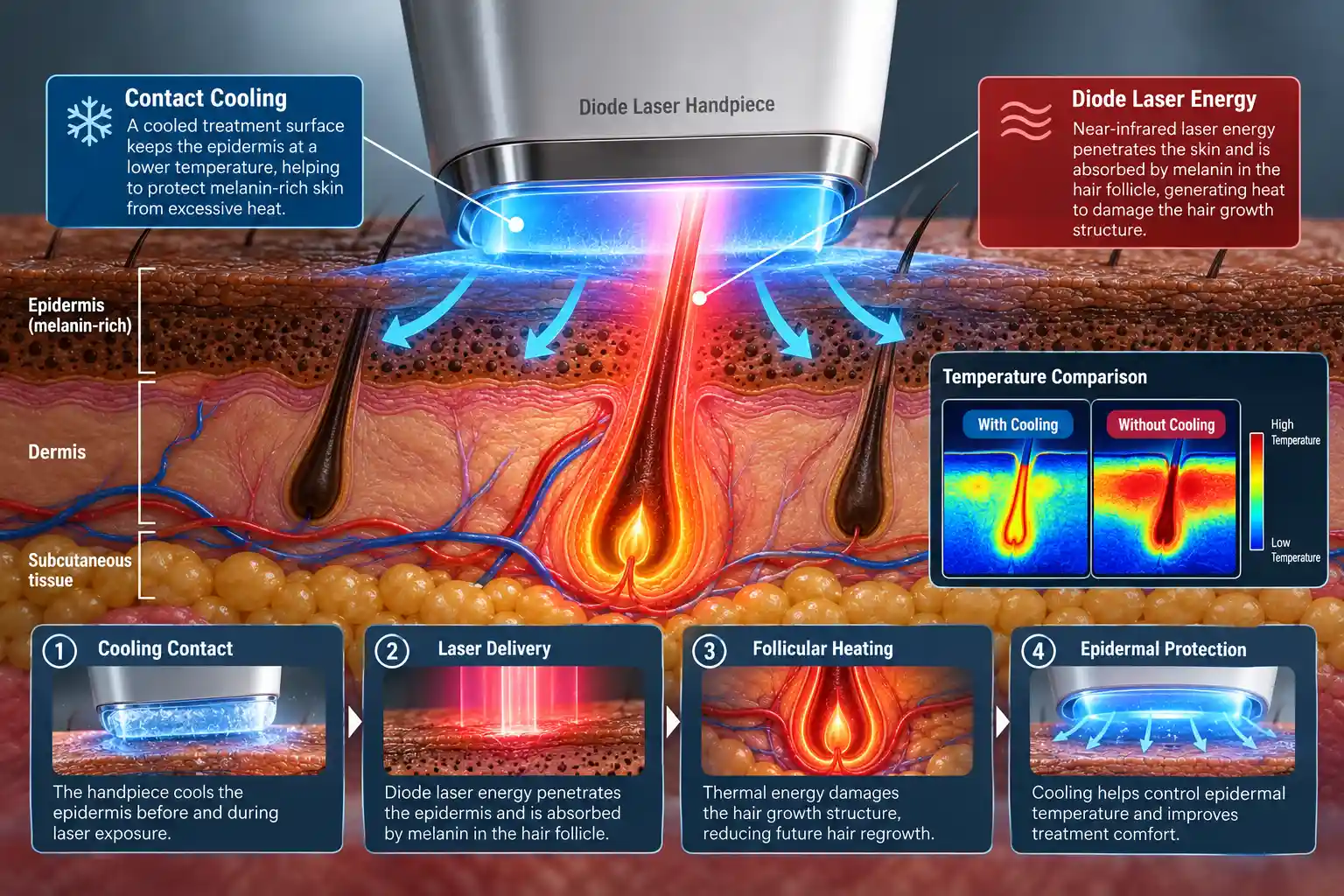
Epidermal cooling is one of the most important supporting technologies used in professional laser hair removal.
During treatment, the laser must produce sufficient heating within the follicular target while limiting unwanted thermal exposure in the surrounding epidermis.
Cooling helps manage this challenge by reducing heat at or near the skin surface.
This is especially relevant for melanin-rich skin, where epidermal pigment can absorb part of the delivered laser energy.
How Does Epidermal Cooling Work?
Cooling technologies remove heat from superficial tissue before, during, or after laser exposure, depending on the system.
By managing epidermal temperature, cooling may improve treatment comfort and reduce the risk of unwanted surface heating.
However, cooling does not prevent every adverse event. Excessive energy delivery, unsuitable wavelengths, or inappropriate treatment technique can still cause thermal injury.
Contact Cooling
Contact cooling uses a cooled treatment surface, often integrated into the laser handpiece, to remove heat from the skin.
This approach is commonly found in professional diode laser hair removal systems.
Effective contact cooling depends on the design of the handpiece, thermal performance, consistent skin contact, and correct operation.
Cold-Air Cooling
Cold-air cooling directs chilled air toward the treatment area to help manage surface temperature and patient discomfort.
It may be used as an integrated feature or alongside certain laser systems.
Cryogen Spray Cooling
Some laser systems use controlled cryogen sprays to cool the epidermis around the time of laser exposure.
The timing and delivery of the cooling spray are device-specific and must follow the manufacturer’s instructions.
Does Better Cooling Make Every Laser Safe for Dark Skin?
No. Cooling is an important protective measure, but it cannot compensate for an unsuitable device or inappropriate treatment settings.
For darker skin, cooling should be evaluated together with wavelength, pulse characteristics, energy delivery, and clinical suitability.
Does Laser Hair Removal Work on Dark Skin? Expected Results and Sessions
Yes. Laser hair removal can produce meaningful long-term hair reduction in patients with darker skin when suitable technology and treatment protocols are used.
Successful treatment may reduce hair density, slow regrowth, and produce finer remaining hair.
However, the degree of improvement varies among individuals. No laser system can guarantee complete elimination of every hair follicle.
How Many Laser Hair Removal Sessions Does Dark Skin Need?
Multiple sessions are generally required because hair follicles progress through different growth phases and do not all respond equally during a single treatment.
A treatment course of approximately six to eight sessions is commonly discussed, but this is only a general reference rather than a fixed requirement.
Some patients may require additional sessions or periodic maintenance, depending on their individual response.
Skin tone alone does not determine the number of treatments needed. Hair characteristics, anatomical location, hormonal factors, treatment intervals, and device performance also influence results.
How Long Does Laser Hair Removal Last on Dark Skin?
Laser hair removal is generally described as producing permanent hair reduction, not guaranteed permanent removal of all hair.
Some treated follicles may produce little or no visible regrowth over an extended period, while other follicles may recover or become active later.
Hormonal changes, treatment area, and individual hair growth patterns can affect the duration of results.
Patients should receive realistic expectations before beginning treatment.
Is Laser Hair Removal Permanent for Black Skin?
Laser hair removal can provide long-lasting hair reduction for patients with Black skin, but permanent elimination of every hair is not guaranteed.
The effectiveness of treatment depends on the selected technology, hair characteristics, treatment course, and individual response.
The distinction between permanent hair reduction and complete permanent removal should be explained clearly during consultation.
Does Dark Skin Need More Laser Hair Removal Sessions?
Not necessarily. It would be inaccurate to assume that every patient with darker skin requires more treatments than a patient with lighter skin.
Some treatment plans may use more conservative parameters or different technologies to manage epidermal heating.
Nevertheless, the total number of sessions depends on multiple factors, including the density and thickness of the hair, the treatment area, and the individual’s response.
Which Hair Types Respond Best on Dark Skin?
Dark, coarse terminal hair is generally a more favorable target because it contains sufficient melanin to absorb laser energy.
Very fine, lightly pigmented, gray, or white hair may respond poorly because less melanin is available for absorption.
A qualified professional should evaluate whether the patient’s hair characteristics make laser treatment worthwhile.
What Factors Influence Laser Hair Removal Results?
| Factor | Why It Matters |
|---|---|
| Hair color | Melanin content influences laser energy absorption. |
| Hair thickness | Coarse terminal hair is often a more favorable treatment target. |
| Skin pigmentation | Epidermal melanin influences treatment planning and safety considerations. |
| Laser technology | Wavelength, pulse characteristics, and cooling affect energy delivery. |
| Treatment area | Hair growth patterns differ across anatomical locations. |
| Hormonal factors | Hormonal influences can affect hair growth and regrowth. |
| Treatment consistency | Appropriate intervals and completion of the recommended course influence outcomes. |
How to Choose a Laser Hair Removal Machine for Dark Skin
Choosing a laser hair removal machine for dark skin requires more than comparing maximum power, treatment speed, or the number of wavelengths listed in a product brochure.
For dermatology clinics, medical spas, and professional hair removal providers, the central question is whether the equipment can support effective treatment while managing the additional considerations associated with epidermal melanin.
Clinics treating patients across Fitzpatrick skin types IV, V, and VI should evaluate the device’s clinical suitability, optical characteristics, cooling performance, safety documentation, and manufacturer support.
1. Evaluate the Laser Wavelength
Wavelength is an important starting point because it influences how laser energy interacts with melanin and other tissue components.
Long-pulsed 1064nm Nd:YAG is an established technology for darker skin phototypes. Certain diode laser platforms may also support treatment of selected darker skin types, depending on the specific device and its documented indications.
Buyers should not assume that a system is suitable for Fitzpatrick VI simply because its marketing materials mention a 1064nm wavelength.
The laser source, pulse characteristics, optical output, and supporting clinical evidence must also be considered.
2. Assess Pulse Control and Energy Delivery
Professional hair removal equipment should provide appropriate control over treatment parameters within its validated operating range.
Relevant specifications may include fluence, pulse duration, spot size, repetition rate, and treatment modes.
These parameters influence how energy is distributed and how thermal exposure develops within the skin.
A wider adjustment range is not automatically better. The important consideration is whether the available settings support safe and appropriate clinical protocols for the intended patient population.
3. Verify Epidermal Cooling Performance
Effective cooling is especially important when treating melanin-rich skin.
Clinics should evaluate the cooling method, temperature-control design, handpiece construction, and ability to maintain consistent cooling during routine operation.
Contact cooling, cold-air cooling, and other technologies may help manage epidermal heating, but none can compensate for inappropriate treatment settings.
4. Review Clinical Indications and Regulatory Documentation
Before purchasing a professional laser hair removal device, clinics should confirm which skin phototypes and treatment applications are supported by its documentation.
Regulatory requirements differ between countries and regions. A device’s commercial availability in one market does not establish authorization for every indication in another.
Buyers should request applicable regulatory documents and verify their relevance to the intended destination market.
5. Consider Operator Training and Laser Safety
A professional laser system should be supported by clear operating instructions, safety guidance, and appropriate training resources.
Clinics should establish procedures for patient assessment, eye protection, equipment inspection, treatment documentation, and adverse-event management.
Qualified operation remains essential regardless of the equipment’s automation features or marketing claims.
6. Evaluate Reliability and After-Sales Support
Equipment performance must remain consistent throughout routine clinical use.
Buyers should review maintenance requirements, handpiece service options, spare-parts availability, warranty conditions, and technical support arrangements.
For distributors and OEM/ODM partners, documentation, product configuration, training support, and long-term supply capabilities may also influence the purchasing decision.
Professional Laser Hair Removal Equipment Buying Checklist
| Evaluation Factor | What to Verify | Why It Matters |
|---|---|---|
| Wavelength | Actual wavelengths, laser source, and optical specifications | Influences melanin absorption and treatment suitability |
| Supported skin types | Device-specific indications and supporting documentation | Helps determine whether the equipment is appropriate for the intended patients |
| Pulse characteristics | Adjustable pulse parameters and recommended operating range | Affects thermal energy delivery and treatment control |
| Cooling system | Cooling method, stability, and maintenance requirements | Helps manage epidermal heating and patient comfort |
| Optical output | Output specifications, consistency, and maintenance procedures | Supports predictable equipment performance |
| Regulatory documentation | Documents relevant to the intended market and clinical application | Supports purchasing and compliance review |
| Training | Operating manuals, safety information, and available training | Supports appropriate clinical implementation |
| After-sales service | Warranty, maintenance, spare parts, and technical support | Helps reduce operational interruptions |
COOLICE Multi-Wavelength Diode Laser Technology for Professional Clinics
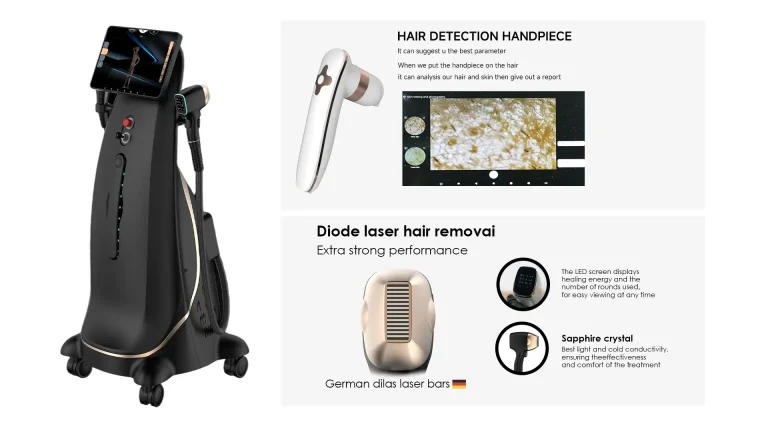
For clinics and distributors evaluating professional diode laser hair removal equipment, Cocoon Laser offers the COOLICE multi-wavelength platform.
The system is designed around four diode wavelengths: 755nm, 808nm, 940nm, and 1064nm.
These wavelengths have different optical characteristics and are incorporated into a platform intended to support professional hair removal applications.
COOLICE also incorporates a cooling architecture combining air, water, and semiconductor cooling technologies.
Cooling is an important consideration for clinics treating diverse skin phototypes, but the system’s suitability for any individual patient must be determined according to its documented indications and appropriate clinical protocols.
What Should Clinics Verify Before Selecting COOLICE?
Professional buyers should request current technical specifications and confirm:
- Supported treatment indications and skin phototypes.
- Optical output and wavelength configuration.
- Available treatment parameter controls.
- Cooling-system design and maintenance requirements.
- Applicable regulatory documentation for the destination market.
- Operator training, warranty, and technical support.
Important technical distinction: A multi-wavelength diode system incorporating a 1064nm diode component should not be assumed to provide the same clinical performance or evidence base as a dedicated long-pulsed 1064nm Nd:YAG laser.
Clinics serving large numbers of Fitzpatrick V–VI patients should compare their available technology options carefully before purchasing.
Cocoon Laser works with professional equipment buyers, distributors, and OEM/ODM partners seeking aesthetic laser systems for their target markets.
Explore Cocoon Laser’s professional aesthetic equipment and contact the team to request product-specific documentation and configuration information.
Common Mistakes in Laser Hair Removal for Dark Skin
Many treatment problems arise from oversimplified assumptions about laser wavelengths, skin pigmentation, and equipment performance.
Assuming All Laser Hair Removal Machines Are Suitable for Every Skin Type
Marketing descriptions such as “all skin types” should be evaluated against the device’s actual indications and supporting documentation.
Not every machine is appropriate for deeply pigmented skin, and suitability cannot be established from wavelength claims alone.
Choosing a Device Based Only on Maximum Power
Higher advertised power does not automatically produce safer or more effective treatment.
The quality of energy delivery, pulse control, cooling, and clinical protocols is more important than a single headline specification.
Confusing 1064nm Diode with 1064nm Nd:YAG
These technologies share a nominal wavelength but use different laser sources and may have different operating characteristics.
Clinical evidence for one technology should not automatically be applied to the other.
Ignoring Recent Tanning or Pigmentation Changes
Recent tanning can increase epidermal pigmentation and change how the skin absorbs laser energy.
Patients should be reassessed when their skin condition changes between treatment sessions.
Using Cooling as a Substitute for Proper Parameters
Cooling helps manage epidermal temperature, but it cannot eliminate the consequences of unsuitable wavelength selection or excessive energy delivery.
Promising Complete and Permanent Hair Removal
Professional clinics should explain that laser treatment generally aims for permanent hair reduction rather than guaranteed elimination of every hair.
Clear expectations help patients make informed treatment decisions.
Frequently Asked Questions About Laser Hair Removal for Dark Skin
Can Black skin get laser hair removal?
Yes. Laser hair removal can be performed on Black skin when a qualified professional selects suitable equipment and individualized treatment parameters. Long-pulsed 1064nm Nd:YAG is an established option for deeply pigmented skin.
What is the safest laser hair removal for dark skin?
No laser is universally safest for every patient. Long-pulsed 1064nm Nd:YAG is commonly considered for darker skin because it has lower epidermal melanin absorption than shorter wavelengths. Operator experience, cooling, and patient assessment remain essential.
Is diode laser good for dark skin?
Certain diode laser systems may be suitable for darker skin when their indications, cooling capabilities, and treatment protocols support the patient’s skin phototype. Not every 808nm diode device is appropriate for Fitzpatrick VI.
Is 1064nm laser hair removal safe for dark skin?
Long-pulsed 1064nm Nd:YAG laser hair removal is an established approach for darker skin phototypes. Its lower epidermal melanin absorption can be advantageous, but burns and pigmentation changes remain possible with inappropriate treatment.
Can laser hair removal cause dark spots on dark skin?
Yes. Post-inflammatory hyperpigmentation can occur after excessive inflammation or thermal injury. Proper treatment planning and aftercare help reduce the risk, but cannot eliminate it completely.
Can laser hair removal cause lighter patches on dark skin?
Yes. Hypopigmentation can occur if thermal injury affects pigment-producing structures. Some cases improve, while others may persist.
Does laser hair removal work on dark skin with fine hair?
Results may be less predictable for very fine hair because it often contains less melanin available to absorb laser energy. A professional consultation can help determine whether treatment is appropriate.
How many laser hair removal sessions are needed for dark skin?
Multiple sessions are generally required. The total number depends on hair characteristics, treatment area, technology, hormonal influences, and individual response rather than skin tone alone.
Is IPL suitable for dark skin?
IPL devices emit broad-spectrum light, and their suitability for darker skin varies by system and treatment settings. Long-pulsed 1064nm Nd:YAG generally has a more established role for deeply pigmented skin.
Can dark skin get Brazilian laser hair removal?
Potentially, yes. However, intimate areas can have variable pigmentation and require careful assessment, suitable technology, qualified operators, and attention to anatomical safety.
Does laser hair removal hurt more on dark skin?
Discomfort varies by patient, treatment area, device, and treatment parameters. Skin tone alone does not reliably predict pain. Appropriate cooling may improve comfort, but patients should discuss pain-management expectations with their provider.
Is laser hair removal permanent on dark skin?
Laser hair removal can produce long-term or permanent hair reduction, but complete permanent elimination of every hair is not guaranteed. Maintenance treatments may be needed.
Final Verdict: Which Laser Hair Removal Technology Is Best for Dark Skin?
Laser hair removal for dark skin can be an effective option for long-term hair reduction when the technology, treatment parameters, and clinical procedures are appropriate.
For patients with deeply pigmented skin, particularly Fitzpatrick types V and VI, long-pulsed 1064nm Nd:YAG remains one of the most established laser technologies to consider.
Certain diode laser systems may also be suitable for selected darker skin phototypes, but their clinical suitability must be evaluated individually.
The best laser for dark skin hair removal is not determined by wavelength alone. It depends on the complete treatment system, the patient’s skin and hair, operator experience, and appropriate safety procedures.
For professional clinics and equipment buyers, the most useful purchasing approach is to compare verified device specifications, clinical documentation, cooling performance, regulatory requirements, and after-sales support.
The essential principle is to achieve sufficient follicular heating while minimizing unwanted epidermal injury.
Looking for Professional Laser Hair Removal Equipment?
Cocoon Laser supplies professional aesthetic equipment for clinics, medical spas, distributors, and OEM/ODM partners.
If your business is evaluating multi-wavelength diode laser technology, contact our team to discuss available equipment, specifications, configuration options, and documentation.
References and Further Reading
- Anderson RR, Parrish JA. Selective photothermolysis: precise microsurgery by selective absorption of pulsed radiation. Science. 1983;220(4596):524–527. https://doi.org/10.1126/science.6836297
- American Academy of Dermatology Association. Laser hair removal: overview and patient guidance. American Academy of Dermatology
- U.S. Food and Drug Administration. Medical Devices: Regulatory Information and Resources. FDA Medical Devices