Q-Switched Laser for Melasma: Clinical Deep Dive | 1064nm vs 755nm Efficacy, Parameters & ROI for Clinics
Introduction
Managing melasma (chloasma) remains one of the most frustrating clinical challenges in aesthetic dermatology. Despite the proliferation of picosecond and IPL devices, Q-switched laser for melasma continues to represent the gold standard for clinics seeking a balance between efficacy, safety on Fitzpatrick skin types III-V, and capital equipment ROI. The primary clinic pain points—post-inflammatory hyperpigmentation (PIH) from overly aggressive fluences, slow treatment speeds limiting daily throughput, and high consumable costs—are directly addressed by modern Q-switched Nd:YAG and Q-switched alexandrite platforms. This technical blog provides an evidence-based, engineering-grade analysis of the technology, specifications, and business case for integrating Q-switched lasers into your medical aesthetics practice.
Core Technology & Clinical Efficacy
Selective Photothermolysis with Nanosecond Pulse Widths
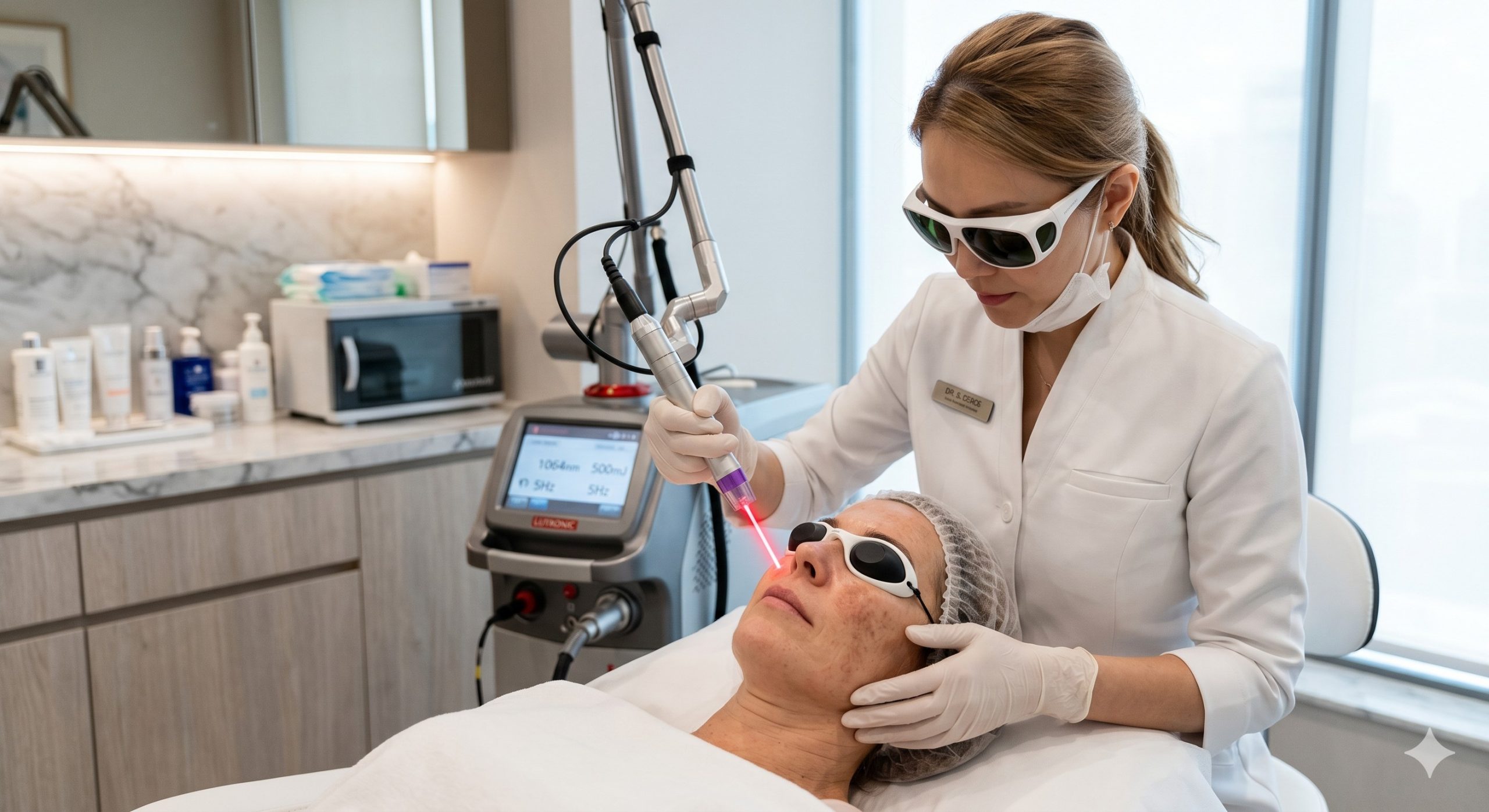
The fundamental mechanism of a Q-switched laser relies on the principle of selective photothermolysis. By generating pulse durations in the nanosecond (ns) domain (typically 5-20 ns), the laser energy is absorbed more rapidly than the thermal relaxation time of targeted melanosomes and pigment granules. This leads to photoacoustic shattering of pigment without coagulating surrounding dermal structures. For melasma, which involves both epidermal and dermal melanin, the 1064 nm wavelength offers deeper penetration with less melanin absorption competition, reducing the risk of post-inflammatory hyperpigmentation (PIH). Key metrics include a spot size of 6-8 mm (larger spots reduce scattering and increase depth) and a fluence of 1.5-3.5 J/cm² when using low-fluence (painless) toning protocols.
Advanced Cooling Integration (TEC vs. Sapphire)
To protect the epidermis—especially critical when treating melasma in darker skin types—modern systems incorporate active cooling. Thermoelectric cooling (TEC) via a chilled sapphire contact tip (typically operating at 0°C to 5°C) provides dynamic epidermal protection. This cooling reduces pain scores (VAS 2-3 vs 6-7 for non-cooled) and permits higher cumulative energy delivery without blistering. Clinics should verify CE Medical (MDD/MDR) and FDA 510(k) clearance, as well as compliance with ISO 13485:2016 for manufacturing quality systems.
Technical Specifications
Below are the critical parameters for a clinical-grade Q-switched laser optimized for melasma. These specifications directly influence treatment outcomes and safety margins.
| Key Parameter | Technical Specification | Clinical Significance for Melasma |
|---|---|---|
| Wavelengths | 1064 nm (dominant) + 532 nm (optional) | 1064 nm penetrates to deep dermal melanin; 532 nm for superficial epidermal pigment (Fitzpatrick I-III only). |
| Pulse Width | 5 – 20 nanoseconds (FWHM) | Nanosecond domain optimizes photoacoustic effect while minimizing thermal diffusion to basal keratinocytes. |
| Spot Size | 2 mm – 8 mm (stepwise adjustable) | ≥6 mm spot reduces fluence density at epidermis; ≥8 mm required for low-fluence toning protocols. |
| Fluence / Energy Density | 0.5 – 12 J/cm² (adjustable) | Melasma: 1.5-3.5 J/cm² for 1064 nm. Higher fluences (5-8 J/cm²) reserved for nevus of Ota or tattoos. |
| Repetition Rate | 1 – 10 Hz (Q-Switched mode) | 10 Hz enables rapid full-face coverage; reduces procedure time and operator fatigue. |
| Cooling System | Sapphire contact TEC (0°C to 5°C) | Epidermal protection allows higher cumulative energy; reduces pain and PIH risk (critical for Types IV-VI). |
| Regulatory Certification | CE Medical (Class IIb), FDA 510(k), ISO 13485:2016 | Mandatory for medical claims and liability insurance; ensures manufacturing consistency. |
Treatment Areas & Indications
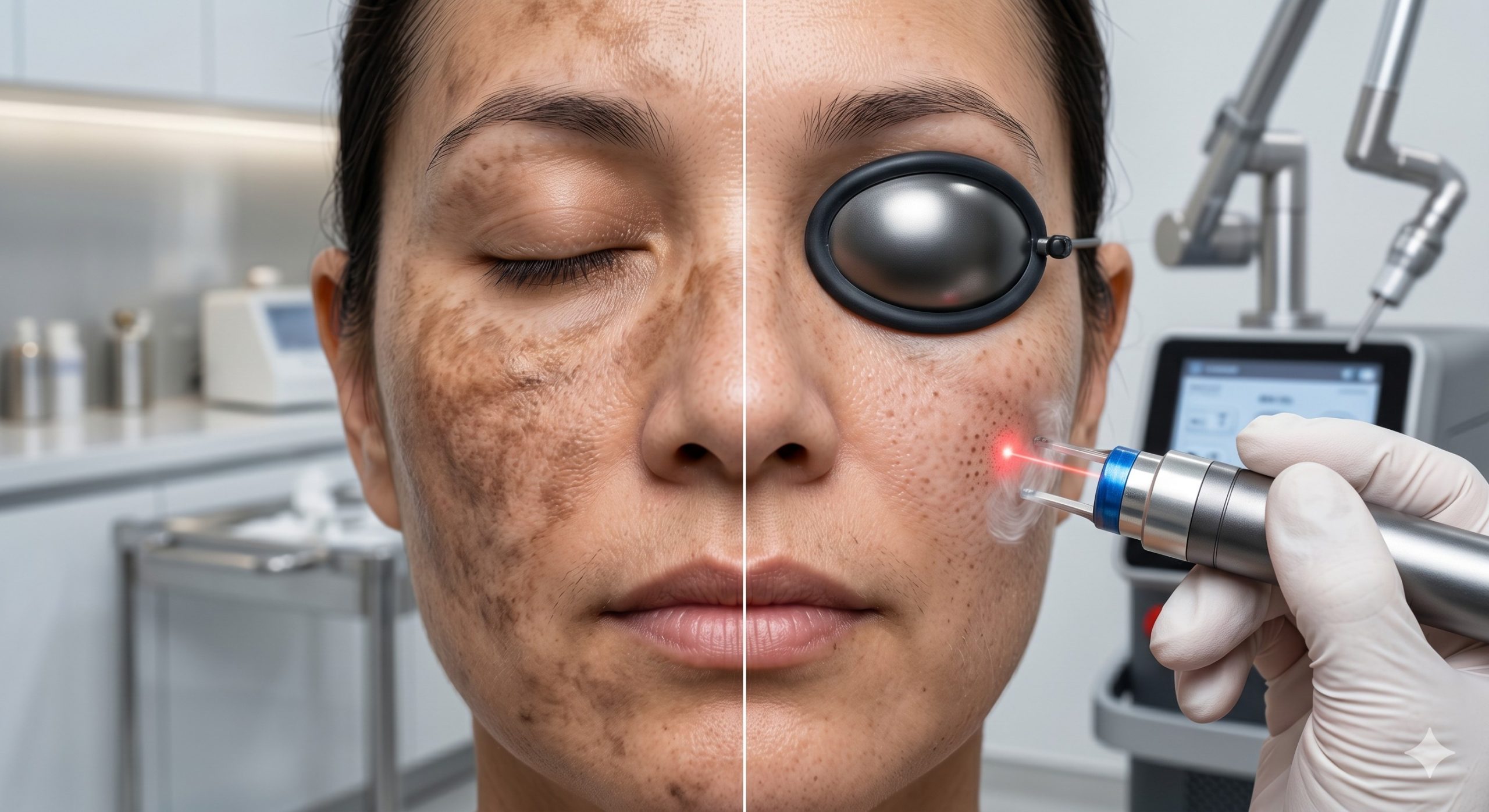
The Q-switched laser for melasma is indicated for multiple facial and body areas, with specific protocol adjustments based on skin type and lesion depth. The Fitzpatrick scale dictates parameter selection: Types I-III may tolerate both 755nm and 1064nm, while Types IV-VI require exclusive 1064nm low-fluence (<3 J/cm²) with larger spot sizes (≥6mm) to minimize the risk of PIH. Beyond melasma, common off-label and on-label indications include nevus of Ota, cafe-au-lait macules, Hori’s nevus, and post-inflammatory hyperpigmentation. The 755nm wavelength is superior for epidermal pigment (e.g., ephelides, lentigines), while 1064nm penetrates to the papillary dermis for dermal melasma components.
Clinic ROI & Competitive Advantage
Consumable-Free Operation
Unlike IPL or diode-based systems that require expensive handheld tips or flashlamps replaced every 5,000-10,000 shots (often USD 1.50-3.00 per patient), Q-switched lasers have zero consumable costs. The only recurring expense is the laser flashlamp (replaced every 500,000-1,000,000 pulses, approx. USD 300-500), which translates to less than USD 0.001 per pulse. This yields a gross margin of 85-92% on each treatment session (typical clinic charge: USD 250-600 per full-face melasma session).
Treatment Speed & Throughput
With a maximum repetition rate of 10 Hz and a typical coverage of 1 cm² per second (using an 8 mm spot size), a full-face treatment (approx. 80-100 cm²) requires only 90-120 seconds of active laser time. Add 5 minutes for cooling and patient prep, and you can schedule 6-8 melasma patients per hour per device. At an average realized revenue of USD 350 per session, that equates to USD 2,100-2,800 per hour of chair time, offering a payback period of under 3-6 months for a USD 25,000-45,000 Q-switched system.
Why Q-Switched Beats Picosecond for Melasma
While picosecond lasers (450-750 ps) dominate tattoo removal, they carry a significantly higher risk of lentigo-like pinpoint bleeding and textural changes when used on melasma, especially at higher energy densities. The nanosecond domain (5-20 ns) of a Q-switched laser provides a wider therapeutic window, allowing for painless toning protocols (low-fluence, multiple passes) that are simply not feasible with pico-second pulse widths due to nonlinear absorption effects. Furthermore, Q-switched platforms offer lower capital investment (USD 25k-60k vs USD 80k-150k for pico) and identical reimbursement codes in most markets.
Conclusion
For aesthetic clinic owners and medical directors, the Q-switched Nd:YAG laser (1064/532 nm) remains the most clinically validated, cost-effective, and versatile platform for managing refractory melasma across all Fitzpatrick skin types. When evaluating systems, prioritize field-replaceable flashlamps, articulating arm with homogenized beam profile, and sapphire TEC cooling certified to ISO 13485. The combination of zero consumables, sub-second treatment times, and predictable safety profiles delivers an unbeatable ROI while genuinely improving patient outcomes in one of dermatology’s most challenging pigmentary disorders. Forward-looking clinics should consider a dual-wavelength (755 nm + 1064 nm) Q-switched system to capture both epidermal and dermal melasma referrals, positioning themselves as regional centers of excellence for pigment correction.