Picosecond Laser vs Q-Switched Laser
Quick Answer
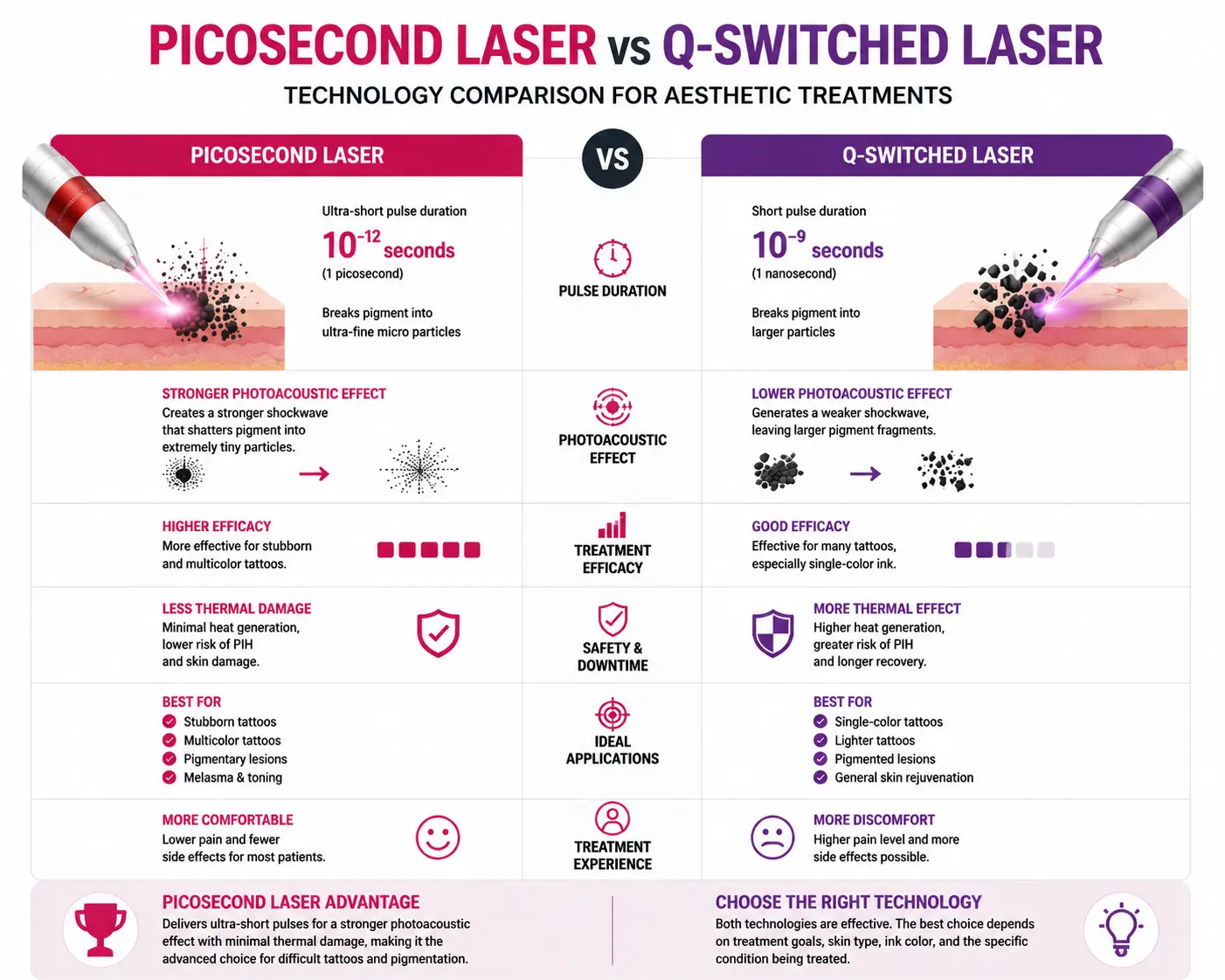
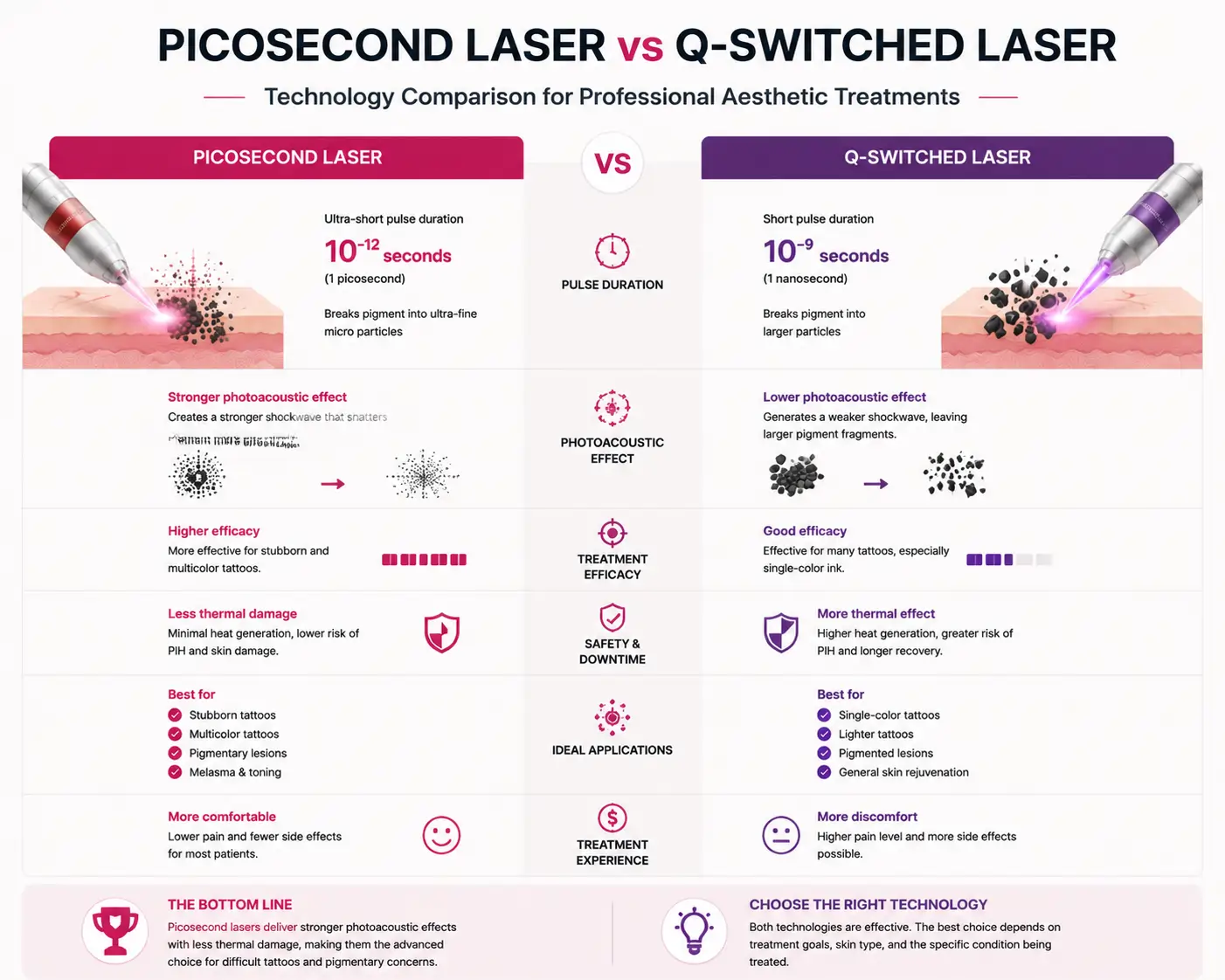
Picosecond lasers and Q-switched lasers are both professional laser technologies commonly used for tattoo removal and pigmentation treatments. The main difference is pulse duration: picosecond lasers deliver ultra-short pulses measured in trillionths of a second, while Q-switched lasers typically operate in the nanosecond range.
Because picosecond lasers generate higher peak power within a shorter pulse duration, they create a stronger photomechanical effect that can fragment pigment particles more efficiently. Q-switched lasers mainly rely on photothermal effects through longer nanosecond pulses.
For modern aesthetic clinics, picosecond laser systems are often selected because they provide advanced pulse technology, multi-wavelength flexibility, and broader treatment capabilities.

What Is a Picosecond Laser?
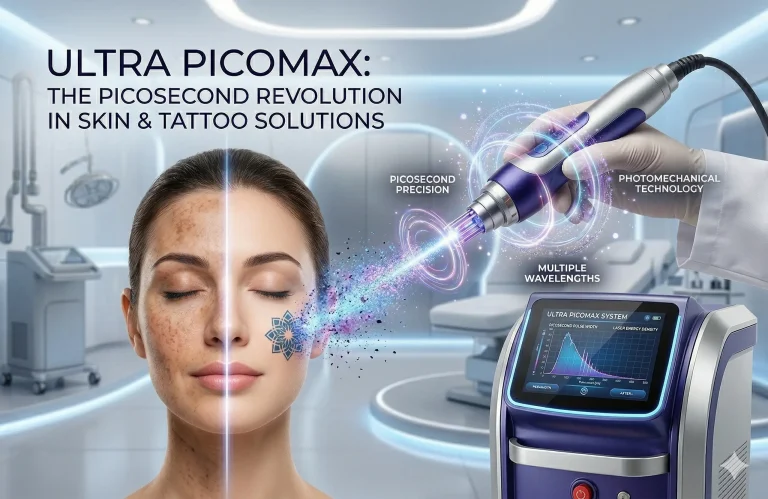
A picosecond laser is an advanced laser system that delivers ultra-short pulses measured in picoseconds. One picosecond equals one trillionth of a second.
The defining characteristic of picosecond laser technology is its ability to deliver high energy within an extremely short period of time.
This creates a photomechanical interaction with targeted structures, making picosecond lasers widely used for:
- Tattoo removal
- Pigmentation treatment
- Skin rejuvenation
- Advanced aesthetic laser procedures
Learn more: What Is a Picosecond Laser?
What Is a Q-Switched Laser?
A Q-switched laser is a traditional pigment laser technology that generates high-energy laser pulses in the nanosecond range.
Q-switched technology has been widely used for many years in professional tattoo removal and pigmentation treatments.
The technology works by storing laser energy and releasing it in a very short nanosecond pulse.
Common Q-switched laser applications include:
- Tattoo removal
- Pigmented lesion treatment
- Skin pigmentation procedures
Picosecond Laser vs Q-Switched Laser: Key Differences
The biggest difference between picosecond and Q-switched lasers is pulse duration.
| Feature | Picosecond Laser | Q-Switched Laser |
|---|---|---|
| Pulse Duration | Picosecond range (10⁻¹² seconds) | Nanosecond range (10⁻⁹ seconds) |
| Main Energy Effect | Photomechanical effect | Photothermal effect |
| Technology Generation | Advanced ultra-short pulse technology | Traditional pigment laser technology |
| Common Applications | Tattoo removal, pigmentation, rejuvenation | Tattoo removal and pigmentation |
Although both technologies can be used for similar applications, their energy delivery methods create different treatment characteristics.
Pulse Duration Comparison: Picosecond vs Q-Switched Laser
Pulse duration is one of the most important technical factors that determines how laser energy interacts with targeted structures.
The difference between picosecond and Q-switched laser technology mainly comes from the time required to deliver laser energy.
| Technology | Pulse Duration | Time Scale |
|---|---|---|
| Picosecond Laser | Picosecond pulse | 10⁻¹² seconds |
| Q-Switched Laser | Nanosecond pulse | 10⁻⁹ seconds |
A picosecond pulse is significantly shorter than a nanosecond pulse. This difference allows picosecond lasers to deliver energy more rapidly and create a different interaction with pigment particles.
This shorter pulse duration is the foundation of modern pico laser technology and one of the main reasons why picosecond systems have become increasingly popular in professional aesthetic clinics.
Photomechanical Effect vs Photothermal Effect
The way laser energy interacts with tattoo pigments and other targets is another major difference between picosecond and Q-switched laser systems.
Photomechanical Effect in Picosecond Lasers
Picosecond lasers primarily utilize a photomechanical effect. The extremely short pulse duration creates rapid energy deposition, generating mechanical stress around targeted pigment particles.
This process can fragment pigment particles into smaller pieces while limiting excessive heat diffusion to surrounding tissues.
The photomechanical effect is one of the key principles behind:
- Picosecond laser tattoo removal
- Advanced pigment treatments
- Certain skin rejuvenation applications
Learn more: Picosecond Laser Tattoo Removal Technology
Photothermal Effect in Q-Switched Lasers
Q-switched lasers primarily rely on photothermal interaction, where laser energy is converted into heat after being absorbed by pigment particles.
This technology has been widely used for decades and remains an important solution for professional pigment treatments.
However, the longer pulse duration creates different energy distribution characteristics compared with picosecond technology.
Peak Power Comparison Between Picosecond and Q-Switched Lasers
Peak power refers to the maximum power delivered during a laser pulse. Because picosecond lasers release energy within an extremely short period, they can generate very high peak power levels.
| Feature | Picosecond Laser | Q-Switched Laser |
|---|---|---|
| Pulse Length | Extremely short | Longer pulse duration |
| Peak Power | Higher peak power concentration | Lower peak power concentration |
| Pigment Interaction | Rapid mechanical fragmentation | Thermal pigment disruption |
The combination of ultra-short pulses and high peak power allows picosecond laser systems to provide advanced pigment targeting capabilities.
Tattoo Removal Comparison: Picosecond Laser vs Q-Switched Laser
Tattoo removal is one of the most common applications where picosecond and Q-switched technologies are compared.
Both technologies can target tattoo pigments, but their operating principles are different.
| Comparison | Picosecond Laser Tattoo Removal | Q-Switched Laser Tattoo Removal |
|---|---|---|
| Technology | Ultra-short pulse laser technology | Nanosecond laser technology |
| Main Effect | Photomechanical pigment fragmentation | Photothermal pigment disruption |
| Wavelength Options | Commonly 532nm / 755nm / 1064nm | Commonly 532nm / 1064nm |
| Applications | Tattoo removal, pigmentation, rejuvenation | Tattoo removal and pigmentation |
For professional clinics evaluating tattoo removal equipment, the choice between picosecond and Q-switched laser technology depends on treatment requirements, target applications, and business objectives.
Wavelength Options: Picosecond Laser vs Q-Switched Laser
Wavelength selection is another important factor when comparing these two laser technologies.
Different wavelengths interact with different pigment colors, which is why professional systems often provide multiple wavelength configurations.
| Wavelength | Common Applications |
|---|---|
| 1064nm | Dark tattoo pigments and deeper pigment targets |
| 532nm | Red and selected superficial pigments |
| 755nm | Specific pigment applications in advanced picosecond systems |
Modern professional picosecond laser platforms often include multiple wavelengths to provide greater treatment flexibility.
Compared with traditional systems, multi-wavelength picosecond technology allows clinics to support a wider range of aesthetic applications.
id=”pico-qswitch-part3″Picosecond Laser vs Q-Switched Laser: Treatment Applications Comparison
Although picosecond and Q-switched lasers are often compared for tattoo removal, both technologies are used across multiple professional aesthetic applications.
Understanding their application differences helps clinics choose the most suitable laser platform for their treatment portfolio.
| Application | Picosecond Laser | Q-Switched Laser |
|---|---|---|
| Tattoo Removal | Advanced pigment fragmentation using ultra-short pulses | Traditional pigment removal using nanosecond pulses |
| Pigmentation Treatment | Common professional application with multiple wavelength options | Established pigment treatment technology |
| Skin Rejuvenation | Available in selected treatment modes | Limited depending on system configuration |
| Multi-purpose Clinic Use | Suitable for advanced aesthetic platforms | Primarily focused on pigment applications |
Which Laser Technology Is Better for Tattoo Removal?
When comparing picosecond laser and Q-switched laser technology, there is no universal answer that applies to every tattoo or every clinic.
The ideal technology depends on several factors, including:
- Tattoo color and pigment type
- Ink depth and density
- Treatment objectives
- Clinic service requirements
- Equipment investment strategy
However, modern aesthetic clinics increasingly evaluate picosecond laser systems because of their advanced pulse technology, flexible wavelength configurations, and ability to support multiple applications.
Why Clinics Choose Picosecond Laser Technology
Professional clinics may select picosecond laser platforms because they provide:
- Ultra-short pulse delivery
- Advanced pigment targeting capability
- Multiple wavelength options
- Flexible treatment parameters
- Modern user interface and workflow features
These advantages make picosecond laser technology an attractive option for clinics looking to offer premium aesthetic treatments.
Picosecond Laser Technology for Different Tattoo Types
Tattoo characteristics play an important role in selecting appropriate laser technology. Different tattoo pigments absorb laser energy differently, requiring customized treatment approaches.
Black Tattoo Pigments
Black tattoo ink is commonly treated using 1064nm wavelength technology because darker pigments typically absorb this wavelength effectively.
Both picosecond and Q-switched systems may use 1064nm, but picosecond platforms provide shorter pulse delivery and advanced energy control.
Colored Tattoo Pigments
Colored tattoos often require different wavelengths because each pigment has unique absorption characteristics.
Professional multi-wavelength picosecond laser systems can provide options such as:
- 532nm for selected red and warm pigments
- 755nm for specific pigment applications
- 1064nm for darker pigments
This wavelength flexibility allows clinics to customize treatment strategies for more complex tattoos.
Professional Picosecond Laser System Selection Guide
For clinics, medical spas, and distributors, choosing a professional laser system requires evaluating the complete technology platform rather than focusing on a single specification.
Important considerations include:
- Laser wavelength configuration
- Pulse duration
- Energy stability
- Spot size options
- Cooling technology
- Software functionality
- Manufacturer reliability
Multi-Wavelength Configuration
A professional picosecond laser with multiple wavelengths can provide broader treatment capability compared with single-wavelength systems.
For clinics offering tattoo removal and pigmentation treatments, wavelength flexibility is an important purchasing consideration.
Energy Stability and System Reliability
Laser performance depends not only on pulse duration but also on stable energy output during repeated treatments.
A professional system should provide consistent performance to support daily clinical operation.
Cooling System Performance
Cooling technology is an important supporting component of professional aesthetic laser systems.
Effective cooling solutions can help improve treatment comfort and support efficient clinical workflows.
Learn more: Professional Laser Cooling Technology
Manufacturer Experience
For distributors and OEM partners, manufacturer capability is an important factor when selecting a professional picosecond laser supplier.
Important supplier considerations include:
- Manufacturing experience
- Quality control processes
- OEM/ODM capability
- Technical support
- After-sales service
Explore: Professional Picosecond Laser Machine Buying Guide
Frequently Asked Questions About Picosecond Laser vs Q-Switched Laser
What is the difference between picosecond laser and Q-switched laser?
The main difference between picosecond laser and Q-switched laser technology is pulse duration. Picosecond lasers deliver ultra-short pulses measured in trillionths of a second, while Q-switched lasers typically operate in the nanosecond range.
This difference affects how laser energy interacts with tattoo pigments and other targeted structures.
Is pico laser better than Q-switched laser?
Picosecond lasers are considered an advanced development in pigment laser technology because they provide shorter pulse durations and different energy delivery characteristics.
However, the most suitable laser technology depends on treatment requirements, tattoo characteristics, clinic objectives, and system configuration.
Which laser is best for tattoo removal?
The best laser for tattoo removal depends on factors such as tattoo color, ink composition, pigment depth, and treatment goals.
Professional picosecond laser systems are widely used for tattoo removal because they offer ultra-short pulse technology and multiple wavelength options, including 532nm, 755nm, and 1064nm.
Is picosecond laser newer technology than Q-switched laser?
Yes. Picosecond laser technology was developed after Q-switched laser systems and represents a newer generation of ultra-short pulse laser technology.
While Q-switched lasers remain widely used in aesthetic applications, picosecond lasers provide advanced pulse control and expanded treatment possibilities.
What is the difference between nanosecond and picosecond laser technology?
The difference is the duration of the laser pulse. Nanosecond lasers deliver pulses measured in billionths of a second, while picosecond lasers deliver pulses measured in trillionths of a second.
Shorter pulse duration allows picosecond lasers to generate higher peak power and create stronger photomechanical interactions with pigment particles.
Can picosecond lasers remove tattoos better than Q-switched lasers?
Picosecond lasers provide advanced pulse technology and are designed to improve pigment fragmentation efficiency. However, treatment outcomes depend on multiple factors, including tattoo characteristics, wavelength selection, treatment parameters, and individual response.
What wavelengths are available in professional picosecond laser systems?
Professional picosecond laser systems commonly include wavelengths such as 532nm, 755nm, and 1064nm. These wavelengths provide different treatment characteristics for various tattoo pigments and aesthetic applications.
Why do professional clinics choose picosecond laser systems?
Professional clinics choose picosecond laser systems because they combine advanced pulse technology, multiple wavelength options, flexible treatment parameters, and intelligent operating systems.
These features allow clinics to provide broader aesthetic services beyond traditional tattoo removal.
Final Verdict: Picosecond Laser vs Q-Switched Laser
Both picosecond lasers and Q-switched lasers are established technologies used in professional aesthetic treatments. Q-switched lasers have played an important role in tattoo removal and pigmentation treatments for many years, while picosecond lasers represent the next generation of ultra-short pulse technology.
The primary advantage of picosecond laser technology is its extremely short pulse duration, which creates high peak power and a strong photomechanical effect. Combined with multi-wavelength capability and advanced control systems, picosecond lasers provide greater flexibility for modern aesthetic clinics.
For clinics evaluating professional laser equipment, the right choice depends on treatment goals, target applications, patient requirements, and long-term business strategy.
As the aesthetic laser industry continues to evolve, picosecond laser technology has become an important platform for advanced tattoo removal, pigmentation treatment, and skin rejuvenation applications.
Explore professional solutions: I-Cool Pico Pure Picosecond Laser System