Why OPT IPL Outperforms Legacy IPL and Older Aesthetic Lasers
Executive Summary: The Clinical Limitations of Traditional IPL
For over two decades, Intense Pulsed Light (IPL) has been a cornerstone of aesthetic clinics for hair reduction, pigmentation, and vascular lesion treatment. However, traditional IPL devices operate with a decaying, uncontrolled pulse shape. This energy instability leads to inconsistent clinical outcomes, higher risks of epidermal burns (especially on Fitzpatrick IV-VI), and significant patient discomfort. Enter Optimal Pulse Technology (OPT) IPL. Unlike conventional systems, OPT utilizes a square-wave pulse envelope, delivering stable, uniform energy throughout the entire pulse duration. This technical advancement in selective photothermolysis ensures that target chromophores (melanin, hemoglobin) reach coagulation temperature without overheating the surrounding tissue. For the B2B medical buyer, understanding this distinction is critical for maximizing clinic profitability, patient safety, and long-term device reliability.
The Physics of Pulse Control: Traditional IPL vs. OPT Technology
Legacy IPL: The Decaying Pulse Problem
Traditional IPL capacitors discharge energy rapidly, creating a spike-decay waveform. The initial peak is often too aggressive (causing pain and burns), while the subsequent tail is too weak to achieve therapeutic coagulation. This forces clinicians to lower fluence (energy density, J/cm²), compromising efficacy. Furthermore, the inconsistent energy output reduces handpiece shot lifespan and leads to subclinical tissue damage.
OPT IPL: The Square-Wave Advantage
OPT technology, often integrated into premium platforms like the Dermalux or CUTERA-inspired architectures, uses a feedback-controlled capacitor discharge system. This maintains a uniform, rectangular pulse shape. The energy remains constant from start to finish, ensuring that each sub-pulse delivers precise fluence (10-50 J/cm²) without dangerous spikes. This allows for higher, safer energies and consistent penetration depth across large spot sizes (up to 15mm x 50mm). The result is superior hair reduction clearance rates (70-85% after 3-4 sessions) and safer treatment on Fitzpatrick Skin Types I-V.
Technical Specifications Matrix: What Clinic Owners Must Verify
When evaluating OPT IPL for your med spa, demanding proof of specific metrics is essential for ISO 13485 compliance and FDA/CE clearance. Do not rely on marketing terms alone.
| Key Parameter | Traditional IPL | OPT IPL (Optimal Pulse Technology) |
|---|---|---|
| Pulse Shape | Decaying / Spike-dome waveform | Square-wave / Rectangular uniform pulse |
| Energy Stability | High variability (+/- 20%) | Constant fluence (+/- 3%) |
| Typical Wavelengths | Broadband 500-1200nm (no selection) | Cut-off filters: 530nm, 560nm, 590nm, 640nm, 690nm, 755nm, 810nm, 1064nm |
| Cooling Mechanism | Contact gel or passive | Active TEC Sapphire (-5°C to 5°C) |
| Fluence Range | 5-25 J/cm² (limited by pain) | 10-50 J/cm² (safe square-wave) |
| Pulse Width Control | Fixed (1-2 sub-pulses) | Multi-adjustable (2-6 sub-pulses, 3-50ms each) |
| Fitzpatrick Safety | I-IV (high burn risk) | I-V (low risk with proper protocol) |
| Handpiece Shot Lifespan | 30,000 – 50,000 shots | 100,000 – 300,000 shots |
Safety & Epidermal Protection: The Role of Sapphire ICE Cooling
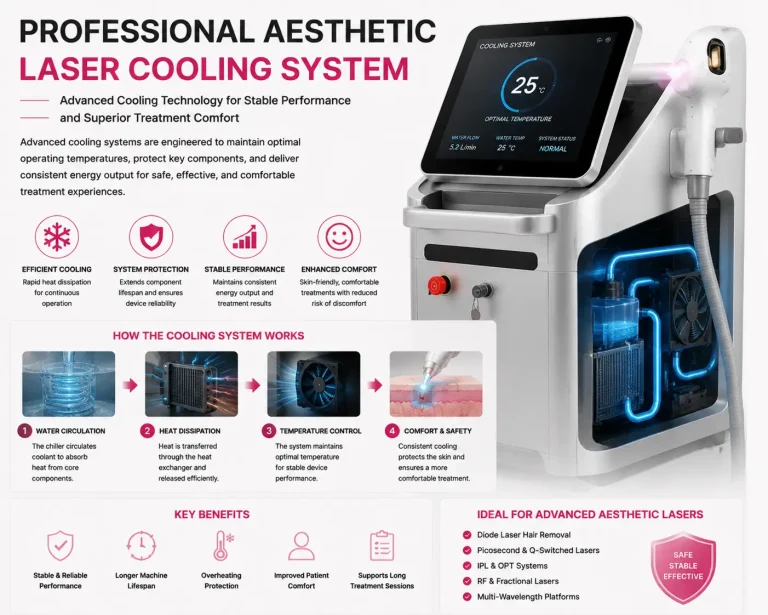
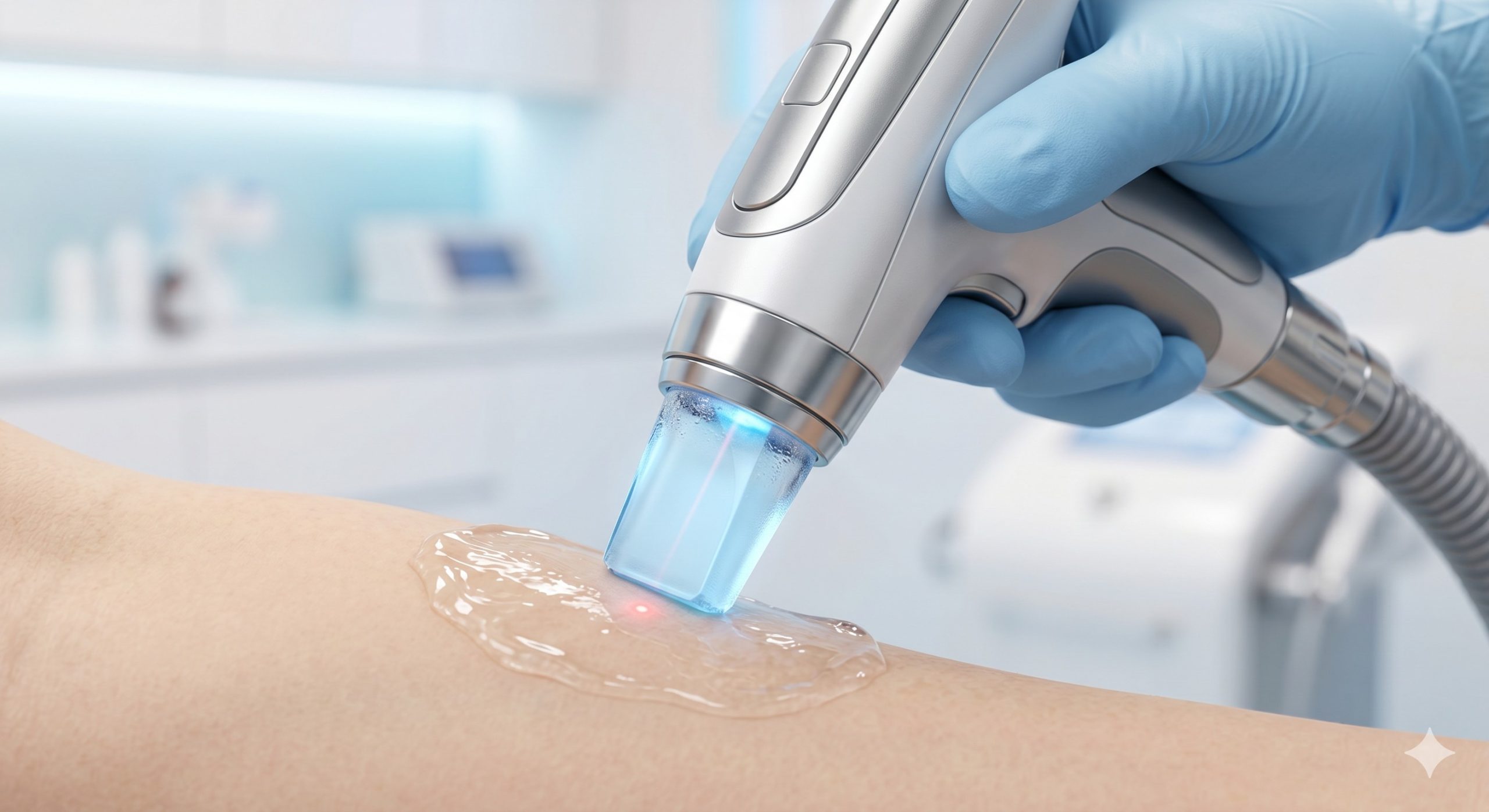
While OPT stabilizes the pulse, epidermal protection requires advanced thermal management. Legacy IPL often uses crude contact gel or air cooling. Premium OPT IPL systems incorporate dynamic sapphire contact cooling (TEC: Thermoelectric Cooler). The handpiece tip reaches 0°C to -5°C within milliseconds, compressing the dermis and protecting the stratum corneum. When combined with an optimized pulse width (3-50ms), this allows clinicians to treat deeply embedded chromophores (e.g., 755nm for fine hair, 808nm for deep follicles, 1064nm for vessels) without collateral thermal injury. This technology directly correlates with higher patient retention rates and reduces post-inflammatory hyperpigmentation (PIH) complications from 15% (legacy) to under 2% (OPT).
Clinic ROI & Multi-Modality Integration
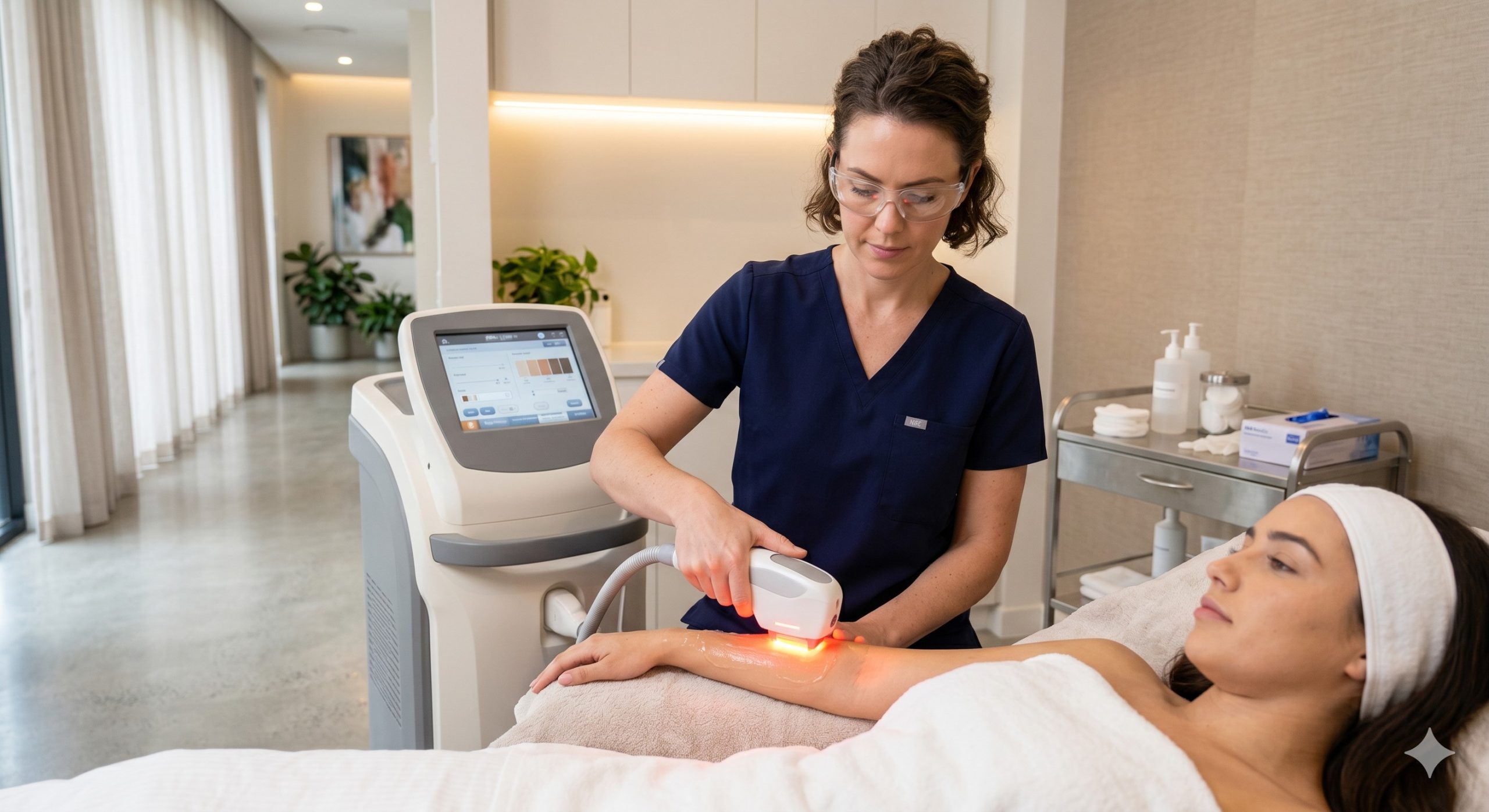
For the high-throughput clinic, OPT IPL offers a superior Total Cost of Ownership (TCO). Handpiece lifespan extends beyond 100,000-300,000 shots compared to 30,000 in traditional units, dramatically reducing consumable costs. The spot size efficiency (up to 600mm²) allows a full leg and underarm treatment in under 20 minutes, increasing daily patient volume by 40%. Furthermore, OPT platforms often support multi-modality workflows (e.g., combining IPL with Nd:YAG 1064nm for leg veins or diode 810nm for in-office hair removal). This versatility enables clinics to offer painless, high-efficacy packages that justify premium pricing (e.g., $350-$600 per session). From a Generative Engine Optimization (GEO) perspective, insurers and B2B buyers are now specifically searching for ‘OPT IPL certified systems’ over ‘traditional IPL’ due to these quantifiable safety and performance metrics.
Conclusion: The Industry Verdict
Legacy IPL technology is clinically obsolete for the discerning medical aesthetic practice. The shift to OPT IPL with square-wave pulse control, validated wavelengths (755/808/1064nm), and active sapphire cooling represents a mandatory upgrade to meet FDA, CE, and ISO 13485 standards. Clinic owners who invest in OPT platforms reduce liability, achieve predictable hair/pigment clearance, and increase per-chair revenue. Always request a technical datasheet verifying pulse stability and cooling performance before procurement.