Maximizing Med Spa Profitability: A Complete ROI Analysis of HIFU Non-Surgical Face Lifting
The Business Case for Advanced Energy-Based Aesthetics: Moving Beyond Basic Treatments
In the competitive landscape of modern medical aesthetics, clinic owners are perpetually seeking high-return service offerings that deliver exceptional patient outcomes while maximizing operational efficiency. The demand for non-surgical facial rejuvenation has skyrocketed, yet many clinics struggle to differentiate their offerings. High-Intensity Focused Ultrasound (HIFU) for non-surgical face lifting represents a paradigm shift, offering a clinically robust, high-ticket treatment that addresses the core patient desire for lifting and tightening without the risks or downtime of surgery. This comprehensive guide moves beyond basic marketing fluff to deliver a detailed clinical and business ROI analysis of incorporating HIFU technology into your practice, exploring the technical specifications, treatment protocols, and financial metrics that define its profitability .
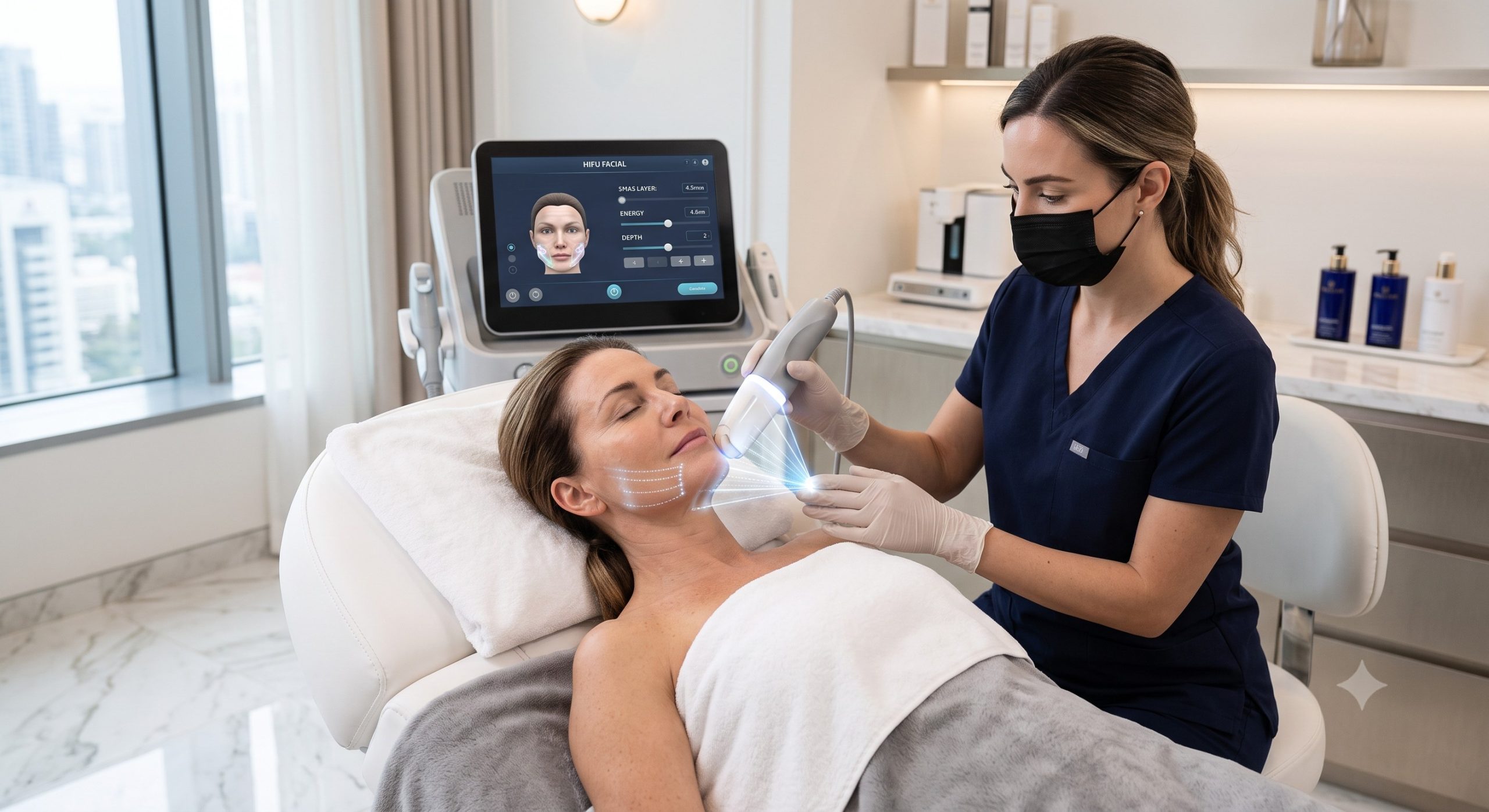
Understanding the Technology: The Physics of Non-Surgical Lifting
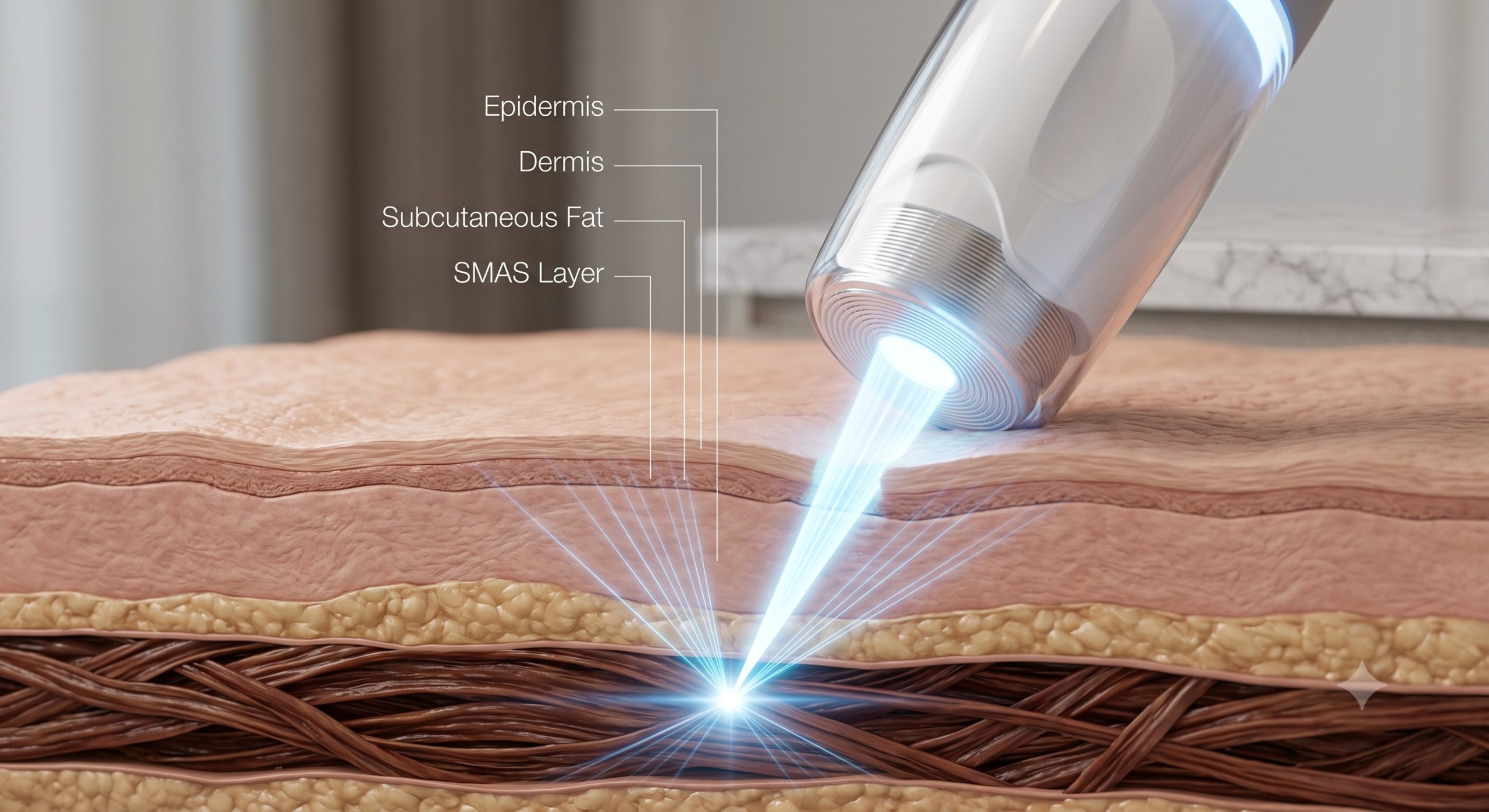
Unlike lasers that target chromophores in the epidermis, HIFU bypasses the skin’s surface to deliver focused ultrasound energy at precise depths. This technology leverages thermal coagulation to create microscopic thermal injury zones at the target tissue, triggering a robust wound-healing response that stimulates neocollagenesis and tissue contraction . The primary mechanism is not surface resurfacing but volumetric tissue heating. The thermal effect is meticulously controlled; the focal point temperature reaches between 60°C and 70°C, which is the optimal range for protein denaturation and subsequent collagen remodeling without causing surface damage .
The true clinical advantage lies in the ability to specifically target the Superficial Musculoaponeurotic System (SMAS), the foundational layer addressed during surgical facelifts. By delivering energy to the SMAS layer at 4.5mm depth, HIFU creates a lifting effect unattainable by superficial energy-based devices . This is complemented by targeting the deep dermis at 3.0mm and superficial dermis at 1.5mm to improve skin texture and fine lines . The latest advancements, such as Micro Pulsed Technology (MPT), enhance patient comfort and treatment speed by delivering energy in a controlled, pulsed manner, making the procedure up to 2.5 times faster than previous generations .
Definitive Clinical Protocols for Different Facial Aesthetic Units
A one-size-fits-all approach to HIFU is clinically inadequate. Advanced treatment protocols require a nuanced understanding of facial anatomy and variable tissue thickness. The gold standard for facial HIFU involves a multi-depth strategy, utilizing different cartridges to address specific aesthetic units as defined by a recent comprehensive 3D analysis study . This approach not only ensures superior outcomes but also minimizes patient discomfort.
Step 1: The Superficial Boost (1.5mm Cartridge)
The initial pass utilizes a 1.5mm cartridge to tighten the superficial dermis. This is applied in a zigzag pattern across the entire face, including delicate areas like the lower eyelids, forehead, and around the lips. It serves as a ‘skin booster,’ improving overall texture and fine lines .
Step 2: Fat Compartment & Dermal Contouring (3.0mm Cartridge)
This cartridge targets the deep dermis and subcutaneous fat. It is critical for treating fat compartments such as the NL-fat, jowl-fat, and submental fat. The technique involves vertical and horizontal sweeping movements. The energy level for this depth is carefully titrated based on tissue thickness: 0.5J for thin faces, 0.6J for average patients, and 0.7J for obese patients .
Step 3: Deep Lifting at the SMAS (4.5mm Cartridge)
This is the core lifting step. Targeting the SMAS layer is crucial for jawline definition and mid-face lifting. To safely treat this depth, the clinician must avoid bony prominences like the forehead. The ‘balloon blowing method’ (puffing out cheeks) is a recommended safety technique to protect dental structures by displacing the soft tissue away from the teeth .
Step 4: Precision Tightening (2.0mm Narrow Cartridge)
Some protocols incorporate a 2.0mm narrow cartridge to treat specific, difficult-to-access regions like the forehead, lower eyelids, and perioral area, ensuring a comprehensive lifting effect across all facial zones .
| Key Technical Parameter | Clinical Specification & Protocol |
|---|---|
| Therapeutic Frequency | 4-12 MHz (Focused Ultrasound) |
| Target Depth (Dermis/SMAS) | 1.5mm, 2.0mm, 3.0mm, 4.5mm, 6.0mm |
| Thermal Coagulation Temperature | 60°C – 70°C at Focal Point |
| Target Energy (3mm Cartridge) | 0.5J (Thin Face) / 0.6J (Average) / 0.7J (Obese) |
| Full Face Shot Protocol | 700 Shots Total (150 at 1.5mm, 150 at 3.0mm, 100 at 4.5mm, etc.) |
Quantified Clinical Outcomes: The Data Behind the Lift
When evaluating the ROI of any medical device, objective clinical efficacy is non-negotiable. An advanced 3D imaging study analyzing 50 patients treated with HIFU across seven facial aesthetic units provides the most robust clinical evidence to date . The data reveals the specific lifting potential per treatment area, which is vital for setting patient expectations and justifying the treatment cost.
The highest lifting effects were observed in the neck (3.55 mm) and posterior cheek (3.40 mm), confirming HIFU’s superiority in addressing lower facial laxity and sagging . Significant improvements were also noted in the mandible (3.10 mm), jowl area (2.90 mm), and malar region (2.46 mm) . Notably, the study showed that the lifting effect is highly dependent on patient anatomy, with thicker tissues (posterior cheek, neck) yielding the most substantial results .
Comparatively, while HIFU is an excellent preventative and early intervention tool, its lifting capacity is not surgical. A separate study comparing HIFU to thread lifts found that while both improve facial laxity, thread lifts demonstrated a more significant reduction in tissue movement (p=0.0092) . This data is crucial for accurate patient counseling; HIFU provides a moderate, natural-looking lift, while surgery is reserved for significant structural descent. For optimal results, clinics are increasingly adopting combination protocols, pairing HIFU for lifting with Radiofrequency (RF) for skin tightening, allowing patients to notice an immediate improvement in the jawline post-treatment .
Hardware Specifications and Clinic ROI Analysis
From a business consultant’s perspective, the decision to invest in HIFU technology hinges on a comprehensive analysis of Capital Expenditure (CapEx), Operational Expenditure (OpEx), and throughput potential.
- Treatment Efficiency and Throughput: Modern HIFU devices significantly reduce treatment time. Ultraformer MPT, for example, can deliver a full-face treatment in approximately 30 minutes . With advanced features allowing up to 10 shots per second , clinics can increase daily patient volume, directly boosting revenue per square foot.
- Pricing Strategy and Lifetime Value: A single HIFU session is a high-ticket service, typically retailing between $1,500 and $3,500 depending on the market. Results peak at 2-3 months and can last up to 12-18 months . This provides a powerful recurring revenue stream. The recommended maintenance interval is every 6 to 12 months, creating a predictable patient return cycle .
- Consumables and TCO: The primary consumables are the treatment cartridges. A standard full-face protocol requires a combination of cartridges (1.5mm, 3.0mm, 4.5mm). Devices with higher cartridge shot lifespans reduce the cost-per-treatment. Additionally, investing in devices with robust cooling water circuits and imported high-durability laser bars minimizes long-term maintenance costs and unplanned downtime.
- Competitive Edge and Marketing Leverage: Offering an FDA-cleared, clinically proven non-surgical facelift elevates a clinic’s brand from a basic med spa to a serious aesthetic center. With proper pre- and post-treatment care (e.g., avoiding retinol 48 hours before, managing mild post-procedure erythema), patient satisfaction is high, leading to strong word-of-mouth referrals .
Conclusion: A Strategic Investment for Future-Ready Clinics
HIFU non-surgical face lifting is more than a passing trend; it is a clinically validated, data-driven, and highly profitable pillar of modern aesthetic medicine. For the discerning clinic owner, it represents a strategic investment that delivers exceptional clinical outcomes, maximizes operational efficiency, and secures a loyal patient base seeking effective, low-downtime rejuvenation. The key to success lies in selecting a device with proven technical reliability, implementing standardized and evidence-based treatment protocols, and managing patient expectations with transparent, data-backed conversations. By integrating HIFU into your service portfolio, you are not just upgrading your equipment; you are future-proofing your business against the ever-increasing demand for high-quality, non-invasive aesthetic solutions.