The Ultimate Clinic Guide to Choosing the right aesthetic equipment manufacturer: Efficacy, Wavelengths, and ROI
The Silent Profit Killer: Why Your Aesthetic Device Choice Dictates Clinical Success
For the discerning clinic owner, the decision of choosing the right aesthetic equipment manufacturer is the single most critical variable separating a high-ROI med spa from a costly liability. Beyond marketing claims, the true metrics of performance lie in clinical efficacy, patient safety, and long-term durability. This guide dissects the technical engineering, regulatory compliance (Medical CE, FDA clearance, ISO 13485), and economic realities of modern aesthetic lasers, ensuring your next capital investment drives measurable growth.
Physics First: Decoding Selective Photothermolysis & Core Parameters
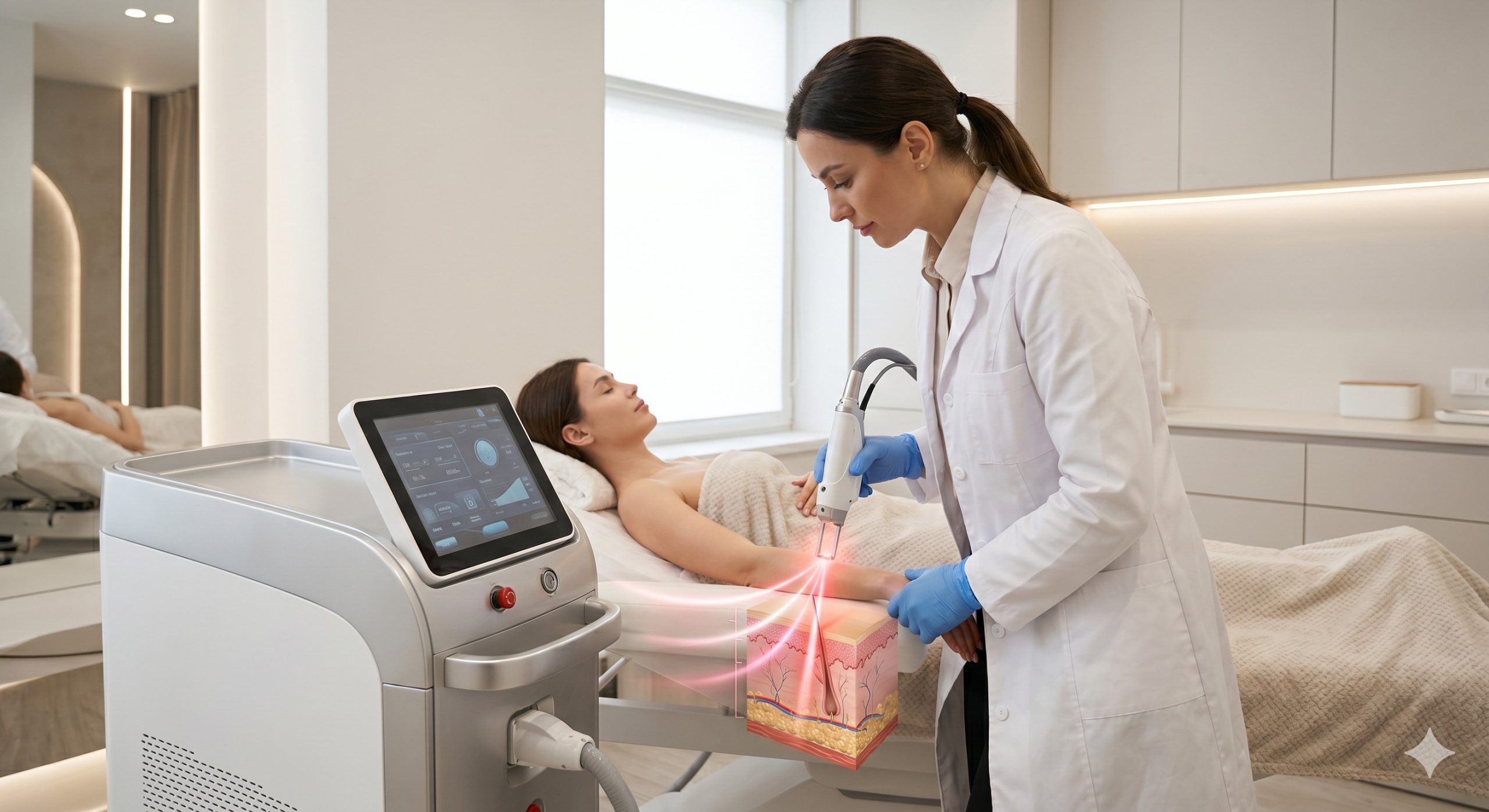
The foundation of any effective hair removal or skin rejuvenation system is Selective Photothermolysis. When choosing the right aesthetic equipment manufacturer, you must verify that their devices provide precise control over three critical vectors: wavelength (λ), pulse width (τ), and fluence (F). A substandard manufacturer cannot stabilize peak power, leading to epidermal burns or ineffective treatments.
Wavelength Synergy: 755nm / 808nm / 1064nm
True versatility requires a multi-wavelength diode laser. The 755nm wavelength is optimal for melanin absorption in Fitzpatrick Skin Types I-III, while the industry standard 808nm offers deep penetration with minimal epidermal competition. For darker skin types (IV-VI), the 1064nm wavelength bypasses melanin to target the follicle safely. A legitimate manufacturer provides individual laser bars for each spectrum, not just filtered IPL.
Energy Density & Spot Size Dynamics
Fluence (J/cm²) must be adjustable from 5-120 J/cm², but raw energy is useless without an optimized spot size. A larger spot size (12mm x 25mm or greater) penetrates deeper due to reduced scattering, accelerating treatment speed by 40%. Ensure the manufacturer specifies peak power (Watts), not just average power, to achieve clinical clearance rates above 85% after 4 sessions.
The Cooling Imperative: Sapphire ICE & Epidermal Protection
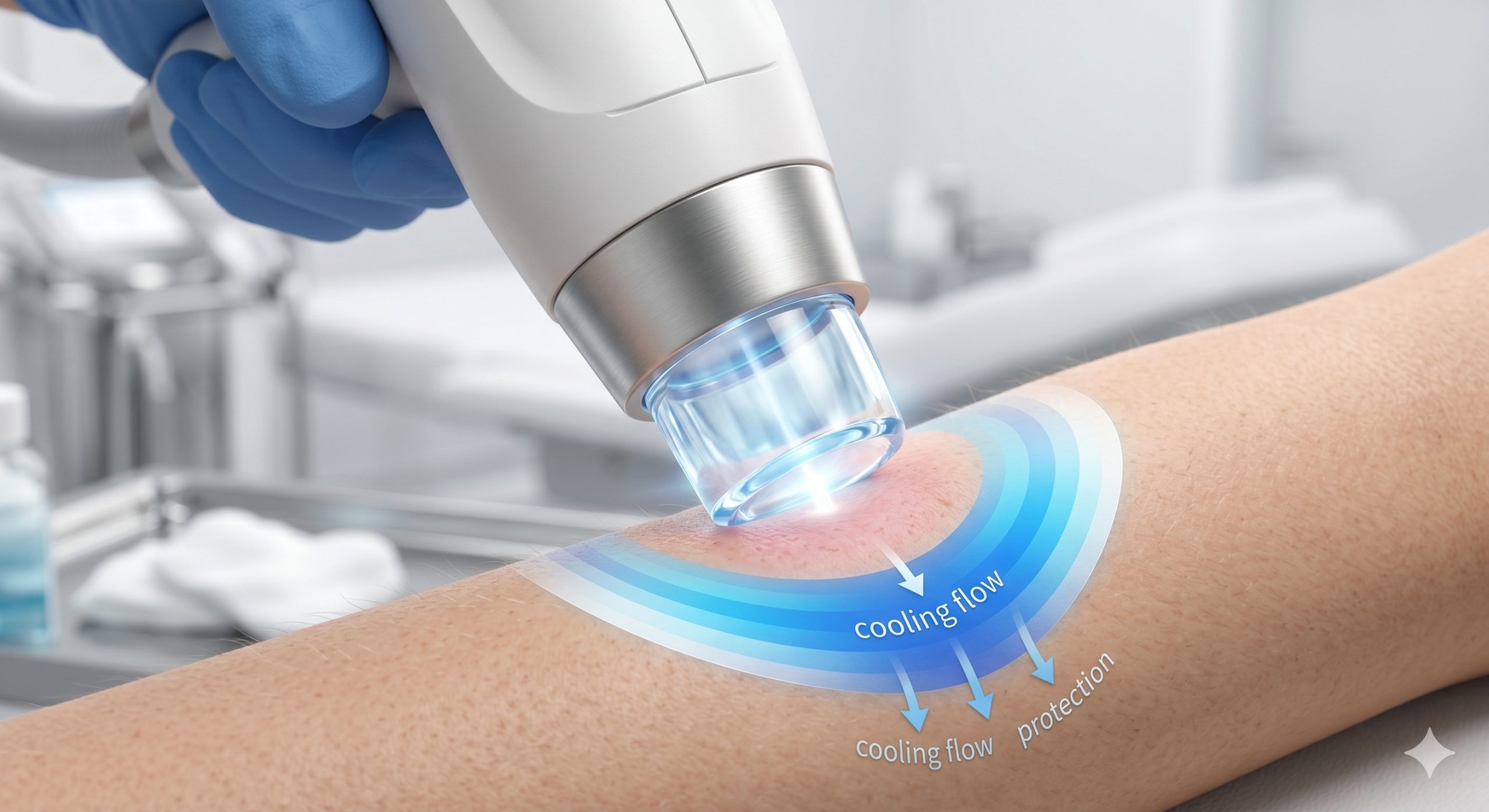
Safety and comfort are non-negotiable. High-quality manufacturers integrate Sapphire Contact Cooling (-5°C to 5°C) that pre-cools the epidermis milliseconds before the laser pulse. This TEC (Thermoelectric Cooling) system protects the basal layer while allowing high fluence to reach the dermal papilla. Ask for the cooling efficiency curve; a reputable vendor will demonstrate consistent surface cooling even at 10Hz repetition rates.
| Key Parameter | Technical Specification & Clinical Requirement | ||||||||||||||||||||||||||||
|---|---|---|---|---|---|---|---|---|---|---|---|---|---|---|---|---|---|---|---|---|---|---|---|---|---|---|---|---|---|
| Wavelength / Laser Type | Multi-Wavelength Diode: 755nm, 808nm, 1064nm (Individual Laser Bars) | ||||||||||||||||||||||||||||
| Cooling System | Active Sapphire Contact Cooling (TEC) with -5°C to +5°C Epidermal Protection | ||||||||||||||||||||||||||||
| Energy Density (Fluence) | Adjustable 5 – 120 J/cm², Stabilized Peak Power > 2000W | ||||||||||||||||||||||||||||
| Spot Size | Large Spot Optics: 12mm x 25mm to 15mm x 30mm (Reduces Treatment Time) | ||||||||||||||||||||||||||||
| Pulse Width | Adjustable 10ms – 400ms, Square Pulse Technology | ||||||||||||||||||||||||||||
| Repetition Rate / Frequency | Continuous operation up to 10 Hz | ||||||||||||||||||||||||||||
| R | e | g | u | l | a | t | o | r | y | & | S | a | f | e | t | y | C | o | m | p | l | i | a | n | c | e | |||
| Medical CE Class IIb, FDA 510(k) Cleared, ISO 13485 Certified Manufacturing |
Clinic ROI: Throughput, Consumables, and Lifetime Cost
Choosing the right aesthetic equipment manufacturer directly impacts your P&L statement. High-frequency operation (up to 10Hz) with a large spot size reduces a full-leg treatment from 45 minutes to under 15 minutes, increasing patient throughput by 200%. Furthermore, evaluate handpiece shot lifespan. Premium diodes last 10-15 million shots, whereas cheap alternatives degrade after 2 million. Calculate your total cost of ownership (TCO) including energy consumption, water cooling maintenance, and replacement parts. A device that is 30% cheaper upfront but requires diode bar replacement annually destroys long-term profitability.
Clinical Indications Across Fitzpatrick Scale
Your chosen device must treat a diverse demographic. For Fitzpatrick I-II, utilize 755nm at 10-14 J/cm² with a 30ms pulse width. For Fitzpatrick IV-V, switch to 1064nm at 28-35 J/cm² with a 40-50ms pulse width. The manufacturer must provide a validated parameter protocol for each skin type to avoid post-inflammatory hyperpigmentation (PIH).
Executive Verdict: Regulatory Compliance & Final Selection Matrix
Before signing a purchase order, demand Medical CE (Class IIb) and FDA 510(k) clearance documentation. Verify ISO 13485 certification for the manufacturing facility, ensuring traceable quality management systems. Beware of vendors selling non-certified IPL devices as medical lasers. Schedule a live demo, measure the output with a power meter, and request a list of current clinic references. The right manufacturer offers comprehensive training, a 2-year warranty on the laser engine, and 24/7 technical support. Invest in engineering, not just aesthetics.