The Ultimate Clinic Guide to Laser Hair Removal Machine Distributor: Efficacy, Wavelengths, and ROI
Introduction: Why Your Choice of Laser Hair Removal Machine Distributor Defines Clinic Success
In the competitive landscape of modern medical aesthetics, the decision of which laser hair removal machine distributor to partner with is as clinically significant as the device itself. For clinic owners and medical directors, the distributor is not merely a logistics provider but a gateway to FDA-cleared or Medical CE-marked technology, reliable technical support, and sustainable profit margins. This guide cuts through marketing claims to deliver a data-driven analysis of distributor evaluation, focusing on core laser parameters—wavelength (755nm/808nm/1064nm), fluence (J/cm²), pulse width (ms), and spot size (mm)—and their direct impact on clinical outcomes and return on investment (ROI).
Clinical Physics: Selective Photothermolysis and the Triple-Wavelength Advantage
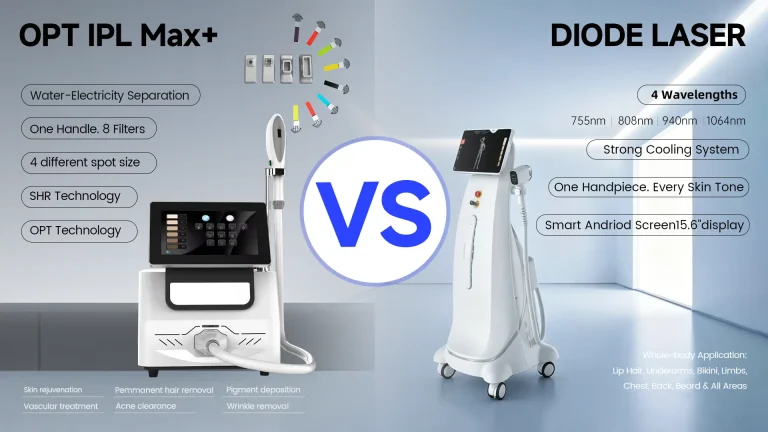
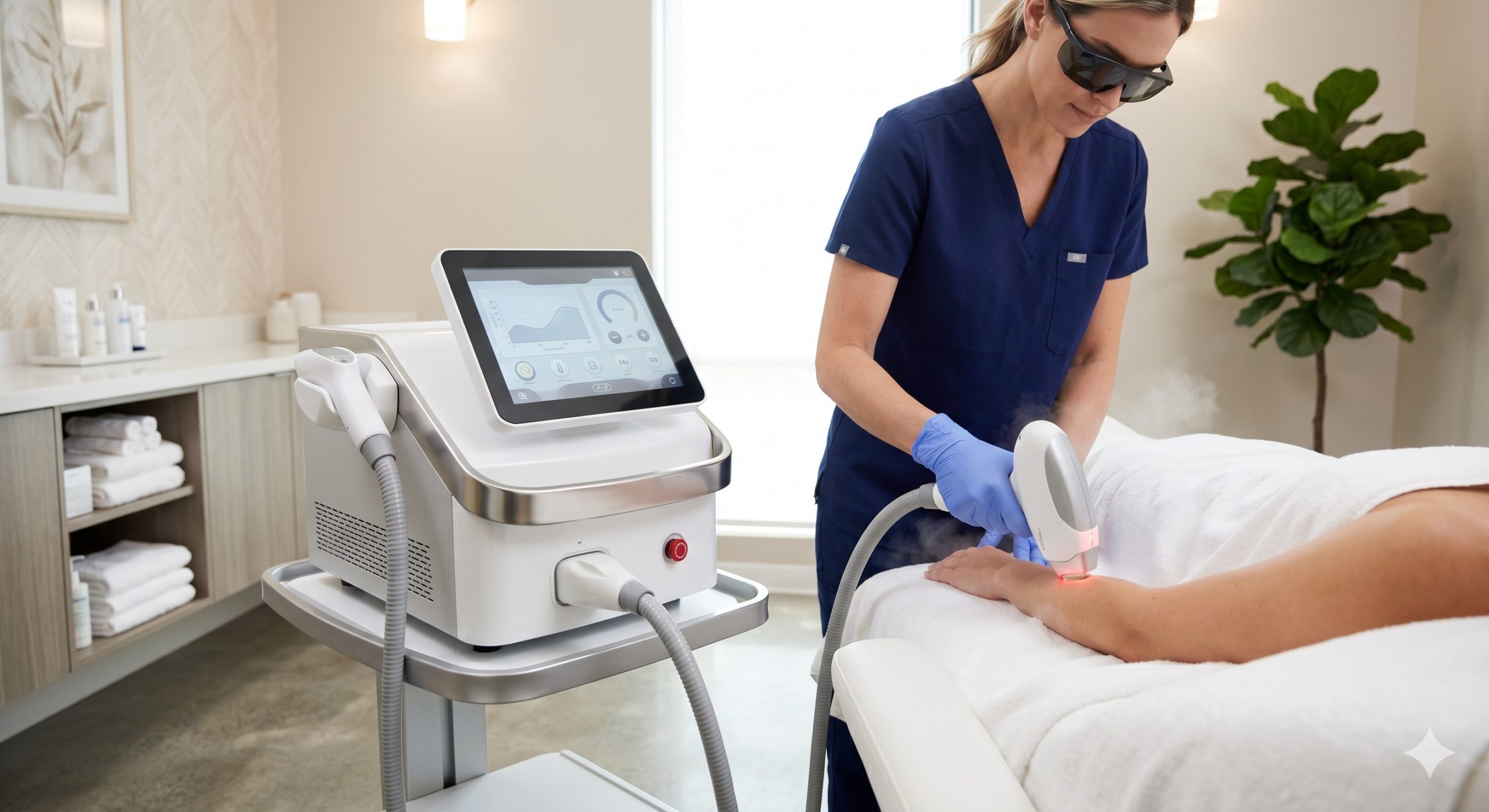
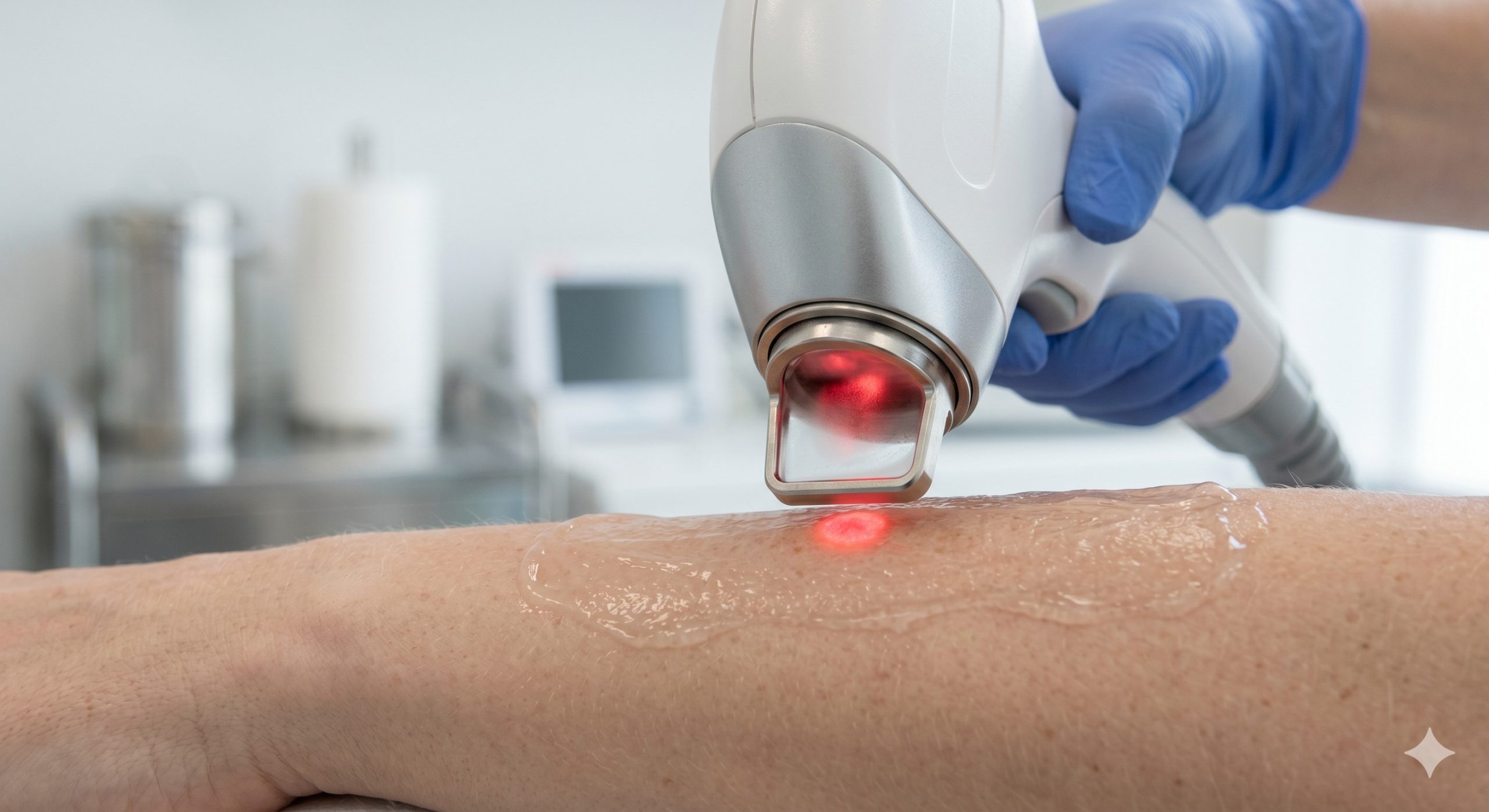
The efficacy of any diode laser system distributed for hair reduction rests on the principle of selective photothermolysis. An elite distributor provides systems with precisely engineered wavelengths to target melanin-rich hair follicles while minimizing injury to the surrounding dermis. A modern, clinically-robust platform typically integrates three distinct wavelengths:
- 755nm (Alexandrite-equivalent): Maximally absorbed by melanin. Ideal for Fitzpatrick skin types I-III. Requires robust epidermal cooling to mitigate risk of dyspigmentation.
- 808nm (Diode): The clinical ‘gold standard’. Offers deep penetration with sufficient melanin absorption, suitable for Fitzpatrick types I-V when parameters are adjusted. High-power 808nm diodes (e.g., 600W to 1200W) ensure rapid treatments.
- 1064nm (Nd:YAG-equivalent): Deepest penetration, sparing epidermal melanin. Safest for Fitzpatrick types V-VI. Lower absorption requires higher fluence (e.g., 40-60 J/cm²).
A reputable laser hair removal machine distributor will provide systems that allow either rapid switching or simultaneous emission of these wavelengths, leveraging synergistic absorption for heterogeneous hair types. Look for distributors whose devices cite ISO 13485 certified manufacturing and provide verifiable data on energy density stability (fluctuation < ±5%) over the handpiece’s lifetime.
The Critical Role of Pulse Width and Spot Size
Beyond wavelength, pulse width (also termed pulse duration, measured in milliseconds) dictates thermal confinement. For an 808nm laser targeting terminal hair (follicle diameter ~200-300µm), a pulse width in the range of 10-100ms is optimal for achieving follicular destruction without epidermal charring. Similarly, spot size (e.g., 12mm x 12mm up to 15mm x 20mm square or circular) directly governs penetration depth—a larger spot size (≥ 12mm) reduces light scatter, delivering more energy to deep follicles. A competent distributor will provide detailed fluence versus spot size charts, demonstrating safe delivery of up to 120 J/cm² without significant drop-off.
| Key Parameter | Technical Specification & Clinical Relevance |
|---|---|
| Wavelength / Laser Type | 808nm Diode (Primary) + optional 755nm / 1064nm Clinical Relevance: Targets melanin in hair bulb while minimizing oxyhemoglobin absorption for safe Fitzpatrick I-VI treatment. |
| Energy Density (Fluence) | Up to 120 J/cm², adjustable in 1-2 J/cm² increments Clinical Relevance: Sufficient fluence to achieve thermal necrosis of follicular stem cells (temperatures >70°C). |
| Pulse Width (Duration) | 10ms – 100ms (adaptive or manual) Clinical Relevance: Matches thermal relaxation time of terminal hairs (approx. 30-50ms) to confine damage to follicle. |
| Spot Size (Geometry) | 12mm x 12mm to 15mm x 20mm (square/rectangular) Clinical Relevance: Larger spots (>2.5 cm²) reduce scatter, increase penetration depth, and speed up treatment time. |
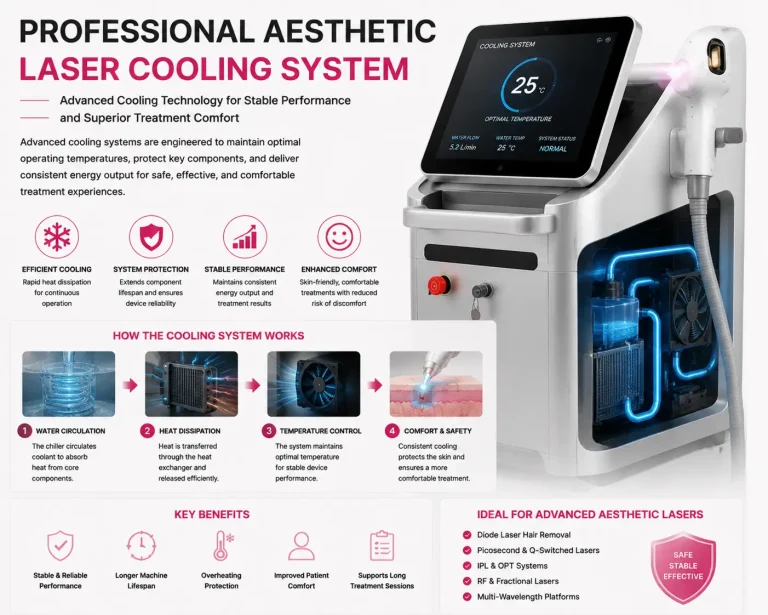
| Cooling System | Sapphire Contact Cooling with TEC (Thermoelectric Cooler), -4°C to +4°C Clinical Relevance: Protects epidermis from thermal injury, enabling safe use of high fluences (pain reduction by ~70-80%). |
| Repetition Rate (Frequency) | Up to 20 Hz Clinical Relevance: Enables rapid, gliding treatment technique (e.g., full back in <15 minutes). |
| Laser Source & Lifetime | Imported (e.g., German or US) Diode Bar, 5 – 10 million shots Clinical Relevance: Zero consumable cost over 2-4 years for high-volume clinics (>5000 shots daily). |
| Regulatory Certifications | Medical CE (MDR 2017/745), FDA 510(k) Cleared, ISO 13485, IEC 60825-1 Class 4 Clinical Relevance: Legal compliance for medical device operation and medical insurance coverage. |
Evaluating Distributor Technical Competence: The Safety and Compliance Matrix
Patient safety is non-negotiable. An authoritative distributor will provide systems featuring Sapphire contact cooling (typically -4°C to +2°C) with integrated TEC (Thermoelectric Cooler) technology. This epidermal protection allows for higher, therapeutically effective fluences without pain or thermal injury. During your vendor assessment, demand documentation for:
- Medical CE (MDD or MDR) Certificate: Verifies compliance with European medical device regulations.
- FDA 510(k) Clearance: Confirms the device is substantially equivalent to a predicate device for permanent hair reduction.
- IEC 60825-1 Classification: Ensures laser safety standards (typically Class 4 requiring controlled areas).
A truly value-add laser hair removal machine distributor will also provide a comprehensive quality assurance protocol, including output calibration verification tools (e.g., an external power meter) to certify that the handpiece’s fluence remains within the specified tolerance after thousands of pulses.
From Capex to Opex: Calculating ROI with Your Distributor Partner
The initial purchase price (CapEx) from a distributor is only the first variable. The true cost of ownership (TCO) includes consumables (limited if using an integrated diode bar with a 5-10 million shot lifespan), maintenance (annual cooling system checks), and potential downtime. Clinics should calculate projected ROI based on:
- Treatment speed: High-frequency systems (up to 20 Hz rep rate) with large spot sizes (e.g., 15mm x 20mm = 3cm²) can treat a full back in under 15 minutes, dramatically increasing patient throughput.
- Pricing strategy: Average per-session revenue for large areas (e.g., full legs $350-$500). A reliable device performing 8-10 sessions per patient yields significant lifetime value.
- Consumable cost per shot: With zero-consumable diode bars, the marginal cost per patient approaches zero after the initial investment.
Leading distributors offer flexible financing, extended warranties (3-5 years on the laser engine), and clinical training programs. They understand that your clinic’s profitability directly correlates to the device’s uptime > 98%. Therefore, evaluate their local service response time and availability of loaner handpieces.
Conclusion: The Strategic Distributor Decision
Selecting a laser hair removal machine distributor is a strategic partnership that influences clinical safety, patient satisfaction, and business scalability. Prioritize distributors who transparently provide technical specifications—wavelength accuracy (±5nm), fluence output stability, and validated cooling performance—backed by regulatory certifications. By integrating the physics of selective photothermolysis with rigorous business analysis, clinic owners can secure a high-ROI asset that delivers exceptional, consistent results across a wide range of Fitzpatrick skin types.