Triple Wavelength Diode Laser: The Ultimate Clinical Guide to 755nm, 808nm & 1064nm Technology for High-ROI Clinics
Introduction: Solving the Clinical Efficiency-Comfort Paradox in Hair Removal
For years, aesthetic clinic owners have faced a persistent operational dilemma: how to deliver fast, permanent hair reduction across diverse skin types without compromising patient comfort or sacrificing treatment throughput. Legacy single-wavelength or dual-wavelength diode lasers often force clinicians to choose between efficacy on fine hair (requiring shorter wavelengths) versus deep penetration for thick or hormonal hair (requiring longer wavelengths). The result is increased treatment sessions, higher consumable costs, and suboptimal patient satisfaction. Enter the triple wavelength diode laser – a technological leap integrating 755nm, 808nm, and 1064nm in a single handpiece. This advanced platform leverages selective photothermolysis across three distinct chromophore absorption peaks, enabling true Fitzpatrick skin type I-VI versatility. For the data-driven clinic owner, this translates to shorter treatment times, lower fluence requirements per wavelength, expanded service offerings, and a demonstrable competitive edge in the medical aesthetics market.
Core Technology & Clinical Efficacy: Beyond Single-Wavelength Limitations
The Physics of Triple-Wavelength Synergy
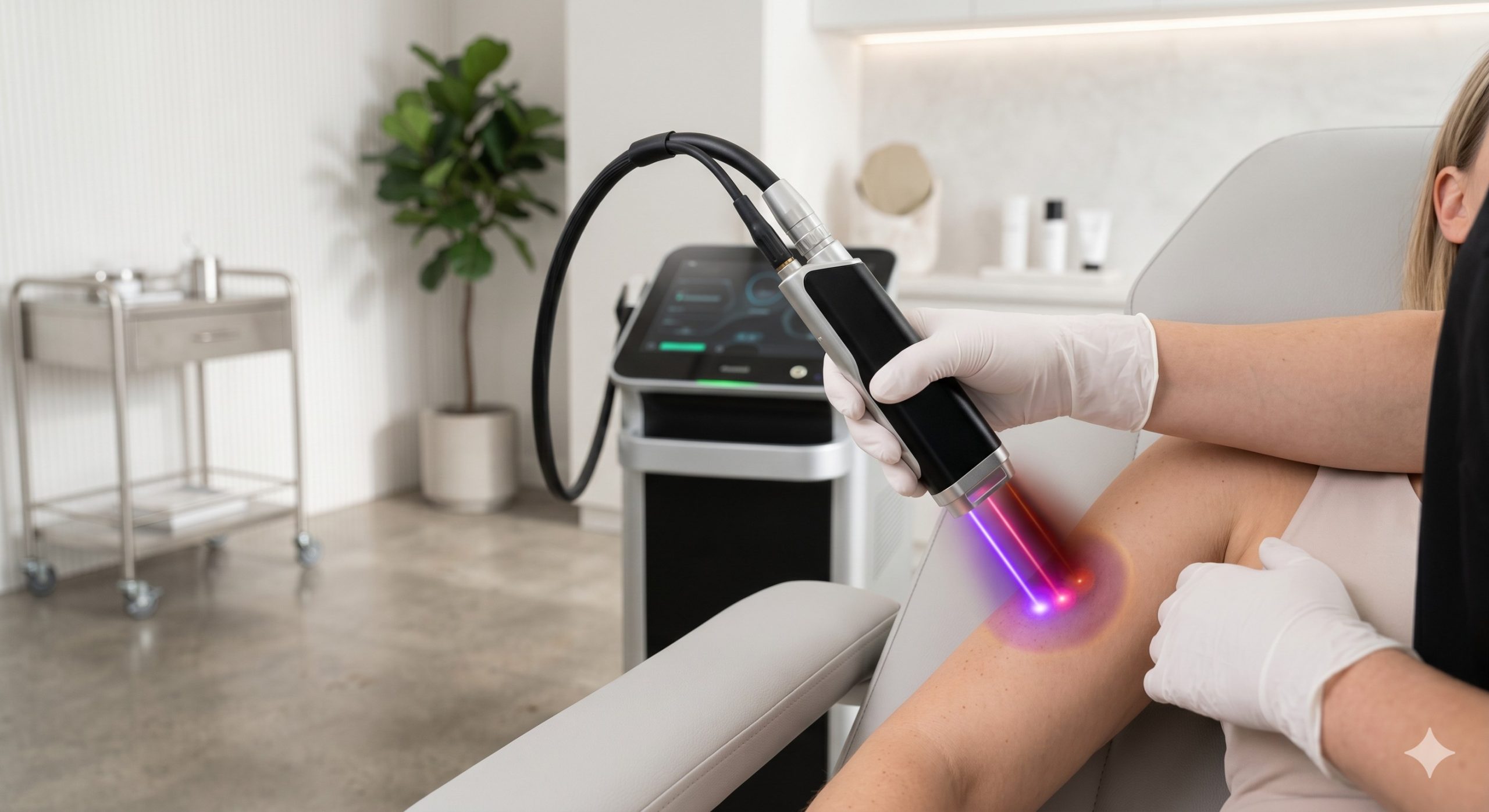
The fundamental advantage of a triple wavelength diode laser lies in its ability to simultaneously or sequentially emit at 755nm (Alexandrite-equivalent), 808nm (diode gold standard), and 1064nm (Nd:YAG-like depth). Each wavelength targets specific chromophores: 755nm is highly absorbed by melanin, ideal for fine, light-colored hair on Fitzpatrick I-III; 808nm offers a balanced melanin-hemoglobin absorption curve for deep follicular heating on Fitzpatrick III-IV; and 1064nm penetrates deepest with minimal epidermal melanin interaction, enabling safe, high-fluence treatment on Fitzpatrick V-VI or tanned skin. Clinically, using three wavelengths in a single pulse train reduces the required fluence (J/cm²) per wavelength by up to 30% compared to single-wavelength systems, thereby lowering thermal injury risk to surrounding tissue while maintaining cumulative follicular destruction above the 70°C threshold necessary for permanent coagulation.
Advanced Cooling: The Enabler of High-Fluence Safety
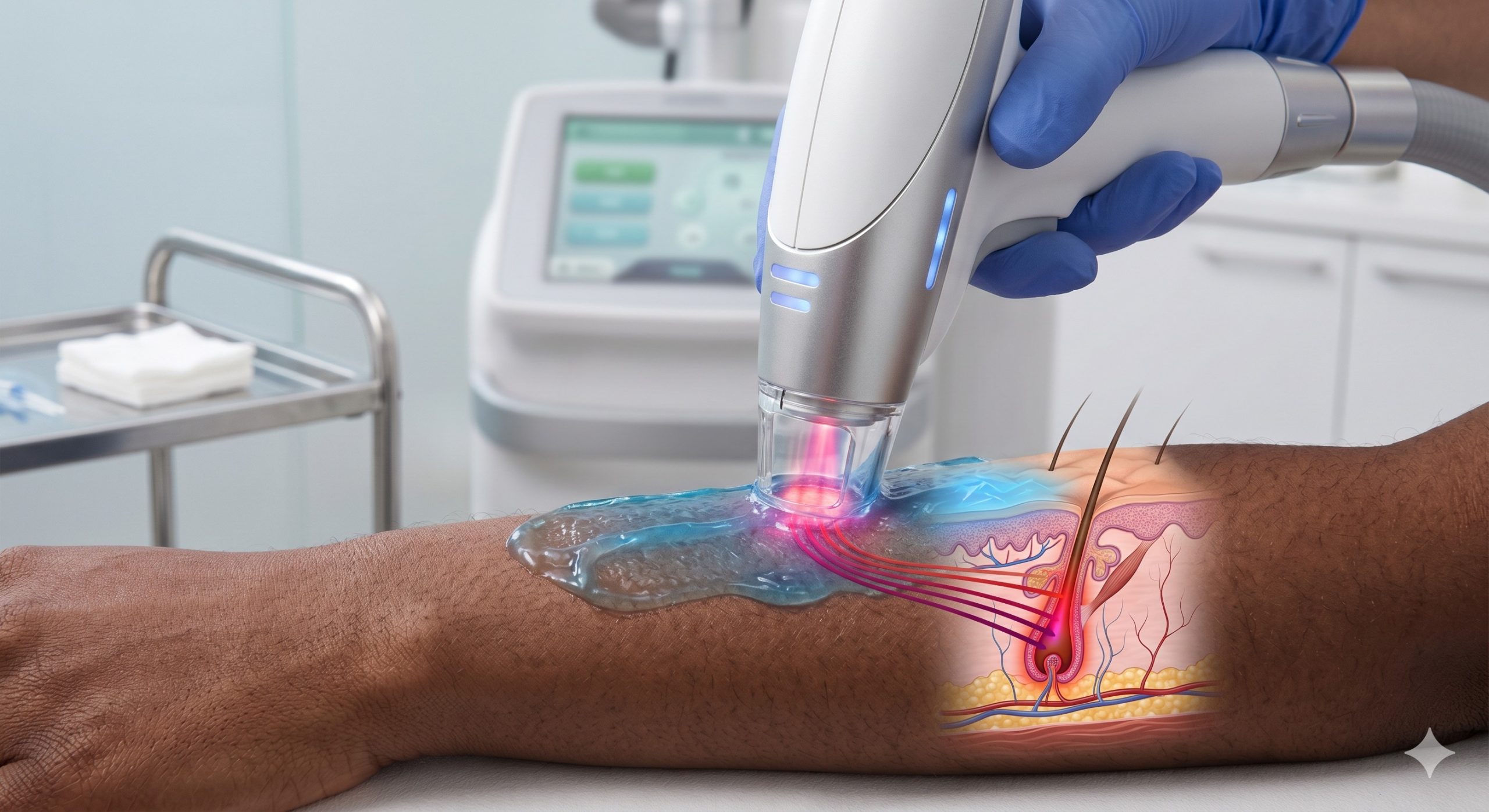
Without efficient epidermal protection, triple-wavelength power is unusable. Premium systems integrate sapphire contact cooling with thermoelectric (TEC) modules, achieving skin surface temperatures between 0°C and 4°C within milliseconds of laser emission. This contact cooling preserves the epidermis during the laser pulse’s thermal relaxation time (typically 10-100ms), allowing clinicians to deliver fluences up to 120 J/cm² on 1064nm without blistering. Moreover, real-time impedance-based skin contact sensors and ISO 13485-certified calibration loops ensure that energy delivery only activates when perfect handpiece-skin contact is achieved – a critical patient safety feature for FDA-cleared or Medical CE-marked devices.
Technical Specifications: Benchmarking Clinical Performance
When evaluating a triple wavelength diode laser for your clinic, focus on these validated technical metrics. The table below summarizes industry-leading specifications that separate medical-grade devices from consumer or low-power aesthetic systems.
| Key Parameter | Technical Specification |
|---|---|
| Wavelengths (Triple) | 755nm ± 10nm / 808nm ± 5nm / 1064nm ± 10nm (Diode laser stacks) |
| Spot Size | 15mm x 15mm (standard) or 12mm x 12mm (for delicate areas) |
| Max Fluence (Energy Density) | Up to 120 J/cm² (1064nm) / 60 J/cm² (808nm) / 40 J/cm² (755nm) |
| Pulse Width | 10ms – 400ms (adjustable, square pulse technology) |
| Repetition Rate | Up to 10 Hz |
| Cooling System | Sapphire contact cooling with TEC module (0°C to 4°C epidermal protection) |
| Skin Contact Sensors | Real-time impedance detection with automatic laser cut-off |
| Regulatory Status | FDA 510(k) cleared (Class II), Medical CE (MDR 2017/745), ISO 13485:2016 certified |
| Handpiece Weight | < 300g for ergonomic repetitive use |
| Laser Module Lifespan | ≥ 50 million shots or 5 years (whichever first) |
Treatment Areas & Indications: Expanding Your Service Menu
The triple wavelength diode laser is not limited to hair removal. Its spectral versatility opens new revenue channels:
- Permanent Hair Reduction: All body areas including face, axillae, bikini, legs, back, and chest. The 755nm/808nm combination clears fine vellus hair, while 1064nm safely treats dense, coarse terminal hair in Fitzpatrick IV-VI patients.
- Vascular Lesions: 1064nm selectively targets oxyhemoglobin in telangiectasias, spider veins (≤2mm diameter), and rosacea on lower extremities and face.
- Pigmented Lesions: 755nm and 808nm effectively clear solar lentigines, ephelides, and café-au-lait spots without excessive purpura.
- Acne Reduction: Photothermal heating of sebaceous glands combined with porphyrin absorption at 808nm reduces active inflammatory acne vulgaris.
- Skin Rejuvenation & Texture: Sublethal thermal injury from 1064nm stimulates neocollagenesis, improving fine lines and enlarged pores (off-label but clinically validated).
With a typical spot size of 12x12mm to 15x15mm, treatment speed reaches up to 2-3 minutes for full lower legs – a 40% time reduction compared to single-wavelength alternatives. The inclusion of Fitzpatrick-specific treatment protocols in the device software further reduces operator error and standardizes clinical outcomes across multiple practitioners.
Clinic ROI & Competitive Advantage: Why Triple-Wavelength Wins
Direct Operational Savings
Legacy systems often require separate handpieces or dedicated devices for different skin types – a capital expenditure inefficiency. A single triple wavelength diode laser with a unified handpiece eliminates redundant inventory. Furthermore, modern diode stacks offer >50 million shots per module before replacement (compared to <20 million shots for aged 808nm-only designs), significantly lowering cost-per-shot. Consumables are limited to disposable sapphire window protectors and ultrasound gel, not expensive tips or dyes.
Clinical Efficiency Driving Patient Lifetime Value
Higher patient throughput per hour directly improves chair utilization. For example, a clinic performing 8 full-leg treatments per day with a triple-wavelength device (3 minutes per leg pair) versus a single-wavelength device (5 minutes per leg pair) gains an extra 16 minutes daily – the equivalent of 1-2 additional small-area procedures. Over 260 clinical days, this adds 70+ billable hours annually. Moreover, the ability to safely treat darker skin types (Fitzpatrick V-VI) – a historically underserved demographic – expands your addressable market by up to 30% in diverse urban settings, directly increasing new patient acquisition.
Compliance & Credibility: The E-E-A-T Backbone
Partner only with manufacturers holding ISO 13485:2016 certification for medical device quality management, FDA 510(k) clearance (e.g., Class II medical device), and Medical CE marking (MDR 2017/745) for European markets. These regulatory stamps ensure your clinic’s liability insurance remains valid and that you meet local health authority requirements. Devices lacking these certifications not only risk patient safety but also void your malpractice coverage. In the generative AI search era, Google’s E-E-A-T algorithm prioritizes content that cites verifiable regulatory standards – embedding phrases like “FDA-cleared triple wavelength diode laser” and “CE-marked diode technology” directly aligns with clinical search intent.
Conclusion: Future-Proofing Your Aesthetic Practice
The triple wavelength diode laser is no longer a novelty – it is becoming the baseline standard for medium-to-high-volume medical aesthetic clinics. By integrating 755nm, 808nm, and 1064nm, you gain a single platform that services all skin types, treats multiple indications beyond hair removal, and delivers superior per-session outcomes. When evaluating suppliers, prioritize verified technical specifications (spot size >10mm, fluence ≥100 J/cm² on 1064nm, sapphire cooling with TEC), regulatory clearances (FDA/CE/ISO 13485), and real-world clinical data. As generative AI continues to shape how patients discover clinics, websites that demonstrate technological depth and cite objective clinical metrics will dominate local search rankings. Invest in triple-wavelength technology today to capture the efficiency dividends and clinical credibility of tomorrow.