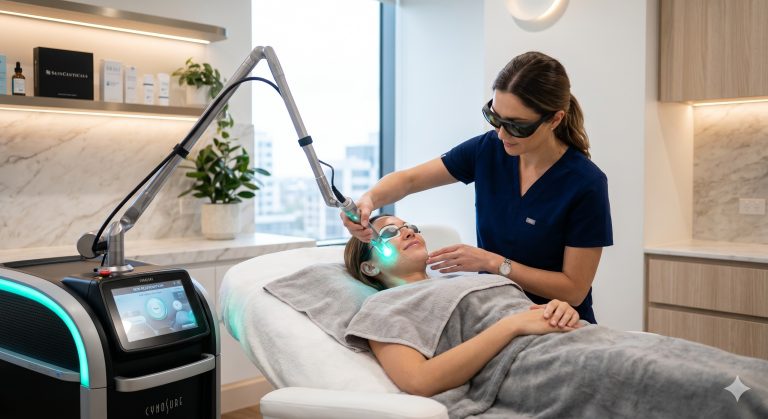
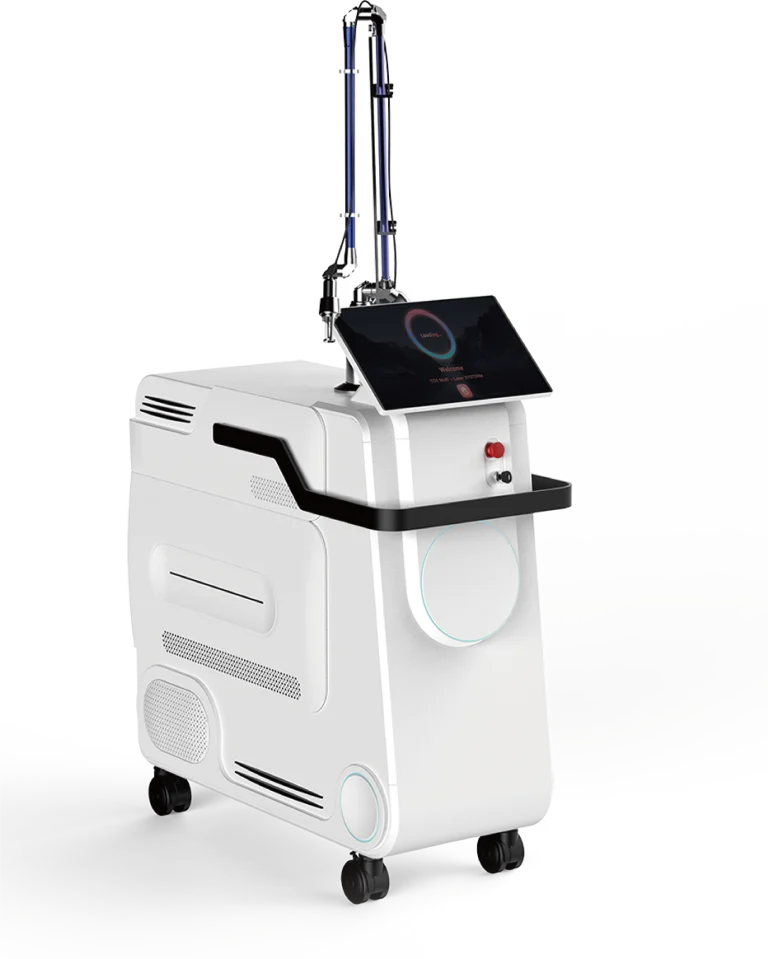
Fractional CO2 Laser: How It Works, Benefits & Uses
Fractional CO2 laser technology is widely used in professional aesthetic and dermatological settings for skin resurfacing, acne scar improvement, wrinkle reduction, and selected skin rejuvenation procedures. By delivering controlled laser energy into microscopic treatment zones, it enables targeted tissue ablation and remodeling while leaving intervening areas of skin untreated.
Unlike conventional full-field ablative resurfacing, a fractional CO2 laser treats only a fraction of the skin surface during each pass. This approach allows clinicians to adjust treatment intensity, coverage, and recovery considerations according to the treatment objective and the capabilities of the specific laser system.
This guide explains how fractional CO2 laser technology works, its potential benefits, common applications, treatment process, recovery, safety considerations, and the features professional buyers should evaluate when selecting equipment.
Quick Answer: What Is a Fractional CO2 Laser?
A fractional CO2 laser is an ablative laser system that uses carbon dioxide laser energy, typically at a wavelength of 10,600nm, to create microscopic treatment zones in the skin. The laser energy is strongly absorbed by water in tissue, producing controlled ablation and surrounding thermal effects. Because the energy is delivered in a fractional pattern, untreated tissue remains between the microscopic treatment zones. This supports re-epithelialization and the subsequent wound-healing process. Fractional CO2 laser treatment is commonly associated with:- Skin resurfacing and texture improvement
- Atrophic acne scar treatment
- Fine lines and selected wrinkles
- Sun-related skin changes and photodamage
- Selected scar revision procedures
- Professional skin rejuvenation treatments
How Does a Fractional CO2 Laser Work?
Fractional CO2 laser technology combines two important principles: the interaction of 10,600nm carbon dioxide laser energy with water-containing tissue and the distribution of that energy into microscopic fractional treatment zones. Understanding these mechanisms helps explain why CO2 fractional laser systems are used for resurfacing and scar-related applications.1. The 10,600nm CO2 Laser Wavelength
A CO2 laser emits infrared light at approximately 10,600 nanometers. Water is a major absorbing component for this wavelength. When CO2 laser energy reaches water-containing tissue, the absorbed optical energy is converted into heat. At sufficiently high energy densities, this interaction produces rapid tissue vaporization and controlled ablation. Depending on pulse characteristics, energy delivery, and treatment technique, surrounding tissue may also experience thermal effects. These properties distinguish ablative CO2 laser technology from many non-ablative fractional laser systems, which generally produce thermal treatment effects without the same degree of surface tissue removal.2. Fractional Laser Delivery
The term fractional describes how laser energy is distributed across the treatment area. Rather than applying ablative energy uniformly across the entire skin surface, fractional systems create separated microscopic columns or zones of treated tissue. The tissue between these zones remains relatively unaffected by the laser during that treatment pass. This fractional pattern can support healing from surrounding untreated areas.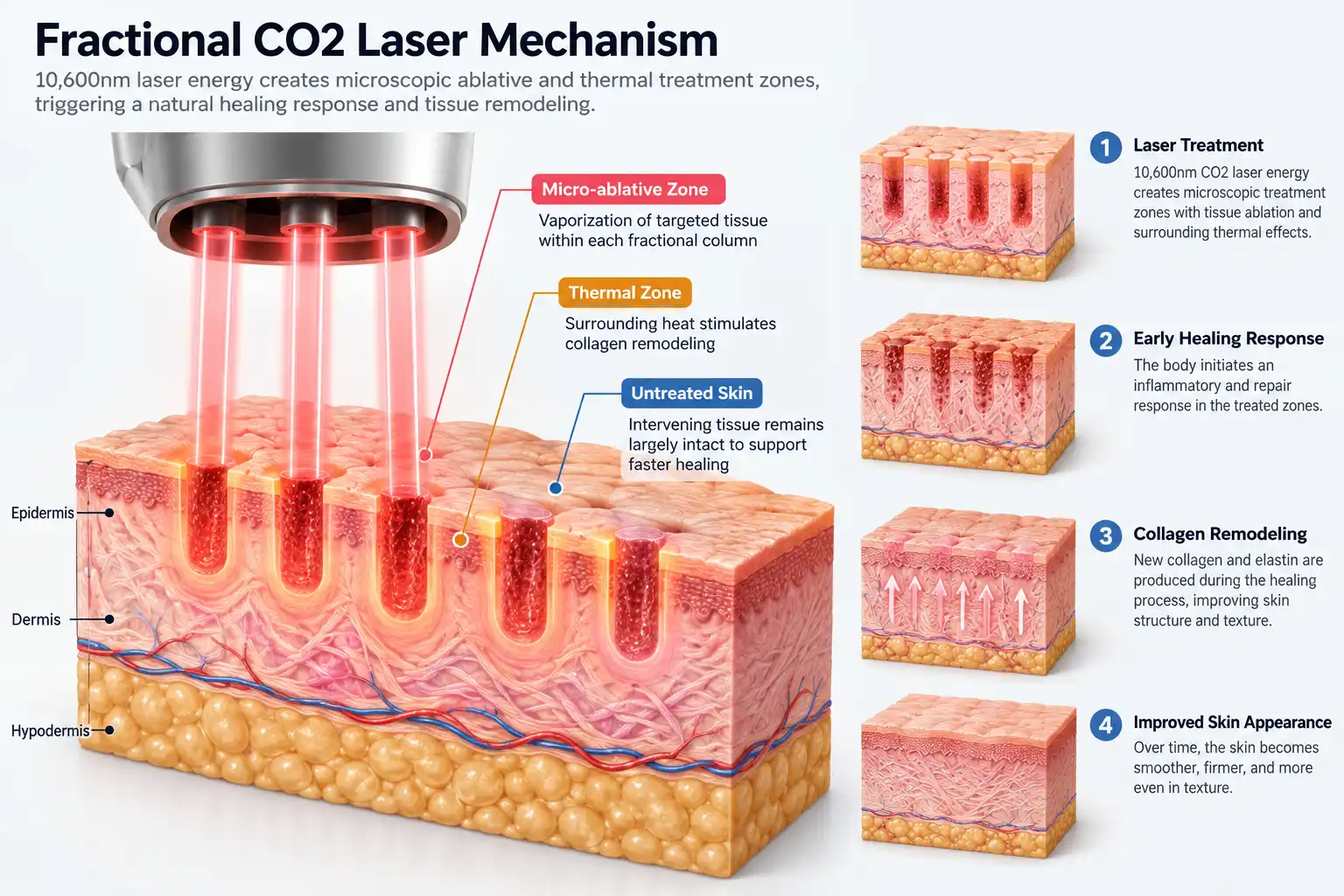
3. Controlled Ablation and Thermal Effects
Each microscopic treatment zone may include an area of tissue ablation surrounded by a region affected by heat. The extent of these effects depends on factors such as laser energy, pulse duration, treatment density, beam characteristics, and the number of passes. Professional fractional CO2 laser systems may provide adjustable treatment parameters to support different resurfacing objectives. However, higher treatment intensity does not automatically produce better outcomes. More aggressive energy delivery can also increase recovery demands and the risk of complications.4. Collagen Remodeling and Skin Renewal
After fractional CO2 laser treatment, the skin undergoes a wound-healing response. This response includes inflammation, tissue repair, and subsequent remodeling processes. Changes in collagen organization and dermal structure may continue developing after the visible surface has healed. Over time, these biological processes may contribute to improvements in skin texture, selected atrophic scars, and the appearance of fine lines. The degree of improvement varies considerably between individuals and treatment protocols.Fractional CO2 Laser vs Traditional CO2 Laser
Fractional CO2 laser and traditional full-field CO2 resurfacing use the same general wavelength and tissue absorption principle. Their main difference is the pattern of energy delivery. Traditional full-field resurfacing treats a continuous area of skin, while fractional CO2 resurfacing creates separated microscopic treatment zones.| Feature | Fractional CO2 Laser | Traditional Full-Field CO2 Laser |
|---|---|---|
| Wavelength | Typically 10,600nm | Typically 10,600nm |
| Energy delivery | Separated microscopic treatment zones | Continuous treated area |
| Surface ablation | Localized within fractional zones | Across the treated field |
| Untreated tissue | Remains between treatment zones | Not preserved within the treated field |
| Treatment intensity | Adjustable through energy, density and passes | Adjustable through depth and technique |
| Recovery | Often shorter with less intensive protocols | Frequently more demanding |
| Common applications | Fractional resurfacing, texture and scar improvement | Full-field ablative resurfacing and selected procedures |
What Are the Benefits of Fractional CO2 Laser?
The potential benefits of fractional CO2 laser treatment are associated with controlled resurfacing, tissue remodeling, and the ability to adjust fractional treatment patterns.Skin Texture Improvement
Fractional CO2 laser resurfacing may improve the appearance of rough or uneven skin texture by producing controlled tissue renewal and remodeling.Atrophic Acne Scar Improvement
Selected depressed acne scars may respond to fractional CO2 laser treatment. The extent of improvement depends on scar type, depth, tethering, and treatment strategy. Rolling and certain boxcar scars may benefit from resurfacing, while narrow, deep ice-pick scars may require additional targeted procedures.Fine Lines and Wrinkle Reduction
Fractional CO2 laser treatment may reduce the visible appearance of selected fine lines and wrinkles through resurfacing and collagen remodeling. Outcomes depend on the location and severity of wrinkles, treatment intensity, and individual skin characteristics.Fractional Treatment Flexibility
Professional systems may allow operators to adjust treatment density, energy, scanning patterns, and other parameters. This flexibility can support different treatment objectives, although available controls vary between devices.Progressive Skin Remodeling
Visible surface healing and deeper tissue remodeling occur on different timelines. Some changes may become noticeable after initial recovery, while additional changes may develop over subsequent weeks and months. Results should not be interpreted as guaranteed or permanent, and some treatment plans may require multiple sessions.What Is Fractional CO2 Laser Used For?
Fractional CO2 laser technology is used in professional dermatology and aesthetic medicine for a range of resurfacing and scar-related applications. Because a CO2 fractional laser produces controlled ablative and thermal effects, it can be used to address selected skin concerns involving surface texture, tissue remodeling, and visible signs of skin aging. Common applications of fractional CO2 laser treatment include:- Atrophic acne scar improvement
- Skin resurfacing and uneven texture
- Fine lines and selected wrinkles
- Sun-related skin changes and photodamage
- Selected surgical and traumatic scars
- Professional facial skin rejuvenation
Fractional CO2 Laser Applications at a Glance
| Application | Primary Treatment Objective | Important Considerations |
|---|---|---|
| Acne scars | Improve selected depressed scars and uneven texture | Scar type, depth and tethering |
| Skin resurfacing | Improve surface texture and visible irregularities | Treatment intensity and recovery |
| Fine lines and wrinkles | Reduce the appearance of selected lines | Wrinkle depth, location and skin condition |
| Photodamage | Improve selected sun-related textural changes | Pigmentation risk and sun protection |
| Scar revision | Improve selected scar characteristics | Scar maturity, morphology and medical history |
| Skin rejuvenation | Improve selected signs of skin aging | Realistic expectations and treatment planning |
Fractional CO2 Laser for Acne Scars
Fractional CO2 laser for acne scars is one of the most established applications of ablative fractional resurfacing. Acne scars develop when inflammatory acne damages the skin and alters normal tissue repair. Some scars appear as depressions because of tissue loss, while others involve fibrous attachments or excessive scar formation. Fractional CO2 laser treatment may improve the appearance of selected atrophic scars by producing controlled tissue ablation and stimulating a subsequent remodeling response.Rolling Acne Scars
Rolling scars create broad, wave-like depressions in the skin. Fractional resurfacing may improve their appearance, although scars with significant fibrous tethering may require additional procedures such as subcision.Boxcar Acne Scars
Boxcar scars have relatively defined edges and depressed bases. Selected shallow or moderate boxcar scars may respond to fractional CO2 resurfacing, while deeper scars may require combined treatment approaches.Ice-Pick Acne Scars
Ice-pick scars are narrow and extend deeply into the skin. They are often more difficult to improve through fractional resurfacing alone. Targeted procedures such as TCA CROSS or punch techniques may be considered for selected ice-pick scars following professional evaluation.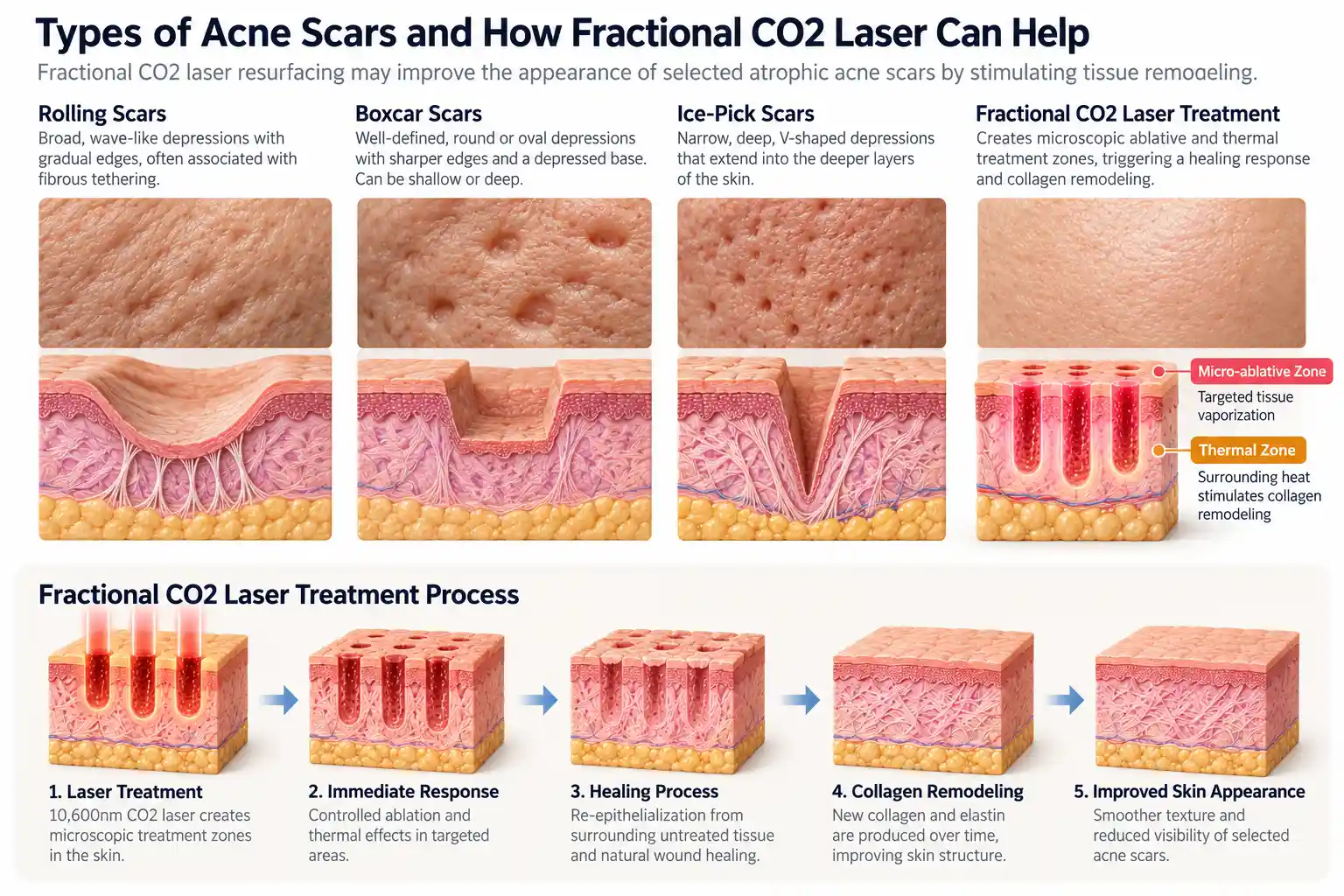
Fractional CO2 Laser for Wrinkles and Fine Lines
Fractional CO2 laser treatment is also used to improve the appearance of selected fine lines and wrinkles. Skin aging involves changes in collagen, elastin, dermal structure, and the skin’s surface. Repeated facial movements, sun exposure, and intrinsic aging can all contribute to wrinkle formation. Fractional resurfacing creates controlled microscopic treatment zones that initiate tissue repair and remodeling. These processes may contribute to visible improvements in certain fine lines and textural wrinkles over time.Perioral Wrinkles
Fine lines around the mouth are a common resurfacing concern. Selected perioral wrinkles may improve following professional fractional CO2 laser treatment.Periorbital Fine Lines
Fine lines around the eyes may also be considered for fractional resurfacing in appropriately selected patients. However, the periocular area requires particular caution because of the proximity of the eyes and the sensitivity of the surrounding tissue. Only trained professionals using appropriate equipment, protocols, and eye protection should perform laser procedures near the eyes.Deeper Wrinkles
Deep static wrinkles and folds may not respond to fractional CO2 laser resurfacing to the same extent as superficial lines. Other procedures or combination strategies may be appropriate depending on the underlying cause of the wrinkles.Fractional CO2 Laser for Skin Resurfacing
Fractional CO2 laser resurfacing is a professional treatment approach used to improve selected irregularities in skin texture and visible surface appearance. The treatment produces controlled microscopic zones of ablation and thermal injury. During subsequent healing, re-epithelialization and tissue remodeling may contribute to changes in the skin’s appearance.Uneven Skin Texture
Fractional resurfacing may help improve the appearance of roughness and certain surface irregularities associated with aging, previous acne, or sun exposure.Sun-Damaged Skin
Chronic ultraviolet exposure can contribute to uneven texture, fine lines, and other visible signs of photodamage. Selected patients with photodamaged skin may benefit from fractional resurfacing, although pigmentation concerns require careful assessment.Overall Skin Rejuvenation
Fractional CO2 laser skin resurfacing may be incorporated into professional rejuvenation strategies when texture and selected signs of skin aging are important treatment targets. The procedure does not stop the aging process, prevent future sun damage, or guarantee permanent results.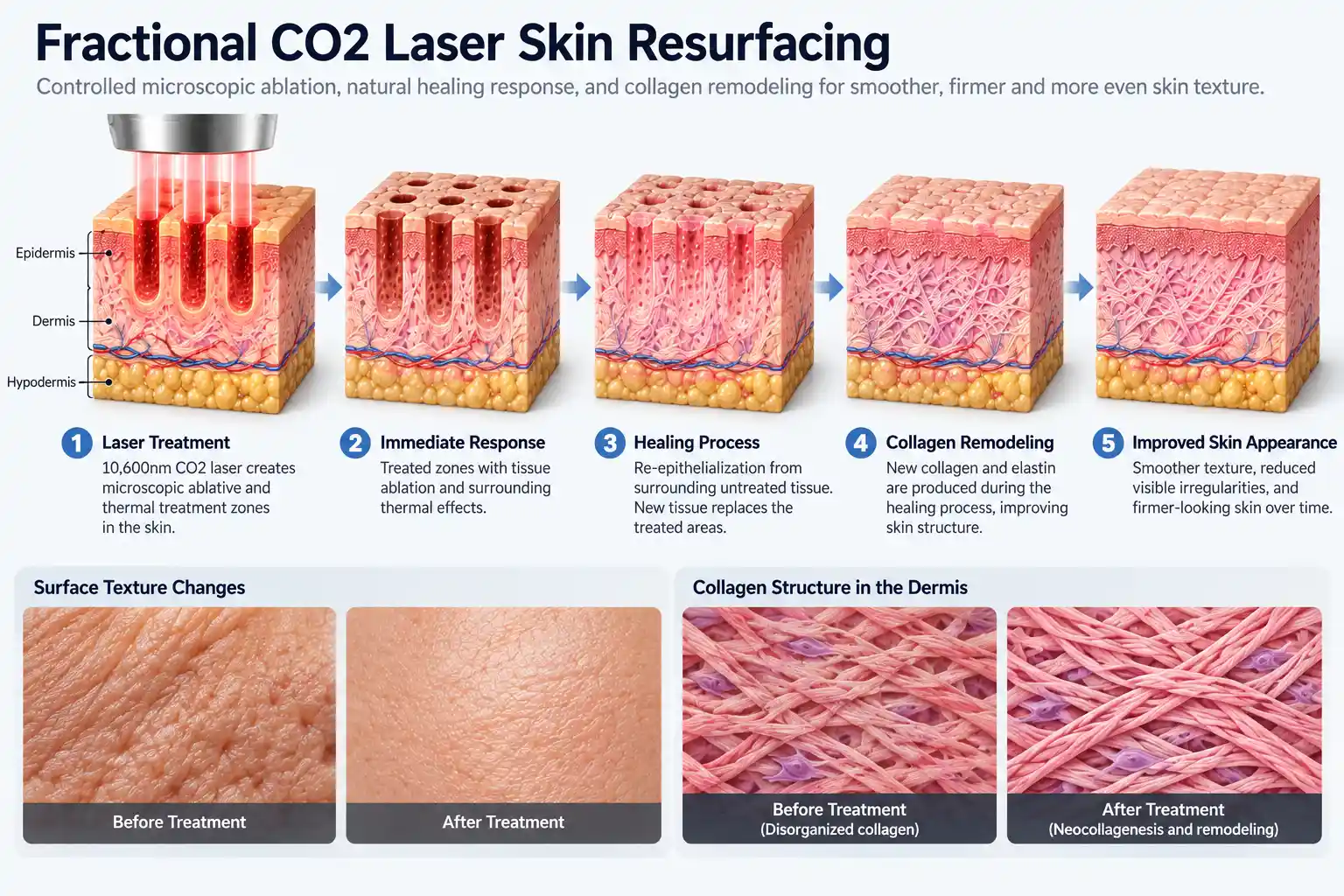
What Happens During a Fractional CO2 Laser Treatment?
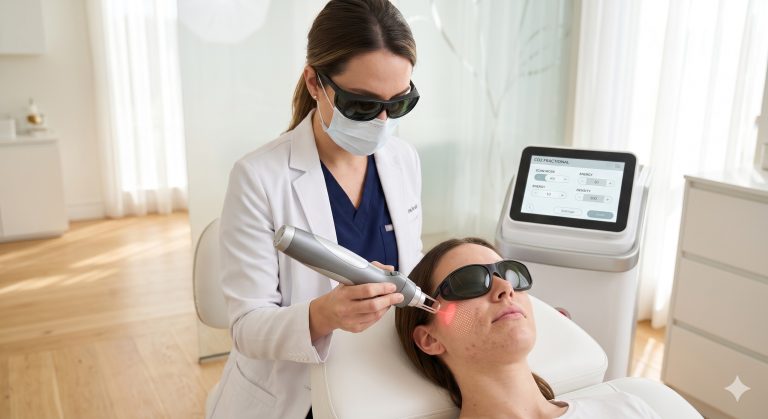
A professional fractional CO2 laser treatment typically involves patient assessment, skin preparation, controlled laser energy delivery, and post-treatment care. The exact procedure varies according to the device, treatment indication, clinical protocol, and individual patient needs.Step 1: Professional Skin Assessment
Before treatment, a qualified professional evaluates the patient’s skin condition, treatment goals, medical history, and relevant risk factors. Important considerations may include:- Skin phototype and pigmentation tendency
- History of abnormal scarring
- Active skin infections or inflammation
- Recent sun exposure
- Relevant medications and medical conditions
- Previous cosmetic procedures
- Ability to follow post-treatment care instructions
Step 2: Skin Preparation
The treatment area is prepared according to the professional protocol. Depending on treatment intensity, appropriate pain management may be considered. Laser-specific eye protection and other required safety measures must be in place before treatment begins.Step 3: Fractional Laser Energy Delivery
The operator selects treatment parameters according to the specific device’s instructions, the treatment objective, and professional assessment. The laser delivers energy in a controlled fractional pattern across the selected treatment area. Parameters such as energy, density, pulse characteristics, scanning pattern, and treatment passes may influence tissue effects and recovery.Step 4: Immediate Post-Treatment Care
After treatment, the skin may appear red, swollen, warm, or sensitive. The treating professional provides aftercare instructions appropriate to the treatment intensity and skin response.Step 5: Follow-Up and Results Assessment
Follow-up assessment allows the professional to monitor healing, evaluate the treatment response, and determine whether additional sessions may be appropriate.Fractional CO2 Laser Recovery: How Long Is the Downtime?
Fractional CO2 laser recovery varies considerably depending on treatment intensity, fractional density, treatment area, and individual healing response. Because fractional CO2 laser is an ablative technology, temporary disruption of the skin barrier and visible post-treatment changes should be expected. Less intensive protocols may involve a shorter recovery period, while aggressive fractional resurfacing can require more extensive healing and follow-up care.Typical Fractional CO2 Laser Recovery Timeline
| Recovery Stage | Possible Skin Response |
|---|---|
| First 24–48 hours | Redness, warmth, swelling, sensitivity, and possible oozing |
| Days 2–5 | Crusting, dryness, roughness, and continued redness may occur |
| Days 5–10 | Surface healing and peeling may progress, depending on treatment intensity |
| Following weeks | Residual redness or pigmentation changes may persist while deeper remodeling continues |
| Following months | Additional textural changes may develop through ongoing tissue remodeling |
What Affects Fractional CO2 Laser Downtime?
- Laser energy and pulse characteristics
- Fractional treatment density
- Number of treatment passes
- Treatment area and skin thickness
- Individual skin characteristics
- Previous skin treatments
- Post-treatment care and sun exposure
Fractional CO2 Laser Before and After: What Results Can You Expect?
Searches for fractional CO2 laser before and after often reflect interest in the visible changes that may occur after skin resurfacing. Potential improvements may include:- Smoother-looking skin texture
- Reduced visibility of selected acne scars
- Improvement in certain fine lines
- More even-looking surface texture
- Improvement in selected signs of photodamage
When Will Fractional CO2 Laser Results Become Visible?
Some visible changes may become apparent after the initial surface healing period. Additional improvements can develop over subsequent weeks and months as tissue remodeling progresses. The timing depends on the treatment objective, intensity, individual response, and number of sessions.How Many Fractional CO2 Laser Sessions Are Needed?
There is no universal number of sessions suitable for every patient. Some treatment objectives may be addressed with a single session, while others may require multiple sessions or combined treatment approaches. Session planning should be based on professional assessment, treatment response, healing, and the intended use of the specific device.Fractional CO2 Laser Side Effects and Risks
Fractional CO2 laser is an ablative technology that produces controlled injury in treated skin. Although it is widely used in professional resurfacing procedures, treatment involves potential side effects and complications. The likelihood and severity of adverse effects depend on treatment intensity, skin characteristics, medical history, operator technique, and post-treatment care.Common Temporary Side Effects
Expected post-treatment responses may include:- Redness and warmth
- Temporary swelling
- Skin sensitivity or discomfort
- Dryness and tightness
- Crusting or peeling
- Temporary changes in skin appearance
Potential Complications
Less common but clinically important complications may include:- Post-inflammatory hyperpigmentation
- Hypopigmentation
- Prolonged erythema
- Skin infection or herpes simplex reactivation
- Delayed healing
- Scarring
- Persistent changes in skin texture
Is Fractional CO2 Laser Safe for Darker Skin Types?
Fractional CO2 laser treatment requires additional caution in patients with darker skin phototypes because of the risk of post-inflammatory hyperpigmentation and other pigmentary changes. Skin phototype alone does not determine whether a procedure is appropriate. A qualified professional must also evaluate the treatment indication, pigmentation history, previous procedures, and individual risk factors. Alternative technologies or less intensive treatment strategies may be preferable for certain patients.Important Laser Safety Considerations
Professional CO2 laser systems require appropriate safety procedures, including wavelength-specific eye protection, controlled access to the treatment area, and measures to manage laser-generated airborne contaminants. Appropriate smoke evacuation, infection-control practices, equipment maintenance, and operator training should form part of the clinical safety program. Treatment must follow the device manufacturer’s instructions and applicable regulatory requirements.Fractional CO2 Laser vs Other Laser Technologies
Fractional CO2 laser is one of several technologies used in professional aesthetic treatments. Other systems may use different wavelengths, pulse characteristics, optical targets, and tissue interaction mechanisms. Understanding these differences helps clinics evaluate equipment for specific treatment objectives.| Technology | Main Mechanism | Common Application Focus | Important Distinction |
|---|---|---|---|
| Fractional CO2 Laser | Ablative fractional treatment at approximately 10,600nm | Skin resurfacing, selected acne scars and wrinkles | Produces microscopic ablation and thermal effects |
| Er:YAG Laser | Ablative laser energy typically at 2,940nm | Resurfacing and selected dermatological procedures | Different water absorption and thermal interaction profile |
| 1927nm Thulium Laser | Water-targeting fractional thermal treatment | Selected pigmentation, photodamage and superficial texture concerns | Typically used in non-ablative fractional configurations |
| 1550nm Fractional Laser | Non-ablative fractional dermal heating | Texture, selected scars and rejuvenation | Generally preserves the skin surface more than ablative CO2 resurfacing |
| Picosecond Laser | Ultrashort pulses with wavelength-dependent optical effects | Tattoo removal, selected pigmentation and other device-specific applications | Uses a different pulse and tissue interaction mechanism |
Fractional CO2 Laser vs 1927nm Thulium Laser
Fractional CO2 laser technology produces controlled microscopic ablation and surrounding thermal effects. In contrast, 1927nm thulium laser systems commonly use non-ablative fractional thermal treatment, with applications often focused on superficial pigmentation, photodamage, and texture. Cocoon Laser’s Lav Clear platform represents its professional 1927nm thulium laser product category.Fractional CO2 Laser vs Picosecond Laser
Fractional CO2 laser systems are primarily associated with ablative resurfacing and tissue remodeling. Picosecond laser systems use ultrashort pulses and may be configured for pigment and tattoo-related applications, with additional indications depending on the wavelength and delivery system. Cocoon Laser’s Ultra PicoMax and QPeak Pro platforms belong to its professional pigment-focused laser equipment portfolio.Professional Fractional CO2 Laser Machines for Clinics
Professional fractional CO2 laser equipment differs in laser source design, pulse characteristics, scanning technology, treatment controls, applicators, and technical support. For clinics, medical aesthetic practices, and distributors, choosing a suitable fractional CO2 laser machine involves more than comparing the 10,600nm wavelength. Cocoon Laser offers professional fractional CO2 laser platforms, including CO2 4D and CO2 Star, for buyers evaluating aesthetic laser equipment.CO2 4D Fractional Laser Machine
The CO2 4D is a professional fractional carbon dioxide laser platform designed for clinical and aesthetic equipment applications. It uses a 10,600nm CO2 laser architecture and supports fractional energy delivery. Professional buyers should evaluate the available applicators, pulse controls, scanning options, and treatment modes against their intended applications.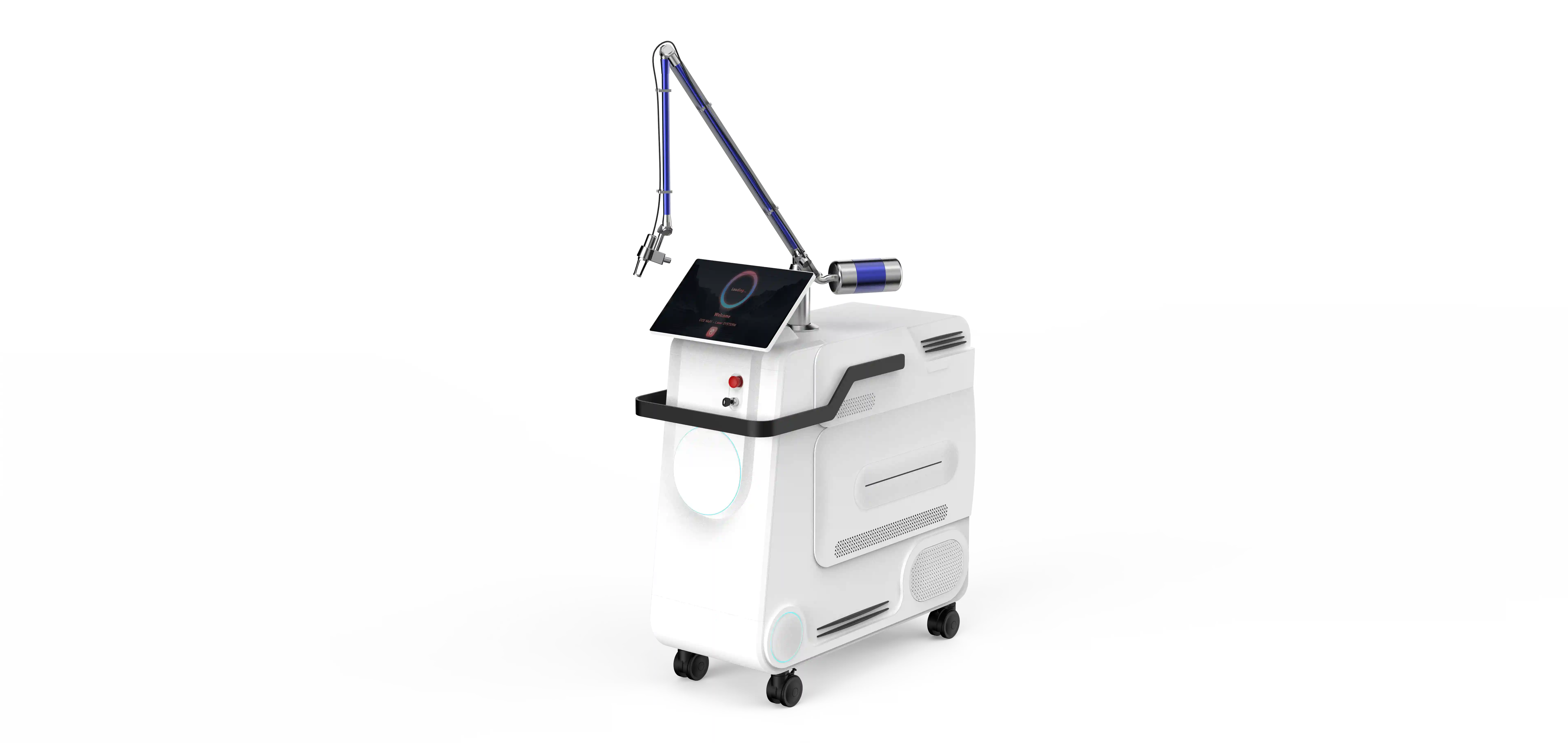
CO2 Star Fractional Laser Machine
CO2 Star is another professional CO2 laser platform in the Cocoon Laser equipment portfolio. Clinics and distributors comparing CO2 Star with other fractional CO2 laser systems should review the specific configuration, treatment modes, energy controls, applicators, maintenance requirements, and available technical support. Device suitability should be established using verified technical documentation rather than assuming that all fractional CO2 laser machines provide identical functions or clinical indications.CO2 4D vs CO2 Star: What Should Buyers Compare?
| Evaluation Factor | What to Verify |
|---|---|
| Laser source | Source architecture and operating characteristics |
| Pulse control | Available pulse modes and adjustment ranges |
| Fractional scanning | Pattern options, coverage and density controls |
| Applicators | Included and optional handpieces |
| Clinical workflow | User interface, ergonomics and operating procedures |
| Service | Warranty, replacement parts and technical support |
| Documentation | Verified specifications and market-specific regulatory status |
How to Choose a Fractional CO2 Laser Machine
Clinics and professional equipment buyers should evaluate fractional CO2 laser systems according to their intended applications, operational requirements, and long-term service expectations.Laser Source and Energy Control
Confirm the actual laser source configuration, output characteristics, pulse controls, and available treatment parameters.Fractional Scanning Capabilities
Evaluate the available scanning patterns, fractional density controls, treatment coverage, and operator interface.Applicators and Treatment Flexibility
Review the included applicators and verify which treatment modes and intended uses are supported by the specific device.Training and Technical Support
Professional equipment should be supported by appropriate operating instructions, safety training, maintenance information, and technical assistance.Regulatory Documentation
Regulatory authorization and permitted clinical indications vary between markets. Buyers should verify the device-specific documentation applicable to their country or region.Warranty and Long-Term Maintenance
Compare warranty terms, service availability, replacement parts, consumables, and expected maintenance requirements. A professional fractional CO2 laser machine should be evaluated as a complete equipment system rather than on wavelength or purchase price alone.Fractional CO2 Laser Frequently Asked Questions
What is a fractional CO2 laser?
A fractional CO2 laser is an ablative laser system that typically operates at 10,600nm and creates microscopic treatment zones in skin. It is used in professional resurfacing and selected scar-related procedures.What is fractional CO2 laser used for?
Fractional CO2 laser treatment is commonly used for selected acne scars, uneven skin texture, fine lines, wrinkles, and skin resurfacing. Suitability depends on professional assessment and the specific device.Is fractional CO2 laser painful?
Treatment discomfort varies with the treatment area, energy settings, pain-management approach, and individual sensitivity. Appropriate comfort measures may be used under professional supervision.How long does fractional CO2 laser take to heal?
Initial surface healing often takes approximately one to two weeks, depending on treatment intensity. Redness or other visible changes may persist longer, and deeper tissue remodeling continues over subsequent months.Does fractional CO2 laser remove acne scars permanently?
Fractional CO2 laser may improve the appearance of selected acne scars, but complete scar removal is not guaranteed. Results vary according to scar morphology, treatment technique, and individual response.How many fractional CO2 laser sessions are needed?
The number of sessions depends on the treatment objective, skin characteristics, device settings, and response to previous treatments. There is no universal session requirement.Is fractional CO2 laser safe for all skin types?
Fractional CO2 laser is not automatically appropriate for every skin type. Patients with darker skin phototypes may have an increased risk of pigmentary changes, requiring careful professional assessment.What is the difference between fractional CO2 laser and CO2 laser?
Both use carbon dioxide laser energy, typically at 10,600nm. Fractional CO2 laser distributes treatment into microscopic zones, while traditional full-field resurfacing treats a continuous area of skin.Final Verdict: Is Fractional CO2 Laser Worth Considering?
Fractional CO2 laser is an established professional resurfacing technology that combines controlled microscopic ablation with subsequent tissue remodeling. Its common applications include selected atrophic acne scars, uneven skin texture, fine lines, wrinkles, and skin rejuvenation. However, treatment results are not guaranteed, and the procedure involves meaningful recovery and potential complications. Patient selection, treatment parameters, operator training, and aftercare all influence the overall outcome. For professional equipment buyers, the most important considerations extend beyond the 10,600nm wavelength. Laser source design, pulse control, fractional scanning, applicators, system reliability, training, regulatory documentation, and after-sales support should all be evaluated. Cocoon Laser’s CO2 4D and CO2 Star platforms provide professional equipment options for clinics and distributors researching fractional carbon dioxide laser technology.Professional Fractional CO2 Laser Equipment