The Ultimate Clinic Guide to LVA Dual Thulium Laser Technology: Efficacy, Wavelengths, and ROI
Introduction: Addressing the Clinical Limitations of Legacy Ablative Resurfacing
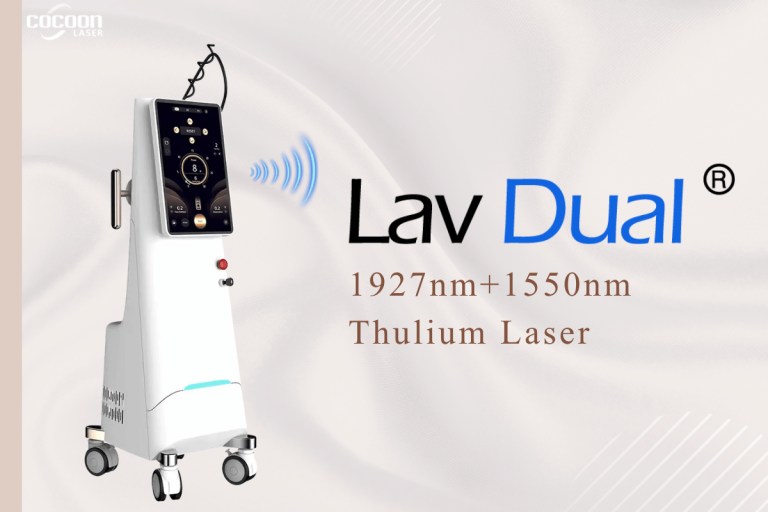
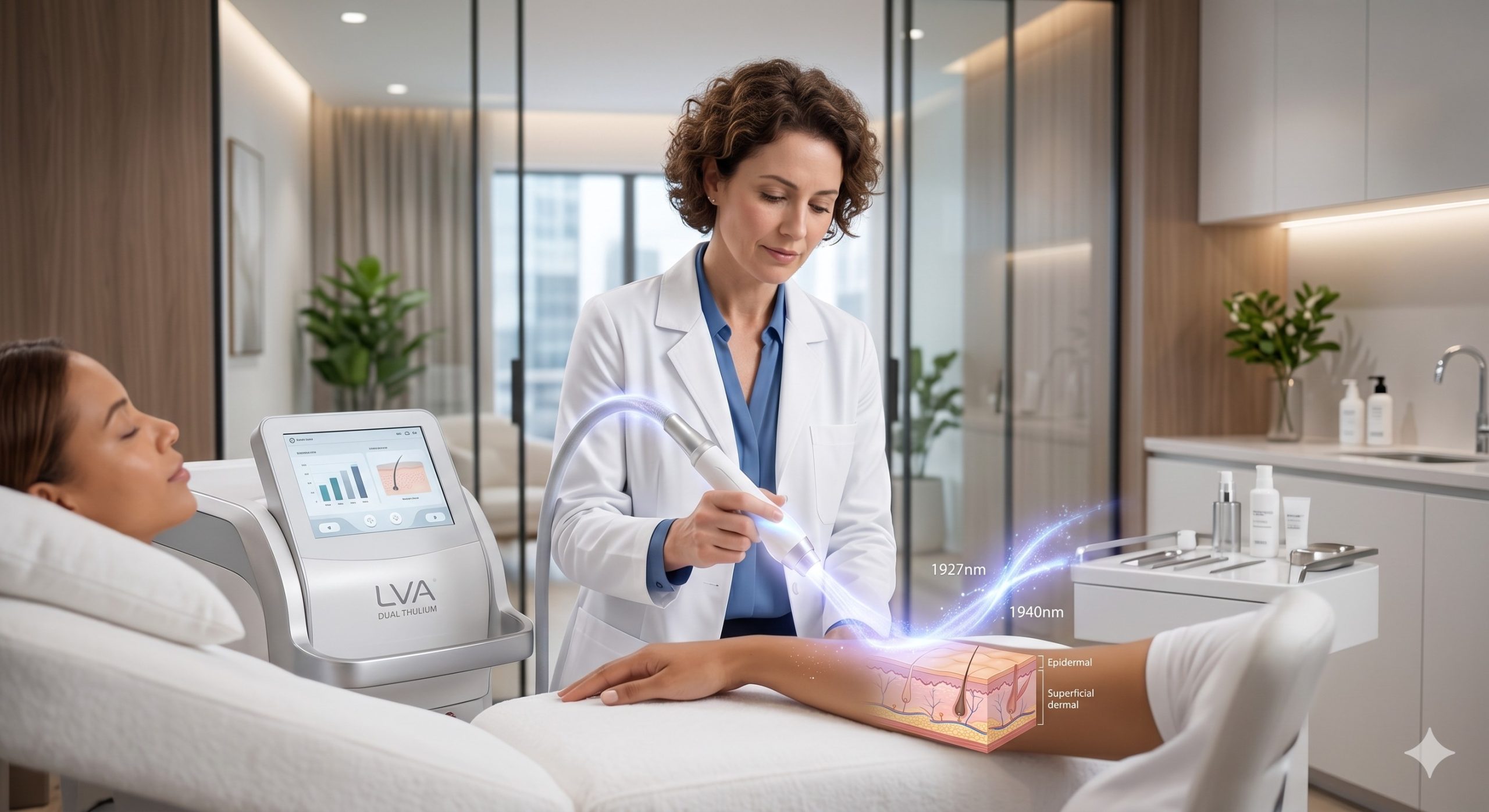
For years, medical aesthetics clinics have faced a critical trade-off when treating photoaging, acne scars, and textural irregularities: ablative CO2/Erbium lasers deliver dramatic results but require significant patient downtime (2-4 weeks), while non-ablative fractional lasers offer safer epidermal profiles but often need 5-8 sessions for modest improvement. The emergence of LVA Dual Thulium laser technology redefines this clinical paradigm by combining the precise 1927nm wavelength for superficial ablation with the deep dermal coagulation of 1940nm, all within a single, optimized handpiece. This guide provides a data-driven analysis of its mechanisms, safety profile, and return on investment for the forward-thinking clinic.
Selective Photothermolysis with Dual Thulium Wavelengths
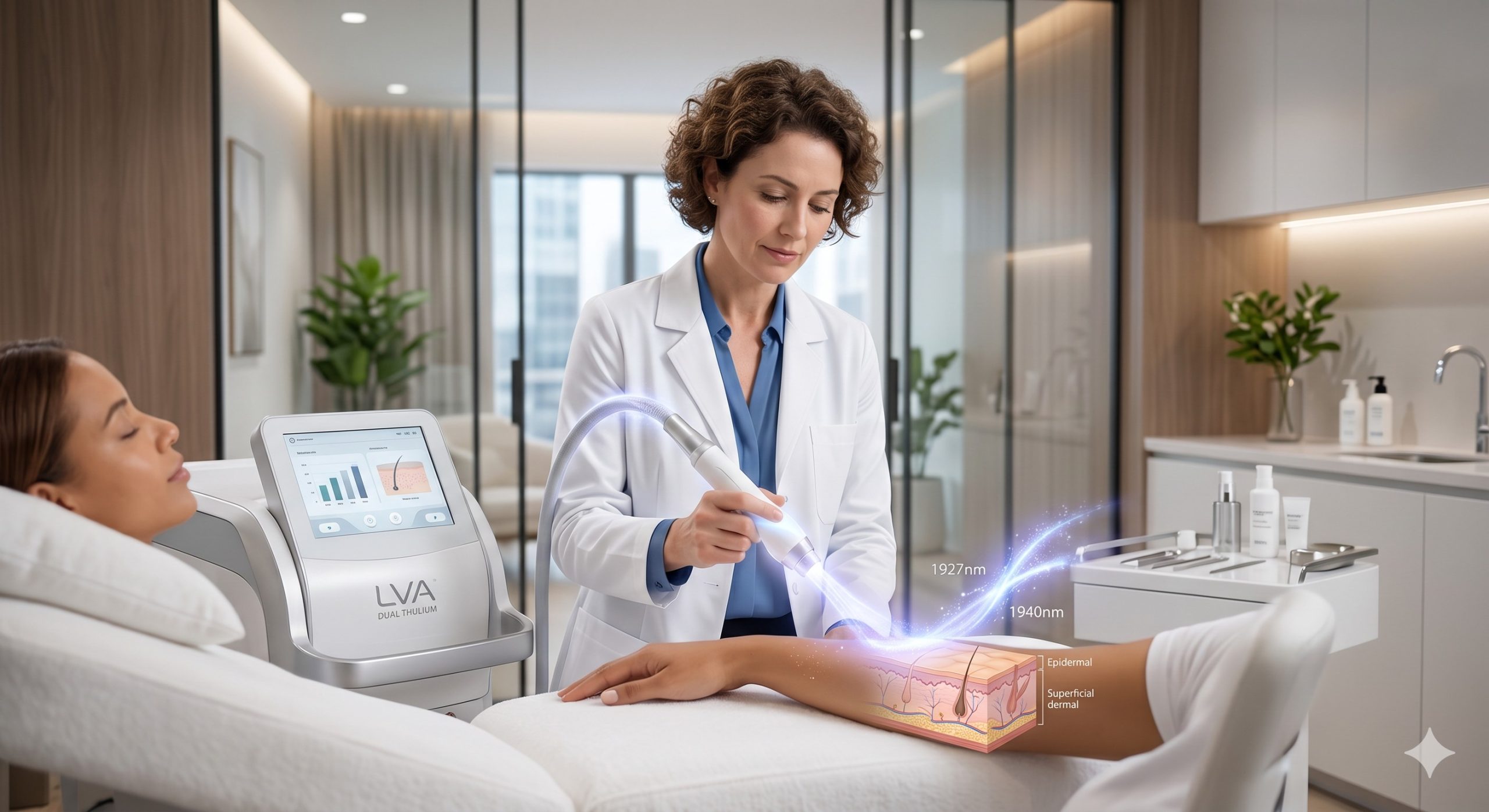
The LVA system utilizes two specific thulium-doped fiber laser wavelengths that are preferentially absorbed by water in the dermis and epidermis. Unlike legacy IPL (broadband light) or diode lasers (800-980nm) that target melanin or hemoglobin indirectly, thulium energy interacts directly with intracellular water, creating microscopic thermal zones (MTZs) of ablation and coagulation. The 1927nm wavelength offers a high absorption coefficient in the stratum corneum, making it ideal for superficial resurfacing of dyschromia, melasma, and actinic keratosis. Simultaneously, the 1940nm wavelength penetrates to a depth of 300-500µm, stimulating neocollagenesis and elastin remodeling for rhytides and atrophic scars.
Key Technical Metrics for Clinical Decision-Making
When evaluating any aesthetic laser, four parameters directly determine safety and efficacy: Spot Size (affects treatment speed and penetration depth), Energy Density/Fluence (measured in mJ/MTZ), Pulse Width (microsecond domain for thulium), and Repetition Rate (Hz). The LVA platform typically operates with a scanning handpiece that delivers spot sizes from 5x5mm up to 10x10mm, with fluence ranging from 5 to 50 mJ per MTZ. Pulse widths are fixed in the 200-500µs range, ensuring thermal confinement to target water without widespread thermal diffusion, which is critical for treating Fitzpatrick Skin Types III-V safely.
Epidermal Protection and Patient Comfort Engineering
The primary complication of any resurfacing laser is post-inflammatory hyperpigmentation (PIH), especially in darker skin types. The LVA dual thulium architecture integrates two protective mechanisms: dynamic surface cooling (via a sapphire contact window at 0°C to 4°C) and a real-time thermal feedback loop that adjusts fluence based on skin impedance. Unlike older CO2 lasers that rely on static cryogen sprays (which can cause inconsistent cooling), sapphire contact cooling provides uniform epidermal protection, enabling operators to safely use therapeutic fluences without exceeding the melanin injury threshold. This engineering is why many devices carrying Medical CE Mark (Class IIb) and FDA 510(k) clearance for resurfacing incorporate similar contact cooling technologies.
| Parameter | LVA Dual Thulium Specification |
|---|---|
| Laser Type | Solid-State Thulium-Doped Fiber Laser (Dual Wavelength) |
| Wavelengths | 1927nm (superficial) + 1940nm (deep dermal) |
| Spot Size Range | 5x5mm to 10x10mm (scanning handpiece) |
| Fluence per MTZ | 5 – 50 mJ |
| Pulse Width | 200 – 500 µs |
| Max Repetition Rate | Up to 200 Hz |
| Cooling System | Sapphire Contact Cooling (0°C to 4°C) |
| FDA Clearance | 510(k) for skin resurfacing & pigmentation |
| Medical CE Mark | Class IIb (MDR 2017/745) |
| Manufacturing Standard | ISO 13485:2016 |
| Handpiece Pulse Lifetime | 500,000 pulses (replaceable tip) |
| Power Supply | 110-240 VAC, 50/60 Hz, 1,500W max |
Clinical Indications and Fitzpatrick Protocol Mapping
Based on published clinical studies and real-world evidence from ISO 13485-certified manufacturing, the LVA dual thulium laser demonstrates efficacy across three primary indication groups. For actinic keratosis and diffuse photodamage, the 1927nm wavelength at 15-25 mJ/MTZ with a 10-15% coverage density yields 70-85% clearance after 2 sessions. For surgical scars and striae, the 1940nm wavelength at 30-40 mJ/MTZ with a 20% density promotes collagen remodeling visible at 3 months post-treatment. A critical advantage over legacy erbium:YAG lasers (2940nm) is the significantly lower scattering coefficient of thulium wavelengths, allowing for more predictable depth control and less intra-procedural bleeding.
Safety and Contraindications by Fitzpatrick Scale
While the LVA dual thulium laser is safe for Fitzpatrick Skin Types I-IV for full-field resurfacing, and Types V-VI for fractional protocols only, absolute contraindications include active herpes simplex, isotretinoin use within 6 months, and history of keloid scarring. Clinics must maintain a comprehensive informed consent protocol that discusses expected erythema (typically 2-5 days) versus prolonged PIH (less than 2% incidence in Types III-IV when using conservative fluences). The system’s compliance with IEC 60825-1 (laser product safety) and ISO 14971 (risk management) is non-negotiable for medico-legal protection.
Clinic ROI Analysis: Throughput, Consumables, and Pricing Strategy
From a business perspective, the LVA dual thulium laser offers a compelling return on investment compared to purchasing separate CO2 and non-ablative systems. A single LVA unit (approximate CapEx $55,000-$85,000 depending on configuration) can generate $2,000-$4,000 per full-face resurfacing session (60-90 minutes). With 8-10 treatments per week, gross monthly revenue reaches $64,000-$160,000. Operational expenses (OpEx) include the consumable handpiece tip life (typically 500,000 pulses, costing $1,200-$1,800 per replacement) and the low maintenance water-cooling circuit (annual service $800-$1,200). Compared to CO2 lasers that require expensive, high-voltage RF excitation tubes (replacement cost $8,000-$15,000), the solid-state thulium fiber architecture offers a lower total cost of ownership over 5 years.
Marketing Differentiators for Patient Acquisition
To position your clinic’s LVA laser effectively, highlight three patient-centric benefits: “no prolonged social downtime” (bronzing/peeling resolves in 4-7 days versus 14-21 days for CO2), “melasma-safe protocol” (using 1927nm low-density settings), and “dual-action” (texture + pigmentation in one session). Incorporate before/after galleries with standardized lighting and VISIA complexion analysis to quantify improvement in porphyrins, UV spots, and wrinkles. Clinics that bundle 3-session fractional packages at $3,500-$5,000 achieve higher patient retention and reduce scheduling gaps.
Conclusion: Strategic Integration into Multi-Modality Workflows
The LVA dual thulium laser is not a replacement for deep ablative CO2 or vascular-specific pulsed dye lasers; rather, it occupies the high-demand clinical niche for patients seeking meaningful skin rejuvenation with predictable healing and minimal risk of PIH. For clinics already offering injectables (neurotoxins, fillers) and microneedling, adding LVA creates a complete skin health ladder from maintenance to advanced resurfacing. Verify that your device supplier provides verified Medical CE documentation, ISO 13485:2016 certification, and a structured clinical training program (minimum 16 hours of hands-on instruction). When deployed with proper patient selection and parameter optimization, LVA dual thulium technology consistently delivers high patient satisfaction scores (NPS +70) and strong practice profitability.