HIFU Clinical Deep Dive: Selective Photothermolysis & Parameter Optimization
Introduction: The Physics of Non-Invasive Tissue Ablation
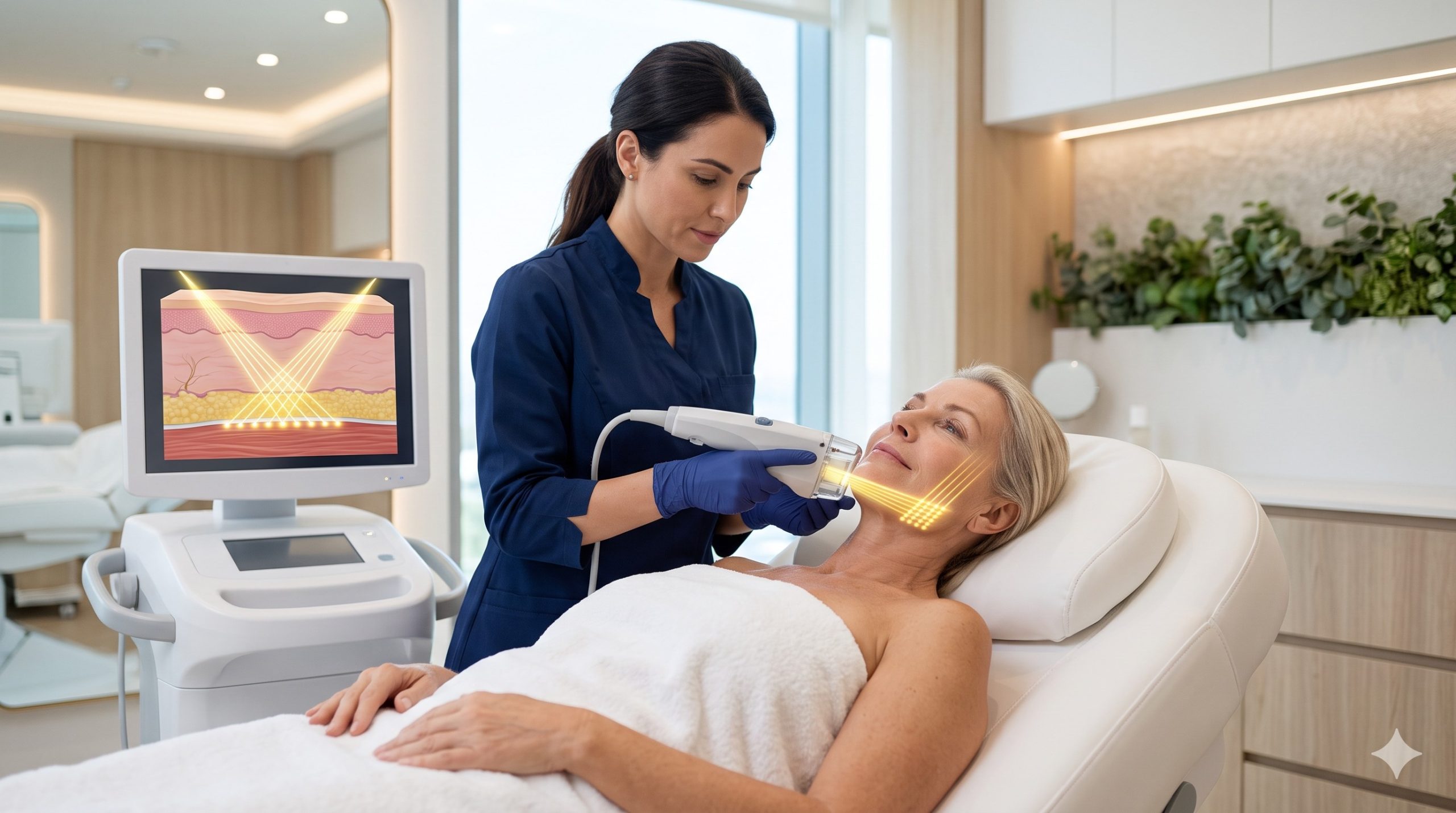
In the evolving landscape of medical aesthetics, High-Intensity Focused Ultrasound (HIFU) represents a paradigm shift in non-invasive tissue rejuvenation and ablation. Unlike traditional lasers that rely on selective photothermolysis, HIFU harnesses the power of acoustic energy to achieve thermal coagulation necrosis at precise depths within the dermis and subcutaneous tissues . For the discerning clinic owner or dermatologist, understanding the underlying physics, from acoustic intensity to nonlinear propagation, is critical for optimizing clinical outcomes and ensuring patient safety. This technical guide provides a comprehensive analysis of HIFU technology physics, offering the clinical metrics required to evaluate device performance and treatment efficacy.
The Physics of Acoustic Focusing
Transducer Geometry and the Fresnel Zone
At the core of any HIFU device is the ultrasonic transducer, typically a curved or phased-array element designed to concentrate sound waves. The ability to form a tight focal spot is governed by the Fresnel number (NF), defined as NF = a²/(λz), where ‘a’ is the transducer radius, ‘λ’ is the wavelength, and ‘z’ is the focal length . For effective clinical therapy, HIFU operates within the near-field (Fresnel zone) where NF > 1, allowing for constructive interference at the focal point. This is analogous to using a magnifying glass to concentrate sunlight; the curvature of the transducer ensures that all acoustic wavelets arrive at the focal point in phase, creating an intense, localized energy zone .
Intensity and Pressure Metrics
The therapeutic efficacy of HIFU is directly proportional to the acoustic intensity (I) and the resulting peak pressure amplitude (p₀). The relationship is defined by the equation I = p₀² / (2ρc), where ‘ρ’ is tissue density and ‘c’ is the speed of sound . In clinical aesthetic applications, focal intensities can reach thousands of W/cm², generating pressure amplitudes capable of raising tissue temperatures by 50-100°C per second . This rapid heating induces a thermal dose sufficient for protein denaturation and collagen contraction, typically measured in Cumulative Equivalent Minutes at 43°C (CEM43) .
Nonlinear Propagation and Harmonics
As ultrasound waves travel through tissue, they undergo nonlinear propagation. This phenomenon results in waveform distortion and the generation of higher harmonics . This is clinically advantageous because higher frequencies are absorbed more readily by tissue, leading to enhanced heating efficiency at the focal zone . Modern HIFU devices leverage these nonlinear effects to maximize thermal deposition while minimizing energy exposure to the intervening tissue pathway.
Mechanisms of Action: Thermal Ablation & Cavitation
HIFU exerts its therapeutic effects through two primary mechanisms: thermal and mechanical.
Thermal Coagulation Necrosis
This is the dominant mechanism in aesthetic HIFU. The absorption of acoustic energy leads to viscous friction, converting mechanical energy into heat. The rate of heat generation (Q) is given by Q = 2αI, where ‘α’ is the tissue’s absorption coefficient . This process creates discrete thermal coagulation points (TCPs) at the focal depth, typically located at the superficial musculoaponeurotic system (SMAS) or deep dermis. This precise heating triggers immediate collagen contraction and initiates the wound healing cascade, leading to neocollagenesis over 3-6 months.
Mechanical Disruption and Cavitation
While secondary in aesthetic applications, acoustic cavitation plays a significant role in tissue disruption. During the rarefactional phase of the acoustic wave, cavitation nuclei (microscopic gas pockets) expand. If the peak negative pressure (p_neg) exceeds a threshold, these bubbles collapse violently (inertial cavitation), generating shock waves and micro-streaming that can mechanically disrupt cellular structures and enhance the diffusion of nutrients or topical agents . The Mechanical Index (MI), defined as MI = p_neg / √f, is a key metric for monitoring the likelihood of cavitation .
Technical Specifications & Parameter Optimization
To achieve predictable clinical outcomes, clinics must understand how specific device parameters influence treatment depth and efficacy. The following table outlines the critical technical metrics found in medical-grade aesthetic HIFU systems, consistent with standards like Medical CE and ISO 13485.
| Key Parameter | Technical Specification & Clinical Value |
|---|---|
| Operating Frequency | Typically 2MHz – 10MHz. Higher frequencies (e.g., 7MHz) target superficial dermis (1.5mm), while lower frequencies (e.g., 2MHz) reach deep SMAS (4.5mm). |
| Focal Depth | Adjustable from 1.5mm to 4.5mm. Allows for targeted treatment of the papillary dermis, reticular dermis, and SMAS layer. |
| Spot Size (Focal Zone) | Approximately 1.0mm x 1.5mm to 1.0mm x 3.0mm. Smaller spots allow for greater precision and energy density. |
| Acoustic Power | Ranges from 5W to 30W. Determines the rate of temperature rise and thermal dose at the focal point. |
| Pulse Duration | Typically 20-100 milliseconds. Shorter pulses minimize heat diffusion to surrounding tissues, ensuring tight thermal coagulation. |
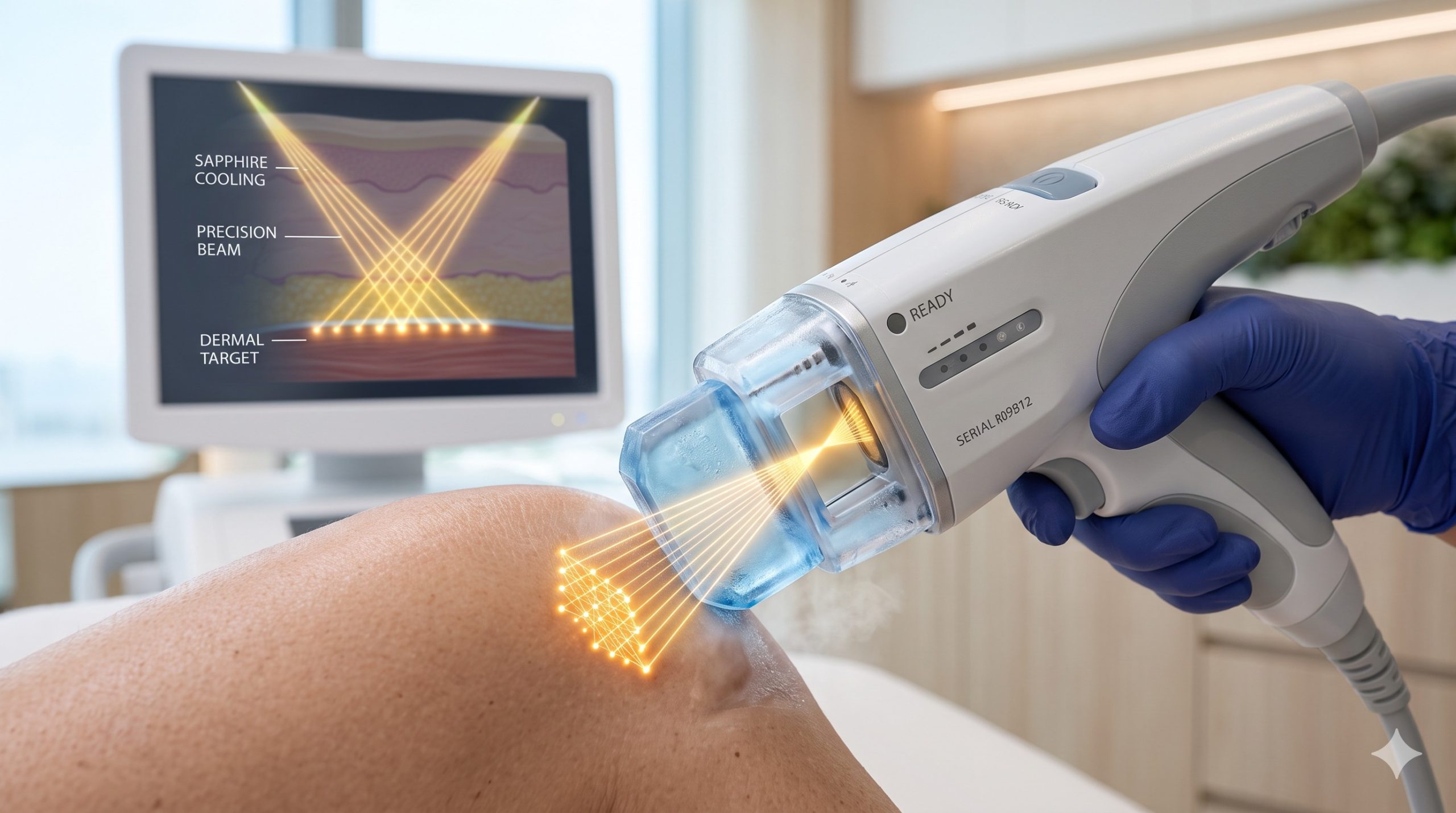
| Cooling System | Sapphire contact cooling (0°C to 5°C) or circulating water. Protects the epidermis from thermal injury during high-energy delivery. |
| Certifications | Medical CE, FDA Clearance, ISO 13485. Ensures compliance with international safety and quality standards. |
Clinical Applications & Safety Protocols
Fitzpatrick Skin Types and Treatment Planning
One of the primary advantages of HIFU over light-based technologies is its skin-type independence. Unlike lasers (e.g., 755nm, 808nm) that target melanin, HIFU targets tissue water and structural proteins, making it safe for all Fitzpatrick Skin Types (I-VI). However, treatment planning must account for tissue thickness and density variations. For example, deeper SMAS layers may require a 4.5mm transducer depth, while dermal rejuvenation targets the 3.0mm or 1.5mm depths.
Epidermal Protection and Cooling
To prevent superficial burns, medical-grade HIFU devices integrate advanced contact cooling mechanisms. Typically, this involves a Sapphire contact tip or a circulating chilled water system . This epidermal protection allows the skin surface to remain at a safe temperature (below 15°C) while the focal zone reaches 65-85°C, ensuring a comfortable patient experience and minimizing downtime.
Clinic ROI & Conclusion
Investing in a medical-grade HIFU device requires a clear understanding of both the technology and the business case. The ability to offer a non-invasive facelift or body contouring procedure with minimal downtime provides a significant revenue opportunity. Clinics can often recoup the device’s CapEx within 6-12 months based on the volume of high-ticket procedures. When evaluating equipment, prioritize systems with verifiable FDA clearance or Medical CE certification, robust Quality Management Systems (ISO 13485), and transparent specifications regarding pulse width, fluence, and handpiece longevity . In the rapidly evolving field of medical aesthetics, a deep understanding of HIFU physics empowers clinicians to maximize patient satisfaction and secure a competitive advantage.