Professional Laser Cooling Technology
Quick Answer
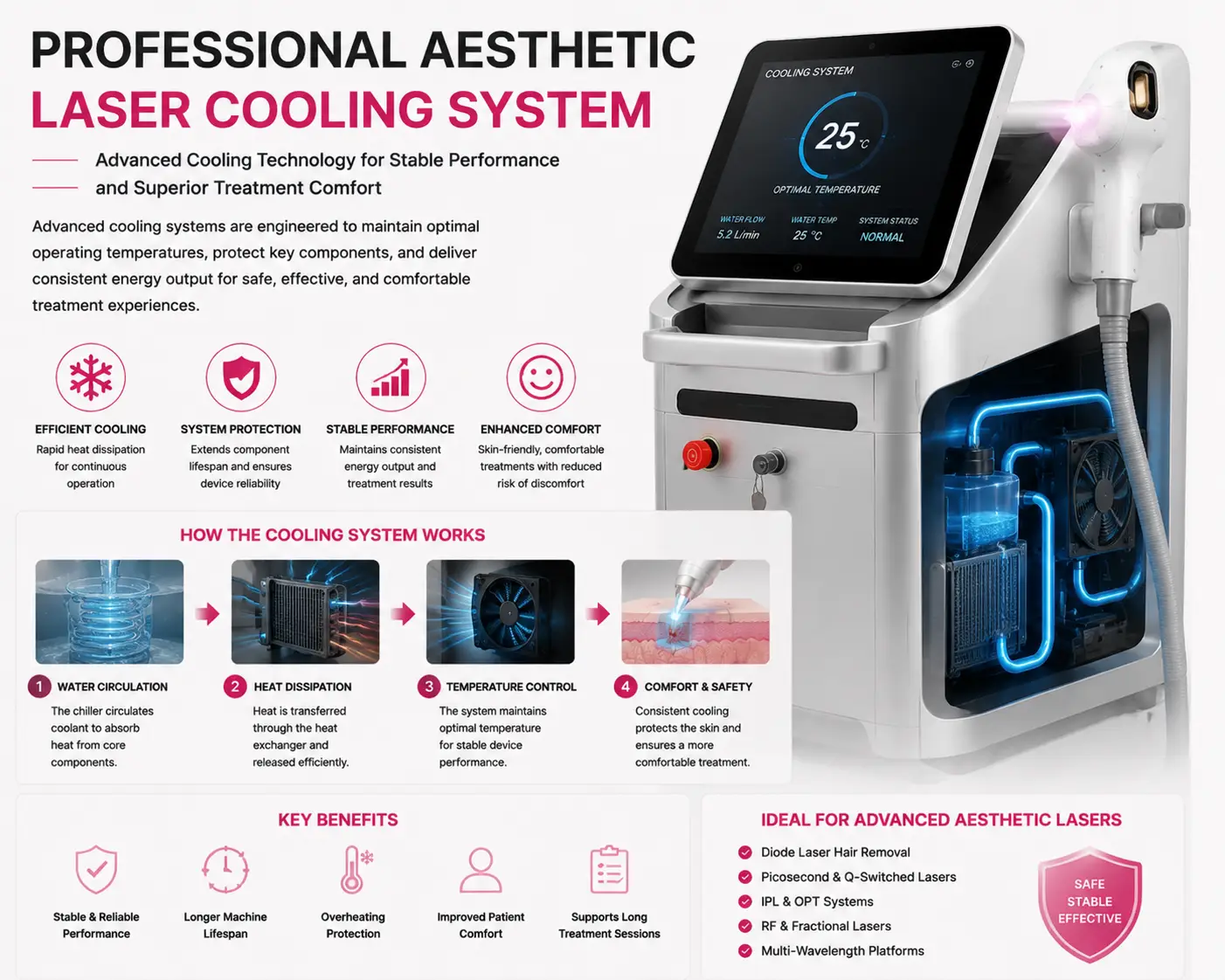
Professional laser cooling technology is an essential component of modern aesthetic laser systems. Cooling systems help manage heat generated during laser treatments, improve patient comfort, and support stable device performance during professional clinical applications.
Different aesthetic laser platforms use different cooling solutions, including air cooling, contact cooling, water cooling, and integrated cooling systems. The ideal cooling method depends on the laser type, energy output, treatment application, and device design.
For professional laser equipment such as picosecond lasers, diode hair removal lasers, and CO2 lasers, an effective cooling system is an important factor in treatment experience, operational reliability, and long-term equipment performance.
What Is Professional Laser Cooling Technology?
Professional laser cooling technology refers to the systems and engineering solutions used to control heat during laser-based aesthetic treatments.
When a laser device delivers energy into targeted tissue, part of the energy is absorbed and converted into heat. While controlled energy absorption is necessary for treatment effectiveness, excessive heat can affect treatment comfort and device performance.
A professional cooling system helps regulate temperature by removing or reducing unwanted heat during treatment.
Modern aesthetic laser cooling technologies are designed to support:
- Patient comfort during procedures
- Stable laser performance
- Consistent treatment workflows
- Protection of surrounding tissue
- Long-term equipment reliability
Why Is Cooling Important in Aesthetic Laser Systems?
Cooling technology plays an important role in almost every professional aesthetic laser platform.
Different laser technologies generate different levels of heat depending on:
- Laser wavelength
- Energy output
- Pulse duration
- Treatment frequency
- Application type
For example, high-energy systems such as picosecond lasers and CO2 lasers require carefully designed thermal management solutions to maintain reliable operation.
Hair removal systems using diode laser technology also rely heavily on cooling because repeated high-energy pulses are delivered over larger treatment areas.
How Does Laser Cooling Technology Work?
Laser cooling systems work by controlling heat before, during, or after laser energy delivery.
Depending on system design, cooling can be achieved through different methods:
- Removing heat from internal laser components
- Cooling the treatment surface
- Reducing skin temperature before laser exposure
- Maintaining stable operating conditions
Professional laser manufacturers integrate cooling technology into the overall system architecture rather than treating it as a separate accessory.
Types of Cooling Systems Used in Professional Aesthetic Lasers
Professional aesthetic laser systems use different cooling technologies depending on the laser type, energy output, and treatment application.
The most common cooling solutions include:
- Air cooling systems
- Contact cooling systems
- Water cooling systems
- Integrated multi-stage cooling systems
Each cooling method provides different advantages, and many advanced laser platforms combine multiple cooling technologies to achieve better thermal management.
Air Cooling System for Aesthetic Laser Devices
Air cooling is one of the most common cooling methods used in professional aesthetic laser equipment.
Air cooling systems use airflow and heat exchange mechanisms to remove heat generated by internal components and maintain stable device operation.
Common applications include:
- Picosecond laser systems
- IPL platforms
- Certain diode laser devices
Advantages of Air Cooling
Air cooling systems provide several benefits:
- Simple system design
- Lower maintenance requirements
- Reliable long-term operation
- Compact equipment integration
For professional aesthetic equipment manufacturers, optimized air cooling design can improve system reliability while maintaining efficient operation.
Contact Cooling System in Laser Treatments
Contact cooling refers to cooling technology that directly transfers cooling energy to the treatment area through contact between the handpiece and the skin surface.
This approach is commonly used in laser hair removal systems because treatment areas often require repeated laser pulses.
Contact cooling can help:
- Reduce surface temperature
- Improve patient comfort
- Support repeated treatments
- Enhance treatment experience
Modern diode laser hair removal machines frequently combine contact cooling with other cooling methods to provide more comprehensive thermal management.
Learn more: Diode Laser Hair Removal Technology
Water Cooling System for Medical Laser Equipment
Water cooling systems use liquid circulation to transfer and remove heat from laser components.
Because water has strong heat transfer capability, water cooling is often used in higher-power laser systems that require efficient thermal control.
Applications may include:
- High-power laser systems
- Professional medical aesthetic platforms
- Advanced energy-based devices
Advantages of Water Cooling
- Efficient heat removal
- Stable temperature control
- Suitable for high-energy applications
However, water cooling systems usually require more complex engineering and maintenance compared with air cooling solutions.
Integrated Cooling Systems in Modern Laser Platforms
Advanced professional laser systems often combine multiple cooling technologies into an integrated cooling architecture.
An integrated cooling system may include:
- Air circulation cooling
- Contact cooling
- Liquid cooling components
- Intelligent temperature monitoring
The purpose of an integrated cooling system is to provide stable thermal management throughout the entire treatment process.
This approach is commonly found in premium professional laser platforms designed for clinics, medical spas, and global distributors.
Cooling Technology Requirements for Different Laser Systems
Different aesthetic laser technologies require different cooling strategies because each platform produces different levels of heat.
| Laser Technology | Common Cooling Requirements |
|---|---|
| Diode Laser Hair Removal | Contact cooling and integrated cooling systems |
| Picosecond Laser | Internal thermal management and air/liquid cooling solutions |
| CO2 Laser | Advanced thermal control for high-energy operation |
| IPL Systems | Air cooling and treatment head cooling |
Selecting the correct cooling technology is an important part of professional laser system design.
Cooling Technology in Different Professional Laser Systems
Different professional aesthetic laser platforms require different cooling strategies because each laser technology operates with different energy levels, pulse characteristics, and treatment applications.
Understanding cooling requirements for different laser systems helps clinics and distributors evaluate equipment performance more effectively.
Diode Laser Cooling System for Hair Removal Machines
Diode laser hair removal systems are one of the most common aesthetic devices that rely heavily on advanced cooling technology.
During hair removal treatments, diode lasers deliver repeated energy pulses to target hair follicles. Because large treatment areas often require multiple pulses, effective cooling is essential for maintaining treatment comfort and stable operation.
Professional diode laser cooling systems commonly combine:
- Contact cooling through the treatment handpiece
- Internal heat management systems
- Temperature monitoring technology
A well-designed diode laser cooling system can help:
- Maintain consistent treatment performance
- Improve patient comfort
- Support high-frequency clinical operation
- Extend device component lifespan
For professional clinics, cooling capability is an important factor when selecting a diode laser hair removal machine.
Learn more: Professional Diode Laser Hair Removal Machines
Picosecond Laser Cooling System
Picosecond laser systems use ultra-short pulses to deliver high peak energy within extremely short time periods. Although the pulse duration is very short, professional systems still require effective thermal management.
Picosecond laser cooling technology focuses on maintaining:
- Stable laser source performance
- Reliable energy output
- Consistent treatment parameters
- Long-term system operation
Professional picosecond laser platforms may integrate cooling solutions such as:
- Air cooling systems
- Internal heat dissipation structures
- Advanced temperature control systems
Effective thermal management allows picosecond laser systems to operate reliably during demanding clinical applications such as tattoo removal and pigmentation treatment.
Related technology: Picosecond Laser Technology Guide
CO2 Laser Cooling Technology
CO2 laser systems generate high-energy laser output and require carefully designed thermal management solutions.
Cooling technology in CO2 laser platforms helps maintain:
- Laser tube performance
- Energy stability
- System reliability
- Treatment consistency
Because CO2 lasers are commonly used for skin resurfacing and ablative treatments, precise engineering of the cooling system is essential for professional operation.
Advanced CO2 laser platforms often combine multiple thermal management technologies to support continuous clinical workflows.
Learn more: CO2 Laser Technology
How Cooling Technology Affects Laser System Performance
Cooling technology does more than improve treatment comfort. It also directly influences the overall performance and reliability of professional laser equipment.
Maintaining Stable Energy Output
Laser components operate most effectively when maintained within appropriate temperature ranges.
Effective cooling helps reduce thermal fluctuations and supports consistent energy delivery during repeated treatments.
Supporting Long-Term Device Reliability
Professional aesthetic laser systems are designed for frequent clinical use. Reliable cooling helps reduce thermal stress on important components.
This can contribute to:
- Improved equipment durability
- Reduced downtime
- More predictable maintenance requirements
Improving Treatment Experience
Cooling systems are also important from the patient experience perspective.
Appropriate cooling can help manage heat sensation during laser procedures and improve overall treatment comfort.
Why Professional Laser Manufacturers Focus on Cooling Design
Cooling system design is an important part of professional laser equipment engineering.
Leading manufacturers consider cooling technology during the entire product development process, including:
- Laser source selection
- Optical system design
- Handpiece engineering
- Software monitoring
- Clinical workflow requirements
An optimized cooling system helps create a more reliable and efficient professional aesthetic laser platform.
How to Choose a Professional Laser Cooling System
Selecting the right cooling technology is an important consideration when evaluating professional aesthetic laser equipment. A suitable cooling system should match the laser platform, treatment application, and expected clinical workload.
Important factors to consider include:
- Laser technology type
- Energy output requirements
- Treatment frequency
- Cooling performance
- Maintenance requirements
- Equipment reliability
Match Cooling Technology With Laser Type
Different laser platforms require different cooling solutions. A cooling system designed for a diode hair removal laser may not be suitable for a high-energy CO2 or picosecond laser system.
Professional buyers should evaluate cooling technology based on the specific laser application.
| Laser Application | Important Cooling Considerations |
|---|---|
| Diode Laser Hair Removal | Fast heat management and treatment handpiece cooling |
| Picosecond Laser | Stable internal thermal control and energy consistency |
| CO2 Laser | Advanced thermal management for high-energy operation |
| IPL System | Flash lamp and treatment head cooling |
Evaluate Cooling Performance
Cooling performance is not only determined by the cooling method itself but also by the overall engineering design of the laser system.
Professional systems should provide:
- Stable temperature control
- Consistent cooling performance
- Reliable operation during repeated treatments
- Efficient heat dissipation
Consider Clinical Workflow Requirements
Clinics performing a high volume of treatments should consider how the cooling system performs during continuous operation.
Important questions include:
- Can the system maintain stable performance during long treatment sessions?
- Does the cooling system require frequent maintenance?
- Is the cooling solution integrated into the device design?
Future Development of Laser Cooling Technology
As aesthetic laser systems continue to become more powerful and versatile, cooling technology will remain an important area of innovation.
Future trends in professional laser cooling may include:
- Smarter temperature monitoring systems
- More efficient heat management
- Improved energy efficiency
- Integrated intelligent control systems
- More compact cooling designs
Advanced cooling solutions will continue to support the development of safer, more reliable, and more efficient aesthetic laser platforms.
Frequently Asked Questions About Professional Laser Cooling Technology
Why is cooling important in aesthetic laser systems?
Cooling is important because laser treatments generate heat. Professional cooling systems help manage thermal effects, improve treatment comfort, and maintain stable device performance.
How does a laser cooling system work?
A laser cooling system works by removing heat from laser components or the treatment area through methods such as air cooling, contact cooling, water cooling, or integrated thermal management systems.
What type of cooling is used in diode laser hair removal machines?
Professional diode laser hair removal machines commonly use contact cooling combined with internal thermal management systems to support repeated high-energy pulses during treatments.
Do picosecond lasers need cooling systems?
Yes. Although picosecond lasers use extremely short pulses, professional systems still require thermal management to maintain stable laser performance and reliable operation.
What is the best cooling system for aesthetic lasers?
The best cooling system depends on the laser technology, energy output, and application. Different systems may use air cooling, contact cooling, water cooling, or integrated cooling solutions.
How does cooling improve laser treatment comfort?
Cooling helps reduce heat sensation during laser procedures and improves the overall patient treatment experience.
Why do professional laser manufacturers design integrated cooling systems?
Integrated cooling systems allow manufacturers to optimize thermal management together with laser source design, handpiece engineering, and treatment workflow requirements.
Final Verdict
Professional laser cooling technology is a critical component of modern aesthetic laser systems. Although laser wavelengths, pulse duration, and energy output receive significant attention, effective thermal management is equally important for reliable clinical performance.
Different technologies require different cooling approaches. Diode laser hair removal systems rely heavily on treatment handpiece cooling, picosecond lasers require stable thermal management for precise energy delivery, and CO2 lasers require advanced cooling solutions for high-energy operation.
For clinics, distributors, and OEM partners, evaluating cooling technology should be an essential part of selecting professional laser equipment.
A well-designed cooling system supports:
- Reliable device operation
- Consistent treatment performance
- Improved patient comfort
- Long-term equipment value
As professional aesthetic laser technology continues to evolve, advanced cooling systems will remain a key factor in developing safer, more efficient, and more reliable treatment platforms.
Explore professional aesthetic laser solutions: Professional Aesthetic Laser Systems