Thulium Laser for Melasma: Benefits, Results & Risks
Melasma is a complex pigmentary condition that commonly appears as symmetrical brown or gray-brown patches on areas such as the cheeks, forehead, upper lip, and chin. Because pigmentation is one of the aesthetic applications associated with 1927nm thulium laser technology, patients and clinics increasingly ask whether a thulium laser can be used for melasma.
The answer requires caution. Fractional 1927nm thulium laser treatment may be considered as part of a melasma management strategy for selected patients, but melasma is not simply a superficial pigment deposit that can always be permanently removed with a laser. Hormonal influences, ultraviolet radiation, visible light, inflammation, skin type, vascular factors, and individual predisposition can all contribute to its development and recurrence.
This guide explains why 1927nm thulium technology may be considered for melasma, how fractional treatment works, what results may realistically look like, and why patient selection, conservative treatment planning, photoprotection, and long-term management are important.
Quick Answer
Can thulium laser treat melasma? A fractional thulium laser operating around 1927nm may be used in selected melasma treatment strategies because the wavelength is strongly absorbed by water and is associated with a relatively superficial treatment profile. This makes it relevant to epidermal pigmentation and other superficial photodamage-related concerns.
However, thulium laser should not be considered a guaranteed or permanent cure for melasma. Melasma can recur, and excessive thermal or inflammatory stimulation may contribute to post-inflammatory pigmentary changes in susceptible patients. Appropriate diagnosis, conservative parameters, sun and visible-light protection, aftercare, and ongoing management are therefore important.
What Is Melasma?
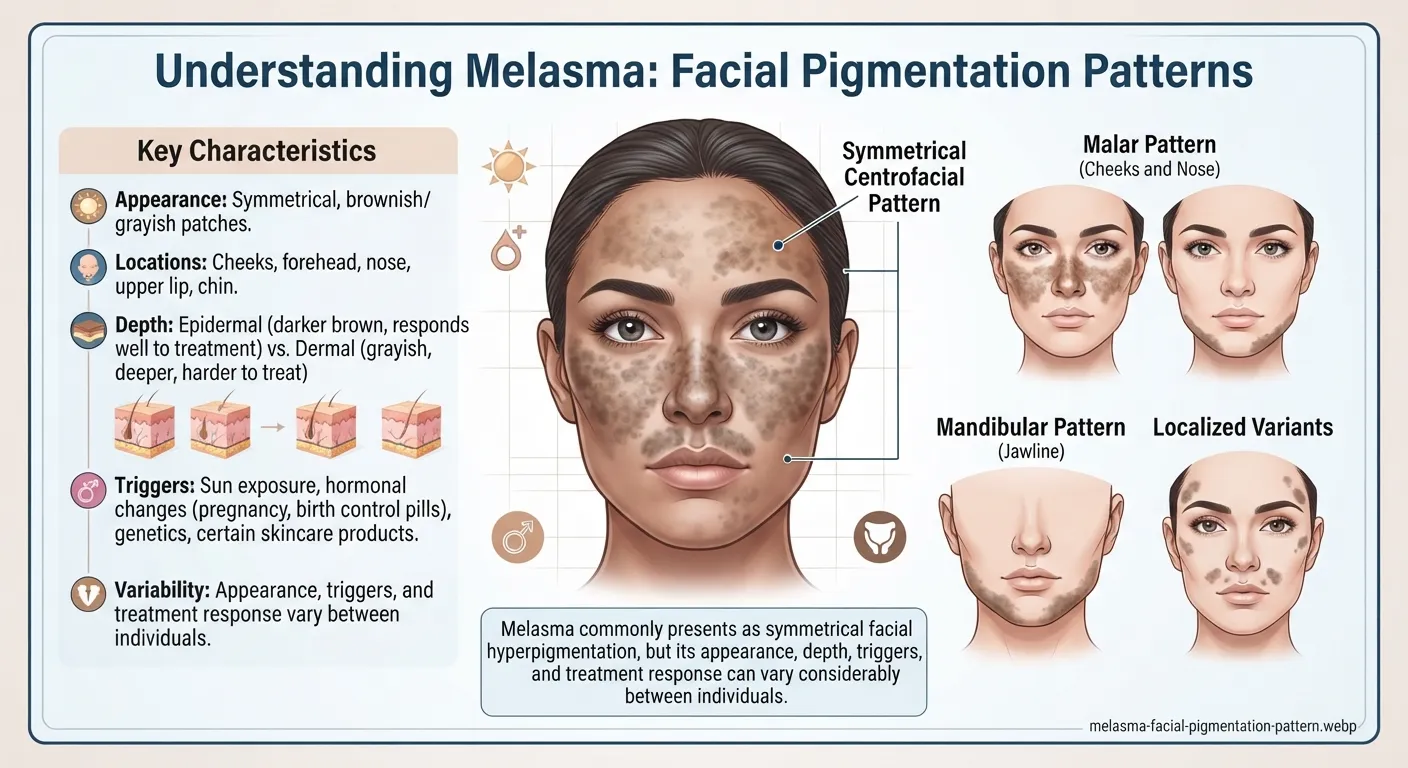
Melasma is an acquired hyperpigmentation disorder characterized by irregular brown, tan, or gray-brown patches, most commonly affecting sun-exposed areas of the face.
It frequently appears on the:
- Cheeks
- Forehead
- Upper lip
- Chin
- Bridge of the nose
Although excess melanin is an important feature, melasma is more complicated than simply having “too much pigment.” Multiple biological and environmental factors may contribute to the condition.
What Can Trigger or Worsen Melasma?
Factors associated with melasma can include:
- Ultraviolet exposure
- Visible-light exposure
- Hormonal influences
- Genetic predisposition
- Pregnancy-related hormonal changes
- Certain medications or hormonal therapies
- Inflammation and skin irritation
- Heat and environmental exposure
These factors help explain why melasma can improve after treatment and later return. Treating visible pigmentation does not necessarily eliminate the underlying tendency to develop melasma.
Why Is Melasma Difficult to Treat?
Melasma is considered challenging because visible pigment is only one part of the condition. Even when pigmentation becomes less noticeable after treatment, the biological tendency responsible for melasma may remain.
This creates several challenges for laser-based treatment.
Melasma Can Exist at Different Skin Depths
Pigment distribution is not identical in every patient. Some pigmentation may be predominantly epidermal, while other cases can involve deeper or mixed components. This can influence how the skin responds to a particular treatment strategy.
Melasma Can Recur
Improvement after treatment does not necessarily mean the condition has permanently disappeared. Continued exposure to triggering factors can contribute to recurrence.
Inflammation Can Influence Pigmentation
Laser treatments intentionally create controlled tissue effects. If treatment is too aggressive for a particular patient, the resulting inflammatory response may contribute to unwanted pigmentary changes.
Skin Type Matters
Patients with greater susceptibility to post-inflammatory hyperpigmentation require careful assessment and treatment planning. A treatment protocol that is appropriate for one patient may not be appropriate for another.
For these reasons, melasma should not be approached as though it were identical to a discrete sun spot or isolated superficial pigmented lesion.
Why Is 1927nm Thulium Laser Used for Melasma?
The interest in 1927nm thulium laser for melasma is related to the wavelength’s optical interaction with water and its relatively superficial treatment profile.
Water is an important chromophore for 1927nm laser energy. Strong water absorption means that the wavelength can create controlled thermal effects relatively superficially compared with some laser wavelengths used for deeper fractional treatment.
This characteristic makes 1927nm relevant to treatment strategies involving superficial pigmentation, photodamage, uneven tone, and overall skin quality.
It is important, however, not to oversimplify the mechanism by saying that a 1927nm thulium laser directly “targets melanin” in the same way that a pigment-selective laser may be described. Water absorption is central to the optical behavior of the 1927nm wavelength.
For a deeper explanation of the wavelength itself, see our 1927nm Thulium Laser guide.
How Does Fractional Thulium Laser Treatment Work for Melasma?
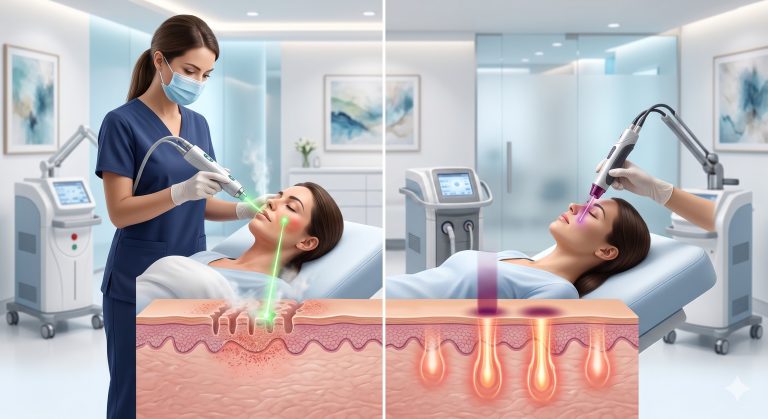
Many aesthetic 1927nm thulium systems use fractional delivery. Rather than exposing the entire treatment area uniformly, fractional technology distributes laser energy into microscopic treatment zones.
Areas of intervening tissue remain between these zones during treatment. The density, energy, scanning pattern, number of passes, and other parameters can influence the overall treatment response.
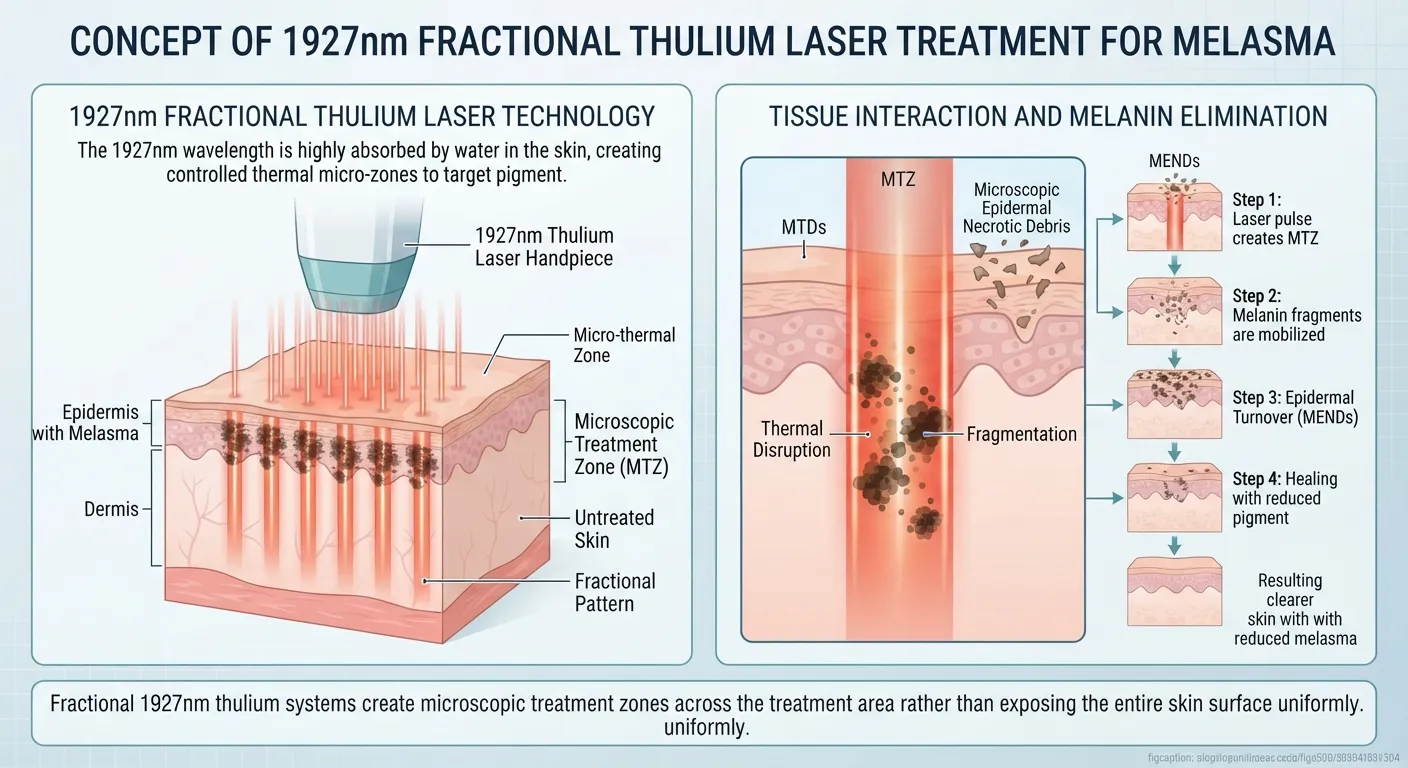
For melasma, this fractional approach may allow a practitioner to use controlled treatment coverage while considering the patient’s pigmentation pattern, skin response, and tolerance for recovery.
The key word is controlled. Melasma is not generally a condition where simply increasing energy or treatment density should be assumed to produce a better result.
Learn more about microscopic treatment zones, fractional density, and treatment architecture in our Fractional Thulium Laser guide.
What Are the Potential Benefits of Thulium Laser for Melasma?
When appropriately selected and performed, fractional thulium treatment may provide several potential advantages within a broader melasma management strategy. The actual benefit varies by patient, device, protocol, and pigmentation characteristics.
Improvement in the Appearance of Pigmentation
The most relevant goal is reducing the visible appearance of uneven pigmentation. Selected patients may experience a more even-looking complexion as treated pigmentation changes during the post-treatment recovery process.
Relatively Superficial Treatment Profile
The optical characteristics of approximately 1927nm make the wavelength relevant when the treatment strategy is focused on relatively superficial skin concerns.
Fractional Treatment Control
Fractional systems can provide control over treatment coverage rather than uniformly exposing the entire surface. Depending on the platform, practitioners may be able to adjust variables such as energy, density, passes, and scanning pattern.
Broader Skin-Quality Goals
Patients with melasma may also have photodamage, uneven tone, or other visible signs of cumulative sun exposure. Fractional 1927nm treatment may therefore be considered within a broader skin-rejuvenation strategy rather than solely as a pigment-removal procedure.
Who May Be a Candidate for Thulium Laser Melasma Treatment?
There is no universal profile that makes every patient with melasma an appropriate candidate for fractional thulium treatment.
Professional assessment may consider:
- The clinical diagnosis and pigmentation pattern
- Whether pigmentation appears predominantly epidermal, dermal, or mixed
- Skin phototype
- History of post-inflammatory hyperpigmentation
- Previous melasma treatments and response
- Current skin irritation or inflammation
- Recent sun exposure or tanning
- Medications and relevant medical history
- Pregnancy or hormonal factors where relevant
- The patient’s ability to follow post-treatment photoprotection
- Expectations regarding improvement and recurrence
An important part of consultation is establishing realistic expectations. The goal may be improvement and management rather than promising permanent elimination of melasma.
When Should Extra Caution Be Used?
Extra caution may be appropriate when a patient has a history of strong pigmentary responses after inflammation, active skin irritation, recent significant sun exposure, unrealistic expectations, or other factors that could increase treatment complexity.
Device-specific contraindications must also be considered. The fact that a treatment is described broadly as “1927nm thulium laser” does not mean every device has identical indications, contraindications, energy delivery, or regulatory authorization.
Qualified practitioners should follow the instructions, training, and approved intended use for the specific laser platform being operated.
Thulium Laser for Epidermal vs Deeper Melasma
The depth and distribution of pigmentation can influence treatment strategy. This is particularly relevant when discussing a relatively superficial wavelength such as 1927nm.
| Melasma Characteristic | General Consideration |
|---|---|
| Predominantly Epidermal Pigmentation | Superficial pigmentation may be more relevant to treatment strategies involving fractional 1927nm technology. |
| Deeper Pigment Components | A superficial fractional approach may not address every component of deeper pigmentation. |
| Mixed Melasma | Treatment may require a broader management strategy rather than relying on one laser modality alone. |
| High PIH Susceptibility | Conservative treatment planning and careful assessment become especially important. |
| Recurrent Melasma | Long-term trigger management and photoprotection remain important even after visible improvement. |
These categories should not be used for self-diagnosis. Clinical assessment is required to determine the characteristics of an individual patient’s pigmentation and whether a laser-based approach is appropriate.
What Results Can You Expect from Thulium Laser for Melasma?
The goal of thulium laser treatment for melasma should generally be described as improvement in the visible appearance of pigmentation rather than permanent removal of the condition.
In appropriately selected patients, fractional 1927nm treatment may contribute to a more even-looking complexion and a reduction in the visibility of some superficial pigmentation. Changes may become noticeable after the initial recovery period and can continue to evolve over the following weeks.
However, results vary substantially. The response can be influenced by the depth and distribution of pigmentation, skin phototype, treatment parameters, previous therapies, sun exposure, hormonal influences, aftercare, and the individual tendency for melasma to recur.
Melasma Improvement Is Not the Same as a Cure
This distinction is particularly important when evaluating laser treatment results. A patient may experience meaningful visible improvement while still retaining the biological tendency to develop melasma.
Therefore, even a good initial response does not guarantee that pigmentation will remain unchanged indefinitely.
Thulium Laser for Melasma Before and After: What Should You Expect?
Before-and-after photographs can be useful for understanding possible changes following thulium laser treatment, but they should be interpreted carefully. Lighting, camera settings, skin preparation, makeup, treatment timing, and image editing can all influence how pigmentation appears in photographs.
More importantly, a before-and-after image represents one patient’s response at one point in time. It does not demonstrate that another patient will achieve the same result or that the improvement will be permanent.
Immediately After Treatment
Depending on the treatment intensity, the skin may appear red or feel warm and sensitive. Mild swelling may also occur.
During the Early Recovery Period
The skin may become dry or rough, and some pigmented areas can temporarily appear darker. This temporary darkening should not automatically be interpreted as treatment failure.
After the Initial Recovery Period
As temporary treatment effects resolve, changes in the appearance of superficial pigmentation and overall tone may become easier to evaluate.
Over the Following Weeks
The final response should be assessed after sufficient recovery rather than immediately after treatment. The practitioner can then determine whether further treatment or a different management strategy is appropriate.
How Many Thulium Laser Sessions Are Needed for Melasma?
There is no universal number of thulium laser sessions required for melasma.
Some treatment plans may involve multiple conservative sessions rather than attempting to create a strong response with one aggressive procedure. The appropriate approach depends on the specific device, treatment protocol, patient characteristics, clinical response, and treatment objective.
Factors that can influence the number of sessions include:
- Severity and distribution of visible pigmentation
- Depth of the pigmentary components
- Skin phototype
- History of previous melasma treatments
- Response after each treatment
- Treatment energy and fractional density
- Post-treatment sun and visible-light exposure
- Hormonal and other contributing factors
- Long-term maintenance strategy
More treatment is not necessarily better. Repeated procedures should be based on professional reassessment rather than following a fixed session count for every patient.
Thulium Laser for Melasma Downtime and Recovery
Recovery following fractional 1927nm thulium treatment varies according to treatment intensity, fractional density, number of passes, device characteristics, treatment area, and individual skin response.
Temporary post-treatment effects can include:
- Redness
- Warmth
- Mild swelling
- Skin sensitivity
- Dryness
- Rough or sandpaper-like texture
- Temporary darkening of visible pigmentation
The presence and duration of these effects vary. A fixed downtime period should therefore not be promised for every patient or every fractional thulium laser system.
Treatment intensity is especially relevant in melasma because the objective is not simply to maximize thermal injury. Excessive inflammation can be counterproductive in patients susceptible to pigmentary changes.
What Are the Side Effects and Risks?
Fractional thulium laser treatment can cause expected temporary skin responses, but unwanted effects are also possible. Risk depends on patient characteristics, treatment settings, practitioner technique, device design, and post-treatment care.
Potential concerns may include:
- Prolonged redness or irritation
- Swelling and sensitivity
- Excessive dryness or disruption of the skin barrier
- Temporary worsening of pigmentation
- Post-inflammatory hyperpigmentation
- Hypopigmentation or uneven pigmentation in some circumstances
- Reactivation or recurrence of melasma
- Other device- or patient-specific adverse reactions
The specific risk profile and contraindications should be determined according to the device instructions and professional clinical assessment.
Post-Inflammatory Hyperpigmentation After Thulium Laser
Post-inflammatory hyperpigmentation (PIH) is an important consideration whenever energy-based treatments are used in patients prone to pigmentary changes.
PIH occurs when inflammation or skin injury is followed by increased pigmentation. Because laser treatment intentionally creates a controlled tissue response, overly aggressive treatment can increase concern about unwanted pigmentary changes in susceptible individuals.
This is one reason melasma treatment should not follow a simple “higher energy equals better results” approach.
Who May Require Greater Caution?
Greater caution may be appropriate for patients with:
- A previous history of PIH
- Greater baseline skin pigmentation
- Recent tanning or substantial sun exposure
- Active irritation or inflammation
- A history of poor responses to aggressive procedures
- Difficulty following post-treatment photoprotection
Skin phototype alone does not determine treatment suitability, but it is one of several factors that should be considered during patient assessment.
Can Melasma Come Back After Thulium Laser?
Yes. Melasma can recur after thulium laser treatment even when the initial cosmetic response is good.
Recurrence is not unique to thulium laser. It reflects the underlying nature of melasma as a chronic and multifactorial pigmentary condition.
Factors that may contribute to recurrence include:
- Ultraviolet exposure
- Visible-light exposure
- Hormonal influences
- Heat and environmental triggers
- Inflammation
- Individual genetic predisposition
- Changes in skin-care or maintenance routines
This is why long-term management can be as important as the laser procedure itself. Patients should understand before treatment that improvement does not necessarily equal permanent clearance.
Thulium Laser vs Pico Laser for Melasma
Thulium and picosecond lasers are different technologies and should not be treated as interchangeable simply because both can appear in discussions about pigmentation.
Fractional 1927nm thulium technology relies strongly on interaction with water and controlled fractional thermal effects. Picosecond laser systems use extremely short pulse durations and, depending on wavelength and device design, can produce strong photoacoustic or photomechanical effects in addition to photothermal effects.
| Feature | 1927nm Thulium Laser | Picosecond Laser |
|---|---|---|
| Core Technology | Thulium wavelength with commonly fractional delivery | Ultra-short picosecond pulse technology |
| Important Interaction | Strong interaction with water | Depends on wavelength and target; strong photoacoustic effects may be involved |
| Treatment Architecture | Often fractional microscopic treatment zones | Varies by platform and handpiece |
| Pigmentation Strategy | Relatively superficial fractional treatment | Pigment-focused strategies vary by wavelength and device |
| Melasma Consideration | Requires conservative selection and management | Also requires careful selection because melasma can recur or worsen |
Neither technology should be described as universally superior for melasma. The appropriate treatment depends on the characteristics of the pigmentation, patient skin, device, protocol, and practitioner assessment.
Thulium Laser vs IPL for Melasma
IPL and 1927nm thulium laser also differ fundamentally. A thulium laser produces a specific laser wavelength or narrow operating region depending on the system, while intense pulsed light delivers broad-spectrum light filtered for selected applications.
IPL can be useful for selected pigmentation and photodamage concerns, but melasma again requires more caution than isolated sun-induced pigmentation.
| Feature | 1927nm Thulium Laser | IPL |
|---|---|---|
| Energy Source | Laser | Broad-spectrum intense pulsed light |
| Wavelength | Approximately 1927nm in the systems discussed here | Broad wavelength range controlled by filters |
| Fractional Delivery | Common in aesthetic 1927nm systems | Not the same fractional laser architecture |
| Common Pigmentation Context | Superficial pigmentation and photodamage strategies | Selected pigmentation, redness and photodamage applications |
| Melasma | Requires careful patient selection | Also requires careful patient selection and conservative treatment planning |
The question should therefore not simply be “Which device removes melasma better?” A more clinically useful question is which treatment strategy is appropriate for the individual patient and how recurrence and inflammatory risk will be managed.
Why Sun Protection Matters After Melasma Laser Treatment
Photoprotection is particularly important after laser treatment for melasma because ultraviolet and visible-light exposure can contribute to pigmentation and recurrence.
Patients should follow the post-treatment instructions provided by their treating professional. Depending on individual needs, the long-term strategy may include appropriate sunscreen, physical sun avoidance, protective clothing, and other clinician-recommended measures.
Photoprotection should not be viewed only as something required during the first few days after treatment. Because melasma can recur, ongoing protection can form part of longer-term management.
Thulium Laser Melasma Aftercare
Aftercare depends on the specific procedure and device, so patients should follow their practitioner’s instructions rather than relying on a universal protocol.
General treatment goals during recovery may include protecting the skin barrier, minimizing unnecessary irritation, and reducing avoidable environmental triggers.
Depending on professional guidance, this may involve:
- Using gentle skin-care products during early recovery
- Avoiding unnecessary exfoliation or irritating products until appropriate
- Maintaining appropriate moisturization
- Following recommended sun and visible-light protection
- Avoiding deliberate tanning
- Not picking or aggressively rubbing areas of temporary roughness or darkening
- Following any prescribed or professionally recommended maintenance regimen
- Contacting the treating clinic if unexpected or persistent reactions occur
Is Thulium Laser Better as a Standalone Treatment or Part of a Combination Plan?
Because melasma is multifactorial, a laser procedure may be only one component of a broader management strategy.
Depending on professional assessment, long-term management can involve photoprotection, appropriate topical approaches, trigger management, maintenance treatment, or other modalities in addition to energy-based procedures.
This does not mean every patient requires combination therapy. Instead, it highlights why melasma treatment should be individualized rather than reduced to choosing a single machine.
What Should Clinics Consider When Using 1927nm Thulium Laser for Melasma?
For clinics, the ability of a device to operate around 1927nm is only one part of the treatment equation. A professional platform must also provide appropriate control, predictable energy delivery, usable treatment protocols, and adequate manufacturer support.
Fractional Density Control
Density affects the proportion and distribution of microscopic treatment zones. This is particularly relevant when conservative treatment coverage is desired.
Energy and Treatment Parameter Control
Practitioners should understand how the platform controls energy, passes, scanning patterns, treatment speed, and other relevant parameters.
Consistent Energy Delivery
Predictable device performance is important when developing repeatable professional protocols. A nominal wavelength alone provides limited information about overall treatment performance.
Operator Training
Melasma is not an indication where a generic preset should replace professional assessment. Training should include patient selection, parameter selection, expected endpoints, contraindications, aftercare, and management of adverse reactions.
Device Intended Use and Regulatory Status
Indications and regulatory authorization differ between devices and markets. Clinics and distributors should confirm the intended use, documentation, and local requirements applicable to the specific system.
Clinics evaluating the underlying technology can also read our Fractional Thulium Laser guide and 1927nm Thulium Laser technology guide.
Frequently Asked Questions About Thulium Laser for Melasma
Does thulium laser remove melasma?
Fractional thulium laser may improve the visible appearance of melasma in selected patients, but it should not be described as permanently removing or curing the condition. Melasma is multifactorial and can recur after successful treatment.
Is 1927nm thulium laser good for melasma?
Approximately 1927nm fractional thulium technology may be considered for selected melasma treatment strategies because of its relatively superficial treatment profile. Suitability depends on pigmentation characteristics, skin type, previous treatment response, device parameters, and professional assessment.
How many thulium laser sessions are needed for melasma?
There is no fixed number that applies to every patient. Treatment plans may use multiple conservative sessions, but the number and spacing should depend on individual response, the specific device, and the practitioner’s treatment strategy.
Can melasma get worse after thulium laser?
Unwanted pigmentary changes are possible after energy-based treatment, particularly when inflammation is excessive or a patient is susceptible to post-inflammatory hyperpigmentation. Appropriate patient selection, conservative treatment planning, and aftercare are therefore important.
Can melasma return after 1927nm laser treatment?
Yes. Melasma can recur because underlying triggers and predisposition may remain even after visible pigmentation improves. Long-term photoprotection and individualized management may therefore be necessary.
Is thulium laser better than pico laser for melasma?
Neither technology is universally better. They use different wavelengths, pulse characteristics, and tissue-interaction mechanisms. The appropriate option depends on the patient’s pigmentation, skin characteristics, treatment history, device, and professional assessment.
Is thulium laser better than IPL for melasma?
Thulium laser and IPL are different technologies, and neither should automatically be considered superior for every case of melasma. Melasma requires individualized assessment because light and laser treatments can produce different responses in different patients.
How long does it take to see results?
Results should generally be evaluated after the initial treatment response and recovery have settled. Some visible changes may appear relatively early, while the overall response can continue to evolve over subsequent weeks. The timeline varies between patients and protocols.
Is thulium laser safe for darker skin tones?
Skin tone is one of several factors that should be considered when assessing treatment suitability. Patients with greater susceptibility to post-inflammatory pigmentary changes may require additional caution. Safety cannot be determined from wavelength or skin tone alone and requires professional assessment and appropriate device parameters.
Final Verdict: Is Thulium Laser Worth Considering for Melasma?
Fractional 1927nm thulium laser can be considered as part of a melasma treatment strategy for appropriately selected patients, particularly when relatively superficial pigmentation and photodamage are important treatment concerns.
Its strong interaction with water and fractional delivery architecture make 1927nm thulium technology distinct from picosecond lasers, IPL, and deeper fractional laser wavelengths. However, the technical advantages of a wavelength do not eliminate the biological complexity of melasma.
Melasma may recur, and aggressive treatment can increase inflammation and the possibility of unwanted pigmentary changes in susceptible patients. For this reason, realistic expectations, appropriate patient selection, conservative parameter selection, photoprotection, aftercare, and long-term management are central to treatment planning.
For clinics evaluating professional 1927nm systems, the decision should extend beyond wavelength alone. Fractional delivery design, parameter control, treatment consistency, operator training, technical support, device documentation, and regulatory requirements should all be considered when selecting a platform for pigmentation-focused applications.
Editorial & Technical Review: This article was prepared for the Cocoon Laser professional aesthetic technology knowledge center for educational and equipment-research purposes. It does not replace individual medical assessment. Melasma diagnosis, treatment suitability, contraindications, treatment parameters, expected outcomes, and adverse-event risks vary by patient and device. Clinical decisions should be made by appropriately qualified professionals according to local requirements and the instructions for the specific system.