Fractional Thulium Laser: How 1927nm Technology Works
Fractional thulium laser technology combines the optical characteristics of a thulium laser wavelength with a fractional delivery pattern that treats microscopic zones of skin rather than exposing the entire treatment area uniformly.
In aesthetic dermatology, fractional systems operating around 1927nm are commonly associated with treatment strategies for pigmentation, photodamage, uneven skin tone, and skin rejuvenation. However, understanding these systems requires separating two different concepts: 1927nm describes the wavelength, while fractional describes how the laser energy is delivered to the skin.
This guide explains how fractional 1927nm thulium laser technology works, what microscopic treatment zones are, why treatment density matters, and how fractional thulium differs from other fractional laser technologies.
Quick Answer
A fractional thulium laser is a laser system that delivers thulium laser energy in a fractional pattern, creating many microscopic treatment zones while leaving intervening areas of skin untreated. In aesthetic applications, systems around 1927nm are commonly used because this wavelength interacts strongly with water and produces a relatively superficial treatment profile.
The fractional delivery pattern allows practitioners to control treatment coverage through parameters such as energy, density, scanning pattern, and number of passes. This makes fractional 1927nm thulium technology particularly relevant to treatment strategies involving pigmentation, photodamage, uneven tone, and superficial skin rejuvenation.
What Is a Fractional Thulium Laser?
A fractional thulium laser combines two separate technological characteristics: a thulium-based laser wavelength and a fractional energy delivery system.
The term “thulium laser” describes a broader family of laser systems and does not, by itself, specify one wavelength or one clinical application. In aesthetic medicine, approximately 1927nm has become an important thulium-associated wavelength for fractional skin treatments.
“Fractional,” on the other hand, describes the spatial pattern in which energy is delivered.
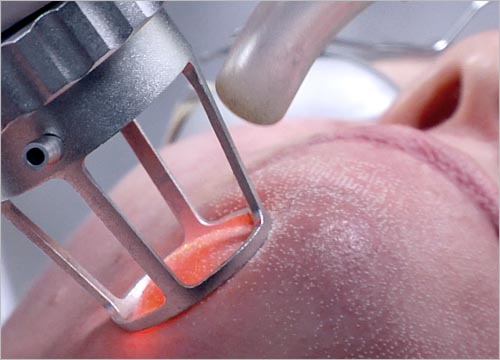
Instead of treating the entire skin surface as one continuous field, a fractional system distributes laser energy into numerous microscopic treatment zones. Areas between these zones receive less direct laser exposure or remain untreated during that pass.
This distinction is important because a wavelength and a delivery method are not the same thing. For a broader explanation of the wavelength itself, see our 1927nm Thulium Laser guide.

What Does “Fractional” Mean in Laser Treatment?
Fractional laser treatment is based on the concept of treating only a fraction of the skin within a given area during each pass.
The laser creates an organized pattern of microscopic treatment zones. These zones may be arranged through a scanning system or another device-specific delivery mechanism.
The tissue between individual treatment zones is comparatively less affected. This spatial separation is one of the defining characteristics of fractional laser technology.
Fractional Does Not Mean a Specific Wavelength
One common misunderstanding is that “fractional laser” refers to one particular wavelength. It does not.
Fractional delivery can be used with different laser wavelengths and technologies. Examples include approximately 1927nm thulium systems, approximately 1550nm fractional systems, and 10,600nm fractional CO2 lasers.
These technologies can all use fractional delivery while producing different tissue interactions because their wavelengths and device architectures are different.
Thulium, 1927nm and Fractional: What Is the Difference?
These three terms frequently appear together, but each describes a different part of the technology.
| Term | What It Describes | Why It Matters |
|---|---|---|
| Thulium | The laser family or gain-medium-related technology | Identifies the broader type of laser system |
| 1927nm | The approximate operating wavelength | Influences optical absorption and tissue interaction |
| Fractional | The spatial delivery pattern | Determines how treatment zones are distributed across the skin |
Therefore, the phrase 1927nm fractional thulium laser provides more information than simply saying “thulium laser.” It describes both the approximate wavelength and the way laser energy is spatially delivered.
How Does a 1927nm Fractional Thulium Laser Work?
A fractional 1927nm thulium system works through a combination of wavelength-specific optical absorption and controlled spatial delivery.
1. The Laser Generates Energy Around 1927nm
The system produces laser energy at or near the 1927nm region, depending on the specific device design.
2. Water in the Skin Absorbs the Laser Energy
Water is an important chromophore for this wavelength. Strong interaction with water contributes to the relatively superficial thermal profile associated with aesthetic 1927nm treatment.
This is one reason 1927nm systems are frequently discussed in relation to superficial pigmentation, photodamage, uneven tone, and skin rejuvenation.
3. The Fractional System Divides Treatment into Microscopic Zones
Instead of exposing the entire treatment area uniformly, the delivery system creates many small treatment zones across the skin.
Their size, spacing, geometry, and distribution depend on the device and treatment settings.
4. Controlled Thermal Effects Are Created Within the Treatment Zones
Absorbed laser energy produces controlled thermal effects within the targeted microscopic areas. The exact nature and intensity of these effects vary according to energy, pulse characteristics, density, scanning method, passes, and device design.
5. Intervening Tissue Supports the Fractional Treatment Strategy
Because the entire surface is not treated uniformly during a fractional pass, intervening tissue remains between the microscopic treatment zones. This is central to the fractional approach and helps distinguish it from full-field treatment.

What Are Microscopic Treatment Zones?
Microscopic treatment zones are small, spatially separated areas where laser energy produces a controlled tissue response.
Rather than creating one continuous treated field, a fractional system produces many individual zones distributed across the treatment area.
The exact dimensions and geometry of these zones are device-specific. They can be influenced by the optical system, scanning mechanism, energy settings, treatment density, pulse characteristics, and other platform parameters.
For this reason, two devices described as “1927nm fractional thulium lasers” should not automatically be assumed to create identical treatment patterns or tissue effects.
Why Does Fractional Density Matter?
Fractional density generally refers to how closely microscopic treatment zones are distributed within a treatment area or how much of that area is treated during a pass.
Density is important because fractional treatment is not determined by energy alone. Increasing or decreasing coverage can substantially change the overall treatment burden placed on the skin.
A treatment strategy may involve lower coverage for a more conservative approach or greater coverage when a more intensive fractional treatment is appropriate. The available range and method of density adjustment depend on the laser platform.
| Parameter | What It Influences |
|---|---|
| Energy | Energy delivered within individual treatment zones |
| Density | Distribution and overall coverage of microscopic treatment zones |
| Number of Passes | Total exposure and cumulative treatment coverage |
| Scanning Pattern | Spatial arrangement of treatment zones |
| Treatment Speed | Workflow and delivery across the treatment area |
These parameters interact with one another. Consequently, comparing two fractional laser treatments based only on a single energy value can be misleading.
Why Is 1927nm Used for Fractional Skin Treatment?
The importance of 1927nm comes primarily from how the wavelength interacts with water in tissue.
Because water absorbs strongly in this spectral region, 1927nm laser energy is generally associated with a relatively superficial treatment profile compared with certain fractional wavelengths used for deeper thermal treatment.
This characteristic has made fractional 1927nm technology relevant to treatment strategies involving visible photodamage, superficial pigmentation, uneven skin tone, and overall skin quality.
However, describing 1927nm as “superficial” should not be interpreted as a fixed penetration depth for every device. Actual tissue effects depend on the complete laser system and treatment parameters.
Fractional vs Full-Field Laser Treatment
The easiest way to understand fractional technology is to compare it with full-field treatment.
In a full-field approach, a much larger proportion of the treatment surface is exposed continuously. Fractional treatment instead separates energy into microscopic zones with intervening areas between them.
| Characteristic | Fractional Treatment | Full-Field Treatment |
|---|---|---|
| Energy Distribution | Microscopic separated treatment zones | More continuous surface treatment |
| Untreated Intervening Areas | Present within the fractional pattern | Much less characteristic of the approach |
| Coverage Control | Can be adjusted through fractional density and pattern | Determined by the full-field treatment technique |
| Treatment Strategy | Balances microscopic treatment with intervening tissue | Treats a larger continuous proportion of the surface |

What Is Fractional Thulium Laser Used For?
In aesthetic dermatology, fractional 1927nm thulium technology is commonly considered for skin concerns where relatively superficial fractional treatment is desirable. Applications depend on the specific device, treatment protocol, patient characteristics, and regulatory authorization in the relevant market.
| Skin Concern | Why Fractional 1927nm May Be Considered |
|---|---|
| Photodamage | Targets superficial skin changes associated with cumulative sun exposure |
| Uneven Pigmentation | 1927nm is commonly used in pigmentation-focused treatment strategies |
| Uneven Skin Tone | Fractional treatment can be incorporated into broader skin rejuvenation protocols |
| Superficial Texture Concerns | May support treatment strategies focused on overall skin quality |
| Melasma | May be considered selectively, with careful patient assessment and conservative treatment planning |
| Facial Rejuvenation | Can be used when the treatment objective includes tone, pigmentation and superficial skin quality |
Fractional Thulium Laser for Pigmentation
Pigmentation is one of the most relevant aesthetic applications associated with fractional 1927nm technology.
Its relatively superficial optical profile makes the wavelength relevant when practitioners are evaluating treatment strategies for visible photodamage and selected pigmentary concerns.
However, pigmentation is not a single condition. Epidermal pigmentation, mixed pigmentation, post-inflammatory changes, and melasma can behave differently and may require different treatment strategies.
Laser suitability should therefore be based on professional assessment rather than assuming that every type of pigmentation should be treated using the same fractional settings.
Fractional Thulium Laser for the Face
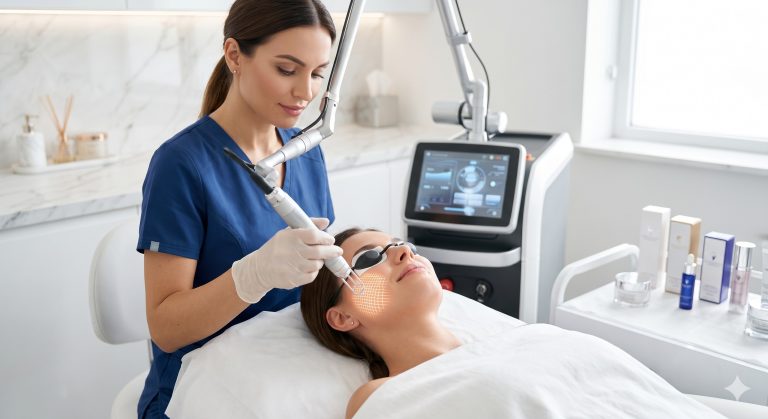
The face is a common treatment area for fractional thulium technology because many of the concerns associated with 1927nm treatment—such as photodamage, uneven tone, visible pigmentation, and general skin quality—frequently occur on facial skin.
Treatment intensity can vary considerably according to the clinical objective and the system being used. Fractional density, energy, passes, and treatment pattern may all influence the tissue response and subsequent recovery.
For a treatment-focused discussion rather than the fractional technology itself, read our complete Thulium Laser for Face guide.
Fractional Thulium Laser vs 1550nm Fractional Laser
Fractional 1927nm thulium lasers and fractional lasers operating around 1550nm can both be used for skin rejuvenation, but they are not interchangeable. One of the most important differences is how their wavelengths interact with water and how this influences the relative treatment profile within the skin.
The 1927nm wavelength has strong absorption by water and is generally associated with relatively superficial fractional treatment. This makes it particularly relevant when treatment goals include visible pigmentation, photodamage, uneven tone, and superficial skin quality.
Fractional systems around 1550nm are generally associated with deeper thermal treatment than 1927nm systems and are commonly considered when treatment goals place greater emphasis on texture, dermal remodeling, or selected scar concerns.
| Feature | 1927nm Fractional Thulium | 1550nm Fractional Laser |
|---|---|---|
| Primary Chromophore | Water | Water |
| Relative Treatment Profile | More superficial | Generally deeper |
| Common Treatment Focus | Pigmentation, photodamage, uneven tone and superficial rejuvenation | Texture, remodeling and selected scar concerns |
| Fractional Delivery | Microscopic treatment zones | Microscopic treatment zones |
| Typical Technology Positioning | Superficial fractional treatment | Deeper fractional treatment |
This does not mean that 1927nm is universally better for pigmentation or that 1550nm is universally better for texture. Clinical outcomes depend on the complete device, treatment parameters, patient characteristics, practitioner technique, and treatment objective.
Clinics should therefore compare the complete treatment platforms rather than selecting a system based on wavelength alone.
Fractional Thulium Laser vs Fractional CO2 Laser
Fractional thulium and fractional CO2 lasers share one important concept: both can distribute energy through a fractional pattern rather than treating the entire surface uniformly. Their wavelengths and resulting tissue interactions, however, are substantially different.
Fractional CO2 lasers typically operate at approximately 10,600nm. This wavelength is strongly absorbed by water and can produce ablative or micro-ablative effects depending on the system and treatment parameters.
For this reason, fractional CO2 technology is commonly associated with more intensive resurfacing applications, including treatment strategies for wrinkles, skin texture, acne scars, and other concerns where greater tissue remodeling may be desired.
Fractional 1927nm thulium technology generally occupies a different clinical position. Its relatively superficial treatment profile makes it particularly relevant to pigmentation, photodamage, uneven tone, and superficial skin rejuvenation.
| Feature | Fractional Thulium Laser | Fractional CO2 Laser |
|---|---|---|
| Common Wavelength | Approximately 1927nm | Approximately 10,600nm |
| Primary Chromophore | Water | Water |
| Typical Treatment Profile | Relatively superficial fractional thermal treatment | More intensive fractional resurfacing |
| Common Focus | Pigmentation, photodamage, uneven tone and skin rejuvenation | Texture, wrinkles, acne scars and resurfacing |
| Ablation | Depends on device design and parameters; many aesthetic systems are positioned as non-ablative or minimally disruptive | Can produce ablative or micro-ablative treatment zones |
| Recovery | Often comparatively lighter, depending on treatment intensity | Can involve more substantial recovery, depending on treatment intensity |
Neither technology is inherently the “better” fractional laser. The appropriate choice depends on the skin concern, desired treatment depth, acceptable recovery period, patient characteristics, and the capabilities of the specific device.
Benefits of Fractional Thulium Laser Technology
Fractional thulium technology is valuable because it combines wavelength-specific tissue interaction with controlled fractional coverage. This gives practitioners several variables that can be considered when designing a treatment strategy.
Controlled Fractional Energy Delivery
Instead of treating the entire surface uniformly, fractional delivery distributes energy into microscopic zones. Treatment coverage can therefore be managed through device-specific parameters such as density, scanning pattern, energy, and passes.
Relatively Superficial Treatment Profile
Strong water absorption around 1927nm contributes to a relatively superficial optical profile. This characteristic is one reason the wavelength is commonly associated with pigmentation, photodamage, and tone-focused treatment strategies.
Adjustable Treatment Intensity
Professional fractional platforms may provide control over several treatment variables. This allows practitioners to adapt treatment intensity according to the indication, treatment area, skin characteristics, and desired clinical endpoint.
Flexible Skin Rejuvenation Applications
Fractional 1927nm technology can be incorporated into treatment strategies addressing several related superficial concerns rather than being limited to a single aesthetic application.
Fractional Approach to Recovery
Leaving intervening areas between microscopic treatment zones is fundamental to the fractional concept. This approach is designed to balance controlled treatment with the recovery characteristics of surrounding tissue.
These characteristics should not be interpreted as guaranteed clinical benefits. Treatment response and recovery vary according to the device, parameters, indication, patient selection, technique, and individual biological response.
What Results Can Fractional Thulium Laser Produce?
Fractional thulium laser results depend on why the treatment is being performed. Treatment plans may focus on reducing the visible appearance of photodamage and pigmentation, improving uneven tone, or supporting broader skin rejuvenation goals.
Results are generally evaluated over time rather than immediately after treatment. The skin undergoes a recovery process following controlled fractional exposure, and visible changes may continue to develop after the initial redness, dryness, or rough texture has subsided.
How Soon Can Results Be Seen?
Some patients may notice changes after the initial recovery period, while other improvements can develop progressively over the following weeks. The timeline depends on the indication, treatment intensity, individual response, and treatment protocol.
Is One Fractional Thulium Treatment Enough?
There is no universal number of sessions. Some treatment strategies may involve a single procedure, while others use a series of sessions spaced according to the patient’s response and the protocol for the specific device.
More sessions or higher treatment intensity should not automatically be interpreted as producing better results. Treatment planning should balance the desired endpoint with skin response, recovery, and safety considerations.
Fractional Thulium Laser Downtime and Recovery
Downtime after fractional thulium laser treatment can vary substantially. Energy, density, passes, treatment area, skin type, device architecture, and individual sensitivity can all influence recovery.
Temporary responses may include redness, warmth, mild swelling, dryness, rough texture, sensitivity, or temporary darkening of pigmented areas. The appearance and duration of these responses depend on treatment intensity and individual skin response.

What Influences Fractional Thulium Laser Downtime?
- Energy delivered within each microscopic treatment zone
- Fractional density and total treatment coverage
- Number of treatment passes
- Size and location of the treatment area
- Skin type and individual sensitivity
- The specific fractional thulium laser platform
- Post-treatment skin care and sun protection
Because protocols differ between devices, a fixed recovery period should not be applied to every 1927nm fractional thulium treatment.
For a broader discussion of the treatment experience and recovery process, see our Thulium Laser Treatment guide.
Possible Side Effects of Fractional Thulium Laser
Fractional delivery does not make laser treatment risk-free. Expected temporary responses and potential adverse effects depend on treatment intensity, patient characteristics, technique, aftercare, and the specific device.
Temporary reactions may include:
- Redness
- Mild swelling
- Warmth or sensitivity
- Dry or rough skin
- Temporary pigment darkening
- Visible changes as treated superficial pigmentation evolves during recovery
Pigmentary complications are an especially important consideration when treating patients susceptible to post-inflammatory hyperpigmentation or when treating complex conditions such as melasma.
Patient assessment, appropriate parameter selection, aftercare, and sun protection are therefore important parts of professional treatment planning.
Is Fractional Thulium Laser Used for Melasma?
Fractional 1927nm thulium laser technology may be considered in selected treatment strategies for melasma, but melasma should not be approached in the same way as a simple isolated pigmented lesion.
Melasma is a complex and often recurrent pigmentary condition influenced by multiple factors, including ultraviolet exposure, visible light, hormonal influences, inflammation, and individual predisposition.
Laser-induced heat and inflammation can also affect pigmentation. For this reason, patient selection, conservative treatment planning, appropriate parameters, and post-treatment photoprotection are particularly important.
Fractional thulium treatment should therefore not be presented as a guaranteed cure for melasma. Its suitability should be evaluated by an appropriately qualified professional as part of an individualized treatment strategy.
What Should Clinics Look for in a Fractional Thulium Laser Machine?
Clinics and distributors evaluating a 1927nm fractional thulium laser machine should look beyond the wavelength printed on a specification sheet. Devices using a similar nominal wavelength can differ considerably in how energy is generated, controlled, and delivered.
Confirmed Operating Wavelength
Buyers should verify the actual operating wavelength and laser source. “Thulium laser” is a broad description and should not automatically be assumed to mean a 1927nm aesthetic system.
Fractional Delivery Architecture
Consider how the system creates microscopic treatment zones and what control the practitioner has over their distribution. Scanning pattern, density adjustment, coverage, spot characteristics, and delivery consistency can influence both treatment flexibility and workflow.
Adjustable Parameters
Professional systems should provide appropriate control over the parameters required for their intended applications. Buyers should understand which settings can be adjusted and how those settings relate to treatment protocols.
Treatment Speed and Handpiece Design
Repetition rate, scanning efficiency, handpiece ergonomics, treatment-area coverage, and interface design can affect daily clinic workflow. These factors become particularly relevant when performing full-face or larger-area treatments.
Consumables and Operating Costs
Purchase price alone does not determine the long-term cost of a laser system. Clinics should ask whether the device requires proprietary tips, cartridges, handpieces, or other recurring consumables and how frequently these components require replacement.
Training and Technical Support
Equipment should be evaluated together with manufacturer support. Operator training, treatment documentation, technical assistance, maintenance, warranty terms, spare parts, and distributor support can all affect long-term ownership.
Regulatory Requirements
Device registration, permitted indications, professional-use requirements, and other regulatory obligations vary by country and region. Buyers should verify the regulatory status and intended use applicable to their own market.
1927nm Fractional Thulium Laser Devices Are Not All the Same
Search terms such as 1927nm fractional thulium laser device or 1927nm fractional thulium laser machine can make these systems appear to be a single standardized equipment category. In practice, substantial differences can exist between platforms.
Two devices may both operate around 1927nm while differing in:
- Laser source design
- Energy range and control
- Pulse characteristics
- Fractional density options
- Scanning architecture
- Spot or treatment-zone characteristics
- Repetition rate and treatment speed
- Handpiece design
- User interface
- Cooling or comfort features
- Consumable requirements
- Training and after-sales support
This is why clinics should avoid selecting a fractional thulium laser solely because two systems advertise the same wavelength.
Wavelength establishes an important part of the optical interaction, but the complete device architecture determines how that wavelength is translated into a practical treatment platform.
Frequently Asked Questions About Fractional Thulium Laser
What is a fractional thulium laser?
A fractional thulium laser combines a thulium-based laser wavelength with fractional energy delivery. In aesthetic applications, systems operating around 1927nm are commonly used to create microscopic treatment zones across the skin while leaving intervening areas between those zones.
What does fractional mean in a thulium laser?
Fractional describes how laser energy is distributed spatially. Instead of treating the entire surface uniformly, the system creates many separated microscopic treatment zones. It describes the delivery method rather than the wavelength itself.
Is fractional thulium laser the same as 1927nm laser?
Not exactly. 1927nm describes a wavelength, while fractional describes an energy-delivery pattern. A system can therefore be both a 1927nm laser and a fractional laser.
What is a 1927nm fractional thulium laser used for?
In aesthetic dermatology, fractional 1927nm thulium systems are commonly associated with treatment strategies for photodamage, uneven pigmentation, uneven skin tone, and superficial skin rejuvenation. Actual indications depend on the specific device and its regulatory authorization.
Is fractional thulium laser ablative or non-ablative?
This depends on the specific device and treatment parameters. Many aesthetic fractional 1927nm platforms are described as non-ablative or minimally disruptive, but these terms should not be assumed to apply identically to every thulium laser system.
What is the difference between fractional thulium and fractional CO2 laser?
The technologies use different wavelengths and can create different tissue effects. Fractional 1927nm thulium is generally associated with relatively superficial treatment strategies, while 10,600nm fractional CO2 technology can produce more intensive ablative or micro-ablative resurfacing depending on the system and settings.
What is the difference between 1927nm and 1550nm fractional lasers?
Both interact with water, but 1927nm is generally associated with a more superficial treatment profile, while fractional systems around 1550nm are commonly used when deeper thermal effects are desired. The appropriate choice depends on the treatment objective and the specific device.
How long is fractional thulium laser downtime?
There is no universal downtime period. Recovery depends on energy, fractional density, passes, treatment area, skin characteristics, device design, and individual response. Temporary redness, dryness, roughness, swelling, or pigment darkening may occur.
Can fractional thulium laser be used on the face?
Facial treatment is a common aesthetic application for fractional 1927nm technology, particularly when treatment goals involve photodamage, uneven pigmentation, tone, and superficial skin quality. Suitability and treatment parameters require professional assessment.
Can fractional thulium laser treat melasma?
Fractional thulium technology may be considered for selected patients as part of a broader melasma treatment strategy. However, melasma is complex and recurrent, and laser treatment can also influence inflammation and pigmentation. It should not be presented as a guaranteed cure.
Final Verdict
Fractional thulium laser technology combines wavelength-specific laser interaction with a fractional delivery pattern that creates microscopic treatment zones across the skin.
In aesthetic dermatology, approximately 1927nm fractional thulium systems are particularly relevant because of the wavelength’s strong interaction with water and its relatively superficial treatment profile. This has made the technology important in treatment strategies involving photodamage, pigmentation, uneven tone, and superficial skin rejuvenation.
The most important distinction is that 1927nm describes the wavelength, while fractional describes how the energy is delivered. Understanding this distinction makes it easier to compare fractional thulium technology with 1550nm fractional lasers, fractional CO2 systems, and other skin treatment platforms.
For clinics and distributors, wavelength should also be only one part of equipment evaluation. Fractional delivery architecture, energy control, treatment speed, consumables, training, technical support, regulatory requirements, and long-term ownership considerations should all be assessed before selecting a professional fractional thulium laser machine.