The Ultimate Clinic Guide to what to look for in a medical laser warranty: Efficacy, Wavelengths, and ROI
Executive Summary: Why a Medical Laser Warranty Dictates Your P&L
In 15 years of consulting for high-volume med spas and dermatology clinics, the single most overlooked line item in a capital equipment purchase is the medical laser warranty. A standard 12-month parts-and-labor clause is a silent profit killer. This guide deconstructs the clinical engineering, ISO 13485 compliance, and ROI modeling required to evaluate what to look for in a medical laser warranty for devices operating at 755nm, 808nm, and 1064nm wavelengths. We will analyze fluence (J/cm²), pulse width (ms), spot size (mm), and sapphire cooling integrity – because a warranty is only as good as the thermal management it protects.
Clinical Pain Points: Downtime = Lost Revenue & Patient Churn
An unexpected diode laser bar failure at 808nm costs a clinic an average of $4,200 per day in deferred hair removal procedures. Beyond direct revenue, a canceled treatment erodes patient trust. Therefore, what to look for in a medical laser warranty begins with uptime guarantees and coverage of consumable high-wear components like the laser handpiece, sapphire window, and water cooling pump. A superior warranty excludes the phrase ‘normal wear and tear’ for these items.
Physical Mechanism Deep Dive: What You Are Insuring
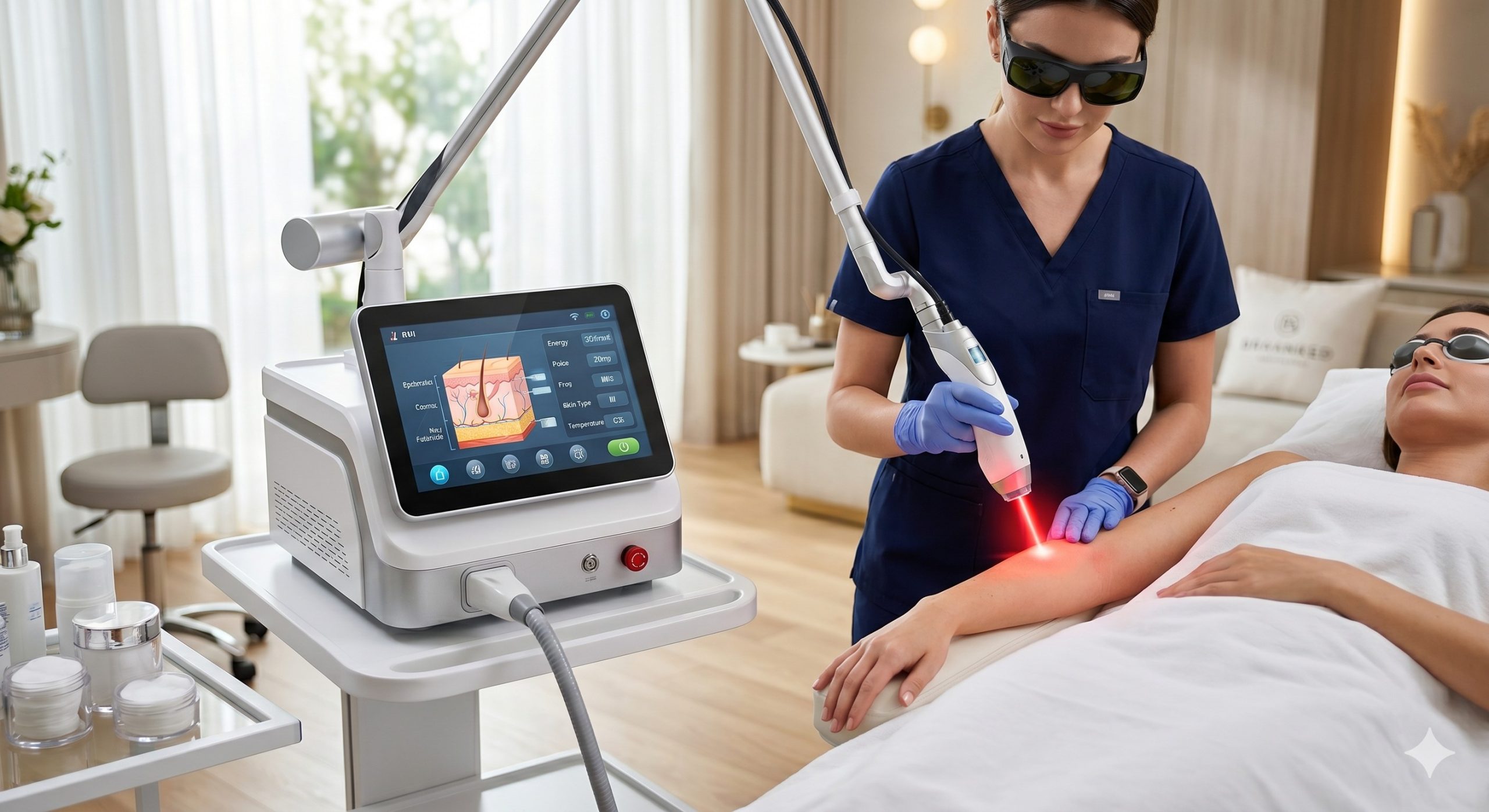
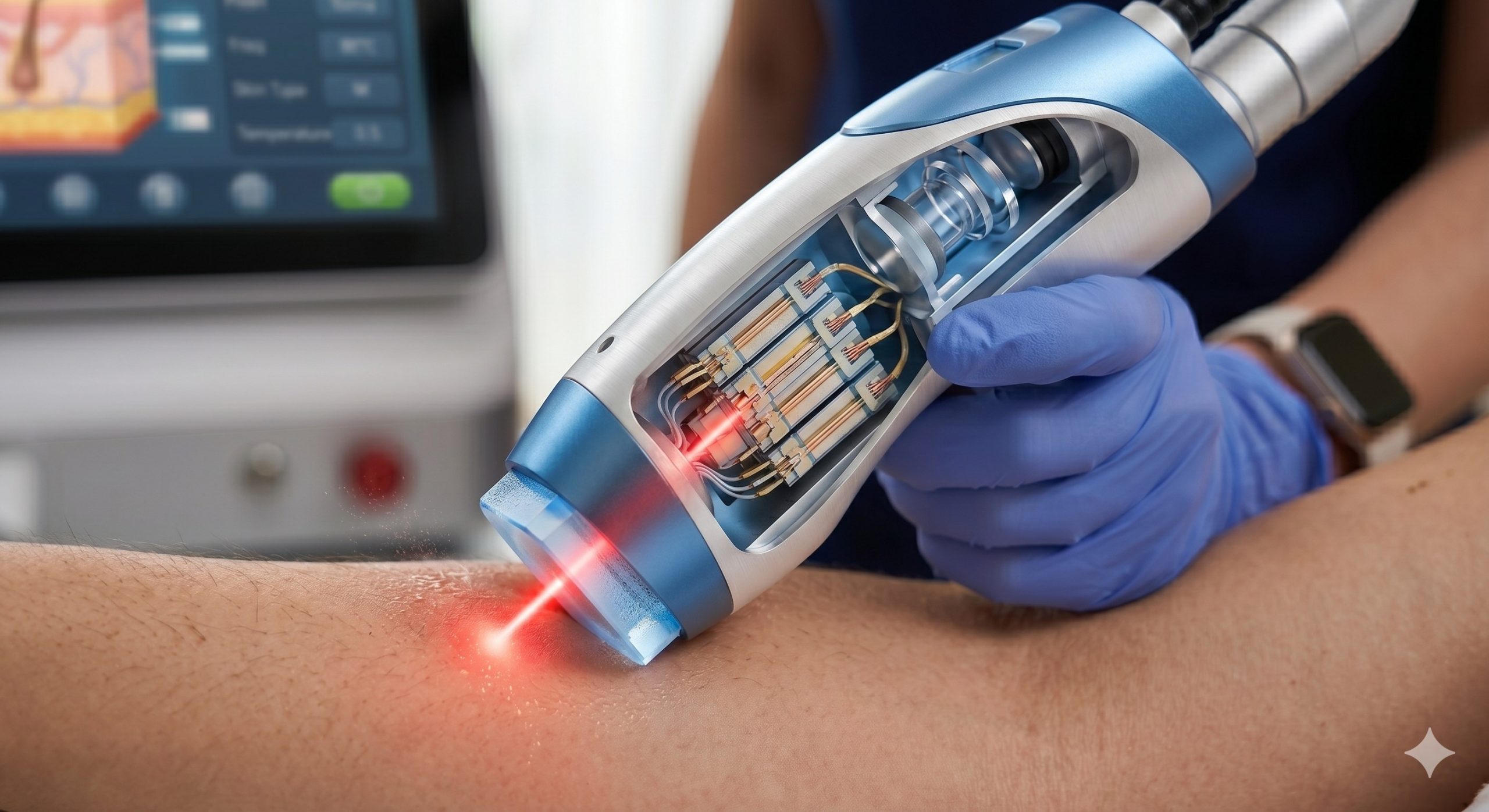
Your warranty underwrites a precise engineering system. The selective photothermolysis efficacy depends on stable output. Key insured components include:
- Laser Diodes (Imported Bars): Lifetime drift must remain ≤5% over 5 million shots. A weak warranty allows 20% degradation before replacement.
- Sapphire Contact Cooling (TEC): Thermoelectric coolers must maintain 0°C to -4°C skin contact temperature. Failure here causes epidermal burns, a liability your warranty must cover.
- RF & Energy Delivery System: Capacitor bank and power supply – replacement costs exceed $3,000 typically.
| Key Parameter | What the Warranty Must Explicitly Cover |
|---|---|
| Wavelength / Laser Type | 755nm (Alexandrite), 808nm (Diode), 1064nm (Nd:YAG) – coverage for diode bar degradation |
| Cooling System | Sapphire TEC (Thermoelectric Cooler) – full replacement for coolant leaks or window cracks |
| Energy Density / Fluence | Calibration guarantee: ±1 J/cm² accuracy at up to 100 J/cm² |
| Pulse Width | Coverage for pulse duration controller (10ms to 400ms) drift |
| Spot Size | Handpiece lens warranty for all spot sizes (12mm to 25mm) |
| Electrical System | Capacitor bank, power supply, and high-voltage board – 24 months minimum |
Technical Specifications Matrix: What the Warranty Must Cover
When assessing what to look for in a medical laser warranty, demand explicit coverage for the parameters below. Vague language like ‘major components’ is a red flag.
Epidermal Protection & Cooling Systems: The Warranty Link
A failed TEC sapphire cooling system directly increases melanin absorption in Fitzpatrick IV-VI, raising post-inflammatory hyperpigmentation (PIH) risk. Premium warranties include free recalibration of the cooling interface every 12-24 months. If the manufacturer refuses to cover sapphire window delamination or coolant leakage, walk away. The cost to replace a cooling circuit in a medical CE device ranges from $1,200 to $2,800.
Clinic ROI Analysis: Total Cost of Ownership (TCO)
Let’s model a 3-year TCO for two identical 808nm diode lasers priced at $25,000:
- Standard Warranty (12 months): Year 2 handpiece failure ($2,500) + Year 3 TEC module ($1,800) = $4,300 unexpected OpEx.
- Premium 36-Month Bumper-to-Bumper Warranty: $0 unplanned costs. Additionally, includes 2 preventive maintenance visits. The premium warranty adds $3,000 to upfront cost but saves $1,300 net and eliminates treatment disruption.
Thus, what to look for in a medical laser warranty is a minimum 24-month inclusive warranty on all electronic and cooling components, plus a pro-rated diode bar replacement policy beyond 5 million shots. Demand FDA clearance and ISO 13485 certification as prerequisites – unregulated manufacturers often void warranties arbitrarily.
Final Executive Verdict: Redefining ‘Full Coverage’
The best-in-class medical laser warranty mirrors an enterprise IT service level agreement: 72-hour on-site repair, loaner device provision, and unlimited technical support. It explicitly names coverage for the laser engine, handpiece cable assembly, sapphire cooling plate, and all PCBA boards. As an elite buyer, you must treat the warranty as a clinical risk management contract. A laser without a robust warranty is not an asset – it is a deferred liability. Prioritize manufacturers offering extended service plans that include annual energy calibration (NIST-traceable) and software updates. Your clinic’s profitability and patient safety depend on this decision.