Thulium Laser for Face: Benefits, Results & Recovery
Thulium laser treatment for the face commonly uses fractional laser technology operating around 1927nm. In aesthetic practice, it is associated with treatments for uneven pigmentation, sun-related skin changes, uneven tone, rough texture, and overall skin rejuvenation.
If you are researching 1927nm thulium laser treatment for facial skin, this guide explains its potential benefits, how the technology works, what results may look like, and what to expect during recovery.
Quick Answer: What Does Thulium Laser Do for the Face?
Thulium laser for the face typically refers to fractional laser treatment using a wavelength around 1927nm. This wavelength is strongly absorbed by water in relatively superficial skin tissue, allowing controlled thermal treatment to be delivered through microscopic fractional treatment zones.
In aesthetic practice, 1927nm thulium laser technology is commonly used for concerns such as uneven pigmentation, sun damage, uneven skin tone, rough texture, and overall skin rejuvenation.
Results are generally progressive rather than immediate. Temporary redness, warmth, dryness, mild swelling, or a rough skin texture may occur during the first several days after treatment. The exact results and recovery time depend on the device, treatment intensity, skin characteristics, and individual response.
How Does Thulium Laser Work on the Face?
The basic mechanism behind facial thulium laser treatment can be understood through two important characteristics: the 1927nm wavelength and fractional energy delivery.
1927nm Laser Energy Interacts with Water
Water is an important chromophore for 1927nm laser energy. When the laser reaches the skin, absorbed energy is converted into heat, producing a controlled photothermal effect in water-containing tissue.
This distinguishes 1927nm thulium technology from many pigment-targeting picosecond and Q-switched laser applications, where melanin or tattoo pigment may be the primary optical target.
Fractional Delivery Creates Microscopic Treatment Zones
Many professional aesthetic thulium systems use fractional delivery. Rather than producing the same thermal effect across the entire facial surface, laser energy is distributed into microscopic treatment zones.
Surrounding untreated tissue remains between these zones, creating a controlled fractional treatment pattern followed by a healing and renewal response.
Treatment intensity can vary according to factors such as delivered energy, density, number of passes, scanning method, and the design of the specific laser system.
What Are the Benefits of Thulium Laser for the Face?
The potential benefits of facial thulium laser treatment depend on the specific device, treatment settings, skin characteristics, and treatment objective. Its aesthetic applications are commonly associated with superficial skin concerns and overall skin appearance.
1. Uneven Pigmentation
Pigmentation is one of the most important aesthetic applications associated with fractional 1927nm laser technology. Its relatively superficial thermal interaction makes it relevant to treatment strategies targeting visible pigment irregularities.
However, pigmentation is not a single condition. Different causes of facial pigmentation may require different approaches, so appropriate assessment remains important before treatment.
2. Sun Damage and Photoaging
Repeated ultraviolet exposure can contribute to visible changes including uneven tone, superficial pigmentation, and rougher skin texture.
Fractional thulium laser technology may be incorporated into professional treatment plans designed to improve the appearance of photodamaged facial skin.
3. Uneven Skin Tone
Facial discoloration does not always appear as a single isolated spot. Some patients are concerned about more generalized unevenness across the face.
Because fractional treatment can be delivered across a larger treatment area, 1927nm thulium technology may be used in procedures focused on improving overall visible skin tone.
4. Skin Texture
Fractional laser treatment creates controlled microscopic thermal zones followed by a healing response. This makes thulium laser technology relevant to aesthetic procedures intended to improve the appearance of rough or irregular skin texture.
5. Overall Skin Rejuvenation
Some facial treatments are performed not for one isolated concern but for broader improvement in tone, texture, clarity, and overall skin appearance.
In these situations, fractional thulium laser treatment may be incorporated into a professional skin rejuvenation program based on the patient’s treatment goals and assessment.
What Facial Concerns Can 1927nm Thulium Laser Be Used For?
| Facial Concern | Role of 1927nm Thulium Technology |
|---|---|
| Superficial Pigmentation | Commonly associated with fractional treatment strategies for visible pigment irregularities. |
| Sun Damage | May be used in aesthetic resurfacing strategies for visible signs of photodamage. |
| Uneven Skin Tone | Fractional treatment can be distributed across broader areas of facial skin. |
| Rough Texture | Microscopic thermal treatment zones are followed by a controlled healing response. |
| Melasma | May be considered in selected professional treatment strategies, although melasma requires particularly careful assessment and management. |
| General Skin Rejuvenation | May support treatment goals involving overall tone, texture, and skin appearance. |
These are general technology applications rather than universal treatment indications. The intended use of the specific device and professional assessment should guide actual treatment.
Thulium Laser for Facial Pigmentation
Facial pigmentation is one of the strongest reasons 1927nm thulium technology is discussed in aesthetic laser treatment.
The wavelength’s interaction with water and its relatively superficial fractional treatment profile make it technically different from lasers designed primarily around direct melanin targeting.
This distinction is important because “pigmentation” can include multiple conditions with different causes and treatment considerations. A treatment strategy for sun-related pigment changes should not automatically be assumed to be appropriate for every pigmentary condition.
We cover this application in more detail in our Thulium Laser for Pigmentation Guide.
Can Thulium Laser Be Used for Melasma?
1927nm thulium laser technology may be considered in selected professional treatment strategies for melasma, but melasma requires more caution than simply treating a visible area of pigmentation.
Melasma is a complex pigmentary condition influenced by multiple factors, and recurrence can occur. Treatment selection therefore requires consideration of skin characteristics, pigmentation pattern, previous treatments, sun exposure, treatment intensity, and post-treatment management.
For this reason, claims that a particular laser wavelength universally “removes melasma” should be treated cautiously.
A dedicated discussion is available in our Thulium Laser for Melasma Guide.
What Results Can You Expect from Thulium Laser on the Face?
Facial thulium laser results usually develop progressively. The appearance immediately after treatment primarily reflects the treatment response rather than the final result.
Depending on the indication and treatment plan, patients may notice progressive changes in:
- Visible skin tone
- Superficial pigment irregularities
- Sun-related discoloration
- Skin texture
- Overall skin clarity and appearance
Some changes may become visible after the initial recovery period, while additional improvement can develop over subsequent weeks.
Results vary according to the underlying skin concern, treatment intensity, number of sessions, device characteristics, post-treatment care, sun exposure, and individual biological response. No specific outcome should therefore be considered guaranteed.
Thulium Laser for Face Recovery: What to Expect
Recovery after a 1927nm thulium laser facial treatment depends on the treatment intensity, fractional density, number of passes, device settings, and individual skin response.
Temporary redness, warmth, mild swelling, dryness, tightness, or a rough texture may occur after treatment. With lighter fractional protocols, these effects may be relatively mild, while more intensive treatments can produce more noticeable downtime.
| Approximate Timeline | What You May Notice |
|---|---|
| Immediately After | Facial redness, warmth, sensitivity, or mild swelling may occur. |
| Day 1–2 | Redness may continue while the skin can begin to feel dry, tight, or slightly rough. |
| Day 2–5 | Dryness and a fine rough or sandpaper-like texture may become more noticeable as the treated skin progresses through recovery. |
| Around Day 5–7 | Many temporary surface effects may have improved substantially, although recovery time varies. |
| Following Weeks | Changes in tone, pigmentation, texture, and overall skin appearance may continue to develop. |
This timeline should be treated as a general reference rather than a guaranteed recovery schedule. Patients should follow the post-treatment instructions provided by their qualified treatment professional.
How Long Do Thulium Laser Results Last?
There is no single duration that applies to every thulium laser treatment. The persistence of visible improvement depends on what was treated, the treatment protocol, individual skin characteristics, ongoing sun exposure, skincare, aging, and other factors.
It is also important to distinguish between improving an existing concern and preventing future skin changes. Laser treatment does not stop normal aging or prevent new effects from ultraviolet exposure.
For pigment-related concerns, recurrence or the development of new pigmentation can also influence how long the skin continues to look improved.
For these reasons, some professional treatment plans may include multiple initial sessions or later maintenance treatments rather than treating one session as a permanent endpoint.
How Many Thulium Laser Sessions Are Needed for the Face?
The number of sessions varies according to the treatment objective. There is no universal rule that every patient requires the same number of 1927nm thulium laser treatments.
A professional treatment plan may consider:
- The type and severity of the facial concern
- Skin characteristics and pigmentation tendency
- The specific thulium laser device
- Energy and fractional density
- Treatment intensity and downtime preference
- Response to previous sessions
- Desired treatment endpoint
A lighter treatment strategy may involve different session frequency and cumulative treatment planning from a more intensive resurfacing protocol.
Does Thulium Laser Hurt?
Sensation during facial thulium laser treatment varies with the system, treatment parameters, treatment area, cooling method, and individual sensitivity.
Patients may describe sensations such as warmth, heat, tingling, or prickling during treatment. Comfort-management approaches vary by device and professional protocol.
Treatment comfort should not be used as the only measure of treatment intensity or effectiveness. Professional systems need to balance energy delivery, treatment objectives, patient comfort, and appropriate safety considerations.
What Are the Side Effects of Thulium Laser on the Face?
Temporary skin responses can occur after fractional thulium laser treatment. Common post-treatment effects may include:
- Redness
- Warmth or temporary sensitivity
- Mild swelling
- Dryness or tightness
- Rough or sandpaper-like texture
- Temporary changes in pigmentation
Less common complications can occur with laser procedures, including prolonged pigment alteration, irritation, infection, or other adverse skin responses.
Risk depends on multiple factors, including skin characteristics, the condition being treated, treatment intensity, device parameters, operator technique, recent sun exposure, and post-treatment care.
This is why facial laser treatment should be preceded by appropriate professional assessment and performed according to the specific device’s intended use, training, and treatment protocols.
Thulium Laser vs CO2 vs Picosecond Laser for the Face
Thulium, CO2, and picosecond lasers may all be encountered in aesthetic practices, but they should not be treated as interchangeable technologies. Their wavelengths, optical targets, pulse characteristics, tissue interactions, and common applications differ.
| Technology | Key Characteristic | Common Aesthetic Focus |
|---|---|---|
| 1927nm Thulium | Strong interaction with water and relatively superficial fractional treatment | Pigmentation, photodamage, tone, texture, and skin rejuvenation |
| Fractional CO2 | 10,600nm wavelength with strong water absorption and ablative fractional resurfacing | More intensive resurfacing applications, texture, wrinkles, and selected scars |
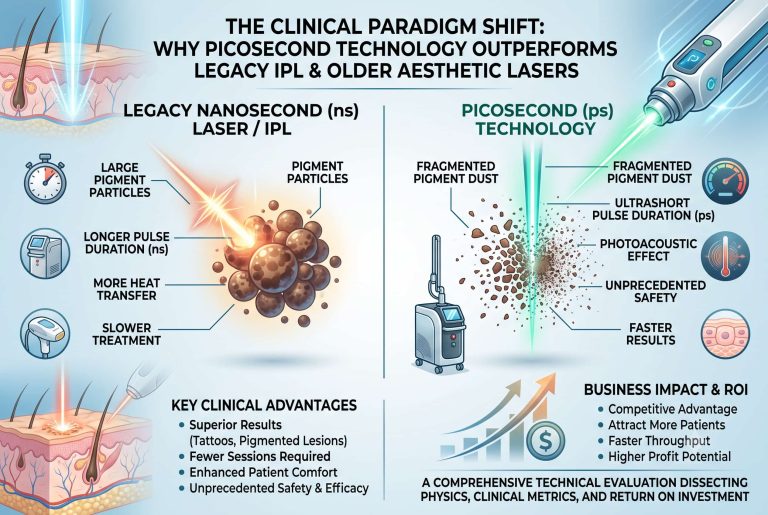
| Picosecond Laser | Ultrashort picosecond pulses with wavelength-dependent pigment interaction | Tattoo and pigment applications, with additional applications depending on the device and delivery system |
The question is therefore not simply whether one laser is “better.” The appropriate technology depends on the treatment target, desired depth, acceptable downtime, skin characteristics, and the capabilities of the specific device.
What Should Clinics Look for in a 1927nm Thulium Laser?
For clinics and professional buyers, understanding the benefits of 1927nm is only one part of evaluating a thulium laser system.
Important equipment considerations include:
- Laser wavelength: confirm the actual operating wavelength and system architecture.
- Fractional delivery: evaluate how treatment zones are generated and controlled.
- Energy control: review the available treatment parameters and adjustment range.
- Treatment density: consider whether the system provides appropriate control over fractional coverage.
- Handpiece design: evaluate ergonomics, treatment speed, and practical workflow.
- User interface: treatment parameters should be clear and practical for trained operators.
- Training: understand what clinical and operational training the supplier provides.
- Warranty and service: compare technical support, replacement parts, and after-sales service.
- Regulatory status: verify the documentation and intended use relevant to the market where the device will be sold or operated.
Two machines marketed as “1927nm thulium lasers” can differ significantly in hardware, fractional delivery, treatment controls, reliability, and support. Buyers should therefore compare the complete system rather than wavelength alone.
Thulium Laser for Face FAQ
What does thulium laser do to your face?
Facial thulium laser treatment commonly uses fractional 1927nm laser energy to create controlled thermal treatment zones in relatively superficial skin tissue. It is commonly associated with pigmentation, photodamage, uneven tone, texture, and skin rejuvenation applications.
How long does your face take to heal after thulium laser?
Recovery varies with treatment intensity and individual response. Temporary redness, warmth, dryness, mild swelling, and roughness may occur during the first several days, while more intensive treatments may require longer recovery.
When will I see results after thulium laser?
Results generally develop progressively. Some visible changes may appear after the initial recovery period, while additional changes in tone, texture, and overall skin appearance can develop over the following weeks.
Is thulium laser good for pigmentation?
Fractional 1927nm thulium technology is commonly associated with treatment strategies for superficial pigmentation and uneven skin tone. Suitability depends on the type of pigmentation, skin characteristics, treatment parameters, and professional assessment.
Is thulium laser good for melasma?
1927nm thulium technology may be considered in selected professional approaches to melasma, but melasma is complex and can recur. Treatment selection and expectations require careful professional assessment.
Is thulium laser the same as CO2 laser?
No. A 1927nm thulium laser and a 10,600nm CO2 laser have different wavelengths and tissue interactions. Fractional CO2 systems are commonly associated with ablative resurfacing, while many aesthetic 1927nm thulium systems use a more superficial fractional approach.
Final Verdict: Is Thulium Laser Good for the Face?
1927nm thulium laser treatment can be a useful professional technology for facial applications involving superficial pigmentation, sun-related skin changes, uneven tone, texture, and overall skin rejuvenation.
Its defining characteristic is the interaction of 1927nm laser energy with water-containing tissue, often combined with fractional delivery to create controlled microscopic treatment zones.
Results typically develop progressively, while temporary redness, warmth, dryness, roughness, or mild swelling may occur during recovery. Treatment intensity and individual response have a major influence on both downtime and results.
For professional clinics, wavelength alone should not determine equipment selection. Fractional delivery, adjustable parameters, treatment workflow, system reliability, training, regulatory documentation, warranty, and manufacturer support should all be considered when comparing 1927nm thulium laser systems.
Professional 1927nm Thulium Laser
Looking for a Professional Thulium Laser System?
Cocoon Laser supplies professional aesthetic laser equipment for clinics, medical spas, distributors, and OEM partners. Contact our team to compare available 1927nm thulium laser configurations, specifications, customization options, and pricing.
Request Specifications & Quote