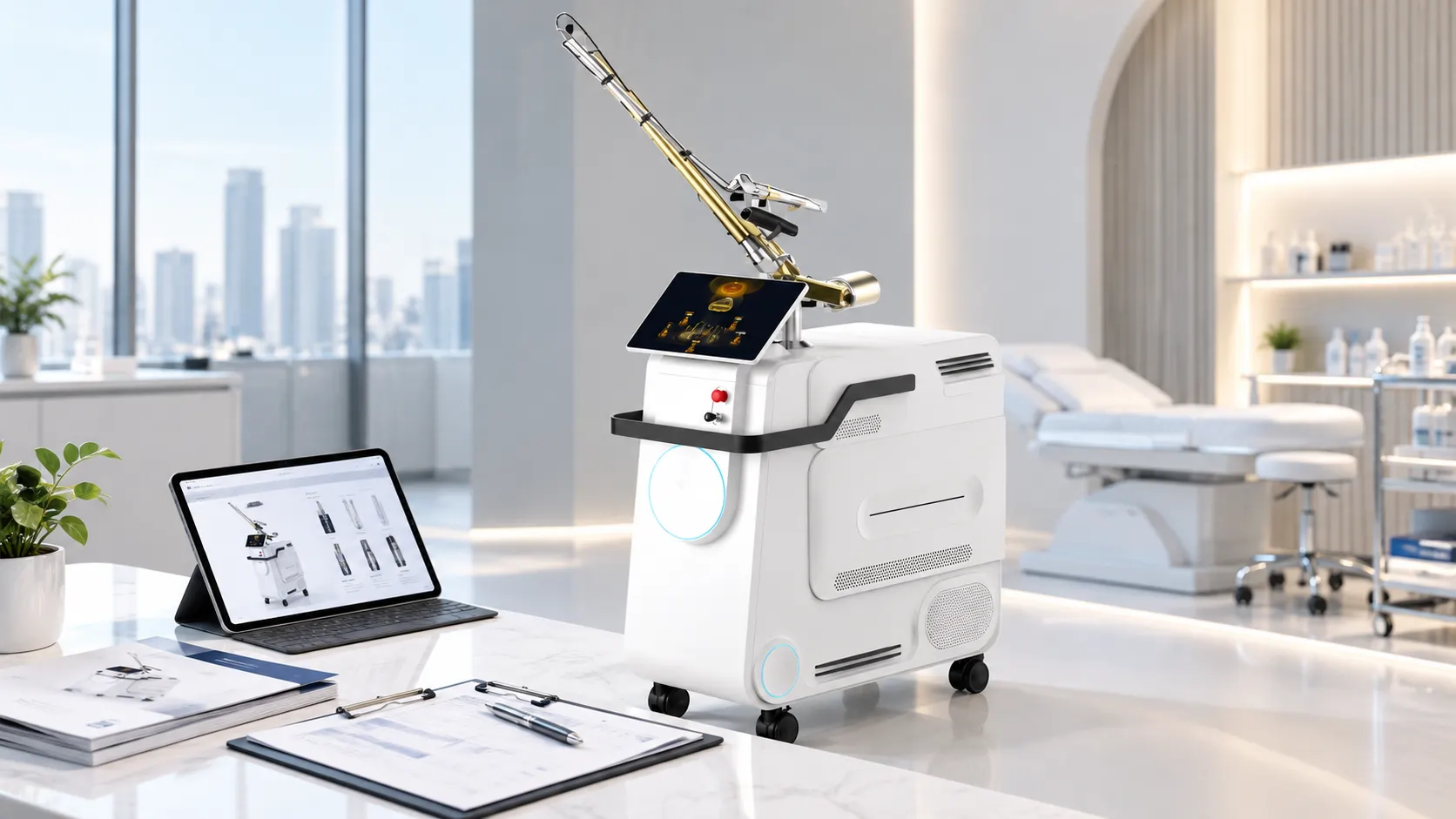
Picosecond Laser Machine for Sale: Buyer’s Guide
For dermatology clinics, medical spas, tattoo removal businesses, equipment importers, and distributors.
Published by Cocoon Laser · Updated October 2026
Looking for a picosecond laser machine for sale? Before requesting a quotation, compare more than the advertised pulse width and number of wavelengths. Professional buyers need to evaluate laser performance, treatment applications, included handpieces, regulatory documentation, manufacturer support, and total ownership costs.
This buying guide explains what to look for in professional picosecond laser equipment, how to evaluate a supplier, and what information to request before placing an order. It also introduces Ultra PicoMax, Cocoon Laser’s multi-wavelength platform for international B2B equipment buyers.
Quick Answer: Where Can You Buy a Professional Picosecond Laser Machine?
Professional picosecond laser machines can be purchased through medical aesthetic equipment manufacturers, authorized distributors, and specialist B2B suppliers. Choose a supplier that can provide model-specific technical specifications, evidence of actual picosecond pulse performance, appropriate regulatory documentation, operator training information, warranty terms, and spare parts support.
Cocoon Laser offers the Ultra PicoMax multi-wavelength laser platform for professional clinics, importers, and OEM/ODM buyers. Contact the supplier for the current configuration, commercial quotation, and documentation relevant to your destination market.
Request a Picosecond Laser Quotation →Professional Picosecond Laser Machine for Sale: Ultra PicoMax
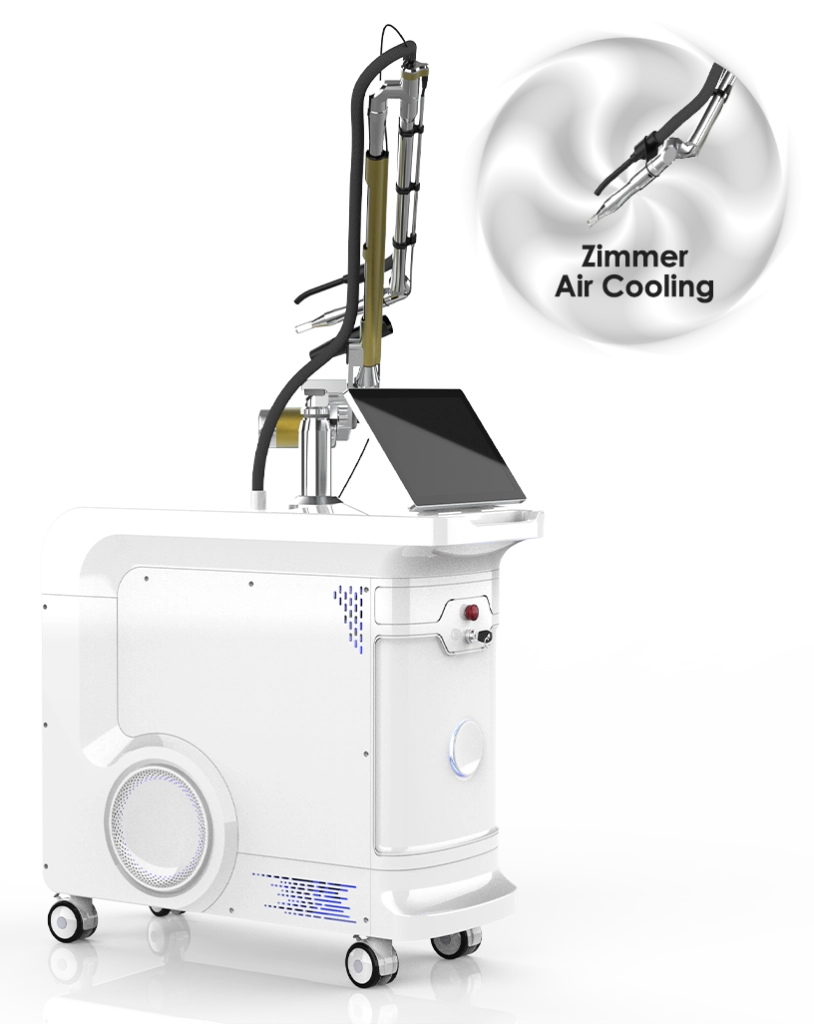
Ultra PicoMax
Ultra PicoMax is a multi-wavelength picosecond laser platform offered for professional aesthetic and dermatology equipment markets. The supplier’s product documentation lists picosecond, PTP, Multi Pulse, Long Pulse, and Long Pulse Pro operating technologies.
The system is marketed for selected tattoo, pigmentation, and skin-focused applications. Actual treatment use must follow the device’s legally permitted indications, mode-specific capabilities, and qualified clinical assessment.
- Laser category: Multi-wavelength picosecond platform
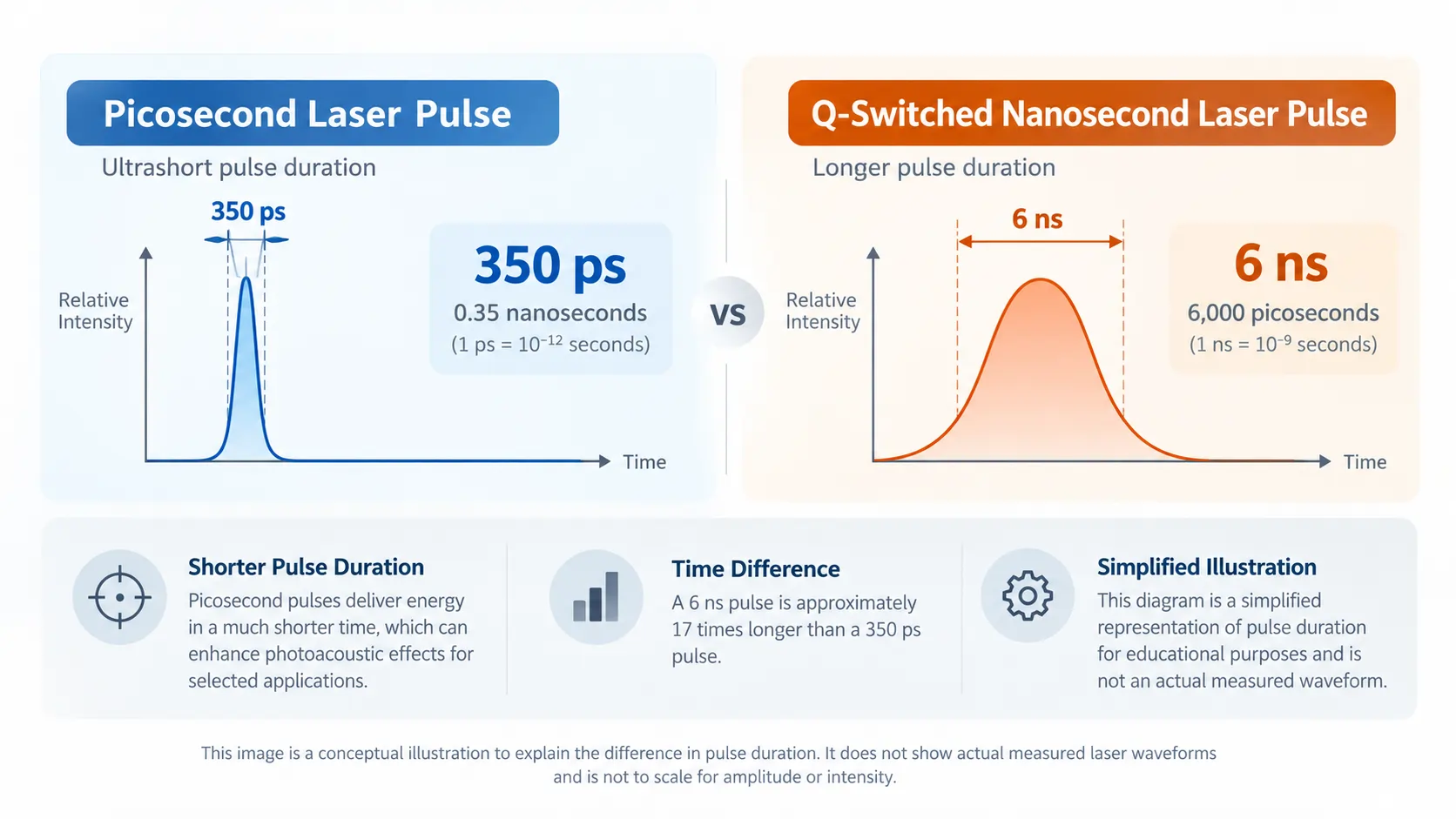
- Listed pulse width: 350 ps
- Wavelength options: 1064 / 755 / 650 / 585 / 532 nm
- Optical delivery: Seven-joint articulated arm
- Fractional option: Honeycomb HP
- Business model: Professional B2B, OEM, and ODM supply
The 350 ps figure and listed wavelength options are taken from supplier product information. Confirm which pulse durations, energies, and treatment modes apply to each wavelength. Do not assume every wavelength or operating mode delivers a 350 ps pulse.
Ultra PicoMax Technical Specifications
The following table summarizes selected product information supplied by Cocoon Laser. It is intended to support initial purchasing research, not to replace the official technical data sheet or acceptance testing.
| Specification | Ultra PicoMax | Buyer Verification |
|---|---|---|
| Equipment type | Multi-wavelength picosecond laser system | Confirm exact model and manufacturer identification |
| Listed pulse width | 350 ps | Request mode-specific measured pulse data |
| Wavelength options | 1064 / 755 / 650 / 585 / 532 nm | Confirm included handpieces and pulse characteristics |
| Operating technologies | Picosecond, PTP, Multi Pulse, Long Pulse, Long Pulse Pro | Confirm mode availability and authorized applications |
| Fractional option | Honeycomb HP | Verify whether included or optional |
| Laser delivery | Seven-joint articulated arm | Review handling, service, and replacement requirements |
| Cooling | Air-to-water cooling system | Confirm installation and maintenance requirements |
| Business supply | Professional equipment / OEM / ODM | Request customization and minimum order details |
What Is a Picosecond Laser Machine?
A picosecond laser machine produces extremely short pulses of laser energy. One picosecond is one trillionth of a second. Professional aesthetic picosecond platforms commonly operate with pulse durations measured in hundreds of picoseconds.
These short pulses can produce strong photoacoustic interactions when the emitted wavelength is absorbed by an appropriate target. This is relevant to selected tattoo pigments and pigmented lesions, although clinical response depends on wavelength, fluence, spot size, skin type, and treatment technique.
A picosecond pulse does not automatically mean better treatment results than a nanosecond pulse. The actual optical output and suitability for the intended indication must be evaluated.
For a deeper explanation, read our picosecond vs. Q-switched laser comparison .
What Treatments Can Professional Picosecond Lasers Support?
The treatment capabilities of a picosecond laser machine depend on its wavelengths, optical delivery system, available operating modes, regulatory authorization, and supporting clinical evidence.
Tattoo Removal
Selected wavelengths can interact with different tattoo pigments. Multicolored tattoos may require multiple wavelength options, and complete removal is not guaranteed.
Pigmented Lesions
Certain benign pigmented lesions may be treated with appropriately selected laser systems. Diagnosis and patient selection are essential.
Skin Texture and Rejuvenation
Some platforms provide fractional optical accessories for selected skin-focused procedures. These applications should be evaluated separately from tattoo removal.
Specialized Multi-Mode Applications
Certain platforms advertise additional long-pulse or other modes. Their capabilities must be verified independently rather than assumed from the picosecond label.
Clinics evaluating tattoo-focused equipment can also read our picosecond laser tattoo removal guide .
Which Picosecond Laser Wavelengths Should Buyers Consider?
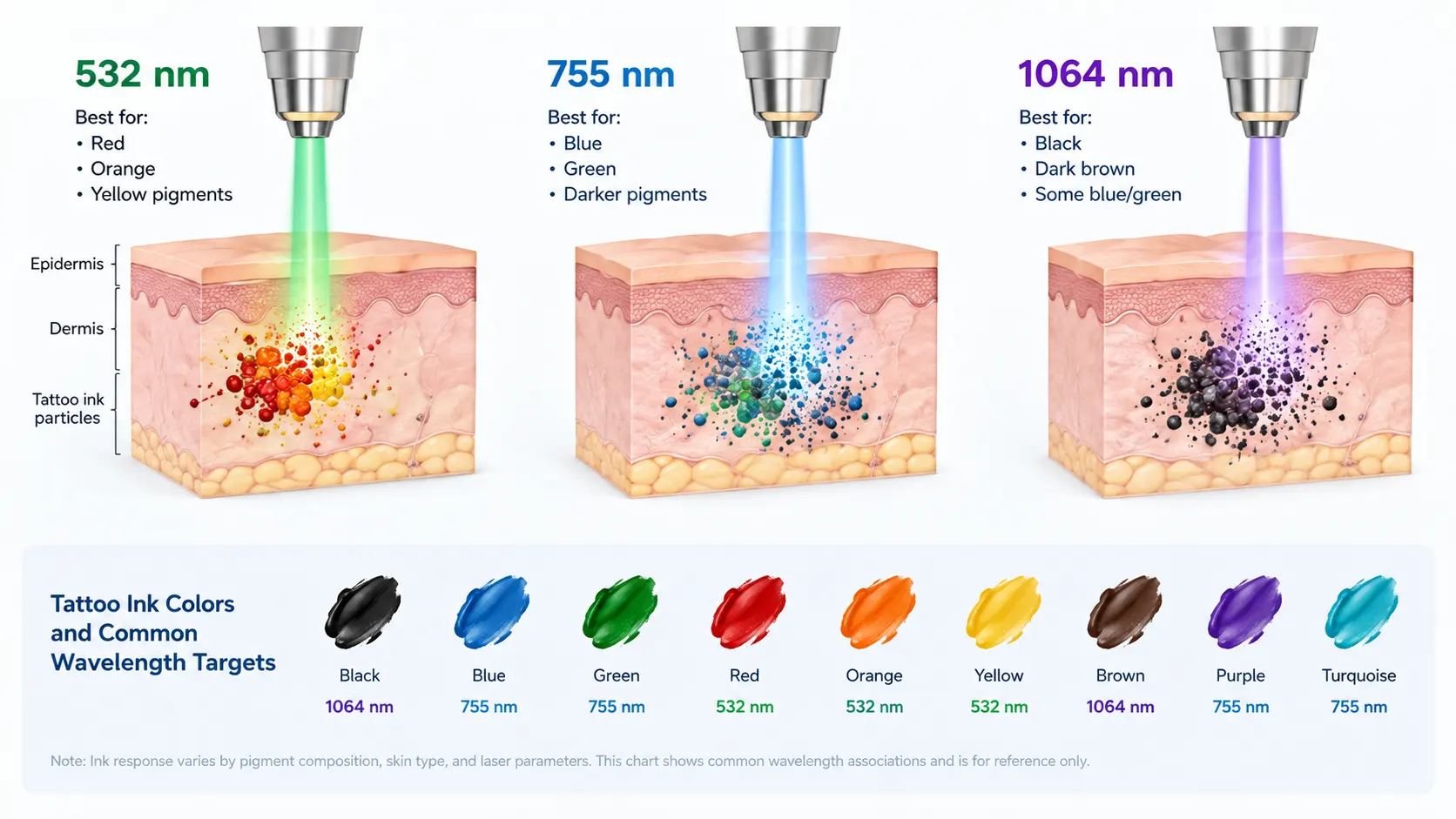
The right wavelength depends on the intended target and the device’s authorized applications. Different tattoo pigments and skin targets absorb light differently.
| Wavelength | Common Research Interest | Purchasing Consideration |
|---|---|---|
| 1064 nm | Selected dark tattoo pigments and deeper targets | Confirm pulse mode, energy delivery, and skin-type suitability |
| 755 nm | Selected blue, green, and dark tattoo pigments | Review laser architecture and wavelength-specific evidence |
| 532 nm | Selected red and warm-colored tattoo pigments | Consider stronger epidermal melanin absorption |
| 585 / 650 nm | Selected colored pigments on compatible systems | Verify wavelength generation and actual pulse performance |
How Much Does a Picosecond Laser Machine Cost?
Professional picosecond laser machine prices vary by manufacturer, optical architecture, wavelengths, included handpieces, regulatory requirements, service arrangements, and purchase quantity.
A single advertised price rarely describes the complete cost of installing and operating a professional laser system. International buyers should request an itemized quotation that separates the base equipment from optional accessories and services.
What Should Be Included in a Quotation?
- Exact machine model and configuration
- Included wavelengths and handpieces
- Optional fractional or specialty accessories
- Shipping and applicable trade terms
- Installation and operator training
- Warranty coverage and exclusions
- Spare parts and technical support
- Lead time and payment conditions
For more detailed budgeting information, see our professional picosecond laser machine price guide .
How to Choose a Picosecond Laser Machine for Your Clinic
1. Start With Your Intended Treatment Services
Identify the procedures your clinic is qualified and legally permitted to perform. A tattoo removal clinic may need a different wavelength and accessory configuration from a dermatology practice focused on selected pigment or skin-texture procedures.
2. Verify Genuine Picosecond Pulse Performance
Ask the supplier for measured pulse-duration data. Confirm the exact operating mode, wavelength, and conditions under which the published specification was obtained.
Some equipment advertised as “pico laser” may use conventional Q-switched nanosecond technology. A marketing label alone is not evidence of picosecond output.
3. Evaluate Laser Energy and Beam Quality
Pulse width is only one specification. Compare available pulse energy, fluence, beam uniformity, spot sizes, output stability, and the actual optical delivery system.
Ask whether the supplier can provide suitable test records and acceptance criteria for the exact machine being purchased.
4. Check the Included Handpieces
A supplier may advertise multiple wavelengths and treatment functions while including only a basic accessory package in the quoted price.
Request a complete packing list with each handpiece, lens, cable, consumable, and optional accessory identified.
5. Confirm Regulatory and Safety Requirements
Verify the exact device model’s regulatory status and permitted indications in the destination country. A generic certificate or quality management document does not automatically authorize clinical use.
Appropriate laser safety measures, protective eyewear, operator training, and controlled treatment environments are essential.
6. Review Warranty and Technical Support
Equipment downtime can interrupt clinic operations. Compare warranty terms, repair procedures, spare parts availability, service response times, and whether local technical assistance is available.
7. Calculate Total Ownership Cost
Include the machine purchase price, freight, taxes, installation, training, accessories, maintenance, repairs, and potential downtime.
A lower initial quotation does not necessarily result in lower lifetime ownership costs.
Buy From a Manufacturer or an Authorized Distributor?
Both purchasing channels can be appropriate, but they offer different commercial arrangements.
| Factor | Direct B2B Supplier | Authorized Distributor |
|---|---|---|
| Purchasing process | Direct quotation and configuration discussion | Regional quotation and sales support |
| OEM/ODM | May offer customization services | Often focused on existing branded products |
| Training | Confirm included remote or on-site services | Confirm local training availability |
| Maintenance | Check parts supply and repair logistics | Check authorized local service coverage |
| Regulatory responsibilities | Importer and supplier roles must be clarified | Verify regional product authorization |
| Best fit | Experienced importers, distributors, and B2B buyers | Clinics requiring accessible local support |
For a broader supplier comparison, visit our picosecond laser manufacturers and suppliers guide .
OEM and ODM Picosecond Laser Machines for Distributors
Importers and distributors may want to sell professional picosecond laser equipment under their own brand. In these cases, OEM/ODM discussions should cover more than the exterior logo.
Common OEM/ODM Requirements
- Brand logo and device labeling
- Housing appearance and product identification
- User interface language options
- Packaging and manuals
- Handpiece and accessory configurations
- Minimum order quantity and production lead time
- Spare parts, training, and after-sales service
- Destination-market documentation and legal responsibilities
Cocoon Laser lists OEM and ODM services within its professional equipment business model. Buyers should request written confirmation of the customization scope, minimum order requirements, available documentation, and commercial terms.
Private-label branding does not automatically establish the buyer as the legal manufacturer. Regulatory responsibilities depend on the market and the specific business arrangement.
Picosecond Laser Machine Buying Checklist
Before You Place an Order
- Confirm the legal supplier and manufacturer identity
- Identify the exact equipment model
- Request measured pulse-duration documentation
- Verify each wavelength and operating mode
- Review pulse energy, fluence, and spot-size data
- Confirm included handpieces and accessories
- Check model-specific regulatory documents
- Review training and laser safety requirements
- Obtain warranty and repair conditions in writing
- Confirm spare parts and technical support
- Review shipping, payment, and lead-time terms
- Request OEM/ODM details if needed
How to Request a Picosecond Laser Machine Quotation
A detailed inquiry helps the supplier recommend an appropriate configuration and prepare a more useful quotation.
When contacting Cocoon Laser or another professional equipment supplier, include the following information:
- Business type: Clinic, medical spa, distributor, importer, or OEM buyer.
- Destination country: Where the machine will be installed or distributed.
- Intended applications: Tattoo removal, selected pigmentation procedures, or other authorized uses.
- Required wavelengths: Specify any particular wavelength or handpiece needs.
- Quantity: Initial purchase volume and potential repeat orders.
- Branding: Standard equipment or OEM/ODM customization.
- Documentation: Any technical, regulatory, or import documents required.
- Support: Training, warranty, installation, and service expectations.
We are looking for a professional picosecond laser machine for our clinic or distribution business. Please provide the Ultra PicoMax technical specifications, available wavelengths and handpieces, current quotation, warranty terms, regulatory documentation, and shipping options to our country.
Common Mistakes When Buying a Pico Laser Machine
Choosing Based on the Lowest Advertised Price
The initial machine price may exclude accessories, shipping, training, service, or import-related costs. Always compare complete quotations.
Assuming Every “Pico” Machine Delivers Picosecond Pulses
Verify actual pulse duration with technical evidence. Product naming and marketing terminology are not enough.
Comparing Wavelength Counts Without Checking Performance
More listed wavelengths do not automatically mean better clinical versatility. Confirm output specifications and the evidence supporting each mode.
Ignoring Regional Regulatory Requirements
A machine offered for international sale may not be authorized for every clinical application in every country. Verify local requirements before purchasing.
Overlooking Service and Spare Parts
A technically attractive machine may become expensive to operate if repairs require long international shipping times or replacement parts are unavailable.
Frequently Asked Questions
Where can I find a picosecond laser machine for sale?
Professional systems are available through medical aesthetic equipment manufacturers, specialist suppliers, and authorized distributors. Verify technical performance, regulatory status, and service support before purchasing.
How much is a professional picosecond laser machine?
Prices vary by brand, model, configuration, included wavelengths, accessories, and service package. Request an itemized quotation for accurate comparison.
Can I buy a picosecond laser machine directly from a supplier?
Yes, some B2B suppliers sell directly to professional buyers. Import, installation, regulatory, and service responsibilities should be clarified before placing an order.
Is a picosecond laser better than a Q-switched Nd:YAG laser?
Not universally. Picosecond systems deliver shorter pulses than conventional Q-switched nanosecond platforms, but treatment suitability depends on the wavelength, indication, device, and patient.
Can a picosecond laser machine remove colored tattoos?
Some colored pigments respond to suitable wavelengths. Results depend on ink composition, available wavelengths, laser settings, and patient characteristics.
Does Ultra PicoMax support multiple wavelengths?
Cocoon Laser documentation lists 1064, 755, 650, 585, and 532 nm options. Buyers should confirm the included configuration and the operating characteristics of each wavelength.
Can I order an OEM picosecond laser machine?
Some professional B2B suppliers offer OEM/ODM services. Customization options, minimum quantities, regulatory responsibilities, and lead times should be confirmed in writing.
What documents should I request before buying?
Request the technical data sheet, exact model identification, relevant test records, applicable regulatory documentation, warranty terms, manuals, and complete accessory list.
Final Verdict: How to Buy the Right Picosecond Laser Machine
When searching for a picosecond laser machine for sale, focus on verified technology, suitable wavelengths, complete equipment configuration, regulatory requirements, and reliable supplier support.
For clinics, the most appropriate system is one that matches the intended treatment menu and can be operated safely by qualified professionals. For distributors, manufacturing responsibilities, OEM/ODM capabilities, documentation, spare parts, and long-term supply arrangements are equally important.
Ultra PicoMax is one professional B2B option for buyers evaluating multi-wavelength picosecond equipment. Request the official technical documentation and a configuration-specific quotation before making a purchasing decision.
Request an Ultra PicoMax Picosecond Laser Quotation
Tell us your destination country, business type, intended applications, quantity, and OEM/ODM requirements. Our team can discuss available configurations, documentation, and commercial terms.
Contact Cocoon Laser →