Pico Laser Treatment: Benefits, Results & Side Effects
Pico laser treatment is a professional aesthetic procedure that uses ultra-short laser pulses to interact with targeted structures in the skin. It is widely associated with tattoo removal, selected pigmentation treatments, and certain skin rejuvenation applications.
Unlike conventional nanosecond laser systems, picosecond technology delivers energy within trillionths of a second. This rapid energy delivery can generate strong photoacoustic effects, particularly when targeting pigment.
However, treatment results depend on more than pulse duration alone. Wavelength selection, laser settings, skin characteristics, clinical diagnosis, and practitioner experience all influence the outcome.
This guide explains how pico laser treatment works, its potential benefits, what happens during a procedure, expected results, recovery, and possible side effects. It also introduces important considerations for professional clinics evaluating picosecond laser technology.
Quick Answer: What Is Pico Laser Treatment?
Pico laser treatment is a laser procedure that delivers extremely short pulses, measured in picoseconds, to interact with targeted pigment or other skin structures.
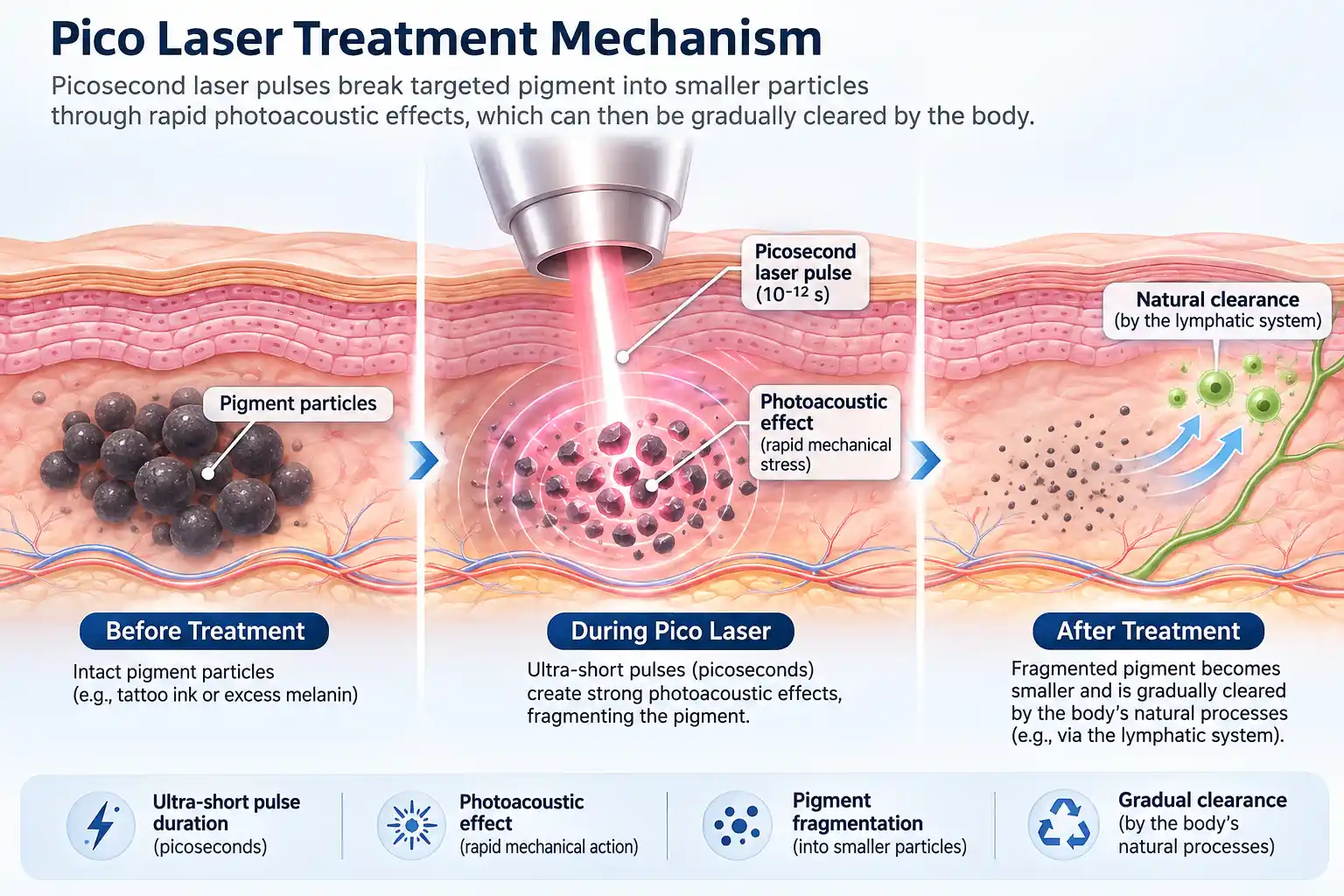
For pigment-focused procedures, the rapid energy delivery produces photoacoustic effects that can fragment pigment particles. The body may gradually clear some of these fragments through natural biological processes.
Depending on the device and its intended use, pico treatment may be performed for tattoo removal, selected benign pigmentation concerns, or certain fractional skin rejuvenation procedures.
Potential benefits include targeted pigment disruption and access to different treatment configurations. Possible side effects include redness, swelling, discomfort, blistering, and pigmentation changes.
A professional consultation is necessary to determine whether the procedure is suitable for an individual patient.
How Does Pico Laser Treatment Work?
To understand how pico laser treatment works, it is useful to examine pulse duration, optical absorption, and the interaction between laser energy and the targeted tissue.
Understanding Picosecond Laser Pulses
A picosecond is one trillionth of a second, or 10-12 seconds. Picosecond laser systems generate pulses within this extremely short time range.
The duration of each pulse influences how quickly optical energy is delivered. When a suitable pigment target absorbs this energy, rapid expansion and mechanical stress may occur.
This mechanism is particularly relevant to laser procedures designed to fragment tattoo ink and selected pigment particles.
The Role of Photoacoustic Energy
One of the defining characteristics of picosecond laser technology is its ability to generate strong photoacoustic effects.
When laser energy is absorbed rapidly, localized mechanical stress can develop within and around the targeted material. This stress may break pigment particles into smaller fragments.
The body’s biological processes can subsequently remove some of the fragmented pigment over time.
Although photoacoustic effects are important, picosecond lasers can also produce thermal interactions. Their relative contribution depends on wavelength, fluence, pulse characteristics, and the target.
Why Wavelength Selection Matters
Laser wavelength determines which tissue components absorb energy most effectively.
Different pigments have different absorption characteristics. Therefore, a wavelength suitable for one target may not be appropriate for another.
Professional picosecond laser systems may offer multiple wavelengths to support different treatment objectives.
Nevertheless, the availability of multiple wavelengths does not mean that every device can safely or effectively treat every skin condition.
How Is Pico Laser Different from Nanosecond Technology?
Traditional Q-switched laser systems commonly operate with nanosecond pulse durations. Picosecond systems deliver energy over shorter intervals.
These differences can affect the mechanical and thermal responses of pigment targets.
However, pulse duration is only one factor influencing clinical performance. Treatment effectiveness also depends on the wavelength, output characteristics, patient selection, and clinical technique.
Neither technology should be considered universally superior for every indication.
What Is Pico Laser Treatment Used For?
Pico laser treatment may be used for several dermatological and aesthetic applications. The specific indications depend on the laser platform, available wavelengths, treatment accessories, and applicable regulatory authorization.
The following applications provide a general overview. Each is a separate clinical topic requiring its own treatment considerations.
Tattoo Removal
Picosecond lasers are used in professional tattoo removal to fragment targeted ink particles. The response depends on pigment color, ink composition, tattoo depth, and other factors.
Multiple sessions are commonly necessary, and complete removal cannot be guaranteed.
Selected Pigmentation Concerns
Certain picosecond laser configurations may be appropriate for selected benign pigmented lesions.
An accurate diagnosis is essential because pigmentation disorders have different causes, and some conditions can worsen after laser exposure.
Fractional Skin Rejuvenation
Some picosecond platforms include fractional optical delivery systems designed to create localized tissue effects.
These configurations may support treatment of selected skin texture concerns, depending on the device and clinical indication.
Other Device-Specific Applications
Certain professional platforms provide additional operating modes or specialized accessories.
These capabilities should be evaluated according to the manufacturer’s technical documentation and the device’s authorized intended use.
The clinical suitability of pico laser treatment should never be inferred solely from a device’s marketing description.
Pico Laser Treatment Benefits
Pico laser benefits vary according to the condition being treated and the characteristics of the laser platform.
The following advantages describe potential capabilities of suitable professional picosecond systems rather than guaranteed patient outcomes.
1. Targeted Pigment Fragmentation
Ultra-short laser pulses can generate rapid photoacoustic effects within suitable pigment targets.
These interactions may support pigment fragmentation during professionally planned treatment procedures.
2. Flexible Wavelength Options
Some professional pico laser platforms offer multiple wavelengths.
This can help clinicians select an appropriate wavelength for different target characteristics, subject to the device’s intended applications.
3. Potentially Limited Surface Disruption
Many pigment-focused picosecond procedures do not involve full-field ablative resurfacing of the skin.
This may be advantageous for selected treatment objectives, but it does not eliminate the possibility of inflammation, blistering, or other complications.
4. Fractional Treatment Capabilities
Certain picosecond laser systems incorporate specialized fractional delivery technologies.
These systems can produce localized tissue responses that may support remodeling in selected aesthetic applications.
5. Adjustable Professional Treatment Parameters
Professional devices may provide adjustable fluence, spot size, repetition rate, and other controls.
These features help trained practitioners develop treatment plans appropriate to the patient, target, and available device.
6. Integration into Aesthetic Clinic Services
For qualified clinics, a professional picosecond laser platform may expand the range of technology-supported aesthetic services.
Before introducing a new procedure, clinics should assess staff training, patient demand, regulatory requirements, safety protocols, and expected operating costs.
The commercial value of a laser system depends on more than the number of advertised treatment applications.
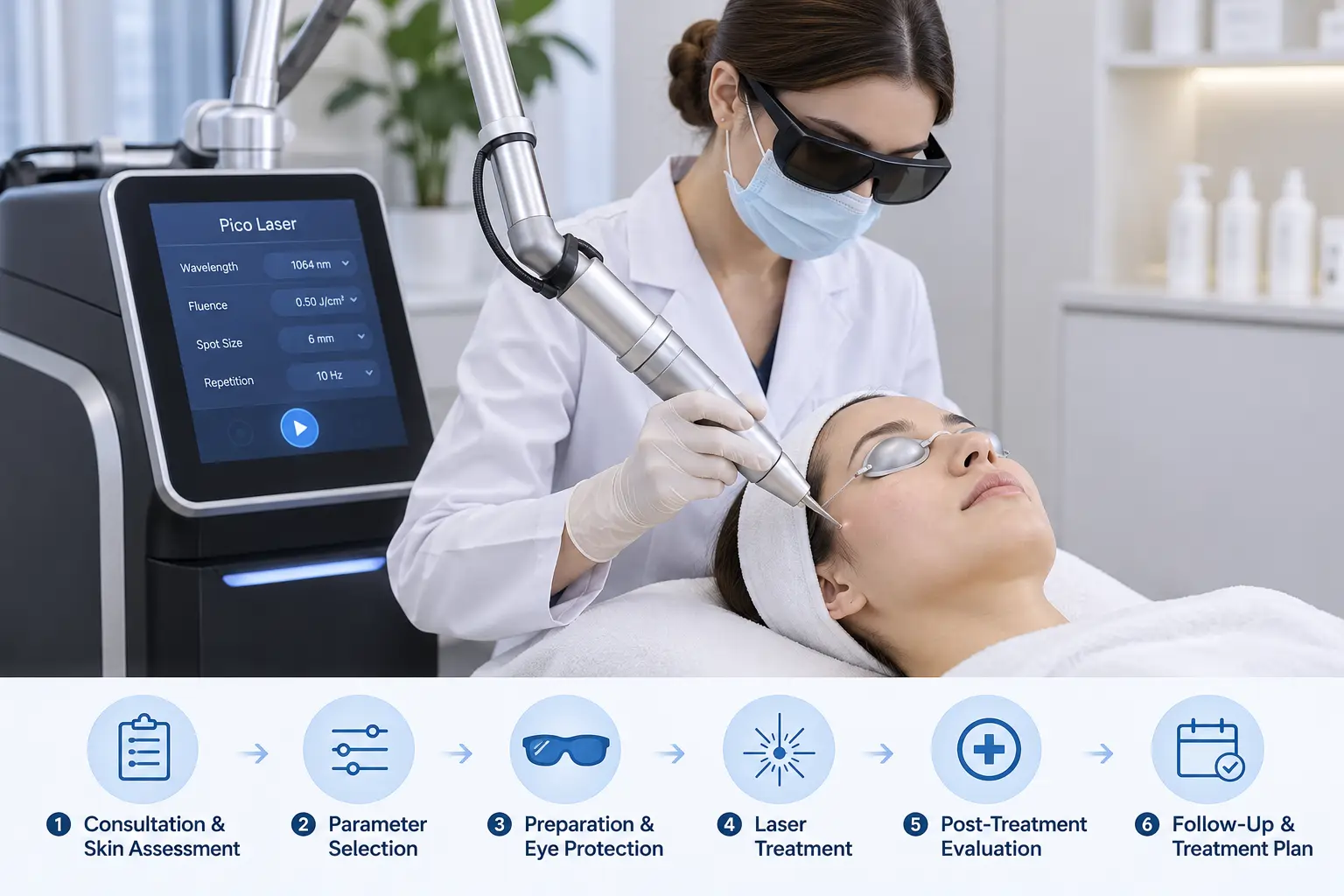
Pico Laser Treatment Procedure: Step by Step
A professional pico laser treatment procedure involves more than delivering laser pulses to the skin. Proper diagnosis, treatment planning, safety preparation, and post-treatment care are essential components of the process.
Although individual protocols vary, most professional procedures follow several general stages.
Step 1: Initial Consultation and Skin Assessment
Before treatment, a qualified practitioner evaluates the patient’s skin condition, medical history, treatment objectives, and potential risk factors.
The consultation may include an assessment of skin phototype, previous aesthetic procedures, medications, photosensitivity, and the patient’s history of pigmentation changes or abnormal scarring.
Accurate diagnosis is particularly important when treating pigmented lesions. Suspicious lesions should receive appropriate medical evaluation before any cosmetic laser procedure.
Step 2: Selecting Treatment Parameters
Once the treatment objective has been established, the practitioner selects suitable laser parameters based on the available equipment and clinical assessment.
Important parameters may include:
- Wavelength: Determines the optical absorption characteristics of the targeted structures.
- Fluence: Describes the laser energy delivered per unit area.
- Spot size: Influences treatment coverage and energy distribution.
- Pulse duration: Affects the interaction between laser energy and the target.
- Repetition rate: Influences how frequently laser pulses are delivered.
- Treatment mode: Depends on the available handpieces and device configuration.
Treatment settings should be determined by trained professionals following appropriate clinical protocols and the manufacturer’s instructions.
Step 3: Preparing the Treatment Area
The treatment area is prepared according to the procedure being performed. This may include cleansing the skin, removing cosmetics, and documenting the treatment area.
Appropriate wavelength-specific protective eyewear must be provided to the patient and personnel.
Depending on the treatment, the practitioner may also consider suitable pain-management measures.
Step 4: Delivering Pico Laser Energy
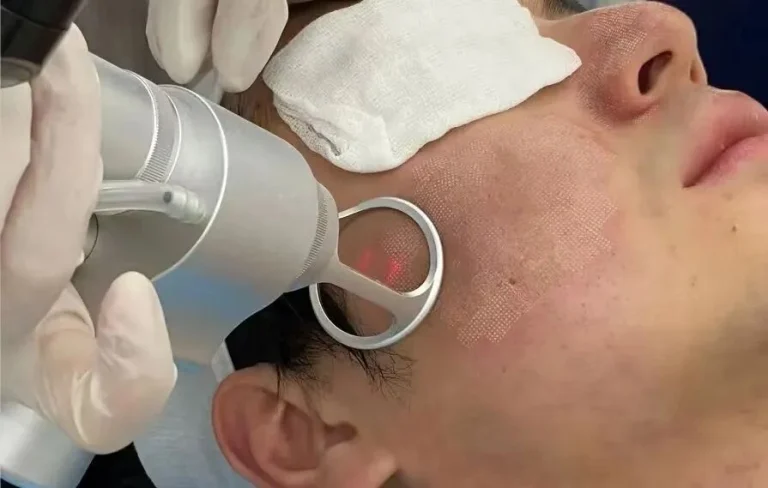
During treatment, the practitioner delivers controlled laser pulses to the selected area.
The interaction between laser energy and tissue depends on the treatment target, wavelength, and selected operating parameters.
Some procedures produce an immediate visible response, while others may cause only subtle changes during the treatment session.
The practitioner monitors the tissue response and follows the appropriate clinical treatment endpoint.

Step 5: Post-Treatment Evaluation
After the laser procedure, the practitioner evaluates the treated area for expected tissue responses and potential complications.
Patients receive aftercare instructions appropriate to the treatment performed. These may address cleansing, skin protection, wound care, and activities to avoid during recovery.
Step 6: Follow-Up and Treatment Planning
Follow-up appointments help practitioners assess healing, treatment response, and whether additional sessions may be appropriate.
Treatment intervals should allow sufficient recovery and should not be based solely on a fixed commercial schedule.
What Does Pico Laser Treatment Feel Like?
Patients frequently want to know whether pico laser treatment is painful and what sensations they may experience during the procedure.
The experience varies according to the treatment area, laser parameters, individual pain tolerance, and the type of procedure performed.
Common Sensations During Treatment
Some patients describe the sensation as a brief snapping or stinging feeling against the skin.
Others may experience localized warmth or discomfort as the laser pulses are delivered.
Treatment of densely pigmented targets or sensitive anatomical areas may produce greater discomfort than other procedures.
Can Pain Be Reduced?
Depending on the procedure, practitioners may use appropriate cooling methods or other pain-management measures.
The suitability of topical anesthetics or other measures should be determined by the treating professional.
How Long Does a Session Last?
Pico laser treatment duration depends on the size of the treatment area, the indication, and the selected procedure.
Small treatment areas may require less time than extensive or complex procedures.
Consultation, preparation, and post-treatment assessment also contribute to the total appointment duration.
What Results Can You Expect from Pico Laser Treatment?
Pico laser treatment results depend on the condition being treated, the laser platform, the selected parameters, and the patient’s individual biological response.
It is important to distinguish between an immediate visible tissue response and a meaningful long-term clinical improvement.
Immediate Treatment Responses
Some pico laser procedures may produce temporary redness, swelling, or changes in the appearance of the targeted area.
For certain pigment-focused procedures, an immediate visible response may occur.
However, these changes do not necessarily represent the final treatment result.
Gradual Changes After Treatment
Following suitable pigment-targeting procedures, fragmented pigment may be gradually processed and cleared through the body’s biological mechanisms.
Consequently, visible changes may develop over several weeks rather than appearing immediately.
In fractional rejuvenation applications, tissue remodeling may continue over a longer period, depending on the treatment and individual response.
Why Do Results Vary Between Patients?
Several factors can influence pico laser treatment outcomes.
- The underlying skin condition and accuracy of diagnosis.
- Skin phototype and individual pigmentation response.
- The laser wavelength and available treatment modes.
- Pulse characteristics, fluence, and spot size.
- Previous treatment history.
- The patient’s healing response and adherence to aftercare.
- Practitioner experience and treatment technique.
How Should Treatment Results Be Evaluated?
Standardized clinical photographs can help document visible changes before and after treatment.
Reliable comparisons should use consistent lighting, camera positioning, facial expression, distance, and documentation timing.
Photographs should not be altered to exaggerate treatment outcomes.
Actual clinical before-and-after examples should be supported by appropriate patient consent and accurate treatment information.
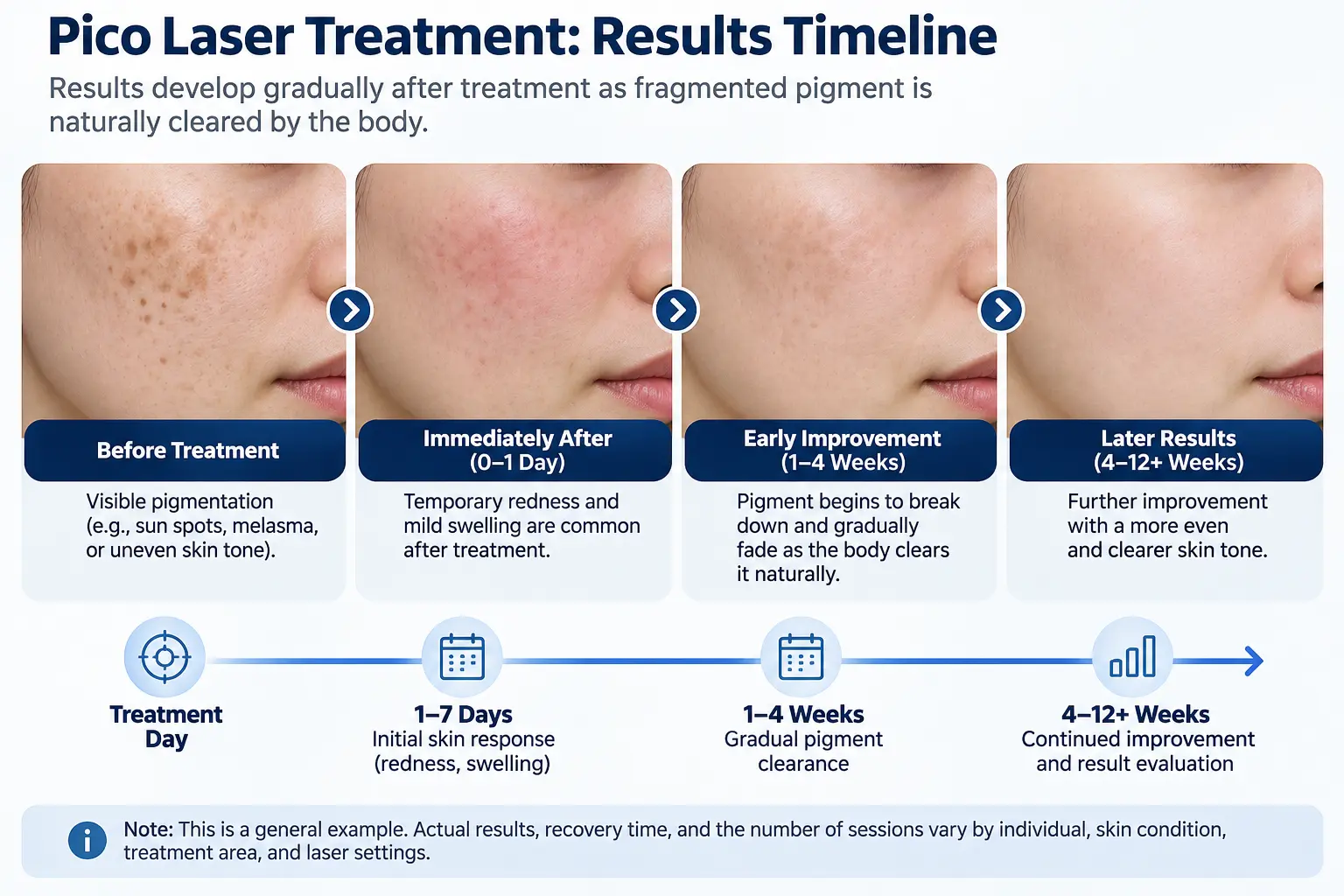
For a more detailed discussion of clinical photography and treatment timelines, see our upcoming guide to pico laser before-and-after results.
How Long Does Pico Laser Treatment Recovery Take?
Pico laser treatment recovery varies significantly between procedures. A pigment-focused treatment may produce a different healing response from a fractional rejuvenation procedure or an intensive tattoo removal session.
Although some treatments involve relatively limited downtime, it is inaccurate to describe every pico laser procedure as requiring no recovery.
Immediately After Pico Laser Treatment
Patients may experience temporary redness, swelling, warmth, or sensitivity in the treated area.
The intensity of these responses depends on the procedure and treatment parameters.
During the First Few Days
Mild reactions may gradually improve during the initial recovery period.
However, some procedures can produce crusting, blistering, or more pronounced inflammation.
Patients should follow the specific wound-care instructions provided by their practitioner.
During the Following Weeks
Visible skin recovery may continue while biological pigment clearance or other treatment responses develop gradually.
The appearance of the treated area may continue to change after initial redness has resolved.
Longer-Term Recovery and Follow-Up
Some aesthetic treatment responses develop over an extended period.
Practitioners should evaluate healing and clinical progress before scheduling additional procedures.
General Pico Laser Recovery Overview
| Recovery Stage | Possible Skin Response | Important Consideration |
|---|---|---|
| Immediately After Treatment | Redness, warmth, swelling, or sensitivity | Follow immediate post-treatment instructions |
| Early Recovery | Improving redness or possible crusting and blistering | Avoid disturbing healing skin |
| Following Weeks | Continued healing and possible gradual pigment clearance | Protect skin and monitor recovery |
| Longer-Term Follow-Up | Assessment of clinical response and residual concerns | Determine whether further treatment is appropriate |
This table describes general recovery stages rather than a fixed medical timeline. Individual recovery may be shorter or longer.
Pico Laser Treatment Aftercare
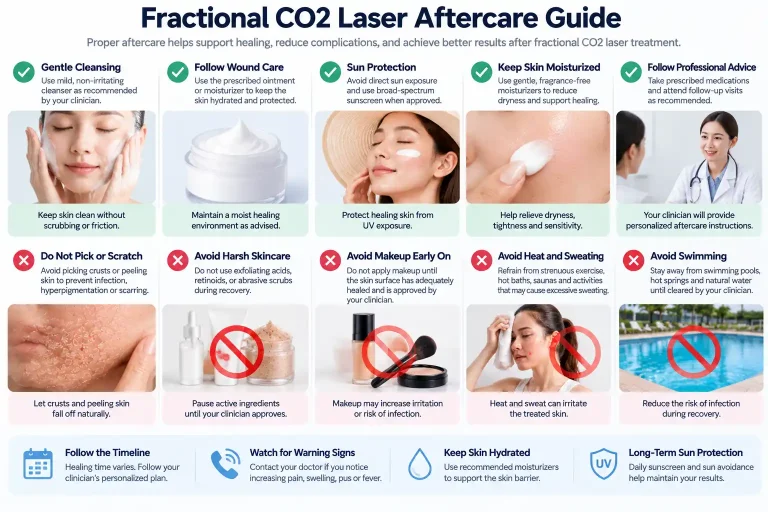
Appropriate aftercare helps protect healing skin and supports safe recovery.
- Follow the treating professional’s cleansing and wound-care instructions.
- Avoid picking, scratching, or removing crusts from treated areas.
- Protect the skin from unnecessary ultraviolet exposure.
- Avoid irritating skincare ingredients until the practitioner confirms they are appropriate.
- Use prescribed or recommended skincare products as directed.
- Attend follow-up appointments when recommended.
Patients should contact their healthcare provider if they experience increasing pain, spreading redness, discharge, fever, or other concerning symptoms.
Pico Laser Side Effects and Risks
Understanding pico laser side effects is an important part of making informed treatment decisions.
Although picosecond laser technology is used in professional dermatology, it can cause adverse reactions and complications.
The likelihood and severity of these effects depend on the patient, the indication, the device, and the treatment technique.
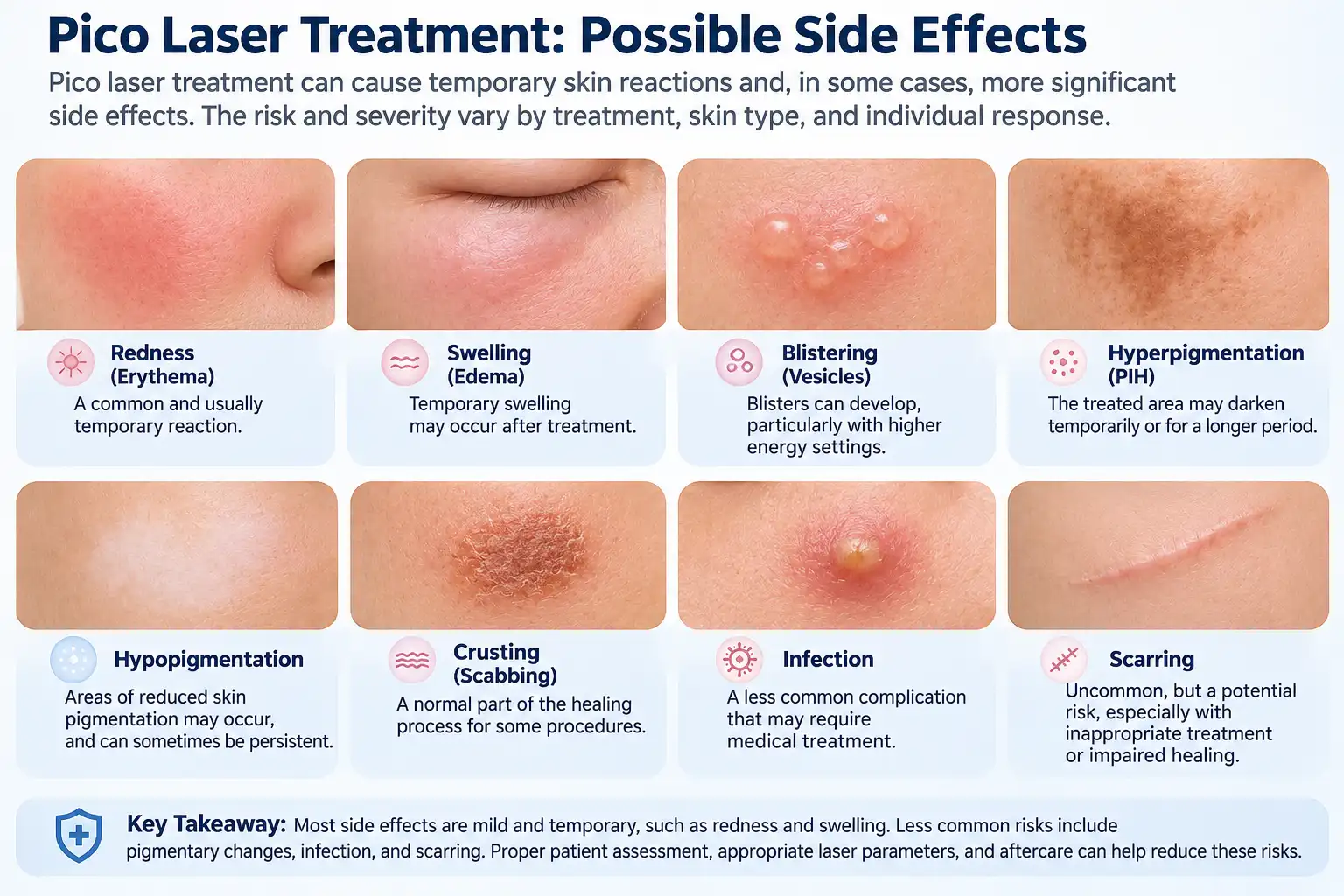
Common Temporary Skin Reactions
Some patients experience short-term reactions following pico laser treatment, including:
- Redness or erythema.
- Localized swelling.
- Warmth or tenderness.
- Temporary skin sensitivity.
- Mild discomfort in the treated area.
These reactions may improve as the treated skin heals.
Blistering and Crusting
Certain laser procedures can produce blisters or crusting, particularly when substantial energy is delivered to pigmented targets.
Damaging or removing crusts prematurely may interfere with healing and increase the risk of complications.
Post-Inflammatory Hyperpigmentation
Post-inflammatory hyperpigmentation, or PIH, refers to darkening of the skin following inflammation or injury.
It can occur after laser procedures and may be more concerning in patients prone to pigmentary changes.
Careful patient selection and appropriate laser parameters are important for reducing this risk.
Hypopigmentation
Hypopigmentation describes areas of reduced skin pigmentation.
It may occur when laser treatment affects normal pigment-producing structures.
Some pigmentary changes can persist for extended periods.
Infection and Delayed Healing
Skin disruption following certain laser procedures may increase susceptibility to infection.
Delayed healing may occur in susceptible patients or following inappropriate treatment.
Scarring and Textural Changes
Although less common than temporary redness or swelling, scarring is a potential complication of laser treatment.
The risk may increase when treatment parameters are inappropriate or wound healing is impaired.
Unexpected Pigment Responses
Some pigment-containing materials may respond unpredictably to laser energy.
Certain cosmetic tattoo pigments, for example, may darken following laser exposure.
Pigmented lesions also require appropriate diagnosis before treatment.
Eye Injury and Laser Safety
Direct or reflected laser exposure can pose serious risks to the eyes.
Appropriate wavelength-specific protective eyewear, operator training, controlled treatment environments, and equipment safety procedures are essential.
How Can Treatment Risks Be Reduced?
Risk reduction begins with appropriate clinical assessment and accurate diagnosis.
Other important considerations include:
- Selecting suitable patients and treatment indications.
- Using appropriate device-specific treatment parameters.
- Providing proper eye protection and laser safety controls.
- Following established infection prevention procedures.
- Giving clear aftercare instructions.
- Monitoring healing and recognizing complications early.
No laser treatment is entirely free from risk. Patients should discuss expected benefits, limitations, and potential complications with a qualified healthcare professional.
Who Is a Suitable Candidate for Pico Laser Treatment?
Pico laser treatment may be appropriate for selected patients seeking professional laser procedures for pigmentation-related concerns, tattoo removal, or device-specific aesthetic applications.
However, suitability depends on the clinical indication, individual skin characteristics, medical history, and the capabilities of the laser system.
Patients with an Appropriate Treatment Indication
A suitable candidate should have a clearly identified concern that can reasonably be addressed by the selected picosecond laser platform.
The practitioner should explain the expected benefits, limitations, and alternative treatment options before proceeding.
Patients with Realistic Expectations
Pico laser treatment does not guarantee complete pigment removal, permanent improvement, or identical results for every patient.
Some conditions require multiple sessions, while others may respond incompletely or recur after treatment.
Patients Who Can Follow Aftercare Instructions
Appropriate post-treatment care is an important part of the overall procedure.
Patients should be able to follow recommendations regarding skin protection, wound care, and follow-up appointments.
Who May Need Additional Medical Evaluation?
Certain patients require additional assessment before undergoing pico laser treatment.
- Patients with active infections or inflammation in the treatment area.
- Individuals with a history of abnormal scarring or impaired healing.
- Patients taking medications that may affect photosensitivity or wound healing.
- Individuals with a history of significant pigmentary changes.
- Patients with suspicious or undiagnosed pigmented lesions.
- Individuals with relevant medical conditions that may influence treatment safety.
Pregnancy and other circumstances in which elective aesthetic treatment may be deferred should be discussed with the treating healthcare professional.
There is no universal candidate checklist that applies to every picosecond laser procedure. Individual medical assessment remains essential.
How Many Pico Laser Treatments Are Needed?
The number of pico laser treatment sessions varies according to the clinical indication, the target, the patient’s skin characteristics, and the response to previous sessions.
Some concerns may respond to a relatively limited treatment course, while others require multiple procedures over an extended period.
Factors That Influence the Number of Sessions
- Treatment objective: Different clinical indications require different treatment plans.
- Target characteristics: Pigment composition, distribution, and depth can influence response.
- Skin phototype: Individual pigmentation characteristics may affect parameter selection.
- Laser technology: Available wavelengths and treatment configurations influence capabilities.
- Previous treatments: Earlier procedures may influence the subsequent treatment strategy.
- Healing response: Additional treatment should be considered only after appropriate recovery.
How Often Can Pico Laser Treatment Be Repeated?
Treatment intervals depend on the procedure and the patient’s recovery.
The practitioner should allow sufficient time for healing and assessment of the previous treatment response.
Repeating laser treatment too frequently may increase the risk of unnecessary inflammation or other complications.
Are Results Permanent?
The durability of results depends on the underlying condition and treatment objective.
Some pigment-related improvements may persist, while other conditions can recur because of biological or environmental factors.
Patients should not assume that every pico laser procedure produces permanent results.
Pico Laser Treatment vs Other Laser Technologies
Pico laser treatment is one of several energy-based approaches used in aesthetic dermatology.
Different technologies interact with tissue in different ways. Therefore, treatment selection should be based on the clinical objective rather than the popularity of a particular device.
Picosecond Laser vs Q-Switched Laser
Picosecond lasers deliver pulses measured in trillionths of a second, while conventional Q-switched systems commonly use nanosecond pulses.
These differences influence the interaction between laser energy and pigment targets.
Both technologies have established roles in selected pigment-focused procedures.
Picosecond Laser vs Fractional CO2 Laser
Fractional CO2 laser systems deliver ablative energy that is strongly absorbed by water in tissue.
They are commonly used for selected skin resurfacing applications.
Picosecond laser systems primarily use ultra-short optical pulses, and some platforms provide fractional nonablative treatment configurations.
The two technologies should not be treated as interchangeable.
Technology Comparison Table
| Technology | Key Characteristic | Selected Applications |
|---|---|---|
| Picosecond Laser | Ultra-short pulses with strong photoacoustic effects | Tattoo removal, selected pigmentation procedures, device-specific rejuvenation |
| Q-Switched Nd:YAG Laser | Nanosecond Q-switched pulses | Tattoo removal and selected pigmentation concerns |
| Fractional CO2 Laser | Ablative laser energy absorbed by tissue water | Selected resurfacing, scar, and wrinkle procedures |
The most appropriate technology depends on diagnosis, skin type, treatment objectives, and device-specific capabilities.
What Should You Know Before Pico Laser Treatment?
Proper preparation can help patients understand the procedure, identify potential risks, and establish realistic treatment expectations.
Discuss Your Medical History
Patients should inform the practitioner about relevant medical conditions, medications, previous laser treatments, and any history of abnormal wound healing.
Understand the Treatment Objective
The practitioner should explain which condition is being treated, why the selected laser technology is appropriate, and what outcomes are reasonably expected.
Ask About Possible Side Effects
Patients should understand the possibility of temporary inflammation, pigmentation changes, blistering, and less common complications.
Review the Expected Recovery Process
Recovery requirements vary by treatment. Patients should ask about expected downtime, skin protection, and post-treatment care before scheduling a procedure.
Confirm the Practitioner’s Qualifications
Laser treatment should be performed by appropriately qualified professionals working within applicable local regulations.
Operator training, equipment maintenance, and appropriate laser safety procedures are important considerations.
Questions to Ask During Consultation
- Is pico laser treatment appropriate for my specific condition?
- What laser technology and wavelength will be used?
- What results are realistic?
- What are the possible side effects for my skin type?
- What recovery should I expect?
- Could another treatment be more appropriate?
Professional Pico Laser Treatment Equipment for Clinics
For aesthetic clinics, dermatology practices, and medical equipment distributors, professional laser equipment selection requires both clinical and technical evaluation.
A professional picosecond laser platform should be assessed according to its documented performance, intended applications, safety features, and service support.
Important Equipment Selection Factors
Clinics evaluating picosecond laser equipment should consider the following factors:
- Verified pulse duration: Confirm that the device produces the advertised pulse characteristics.
- Available wavelengths: Evaluate the wavelengths provided by the specific device configuration.
- Energy output: Review documented output performance and operating controls.
- Handpiece options: Examine the available treatment accessories and their intended uses.
- Laser safety: Review protective measures, emergency controls, and operating requirements.
- Regulatory status: Verify the documentation and authorized indications applicable to the destination market.
- Technical support: Consider training, maintenance, warranty, and spare-part availability.
Ultra PicoMax by Cocoon Laser
Cocoon Laser offers Ultra PicoMax, a professional picosecond laser system for aesthetic equipment buyers.
Clinics and distributors evaluating this platform should review the exact product configuration, documented wavelengths, pulse characteristics, operating modes, and intended applications.
Technical specifications should be confirmed against the product documentation rather than generalized across different picosecond systems.
QPeak Pro: An Alternative Laser Technology
Cocoon Laser also offers QPeak Pro, a professional Q-switched Nd:YAG laser platform.
QPeak Pro uses nanosecond Q-switched technology rather than picosecond pulse technology.
It represents a different equipment category that may be relevant when comparing laser technologies for selected applications.
Request Professional Equipment Information
Medical aesthetic businesses should request complete technical documentation before making purchasing decisions.
For information about Cocoon Laser equipment, available configurations, and international distribution cooperation, contact Cocoon Laser .
Frequently Asked Questions About Pico Laser Treatment
What is pico laser treatment?
Pico laser treatment is a professional laser procedure that uses ultra-short pulses measured in picoseconds. These pulses can generate strong photoacoustic effects when interacting with suitable pigment targets.
What is pico laser used for?
Picosecond laser technology is used for tattoo removal, selected benign pigmentation concerns, and certain device-specific fractional rejuvenation procedures.
What are the main pico laser benefits?
Potential pico laser benefits include targeted pigment fragmentation, flexible wavelength options on suitable systems, and access to specialized treatment configurations.
Is pico laser treatment painful?
Patients may experience a brief snapping, stinging, or warming sensation during treatment. Discomfort varies by procedure, treatment area, and individual sensitivity.
How long does pico laser treatment take?
Treatment duration depends on the size of the treatment area, the procedure, and the laser settings. Consultation and preparation also contribute to the total appointment time.
What are the side effects of pico laser?
Possible pico laser side effects include redness, swelling, discomfort, blistering, crusting, pigmentation changes, infection, and scarring.
How long does pico laser treatment recovery take?
Recovery varies by procedure and patient. Some reactions resolve relatively quickly, while other treatments may require longer healing and follow-up.
How many pico treatments are needed?
The number of sessions depends on the treatment objective, target characteristics, device, and individual response. Some procedures require multiple sessions.
Is pico laser treatment suitable for all skin types?
Suitability depends on the indication, skin phototype, laser parameters, and individual risk factors. Patients with darker skin tones may have an increased risk of certain pigmentary complications.
Is pico laser better than traditional laser treatment?
Picosecond lasers offer different pulse characteristics from nanosecond systems, but no laser technology is universally superior. The best choice depends on the clinical indication and available device.
Are pico laser treatment results permanent?
Results depend on the underlying condition. Some improvements may persist, while other conditions may recur or require additional management.
What should I avoid after pico laser treatment?
Patients should follow their practitioner’s aftercare instructions, avoid picking healing skin, protect treated areas from excessive ultraviolet exposure, and avoid irritating products until medically appropriate.
Final Thoughts on Pico Laser Treatment
Pico laser treatment uses ultra-short optical pulses to interact with targeted structures in the skin.
Its established applications include professional tattoo removal and selected pigmentation procedures, while certain picosecond platforms also offer fractional aesthetic capabilities.
Potential benefits should always be considered alongside treatment limitations, recovery requirements, and possible side effects.
Accurate diagnosis, suitable laser parameters, qualified practitioners, and appropriate aftercare remain essential for responsible treatment.
For clinics and international distributors evaluating professional picosecond laser equipment, Cocoon Laser provides product information and technical consultation.
Contact Cocoon Laser to discuss equipment configurations and purchasing requirements.