Fractional CO2 Laser Recovery: Timeline & Aftercare
Fractional CO2 laser recovery is an important part of the skin resurfacing process. Although fractional technology leaves untreated tissue between microscopic treatment zones, the procedure still creates controlled skin injury that requires careful healing and aftercare.
Redness, swelling, pinpoint crusting, peeling, and temporary skin sensitivity can occur during recovery. The intensity and duration of these reactions depend on treatment settings, skin characteristics, treated areas, and individual healing responses.
This guide explains the fractional CO2 laser recovery timeline, typical day-by-day changes, practical aftercare, potential complications, and warning signs that require medical attention.
Quick Answer: How Long Does Fractional CO2 Laser Recovery Take?
Initial fractional CO2 laser recovery commonly takes approximately 5–14 days, but healing time can be shorter or substantially longer depending on treatment intensity and individual factors. During this period, patients may experience redness, swelling, crusting, and peeling as the treated skin re-epithelializes.
Pinkness or redness can persist for several weeks or longer, especially after more intensive treatment. Collagen remodeling and changes in skin texture may continue for several months.
The return to work, exercise, makeup, and normal skincare should follow the treating clinician’s instructions rather than a fixed online timeline.
Fractional CO2 Laser Recovery Timeline: Day by Day
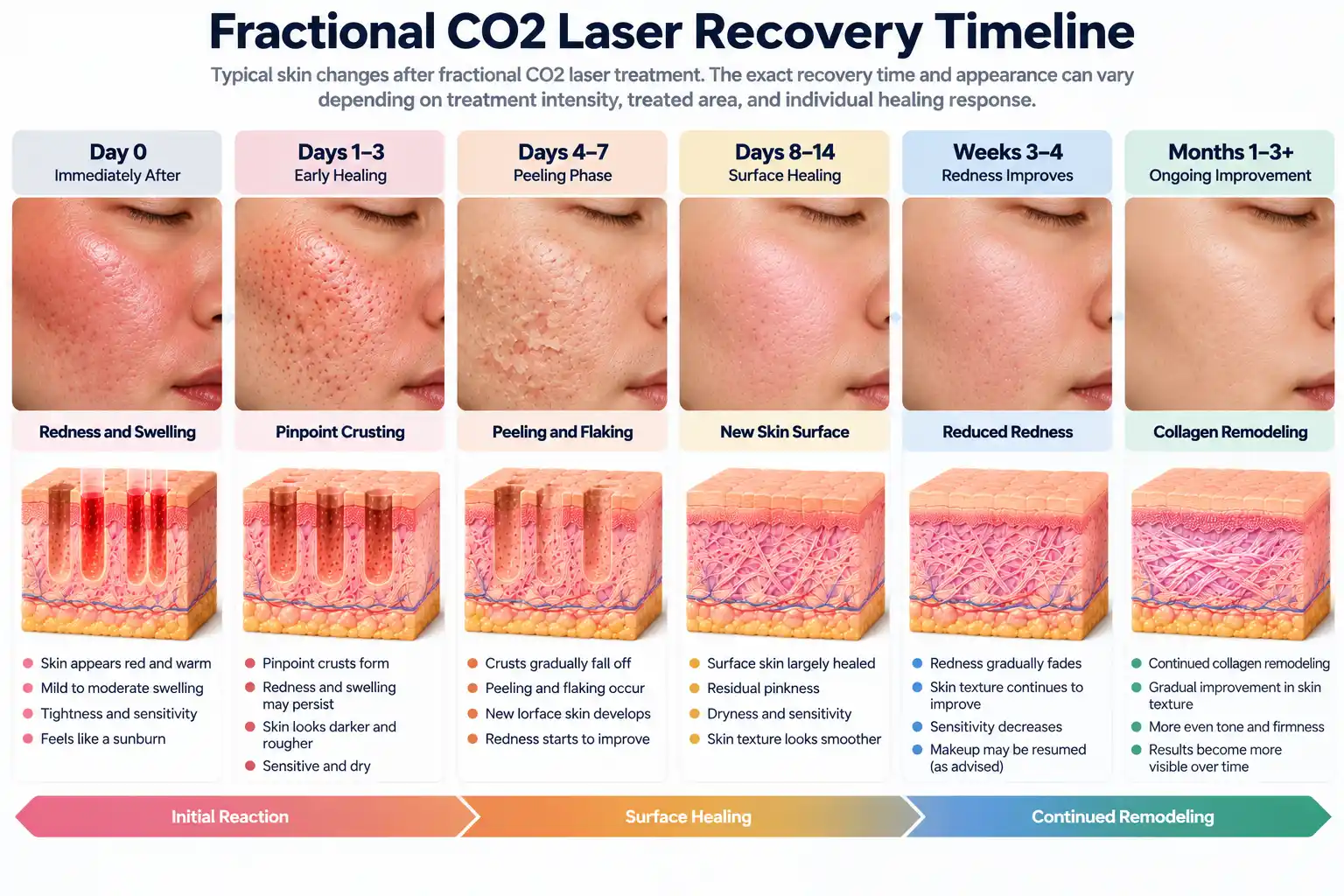
The fractional CO2 laser recovery day-by-day timeline below describes possible responses after ablative fractional resurfacing. It is a general educational guide, not a prediction of how every patient will heal.
| Recovery Period | Possible Skin Changes | General Care Priority |
|---|---|---|
| Day 0–1 | Redness, warmth, swelling, tenderness | Protect the treated skin and follow immediate aftercare |
| Days 2–3 | Swelling, darkening, pinpoint crusts, dryness | Gentle cleansing and prescribed wound care |
| Days 4–7 | Crusting, flaking, peeling, new surface skin | Avoid picking and unnecessary irritation |
| Days 8–14 | Further surface healing; residual pinkness | Maintain skin protection and approved moisturization |
| Weeks 3–4 | Persistent redness or sensitivity in some patients | Sun protection and gradual return to approved skincare |
| Months 1–3+ | Gradual texture changes and tissue remodeling | Follow-up assessment and ongoing photoprotection |
Day 1: Redness, Warmth, and Swelling
Immediately after treatment, the skin may appear red and feel warm or sensitive. Swelling can develop, particularly in areas with delicate skin.
Some patients experience a sensation resembling a significant sunburn. The degree of discomfort depends on the procedure and individual sensitivity.
Patients should follow the clinic’s instructions regarding cleansing, cooling, medications, and protective products. Unapproved products should not be applied to freshly treated skin.
Days 2–3: Early Healing and Pinpoint Crusting
The treated skin may become darker, rougher, or more visibly textured as microscopic treatment zones begin healing.
Small crusts or a grid-like pattern may be visible. Swelling can remain noticeable during this stage.
Crusts should not be scratched or forcibly removed. Premature removal may disrupt healing and increase the risk of infection, pigmentation changes, or scarring.
Days 4–7: Peeling and Re-Epithelialization
As the skin repairs its surface, crusts may loosen and flaking or peeling can occur. New skin may appear pink and remain sensitive.
The timing of peeling is not identical for every patient. More aggressive resurfacing can require a longer period of wound care.
Gentle care and avoidance of friction remain important until the skin barrier has adequately recovered.
Days 8–14: Continued Surface Recovery
Many patients undergoing less intensive fractional resurfacing experience substantial surface healing during this period.
However, visible redness, dryness, tightness, or sensitivity may continue. More intensive procedures can require additional healing time.
Skin that looks healed may still be more vulnerable to irritation and ultraviolet exposure.
Weeks 3–4: Redness Gradually Improves
Surface healing and the disappearance of redness are separate processes.
Some patients experience prolonged erythema, especially following deeper or higher-density fractional CO2 laser treatment.
Persistent redness should be discussed with the treating clinician if it is worsening, unusually severe, or accompanied by other concerning symptoms.
Months 1–3 and Beyond: Tissue Remodeling
The visible recovery period is not the same as the complete biological remodeling process.
Collagen organization and other tissue changes may continue for months after the skin surface has healed.
Improvement in wrinkles, scars, and uneven texture may therefore become more apparent over time. Outcomes are variable and cannot be guaranteed.
What Happens During the CO2 Laser Healing Process?
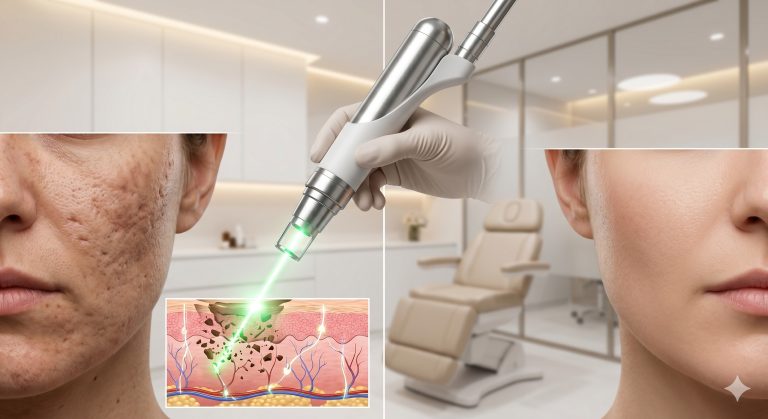
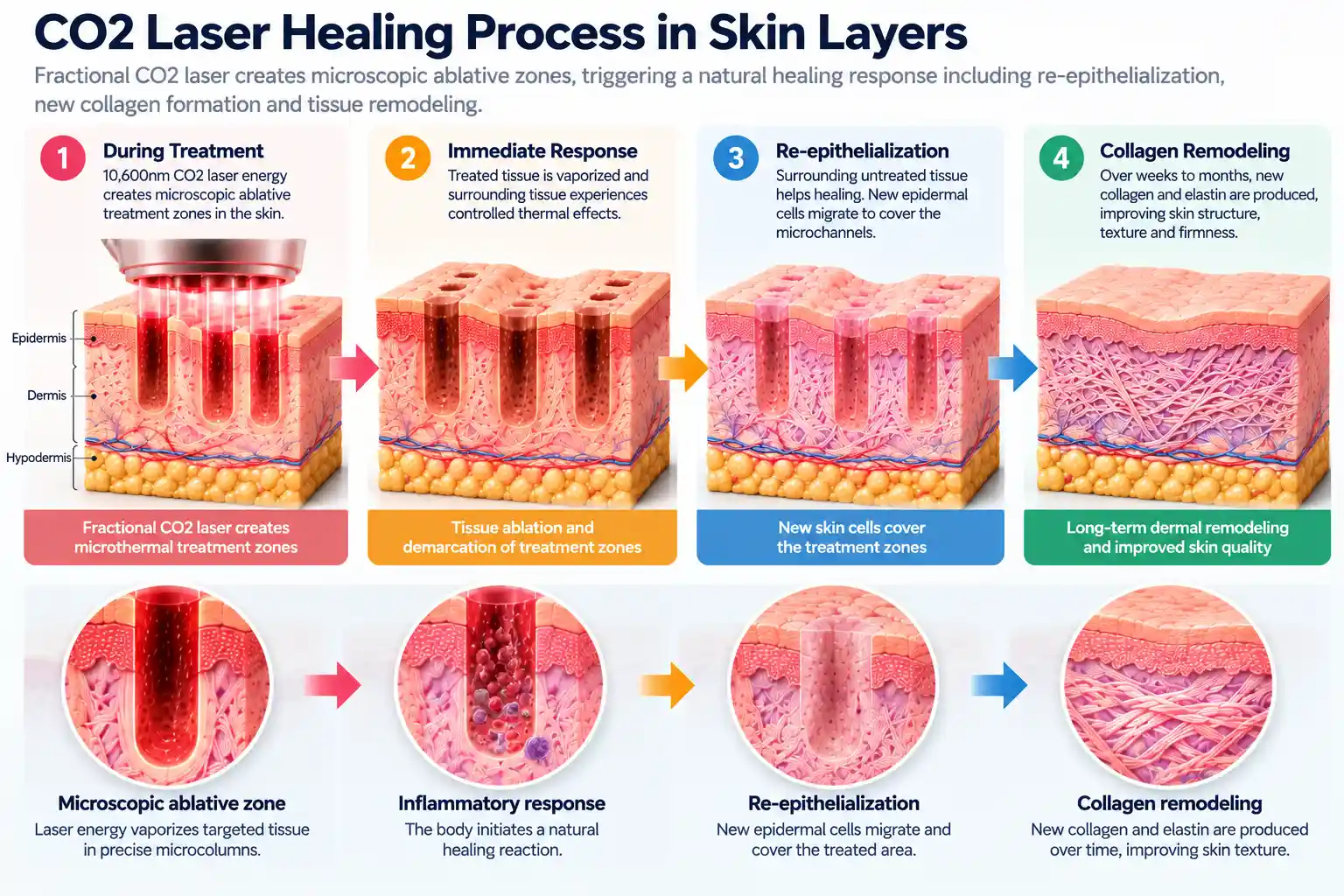
The CO2 laser healing process begins when 10,600nm laser energy is absorbed by water within the treated tissue.
In fractional ablative resurfacing, this interaction creates microscopic columns of ablation and associated thermal effects. Tissue between the treatment zones remains untreated, helping support surface repair.
Inflammatory Response
Immediately after laser exposure, the body initiates an inflammatory response. Redness, warmth, and swelling are among the possible visible signs.
Re-Epithelialization
Skin cells migrate and proliferate to restore the epidermal surface. This process is essential for rebuilding the skin barrier.
Collagen Remodeling
Dermal remodeling occurs over a longer period and may contribute to changes in skin texture and the appearance of selected scars or wrinkles.
For an explanation of the treatment itself, see our CO2 laser skin resurfacing guide .
Fractional CO2 Laser Aftercare: What Should You Do?
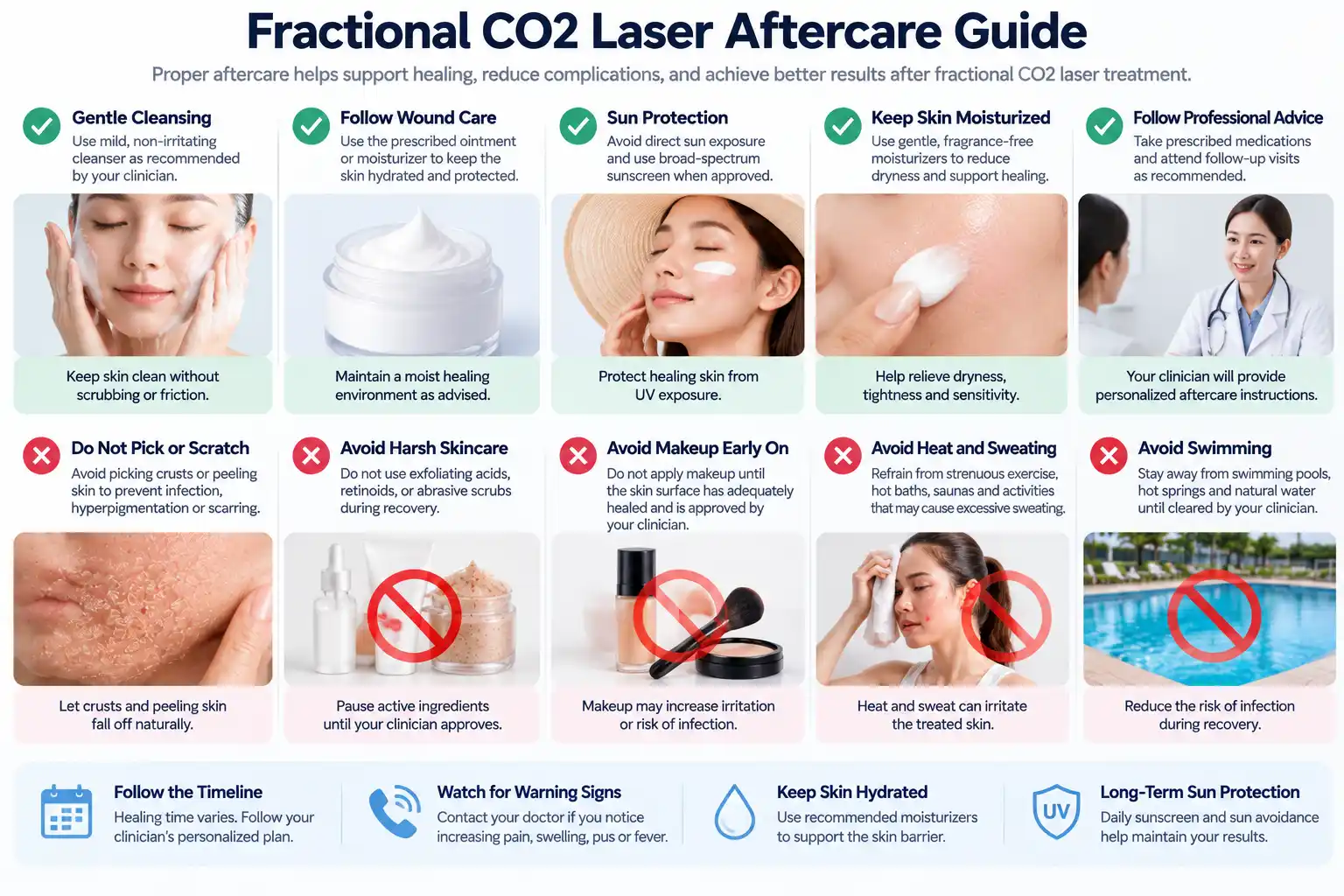
Appropriate fractional CO2 laser aftercare supports healing and helps reduce avoidable complications. Instructions should be individualized by the treating medical professional.
1. Follow the Prescribed Cleansing Routine
Use only the cleansing method and products recommended by the clinic during early healing. Avoid scrubbing, cleansing brushes, and unnecessary friction.
2. Maintain the Recommended Wound-Care Environment
Depending on the procedure, the clinician may recommend a specific ointment, moisturizer, dressing, or other wound-care approach.
Do not substitute active cosmetic ingredients or unapproved home remedies for prescribed care.
3. Avoid Picking, Scratching, or Exfoliating
Pinpoint crusts and peeling skin should separate naturally. Picking can damage recovering tissue and increase the possibility of complications.
4. Protect the Skin From Sun Exposure
Sun protection is especially important after resurfacing because recently treated skin may be more susceptible to pigmentation changes.
During early healing, follow the clinician’s instructions about avoiding direct sunlight and when sunscreen can safely be applied. Once appropriate, use broad-spectrum sun protection and additional physical measures such as shade and protective clothing.
5. Pause Irritating Skincare Ingredients
Retinoids, exfoliating acids, abrasive scrubs, and other potentially irritating products may need to be paused during recovery.
Resume active skincare only when approved by the treating clinician.
6. Follow Instructions About Exercise and Heat
Strenuous exercise, excessive sweating, hot baths, saunas, and swimming may need to be avoided temporarily.
The appropriate duration depends on the extent of treatment and the condition of the healing skin.
7. Attend Recommended Follow-Up Visits
Follow-up appointments allow the clinician to assess wound healing, identify possible complications, and advise on the safe return to normal activities.

What Should You Avoid After Fractional CO2 Laser Treatment?
During fractional CO2 laser recovery, patients should avoid activities and products that could disrupt the healing skin barrier.
- Picking or peeling crusts manually
- Using harsh exfoliating products
- Applying unapproved retinoids or acids
- Excessive direct sun exposure
- Scrubbing or rubbing treated areas
- Using makeup before the clinician permits it
- Swimming or using saunas before clearance
- Ignoring worsening or unusual symptoms
These precautions should be adapted to the treatment protocol rather than treated as universal restrictions with identical durations.
How Much Downtime Does Fractional CO2 Laser Require?
CO2 laser downtime refers to the period when visible skin reactions, wound care, or activity restrictions interfere with normal daily routines.
Downtime is not necessarily identical to the time required for complete surface healing or the disappearance of redness.
Some lower-intensity fractional procedures involve relatively short social downtime, while more aggressive resurfacing may require one to two weeks or longer away from activities that expose healing skin to irritation or contamination.
When Can You Return to Work?
Return-to-work timing depends on visible skin changes, workplace conditions, and the clinician’s recommendations.
Patients working outdoors or in environments with dust, heat, or high physical activity may need additional precautions.
When Can You Wear Makeup?
Makeup should generally be avoided while the skin remains open, crusted, or incompletely healed.
The treating clinician should determine when makeup can safely be resumed.
When Can You Exercise Again?
Exercise may be restricted temporarily because heat, sweating, friction, and shared equipment can irritate recently treated skin.
Follow the treating clinic’s activity-specific guidance.
Normal Healing vs Warning Signs After Fractional CO2 Laser
Certain reactions are expected after ablative fractional resurfacing. However, not every symptom should be assumed to be normal healing.
| Possible Expected Response | Concerning Sign |
|---|---|
| Redness that gradually improves | Rapidly spreading or worsening redness |
| Temporary swelling | Severe or progressively increasing swelling |
| Mild to moderate discomfort | Severe or worsening pain |
| Pinpoint crusting and peeling | Purulent drainage, foul odor, or concerning wounds |
| Temporary sensitivity | New blisters, rapidly worsening symptoms, or suspected infection |
Contact the treating clinician promptly if symptoms are worsening unexpectedly, if infection is suspected, or if new blistering develops.
Fever accompanied by concerning wound symptoms also requires prompt medical assessment. Severe systemic symptoms warrant urgent medical care.
Patients with a history of cold sores should inform their clinician before treatment because resurfacing may reactivate herpes simplex infection. Preventive medication may be considered when appropriate.
Fractional CO2 Laser Side Effects and Complications
Fractional CO2 laser side effects range from temporary expected reactions to less common but clinically important complications.
Temporary Redness and Swelling
Erythema and edema are common after ablative resurfacing. Their duration varies with treatment intensity and individual response.
Post-Inflammatory Hyperpigmentation
Post-inflammatory hyperpigmentation can develop after laser-induced inflammation. Risk may be higher in patients with more heavily pigmented skin and certain pigmentation histories.
Careful patient selection, treatment planning, and photoprotection are important risk-management considerations.
Hypopigmentation
Loss of pigmentation can occur, particularly following aggressive or repeated ablative treatments. Some pigmentary changes may persist.
Infection
Bacterial, viral, or fungal infections may complicate resurfacing procedures. Appropriate wound care and timely clinical evaluation are important.
Scarring and Prolonged Erythema
Although fractional delivery preserves intervening tissue, scarring remains a potential complication of ablative laser treatment.
Prolonged redness may also occur and should be evaluated in the context of the procedure and clinical findings.
Fractional technology does not eliminate these risks. Professional assessment and appropriate technique remain essential.
Why Does Fractional CO2 Laser Recovery Time Vary?
There is no single fractional CO2 laser recovery time that applies to every patient.
Several factors influence the extent of tissue injury and the subsequent healing process.
Treatment Energy and Density
Higher energy, greater fractional coverage, additional passes, and deeper treatment can increase tissue injury and potentially prolong recovery.
Skin Type and Pigmentation History
Skin phototype, pigmentation disorders, and prior reactions to skin injury influence treatment planning and complication risk.
Treated Body Area
Different anatomical areas may heal at different rates. Nonfacial skin can require particular caution because healing characteristics differ from those of the face.
Individual Health and Healing Factors
Relevant medical conditions, medications, smoking, previous procedures, and wound-healing history can affect recovery.
Aftercare Adherence
Following appropriate wound-care instructions can help reduce avoidable irritation and support uncomplicated healing.
Fractional CO2 Laser Recovery vs Other Resurfacing Treatments
Recovery requirements differ between resurfacing technologies because their mechanisms and treatment intensities vary.
| Treatment | Mechanism | General Recovery Considerations |
|---|---|---|
| Fractional CO2 laser | Fractional ablative laser treatment | Crusting, peeling, and potentially significant redness |
| Full-field CO2 laser | Continuous ablative resurfacing | Often more extensive wound care and downtime |
| Nonablative fractional laser | Thermal treatment without equivalent surface ablation | Often less surface disruption, depending on settings |
| RF microneedling | Needle-based radiofrequency tissue heating | Usually different surface healing characteristics |
Comparisons should consider treatment goals, device settings, individual skin characteristics, and the experience of the treating professional.
When Will You See Fractional CO2 Laser Results?
Fractional CO2 laser results should not be judged solely during the early recovery period.
Swelling, redness, dryness, and temporary changes in surface texture can make early appearance misleading.
Once the surface heals, gradual improvements in selected textural concerns may become more apparent. Dermal remodeling can continue over subsequent months.
The number of sessions and the degree of improvement depend on the indication, treatment approach, and individual response.
For patients specifically researching scar improvement, our CO2 laser for acne scars guide explains how different scar characteristics influence treatment selection.
Professional Fractional CO2 Laser Technology and Recovery Management
For dermatology clinics and aesthetic practices, recovery management begins before the treatment is performed.
Appropriate patient selection, operator training, energy settings, fractional density, treatment pattern, and post-procedure instructions all influence clinical workflow and patient safety.
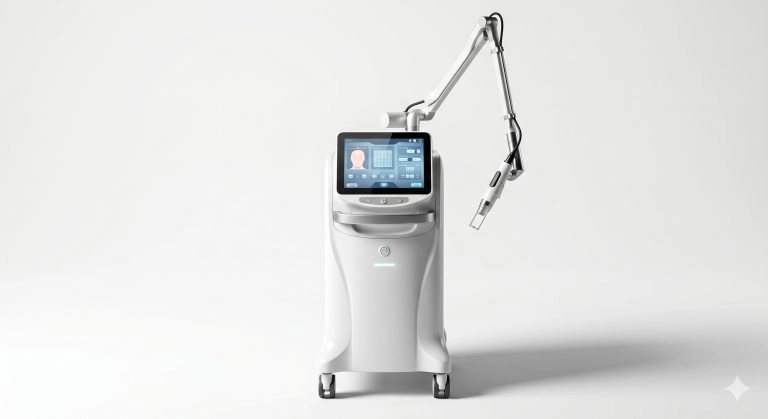
Professional fractional CO2 laser platforms may offer adjustable parameters that support individualized treatment planning.
Cocoon Laser offers professional CO2 laser platforms, including the CO2 4D and CO2 Star , for clinics and distributors evaluating resurfacing technology.
Device features should be assessed alongside training, maintenance requirements, applicable regulatory obligations, and clinical operating procedures.
Contact Cocoon Laser to discuss professional CO2 laser equipment and product specifications.
Frequently Asked Questions About Fractional CO2 Laser Recovery
How long does fractional CO2 laser recovery take?
Initial surface healing commonly takes around 5–14 days, but recovery can take longer after intensive treatments. Redness and sensitivity may persist beyond surface healing.
What does fractional CO2 laser recovery look like day by day?
Early recovery may involve redness and swelling, followed by pinpoint crusting, peeling, and gradual surface healing. The timing and severity of each stage vary.
Is peeling normal after fractional CO2 laser?
Peeling and flaking can be normal during surface healing. Patients should not forcibly remove crusts or peeling skin.
When can I wash my face after fractional CO2 laser?
Cleansing instructions depend on the treatment protocol. Patients should use the timing and cleansing method recommended by their treating clinician.
When can I wear makeup after fractional CO2 laser?
Makeup should generally be avoided until the skin surface has adequately healed and the treating clinician confirms that it is appropriate.
How long does redness last after CO2 laser?
Redness may last for days, weeks, or longer depending on treatment intensity and individual healing. Worsening or unusual redness requires clinical assessment.
Can fractional CO2 laser cause hyperpigmentation?
Yes. Post-inflammatory hyperpigmentation is a recognized risk, particularly in susceptible skin types. Careful treatment planning and sun protection are important.
When can I exercise after fractional CO2 laser?
The appropriate time to resume exercise depends on the extent of treatment and skin healing. Patients should follow the clinician’s instructions.
When should I contact my doctor during recovery?
Contact the treating clinician promptly for worsening pain, spreading redness, increasing swelling, pus, new blisters, fever with concerning skin symptoms, or other unexpected changes.
When will my skin look normal after fractional CO2 laser?
The skin surface may heal before all redness and sensitivity disappear. Appearance can continue changing over several weeks, while deeper remodeling may continue for months.
Final Thoughts: Understanding Fractional CO2 Laser Recovery
Fractional CO2 laser recovery involves several overlapping processes, including inflammation, surface repair, and longer-term tissue remodeling.
Although initial healing often occurs within approximately one to two weeks, individual recovery varies considerably. More intensive treatments may require longer wound care and prolonged redness.
The most important priorities are appropriate professional assessment, careful treatment planning, adherence to individualized aftercare, and prompt evaluation of concerning symptoms.
For professional clinics and equipment distributors, contact Cocoon Laser to learn more about fractional CO2 laser systems for aesthetic applications.