The Pain-Free Promise: Why You Need a Professional Ice Cooling Hair Removal Device
Executive Summary:
For decades, achieving permanent hair reduction meant subjecting patients to agonizing clinical discomfort, resulting in high drop-out rates and compromised treatment protocols. Today, the integration of a professional ice cooling hair removal device has fundamentally disrupted this paradigm. By harnessing advanced TEC Cooling and Sapphire contact surfaces, elite aesthetic laser systems precisely protect the epidermis while delivering the required photothermal energy to destroy the hair follicle. This rigorous mastery over selective photothermolysis guarantees unprecedented safety across the entire Fitzpatrick Scale, eliminating the risks of collateral thermal damage and downtime. Compliant with strict FDA 510(k) and Medical CE standards, these systems not only ensure a painless patient experience but also offer clinical directors a robust ROI through maximized patient throughput and extended handpiece shots count. Whether you are a practitioner aiming for clinical excellence or a B2B buyer evaluating procurement, understanding the biomechanics of ice cooling is non-negotiable.
Introduction: The Evolution from “No Pain, No Gain” to Clinical Comfort
In the nascent stages of aesthetic laser medicine, the pursuit of permanent hair reduction was inherently bound to patient suffering. Legacy devices, utilizing early ruby and alexandrite wavelengths without adequate epidermal protection, subjected patients to intense thermal spikes. The standard clinical sensation was universally described as the aggressive, rapid snapping of a rubber band against bare skin, accompanied by an intense burning sensation. This archaic “no pain, no gain” methodology created a significant psychological barrier, severely limiting the demographic of patients willing to undergo or complete their necessary treatment cycles.
The modern aesthetic landscape, however, has undergone a radical technological evolution. The industry has firmly pivoted away from enduring pain as a prerequisite for clinical efficacy. The critical turning point was the engineering and integration of advanced ice cooling mechanisms directly into the laser delivery system. Today, a professional ice cooling hair removal device does not merely offer a luxury upgrade; it represents the baseline standard of care. This evolution has redefined patient expectations and established a new benchmark for clinical efficacy. Equipment engineered by forward-thinking suppliers like Cocoon Laser demonstrates that patient comfort and aggressive clinical results are no longer mutually exclusive, but rather symbiotic components of a successful aesthetic practice.
The Anatomy of Laser Hair Removal Pain (And Why Ice Cooling is the Antidote)
To appreciate the absolute necessity of advanced cooling systems, clinical operators and procurement managers must first understand the underlying biological and physical mechanisms that trigger pain during a laser session.
Selective Photothermolysis: Heat is Necessary, Pain is Not
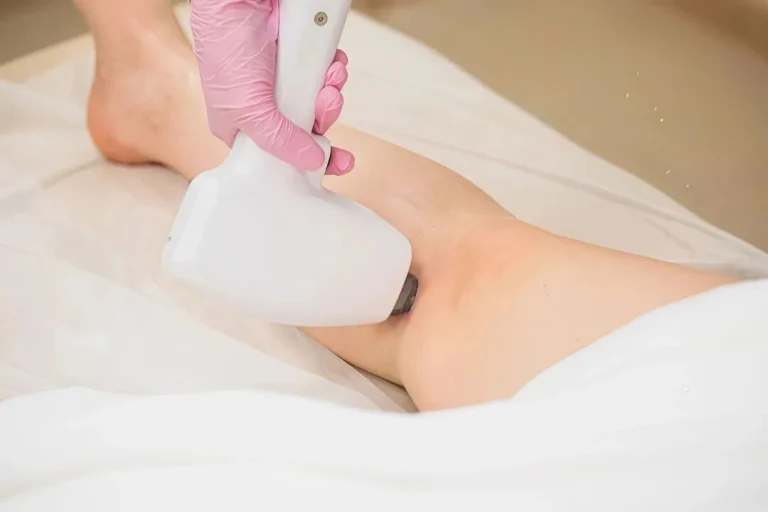
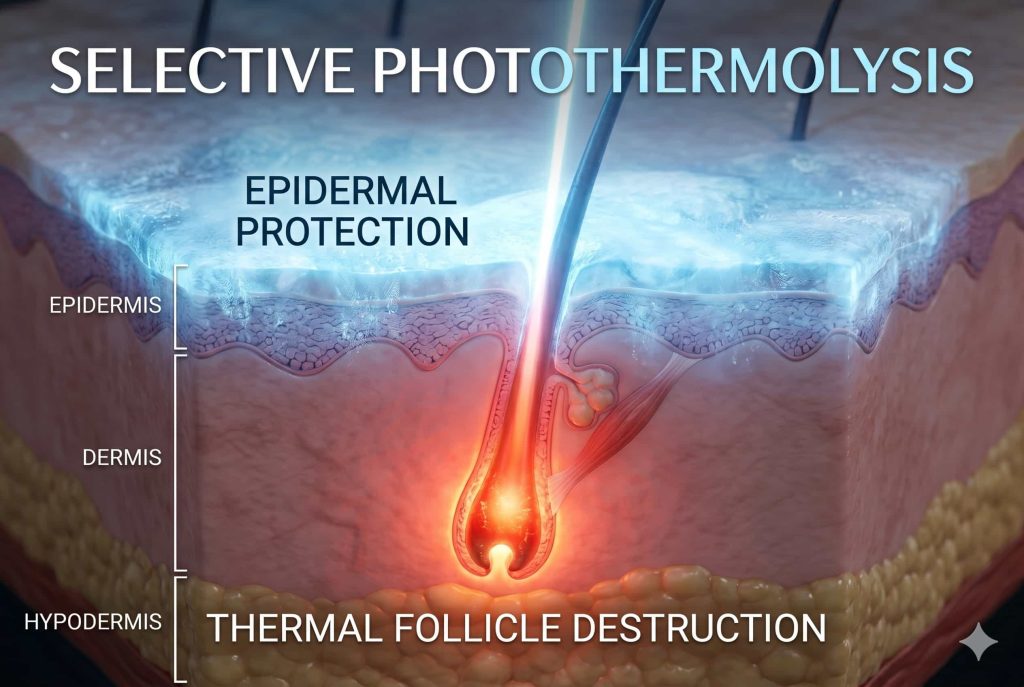
The foundational principle of laser hair removal is selective photothermolysis. To achieve long-term hair reduction, the laser must emit a specific wavelength of light (typically 808nm in diode systems) that is highly absorbed by the melanin within the hair shaft. This light energy is rapidly converted into thermal energy, safely heating the follicle to a critical threshold of approximately 65°C. At this temperature, the thermal energy effectively denatures the proteins within the follicular bulge and the dermal papilla—the biological engines responsible for hair regeneration.
While this targeted heat is absolutely necessary for follicular destruction, it presents a distinct physiological challenge. As the laser photons travel through the skin to reach the deep-seated follicle, they must first pass through the epidermis, which also contains varying levels of melanin. If the epidermis absorbs this energy and heats up simultaneously, it triggers the dense network of nociceptors (pain receptors) located in the upper dermal layers.
Furthermore, unlike tattoo removal—which relies on ultra-short pulse durations to create a photoacoustic effect that physically shatters ink particles—hair removal depends entirely on a sustained photothermal effect. This prolonged exposure to heat means that without a dedicated countermeasure, the epidermal temperature will rise to intolerable levels, resulting in acute pain and potential epidermal blistering. Ice cooling acts as the exact thermodynamic antidote, continuously extracting heat from the surface of the skin faster than the laser can deposit it.
Overcoming the Fear Factor for Consistent Sessions
From a biological standpoint, human hair grows in three distinct phases: Anagen (active growth), Catagen (transition), and Telogen (resting). Laser hair removal is only effective when the targeted hair is in the Anagen phase, as this is the only time the hair shaft is physically attached to the dermal papilla. Because only a percentage of a patient’s hair is in the Anagen phase at any given time, multiple sessions spaced several weeks apart are a clinical requirement.
When patients experience severe pain during their initial sessions, the psychological “fear factor” often leads to high clinical drop-out rates.
The Business Impact of Treatment Abandonment:
- Compromised Efficacy: Patients who skip sessions miss the critical Anagen growth windows, rendering the entire protocol ineffective.
- Revenue Loss: Incomplete treatment packages result in lost recurring revenue and negative clinical reviews.
- Brand Damage: Patients associate the clinic with a traumatic experience rather than a premium aesthetic service.
By investing in a pain-free Cocoon Laser hair removal machine, clinical directors actively eliminate this fear factor. A comfortable experience guarantees patient compliance with the treatment schedule, ensuring optimal biological timing and, ultimately, superior clinical outcomes.
Demystifying the Technology: How Professional Ice Cooling Actually Works
The terminology “ice cooling” is frequently utilized as a marketing buzzword, but in the realm of high-end B2B aesthetic devices, it refers to precise, measurable thermodynamic engineering. Understanding the hardware architecture is critical for buyers looking to avoid low-tier equipment that masquerades as “professional.”
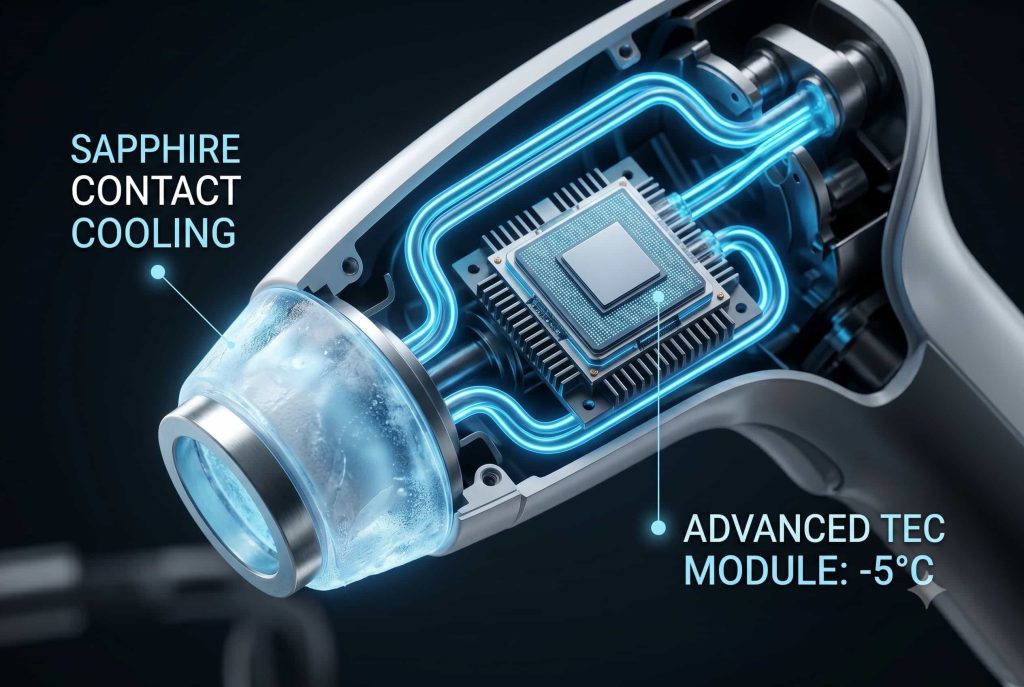
Advanced TEC (Thermoelectric Cooling) Modules
The backbone of a legitimate ice cooling system is the Thermoelectric Cooling (TEC) module, which operates on the Peltier effect. When a direct electric current is passed through two dissimilar semiconductor materials, heat is absorbed at one junction and released at the other.
In premium devices, high-capacity TEC chips are integrated directly into the handpiece and supported by a robust internal water circulation system. As the device operates, the TEC module rapidly draws heat away from the treatment window. The internal water pump then circulates distilled or deionized water to carry this extracted heat back to a massive radiator and fan assembly housed within the main chassis of the laser.
Key Hardware Indicators of Premium TEC Cooling:
- Rapid Temperature Drop: The tip of the handpiece should reliably drop to a sustained temperature between -5°C and 5°C within 60 seconds of system initialization.
- Continuous Operation: The cooling must remain stable even during high-frequency (10Hz) continuous firing, without the temperature creeping upwards.
- Condensation Evidence: A visible layer of frost or condensation on the sapphire window in a room-temperature clinic is a visual confirmation of effective TEC operation.
Sapphire Contact Cooling vs. Traditional Cryogen Sprays
Historically, some laser systems relied on consumable cryogen gas sprayed onto the skin milliseconds before the laser pulse. While somewhat effective, this method is fundamentally flawed compared to modern Sapphire contact cooling.
The optical window of a premium diode laser is crafted from synthetic Sapphire crystal. Sapphire possesses an extraordinary combination of high optical transmissivity (allowing the laser beam to pass through without distortion) and immense thermal conductivity.
| Feature | Sapphire Contact Cooling (Modern Standard) | Traditional Cryogen Spray (Legacy Systems) |
| Cooling Method | Continuous, pre, parallel, and post-pulse conductive cooling. | Intermittent, pre-pulse evaporative cooling. |
| Epidermal Protection | Outstanding. The cold sapphire acts as a continuous heat sink physically pressed against the skin. | Variable. Relies heavily on precise timing; risk of “cryo-burns” if the spray malfunctions. |
| Operating Cost (B2B) | Zero consumable costs. Built entirely into the solid-state hardware. | High recurring costs. Requires constant purchasing of proprietary cryogen canisters. |
| Patient Sensation | A soothing, massage-like chilled sensation. | A harsh, sudden freezing blast followed by the laser snap. |
| Maintenance | Minimal. Simply wipe the sapphire clean. | High. Valves and spray nozzles are prone to clogging and mechanical failure. |
For procurement managers evaluating the Total Cost of Ownership (TCO), the shift from consumable cryogen to solid-state Sapphire TEC cooling is one of the most critical financial and clinical upgrades available.
Beyond Comfort: The Clinical and Safety Advantages of Ice Cooling
It is a common misconception that ice cooling is solely a luxury feature designed to pamper the patient. In rigorous clinical practice, profound epidermal cooling is an absolute prerequisite for advanced safety protocols and high-efficacy treatments.
Safely Delivering Higher Fluence (Energy)
In laser physics, the energy delivered to the tissue is measured in Fluence ($J/cm^2$). To destroy stubborn, deep-rooted, or lightly pigmented hair follicles, the clinician must utilize a higher fluence. However, increasing the laser energy inherently increases the thermal load on the entire treatment area, including the delicate epidermis.
Without an advanced cooling system, the practitioner is forced to artificially cap the energy output to prevent second-degree burns, resulting in sub-optimal follicular destruction and the need for endless, ineffective sessions.
A high-performance professional ice cooling hair removal device fundamentally alters this equation. By maintaining the epidermal temperature at near-freezing levels, the Sapphire window creates a protective thermal barrier. This allows the clinical operator to safely escalate the fluence. The laser energy safely bypasses the frozen epidermis and concentrates entirely deep within the dermis where the hair bulb resides. This capability to safely deploy high energy translates directly to faster, more aggressive clearance rates and superior long-term results.
Inclusivity for Diverse Skin Tones (Fitzpatrick Types IV-VI)
Perhaps the most critical clinical advantage of continuous contact cooling is the democratization of laser hair removal for diverse demographics. The Fitzpatrick Scale classifies human skin types from I (very pale, always burns) to VI (deeply pigmented, never burns).
Treating patients with Fitzpatrick Types IV, V, and VI has historically been considered high-risk. Because darker skin contains a dense concentration of melanin in the epidermis, the skin itself actively competes with the hair follicle for the laser’s thermal energy. If an uncooled or poorly cooled laser is fired on Type V skin, the epidermal melanin will rapidly absorb the heat, inevitably leading to severe epidermal blistering, scarring, and permanent Post-Inflammatory Hyperpigmentation (PIH).
Clinical Safeguards for Darker Skin Tones:
- Pre-Cooling: The chilled Sapphire window pre-cools the epidermis before the photon delivery, effectively lowering the baseline temperature of the epidermal melanin.
- Parallel Cooling: During the precise millisecond the pulse is delivered, the cooling system immediately neutralizes the heat generated in the upper skin layers.
- Post-Cooling: As the handpiece glides over the skin, the trailing edge of the chilled tip immediately soothes the treated area, shutting down the inflammatory cascade before it can begin.
Systems engineered by top-tier aesthetic laser equipment manufacturers like Cocoon Laser are specifically calibrated to handle these complex thermal dynamics, ensuring that clinics can safely and confidently market their services to patients of all ethnicities.
Why Top Clinics Invest in Cocoon Laser’s Diode Technology
For a clinical director or B2B investor, purchasing an aesthetic device represents a significant capital expenditure. The decision must be driven by hardware reliability, regulatory compliance, and a clear path to profitability. Integrating Cocoon Laser diode technology provides a distinct competitive advantage in a saturated market.
Continuous “In-Motion” Delivery Meets Sustained Cooling
Traditional laser hair removal relied on a “stamping” technique—firing a high-energy pulse, lifting the handpiece, moving it, and firing again. This was slow, tedious, and notoriously painful due to the concentrated peaks of thermal energy.
Modern premium devices utilize an advanced SHR (Super Hair Removal) or “In-Motion” protocol. Instead of delivering a single, massive jolt of energy, the laser fires at a highly rapid repetition rate (up to 10Hz, or 10 shots per second) at a lower individual fluence. The practitioner glides the handpiece continuously over the treatment grid.
This technique relies on cumulative thermal buildup to reach the 65°C target in the follicle. However, firing at 10Hz generates immense heat within the diode stack and the handpiece itself. Only a device equipped with a massive, industrial-grade TEC and water-cooling infrastructure can sustain this continuous output without overheating.
When you combine the rapid, sweeping motion of the SHR technique with the unyielding, sub-zero touch of a Cocoon Laser handpiece, the clinical sensation is completely transformed. Patients routinely compare the experience to a soothing hot stone massage, entirely devoid of the sharp, snapping pain associated with legacy systems.
Zero Downtime and Maximized Patient Throughput
From an operational perspective, clinical efficiency is the metric that dictates profitability.
The B2B Operational Advantages of Ice Cooling:
- Zero Downtime for Patients: Because the epidermis is completely protected from thermal trauma, patients experience zero downtime. They can immediately return to work, the gym, or daily activities without the embarrassing erythema (redness) or swelling common with older systems.
- Maximized Clinic Throughput: The combination of large spot sizes and In-Motion continuous firing allows a skilled operator to treat an entire back or pair of legs in under 20 minutes. Faster treatment times mean more appointments can be booked per day, drastically increasing the hourly revenue yield of the treatment room.
- Longevity and Reliability: Heat is the ultimate enemy of laser diode arrays. A superior internal cooling system doesn’t just protect the patient; it protects the hardware. Devices that manage their internal thermals effectively boast a vastly superior shots count lifespan, ensuring the clinic does not face premature and expensive handpiece replacement costs.
Furthermore, investing in equipment backed by rigorous Medical CE and FDA 510(k) clearances guarantees that the underlying cooling claims have been subjected to, and passed, strict international regulatory scrutiny.
Conclusion: Making the Pain-Free Choice
The narrative surrounding laser hair removal has permanently shifted. The archaic expectation of clinical pain has been entirely eradicated by the sophisticated application of thermodynamic engineering. A professional ice cooling hair removal device is no longer an optional luxury; it is the definitive technological standard required to operate a safe, inclusive, and highly profitable aesthetic practice.
By utilizing advanced TEC modules and continuous Sapphire contact cooling, modern systems effortlessly manage the complex physics of selective photothermolysis. They allow practitioners to safely deploy the necessary clinical energy to permanently destroy hair follicles while wrapping the epidermis in an impenetrable layer of thermal protection. This ensures predictable efficacy across all skin types, entirely eliminates patient downtime, and fosters the deep clinical trust required for high patient retention.
For patients, the era of dreading your aesthetic appointments is officially over. Seek out modern, certified clinics that prioritize your comfort and safety by utilizing premium ice-cooled diode systems. For clinical directors, B2B procurement managers, and forward-thinking aesthetic entrepreneurs, the mandate is clear: upgrading your hardware to feature legitimate, sustained ice cooling is the most direct pathway to scaling your practice, elevating your clinical reputation, and dominating your local market. Choose technology that refuses to compromise—explore the advanced, pain-free diode solutions engineered by industry leaders like Cocoon Laser today.
If you need more information, please click “Contact Us”.
If you want to obtain more information, please follow our official website and Facebook.