How Does Piko Laser Work? Technology, Pulse Duration & Applications
Piko Laser has become one of the most advanced laser technologies used in modern aesthetic clinics for pigmentation treatment, tattoo removal, and skin rejuvenation. Unlike traditional laser systems that deliver energy over longer pulse durations, Piko Laser uses ultra-short picosecond pulses to create precise energy delivery with reduced thermal impact.
Understanding how Piko Laser works helps clinics and aesthetic professionals evaluate why picosecond laser technology has become an important solution for advanced skin treatments.

Quick Answer
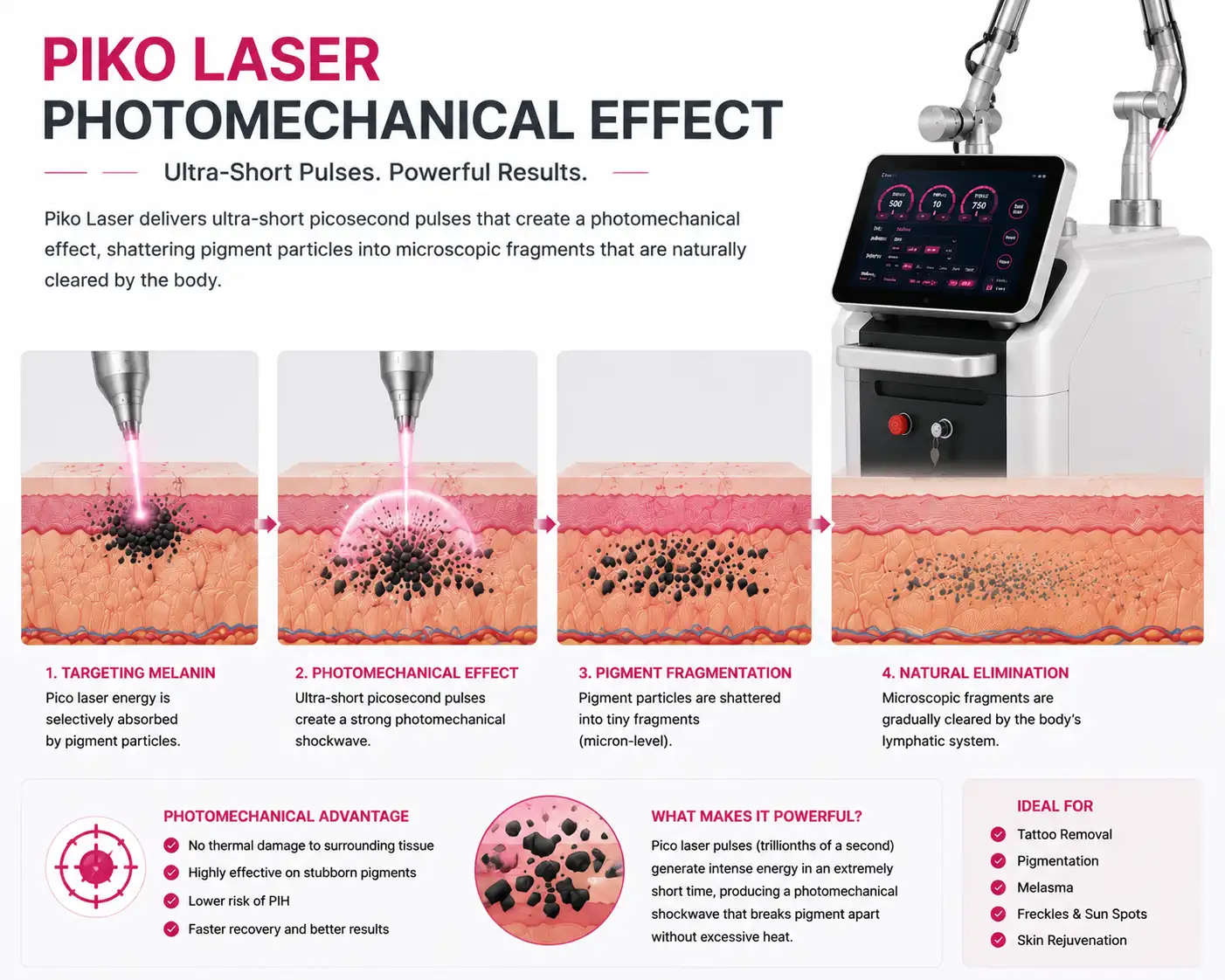
Piko Laser works by delivering ultra-short picosecond laser pulses into the skin to create a photomechanical effect. These extremely fast energy bursts break unwanted pigment particles into smaller fragments while minimizing heat transfer to surrounding tissues.
Compared with traditional nanosecond laser systems, Piko Laser technology provides faster pulse delivery, precise energy control, and versatile applications including tattoo removal, pigmentation correction, and skin rejuvenation.
What Is Piko Laser Technology?
Piko Laser is a type of picosecond laser technology that delivers laser energy in trillionths of a second. The word “pico” refers to picoseconds, which represent an extremely short measurement of time.
A picosecond is equal to one trillionth of a second. This ultra-short pulse duration allows the laser system to generate high peak power while reducing unnecessary heat accumulation in the surrounding skin.
Although commonly called Piko Laser, this technology is also known as:
- Pico Laser
- Picosecond Laser
- Picosecond Laser Technology
These terms generally refer to laser systems that operate with picosecond pulse durations for advanced aesthetic treatments.
How Does Piko Laser Work?
The working principle of Piko Laser is based on delivering high-energy laser pulses in extremely short durations. This creates a unique interaction between laser energy and targeted particles inside the skin.
The treatment process can be explained through four main steps:
1. Laser Energy Delivery
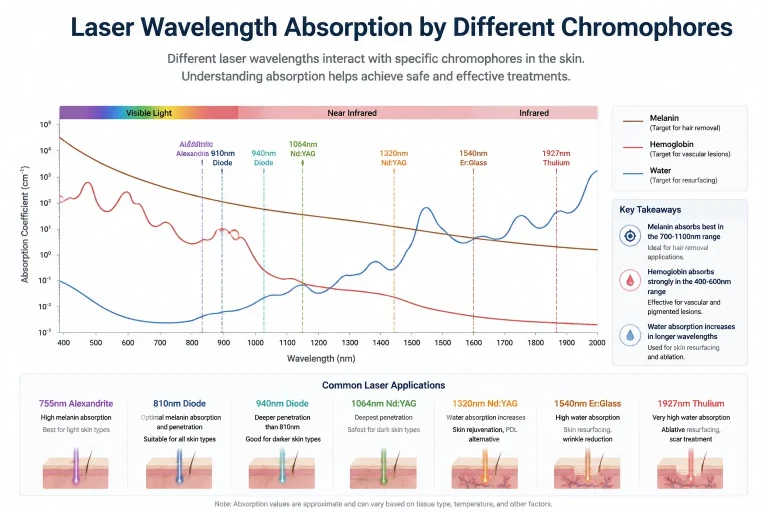
The Piko Laser system generates controlled laser energy at specific wavelengths. The selected wavelength determines how deeply the energy penetrates and which targets are affected.
Different wavelengths allow clinicians to customize treatments for different applications, including superficial pigmentation, deeper pigment, and tattoo ink particles.
2. Picosecond Pulse Generation
The key feature of Piko Laser technology is its extremely short pulse duration.
Instead of delivering energy over longer nanosecond pulses, picosecond lasers release energy in much shorter time intervals. This creates higher peak power and more precise energy delivery.

3. Photomechanical Effect
One of the main advantages of Piko Laser is the photomechanical effect.
The ultra-short pulse creates a rapid energy impact that produces a mechanical disruption of pigment particles instead of relying only on heat.
This process helps break larger pigment particles into smaller fragments that can be naturally processed by the body’s immune system.
4. Natural Elimination of Pigment Particles
After the laser breaks down unwanted pigment, the body gradually removes the fragmented particles through natural biological processes.
This mechanism makes Piko Laser an effective technology for applications such as:
- Tattoo pigment removal
- Freckles and sun spots
- Melasma and pigmentation concerns
- Skin tone improvement
The Science Behind Picosecond Pulse Technology
The major difference between Piko Laser and traditional laser systems is pulse duration.
Traditional laser technologies often operate using longer nanosecond pulses, while picosecond lasers deliver energy much faster.
| Technology | Pulse Duration | Main Energy Effect |
|---|---|---|
| Traditional Laser | Nanoseconds | More thermal interaction |
| Piko Laser | Picoseconds | Photomechanical pigment disruption |
Because of the shorter pulse duration, Piko Laser can provide more controlled energy delivery for specific aesthetic applications.
Why Picosecond Pulse Duration Matters
The most important feature that separates Piko Laser from many traditional laser systems is its ultra-short pulse duration.
A picosecond represents one trillionth of a second. By delivering laser energy within such a short time, Piko Laser systems can generate high peak power while limiting unnecessary heat diffusion into surrounding tissues.
Picosecond Pulse Technology vs Nanosecond Laser Technology
Traditional Q-switched laser systems commonly use nanosecond pulse durations. While they can effectively target pigment, longer pulse delivery may create more thermal interaction with surrounding tissues.
Picosecond laser technology uses much shorter pulses, creating a stronger photomechanical effect that helps break pigment particles more efficiently.
| Feature | Nanosecond Laser | Piko Laser Technology |
|---|---|---|
| Pulse Duration | Nanoseconds | Picoseconds |
| Energy Delivery | Longer energy exposure | Ultra-short energy delivery |
| Main Effect | Thermal + photothermal interaction | Photomechanical effect |
| Pigment Fragmentation | Effective | Highly precise |
| Common Applications | Tattoo and pigment treatment | Tattoo removal, pigmentation, skin rejuvenation |
For aesthetic clinics, the shorter pulse duration of Piko Laser technology provides greater flexibility when treating different pigment conditions and skin concerns.
Piko Laser Wavelengths Explained
Wavelength selection is an important factor in determining how Piko Laser energy interacts with different targets in the skin.
Professional Piko Laser systems commonly support multiple wavelengths, allowing clinics to customize treatments according to pigment depth, color, and treatment goals.

532nm Piko Laser Wavelength
The 532nm wavelength is commonly used for superficial pigment targets located closer to the skin surface.
Typical applications include:
- Freckles
- Sun spots
- Superficial pigmentation
- Red and warm-color tattoo pigments
755nm Piko Laser Wavelength
The 755nm wavelength provides strong absorption by melanin and is commonly used for pigment-related treatments.
Applications may include:
- Pigmentation correction
- Tattoo pigment treatment
- Skin tone improvement
1064nm Piko Laser Wavelength
The 1064nm wavelength has deeper penetration and is widely used for deeper pigment targets.
Common applications include:
- Dark tattoo pigments
- Deeper pigmentation concerns
- Skin rejuvenation treatments
How Wavelength Selection Affects Piko Laser Treatment
Different pigments and skin conditions require different energy absorption characteristics. This is why professional Piko Laser systems often combine multiple wavelengths in one platform.
| Wavelength | Penetration | Common Applications |
|---|---|---|
| 532nm | Superficial | Surface pigmentation, freckles, warm tattoo colors |
| 755nm | Medium depth | Pigmentation and selected tattoo applications |
| 1064nm | Deep penetration | Dark pigments, deeper targets, rejuvenation |
For clinics evaluating professional laser equipment, understanding wavelength options is essential because it directly affects treatment versatility and application range.
Piko Laser Applications in Aesthetic Clinics
Because of its precise energy delivery and multiple wavelength options, Piko Laser technology is used for various aesthetic applications.
Piko Laser Tattoo Removal
Tattoo removal is one of the most recognized applications of picosecond laser technology.
Piko Laser works by delivering high-energy pulses that break tattoo ink particles into smaller fragments, allowing the body to gradually remove them.
Compared with older laser technologies, picosecond systems are designed to provide more efficient pigment fragmentation with advanced energy control.
Piko Laser Pigmentation Treatment
Piko Laser is widely used for pigmentation concerns because different wavelengths can target different pigment depths.
Common applications include:
- Melasma management
- Age spots
- Freckles
- Uneven skin tone
Piko Laser Skin Rejuvenation
In addition to pigment treatment and tattoo removal, Piko Laser technology is also used for skin rejuvenation applications.
The controlled laser energy can stimulate skin remodeling processes and improve overall skin appearance by supporting collagen-related treatments.
Common skin rejuvenation applications include:
- Improving uneven skin texture
- Enhancing skin brightness
- Supporting collagen stimulation
- Refining overall skin appearance

Piko Laser Benefits for Professional Clinics
For aesthetic clinics evaluating advanced laser equipment, Piko Laser technology provides several advantages compared with traditional laser platforms.
1. Ultra-Short Pulse Technology
The main advantage of Piko Laser is its picosecond pulse duration. The extremely short pulses allow precise energy delivery and high peak power for targeted aesthetic applications.
2. Multiple Treatment Applications
A professional Piko Laser system can support multiple treatment categories, allowing clinics to expand their service portfolio.
Applications may include:
- Tattoo removal
- Pigmentation correction
- Skin rejuvenation
- Complexion improvement treatments
3. Flexible Wavelength Options
Multiple wavelength configurations allow practitioners to select appropriate energy characteristics for different skin concerns.
This flexibility makes professional Piko Laser platforms suitable for clinics serving diverse client needs.
4. Advanced Treatment Precision
Because picosecond pulses deliver energy within extremely short time periods, Piko Laser technology allows precise control over laser-tissue interaction.
Piko Laser vs Traditional Laser Technology
The main difference between Piko Laser and traditional laser systems is the way energy is delivered.
| Feature | Traditional Laser | Piko Laser |
|---|---|---|
| Pulse Duration | Nanoseconds or longer | Picoseconds |
| Energy Effect | More thermal interaction | More photomechanical effect |
| Precision | Effective | Higher energy control |
| Main Applications | Pigment and tattoo treatments | Pigment, tattoo, rejuvenation |
The shorter pulse duration of Piko Laser technology allows clinics to perform advanced aesthetic treatments with more controlled energy delivery.
Piko Laser vs Q-Switched Laser: What Is the Difference?
Many clinics compare Piko Laser vs Q-Switched Laser when evaluating advanced pigment and tattoo removal technologies.
Both technologies use laser energy to target pigment, but the major difference is pulse duration.
| Comparison | Piko Laser | Q-Switched Laser |
|---|---|---|
| Pulse Duration | Picoseconds | Nanoseconds |
| Energy Delivery | Ultra-short pulse delivery | Longer pulse delivery |
| Main Effect | Photomechanical pigment fragmentation | Photothermal pigment targeting |
| Applications | Tattoo removal, pigmentation, rejuvenation | Tattoo and pigment treatment |
For clinics looking for newer-generation laser technology, Piko Laser provides an advanced option with shorter pulse duration and flexible treatment applications.
How Clinics Choose a Professional Piko Laser System
When selecting a Piko Laser system, clinics should evaluate more than laser specifications. A reliable professional platform should support clinical requirements, workflow efficiency, and long-term operation.
Important Factors to Consider
- Wavelength Configuration: Multiple wavelengths improve treatment flexibility.
- Pulse Performance: Stable picosecond pulse delivery is important for consistent treatment results.
- Cooling System: Effective cooling improves patient comfort.
- Energy Adjustment: Flexible parameter control allows customized treatments.
- Manufacturer Support: Training, warranty, and technical service are important for professional clinics.
Common Questions About Piko Laser
How does Piko Laser work?
Piko Laser works by delivering ultra-short picosecond pulses that create a photomechanical effect. The energy breaks pigment particles into smaller fragments while reducing unnecessary heat accumulation in surrounding tissues.
What is the difference between Piko Laser and Pico Laser?
Piko Laser and Pico Laser generally refer to the same type of picosecond laser technology. Different spelling variations are commonly used when searching for this technology online.
What wavelengths does Piko Laser use?
Professional Piko Laser systems commonly use wavelengths such as 532nm, 755nm, and 1064nm. Different wavelengths allow treatment of different pigment depths and aesthetic applications.
How does Pico Laser work?
Pico Laser works by delivering laser energy in ultra-short picosecond pulses. These rapid pulses create a photomechanical effect that helps break unwanted pigment particles into smaller fragments.
The fragmented pigment can then be gradually processed and removed by the body’s natural mechanisms.
What are the main applications of Piko Laser technology?
Piko Laser technology is commonly used for several aesthetic applications, including:
- Tattoo removal
- Pigmentation treatment
- Freckles and sun spots
- Skin rejuvenation
- Overall skin tone improvement
Why is picosecond pulse duration important?
Picosecond pulse duration allows laser energy to be delivered within an extremely short period of time. This helps increase peak power while reducing unnecessary thermal diffusion into surrounding tissues.
This unique energy delivery method is one of the main reasons why picosecond laser technology is widely used in advanced aesthetic treatments.
Is Piko Laser better than traditional laser systems?
Piko Laser technology provides advantages through shorter pulse duration and precise energy delivery. However, the most suitable laser technology depends on the treatment goal, skin condition, and clinical requirements.
Professional clinics should select equipment based on application range, wavelength options, and treatment objectives.
Is Piko Laser suitable for professional aesthetic clinics?
Yes. Professional Piko Laser systems are designed for aesthetic clinics that provide advanced treatments such as pigmentation correction, tattoo removal, and skin rejuvenation.
With multiple wavelengths and precise energy control, Piko Laser platforms can support a wide range of aesthetic applications.
Final Verdict: How Does Piko Laser Work?
Piko Laser works by using ultra-short picosecond pulses to deliver highly controlled laser energy into targeted areas of the skin. The extremely fast pulse duration creates a photomechanical effect that breaks pigment particles while minimizing unnecessary heat accumulation.
The combination of advanced pulse technology, multiple wavelength options, and flexible treatment applications makes Piko Laser an important technology for modern aesthetic clinics.
Compared with traditional laser systems, picosecond laser technology provides a more precise approach for applications such as tattoo removal, pigmentation treatment, and skin rejuvenation.
For clinics considering professional laser equipment, understanding how Piko Laser works is the first step toward selecting the right technology platform for their treatment needs.

About Cocoon Laser
Cocoon Laser specializes in professional medical aesthetic laser systems designed for clinics, aesthetic professionals, and global distributors.
Our solutions include picosecond laser systems, diode laser hair removal platforms, CO2 laser technology, and advanced skin rejuvenation equipment.
With professional manufacturing capabilities, technical support, and OEM/ODM cooperation options, Cocoon Laser helps partners provide advanced aesthetic treatments worldwide.
Medical Review & Content Quality Statement
This article is based on professional knowledge of aesthetic laser technology, picosecond laser systems, and clinical applications.
Laser treatments should always be performed by trained professionals following appropriate safety protocols and applicable regulations.