Pico Laser for Hyperpigmentation: Benefits & Risks
Pico laser for hyperpigmentation is an aesthetic treatment approach that uses ultra-short laser pulses to target selected pigment-related skin concerns.
Hyperpigmentation occurs when areas of the skin become darker than the surrounding tissue. It can develop for different reasons, including sun exposure, inflammation, hormonal influences, and certain underlying skin conditions.
Picosecond laser technology has attracted interest in pigmentation treatment because its extremely short pulses can generate photoacoustic effects within suitable pigment targets.
However, not every type of hyperpigmentation responds equally well to laser treatment. Some conditions may improve, while others can recur or become worse following inappropriate laser exposure.
This guide explains how pico laser hyperpigmentation treatment works, which pigmentation concerns may be suitable, its potential benefits, expected results, recovery, and important safety considerations.
Quick Answer: Does Pico Laser Work for Hyperpigmentation?
Pico laser treatment may improve selected types of hyperpigmentation by delivering picosecond laser pulses that interact with targeted pigment. However, its effectiveness depends on the underlying diagnosis, pigment depth, skin phototype, wavelength, and treatment parameters.
Certain well-defined benign pigmented lesions may respond to appropriate laser treatment. Other conditions, particularly melasma and some forms of post-inflammatory hyperpigmentation, require additional caution because inflammation can worsen pigmentation.
Visible improvement may develop gradually, and multiple sessions may be required.
Possible side effects include redness, swelling, temporary darkening, post-inflammatory hyperpigmentation, hypopigmentation, and less commonly blistering or scarring.
A qualified healthcare professional should establish the diagnosis before recommending laser treatment. Not all hyperpigmentation requires or benefits from a laser procedure.
What Is Hyperpigmentation?
Hyperpigmentation describes areas of skin that appear darker than the surrounding skin because of increased pigmentation or other pigment-related changes.
Melanin is the primary pigment responsible for normal skin color. Its production and distribution can change in response to ultraviolet exposure, inflammation, hormonal factors, and other influences.
Importantly, hyperpigmentation is a description of appearance, not a single diagnosis.
Different pigmentation disorders have different causes, biological behaviors, and treatment requirements.
Sun-Induced Pigmentation
Long-term ultraviolet exposure can contribute to certain benign pigmented lesions, including solar lentigines.
These lesions often appear as relatively well-defined brown spots on sun-exposed areas of the face, hands, and body.
Selected benign lesions may be considered for pigment-targeting laser procedures after appropriate diagnosis.
Suspicious or changing pigmented lesions should be medically assessed before cosmetic treatment.
Post-Inflammatory Hyperpigmentation
Post-inflammatory hyperpigmentation, commonly abbreviated as PIH, can develop after acne, dermatitis, injury, or other inflammatory skin conditions.
The resulting discoloration may persist after the original inflammation has resolved.
Because additional inflammation can worsen PIH, laser treatment requires careful consideration and is not automatically a first-line option.
Melasma
Melasma is a chronic pigmentation disorder characterized by irregular darker patches, commonly affecting the face.
Its development involves multiple factors, including ultraviolet exposure and hormonal influences.
Melasma can be persistent and recurrent. Certain laser procedures may trigger worsening or rebound pigmentation.
Laser treatment should therefore be approached cautiously and generally considered within a broader dermatologist-led management strategy.
Other Pigmented Skin Conditions
Freckles, dermal pigmentation, medication-related pigmentation, and other skin conditions may produce darker areas of skin.
These conditions are not interchangeable, and some may not be suitable for picosecond laser treatment.
A correct diagnosis is essential before selecting a laser or other treatment.
Why Pigment Depth Matters
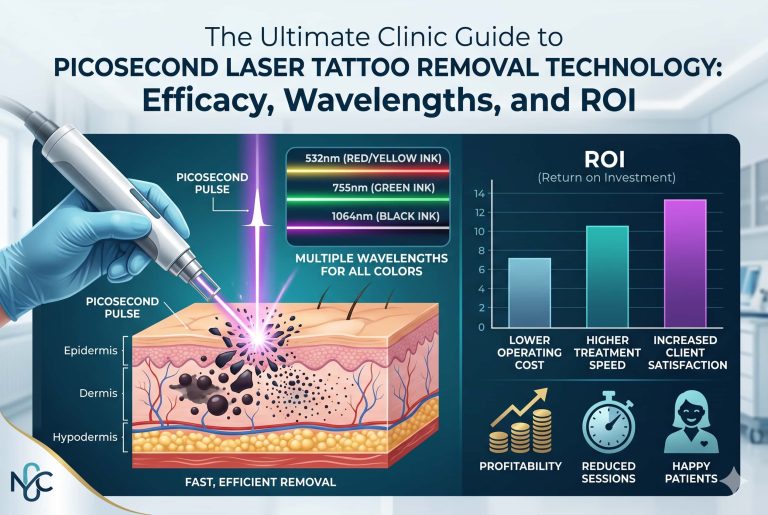
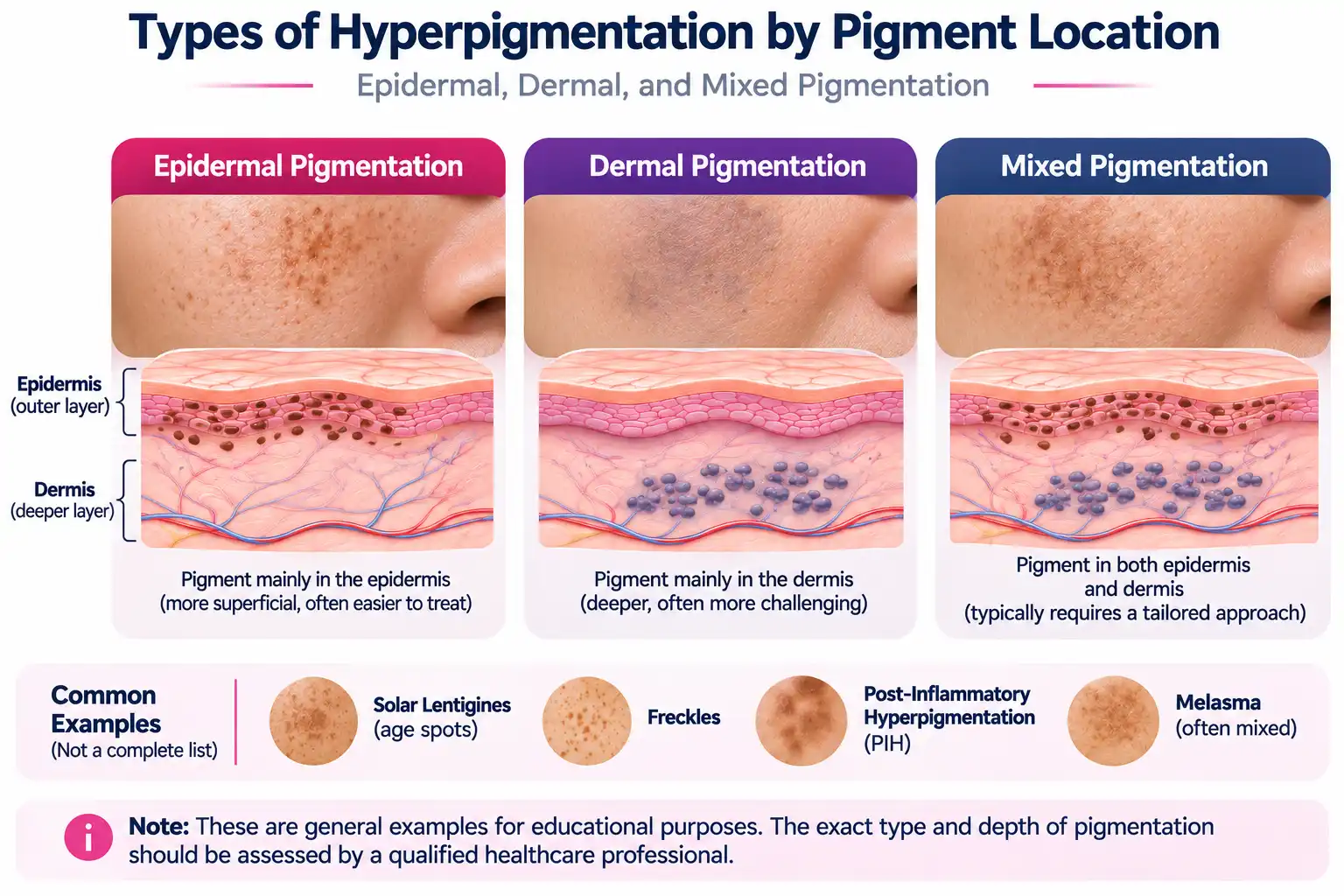
Pigmentation may involve the epidermis, dermis, or both.
The location of pigment influences how laser energy reaches the target and how the skin may respond.
Treatment planning must consider pigment depth alongside wavelength, skin characteristics, and the diagnosis.

How Does Pico Laser for Hyperpigmentation Work?
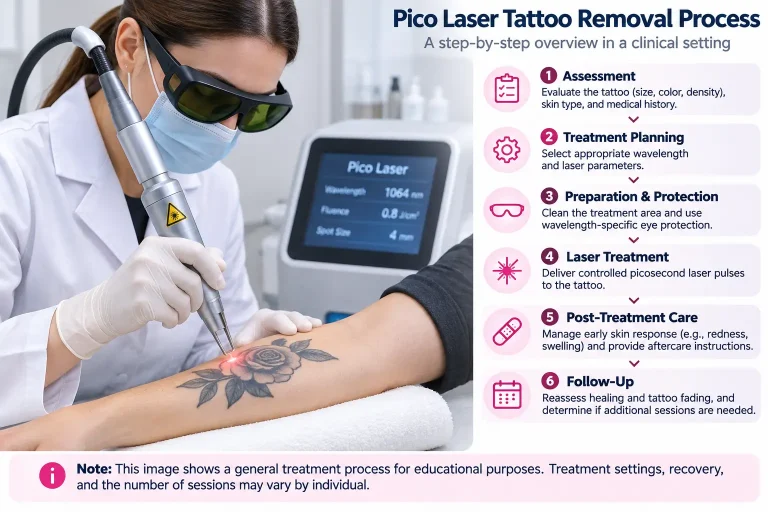
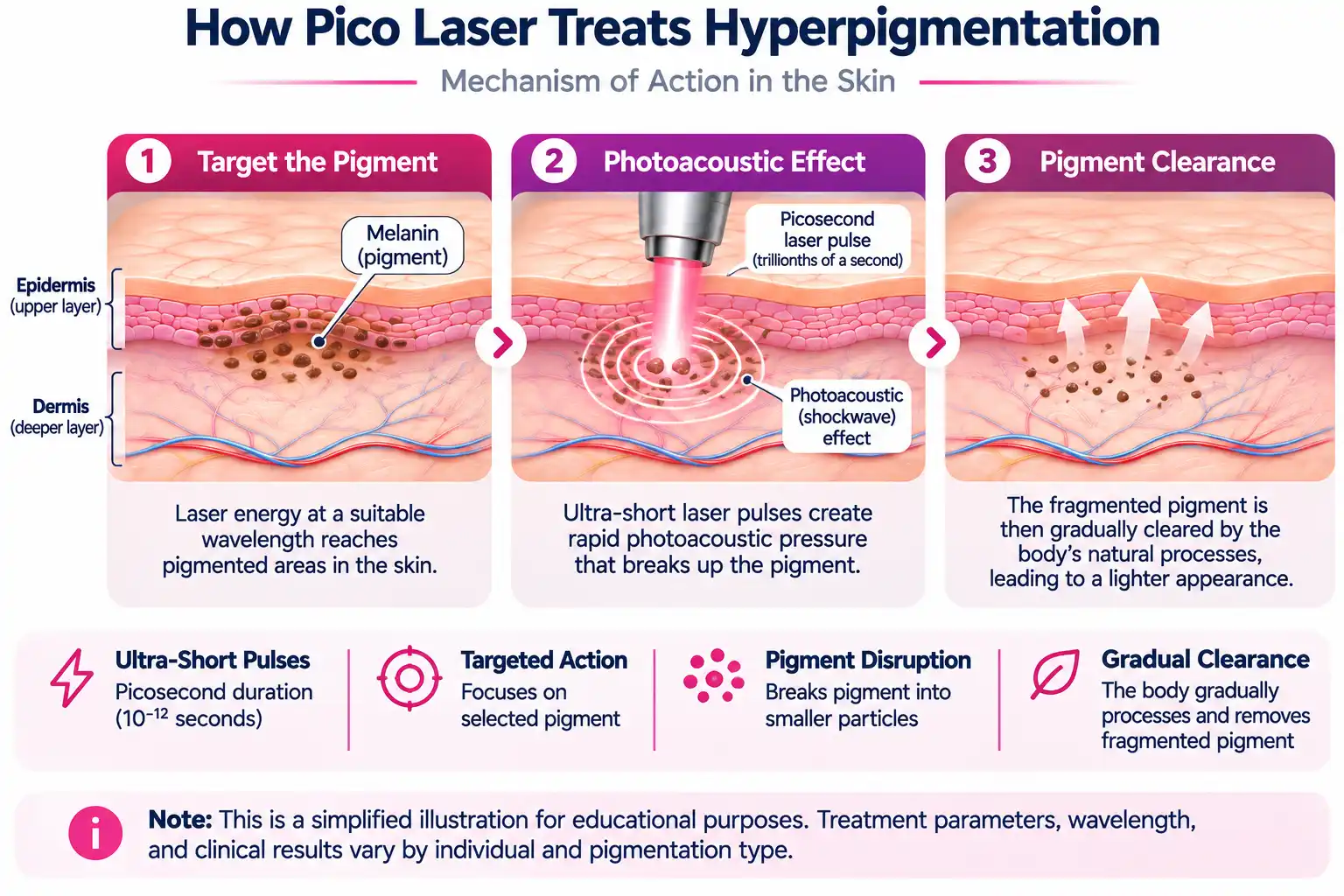
Pico laser for hyperpigmentation uses pulses measured in picoseconds, or trillionths of a second.
These ultra-short pulses can deliver energy rapidly to selected targets within the skin.
When suitable pigment absorbs laser energy, localized photoacoustic interactions may contribute to pigment disruption.
Step 1: Laser Energy Reaches the Target
The practitioner selects a wavelength and treatment configuration according to the diagnosed pigmentation condition.
Different wavelengths have different optical absorption and penetration characteristics.
Normal epidermal melanin can also absorb laser energy, which is an important safety consideration.
Step 2: Rapid Energy Delivery Produces Photoacoustic Effects
Picosecond pulses deposit energy over extremely short intervals.
Rapid absorption can generate localized mechanical stress in suitable pigment-containing structures.
The balance between photoacoustic and thermal effects depends on the laser configuration and tissue target.
Step 3: Targeted Pigment May Be Disrupted
Under appropriate conditions, laser interactions may contribute to fragmentation or disruption of selected pigment targets.
However, not all pigmentation disorders respond through the same mechanism.
The underlying biological cause of pigmentation may remain even when visible pigment decreases.
Step 4: Skin Response Develops Over Time
Visible changes may develop as the treated tissue heals and the body processes disrupted pigment.
Improvement is not necessarily immediate, and the response varies according to the condition and individual.
Why Picosecond Laser Is Not Suitable for Every Dark Spot
A dark spot may represent a benign pigmentation disorder, an inflammatory condition, or a lesion requiring medical investigation.
Laser treatment without appropriate diagnosis may delay necessary medical care or worsen pigmentation.
The decision to use a picosecond laser should therefore follow a professional assessment rather than appearance alone.
Which Types of Hyperpigmentation May Respond to Pico Laser?
Picosecond laser for hyperpigmentation may be considered for selected pigmentation concerns, but suitability varies considerably by diagnosis.
The following overview explains why different conditions require different expectations.
Solar Lentigines and Selected Benign Pigmented Lesions
Certain well-defined benign pigmented lesions may respond to appropriate pigment-targeting laser treatment.
Picosecond systems are among the technologies that may be considered, depending on device capabilities and clinical assessment.
Lesions should be properly diagnosed before cosmetic laser treatment.
Freckles
Some patients seek treatment for visible freckles or similar superficial pigmentation.
Selected laser approaches may reduce the appearance of suitable pigment targets.
However, pigmentation can recur with continued sun exposure or underlying predisposition.
Post-Inflammatory Hyperpigmentation
PIH requires particular caution because laser-induced inflammation may worsen discoloration.
Management often prioritizes the underlying cause, photoprotection, and appropriate topical therapy.
Laser treatment may be considered only in selected circumstances following specialist evaluation.
Melasma
Melasma is not equivalent to isolated benign pigment spots.
It is a chronic, recurrent condition that can worsen following inappropriate laser treatment.
Certain laser approaches have been investigated for selected patients, but recurrence and pigmentary complications remain important concerns.
A dermatologist-led treatment strategy is particularly important.
Dermal Pigmentation
Some dermal pigment disorders may be considered for specialized laser treatment.
However, the diagnosis, target characteristics, and available wavelengths determine whether a particular laser system is appropriate.
Hyperpigmentation Treatment Suitability Comparison
| Condition | Potential Role of Pico Laser | Important Consideration |
|---|---|---|
| Solar Lentigines | May be considered for selected diagnosed lesions | Confirm benign diagnosis before cosmetic treatment |
| Freckles | May reduce selected visible pigment targets | Recurrence is possible with sun exposure |
| Post-Inflammatory Hyperpigmentation | Limited role in selected cases | Additional inflammation may worsen pigmentation |
| Melasma | May be investigated as an adjunct in selected cases | Recurrence and rebound pigmentation are important risks |
| Selected Dermal Pigmentation | Depends on diagnosis and laser configuration | Requires specialized clinical assessment |
| Suspicious Pigmented Lesions | Not appropriate for cosmetic treatment before diagnosis | Medical evaluation is necessary |
This table provides general educational information rather than a recommendation to treat a specific lesion.
Potential Benefits of Pico Laser for Hyperpigmentation
The potential benefits of pico laser for hyperpigmentation depend on the pigmentation disorder, device, treatment technique, and individual response.
Targeted Interaction with Selected Pigment
Picosecond laser systems can deliver energy to suitable pigment targets through carefully selected wavelengths and parameters.
This targeted interaction may help reduce certain visible pigment concerns.
Photoacoustic Pigment Disruption
Ultra-short pulses can generate rapid photoacoustic effects within appropriate targets.
These effects are one reason picosecond laser technology is studied and used in selected pigmentation procedures.
Potential Improvement in Skin Appearance
When treatment is appropriate and effective, some patients may experience reduced visibility of targeted pigmented areas.
This may contribute to a more even-looking complexion.
However, overall skin appearance should not be confused with the clinical improvement of a specific pigmentation disorder.
Different Wavelength Options on Selected Platforms
Some professional picosecond laser systems offer multiple wavelengths for different pigment-related applications.
Available wavelengths and their intended uses must be verified for each device.
Potential for Individualized Treatment Planning
Professional systems may provide adjustable treatment parameters that support individualized procedure planning.
Appropriate settings depend on the target, skin phototype, device, and practitioner assessment.
Important Limitations of These Benefits
Picosecond pulse duration does not guarantee superior results for every type of pigmentation.
Laser treatment may be unnecessary, ineffective, or inappropriate for some patients.
Benefits should be considered alongside the risks of inflammation, pigmentary changes, recurrence, and scarring.
Pico Laser for Hyperpigmentation Before and After: What Results Can You Expect?
Pico laser for hyperpigmentation before and after results vary according to the underlying pigmentation disorder, skin phototype, treatment parameters, and individual biological response.
Some patients with appropriately diagnosed benign pigmented lesions may experience a noticeable reduction in pigmentation. Others may achieve partial improvement, require additional treatment, or experience little visible change.
What Does Successful Treatment Look Like?
For selected pigment-focused procedures, improvement may appear as reduced darkness or visibility of the targeted lesion.
However, treatment success should be evaluated against the original diagnosis and clinical goal, rather than the expectation of completely uniform skin color.
Can Hyperpigmentation Disappear Completely?
Complete clearance may occur in some selected benign pigmented lesions, but it cannot be guaranteed.
Conditions driven by ongoing inflammation, hormonal influences, or ultraviolet exposure may persist or recur even after visible improvement.
Can You See Results After One Pico Laser Treatment?
Some patients may notice changes after one treatment, particularly when an appropriate laser is used for a suitable isolated pigmented lesion.
Other pigmentation concerns require multiple sessions or a different treatment approach.
The number of treatments should not be predicted solely from the appearance of the skin.
How Should Before-and-After Photos Be Evaluated?
Authentic clinical photographs should use consistent lighting, camera angles, positioning, and follow-up intervals.
The number of sessions and any additional treatments should be documented whenever possible.
Photographs should not be digitally altered to exaggerate pigment clearance.
For a broader explanation of treatment photography and outcome assessment, read our Pico Laser Before and After guide .
How Many Pico Laser Sessions Are Needed for Hyperpigmentation?
The number of pico laser sessions required for hyperpigmentation depends on the specific diagnosis, target characteristics, device configuration, and individual response.
There is no universal treatment schedule suitable for every pigmentation disorder.
Why Some Pigmented Lesions May Respond After One Session
Certain isolated benign pigmented lesions may respond to a single appropriately selected laser treatment.
However, the initial response does not necessarily predict long-term clearance or the risk of recurrence.
Why Other Conditions May Require Multiple Sessions
Some pigmentation concerns involve complex biological mechanisms or pigment distributed at different depths.
Repeated treatment may be considered when the clinical response is favorable, the skin has recovered, and additional sessions are appropriate.
Does More Frequent Treatment Produce Faster Results?
More frequent laser exposure does not necessarily produce better results.
Insufficient recovery time may contribute to persistent inflammation and pigmentary complications.
Treatment intervals should be determined by the practitioner based on the procedure and observed skin response.
When Should the Treatment Plan Be Reassessed?
The treatment plan should be reassessed if pigmentation worsens, the skin develops unexpected reactions, or improvement remains limited despite an appropriate course of care.
Further laser treatment should not automatically be continued when the underlying diagnosis or response is uncertain.
Pico Laser Hyperpigmentation Results Timeline
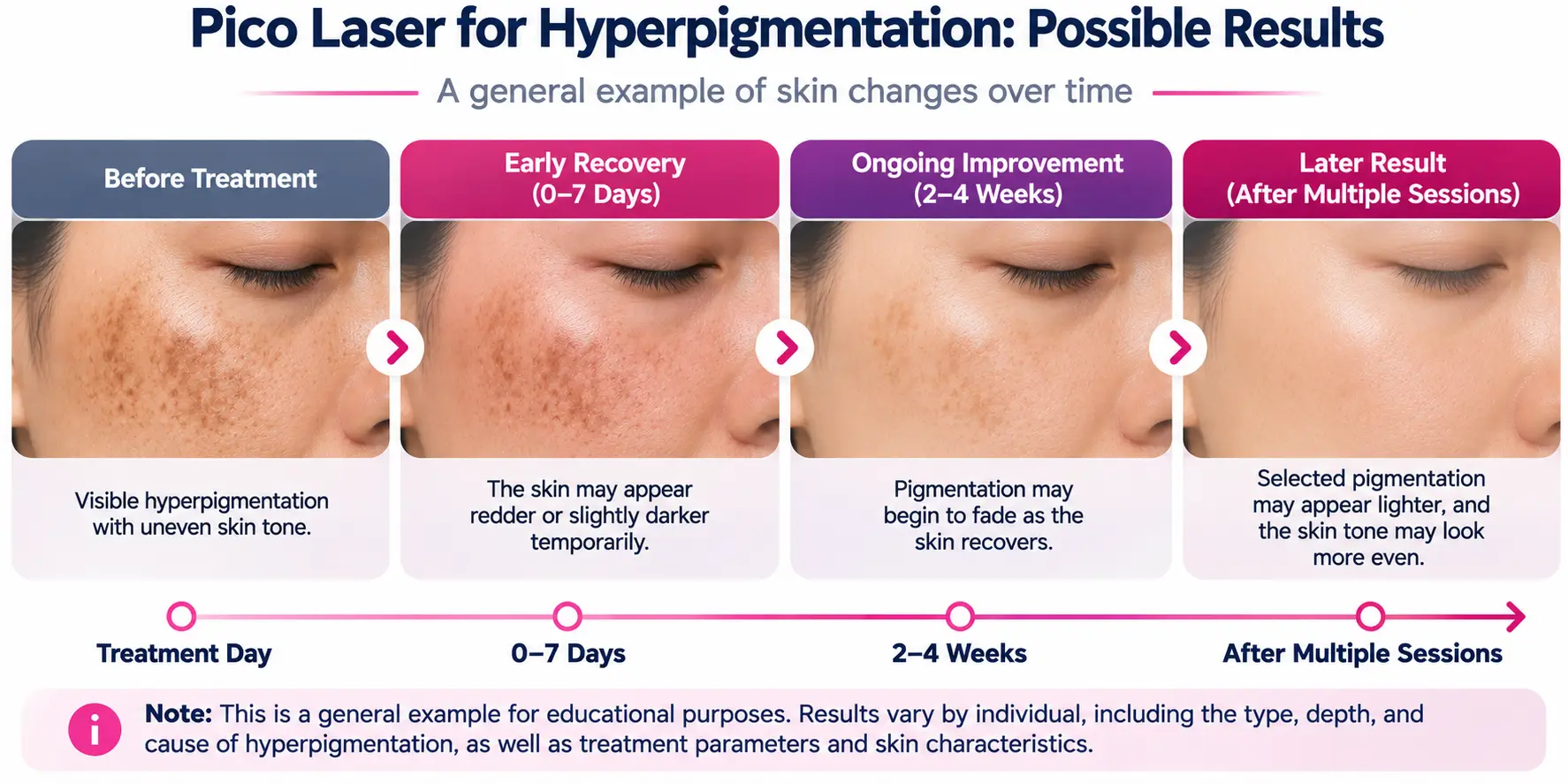
Pico laser hyperpigmentation results may develop gradually rather than immediately after treatment.
The timing depends on the lesion, treatment method, and individual healing response.
Immediately After Treatment
The treated skin may develop redness, mild swelling, warmth, or temporary changes in the appearance of pigment.
Certain procedures may cause the targeted pigmentation to appear temporarily darker.
These early changes do not necessarily indicate the final treatment outcome.
During the First Several Days
Temporary inflammation may gradually improve as the skin recovers.
Depending on the procedure, some treated lesions may develop superficial crusting or other visible changes.
Patients should avoid picking or disturbing healing skin.
During the Following Weeks
Visible pigmentation changes may become more apparent as the treated area recovers.
Some patients may notice reduced pigment visibility, while others require longer observation.
Persistent inflammation or new discoloration should be evaluated professionally.
Longer-Term Follow-Up
Longer-term assessment helps determine whether improvement is maintained, whether pigmentation has recurred, and whether additional treatment is appropriate.
Sun exposure and the underlying pigmentation disorder may influence the durability of results.
General Results Timeline
| Stage | Possible Skin Response | Important Consideration |
|---|---|---|
| Before Treatment | Visible pigmentation | Confirm diagnosis and document baseline |
| Immediately After | Redness, swelling, or temporary pigment changes | Early reactions are not final results |
| First Several Days | Inflammation may settle; crusting is possible | Follow individualized aftercare |
| Following Weeks | Possible gradual improvement in pigmentation | Assess response after adequate recovery |
| Longer-Term Follow-Up | Improvement may persist or pigmentation may recur | Review ongoing management and sun protection |

Pico Laser for Hyperpigmentation Recovery and Aftercare
Recovery after picosecond laser treatment varies according to the pigmentation condition, treatment parameters, and individual skin response.
Some procedures produce relatively limited downtime, while others cause more visible inflammation or superficial skin changes.
Protect the Treated Skin
Patients should follow individualized instructions for cleansing, moisturizing, and protecting the treated area.
Avoid unnecessary friction, scratching, and aggressive skincare during recovery.
Prioritize Sun Protection
Ultraviolet exposure can contribute to pigmentation changes and recurrence of certain conditions.
Appropriate photoprotection is particularly important for patients undergoing pigmentation treatment.
Patients should follow professional guidance on sun avoidance, protective clothing, and sunscreen use when appropriate for the condition of the skin.
Avoid Picking Crusts or Irritated Skin
If crusting occurs, patients should not deliberately remove the affected tissue.
Disturbing the healing skin may increase the risk of inflammation, infection, and pigmentation changes.
Resume Active Skincare Carefully
Exfoliating acids, retinoids, and other potentially irritating products may need to be temporarily adjusted.
The treating professional should advise when normal skincare can be resumed.
Continue Management of the Underlying Condition
Laser treatment does not necessarily eliminate the biological cause of hyperpigmentation.
Some patients may require ongoing photoprotection, topical therapy, or management of inflammation to reduce recurrence.
Pico Laser for Hyperpigmentation Side Effects and Risks
Pico laser for hyperpigmentation can cause adverse skin reactions, even when performed using professional equipment.
Picosecond pulse duration does not eliminate the possibility of tissue injury.
Redness and Swelling
Temporary redness, warmth, and swelling may occur after treatment.
The duration and intensity depend on the procedure and individual response.
Post-Inflammatory Hyperpigmentation
Post-inflammatory hyperpigmentation is an important potential complication of pigment-targeting laser procedures.
Laser-induced inflammation may stimulate additional pigmentation, causing treated areas to become darker rather than lighter.
Hypopigmentation
Hypopigmentation occurs when normal skin pigmentation becomes reduced.
It may appear as lighter patches within or around the treated area.
Some pigmentary changes may persist for extended periods.
Blistering, Crusting, and Scarring
More significant tissue reactions may include blistering or crusting.
Scarring is less common but remains a possible complication, particularly when excessive injury or impaired healing occurs.
Rebound or Worsening Pigmentation
Certain pigmentation disorders, particularly melasma, may worsen or recur after laser treatment.
This risk makes accurate diagnosis and careful patient selection essential.
When Should Patients Seek Medical Advice?
Increasing pain, spreading redness, discharge, fever, or delayed healing require prompt medical assessment.
Unexpected worsening of pigmentation or persistent loss of normal skin color should also be reviewed by a qualified professional.

Is Pico Laser for Hyperpigmentation Safe for Darker Skin?
Picosecond laser treatment may be considered for selected patients with darker skin, but suitability depends on the diagnosis, wavelength, device, and treatment parameters.
Darker skin generally contains more epidermal melanin, which can also absorb laser energy.
This creates additional considerations when targeting pigmentation without injuring surrounding tissue.
Why Skin Phototype Matters
Skin phototype influences the risk of pigmentary complications following laser exposure.
Patients with darker skin may be more susceptible to post-inflammatory hyperpigmentation under certain treatment conditions.
Does a Longer Wavelength Always Mean Safer Treatment?
Longer wavelengths may interact differently with epidermal melanin and deeper tissue.
However, wavelength alone does not determine safety.
Fluence, spot size, pulse characteristics, skin condition, and operator technique must also be considered.
Why Conservative Treatment Planning Matters
Careful patient selection and appropriate treatment parameters may help reduce avoidable injury.
Practitioners should consider previous pigmentary reactions, active inflammation, and the underlying pigmentation disorder.
Patients should not assume that any picosecond laser is automatically safe for every skin phototype.
Pico Laser vs IPL for Hyperpigmentation: Which Is Better?
Picosecond lasers and intense pulsed light, commonly called IPL, are different technologies used in selected aesthetic procedures.
Their suitability for hyperpigmentation depends on the underlying diagnosis, skin phototype, treatment target, and equipment configuration.
How Pico Laser Works
Picosecond laser systems deliver highly controlled pulses of laser light at specific wavelengths.
Rapid energy deposition can produce photoacoustic effects within suitable pigment targets.
How IPL Works
IPL systems use broad-spectrum, non-laser light delivered through selected optical filters.
The treatment effect depends on the wavelengths delivered, pulse configuration, and tissue absorption.
Which Technology Is More Suitable?
Neither picosecond laser nor IPL is universally better for every type of hyperpigmentation.
Some superficial benign pigmentation concerns may be considered for IPL, while selected pigment targets may be approached with picosecond laser technology.
Certain pigmentation disorders, including melasma and PIH, require additional caution with either technology.
Pico Laser vs IPL Comparison
| Feature | Picosecond Laser | IPL |
|---|---|---|
| Technology | Laser | Broad-spectrum non-laser light |
| Wavelength Delivery | Specific laser wavelengths | Filtered wavelength ranges |
| Pulse Characteristics | Picosecond laser pulses | Device-dependent light pulses |
| Pigmentation Applications | Selected diagnosed pigment targets | Selected superficial pigmentation concerns |
| Darker Skin Considerations | Requires careful wavelength and parameter selection | Requires particular caution due to epidermal melanin absorption |
| Potential Risks | Pigmentary changes, inflammation, blistering, scarring | Pigmentary changes, burns, blistering, scarring |
| Best Choice | Depends on diagnosis, patient characteristics, device capabilities, and clinical judgment | |
Treatment selection should be based on clinical assessment rather than the assumption that one technology is always more effective.
Who Is a Good Candidate for Pico Laser Hyperpigmentation Treatment?
Pico laser hyperpigmentation treatment may be appropriate for selected patients with properly diagnosed pigment-related concerns. However, suitability cannot be determined from the appearance of dark spots alone.
A qualified healthcare professional should evaluate the underlying pigmentation disorder, skin phototype, medical history, previous treatments, and risk of adverse reactions before recommending a laser procedure.
Patients Who May Be Considered
Depending on the diagnosis, possible candidates may include individuals who:
- Have confirmed benign pigmented lesions that may respond to pigment-targeting lasers.
- Have realistic expectations about improvement, recurrence, and treatment sessions.
- Can follow recommended sun protection and post-treatment skin care.
- Have been assessed for relevant medical and dermatological risks.
- Understand that laser treatment may not be the preferred option for their pigmentation condition.
When Laser Treatment May Not Be Appropriate
Laser treatment should be postponed, avoided, or reconsidered when the clinical assessment identifies unacceptable risks.
Situations requiring particular attention include:
- Undiagnosed, changing, or suspicious pigmented skin lesions.
- Active infection or significant inflammation in the proposed treatment area.
- Recent tanning or substantial ultraviolet exposure.
- A history of significant pigmentary complications after previous procedures.
- Conditions or medications that may affect photosensitivity or wound healing.
- Unrealistic expectations about permanent or complete pigment clearance.
Pregnancy, certain medical conditions, and medication use may require additional assessment. The appropriate decision depends on the clinical situation and the specific device.
Why a Professional Skin Assessment Matters
Some pigmentation disorders resemble one another despite having different causes and treatment requirements.
A professional evaluation helps determine whether the condition is suitable for cosmetic treatment, whether further investigation is necessary, and whether a non-laser approach may be preferable.
How to Choose a Professional Picosecond Laser for Pigmentation Treatment
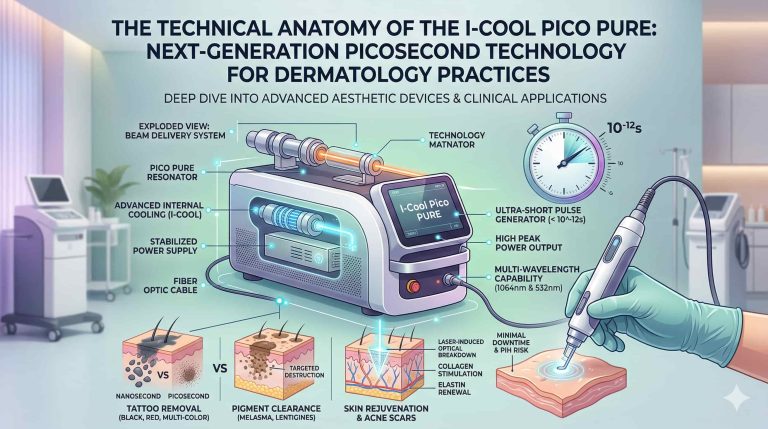
For aesthetic clinics and equipment buyers, selecting a professional picosecond laser requires more than comparing pulse duration or advertised treatment applications.
Device specifications, available wavelengths, intended uses, safety features, documentation, and operator training all influence the suitability of a laser platform.
Wavelength Availability
Different laser wavelengths have different absorption and penetration characteristics. Their clinical applications depend on the device configuration and the pigmentation condition being treated.
Buyers should verify the actual wavelengths supported by a system rather than assuming that all picosecond lasers offer the same capabilities.
Pulse Characteristics and Energy Control
Pulse duration is one characteristic of a picosecond laser system, but it does not independently establish clinical effectiveness.
Other relevant parameters include energy delivery, spot size, beam characteristics, and the device’s available treatment modes.
Appropriate treatment parameters must be established by trained professionals according to the device instructions and clinical assessment.
Cooling and Safety Considerations
A professional treatment environment requires appropriate laser safety procedures, wavelength-specific eye protection, equipment maintenance, and suitable patient preparation.
Cooling or other supportive measures may be used when clinically appropriate, but they do not eliminate the risk of pigmentary changes or skin injury.
Documentation, Training, and Support
Clinics and distributors should evaluate the manufacturer’s technical documentation, operator training, warranty terms, maintenance arrangements, and after-sales support.
They should also verify the device’s regulatory status and authorized indications in the intended market.
Professional Picosecond Laser Equipment from Cocoon Laser
Cocoon Laser supplies professional aesthetic laser equipment for clinics, distributors, and international equipment buyers.
The Ultra PicoMax platform is part of Cocoon Laser’s professional picosecond laser product range.
Buyers considering a picosecond laser for pigmentation-related applications should request current technical specifications, available treatment configurations, training information, and documentation for their market.
For product specifications, purchasing inquiries, or distributor discussions, contact Cocoon Laser .
Equipment selection should not be interpreted as confirmation that a device is appropriate for every pigmentation disorder or authorized for every treatment indication.
Frequently Asked Questions About Pico Laser for Hyperpigmentation
1. Does pico laser work for hyperpigmentation?
Pico laser may improve selected types of hyperpigmentation, particularly certain properly diagnosed benign pigmented lesions. Results depend on the condition, skin characteristics, laser configuration, and treatment approach. Not every type of hyperpigmentation is suitable for laser treatment.
2. Is pico laser good for dark spots?
Picosecond laser treatment may be considered for selected benign dark spots after professional diagnosis. However, dark spots have different causes, and some require medical evaluation rather than cosmetic laser treatment.
3. How many pico laser sessions are needed for hyperpigmentation?
There is no universal number of sessions. Treatment requirements depend on the pigmentation disorder, lesion characteristics, skin phototype, device, and individual response. Some conditions may not be appropriate for laser treatment.
4. How long does pico laser take to remove hyperpigmentation?
Visible improvement may develop over several weeks or longer, depending on the treated condition. Complete removal cannot be guaranteed, and some pigmentation may recur.
5. Can pico laser make hyperpigmentation worse?
Yes. Laser-induced inflammation may cause or worsen post-inflammatory hyperpigmentation, particularly in susceptible individuals. Other possible complications include hypopigmentation and scarring.
6. Is pico laser safe for darker skin tones?
Picosecond laser treatment may be considered in selected patients with darker skin tones, but the risk of pigmentary complications requires careful assessment. Pulse duration alone does not guarantee safety.
7. Is pico laser effective for melasma?
Certain picosecond laser approaches have been investigated for melasma, but results vary and recurrence or worsening pigmentation can occur. Melasma generally requires a comprehensive management strategy under professional supervision.
8. What is the difference between pico laser and IPL for hyperpigmentation?
Picosecond lasers deliver ultra-short laser pulses at specific wavelengths, while IPL uses filtered broadband light. Their suitability depends on the pigmentation diagnosis, skin characteristics, and treatment objectives. Neither technology is universally superior for all patients.
9. Does pico laser treatment hurt?
Patients may experience sensations such as snapping, stinging, or warmth during treatment. Discomfort varies with the treatment area, settings, and individual sensitivity. Clinicians may use appropriate comfort measures.
10. What is the downtime after pico laser for hyperpigmentation?
Recovery varies according to the treatment and skin response. Temporary redness or swelling may occur, while some procedures can cause crusting or other changes requiring additional healing time.
11. Can hyperpigmentation return after pico laser treatment?
Yes. Pigmentation may recur because of ultraviolet exposure, hormonal influences, inflammation, or the underlying skin condition. Long-term management and photoprotection may remain important.
12. Is picosecond laser better than nanosecond laser for pigmentation?
Picosecond and nanosecond lasers differ in pulse duration and their interactions with pigment targets. Clinical outcomes depend on the condition, wavelength, parameters, and available evidence. Picosecond technology should not automatically be considered superior for every pigmentation disorder.
Final Thoughts: Is Pico Laser Worth Considering for Hyperpigmentation?
Pico laser for hyperpigmentation may be a useful treatment option for selected, properly diagnosed pigment-related skin concerns.
Picosecond laser technology provides ultra-short pulses capable of interacting with suitable pigment targets, but treatment effectiveness varies considerably.
The most important factor is identifying the underlying cause of pigmentation before selecting a treatment.
Patients should understand that results are not guaranteed, pigmentation may recur, and laser procedures can sometimes worsen discoloration.
Professional diagnosis, individualized treatment planning, appropriate photoprotection, and realistic expectations remain essential.
For clinics and distributors evaluating professional picosecond laser equipment, Cocoon Laser can provide product information and purchasing support through its contact page.