The Clinical Physics and Commercial Strategy of Laser Hair Removal on Tattooed Skin: A Comprehensive B2B Blueprint
Anyone who has battled severe acne knows that the war doesn’t always end when the breakouts stop. Long after the active pimples have faded, the battlefield remains: indented scars, uneven texture, and a constant reminder of the skin struggles you thought you had left behind. You buy expensive serums, you try aggressive chemical peels, and you layer on primers hoping to create an illusion of smoothness. But the reality is that topical creams cannot physically rebuild the structural foundation of your skin.
If you are exhausted from hiding behind makeup and filters, it is time for a reality check. True skin transformation requires reaching beneath the surface to stimulate profound biological repair. Enter the gold standard of dermatological resurfacing: the professional fractional CO2 laser machine.
Whether you are an individual desperately seeking a solution for your acne scars, or a clinic owner looking to invest in high-performing medical grade CO2 laser equipment to serve this exact patient demographic, this comprehensive guide will break down the science, the process, and the unparalleled results of this technology. We will explore how it works, what to realistically expect during the downtime, and why industry leaders like Cocoon Laser are the go-to source for aesthetic professionals worldwide.
The Emotional and Physical Toll of Acne Scars
Before diving into the laser technology, it is essential to validate the frustration that comes with acne scarring. Scars are not merely a cosmetic issue; they carry a heavy psychological weight. Many patients report a loss of confidence, social anxiety, and a feeling of being trapped by their skin’s past.
The reason over-the-counter products fail to resolve this issue is rooted in biology. True acne scars are not just dark spots (which is post-inflammatory hyperpigmentation); they are structural defects. When a severe cystic acne lesion bursts deep within the follicle, it destroys healthy skin tissue. As the body rushes to repair the damage, it often produces too little or too much collagen, leading to an uneven surface.
Decoding Your Scars: Not All Marks Are Created Equal
To understand why a commercial CO2 laser resurfacing machine is necessary, we must first categorize the types of acne scars. Different scars require different depths of treatment.
| Scar Type | Visual Characteristics | Underlying Cause | Response to CO2 Laser |
| Ice Pick Scars | Deep, very narrow, V-shaped pits that look like small punctures. | Destruction of tissue extending deep into the dermis. | Excellent. The laser penetrates deeply to remodel the targeted tissue column. |
| Boxcar Scars | Broad, U-shaped depressions with sharp, defined edges. | Significant collagen loss resulting in a collapsed skin surface. | Highly Effective. The laser smooths the sharp edges and stimulates base collagen. |
| Rolling Scars | Wide depressions with sloping edges, creating a wave-like appearance. | Fibrous bands of tissue tethering the skin down to deeper structures. | Very Good. Often combined with subcision, the CO2 laser dramatically improves overall texture. |
| Hyperpigmentation | Flat red, brown, or purple marks (Not true scars). | Post-inflammatory response; excess melanin or dilated capillaries. | Good, though usually treated first with IPL or a Picosecond laser before CO2. |
Enter the Game Changer: The Professional Fractional CO2 Laser Machine
For decades, fully ablative CO2 lasers were the ultimate weapon against aging and scars. They worked by vaporizing the entire top layer of the skin. While the results were nothing short of miraculous, the treatment required general anesthesia, immense pain, and a brutal recovery period that could last for months.
Then came the “fractional” revolution.
What Does “Fractional” Mean?
Imagine a digital photograph. Instead of erasing the entire picture all at once, you only remove a fraction of the pixels, leaving the surrounding pixels completely untouched.
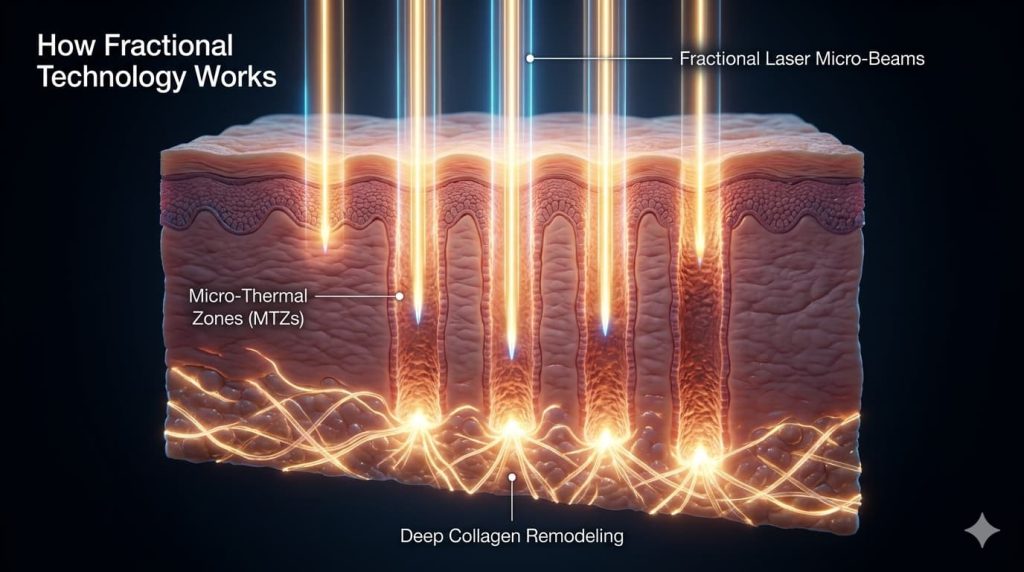
A professional fractional CO2 laser machine operates on this exact principle. It emits a highly focused beam of light at a wavelength of 10,600nm. This light is heavily absorbed by the water in our skin tissue. Instead of removing the entire epidermis, the laser’s scanner divides the light beam into thousands of microscopic thermal columns (Micro-Thermal Zones or MTZs).
These microscopic beams punch tiny, controlled, invisible holes deep into the dermis, deliberately causing controlled micro-injuries.
The Biological Magic: How Your Skin Transforms
Because the laser leaves bridges of completely healthy, untouched skin surrounding each micro-injury, the body’s natural healing response goes into overdrive without the catastrophic downtime of older lasers.
- Immediate Tissue Shrinkage: The heat from the laser vaporizes the damaged scar tissue and causes immediate contraction of the existing collagen fibers. You can literally see the skin tighten during the procedure.
- The Exfoliation Phase: Over the next few days, the microscopic columns of ablated tissue are pushed out of the skin in the form of tiny crusts, taking old, damaged, and pigmented skin cells with them.
- Massive Collagen Synthesis (Neocollagenesis): This is where the real magic happens. The thermal heat stimulates the fibroblasts in the lower dermis. For the next 3 to 6 months, your body furiously produces fresh, healthy, and highly organized Type I and Type III collagen. This new collagen fills in the “valleys” of your boxcar and rolling scars, effectively pushing the depressed skin upward to level with the surrounding tissue.
The Step-by-Step Patient Journey: What to Expect
Candor is crucial when discussing aggressive laser treatments. A 4D fractional CO2 laser for clinics is a powerful medical tool, not a relaxing spa facial. Here is the honest, unfiltered breakdown of the patient journey.
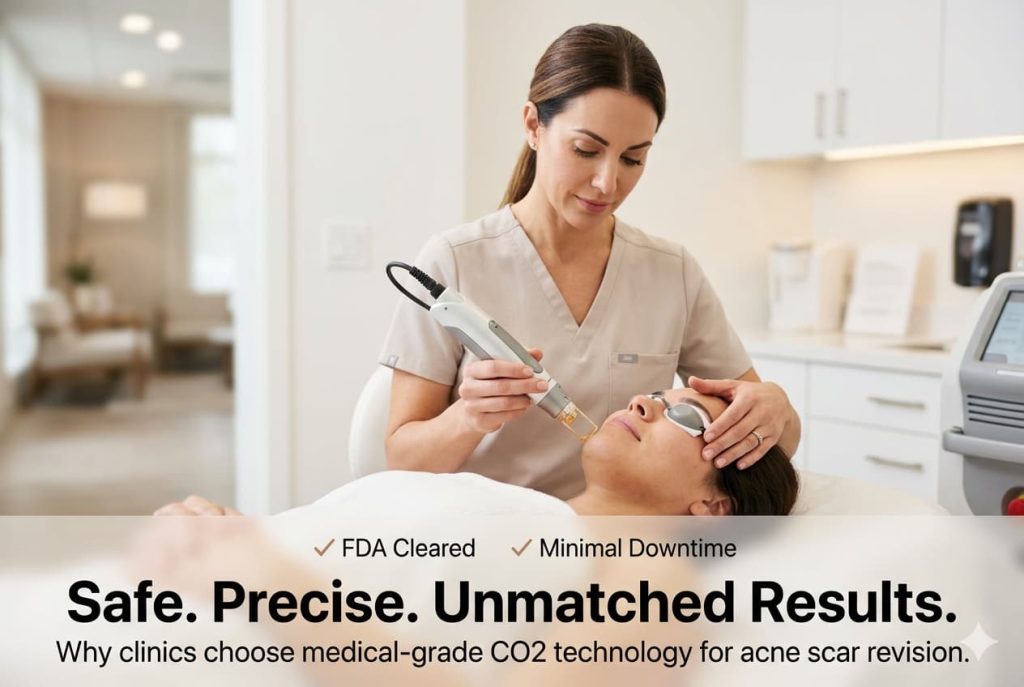
Phase 1: Pre-Treatment Preparation
A successful outcome begins weeks before the laser touches your skin. A reputable clinic will require you to avoid direct sun exposure and discontinue the use of harsh active ingredients like Retinol, AHAs, and BHAs for at least a week prior. If you have a history of cold sores, your provider will prescribe an antiviral medication, as the laser heat can trigger a breakout. For patients with darker skin tones (Fitzpatrick IV-VI), a tyrosinase inhibitor (like Hydroquinone) may be prescribed to prevent post-inflammatory hyperpigmentation.
Phase 2: Treatment Day – The Procedure
- Numbing: The clinic will apply a thick layer of medical-grade topical numbing cream for 45 to 60 minutes.
- The Sensation: As the commercial CO2 laser resurfacing machine glides over your face, you will hear a rapid snapping or buzzing sound. You will feel intense heat and a sensation often described as a hot rubber band snapping against the skin. While uncomfortable, it is generally tolerable thanks to the numbing cream and integrated cooling systems.
- Duration: The actual lasering process for a full face takes about 20 to 30 minutes.
Phase 3: The Reality of Downtime (Days 1 to 7)
Do not plan any social events for a week. Your skin is healing from a significant, controlled injury.
- Day 1 (The Sunburn Phase): Your face will feel extremely hot, tight, and look severely sunburned. Swelling is common, especially around the eyes. You will apply a thick medical barrier ointment to keep the skin moist.
- Day 2-3 (The Bronzing Phase): The micro-thermal zones begin to push outward. Your skin will turn a bronze or brown color and feel like rough sandpaper. The swelling will peak.
- Day 4-5 (The Peeling Phase): The tiny brown crusts (often called MENDs – Microscopic Epidermal Necrotic Debris) will start to flake off. Crucial rule: Do not pick, scratch, or force the peeling. Let it fall off naturally while washing with a gentle cleanser.
- Day 6-7 (The Fresh Canvas): The crusting has mostly resolved, revealing fresh, baby-pink skin beneath. You can usually start wearing breathable, mineral-based makeup at this point.
Phase 4: The Long-Term Transformation
While your skin looks brighter immediately after healing, the real improvement in your acne scars will not be visible until week 4 to week 6. As your body builds new collagen, you will notice the indentations becoming shallower. The results are cumulative; your skin will continue to improve for up to 6 months post-treatment. Depending on the severity of the scarring, a protocol of 2 to 4 sessions spaced a few months apart is usually recommended.
For Clinic Owners: Why Invest in Medical Grade CO2 Laser Equipment?
If you are a MedSpa owner, a dermatologist, or an aesthetic entrepreneur reading this, you know that patient demand for effective scar and anti-aging treatments is at an all-time high. However, the market is flooded with cheap, underpowered devices that deliver subpar results and risk patient safety.
Partnering with a reliable supplier like Cocoon Laser to acquire a professional fractional CO2 laser machine is a foundational business decision. Here is why this equipment is the cornerstone of a highly profitable clinic:
1. Unmatched Clinical Efficacy and Patient Loyalty
When you successfully treat a patient’s severe acne scars—a condition that has plagued them for years—you create a patient for life. The visible, undeniable results achieved with a 4D fractional CO2 laser for clinics generate powerful word-of-mouth marketing and spectacular before-and-after portfolios that drive new bookings.
2. High Return on Investment (ROI)
While medical grade CO2 laser equipment represents a significant capital expenditure, the revenue potential is immense. CO2 resurfacing commands premium pricing globally due to its gold-standard status. Furthermore, unlike machines that require expensive single-use consumables (like certain microneedling tips or specialized serums), the running cost of a CO2 laser is remarkably low, keeping your profit margins high.
3. Ultimate Versatility: Beyond Acne Scars
You are not just buying an “acne scar machine.” A high-quality commercial CO2 laser resurfacing machine is a multi-functional platform. Depending on the handpieces and modes used, you can treat:
- Severe rhytids (deep wrinkles) and skin laxity.
- Surgical scar revision and stretch marks.
- Benign skin lesions (warts, skin tags, seborrheic keratoses) using the surgical cutting mode.
- Vaginal Rejuvenation: Many modern systems include specialized gynecological handpieces to treat vaginal atrophy, laxity, and mild stress urinary incontinence, opening up a highly lucrative wellness revenue stream for your practice.
4. Precision and Safety Profiles
State-of-the-art equipment from Cocoon Laser allows practitioners to adjust pulse energy, dwell time, and the shape and density of the fractional grid with absolute precision. This allows you to customize the aggressiveness of the treatment: offering a lighter “weekend peel” for a patient wanting a quick glow-up, or a deep, aggressive pass for severe ice pick scars.
Comparing the Heavyweights: CO2 vs. The Rest of the Market
It is normal for patients and practitioners to be confused by the sheer volume of aesthetic technologies available. Let’s compare the professional fractional CO2 laser machine to other popular scar-revision methods to understand why CO2 retains its crown.
Fractional CO2 Laser vs. RF Microneedling
Radiofrequency (RF) Microneedling is excellent for skin tightening and mild to moderate rolling scars. It bypasses the epidermis, meaning there is less surface downtime (usually just redness for a day or two). However, for deep boxcar and ice pick scars, RF Microneedling simply cannot provide the intense epidermal ablation and deep tissue vaporization required to level the skin. CO2 is significantly more aggressive and yields faster, more dramatic results for severe textural issues.
Fractional CO2 Laser vs. Picosecond Lasers (Using MLA/Diffractive Lenses)
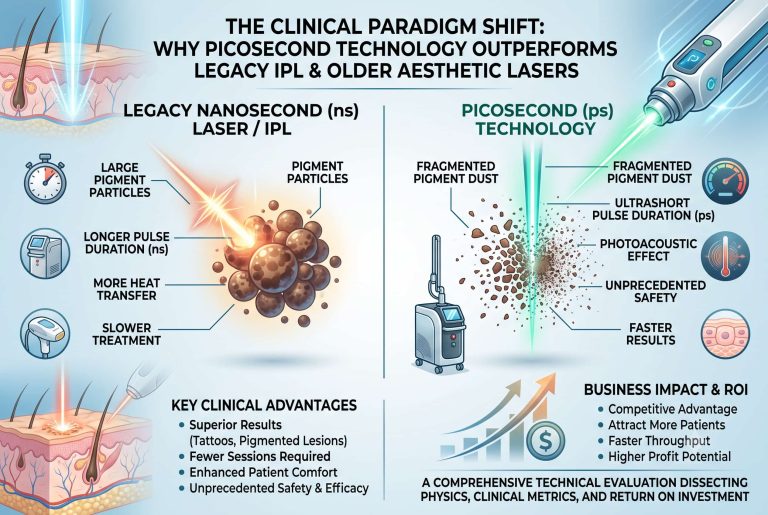
Pico lasers are the kings of pigmentation and tattoo removal. When equipped with a special lens (fractional mode), they create “LIOBs” (Laser-Induced Optical Breakdown) beneath the skin to stimulate collagen without breaking the surface. Pico is fantastic for patients of color (Fitzpatrick IV-VI) who are at high risk of hyperpigmentation from CO2 heat. However, for sheer tissue remodeling power and smoothing out deep craters, the thermal ablation of the CO2 laser remains superior.
Fractional CO2 Laser vs. Chemical Peels
Deep chemical peels (like TCA cross or Phenol peels) can yield incredible results for acne scars, but they are highly operator-dependent, carry significant risks of scarring if applied incorrectly, and offer less control than a digital laser scanner. A commercial CO2 laser resurfacing machine provides exact, uniform depth control that a liquid acid simply cannot guarantee.
Aftercare Essentials: Protecting Your Investment
Whether you have just spent your hard-earned money on a treatment, or you are a practitioner ensuring your patient’s success, strict adherence to post-laser aftercare is non-negotiable. The laser does 50% of the work; how the skin is treated during the healing phase does the rest.
- Hydration is Healing: For the first week, the skin must be kept occluded (covered) with a medical barrier cream like Aquaphor or a specialized post-procedure ointment. If the skin dries out, it can crack, leading to scarring and delayed healing.
- Strict Sun Avoidance: The fresh, baby skin emerging after a CO2 treatment has zero defense against UV rays. Sun exposure will almost certainly result in severe hyperpigmentation. Broad-spectrum SPF 50+ is mandatory every day, even indoors, alongside physical barriers like wide-brimmed hats.
- Skip the Actives: Put away the Vitamin C, Retinols, and exfoliating acids for at least 3 to 4 weeks. Introduce them only when the skin barrier is completely rebuilt.
- Patience: Remodeling collagen is a marathon, not a sprint. Take photos every two weeks in the same lighting to objectively track your transformation.
Conclusion: Reclaiming Your Skin and Your Confidence
Living with severe acne scars can feel like carrying the ghost of your past breakouts into every room you enter. But aesthetic medicine has evolved. You no longer have to settle for treatments that only offer marginal improvements. The professional fractional CO2 laser machine remains the undisputed champion of skin resurfacing, offering a scientifically proven mechanism to literally rebuild the topography of your skin from the inside out.
For the individual ready to invest in their confidence, the downtime is a small price to pay for a permanent transformation. Consult with a board-certified professional to see if you are a candidate.
And for the forward-thinking clinic owners and aesthetic entrepreneurs: equipping your practice with medical grade CO2 laser equipment from a trusted supplier like Cocoon Laser is more than an upgrade to your service menu. It is an investment in your clinic’s reputation, allowing you to deliver the profound, life-changing results that turn patients into lifelong advocates.
The scars of the past do not have to dictate the face of your future. Embrace the science of CO2, and say bye-bye to acne scars for good.
If you need more information, please click “Contact Us”.
If you want to obtain more information, please follow our official website and Facebook.