Advanced Clinical Workflows: Combining RF Microneedling with Fractional CO2 Lasers
Introduction: The Clinical Imperative for Dual-Modality Skin Resurfacing
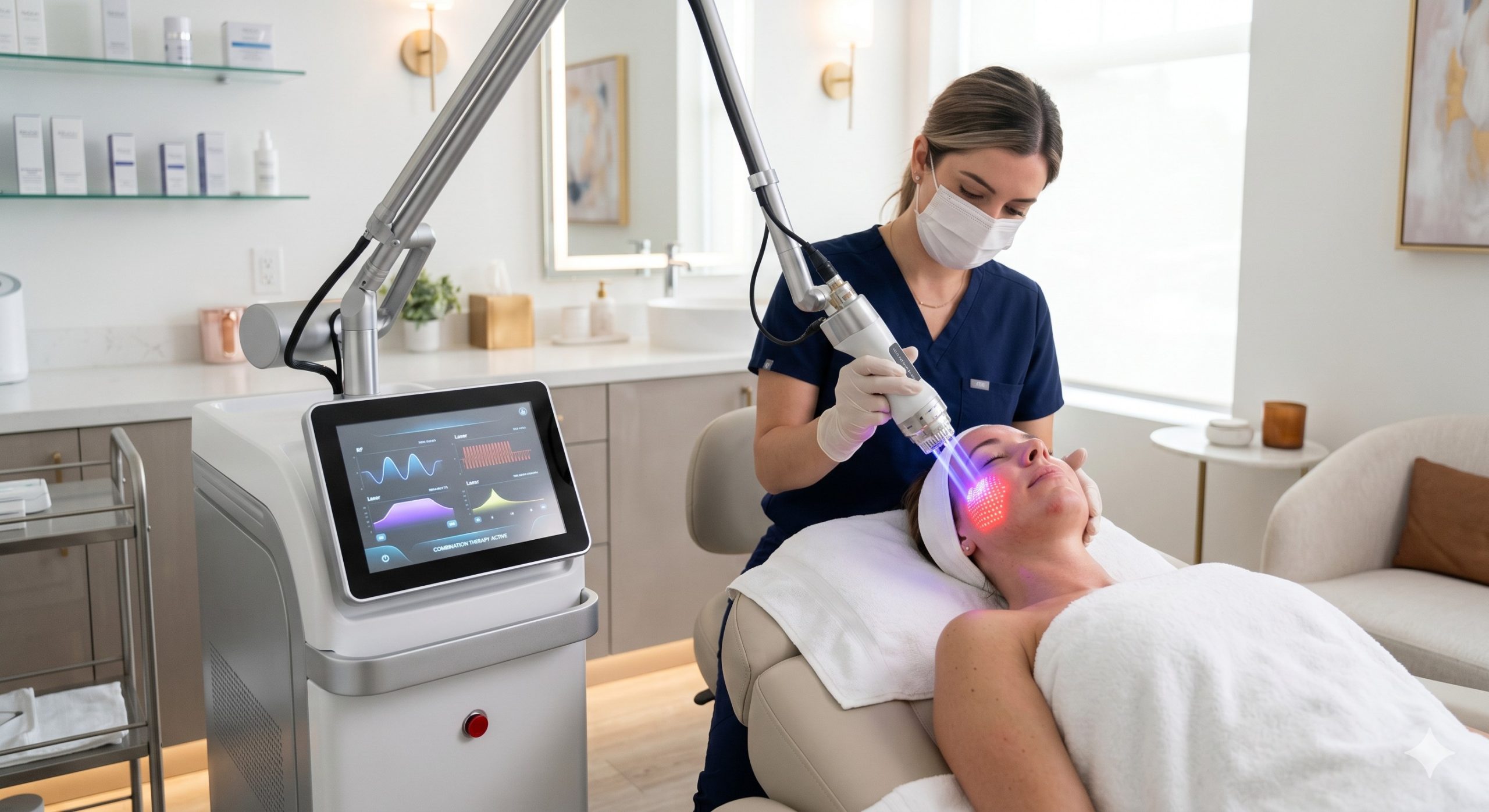
For the modern medical aesthetics clinic, achieving superior outcomes in deep rhytides, atrophic acne scars, and textural irregularities requires moving beyond single-modality thinking. While fractional CO2 lasers (10,600 nm) remain the gold standard for profound collagen remodeling, they lack the volumetric heating and fibrotic septae release offered by RF microneedling. Combining these technologies unlocks a synergistic effect: fractional CO2 addresses epidermal and superficial dermal matrix via ablative fractional photothermolysis, while bipolar or monopolar RF microneedling delivers deep dermal coagulation without epidermal disruption. This guide provides a clinically-driven, device-agnostic protocol for integrating both platforms to maximize patient outcomes and clinic ROI, referencing FDA-cleared and Medical CE-marked systems adhering to ISO 13485 quality standards.
Physical Mechanisms: Selective Photothermolysis vs. Volumetric RF Heating
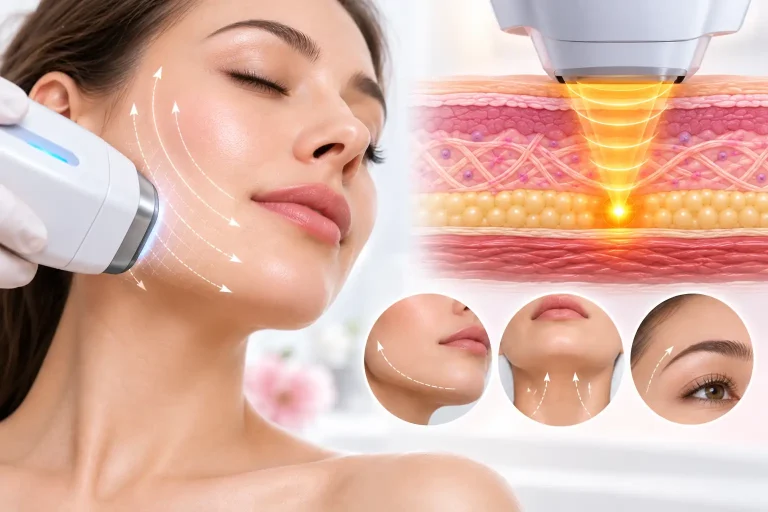
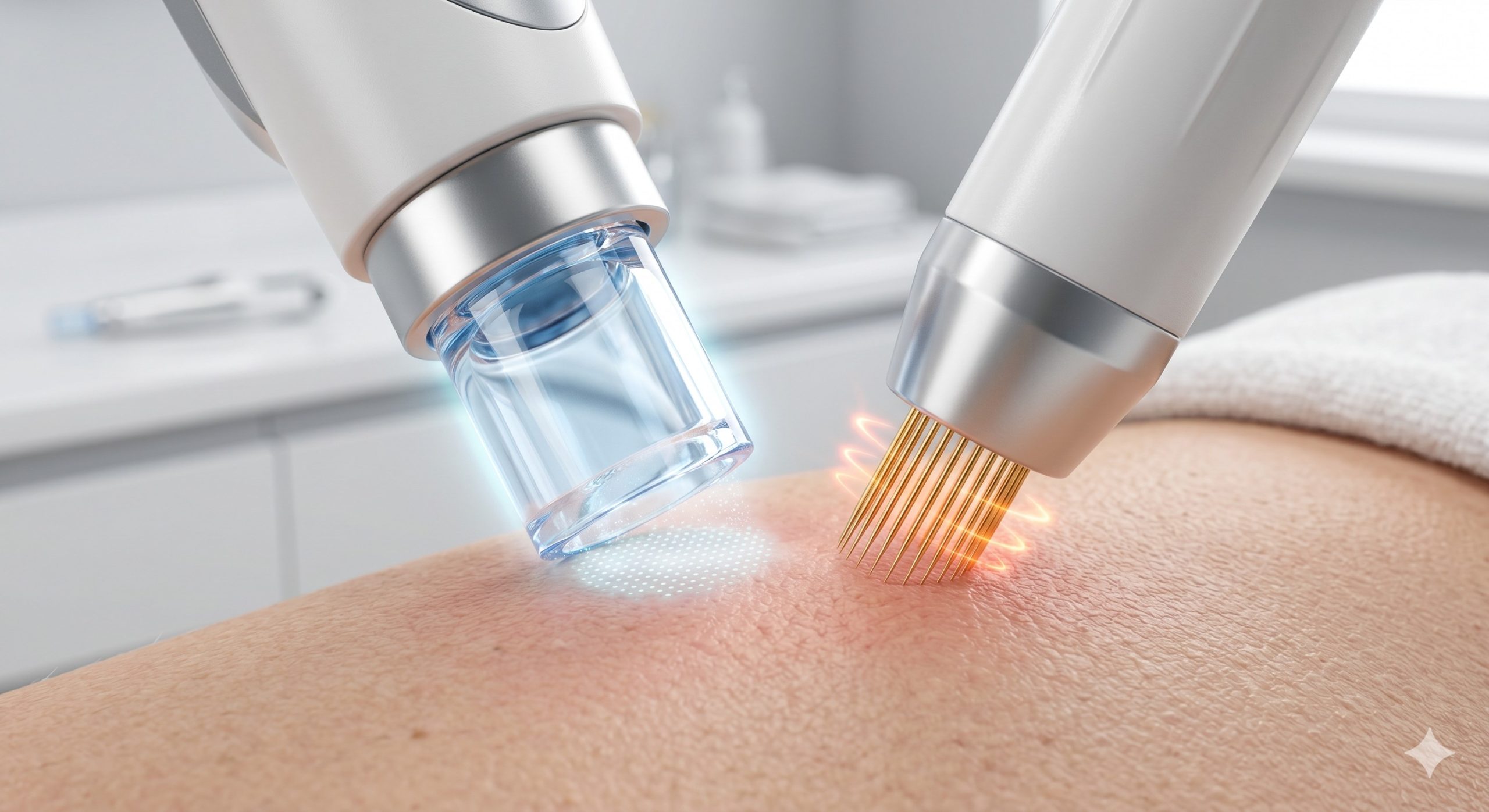
Understanding tissue interaction is critical. A fractional CO2 laser emits at 10,600 nm, heavily absorbed by water. Typical parameters: spot sizes 120-300 µm, density 5-20%, fluence 5-50 mJ, and pulse width <1 ms. This creates microscopic ablation zones (MAZs) reaching 300-700 µm depth, inducing neocollagenesis and epidermal turnover. Conversely, RF microneedling uses insulated or non-insulated needles (0.15-0.3 mm diameter) to deliver monopolar or bipolar RF energy (typically 0.5-4 MHz, 2-25 W) directly to the deep dermis (1.5-3.5 mm depth). The RF current generates resistive heating (65-75°C) creating volumetric coagulation columns, sparing the epidermis. Combined therapy yields full-thickness remodeling: superficial ablation + deep dermal tightening.
Key Synergy Metrics
Clinical studies demonstrate that dual therapy increases collagen type I and III expression by 210-340% compared to either modality alone. For atrophic acne scars, combination protocols show a 2-3 point improvement on the Goodman and Baron scale after 2-3 sessions.
Clinical Indications & Ideal Patient Selection (Fitzpatrick I-VI)
The combination is indicated for moderate to severe atrophic acne scars, dynamic and static rhytides, surgical and traumatic scars, and striae distensae. However, patient selection must respect the Fitzpatrick scale. Fractional CO2 carries a risk of post-inflammatory hyperpigmentation (PIH) in Fitzpatrick IV-VI; thus, conservative CO2 parameters (low density, 5-10%, fluence <20 mJ) should be used, with RF microneedling serving as the primary deep driver. For Fitzpatrick I-III, aggressive CO2 can be combined safely. Test spots are mandatory for all skin of color. Contraindications include active infection, isotretinoin use within 6 months, and compromised wound healing.
| Key Parameter | Fractional CO2 Laser (10,600 nm) | RF Microneedling (Monopolar/Bipolar) |
|---|---|---|
| Energy / Power | 5-50 mJ per microbeam | 10-25 W RF power |
| Penetration Depth | 300-700 µm (epidermis to superficial dermis) | 1.5-3.5 mm adjustable (deep dermis to hypodermis) |
| Spot Size / Needle Gauge | 120-300 µm spot diameter | 0.15-0.3 mm diameter (insulated or non-insulated) |
| Pulse Width / RF On-Time | <1 ms pulse | 0.5-3 ms per needle zone |
| Tissue Effect | Ablative microscopic zones (MAZs) + coagulation | Volumetric dermal coagulation (preserves epidermis) |
| Cooling Mechanism | Forced cold air or contact cooling | Sapphire or cryogen spray (some devices) |
| Regulatory Status | FDA cleared, Medical CE (Class IIb/III), ISO 13485 | FDA cleared, Medical CE (Class IIb), ISO 13485 |
Optimized Combination Protocol: Staged vs. Same-Day
Two workflows dominate. Same-day sequence (most popular): Perform fractional CO2 first, creating MAZs. Immediately follow with RF microneedling. The CO2 laser transiently reduces tissue impedance, potentially enhancing RF conductivity. Interval between passes: 15-30 minutes. Staged protocol (2-4 weeks apart): Perform RF microneedling first to induce deep dermal remodeling, followed by fractional CO2 to resurface. This reduces erythema and downtime. For high-throughput clinics, same-day yields higher patient compliance. Recommended anesthesia: topical lidocaine 23%/tetracaine 7% for 45-60 minutes, plus regional nerve blocks for deep RF passes at 3.0-3.5 mm.
Parameter Optimization Matrix
For fractional CO2 (e.g., DEKA SmartXide, Lumenis UltraPulse): start at 10-20 mJ, density 10-15%, 1-2 passes. For RF microneedling (e.g., EndyMed Pro, Lutronic Genius, Potenza): use insulated needles for Fitzpatrick IV-VI (to prevent epidermal melanin heating) at 1.5-2.5 mm depth, 0.5-2 ms pulse width, 10-15 W power, 1-2 passes. Cool the CO2-treated skin with forced cold air (Zimmer) between modalities.
Post-Treatment Care, Downtime, and Complication Avoidance
Patients experience 3-7 days of erythema, edema, and pinpoint bleeding (from RF needles). Post-care is critical: occlusive healing (silicone or petrolatum-based) for 48 hours, followed by gentle cleanser and broad-spectrum SPF 50+. Avoid makeup for 72 hours. Typical adverse events: transient PIH (3-15% incidence, higher in skin of color), acneiform eruptions (manage with low-dose doxycycline), and prolonged erythema (>7 days). Mitigate by reducing CO2 density and using lower RF fluence in high-risk zones (perioral, periocular). Ensure devices have FDA clearance for these indications and ideally real-time impedance monitoring (RF microneedling) to prevent overtreatment.
Clinic ROI & Equipment Integration Strategy
From a business perspective, offering combined RF microneedling + fractional CO2 commands a premium. Pricing typically ranges $1,500-$3,500 per session (versus $800-$1,500 for monotherapy). At 3-4 sessions per patient, lifetime value can exceed $10,000. Capex for a medical-grade fractional CO2 (e.g., DEKA, Lumenis, Sciton) ranges $80,000-$150,000; a premium RF microneedling platform (EndyMed, InMode, Lutronic) adds $40,000-$80,000. Combined consumables (RF needle tips + CO2 handpiece wear) cost $50-$150 per patient. With 4 patients per week dual-treatment, payback period is 6-12 months. Ensure both devices have ISO 13485 certification, medical CE (Class IIb or III), and FDA 510(k) clearance. High-throughput clinics should prioritize devices with vacuum-assisted or intelligent energy delivery to reduce operator variability. Marketing this combination as ‘Full Thickness Resurfacing’ or ‘Deep RF + CO2 Fusion’ boosts conversion by positioning it as superior to standalone lasers.
Conclusion: The Verdict on Dual-Modality Therapy
Combining RF microneedling with fractional CO2 lasers is not a marketing gimmick—it is evidence-based synergistic dermatology. For clinics aiming to treat severe acne scars and advanced photodamage unresponsive to monotherapy, this protocol delivers quantifiable superior outcomes. Key success factors: rigorous patient skin typing, conservative CO2 parameters in darker phototypes, and investment in FDA/CE-marked platforms with validated handpiece durability. Adopt this dual workflow, and you will differentiate your practice, improve patient satisfaction, and accelerate ROI.