CO2 Laser Treatment: Procedure, Benefits & Risks
CO2 laser treatment is an established medical laser procedure used for skin resurfacing, scar revision, and selected dermatological and aesthetic applications. Operating at a wavelength of 10,600 nm, carbon dioxide (CO2) lasers primarily interact with water in biological tissue, allowing controlled tissue ablation and thermal effects.
Depending on the laser system and treatment approach, CO2 laser procedures may be performed using traditional ablative techniques or fractional laser technology. These approaches differ in how tissue is treated, the extent of the treatment area, and the associated recovery requirements.
This guide explains how CO2 laser treatment works, what conditions it may address, how the procedure is performed, its potential benefits and risks, and what patients and professional clinics should understand before treatment.
Quick Answer: What Is CO2 Laser Treatment?
CO2 laser treatment is an ablative laser procedure that uses 10,600 nm carbon dioxide laser energy to remove targeted tissue and produce controlled thermal effects.
In aesthetic dermatology, CO2 laser treatments are commonly used for skin resurfacing, selected acne scars, fine lines, wrinkles, and certain textural irregularities.
Fractional CO2 laser technology divides the treatment into microscopic zones, leaving surrounding untreated tissue between treatment columns. This approach supports a different healing profile compared with full-field ablative resurfacing.
Potential benefits include improved skin texture and the appearance of selected scars and wrinkles. However, CO2 laser treatment involves downtime and potential risks, including prolonged redness, infection, pigmentation changes, and scarring.
Treatment suitability, parameters, and expected recovery should always be determined through an individualized assessment by a qualified healthcare professional.
How Does CO2 Laser Treatment Work?
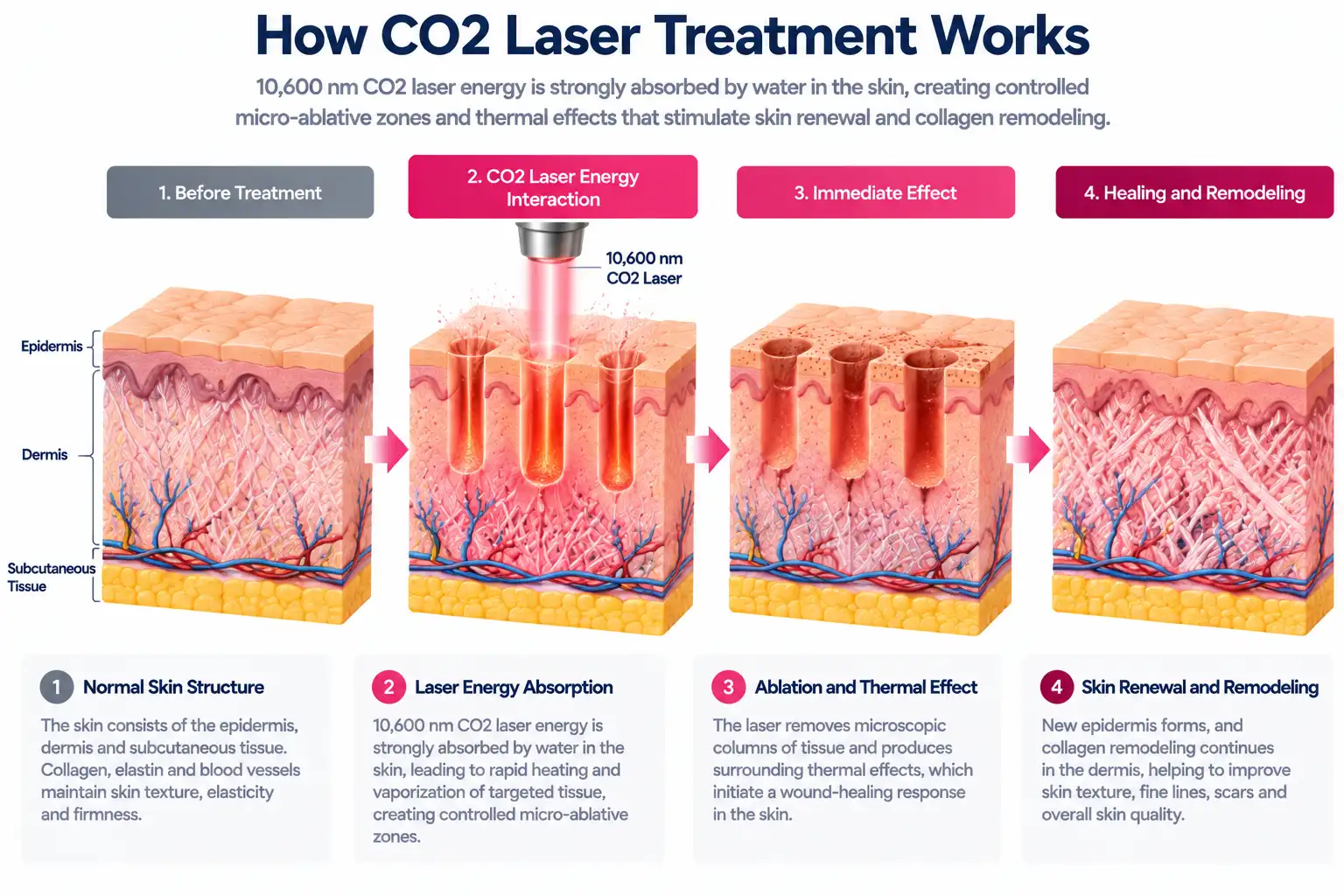
CO2 laser treatment works through the interaction between 10,600 nm laser energy and water-containing biological tissue. Because water is a major component of skin, this wavelength is strongly absorbed by tissue water.
The absorbed energy produces rapid heating and controlled vaporization of targeted tissue. Depending on the selected treatment parameters, surrounding tissue may also experience thermal effects.
These controlled effects initiate a wound-healing response involving re-epithelialization, tissue repair, and subsequent collagen remodeling.
What Happens to the Skin During Treatment?
When CO2 laser energy reaches the targeted skin area, tissue water absorbs the energy and rapidly heats. This produces controlled ablation of the selected tissue according to the treatment settings.
The resulting thermal response contributes to tissue coagulation and activates biological repair processes. Over time, new epidermal tissue forms and deeper remodeling may contribute to changes in skin texture.
How Does Fractional CO2 Laser Technology Work?
Fractional CO2 laser technology delivers laser energy in a pattern of microscopic treatment zones rather than treating the entire skin surface uniformly.
Small untreated areas remain between the treated columns. These surrounding areas provide a source of cells that participate in the healing process.
This fractional approach allows practitioners to customize treatment density and intensity according to the indication and the patient’s skin condition.
Read our detailed explanation: Fractional CO2 Laser: How It Works, Benefits & Uses .
Types of CO2 Laser Treatment
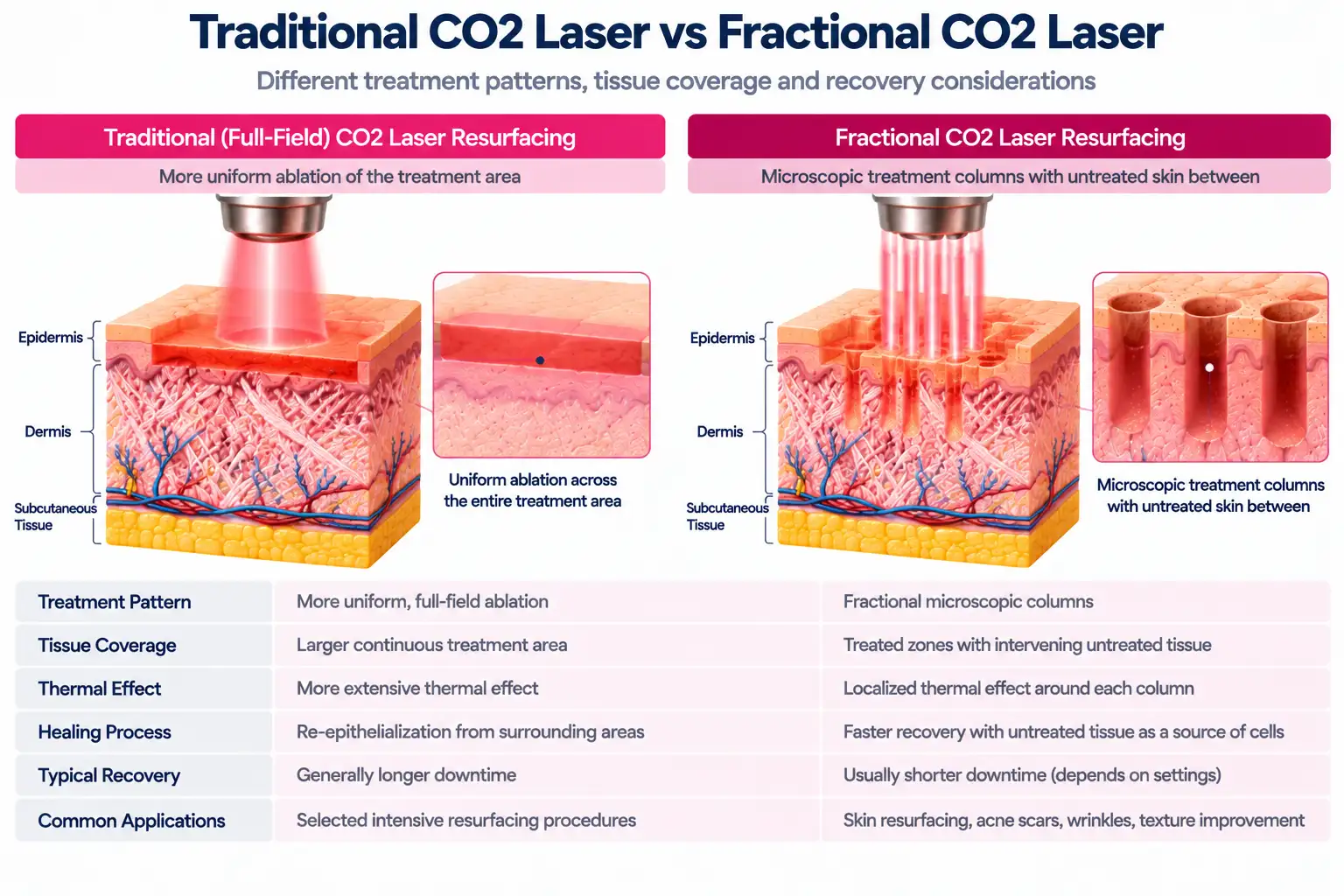
CO2 laser procedures can be broadly divided into traditional full-field ablative resurfacing and fractional ablative resurfacing. The distinction is important because the two approaches differ in tissue coverage and recovery considerations.
1. Traditional Full-Field CO2 Laser Resurfacing
Traditional ablative CO2 laser resurfacing treats the targeted skin surface more uniformly rather than leaving microscopic untreated areas between treatment columns.
It may be considered for selected cases requiring more extensive resurfacing. However, the procedure generally involves a more intensive wound-healing process and potentially longer downtime.
Patient selection, treatment depth, anatomical location, and the practitioner’s experience are important considerations.
2. Fractional CO2 Laser Treatment
Fractional CO2 laser treatment creates microscopic ablative columns separated by untreated tissue. This distribution allows the skin to heal through both treated and surrounding tissue.
It is commonly used in professional aesthetic practices for selected acne scars, wrinkles, skin texture irregularities, and resurfacing procedures.
Fractional treatment density, energy, pulse characteristics, and the number of passes influence treatment intensity and recovery.
Traditional vs Fractional CO2 Laser: Key Differences
| Feature | Traditional CO2 Laser | Fractional CO2 Laser |
|---|---|---|
| Treatment Pattern | More uniform full-field ablation | Microscopic treatment columns |
| Untreated Tissue | Less intervening untreated tissue | Untreated areas remain between columns |
| Typical Treatment Focus | Selected intensive resurfacing procedures | Resurfacing, selected scars and wrinkles |
| Recovery | Generally more intensive | Depends on fractional density and energy |
| Customization | Based on ablation depth and treatment area | Includes energy, density and pulse parameters |
Neither approach is universally better. The appropriate method depends on the patient’s condition, treatment objectives, risk factors, and acceptable recovery period.
What Is CO2 Laser Treatment Used For?
CO2 laser technology is used in several professional dermatological and aesthetic procedures. In aesthetic clinics, fractional CO2 laser resurfacing is particularly relevant for selected textural and scar-related concerns.
1. CO2 Laser Treatment for Acne Scars
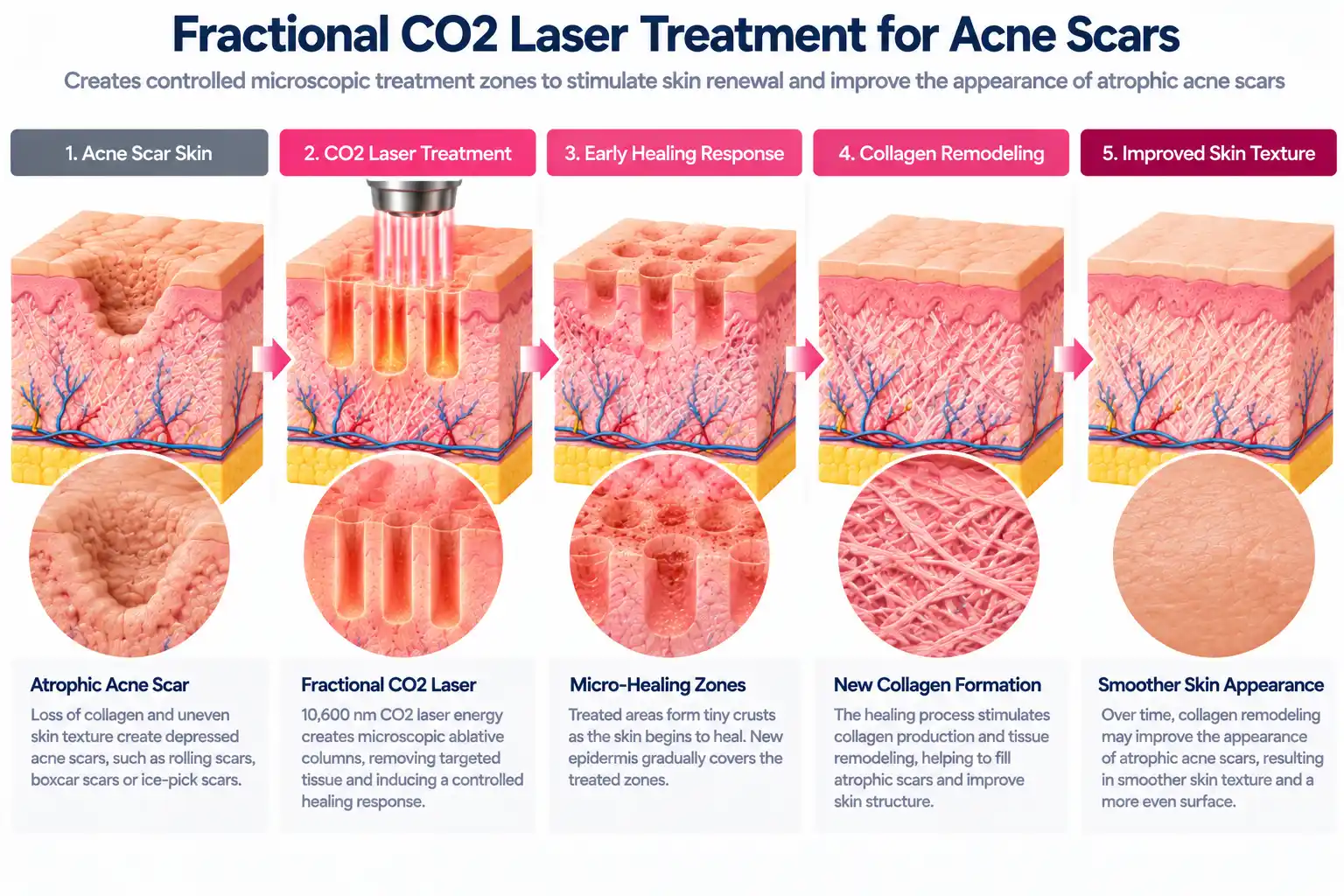
Atrophic acne scars develop when the skin’s healing process following inflammatory acne produces a loss or disruption of normal dermal tissue.
Fractional CO2 laser treatment creates controlled ablative zones within the scarred skin. The subsequent healing response and collagen remodeling may improve the appearance of selected depressed scars.
Treatment response varies according to scar morphology. Rolling scars, boxcar scars, and ice-pick scars have different structural characteristics and may require different treatment strategies.
Explore the dedicated guide: CO2 Laser for Acne Scars .
2. CO2 Laser Treatment for Wrinkles and Fine Lines
Photoaging and natural skin aging can contribute to fine lines, wrinkles, and changes in skin texture. CO2 laser resurfacing removes targeted tissue and produces thermal effects that initiate tissue repair.
Subsequent collagen remodeling may improve the appearance of selected wrinkles and surface irregularities.
Treatment depth, anatomical location, skin laxity, and wrinkle characteristics should be considered during clinical planning.
3. CO2 Laser Skin Resurfacing
CO2 laser skin resurfacing is performed to address selected concerns such as rough skin texture, surface irregularities, and photodamage.
By removing targeted tissue and initiating a healing response, treatment may support improvements in the appearance of the skin surface.
Fractional and traditional resurfacing approaches offer different treatment profiles and should be selected according to clinical requirements.
Learn more: CO2 Laser Skin Resurfacing .
4. CO2 Laser for Selected Skin Lesions
CO2 lasers may also be used by appropriately trained medical professionals for selected tissue removal and dermatological procedures.
The suitability of laser treatment depends on the type of lesion, anatomical location, diagnostic assessment, and applicable clinical guidelines. Suspicious or undiagnosed lesions require appropriate medical evaluation before any destructive procedure.
5. Other Specialized Medical Applications
Depending on the device configuration and approved indications, CO2 laser technology may also be used in certain surgical and specialized medical procedures.
These applications should not be assumed to be available on every aesthetic CO2 laser platform. Practitioners must verify the device’s intended use, regulatory status, and clinical documentation before use.
CO2 Laser Treatment: Step-by-Step Procedure
A CO2 laser procedure should be planned around the patient’s medical history, skin condition, treatment indication, and selected laser approach.
The following describes a general professional fractional CO2 laser resurfacing workflow. Actual procedures vary according to the device, treatment area, clinical protocol, and practitioner.
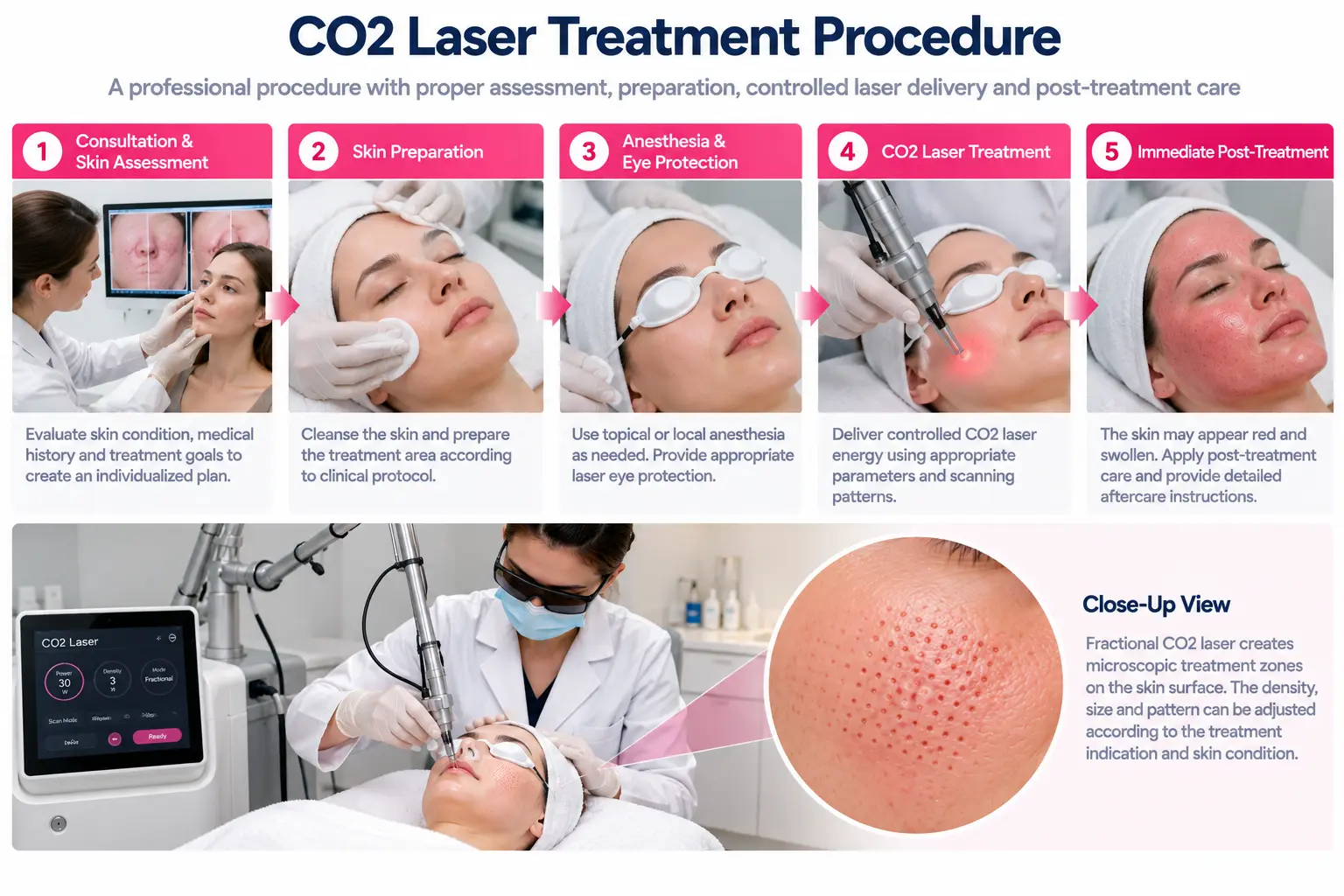
Step 1: Consultation and Skin Assessment
Before treatment, the practitioner evaluates the patient’s skin condition, treatment objectives, medical history, medications, previous procedures, and potential risk factors.
Skin phototype, history of pigmentation changes, active skin infections, healing problems, and susceptibility to abnormal scarring should be considered.
The practitioner also determines whether fractional CO2 resurfacing is appropriate or whether another treatment approach would be more suitable.
Step 2: Treatment Planning and Preparation
The treatment area is examined and prepared according to the clinical protocol. Appropriate cleansing, photography, and protective measures may be included.
The practitioner determines the treatment area and selects the appropriate parameters based on the indication and individual skin characteristics.
Step 3: Anesthesia and Eye Protection
Depending on the treatment intensity and anatomical area, topical anesthesia, local anesthesia, or another appropriate pain-management approach may be considered.
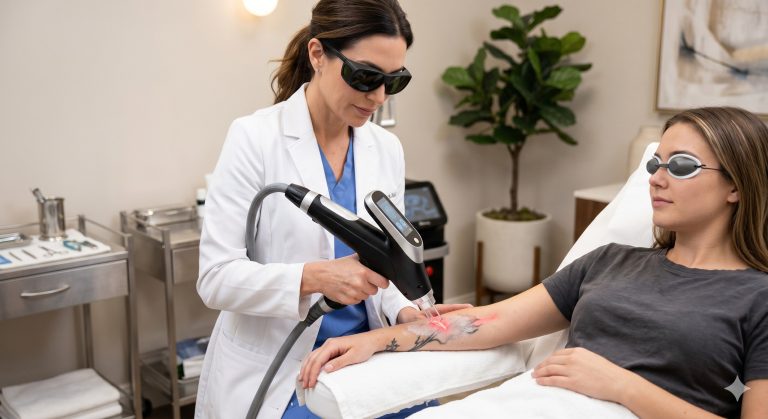
Laser-specific eye protection is essential for the patient and everyone in the treatment room. Protection must be appropriate for the wavelength and procedure being performed.
Step 4: CO2 Laser Energy Delivery
The practitioner delivers laser energy to the selected treatment area using the appropriate handpiece or scanning configuration.
Treatment parameters may include energy, pulse duration, fractional density, scanning pattern, and the number of passes, depending on the device.
The practitioner monitors tissue response throughout the procedure and adjusts the approach according to the treatment plan and clinical observations.
Step 5: Immediate Post-Treatment Care
After treatment, the skin may appear red and swollen and may feel warm or sensitive.
Appropriate wound care and post-procedure instructions are provided according to treatment intensity and the patient’s individual needs.
Benefits of CO2 Laser Treatment
CO2 laser treatment offers several potential advantages in professional dermatology and aesthetic practice. The specific benefits depend on the treatment method and clinical indication.
1. Controlled Ablative Resurfacing
CO2 laser technology allows practitioners to remove targeted tissue with controlled laser energy delivery.
This makes it useful for selected resurfacing and tissue-removal procedures.
2. Support for Collagen Remodeling
The thermal response associated with CO2 laser treatment initiates tissue repair and remodeling processes. These processes may contribute to changes in skin texture and the appearance of selected wrinkles.
3. Multiple Clinical Applications
Depending on the treatment configuration, CO2 laser systems may support several clinical applications, including fractional resurfacing, selected acne scar treatments, and wrinkle reduction procedures.
4. Customizable Treatment Parameters
Professional fractional CO2 laser systems may allow practitioners to adjust treatment energy, pulse characteristics, density, and scanning patterns.
These controls help practitioners develop individualized treatment protocols.
5. Established Ablative Laser Technology
CO2 laser technology has a long history in dermatological and surgical applications. Its strong absorption by tissue water makes it suitable for controlled ablative procedures.
CO2 Laser Treatment Risks and Side Effects
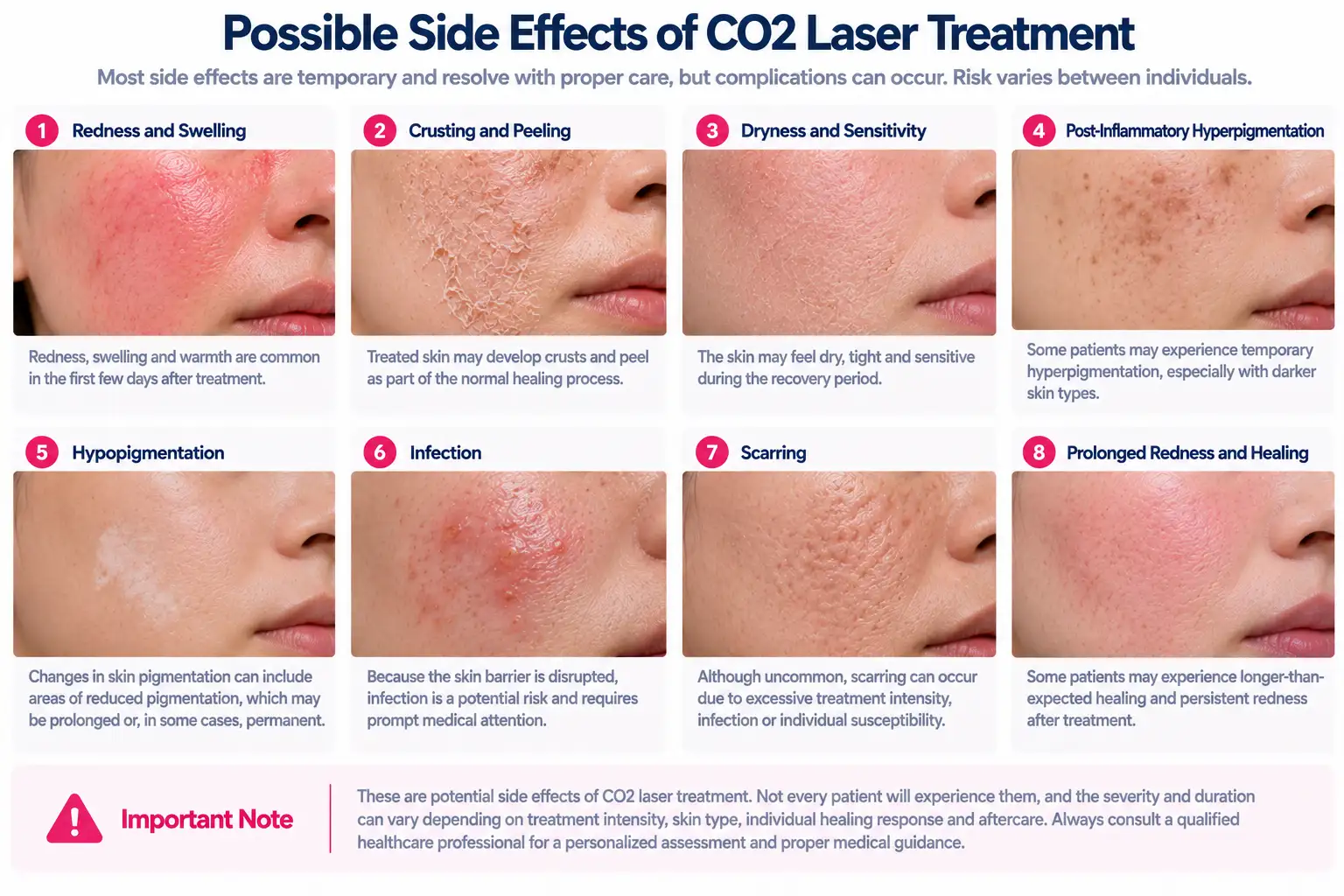
CO2 laser treatment is an ablative procedure and should not be regarded as risk-free. The possibility and severity of complications depend on treatment depth, density, anatomical location, patient characteristics, and clinical technique.
1. Redness and Swelling
Temporary redness and swelling are common responses after CO2 laser resurfacing.
The duration varies according to treatment intensity and individual healing response. Persistent or worsening symptoms should be assessed by the treating professional.
2. Infection
Because ablative resurfacing disrupts the skin barrier, infection is a potential complication.
Appropriate infection-control procedures, wound care, and clinical follow-up are important. Increasing pain, spreading redness, pus, fever, or other concerning symptoms require medical assessment.
3. Post-Inflammatory Hyperpigmentation
Post-inflammatory hyperpigmentation may develop after skin injury or inflammation.
Patients with darker skin phototypes or a history of pigmentation changes may require additional caution during treatment planning.
4. Hypopigmentation
Changes in skin pigmentation can also include areas of reduced pigmentation. These changes may be prolonged or, in some cases, persistent.
5. Scarring
Although uncommon when appropriate patient selection and treatment techniques are used, scarring is a potential complication of ablative CO2 laser procedures.
Excessive treatment intensity, infection, delayed healing, and individual susceptibility may contribute to this risk.
6. Prolonged Healing and Redness
Some patients may experience longer-than-expected healing, persistent redness, or skin sensitivity.
Patients should follow their practitioner’s wound-care instructions and attend recommended follow-up visits.
7. Herpes Simplex Reactivation
Facial ablative laser resurfacing may trigger reactivation of herpes simplex in susceptible individuals.
A history of cold sores should be discussed during consultation. The practitioner may consider appropriate antiviral prophylaxis according to clinical guidelines.
Who May Not Be a Suitable Candidate?
CO2 laser treatment is not suitable for every patient. A careful medical assessment is required before proceeding.
Additional caution or alternative treatment planning may be necessary for individuals with:
- Active skin infections in the treatment area.
- Uncontrolled inflammatory skin conditions.
- A history of abnormal or hypertrophic scarring.
- Significant wound-healing problems.
- Recent excessive sun exposure or tanning.
- Medical conditions or medications that may affect healing.
- A history of post-inflammatory pigmentation changes.
This is not an exhaustive list. Pregnancy, recent isotretinoin use, immunosuppression, and other patient-specific factors should be discussed with a qualified healthcare professional.
Read our related educational resource: Laser Treatment Safety Guide .
CO2 Laser Treatment Recovery: What to Expect
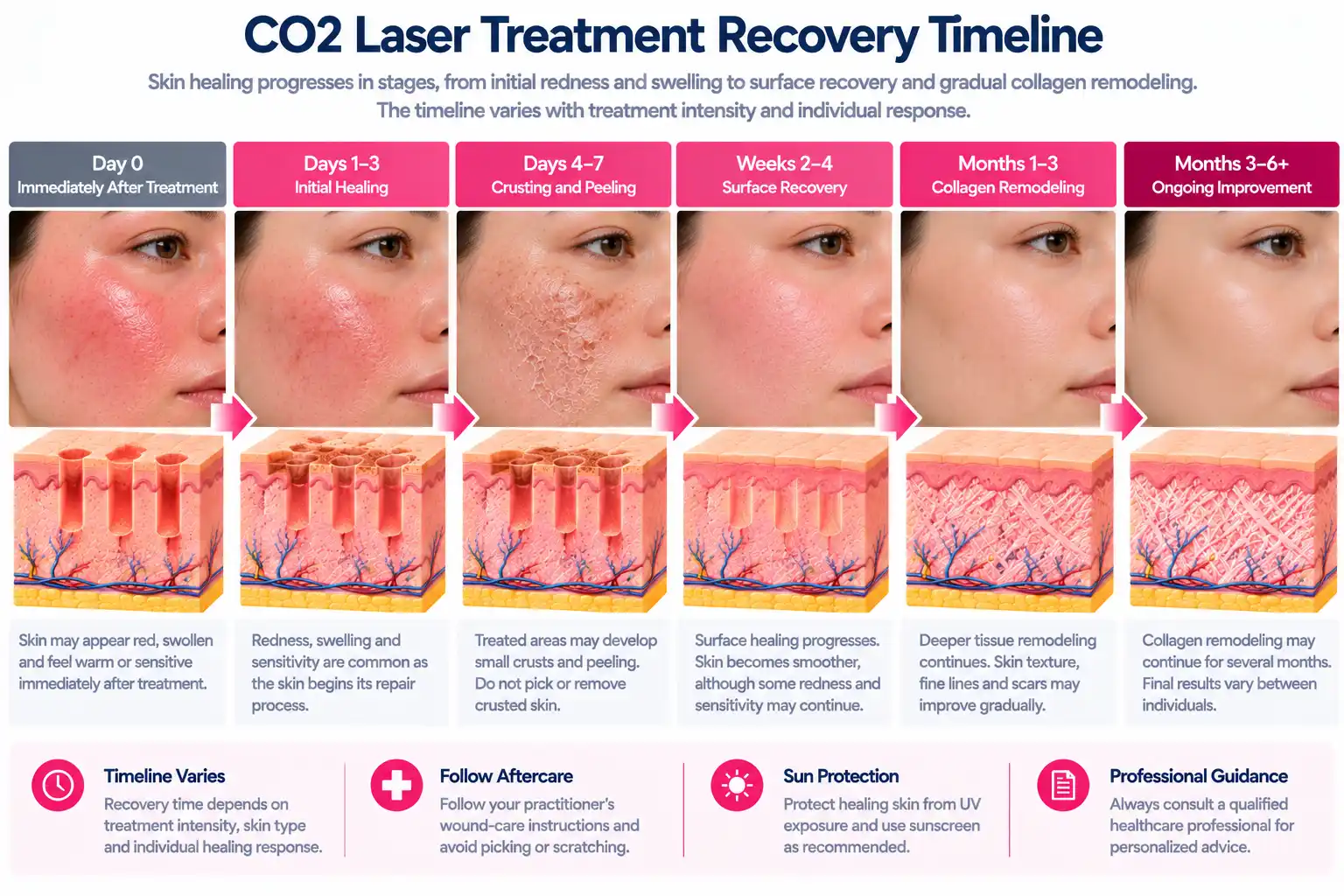
Recovery after CO2 laser treatment depends on whether traditional full-field or fractional resurfacing is performed, as well as treatment intensity and individual healing.
Fractional treatment generally leaves intervening untreated tissue, while full-field ablative resurfacing involves more extensive surface treatment.
Immediately After Treatment
Redness, swelling, warmth, and sensitivity may occur shortly after the procedure.
Days 1–3: Initial Healing
The skin begins its repair process. Redness, swelling, and sensitivity may remain noticeable.
Days 4–7: Crusting and Peeling
Treated areas may develop small crusts, dryness, or peeling. Patients should avoid picking or removing crusted skin.
Weeks 2–4: Surface Recovery
Surface healing progresses, although residual redness and sensitivity may continue.
Months 1–3: Gradual Remodeling
Following surface recovery, deeper remodeling may continue. Changes in texture and the appearance of selected scars may become more noticeable.
Months 3–6 and Beyond
Collagen remodeling may continue for several months. The final assessment period depends on the procedure and individual clinical response.
For a more detailed recovery guide, see: Fractional CO2 Laser Recovery .
CO2 Laser Aftercare Considerations
Appropriate aftercare is essential following ablative laser resurfacing. The treating professional should provide specific wound-care instructions.
- Follow the prescribed cleansing and wound-care routine.
- Do not pick, scratch, or forcibly remove crusts.
- Avoid irritating skincare products until cleared by the practitioner.
- Protect healing skin from direct ultraviolet exposure.
- Use recommended sun protection once appropriate for the healing stage.
- Attend scheduled clinical follow-up appointments.
How Many CO2 Laser Treatments Are Needed?
The number of CO2 laser treatments depends on the indication, treatment approach, skin condition, and desired clinical outcome.
Some patients may be considered for a single resurfacing procedure, while others may require a series of fractional treatments.
Acne scar treatment, for example, may require a different approach from treatment of superficial textural irregularities or fine lines.
Treatment intervals should allow sufficient recovery and should be determined through professional clinical assessment.
CO2 Laser Treatment vs Other Laser Technologies
CO2 laser treatment is different from non-ablative lasers, picosecond lasers, and intense pulsed light systems. Each technology interacts with tissue in a different way and is designed for different clinical objectives.
| Technology | Primary Mechanism | Typical Applications |
|---|---|---|
| CO2 Laser | Ablative laser energy absorbed by tissue water | Skin resurfacing, selected scars and wrinkles |
| 1550nm Fractional Laser | Non-ablative fractional optical heating | Selected textural concerns and dermal remodeling |
| 1927nm Thulium Laser | Fractional optical energy with strong epidermal water absorption | Selected pigmentation and photodamage concerns |
| Picosecond Laser | Very short optical pulses with photoacoustic effects | Tattoo removal and selected pigmentation concerns |
| IPL | Broad-spectrum pulsed light | Selected hair removal, pigmentation and vascular concerns |
These technologies should not be considered direct replacements for one another. Treatment selection should be based on the patient’s condition, clinical objectives, and risk profile.
Related Cocoon Laser technology: 1927nm Thulium Laser .
Professional CO2 Laser Systems for Aesthetic Clinics
For dermatology clinics, aesthetic practices, and medical equipment distributors, selecting a CO2 laser system requires an evaluation of technical capabilities, clinical applications, operational requirements, and manufacturer support.
Important considerations include laser source configuration, fractional scanning capabilities, adjustable treatment parameters, beam delivery, safety features, documentation, and technical service.
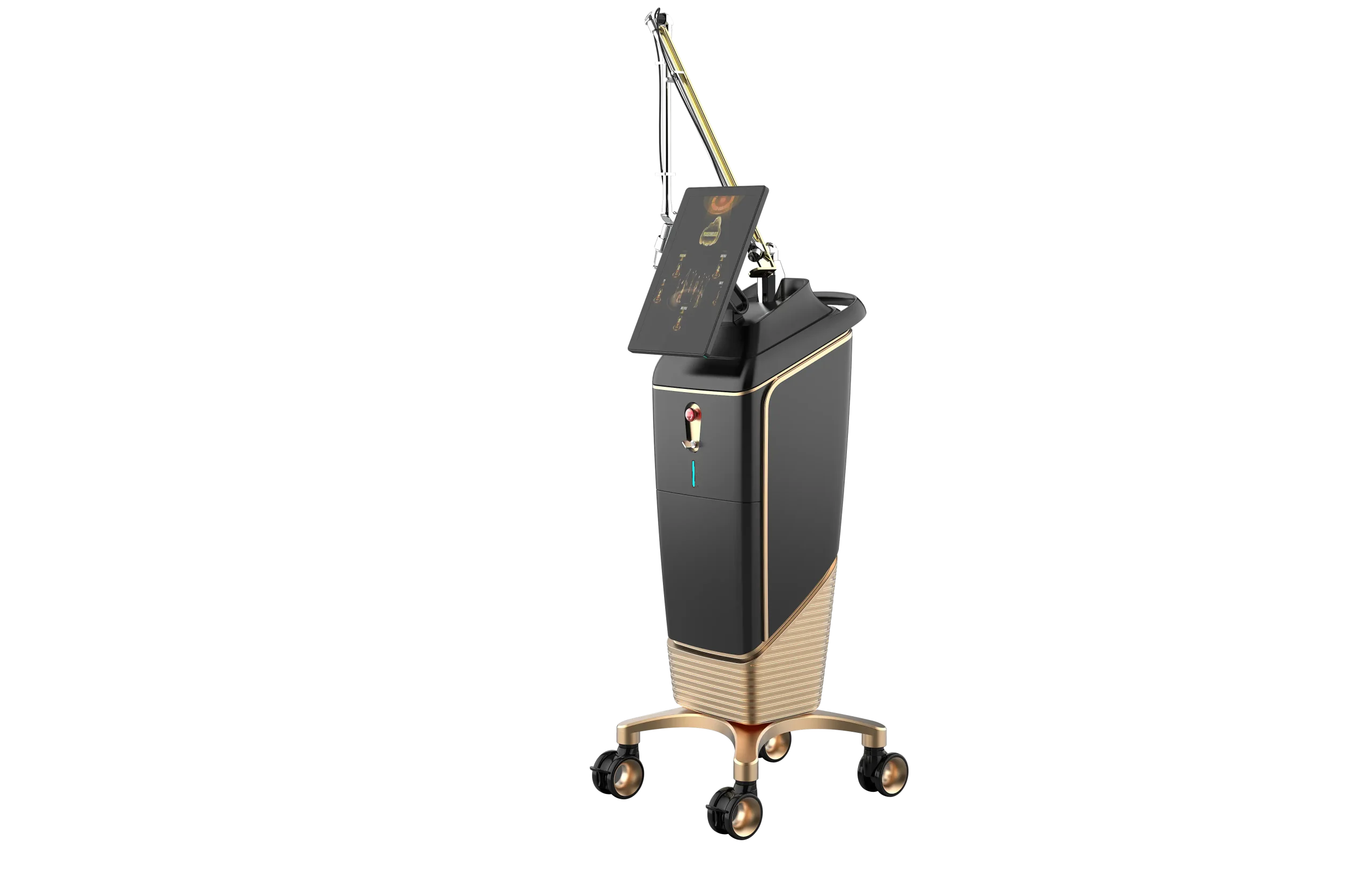
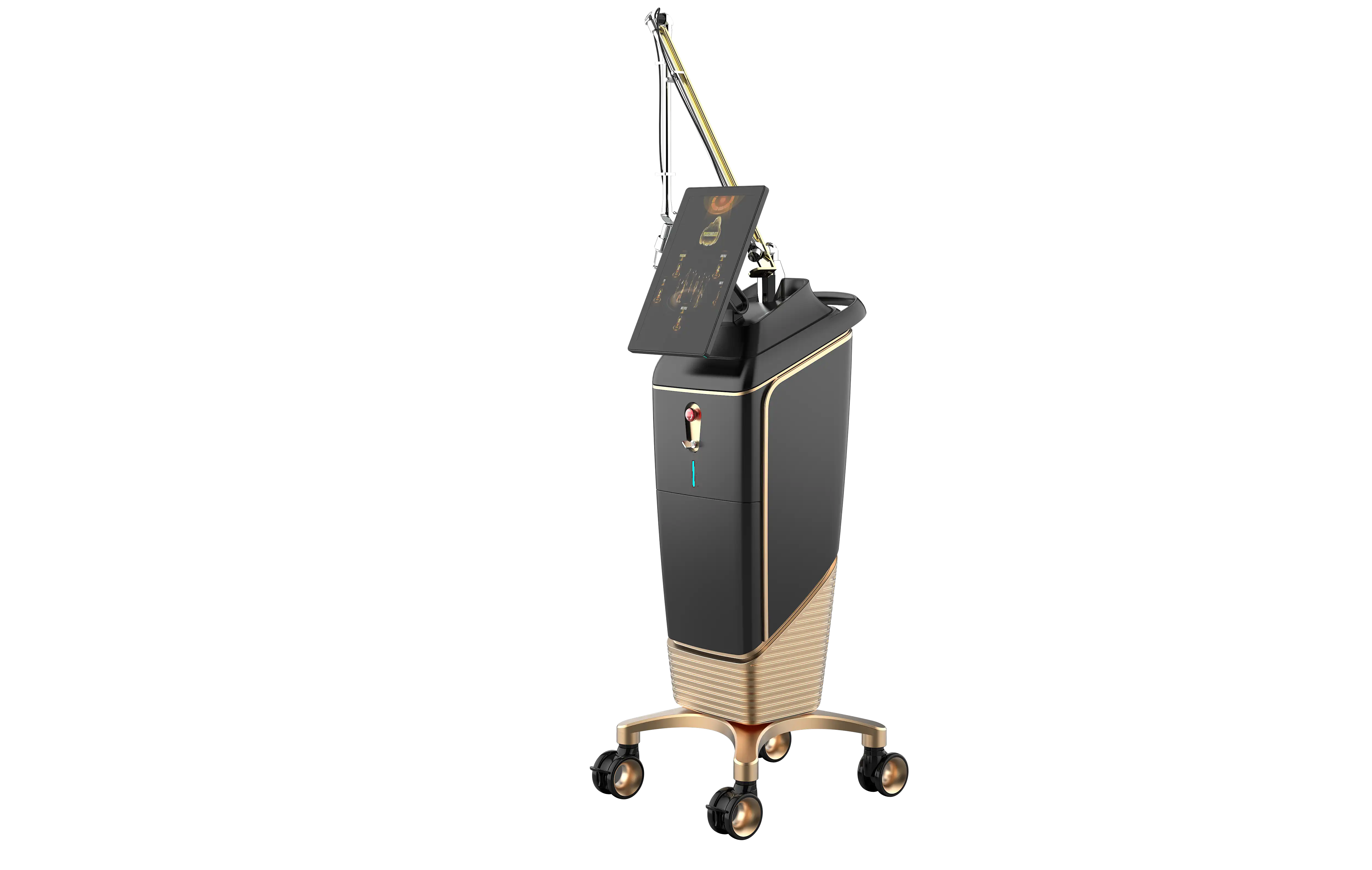
CO2 Star: Professional Fractional CO2 Laser System
CO2 Star is a professional fractional CO2 laser platform for aesthetic clinics and medical equipment buyers.
Clinics evaluating the system can review its official product specifications, available configurations, and intended applications to determine whether it matches their treatment requirements.
CO2 4D: Professional CO2 Laser Platform
CO2 4D is another CO2 laser platform in the Cocoon Laser product range.
Professional buyers can compare the available platform configurations according to their intended clinical applications and operational requirements.
What Should Clinics Consider When Choosing a CO2 Laser?
- Laser source: Review the laser source type and its technical documentation.
- Fractional scanning: Evaluate available scanning patterns and treatment controls.
- Parameter flexibility: Review energy, pulse characteristics, and treatment density controls.
- Safety: Check interlocks, emergency controls, eye protection requirements, and laser safety documentation.
- Training: Confirm the availability of operator training and technical guidance.
- Manufacturer support: Evaluate documentation, spare parts, service arrangements, and after-sales support.
Contact Cocoon Laser for product specifications, quotation requests, OEM cooperation, and distributor inquiries.
Frequently Asked Questions About CO2 Laser Treatment
What is CO2 laser treatment used for?
CO2 laser treatment is used for selected skin resurfacing procedures, acne scar treatments, wrinkle reduction, and certain dermatological and surgical applications. The appropriate indication depends on the device and clinical assessment.
Is CO2 laser treatment ablative or non-ablative?
CO2 laser treatment is an ablative laser procedure. It removes targeted tissue through energy absorption by water in biological tissue. Fractional CO2 treatment distributes ablation into microscopic zones.
Is fractional CO2 laser different from traditional CO2 laser?
Yes. Traditional full-field CO2 resurfacing treats the target surface more uniformly, while fractional CO2 laser treatment creates microscopic treatment columns with untreated tissue between them.
Does CO2 laser treatment hurt?
Discomfort varies according to treatment intensity, anatomical location, and individual sensitivity. Appropriate anesthesia or pain management may be used according to the clinical protocol.
How long does CO2 laser recovery take?
Initial surface healing may take several days to a few weeks, depending on the procedure. Redness and deeper tissue remodeling may continue for longer.
How many CO2 laser treatments are needed?
The number varies according to the indication, skin condition, treatment intensity, and individual response. Some patients may be considered for one session, while others may require multiple treatments.
What are the main risks of CO2 laser treatment?
Potential risks include prolonged redness, swelling, infection, post-inflammatory hyperpigmentation, hypopigmentation, delayed healing, herpes simplex reactivation, and scarring.
Can CO2 laser treatment improve acne scars?
Fractional CO2 laser treatment may improve the appearance of selected atrophic acne scars through controlled resurfacing and subsequent tissue remodeling. Results vary according to scar type and depth.
Is CO2 laser treatment suitable for darker skin?
Treatment may be possible in selected patients, but darker skin phototypes require careful assessment because of the potential risk of pigmentation changes. Treatment planning should be individualized.
Can CO2 laser treatment remove wrinkles?
CO2 laser resurfacing may improve the appearance of selected fine lines and wrinkles. The extent of improvement depends on wrinkle depth, skin condition, and treatment parameters.
What should patients avoid after CO2 laser treatment?
Patients should avoid picking crusts, irritating the healing skin, and excessive ultraviolet exposure. Specific restrictions and skincare instructions should follow the treating professional’s recommendations.
What is the difference between CO2 laser and Erbium laser?
CO2 lasers operate at 10,600 nm and are strongly absorbed by tissue water. Er:YAG lasers operate at 2,940 nm and have different tissue absorption and thermal characteristics. Their treatment profiles and clinical applications differ.
Final Thoughts: Is CO2 Laser Treatment Right for Your Clinic?
CO2 laser treatment remains an important technology in professional skin resurfacing and selected dermatological procedures. Its ability to produce controlled tissue ablation and thermal effects makes it relevant to a range of clinical applications.
However, successful treatment planning requires more than selecting a laser device. Patient assessment, appropriate treatment parameters, operator training, safety procedures, and aftercare all contribute to responsible clinical practice.
For clinics and distributors evaluating professional CO2 laser equipment, Cocoon Laser offers CO2 platforms including CO2 Star and CO2 4D.
Contact Cocoon Laser to discuss product specifications, equipment configurations, and distributor or OEM cooperation.