Picosecond Laser Tattoo Removal Technology: How Pico Lasers Remove Tattoos
Quick Answer
Picosecond laser tattoo removal is an advanced tattoo removal technology that uses ultra-short laser pulses to target tattoo pigments. Unlike traditional laser systems that rely mainly on thermal effects, picosecond lasers create a powerful photomechanical effect that breaks tattoo ink particles into smaller fragments.
Professional picosecond laser systems use extremely short pulses measured in trillionths of a second, allowing precise energy delivery to different tattoo pigments. Multiple wavelengths, including 532nm, 755nm, and 1064nm, are commonly used to target different ink colors and depths.
Because of its advanced pulse technology and flexible wavelength options, picosecond laser technology has become one of the leading solutions for professional tattoo removal clinics.
What Is Picosecond Laser Tattoo Removal?
Picosecond laser tattoo removal is a professional laser treatment technology that uses picosecond pulse duration to break down tattoo ink particles beneath the skin.
A picosecond is one trillionth of a second. This extremely short pulse duration allows the laser system to deliver high peak energy within a very short time period.
When the laser energy reaches tattoo pigments, the pigment particles absorb the energy and experience a rapid mechanical reaction. This process fragments larger ink particles into smaller particles that can be gradually cleared by the body’s natural processes.
Professional picosecond laser tattoo removal systems are commonly used for:
- Black tattoo removal
- Colored tattoo removal
- Professional tattoo correction
- Cosmetic tattoo removal
- Pigment-based aesthetic treatments
How Does Picosecond Laser Remove Tattoos?
The working principle of picosecond laser tattoo removal is based on selective absorption and photomechanical energy delivery.
The treatment process involves several steps:
- The laser emits a specific wavelength based on the tattoo pigment.
- The tattoo ink absorbs the laser energy.
- The ultra-short pulse creates rapid mechanical stress.
- The ink particles are fragmented into smaller particles.
- The body gradually removes the fragmented pigment.
The goal of picosecond laser technology is to deliver enough energy to affect tattoo pigments while controlling the impact on surrounding skin.
Why Are Picosecond Lasers Used for Tattoo Removal?
Traditional tattoo removal methods often used nanosecond laser technology. The development of picosecond lasers introduced shorter pulse durations and different energy delivery characteristics.
The main advantages of picosecond laser tattoo removal technology include:
- Ultra-short pulse delivery
- High peak power output
- Advanced pigment targeting
- Multiple wavelength options
- Flexible treatment parameters
These characteristics make picosecond lasers an important technology for clinics providing advanced tattoo removal services.
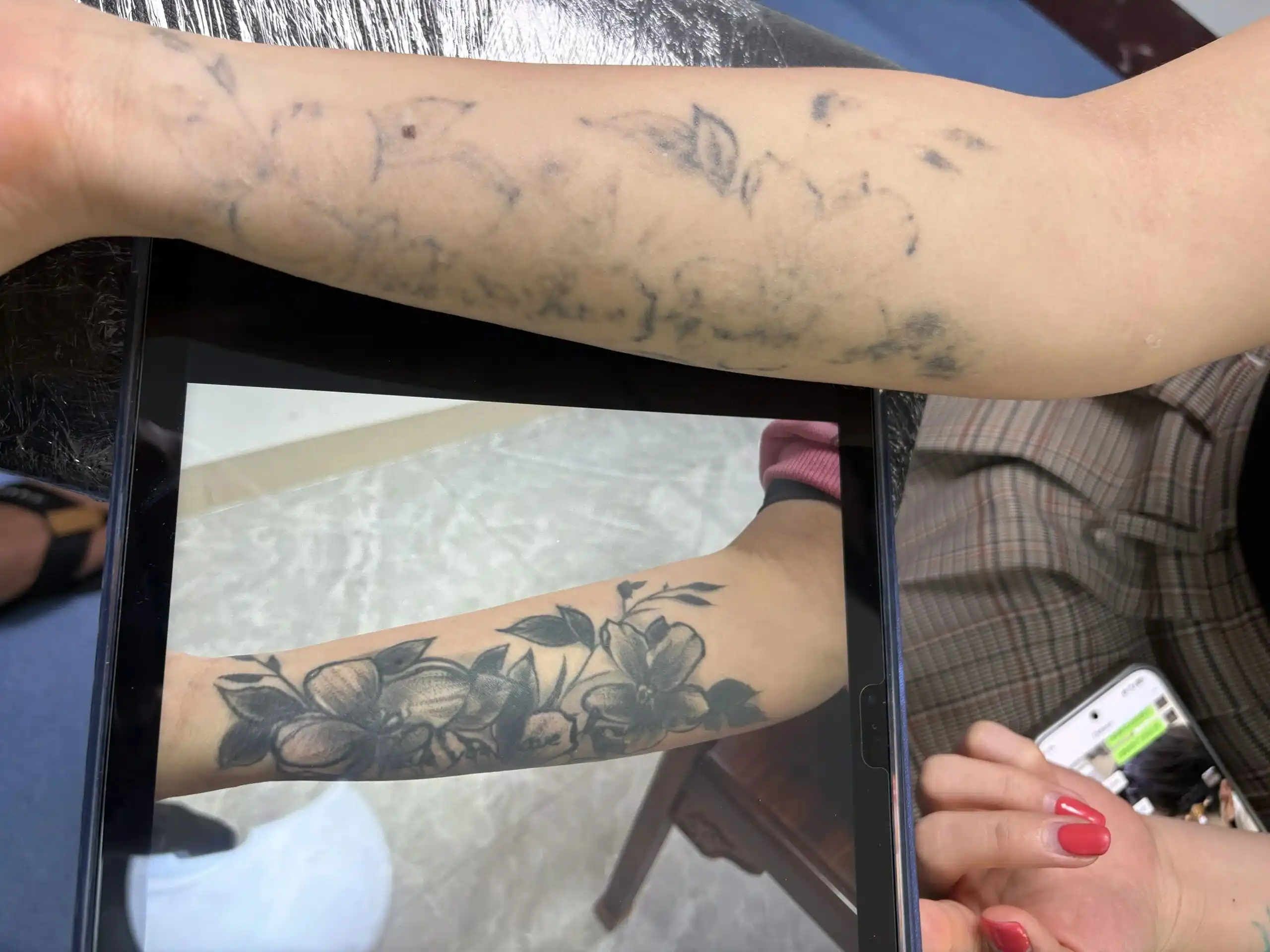
Picosecond Laser Tattoo Removal Before and After Results
The effectiveness of picosecond laser tattoo removal depends on various factors, including tattoo color, pigment depth, ink composition, treatment parameters, and individual skin characteristics.
The following treatment example demonstrates the application of professional picosecond laser technology for tattoo pigment reduction.

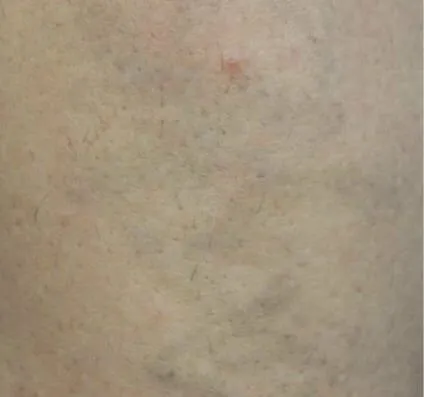
Before and after comparison showing tattoo pigment reduction using professional picosecond laser technology.
Professional picosecond laser systems use adjustable wavelengths and treatment parameters to target different tattoo pigments. Treatment outcomes may vary depending on tattoo characteristics, skin condition, and treatment protocols.
The Science Behind Picosecond Tattoo Removal Technology
The effectiveness of picosecond tattoo removal comes from the interaction between laser energy and tattoo pigment particles.
Photomechanical Effect
Unlike traditional thermal laser approaches, picosecond lasers rely heavily on a photomechanical effect.
The ultra-short pulse creates rapid energy expansion around pigment particles, generating mechanical stress that helps break the pigment into smaller fragments.
This mechanism allows the laser system to target tattoo ink more precisely while limiting unnecessary heat accumulation.
Tattoo Ink and Laser Wavelength Selection
One of the most important factors in professional picosecond laser tattoo removal is wavelength selection. Different tattoo pigments absorb different wavelengths of laser energy, which means professional systems often use multiple wavelengths to treat a wide range of tattoo colors.
The most common wavelengths used in picosecond tattoo removal systems include:
- 532nm
- 755nm
- 1064nm
Each wavelength provides different penetration characteristics and pigment absorption properties.
Learn more about: picosecond laser wavelengths and their applications
1064nm Picosecond Laser for Tattoo Removal
The 1064nm wavelength is one of the most commonly used wavelengths in professional picosecond tattoo removal systems.
Because of its deeper penetration characteristics, 1064nm is often selected for darker tattoo pigments and deeper ink particles.
Common applications include:
- Black tattoo pigment removal
- Dark blue tattoo pigment treatment
- Deep pigment targeting
Professional clinics often rely on 1064nm wavelength technology because many traditional tattoo inks contain dark pigments that respond well to this wavelength.
532nm Picosecond Laser for Tattoo Removal
The 532nm wavelength is commonly used for certain superficial pigments and warmer tattoo colors.
Applications may include:
- Red tattoo pigment removal
- Orange tattoo pigment treatment
- Superficial pigment applications
Because shorter wavelengths interact differently with pigment structures, 532nm provides an important complementary option in multi-wavelength picosecond laser platforms.
755nm Picosecond Laser for Tattoo Removal
The 755nm wavelength is another important option in professional picosecond laser systems. It provides strong absorption characteristics for certain pigment applications and is commonly incorporated into advanced multi-wavelength platforms.
Potential applications include:
- Selected tattoo pigments
- Pigmentation treatments
- Advanced aesthetic laser procedures
Why Multi-Wavelength Picosecond Lasers Are Preferred for Tattoo Removal
A single wavelength cannot effectively target every tattoo color. Different ink pigments have different optical absorption characteristics, which is why professional tattoo removal systems often combine multiple wavelengths.
| Wavelength | Common Tattoo Applications |
|---|---|
| 1064nm | Black and dark tattoo pigments |
| 532nm | Red, orange, and selected warm pigments |
| 755nm | Specific pigments and advanced applications |
Multi-wavelength picosecond laser systems provide clinics with greater flexibility because practitioners can select appropriate wavelengths according to tattoo color, depth, and treatment requirements.
Factors That Affect Picosecond Laser Tattoo Removal Results
Although picosecond laser technology provides advanced pigment targeting capabilities, treatment results depend on multiple factors.
Important factors include:
- Tattoo color
- Ink composition
- Pigment depth
- Tattoo age
- Skin type
- Laser wavelength selection
- Treatment parameters
Tattoo Color
Different tattoo colors absorb laser energy differently. Dark pigments, especially black ink, often respond differently compared with lighter colors such as green, blue, or yellow.
Ink Type and Pigment Depth
Professional tattoos may contain different ink formulations and pigment concentrations. Deeper pigments may require different treatment strategies compared with superficial pigment deposits.
Laser Parameters
Professional operators adjust treatment parameters according to tattoo characteristics and individual requirements.
Important settings may include:
- Energy level
- Spot size
- Frequency
- Wavelength selection
How Many Sessions Are Needed for Picosecond Laser Tattoo Removal?
The number of picosecond laser tattoo removal sessions varies depending on tattoo characteristics, pigment type, and individual response.
Factors that influence treatment frequency include:
- Size of the tattoo
- Color complexity
- Ink density
- Tattoo location
- Individual healing response
Professional evaluation is important because each tattoo has different characteristics and requires customized treatment planning.
Modern picosecond laser systems allow practitioners to adjust treatment parameters according to individual tattoo conditions, improving flexibility compared with fixed-parameter approaches.
Picosecond Laser vs Q-Switched Laser for Tattoo Removal
Picosecond lasers and Q-switched lasers are two of the most widely recognized laser technologies used for professional tattoo removal. While both systems target tattoo pigments using selective laser energy, they differ significantly in pulse duration and energy delivery methods.
The primary difference between these technologies is that picosecond lasers use ultra-short pulses measured in trillionths of a second, while Q-switched lasers typically operate in the nanosecond range.
| Feature | Picosecond Laser | Q-Switched Laser |
|---|---|---|
| Pulse Duration | Picosecond range | Nanosecond range |
| Energy Effect | Stronger photomechanical effect | Primarily photothermal effect |
| Technology | Advanced ultra-short pulse technology | Traditional pigment laser technology |
| Common Applications | Tattoo removal, pigmentation, rejuvenation | Tattoo removal and pigmentation |
| Clinical Flexibility | Multi-wavelength and advanced parameter options | Depends on system configuration |
Pulse Duration Difference
The biggest technological difference between picosecond and Q-switched lasers is pulse duration.
A picosecond laser delivers energy much faster than a nanosecond laser. This shorter pulse duration allows the system to generate higher peak power and create a stronger mechanical interaction with tattoo pigments.
Energy Delivery Difference
Q-switched lasers primarily rely on thermal and photothermal effects to affect pigment particles, while picosecond lasers emphasize photomechanical fragmentation.
This difference in energy delivery is one of the reasons why picosecond technology has become popular in advanced aesthetic clinics.
Which Laser Technology Is Better for Tattoo Removal?
There is no single laser technology that is ideal for every tattoo. The most suitable system depends on factors such as tattoo color, pigment depth, treatment requirements, and clinic objectives.
However, professional clinics often select picosecond laser systems because they provide:
- Ultra-short pulse technology
- Advanced pigment targeting
- Multiple wavelength options
- Flexible treatment parameters
For a complete technology comparison, see: Picosecond Laser vs Q-Switched Laser: Complete Comparison Guide
Why Picosecond Laser Technology Has Changed Tattoo Removal
The development of picosecond laser technology represents an important advancement in professional tattoo removal equipment.
Traditional laser systems were limited by longer pulse durations, while picosecond systems introduced a new approach based on ultra-short energy delivery.
More Precise Energy Control
Picosecond laser systems allow practitioners to control energy delivery more precisely through adjustable parameters such as wavelength, energy level, and spot size.
This flexibility helps clinics customize treatment approaches according to different tattoo characteristics.
Advanced Pigment Fragmentation
The photomechanical effect created by picosecond pulses helps break tattoo pigments into smaller particles.
This technology is especially valuable for complex tattoos containing multiple colors or dense pigment structures.
Expanded Treatment Possibilities
Modern picosecond laser platforms are not limited to tattoo removal. Many systems support additional aesthetic applications, including pigmentation treatment and skin rejuvenation.
This makes professional pico laser systems attractive for clinics seeking multi-purpose aesthetic technology.
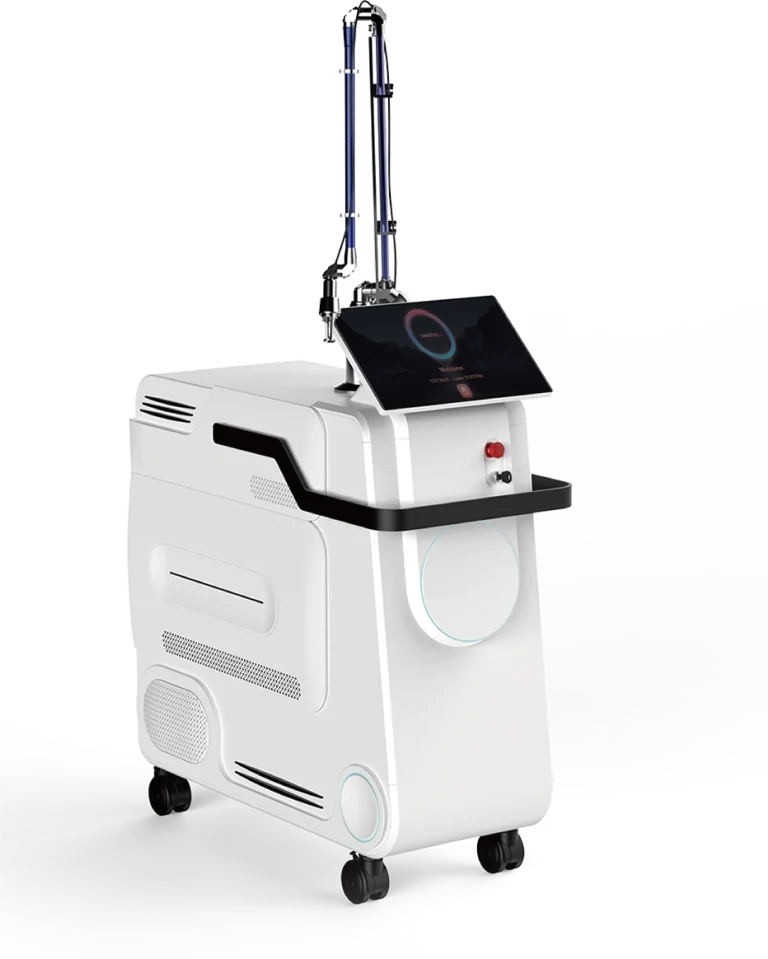
Professional Picosecond Laser Systems for Tattoo Removal Clinics
Professional tattoo removal clinics require laser systems that provide reliable performance, flexible treatment options, and consistent energy delivery.
When evaluating a professional picosecond laser machine, clinics should consider:
- Wavelength configuration
- Pulse duration
- Energy stability
- Spot size options
- Cooling technology
- Operating interface
- Manufacturer support
Multi-Wavelength Capability
A professional tattoo removal laser should provide suitable wavelength options for different tattoo pigments.
Multi-wavelength systems offer greater flexibility because practitioners can select the most appropriate wavelength according to tattoo characteristics.
Reliable Energy Output
Consistent energy delivery is essential for professional tattoo removal applications.
Stable laser output helps clinics maintain reliable treatment workflows and professional service standards.
Cooling and Patient Comfort
Cooling technology is an important supporting feature in modern aesthetic laser systems.
Professional cooling solutions can help improve treatment comfort and support efficient clinical operation.
Learn more: Laser Cooling Technology for Professional Aesthetic Treatments
How to Choose a Professional Picosecond Laser Tattoo Removal System
Choosing a professional picosecond laser tattoo removal system requires evaluating both technology performance and long-term business requirements. Clinics, medical spas, and distributors should consider more than just the laser specifications when selecting equipment.
Important factors include:
- Laser wavelength configuration
- Pulse duration
- Energy output stability
- Spot size options
- Cooling system
- Software features
- Manufacturer experience
- Technical support
Evaluate Wavelength Options
Because tattoo inks contain different pigments, wavelength flexibility is one of the most important considerations when choosing a professional tattoo removal laser.
A multi-wavelength picosecond laser platform provides broader treatment capability by supporting different tattoo colors and pigment depths.
Professional buyers should evaluate whether the system includes suitable wavelengths for their target market and treatment applications.
Consider Pulse Technology and Energy Performance
Pulse duration is a key factor in picosecond laser technology, but it should be evaluated together with overall system performance.
A professional system should provide:
- Stable pulse delivery
- Consistent energy output
- Reliable operation during repeated treatments
- Adjustable treatment parameters
Evaluate Cooling Technology
Cooling technology is an important part of modern tattoo removal laser systems.
A professional cooling solution can support:
- Improved patient comfort
- Better treatment experience
- Efficient clinic workflow
For clinics performing frequent tattoo removal procedures, cooling capability should be considered as part of the overall system design.
Choose an Experienced Laser Manufacturer
For clinics, distributors, and OEM partners, the manufacturer behind the equipment is an important factor in long-term success.
A reliable picosecond laser manufacturer should provide:
- Professional engineering capability
- Quality control procedures
- Technical documentation
- OEM and ODM support
- After-sales service
Choosing the right supplier helps ensure consistent equipment performance and long-term business support.
Learn more: Professional Picosecond Laser Machine Buying Guide
Picosecond Laser Tattoo Removal Technology for Modern Clinics
As demand for advanced aesthetic treatments continues to grow, picosecond laser technology has become an important solution for clinics offering professional tattoo removal services.
Modern systems combine:
- Ultra-short pulse technology
- Multiple wavelength options
- Advanced energy control
- Intelligent operating systems
- Professional cooling solutions
These technologies allow clinics to provide more flexible treatment options while supporting a wider range of tattoo removal applications.
Frequently Asked Questions About Picosecond Laser Tattoo Removal
How does a picosecond laser remove tattoos?
A picosecond laser removes tattoos by delivering ultra-short laser pulses that are absorbed by tattoo pigments. The energy creates a photomechanical effect that breaks pigment particles into smaller fragments, which can then be gradually processed by the body.
Is picosecond laser better than traditional tattoo removal lasers?
Picosecond lasers use shorter pulse durations than many traditional tattoo removal lasers, creating different energy delivery characteristics. The most suitable technology depends on tattoo type, pigment, treatment goals, and system configuration.
What wavelength is best for tattoo removal?
The best wavelength depends on the tattoo pigment. Professional picosecond laser systems commonly use 1064nm, 532nm, and 755nm wavelengths because different wavelengths target different pigment characteristics.
Can picosecond lasers remove all tattoo colors?
Picosecond lasers can treat many tattoo colors, but results depend on factors such as pigment type, ink composition, tattoo depth, and wavelength selection.
How many sessions are needed for picosecond tattoo removal?
The number of sessions varies depending on tattoo size, color, ink density, location, and individual response. Professional evaluation is required to determine an appropriate treatment plan.
What is the difference between pico laser and Q-switched laser tattoo removal?
The main difference is pulse duration. Pico lasers use picosecond pulses, while Q-switched lasers typically use nanosecond pulses. This difference affects how laser energy interacts with tattoo pigments.
How much does a professional picosecond tattoo removal machine cost?
The cost depends on system configuration, wavelength options, pulse technology, energy output, cooling system, manufacturer quality, and customization requirements.
Who uses professional picosecond tattoo removal machines?
Professional picosecond tattoo removal machines are commonly used by aesthetic clinics, dermatology centers, medical spas, tattoo removal specialists, distributors, and OEM partners.
Final Verdict
Picosecond laser tattoo removal technology represents a major advancement in professional tattoo removal equipment. By using ultra-short pulses and advanced energy delivery methods, picosecond lasers provide precise targeting of tattoo pigments and flexible treatment options.
The combination of multiple wavelengths, photomechanical technology, intelligent control systems, and professional cooling solutions makes picosecond lasers an important platform for modern aesthetic clinics.
For clinics and distributors evaluating tattoo removal technology, understanding how picosecond lasers work, how wavelengths interact with pigments, and how to select the right professional system is essential for making informed equipment decisions.
Explore professional picosecond laser solutions: Professional Picosecond Laser System