Understanding the 1064nm Laser Wavelength
Understanding the 1064nm Laser Wavelength
In aesthetic and dermatologic laser technology, the laser wavelength largely determines what structures in the skin are targeted and how deep the energy can travel. Among the many options used in clinics today, the 1064nm laser wavelength has become a workhorse because it combines good penetration depth with relatively low melanin absorption, making it versatile and safer for a wide range of skin types.
What is the 1064nm laser wavelength?
The 1064nm wavelength lies in the near-infrared region of the spectrum. In medical aesthetics it is most closely associated with Nd:YAG (neodymium-doped yttrium aluminium garnet) lasers, a solid-state technology that produces a focused, coherent beam of light at 1064nm.
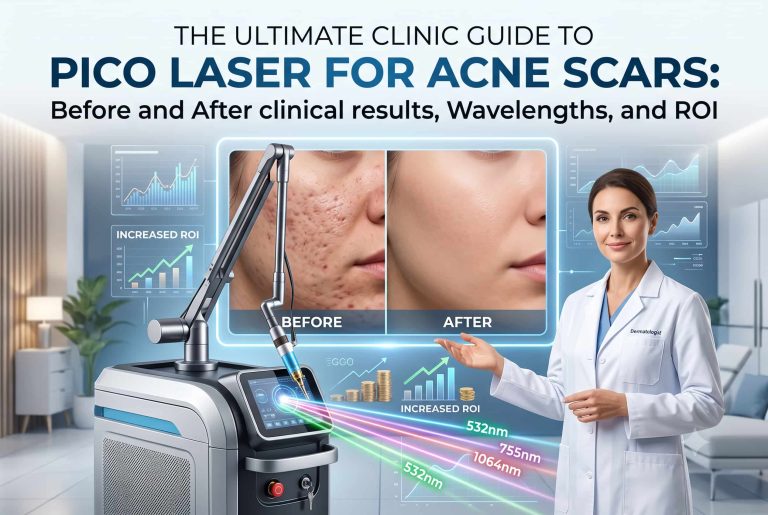
Compared with shorter wavelengths such as 532nm or 755nm, 1064nm is absorbed less by epidermal melanin and can reach deeper into the dermis. This makes it particularly useful for:
- Treating deeper pigmented lesions
- Targeting hair follicles located below the surface
- Addressing vascular structures in the dermis

1064nm in hair removal and darker skin types
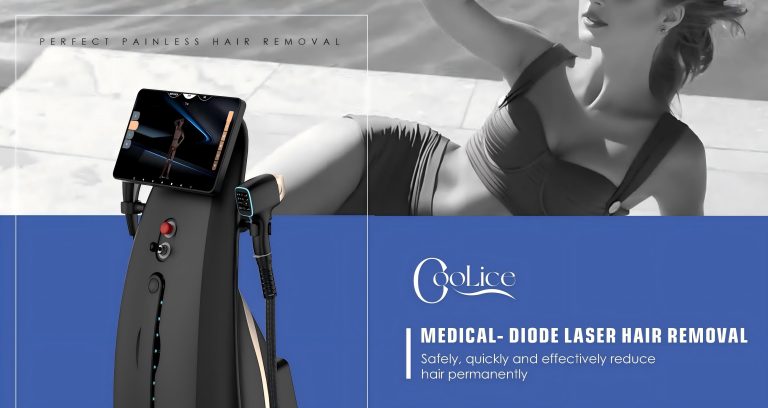
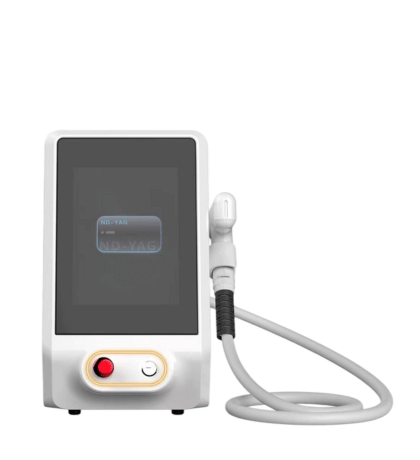
For permanent hair reduction, both long-pulsed Nd:YAG and diode systems can be configured to emit 1064nm. Clinical guidance and expert opinion consistently note that 1064nm lasers are well-suited for darker or tanned skin, because the wavelength bypasses much of the epidermal melanin and focuses more selectively on the hair follicle.
Compared with some shorter-wavelength devices, a properly cooled 1064nm platform can therefore reduce the risk of surface burns or post-inflammatory hyperpigmentation when used by trained professionals with appropriate parameters.
1064nm for pigmentation, tattoos and vascular concerns
Beyond hair removal, the 1064nm laser wavelength is widely used for:
- Deep dermal pigmentation and tattoos – High-energy Q-switched or picosecond 1064nm Nd:YAG lasers fragment dark tattoo inks and deep melanin clusters while 532nm is often used for more superficial red or yellow pigments.
- Vascular lesions – Long-pulsed 1064nm Nd:YAG lasers can target blood vessels for conditions such as spider veins and haemangiomas.
- Skin rejuvenation – By delivering controlled thermal energy into the dermis, long-pulsed 1064nm systems can stimulate collagen remodelling and improve overall tone and texture.
Because of this flexibility, many clinics consider a 1064nm platform—whether diode or Nd:YAG—an essential part of a modern laser portfolio.
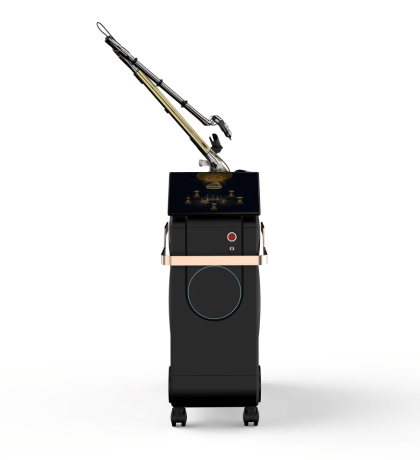
1064nm in CocoonLaser platforms: Ultra PicoMax & QPeak Pro
Cocoon’s portfolio includes several devices that make use of the 1064nm wavelength. For example:
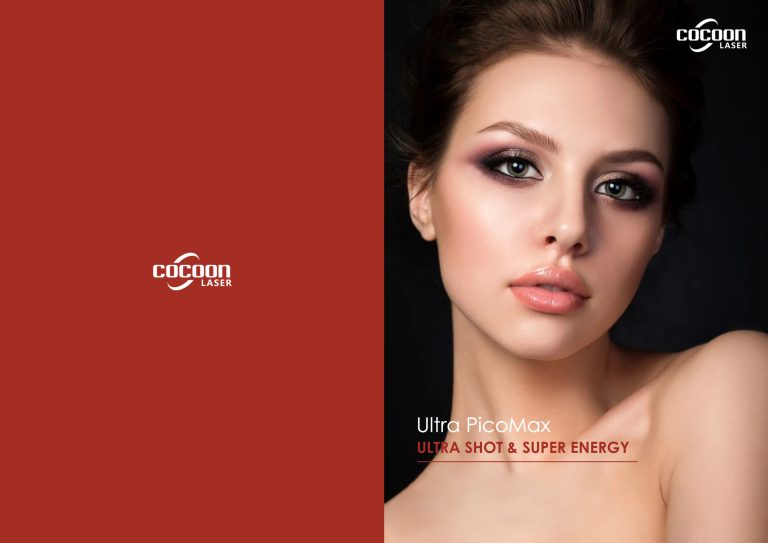
- Ultra PicoMax is a picosecond Nd:YAG platform that combines 1064nm with 532nm to address deep and superficial pigmentation, tattoos and overall skin rejuvenation. Picosecond pulse durations deliver high peak power with a photomechanical effect, breaking up pigment while minimising thermal damage.
- QPeak Pro is a high-power Q-switched Nd:YAG system at 1064nm with a KTP adaptor that converts the beam to 532nm. This dual-wavelength design allows practitioners to treat both deep pigmented lesions with 1064nm and more superficial browns and reds with 532nm, as well as multicolour tattoo work.
Both platforms leverage the strengths of the 1064nm laser wavelength while offering additional flexibility through multiple pulse modes and wavelengths.
Safety, training and patient selection
Although the 1064nm wavelength has advantages for a broad range of skin types, safe use still depends on proper training, device maintenance and patient assessment. Eye protection, accurate skin typing, conservative test spots and realistic patient counselling remain essential for all laser treatments. Clinics should follow manufacturer guidance, local regulations and evidence-based protocols when selecting fluence, pulse duration and spot size for each indication.
When combined with appropriate clinical judgement, 1064nm laser technology—whether in diode or Nd:YAG form—offers a powerful, versatile tool for hair removal, pigmentation, vascular work and rejuvenation.
FAQs about the 1064nm Laser Wavelength
Q1. What is the 1064nm laser wavelength best used for?
The 1064nm wavelength is commonly used for hair removal on darker skin types, deep dermal pigmentation, multicolour tattoos (especially dark inks) and vascular lesions such as spider veins. Different pulse modes—long-pulsed, Q-switched or picosecond—are chosen depending on the indication.
Q2. Is a 1064nm laser safe for dark or tanned skin?
Compared with many shorter wavelengths, 1064nm light is absorbed less by epidermal melanin and penetrates deeper into the dermis. When combined with effective cooling and correct settings, this makes it a suitable choice for darker skin types in experienced hands.
Q3. What is the difference between a 1064nm Nd:YAG laser and a 1064nm diode laser?
Both can emit energy at 1064nm, but they use different gain media and device architectures. Nd:YAG systems are common in Q-switched and picosecond platforms for pigmentation and tattoo work, while diode systems are more often used for high-efficiency hair removal. The best choice depends on your clinical focus.
Q4. Do I still need other wavelengths if I have 1064nm?
Yes. While 1064nm is highly versatile, shorter wavelengths such as 532nm or 755nm can be more effective for superficial or specific pigment colours. Many advanced systems therefore combine 1064nm with additional wavelengths to expand treatment options.
If you need more information, please click “Contact Us”.
If you want to obtain more information, please follow our official website and Facebook.